Week 0️⃣ 9️⃣
Generations
🔊 Audio
📜 Show transcript
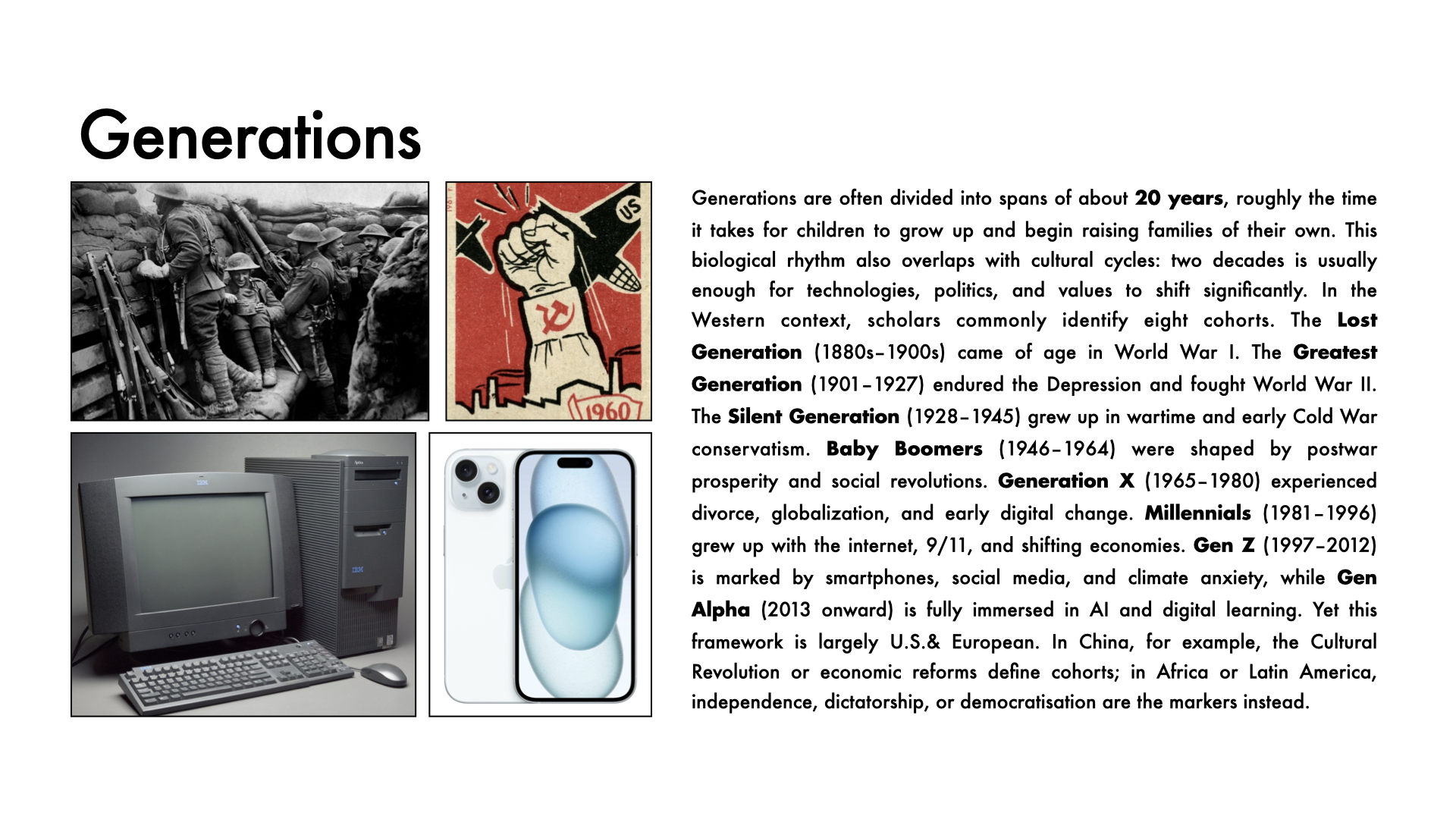
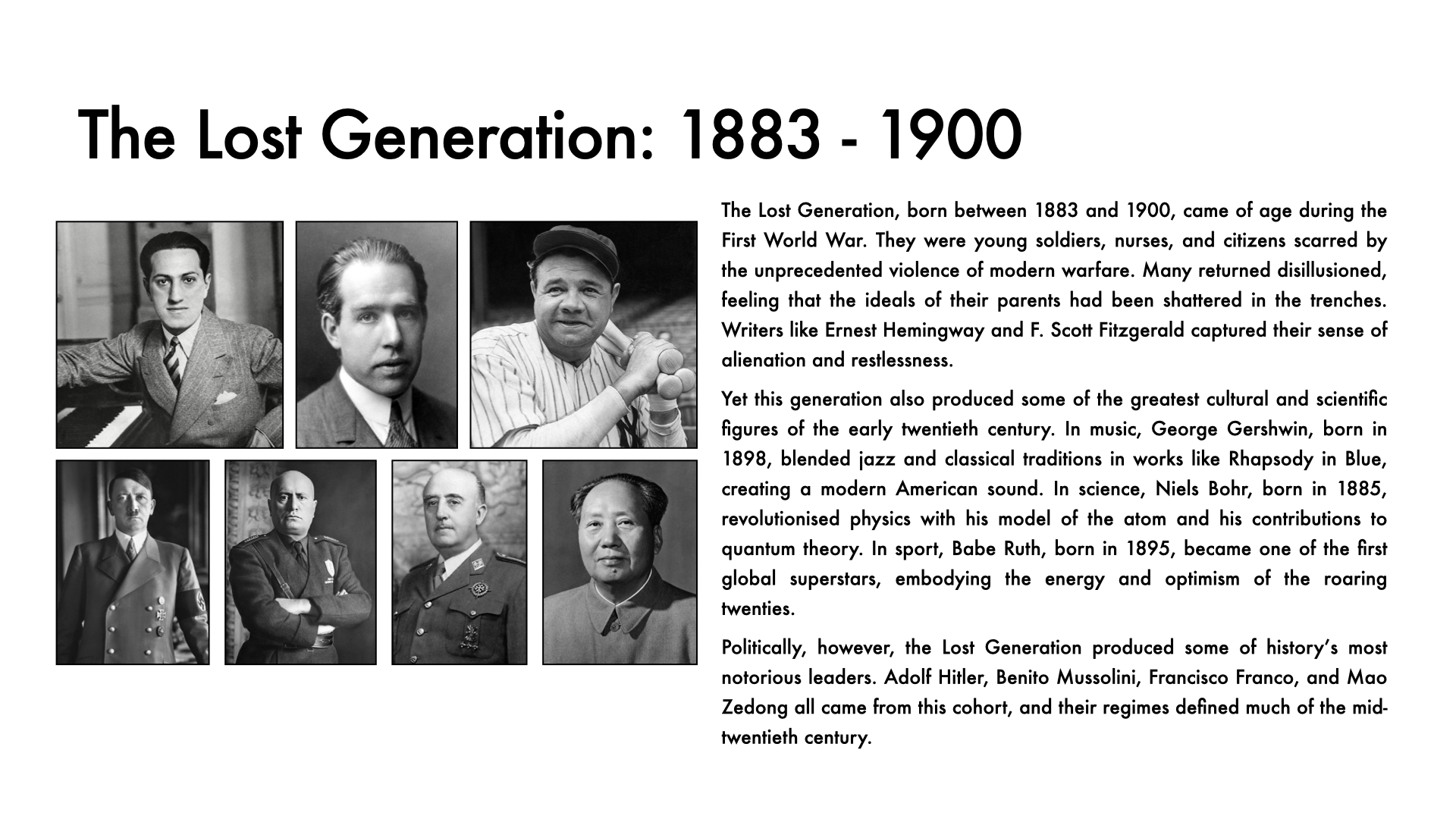
The story of modern generations begins with the Lost Generation, born between the 1880s and 1900. They came of age during the First World War, a conflict that shattered old empires and ideals. Many felt disillusioned, questioning the values that had led to such destruction. Writers like Ernest Hemingway and F. Scott Fitzgerald gave them a voice, capturing themes of alienation and the restless search for meaning.
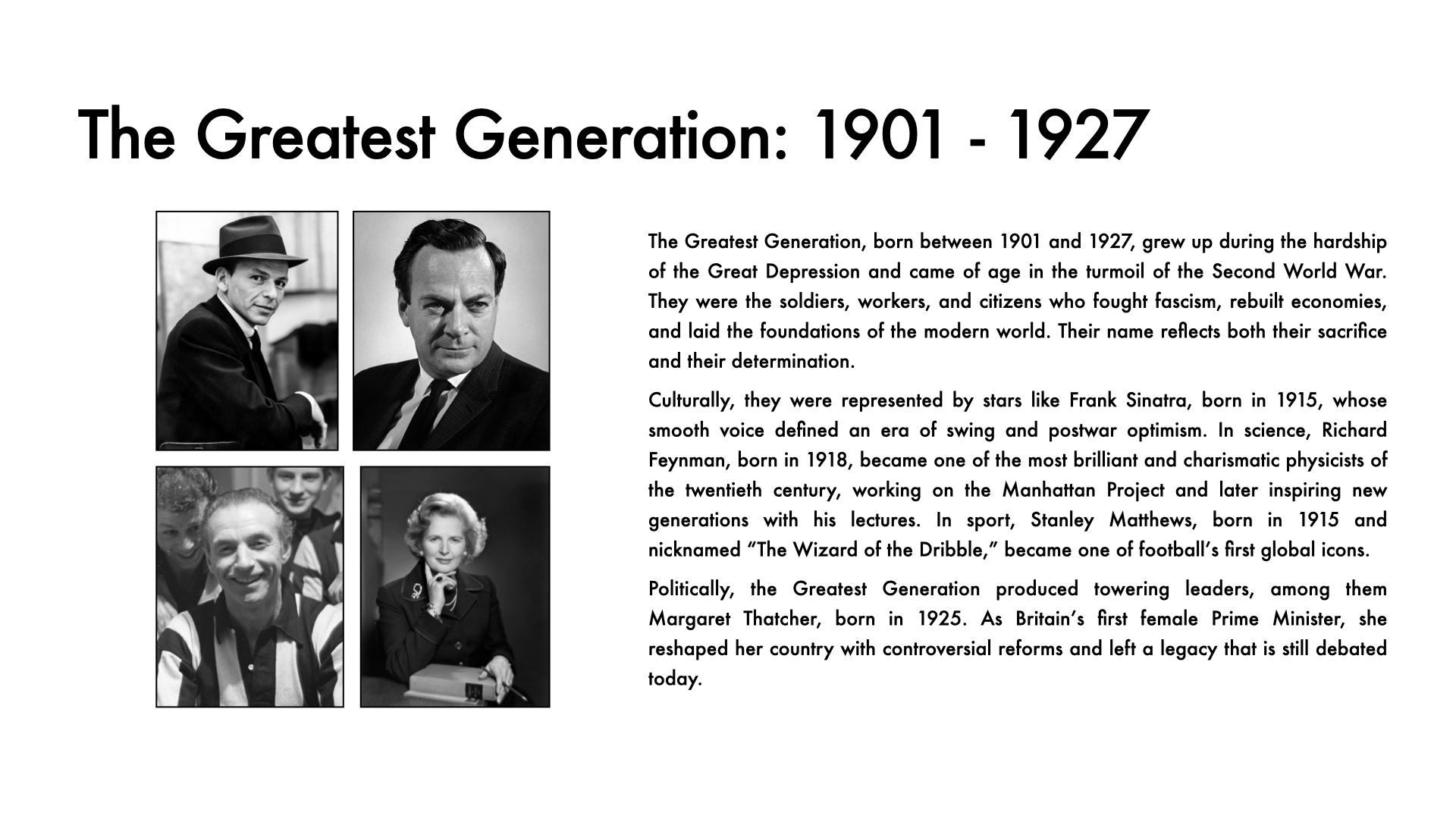
Next came the Greatest Generation, born between 1901 and 1927. They endured the Great Depression and fought in World War Two. Known for sacrifice, duty, and resilience, they returned from war to build stable families, suburbs, and the institutions of the mid-twentieth century.
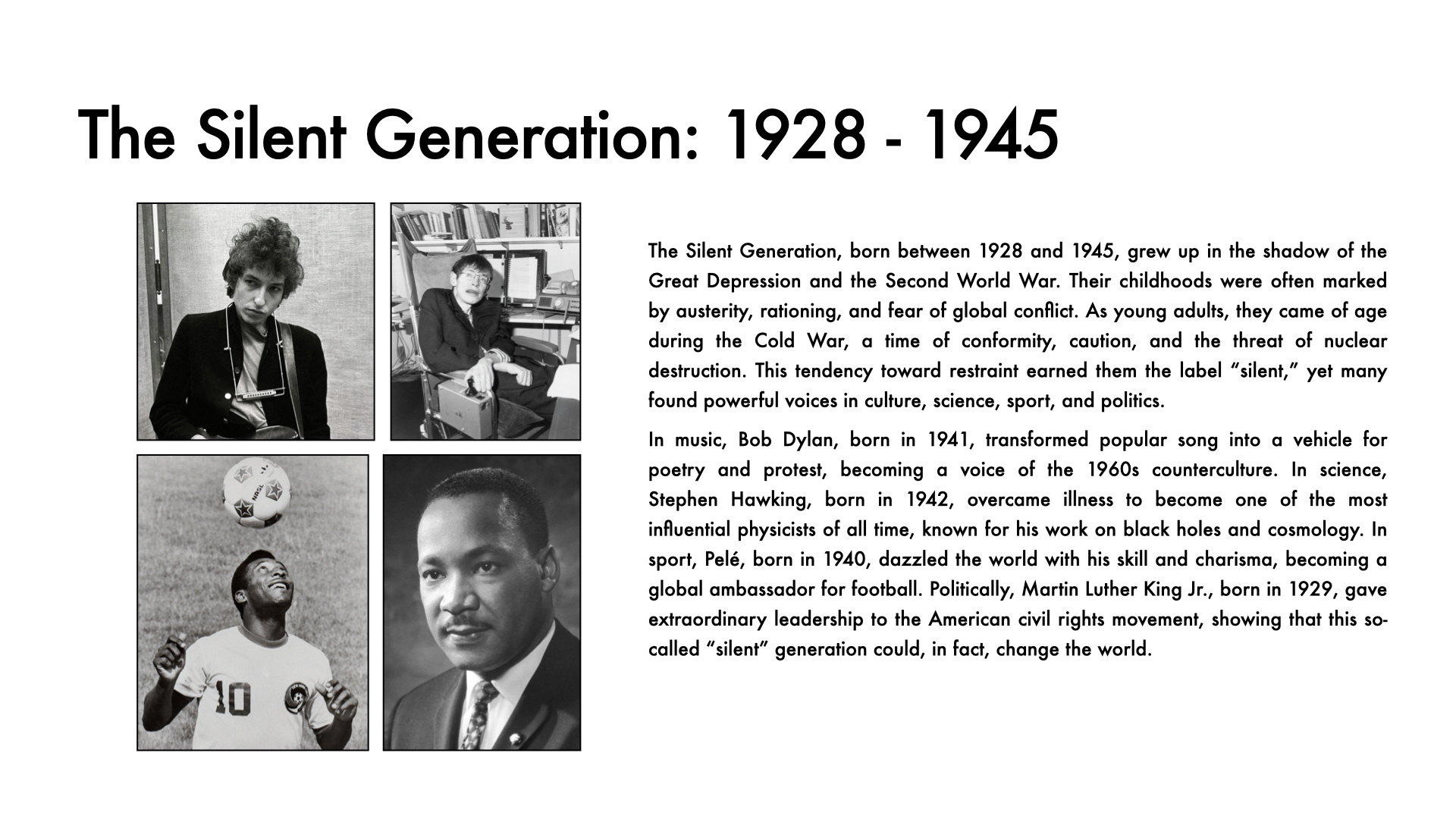
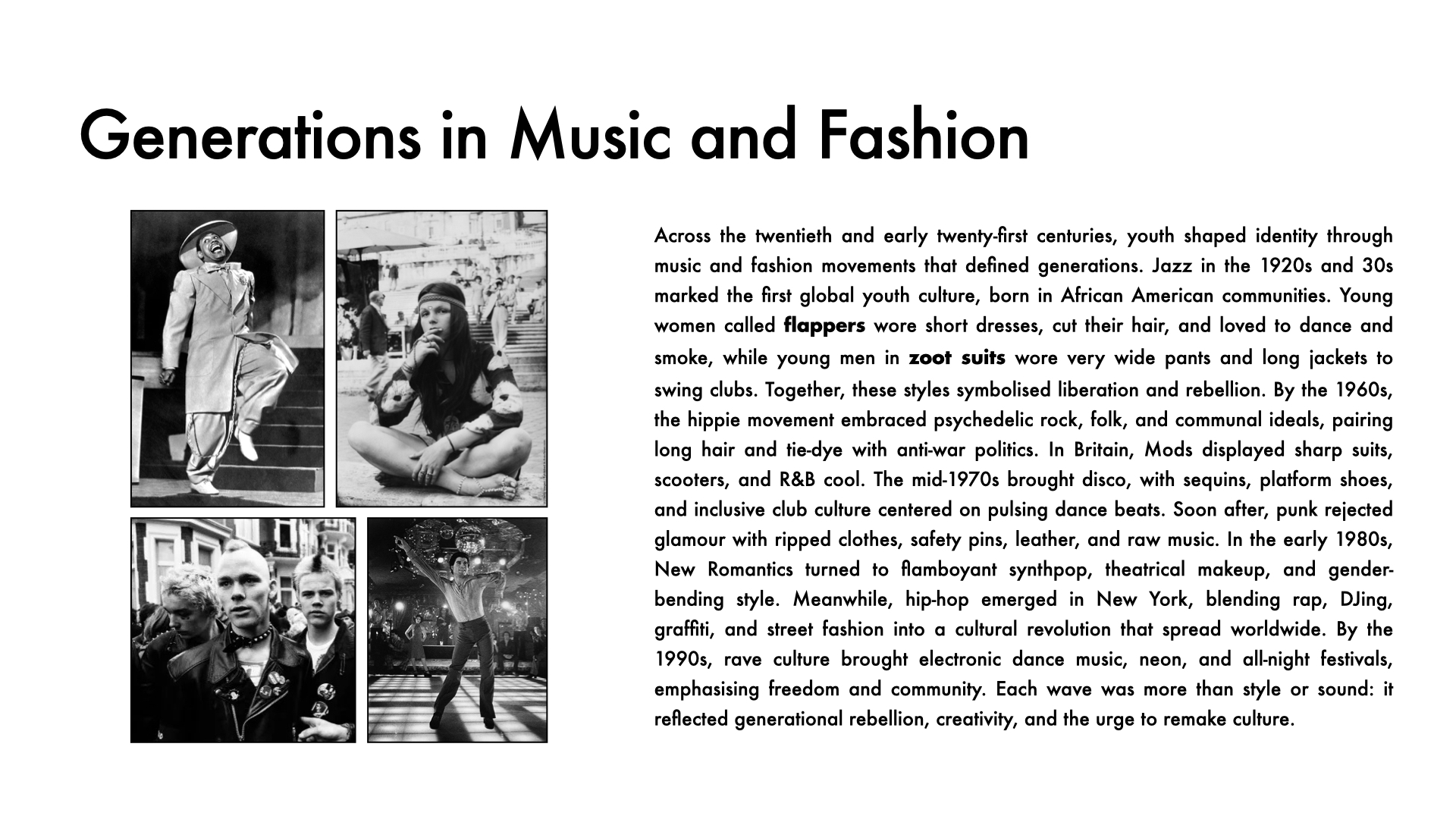
Following them was the Silent Generation, born from 1928 to 1945. They grew up in hard times and were shaped by conformity and caution during the Cold War. Yet this “quiet” generation produced bold leaders such as Martin Luther King Junior, and many of the artists who powered the counterculture of the 1960s. The hippie movement, often linked with Baby Boomers, was first seeded by Silent Gen musicians and activists like Bob Dylan and John Lennon. They provided the soundtrack of protest and change.
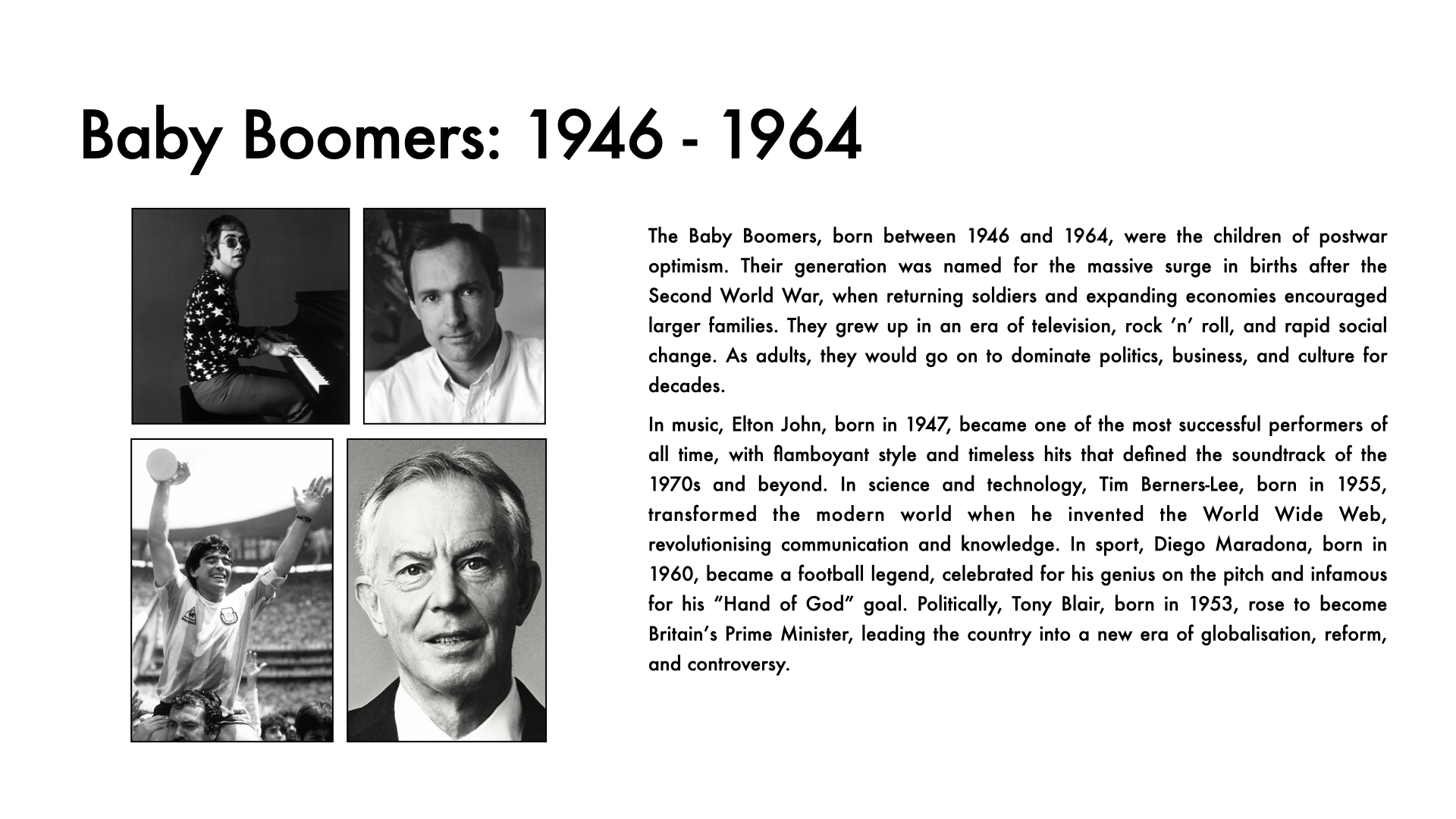
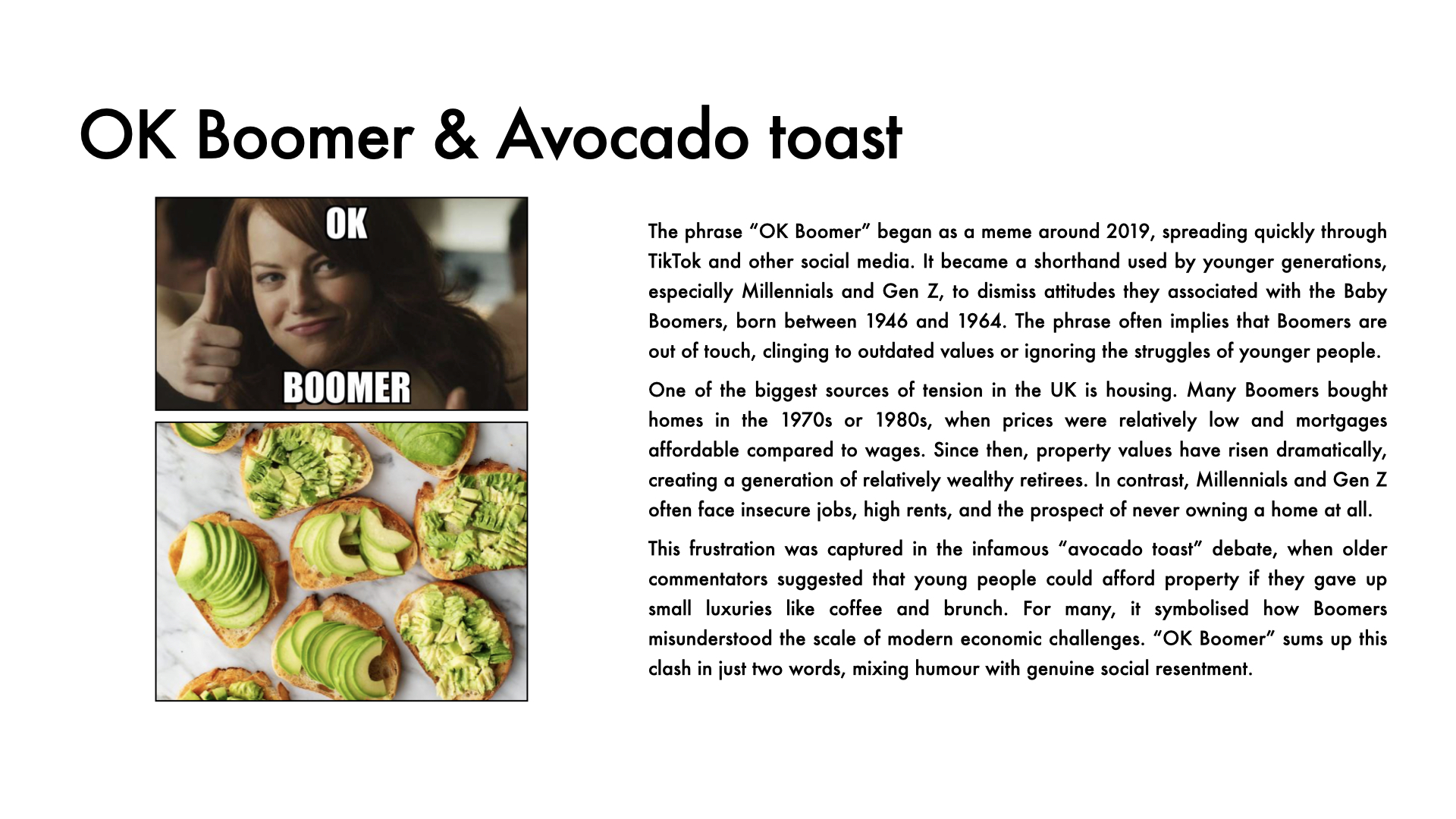
The Baby Boomers, born between 1946 and 1964, experienced postwar prosperity and huge cultural change. They lived through the civil rights movement, Vietnam, Woodstock, and the moon landing. In Britain, Boomer youth also embraced the clash of Mods and Rockers, creating a distinct generational identity around music, fashion, and rebellion. Their numbers and wealth gave them lasting influence, though in later years they have been criticized for holding on to power—captured in the modern phrase “OK Boomer.”
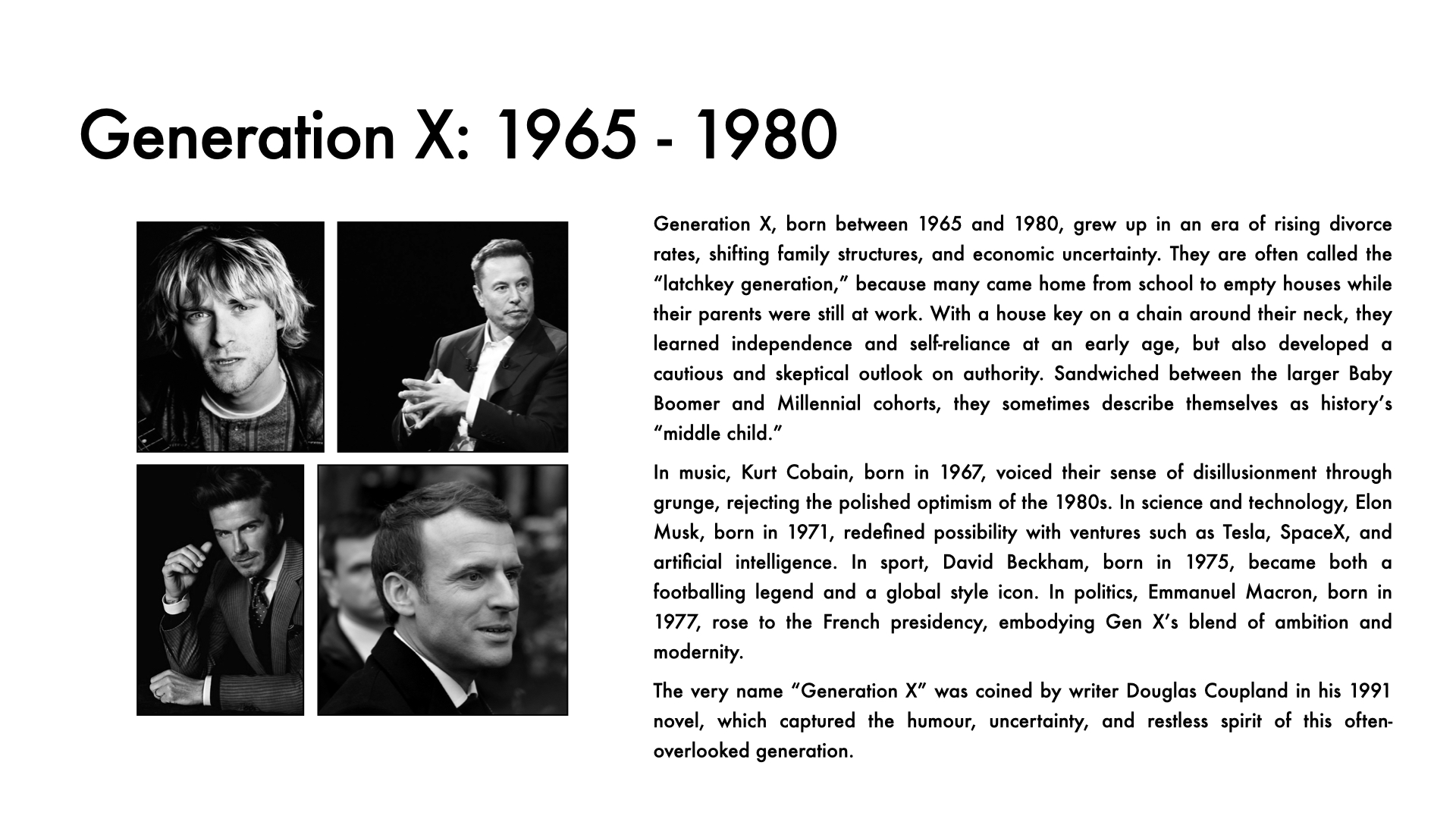
Generation X, born 1965 to 1980, grew up as independent “latchkey kids.” They found expression through raw cultural movements. In Seattle, grunge gave voice to disillusionment, with bands like Nirvana rejecting consumerism. In Britain, rave culture transformed warehouses and clubs into spaces of freedom, unity, and dance. And globally, hip hop became the soundtrack of Gen X, combining rap, graffiti, and breakdancing into a lifestyle of identity and resistance.
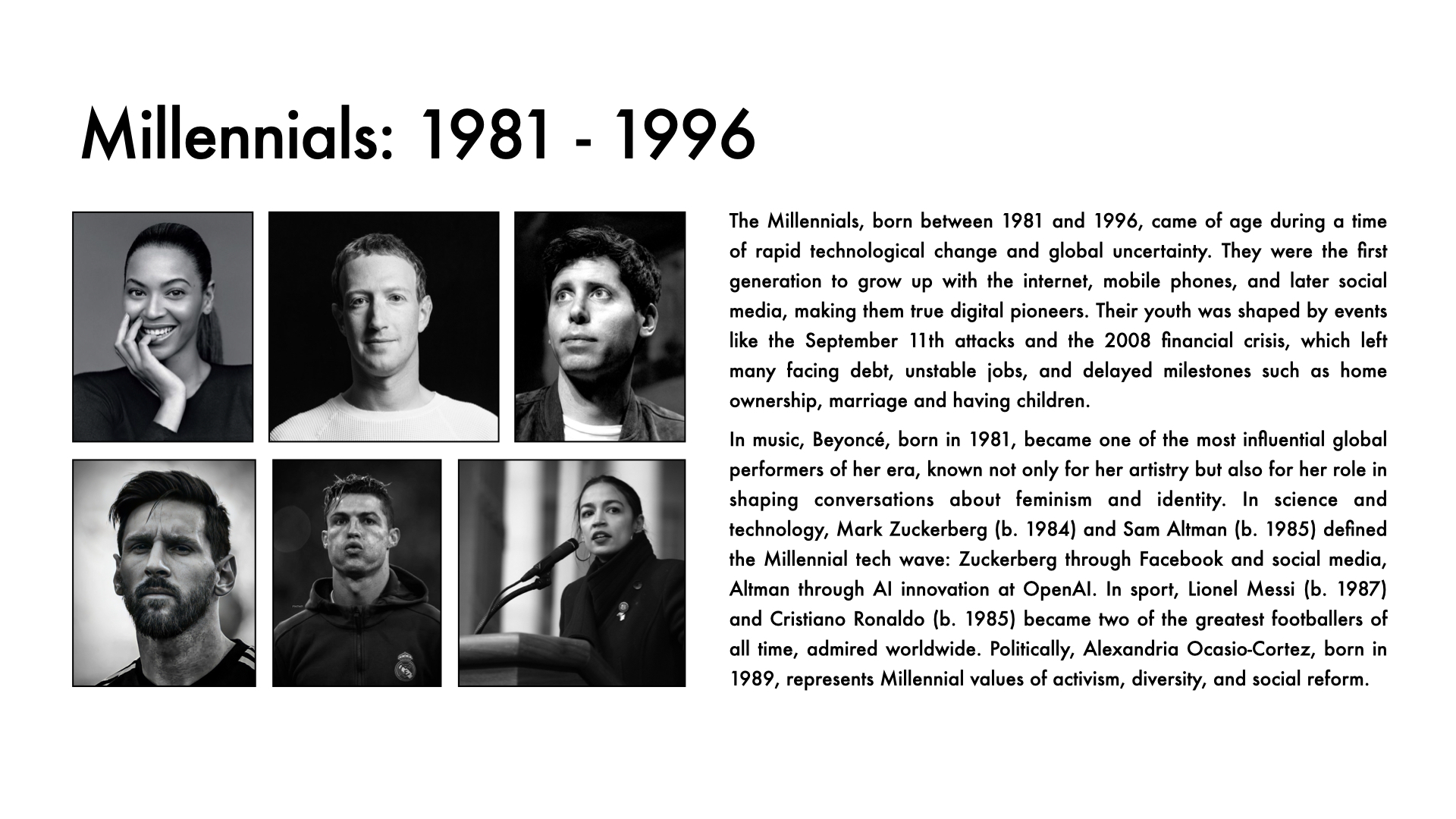
Millennials, or Generation Y, were born between 1981 and 1996. Digital pioneers, they bridged the transition from dial-up internet to smartphones and social media. Shaped by September Eleventh and the financial crisis of 2008, they face debt and delayed milestones, yet they are known for diversity, collaboration, and online creativity.
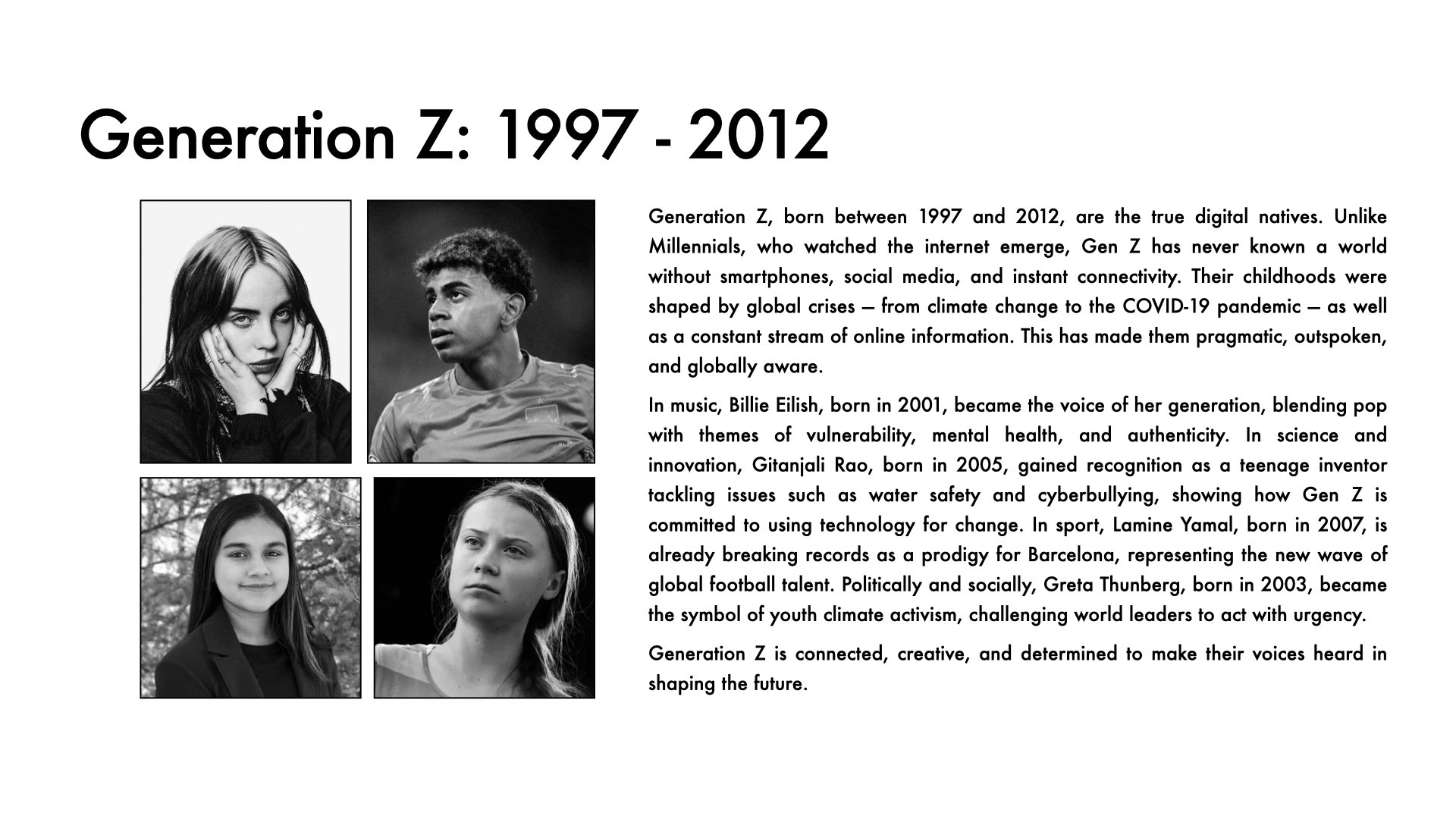
Generation Z, born 1997 to 2012, are true digital natives. Their lives revolve around smartphones, TikTok, and meme culture. They are pragmatic, globally aware, and deeply engaged with issues like climate change and racial justice.
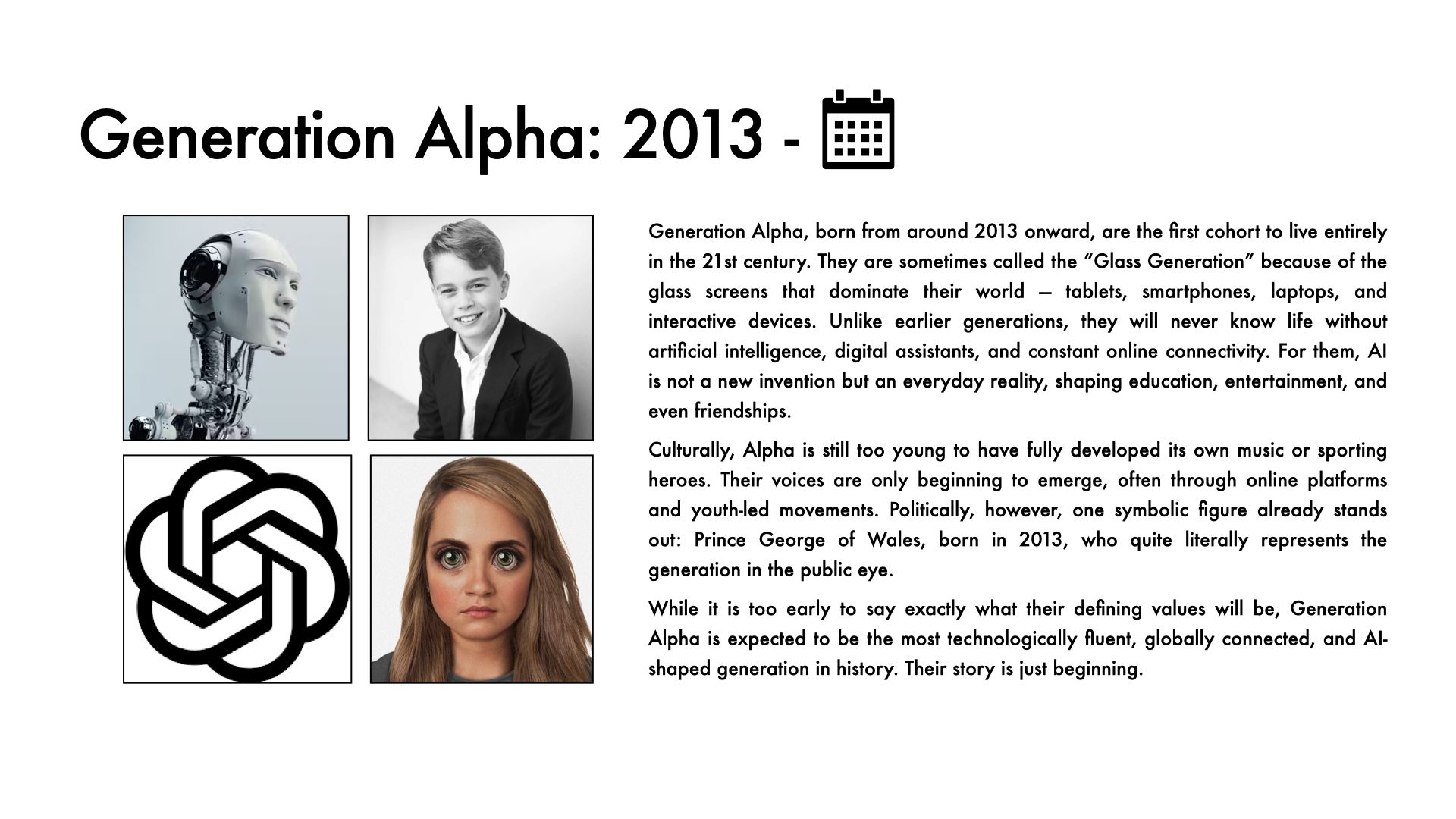
Finally, Generation Alpha, born from 2013 onward, are the children of Millennials. Growing up with AI, tablets, and streaming platforms, they are sometimes called the “Glass Generation.” Their full character is still taking shape, but they are expected to be the most connected and technologically fluent generation in history.
📽️ Slideshow
📺 Video
🔑 Key Vocabulary
- Avocado toast – A modern food trend often used as a symbol of Millennial spending habits.
- Baby Boom – The sharp rise in birth rates after World War II (1946–1964).
- Counterculture – A social movement that rejects mainstream values, such as the hippies in the 1960s.
- Disillusionment – A feeling of disappointment after discovering something is not as good as expected.
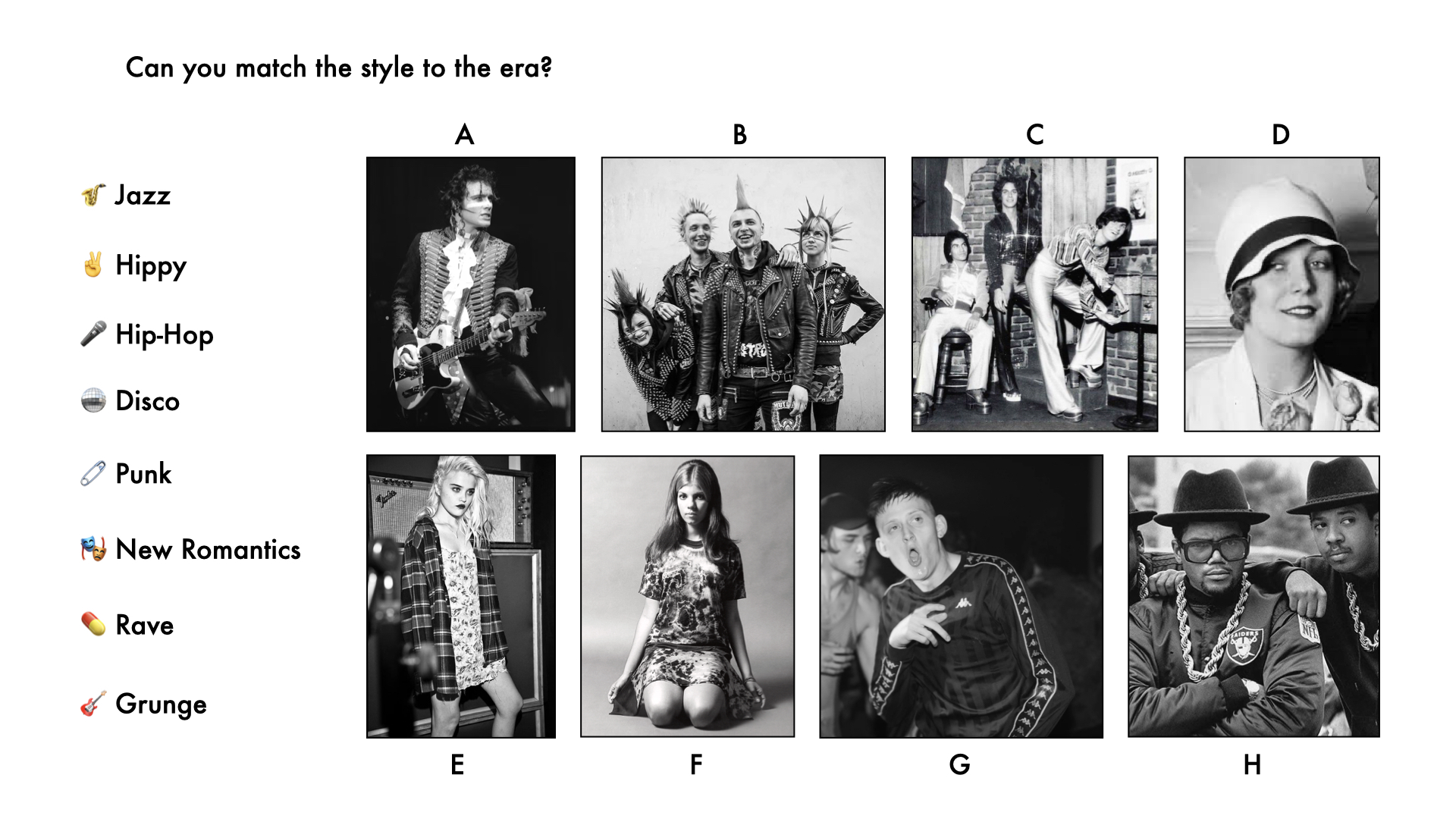
- Flapper – A fashionable young woman of the 1920s known for bold behaviour and style.
- Generational divide – Differences in attitudes or opportunities between younger and older generations.
- Glass Generation – A term for Generation Alpha, surrounded by glass screens like smartphones and tablets.
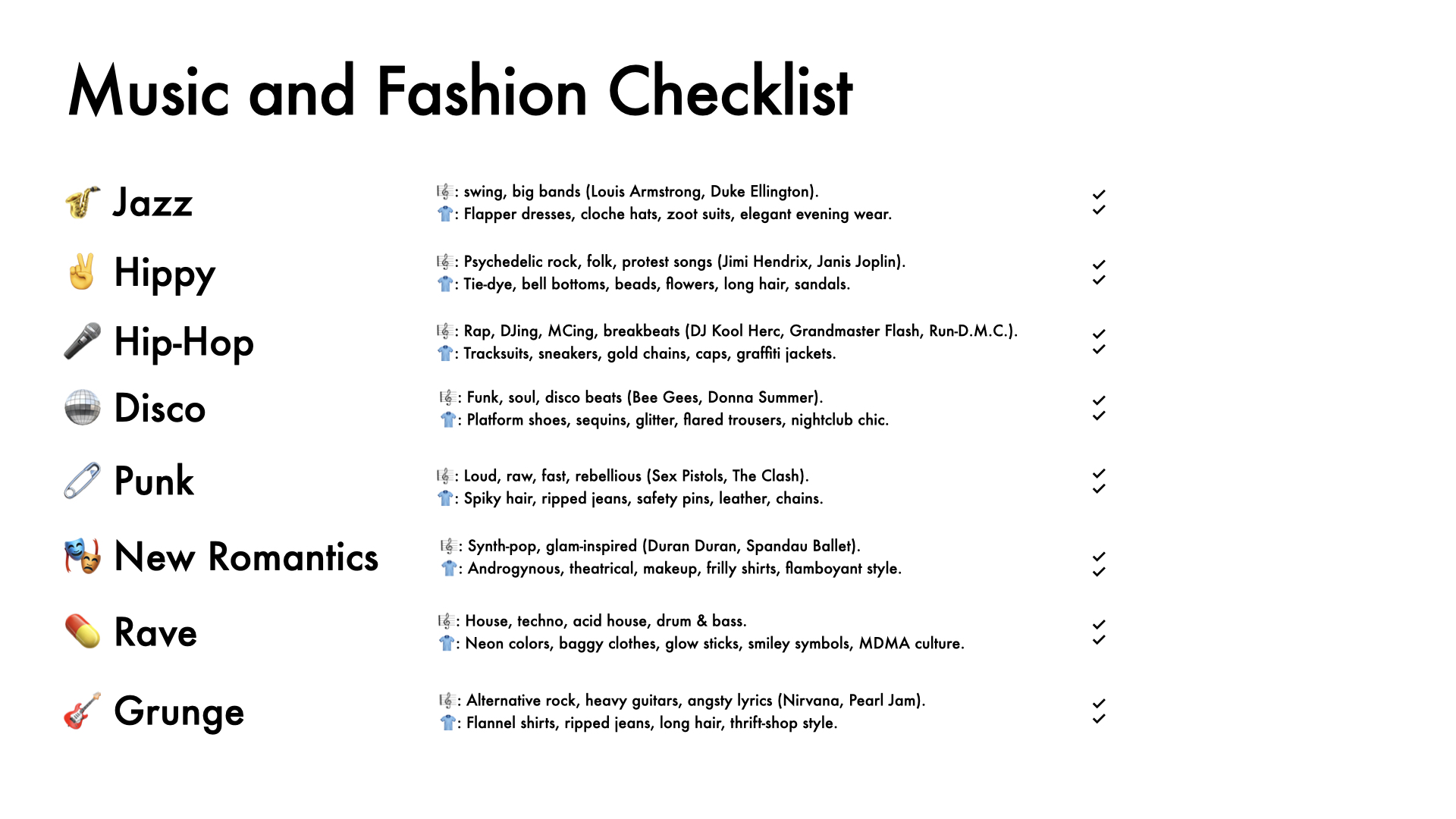
- Grunge – A 1990s music and fashion movement with heavy guitar sounds and thrift-shop style.
- Hip hop – A cultural movement from the 1970s combining rap, DJing, graffiti, and breakdancing.
- Hippie – A member of the 1960s counterculture, known for peace protests, long hair, and colourful clothes.
- Latchkey kid – A child who returns from school to an empty home because parents are at work.
- Meme – A cultural idea or joke spread online, often using images and text.
- New Romantics – An early 1980s music and fashion movement with flamboyant, theatrical style.
- Punk – A late 1970s music and fashion subculture, known for loud, rebellious songs and ripped clothing.
- Ragtime – A lively piano style popular in the early 1900s, a forerunner of jazz.
- Rave culture – A late 1980s–90s movement centred on electronic music, dance clubs, and MDMA use.
- Silent Generation – People born between 1928 and 1945, often seen as cautious and traditional.
- Subculture – A smaller cultural group within society, with its own music, fashion, and values.
- Wealth gap – The unequal distribution of assets and income between different groups.
- Zoot suit – A flamboyant style of suit from the 1930s–40s, with wide shoulders and baggy trousers.
💬 Conversation Questions
- Which generation do you belong to, and do you feel the description of your generation is accurate?
- Do you think generational labels (Boomers, Gen X, Millennials, etc.) are useful or just stereotypes?
- What are the biggest differences you notice between your generation and your parents’ generation?
- How has technology shaped the identity of younger generations like Gen Z and Alpha?
- Do you think housing and property ownership are a fair source of tension between Boomers and Millennials?
- Which cultural style (hippies, punk, disco, hip hop, rave, grunge, New Romantics, jazz) do you find most interesting, and why?
- If you could live in one cultural era, which would you choose — and would you fit in?
- Do you think today’s youth culture has the same power to shock society as punk or hippies once did?
- How do fashion and music reflect the values of a generation?
- Can memes like “OK Boomer” really capture generational conflict, or do they oversimplify it?
- What role do sport and celebrity figures play in defining a generation’s identity?
- Which generation do you think has had the most influence on global culture?
- How do you think Generation Alpha will be remembered in the future?
- Do you feel closer culturally to people of your generation in other countries, or to older/younger people in your own country?
- What fashion trend from the past would you bring back, and why?