Week 0️⃣ 6️⃣
Candles
🔊 Audio
📜 Show transcript
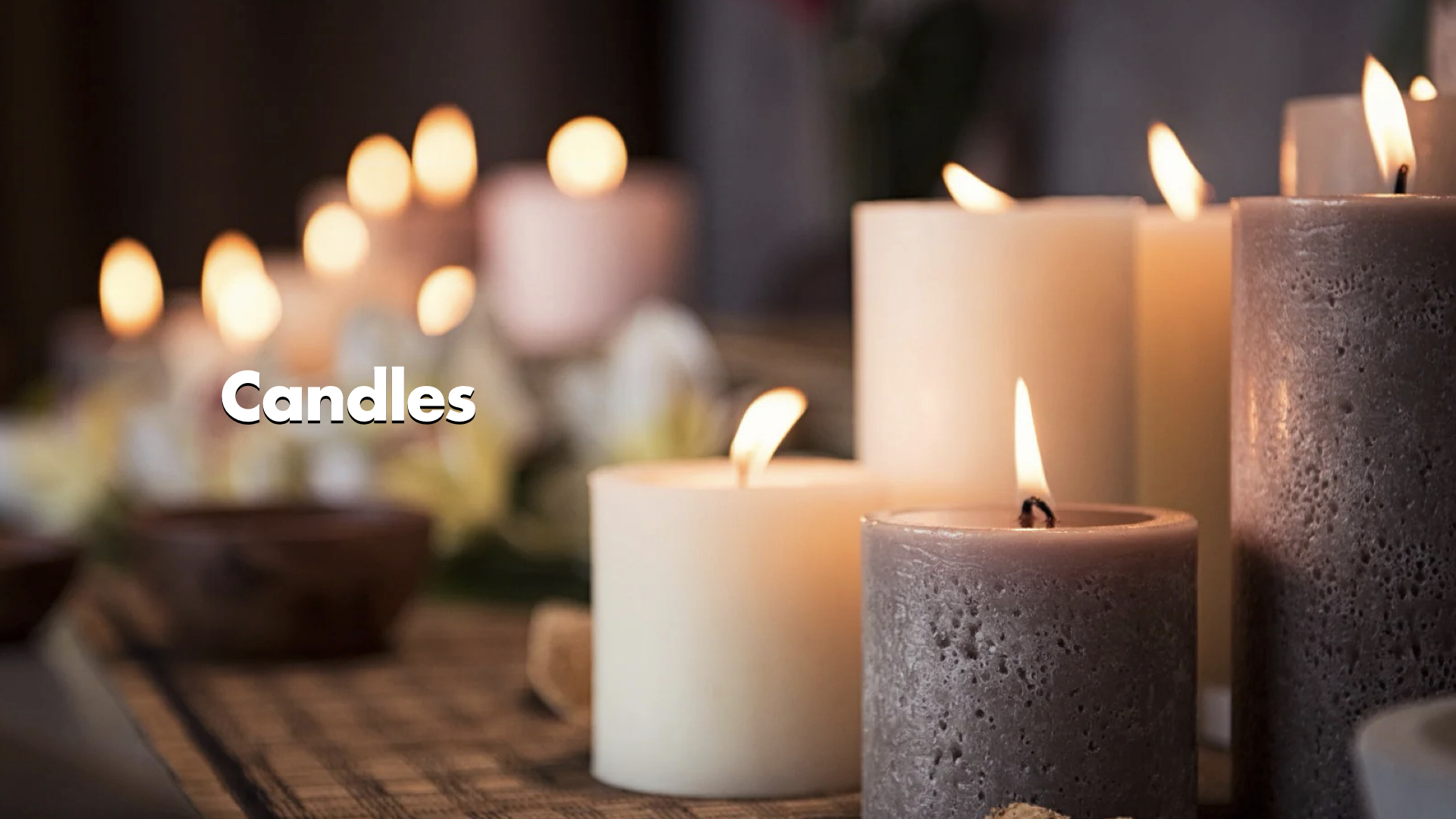
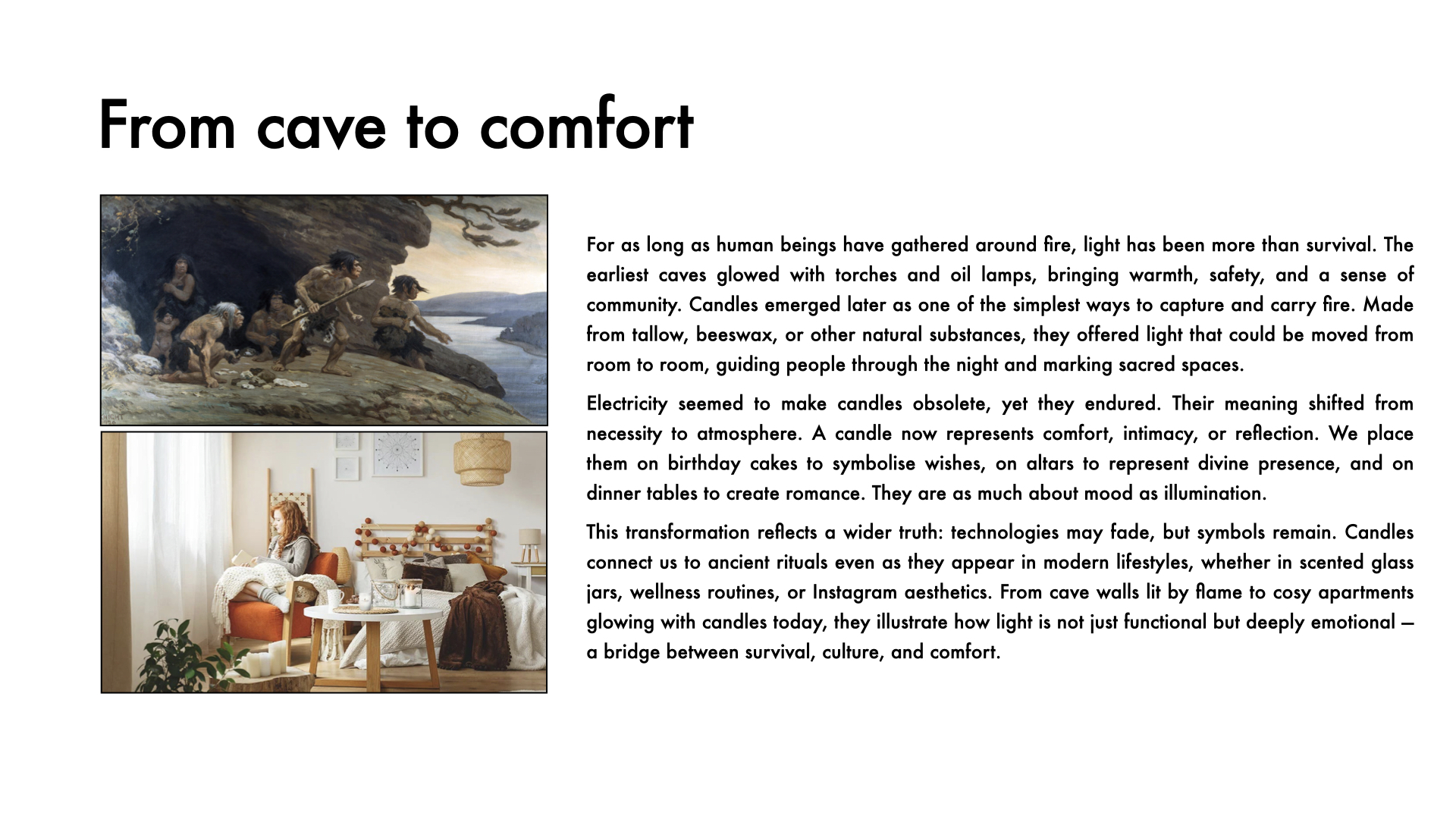
Candles were once essential sources of light, carried from room to room as portable fire. Electricity made them unnecessary, yet the global candle market now exceeds ten billion dollars a year. Their survival reflects a shift from function to emotion: candles are used to create atmosphere, for relaxation, and as symbols in ritual.
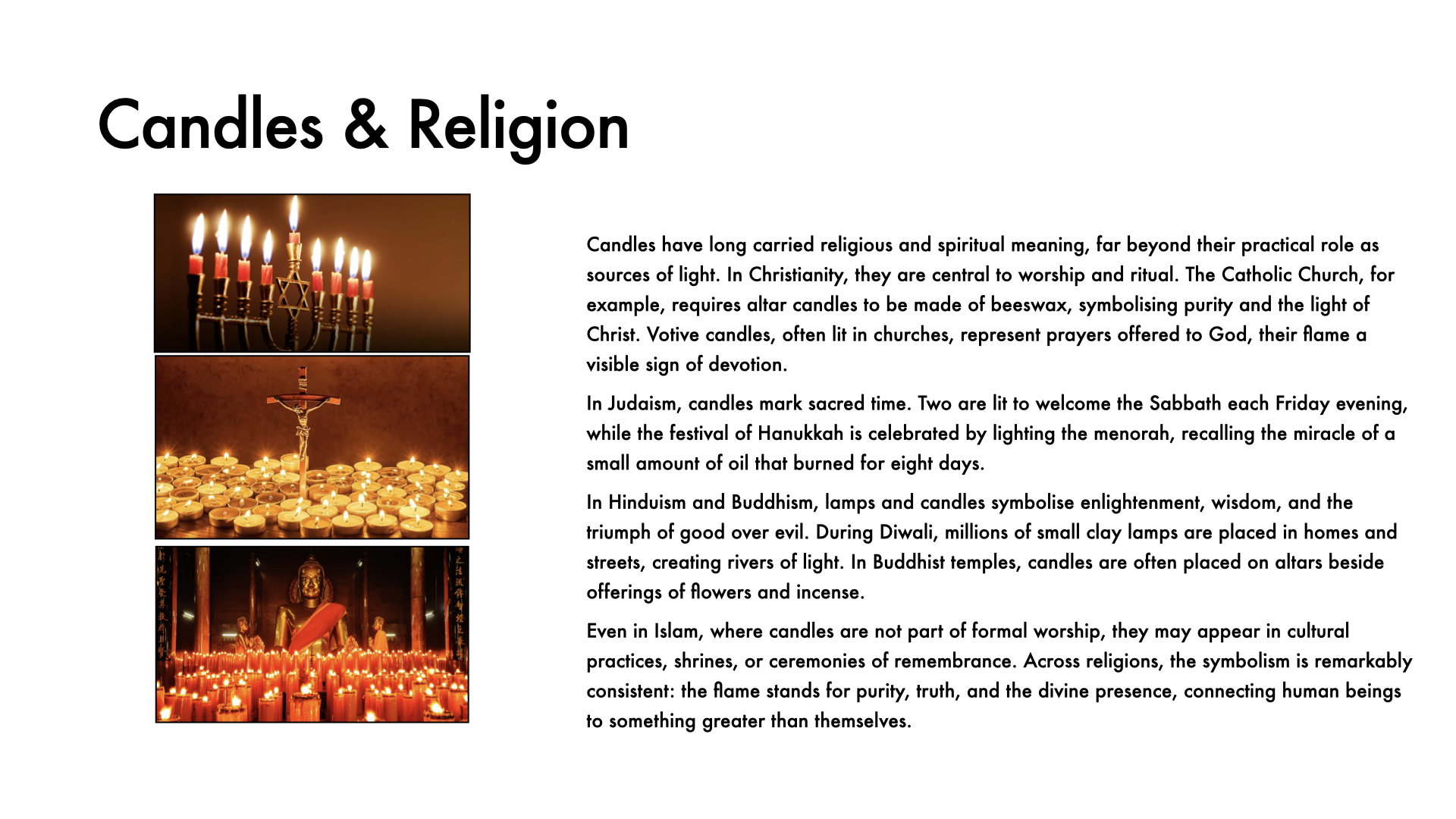
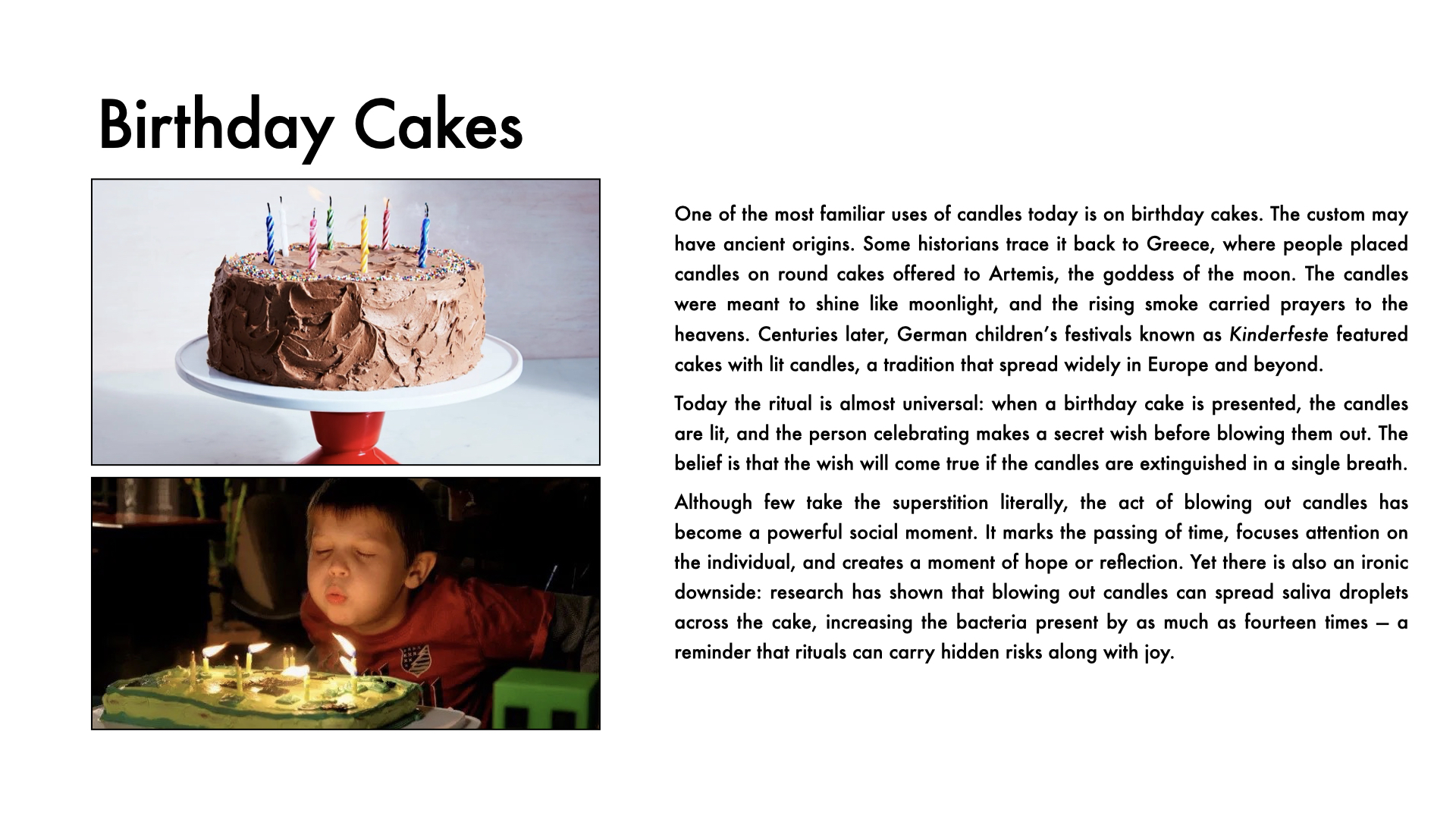
Birthday candles may trace back to ancient Greece, where offerings with flames and smoke were believed to send wishes to the gods. In religion they remain central. Catholics insist on beeswax candles at the altar as a symbol of purity and divine light. Jews light Shabbat and Hanukkah candles, and Hindus and Buddhists use lamps in festivals and temple rituals.
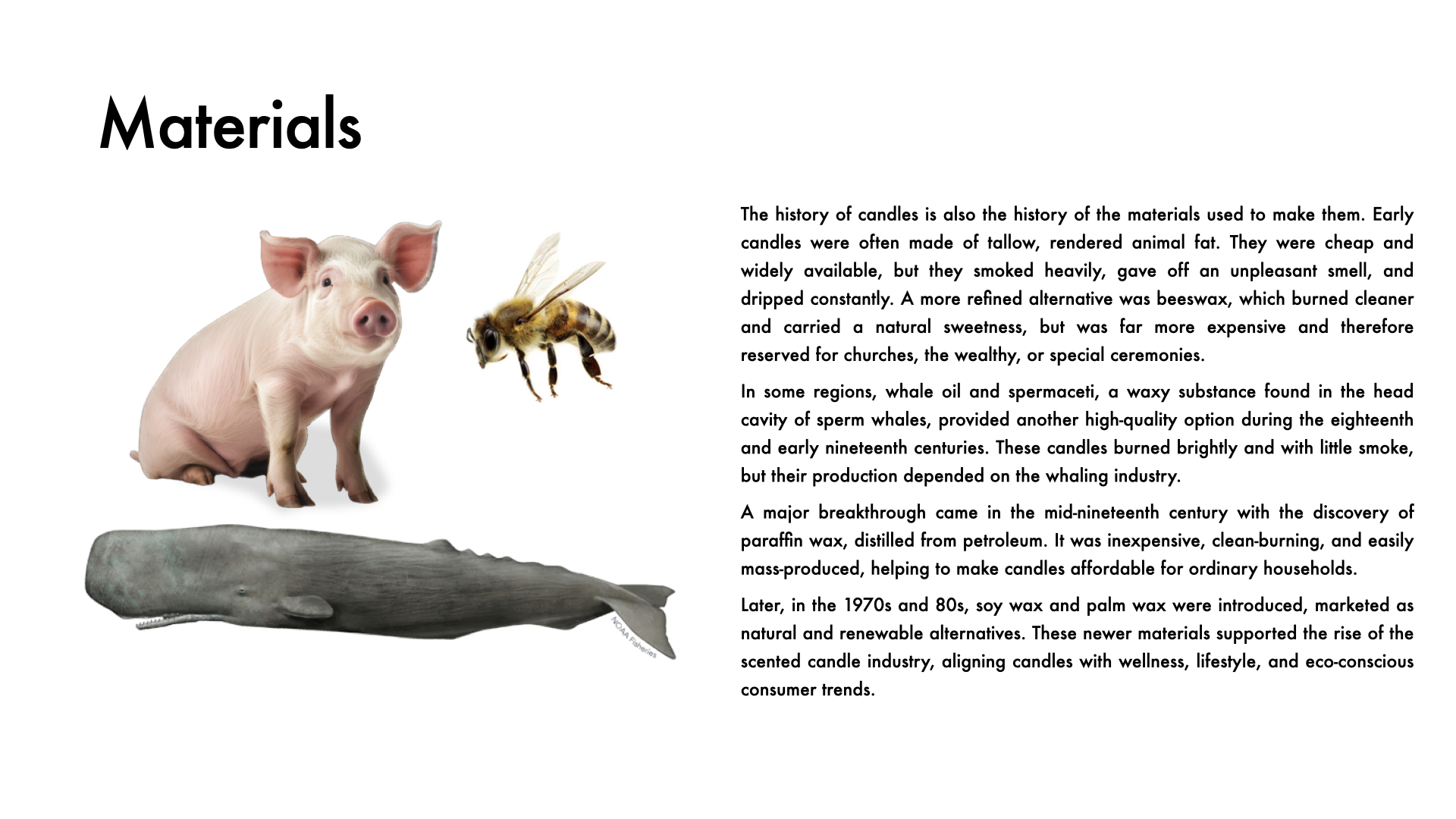
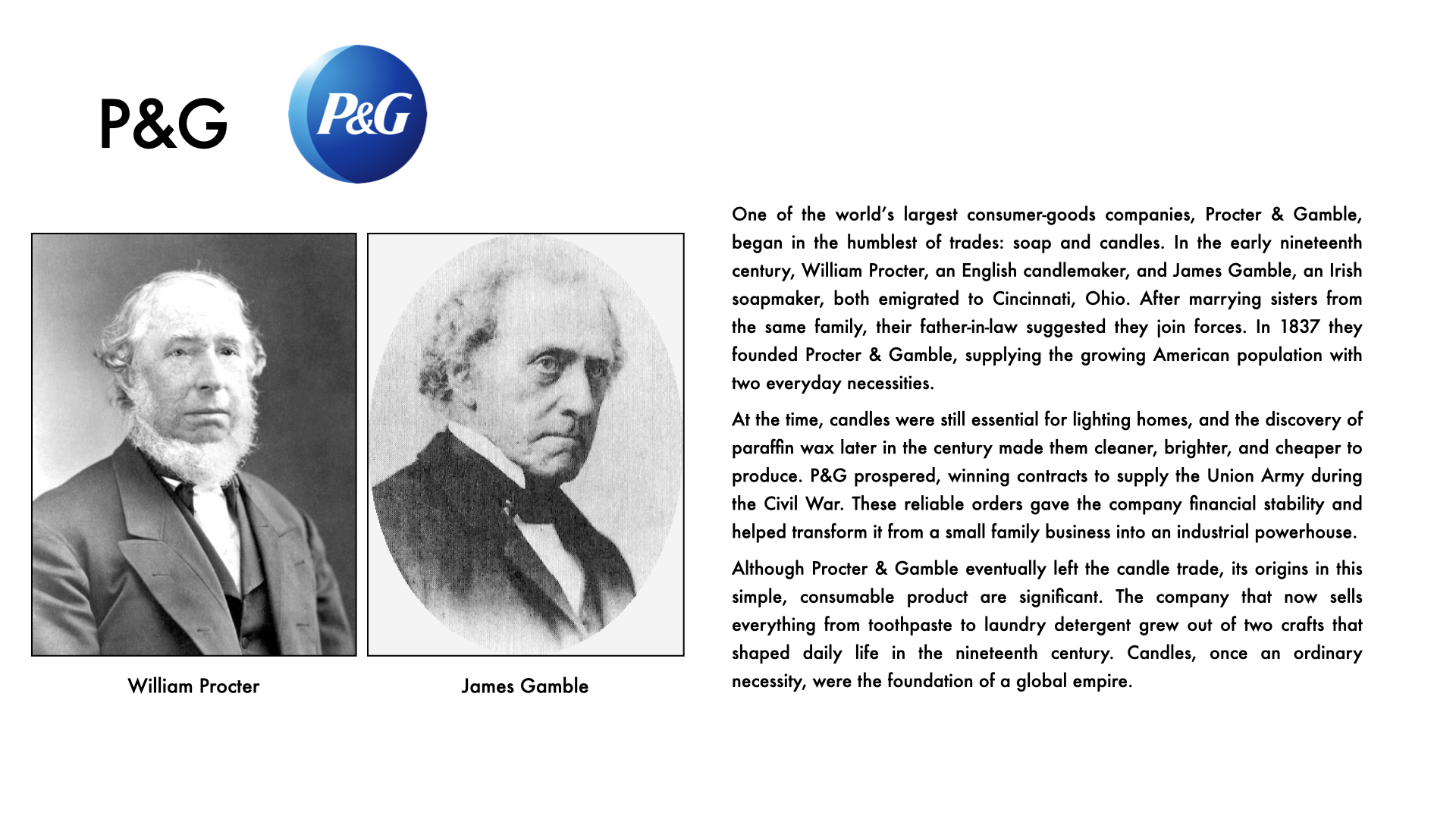
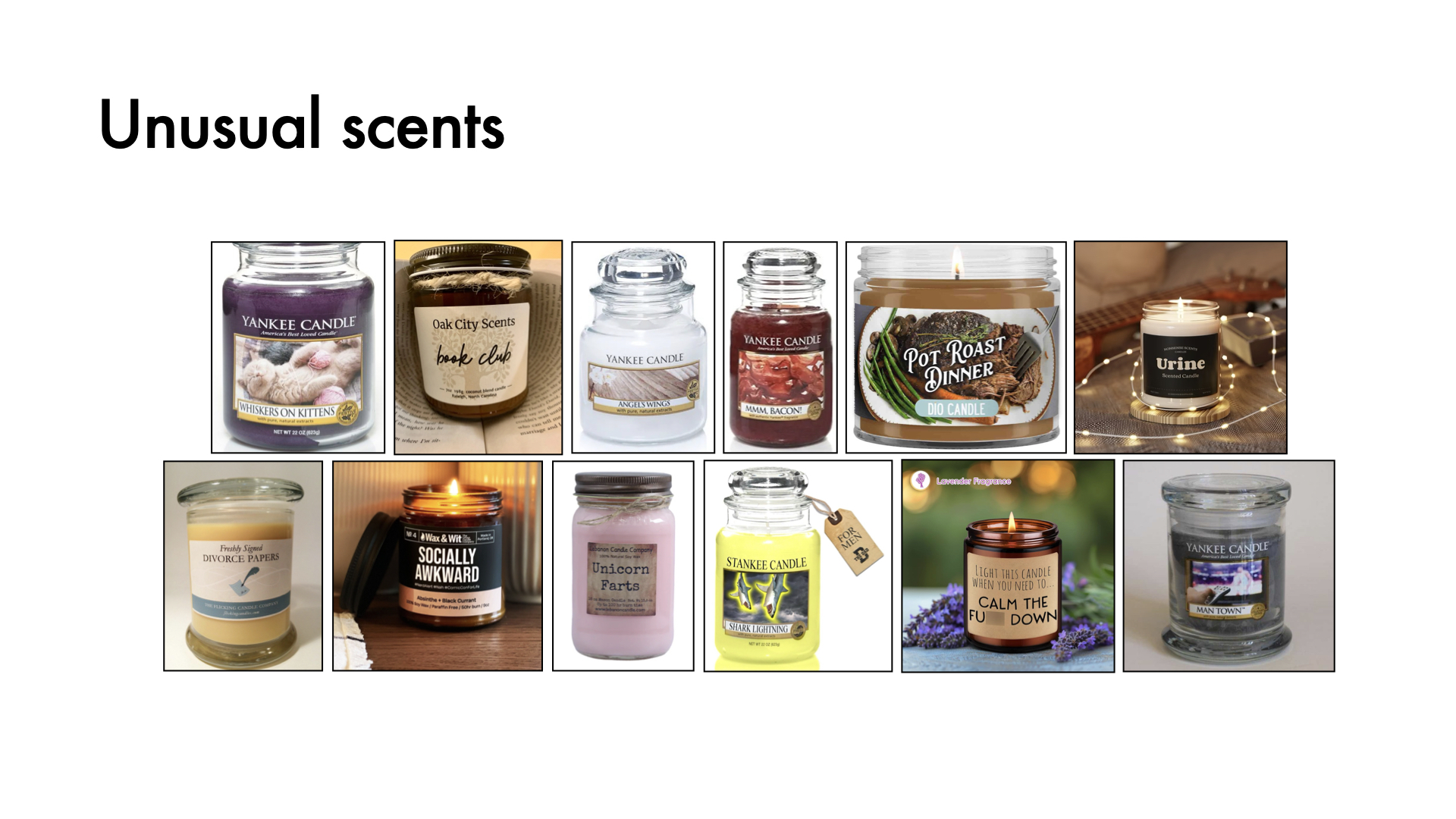
Industry shaped their story too. The discovery of paraffin wax in the nineteenth century made candles cheap and mass-produced. Procter and Gamble, founded by a candlemaker and a soapmaker, built part of its early success on paraffin candles before expanding into global consumer goods. Later, soy and palm wax were promoted as natural alternatives, and scented candles exploded in popularity during the late twentieth century. Today the industry offers thousands of fragrances, sold not as necessities but as lifestyle experiences.
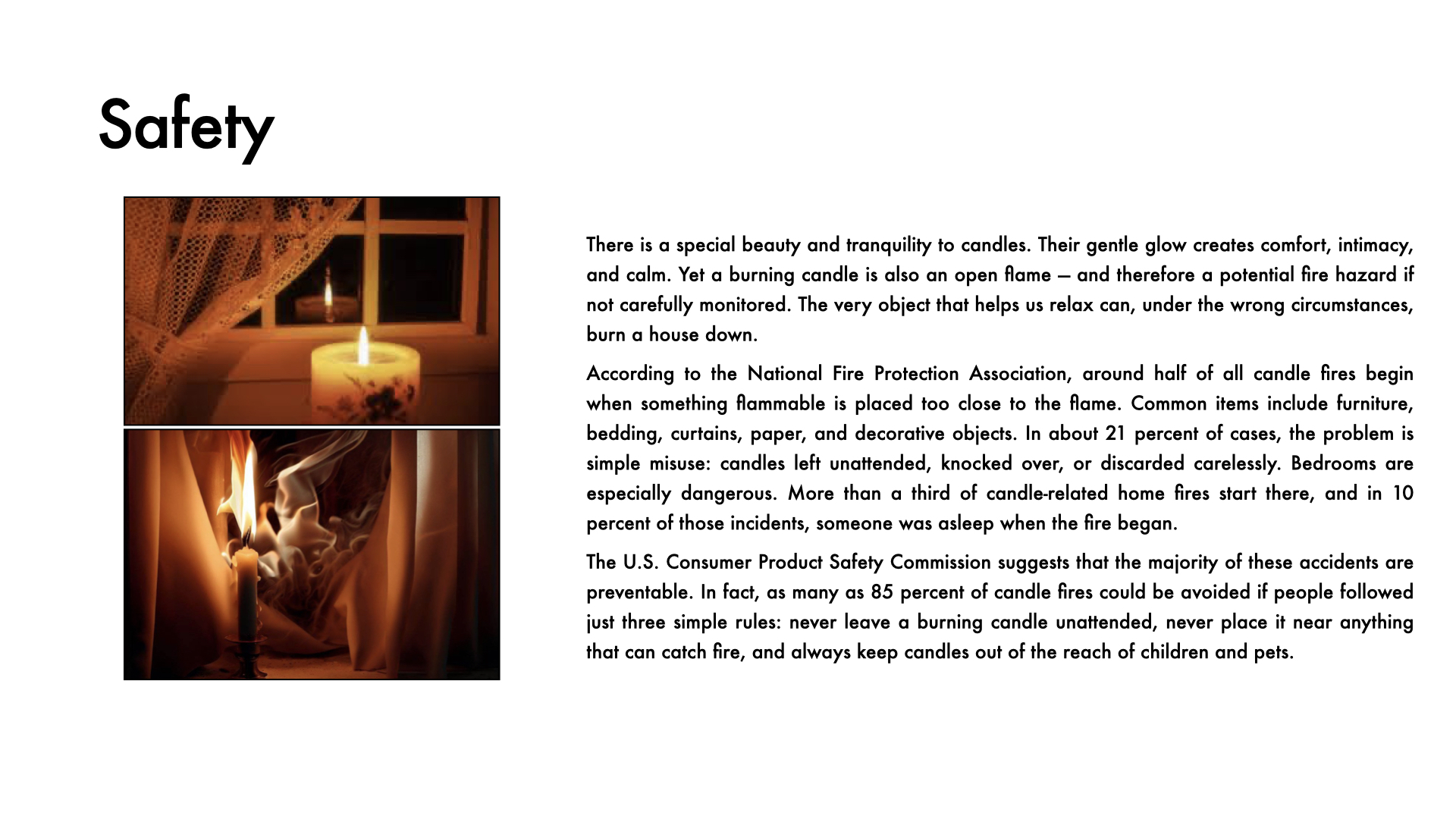
Candles also embody risk. Despite safety instructions to keep them in sight and away from children or curtains, the United States registers around six thousand candle-related fires and more than seventy deaths each year. Comfort and danger coexist in a single object.
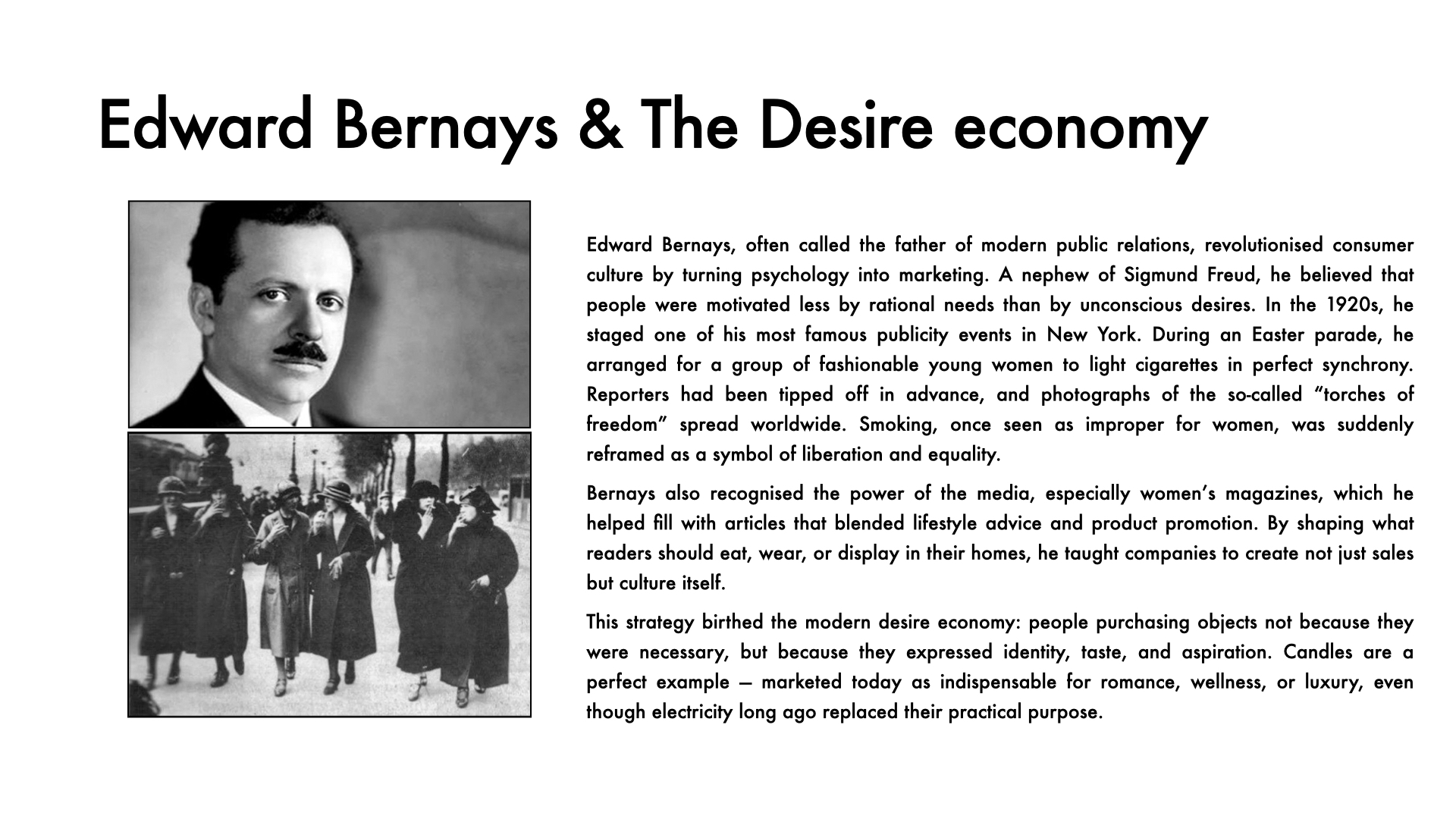
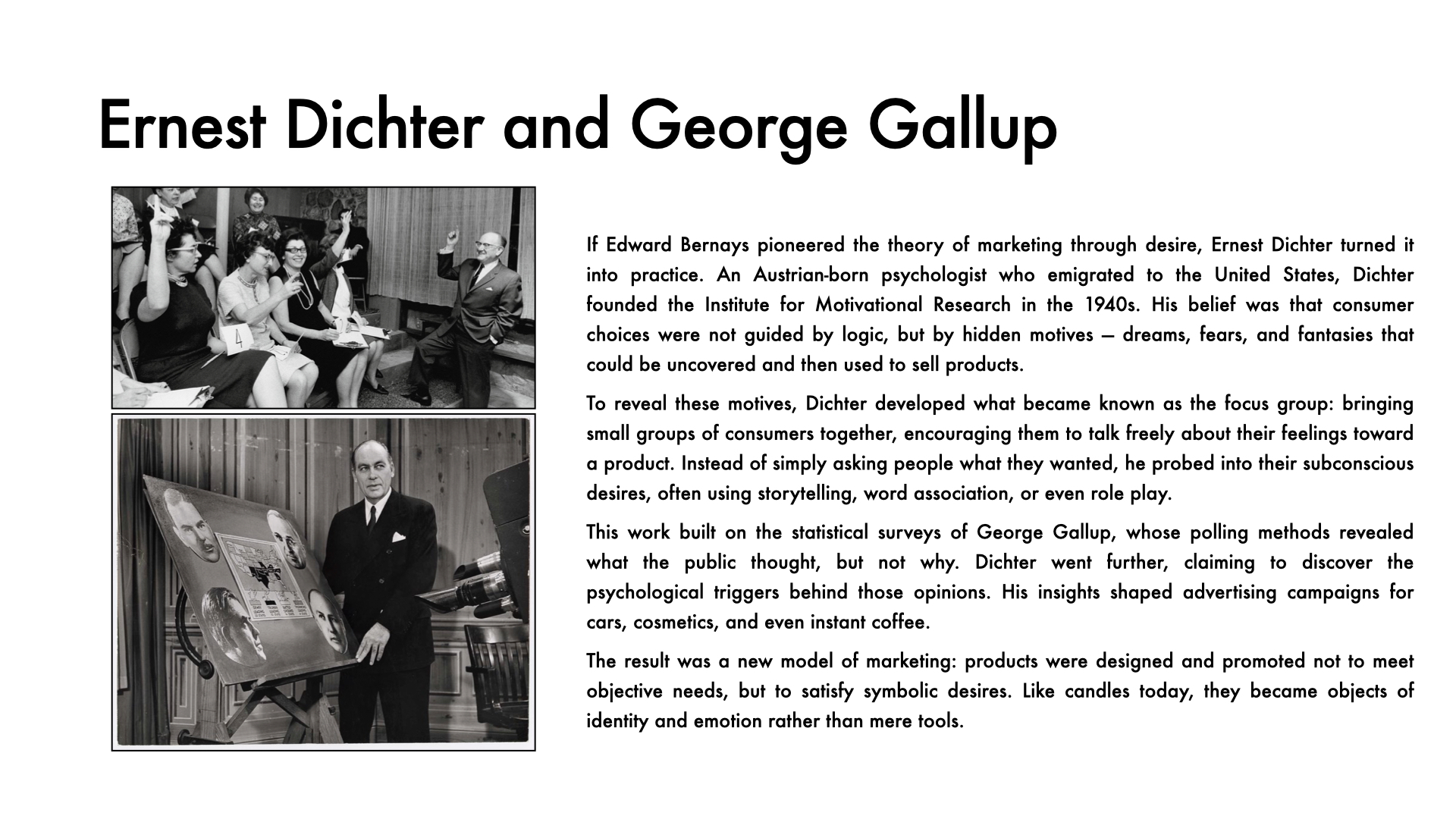
Their rapid consumption makes them a perfect example of what scholars call the “desire economy.” Edward Bernays, nephew of Sigmund Freud and the father of modern public relations, taught companies to sell not on need but on unconscious desire. Candles illustrate this perfectly: they burn away quickly, creating constant demand, while advertising links them to intimacy, self-care, and identity. Influencers such as “Sir Candleman” review scents online, extending this economy of desire into social media.
Candles therefore belong to the same category as paper books, wristwatches, or diaries: technologies made obsolete but still treasured. They illuminate how tradition, industry, psychology, and consumerism interact, and why objects we no longer need can remain irresistible.
📽️ Slideshow
📺 Video
🔑 Key Vocabulary
- Aesthetic – Concerned with beauty, style, or artistic value.
- Atmosphere – The mood or feeling created by a place, event, or object.
- Beeswax – A natural wax made by bees, used for candles and other products.
- Commodity – A basic product that can be bought, sold, or traded in large amounts.
- Consumerism – The practice of buying and using goods in large quantities, often linked to identity or lifestyle.
- Desire Economy – An economic system where people buy things based on wants and emotions, not just needs.
- Enlightenment – A state of wisdom or understanding; often used in religious or spiritual contexts.
- Flammable – Easily set on fire and able to burn quickly.
- Fragrance – A pleasant smell, often added to candles, perfumes, or cleaning products.
- Influencer – A person on social media who shapes opinions and encourages people to buy products.
- Lifestyle Product – An item marketed not for necessity but for identity, comfort, or self-expression.
- Obsolete – Out of date or no longer needed because something newer exists.
- Paraffin – A wax made from petroleum, widely used for cheap, clean-burning candles.
- Purity – The state of being clean, innocent, or free from corruption; often symbolic in religion.
- Ritual – A formal or repeated action with symbolic meaning, often religious or cultural.
- Self-care – Activities people do to relax, heal, and improve their well-being.
- Symbolism – The use of objects, actions, or images to represent larger ideas or feelings.
- Tallow – A hard animal fat once used to make candles before modern waxes.
- Tradition – A custom or belief passed down through generations.
💬 Conversation Questions
- Do you enjoy using candles, and if so, what kinds are your favorite?
- When you think of candles, what moods, memories, or places come to mind?
- What role do candles play in celebrations or traditions you know?
- How do you feel about scented candles and the huge variety of fragrances available?
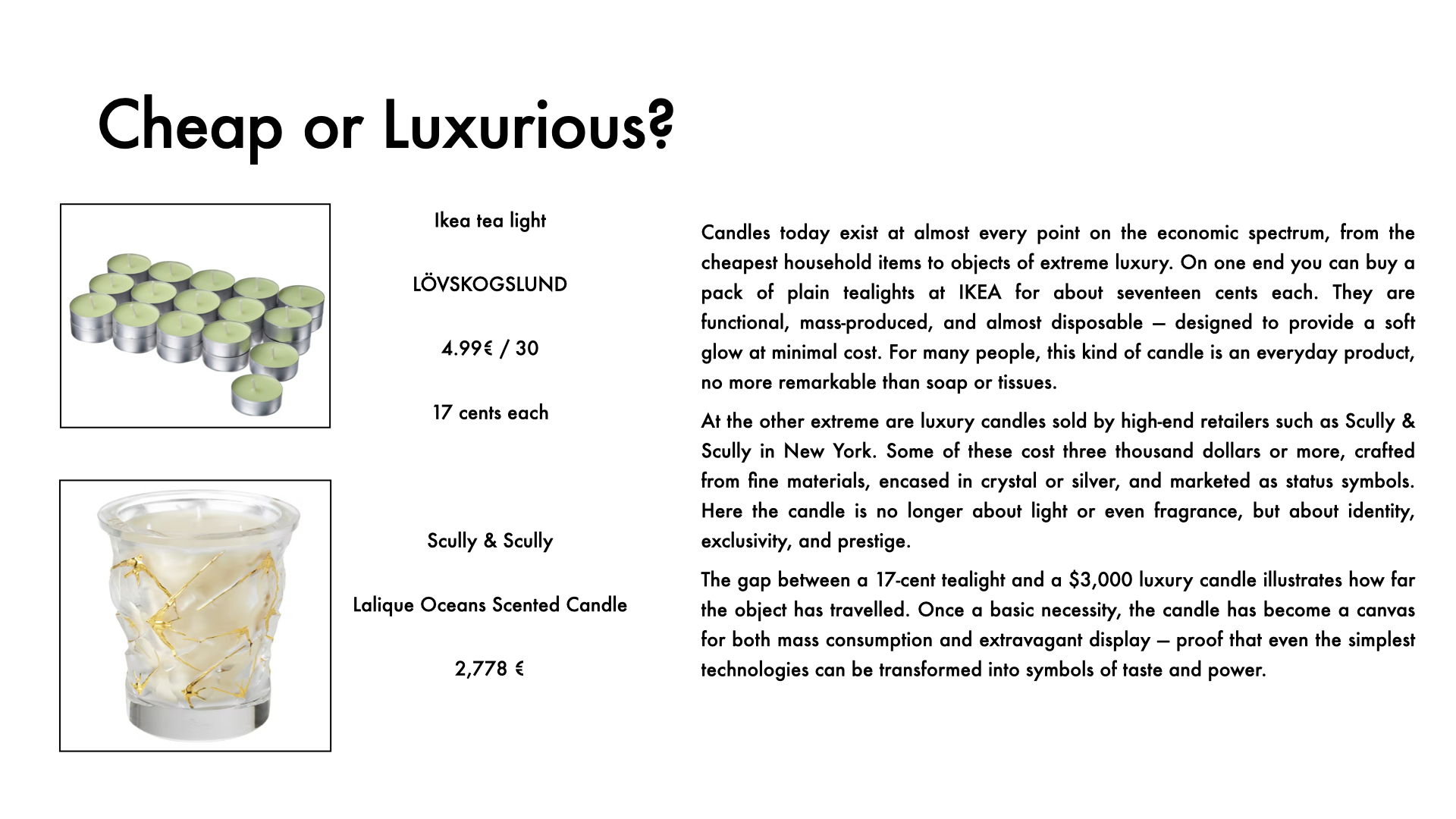
- Would you ever buy a very expensive candle? Why or why not?
- What risks do you associate with candles, and how do you balance those with their benefits?
- Why do you think candles are often connected with romance and relaxation?
- Do you prefer modern technology for atmosphere, like smart lights, or traditional candles? Why?
- How would you describe the difference between a candle as a tool and a candle as a symbol?
- In your opinion, will candles remain popular in the future, or eventually fade away?