Week 0️⃣ 3️⃣
Tropisms
🔊 Audio
📜 Show transcript
When we think about movement in nature, we usually picture animals. Plants, by contrast, seem still and rooted in place. Yet plants actually move in many fascinating ways — some slow and steady, others surprisingly quick.
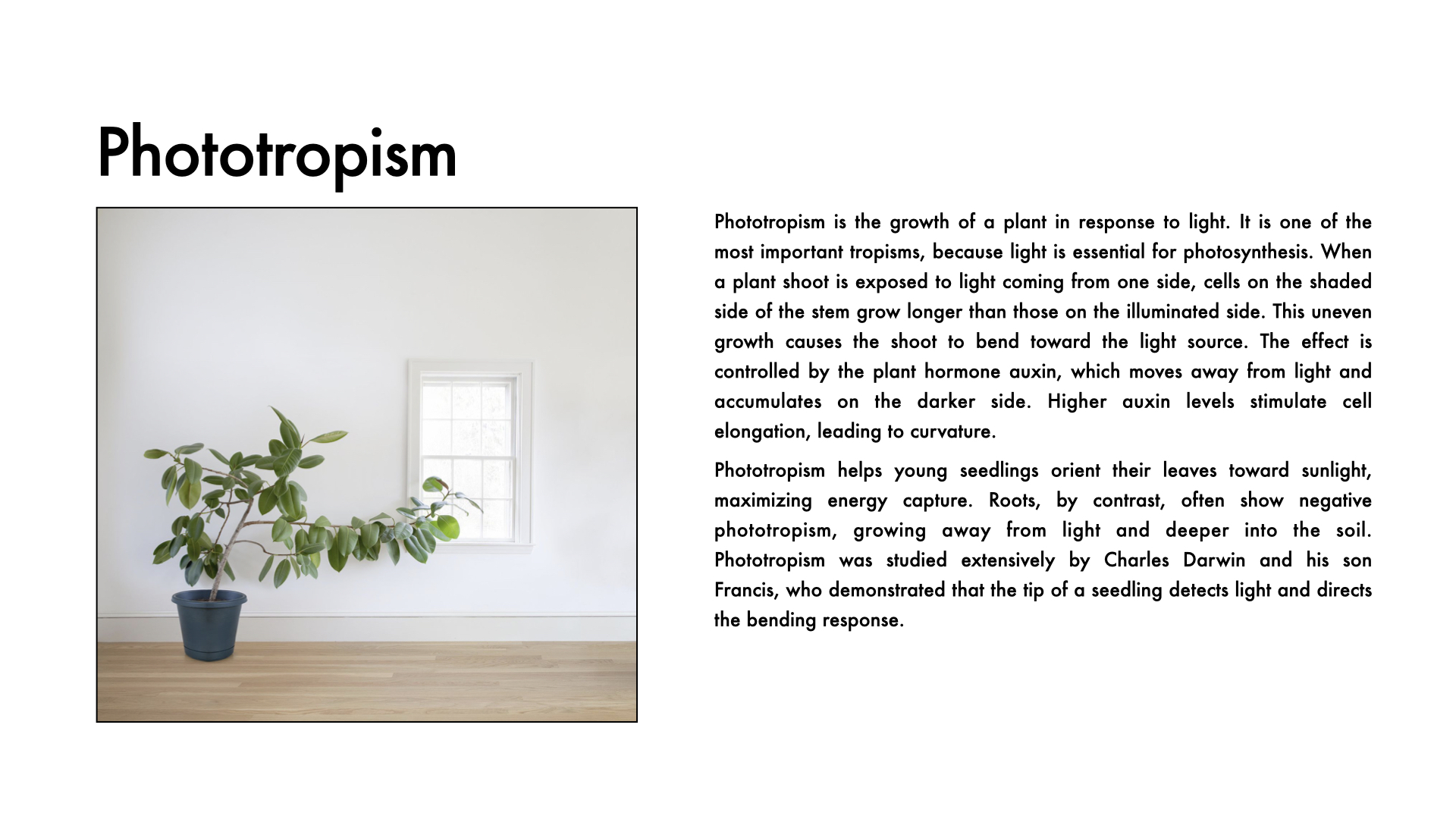
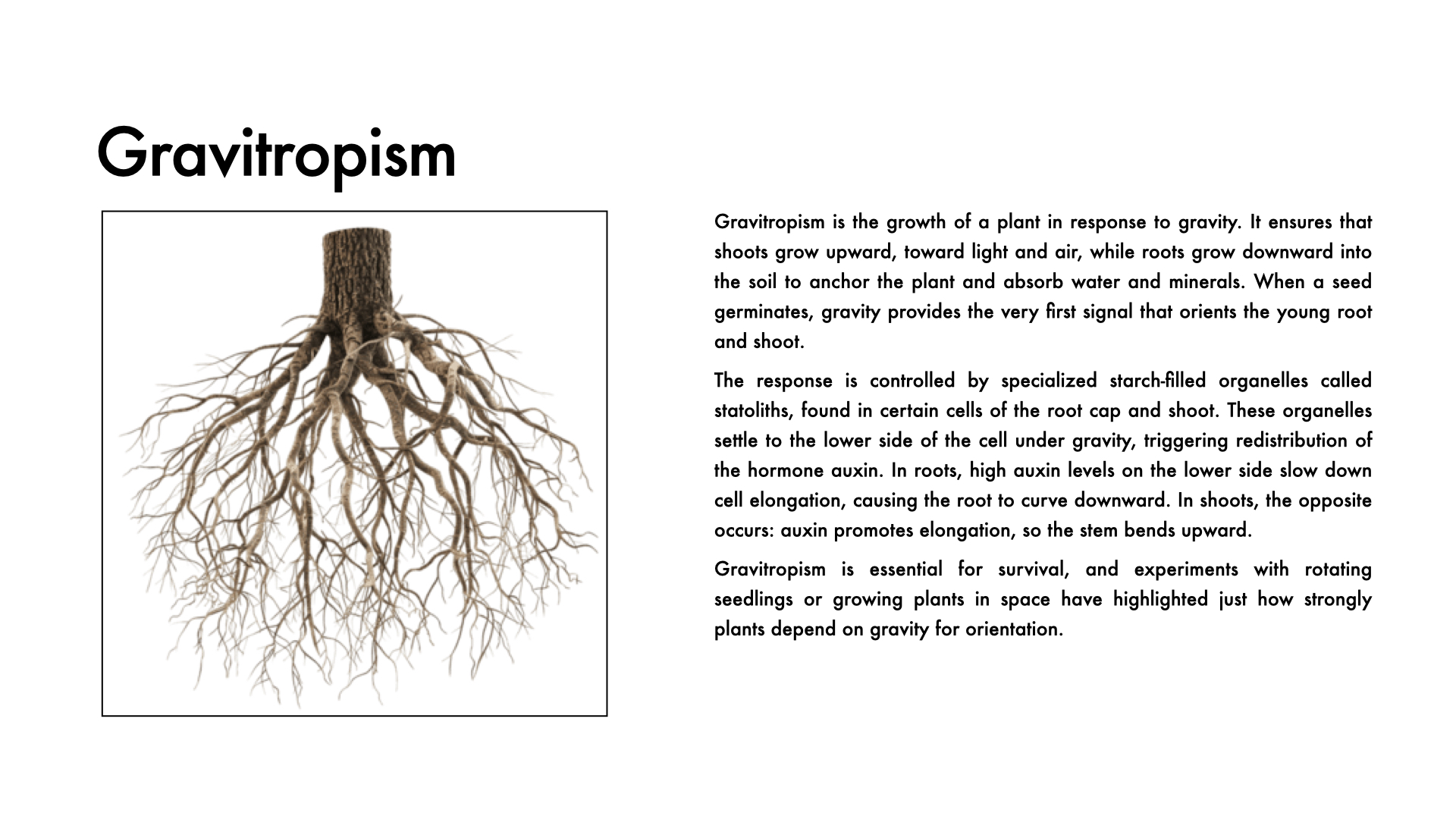
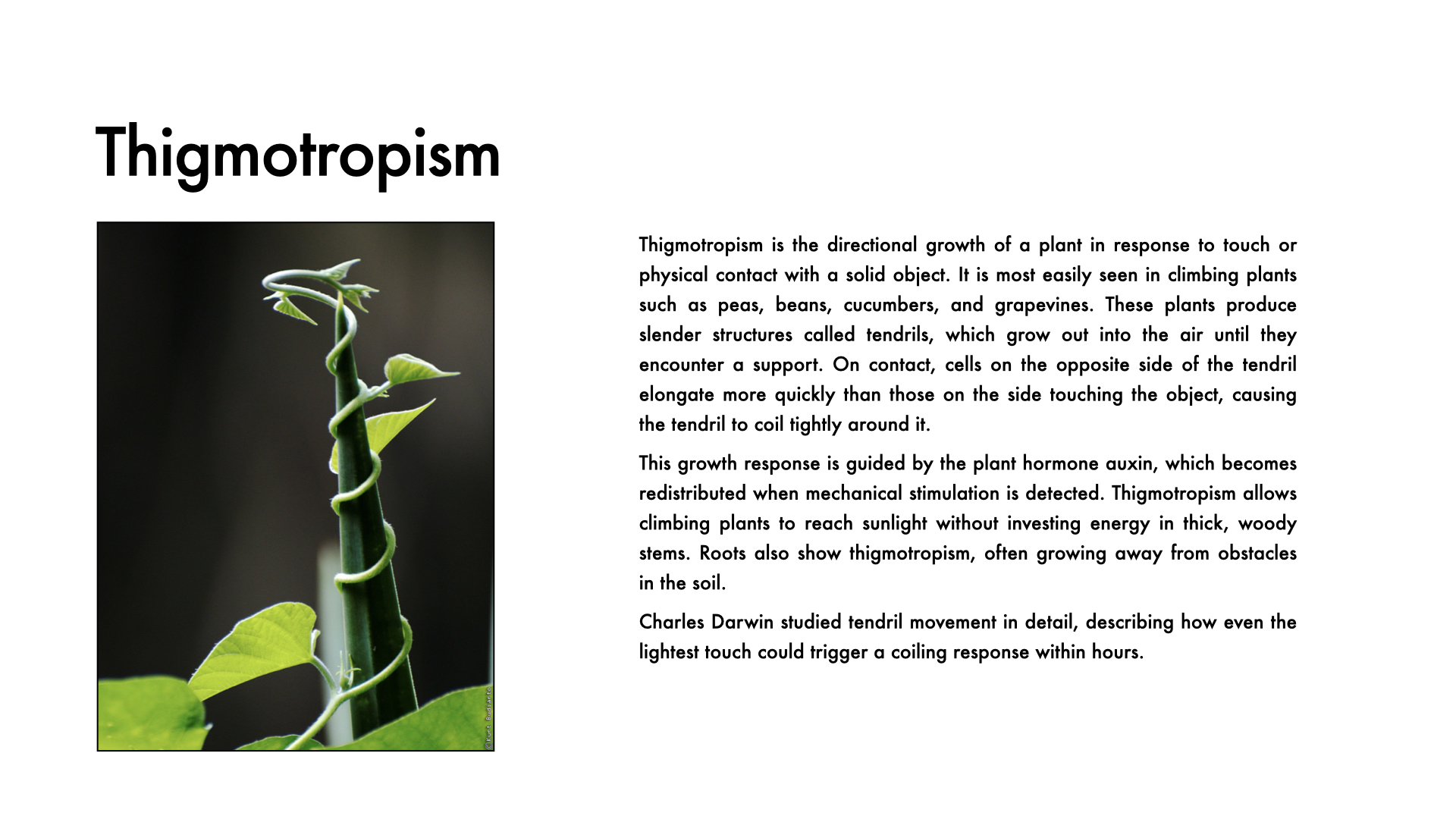
Some of these movements are based on growth, and they’re known as tropisms. In phototropism, for example, stems and leaves grow toward light so they can capture more energy for photosynthesis. In gravitropism, roots grow downward in response to gravity. And in thigmotropism, climbing plants like peas and grapevines wrap their tendrils around supports, reaching sunlight without having to build thick, heavy stems.
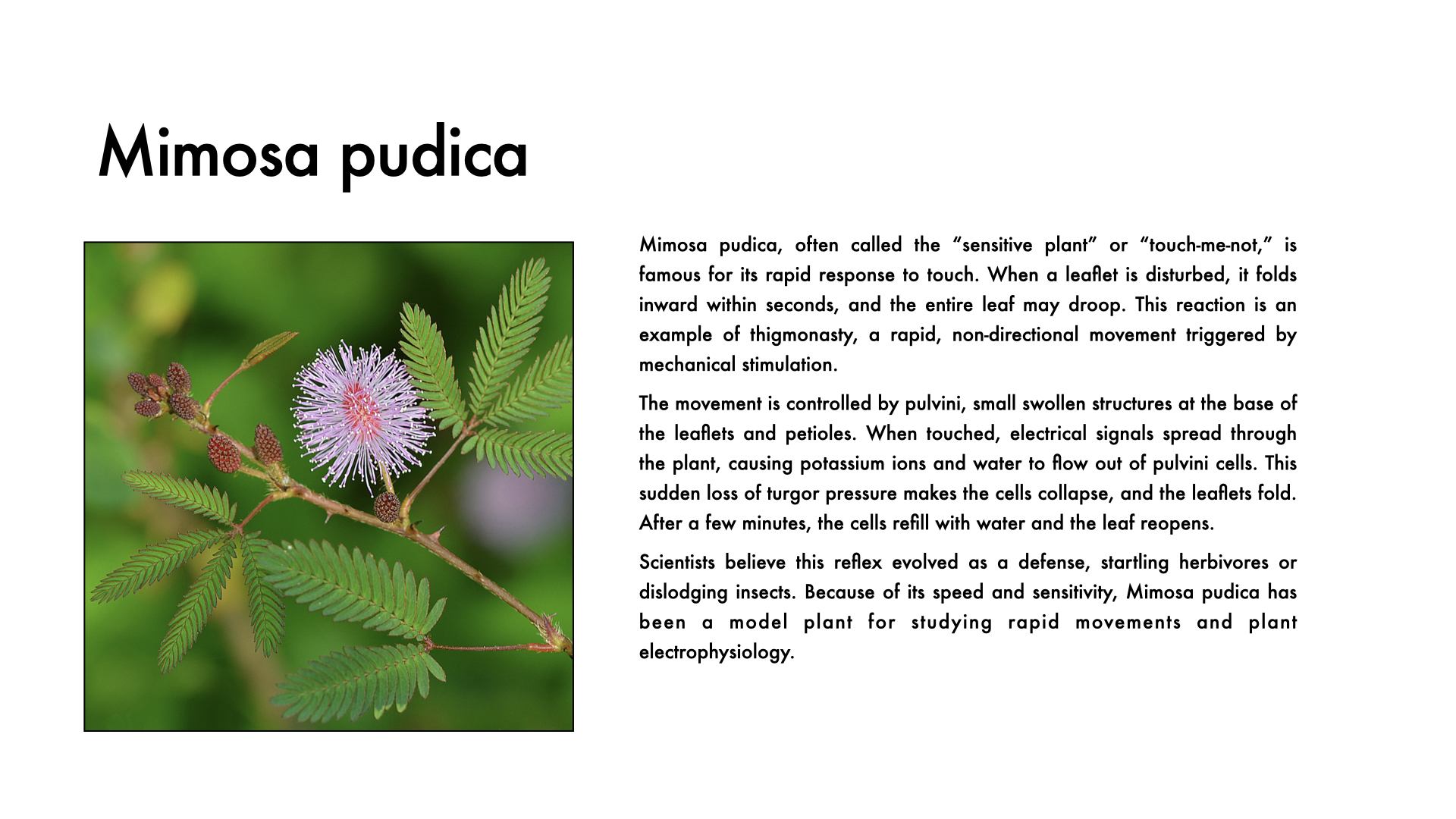
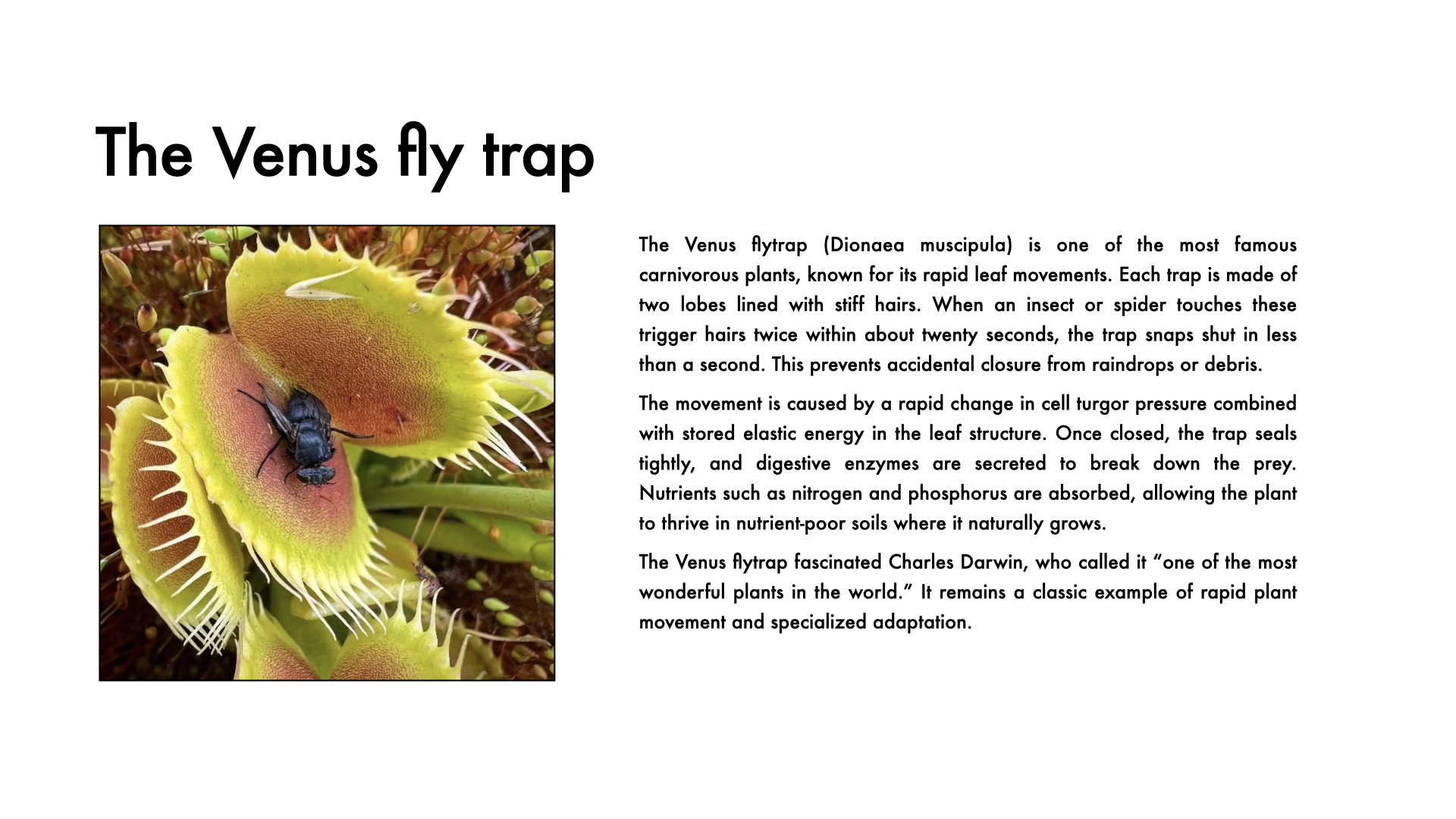
Other plant movements happen much faster. The sensitive plant, Mimosa pudica, folds its leaflets within seconds of being touched. The Venus flytrap closes its jaws on unsuspecting insects, and the sundew curls sticky tentacles around its prey. These quick reactions are called nastic movements — changes in shape caused by rapid shifts in water pressure inside the cells, rather than by growth.
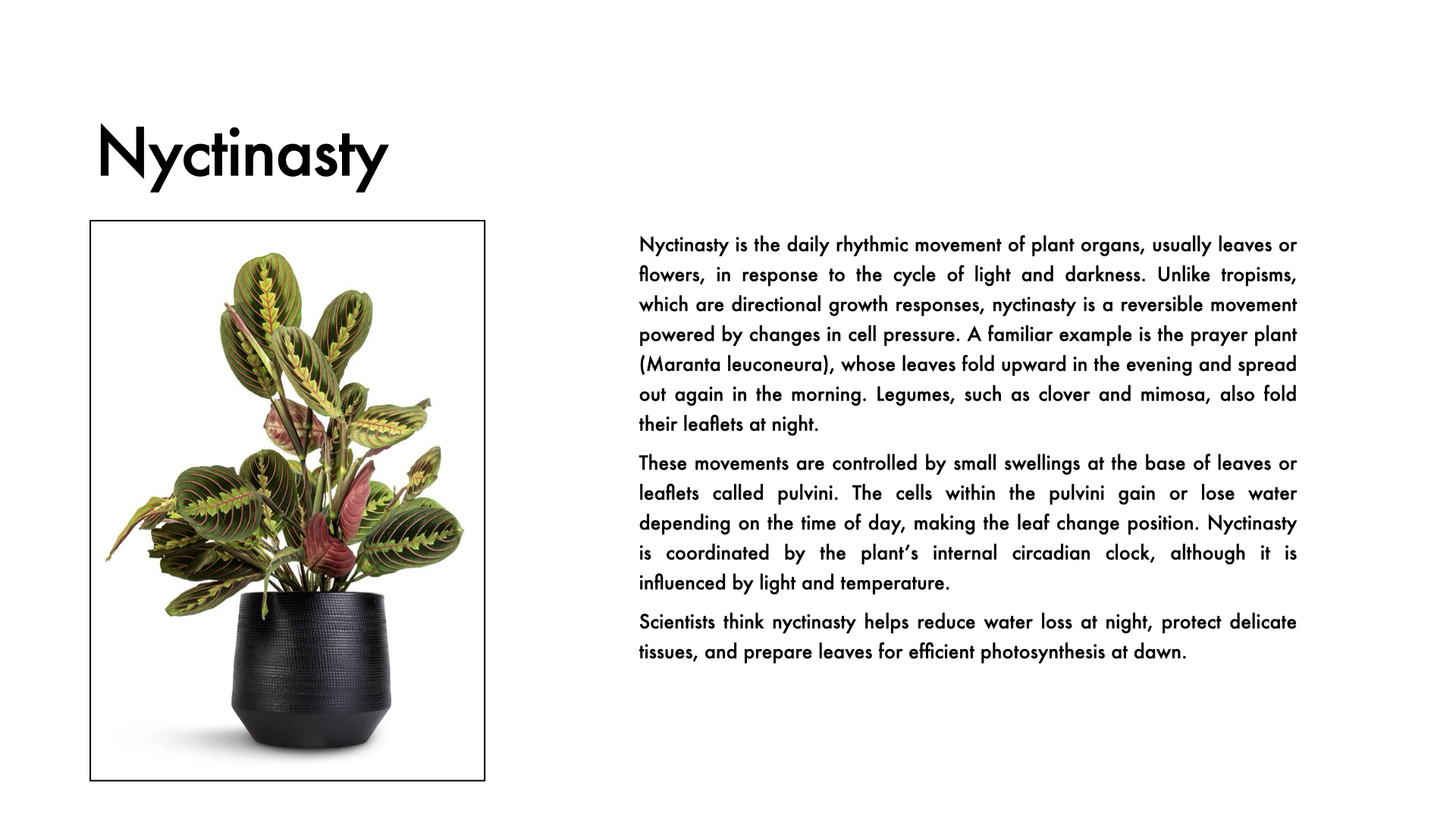
Many plants also move in rhythm with the day. The prayer plant, for instance, folds its leaves at night and opens them again in the morning. This daily cycle is known as nyctinasty, or “sleep movement.”
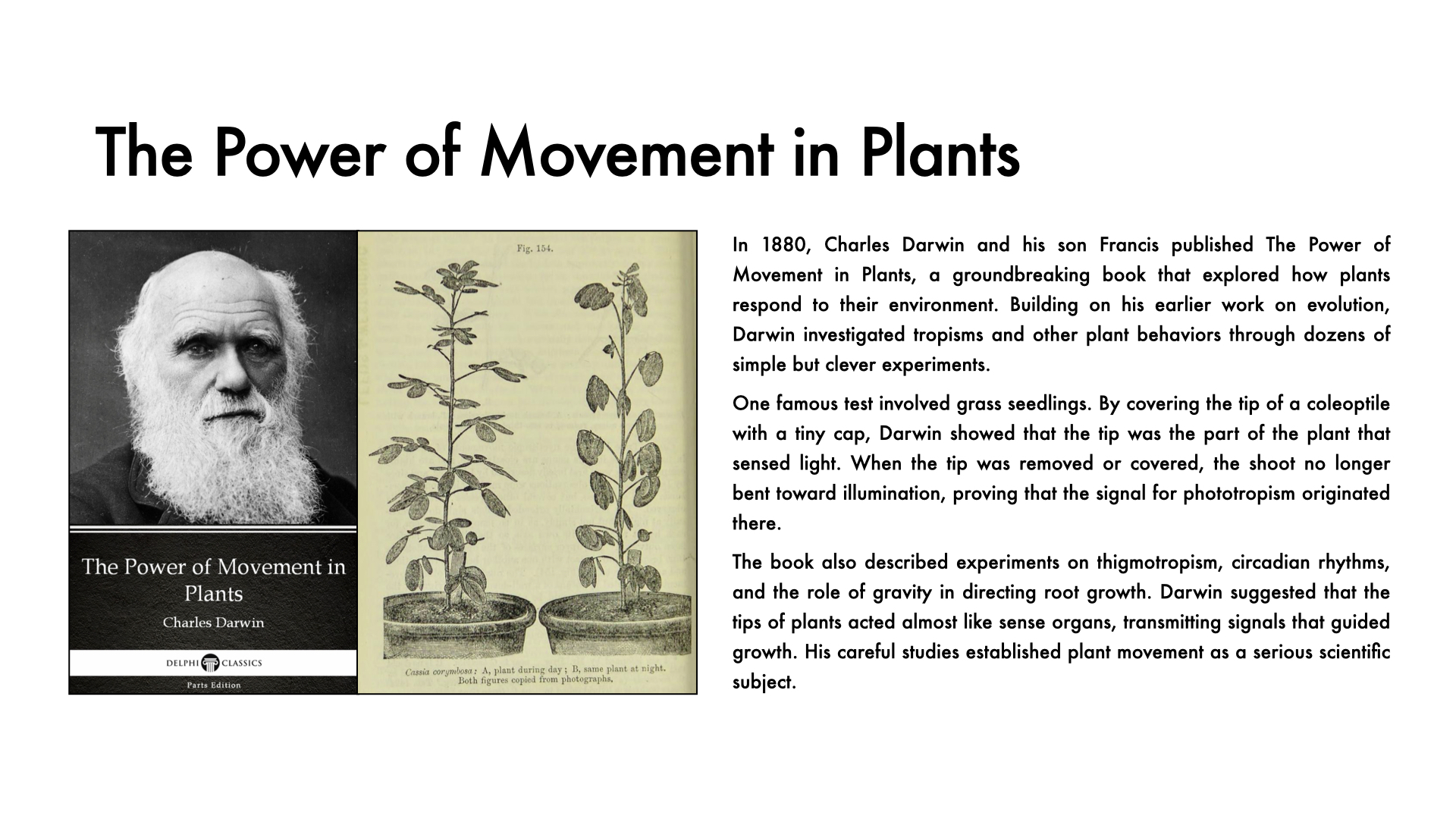
Scientists have been intrigued by plant movement for centuries. In 1880, Charles Darwin and his son Francis published The Power of Movement in Plants. Through clever experiments — like covering or cutting off seedling tips — they showed that plants can sense light and touch. Darwin even suggested that the tip of a plant acts almost like a tiny brain, directing how the rest of the plant bends and grows.
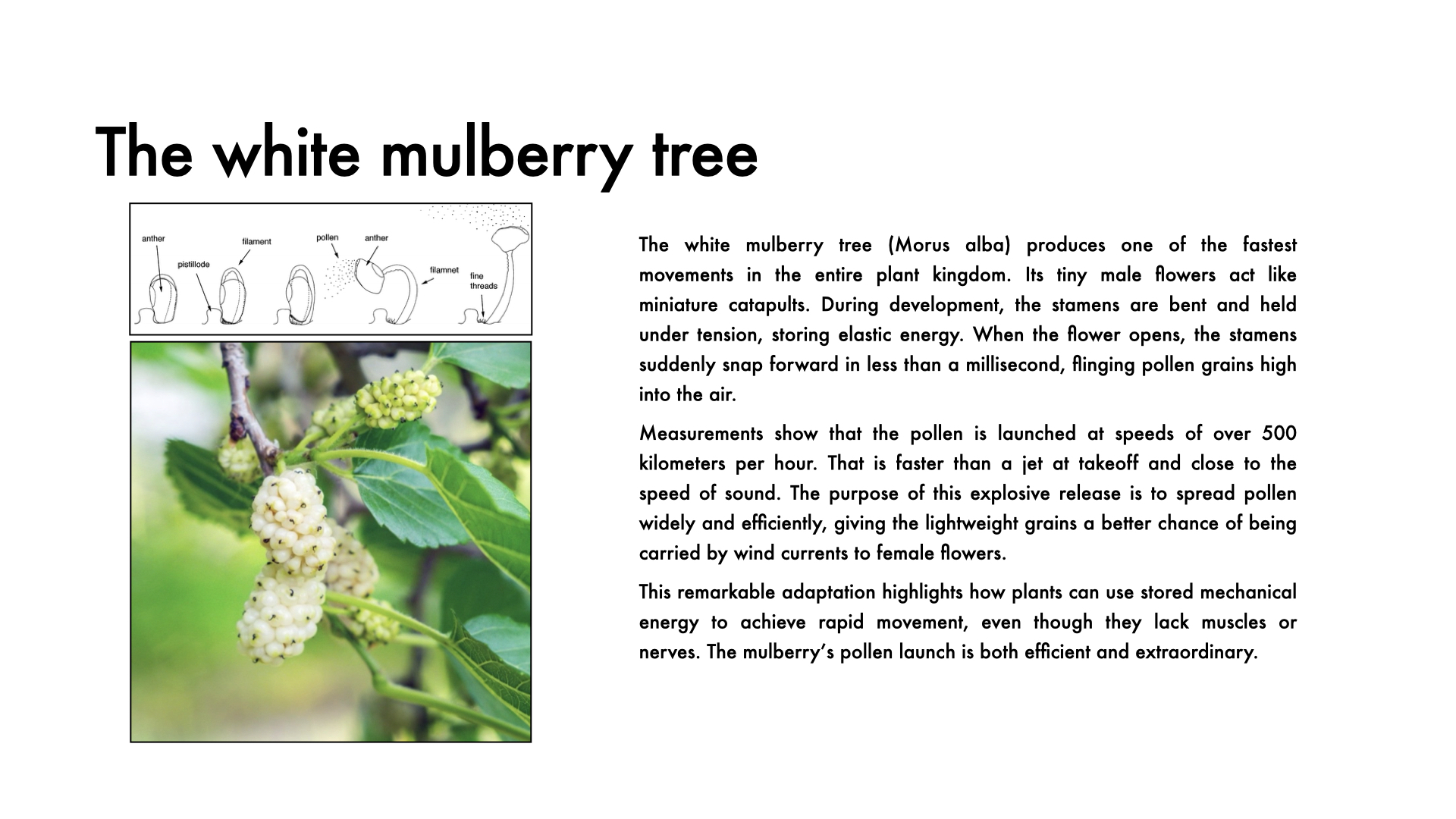
Some plant movements are astonishingly fast. The white mulberry tree launches pollen at speeds over five hundred kilometers per hour — faster than a jet taking off and close to the speed of sound. And the seed pods of the touch-me-not explode when disturbed, scattering seeds in tiny botanical fireworks.
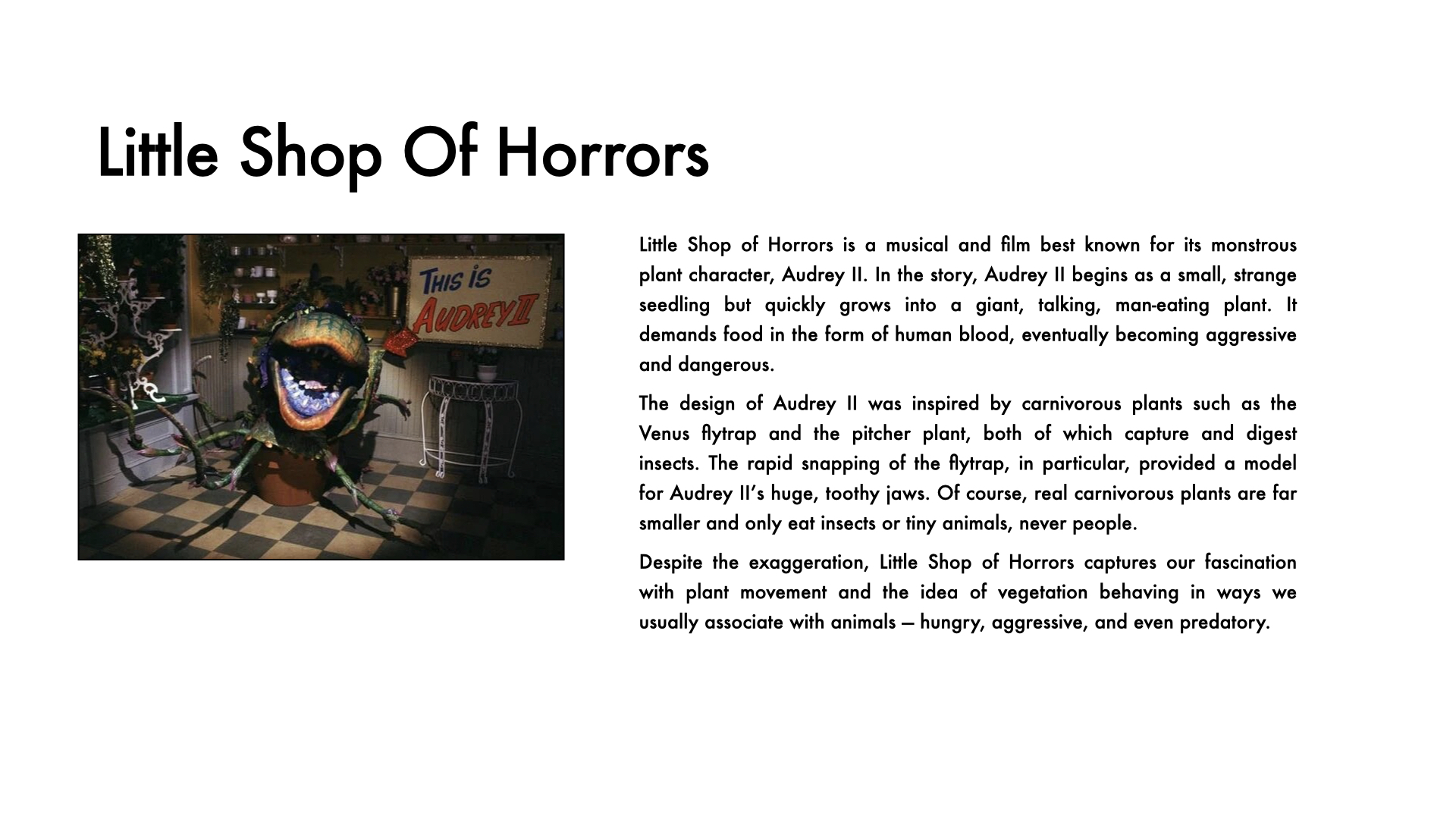
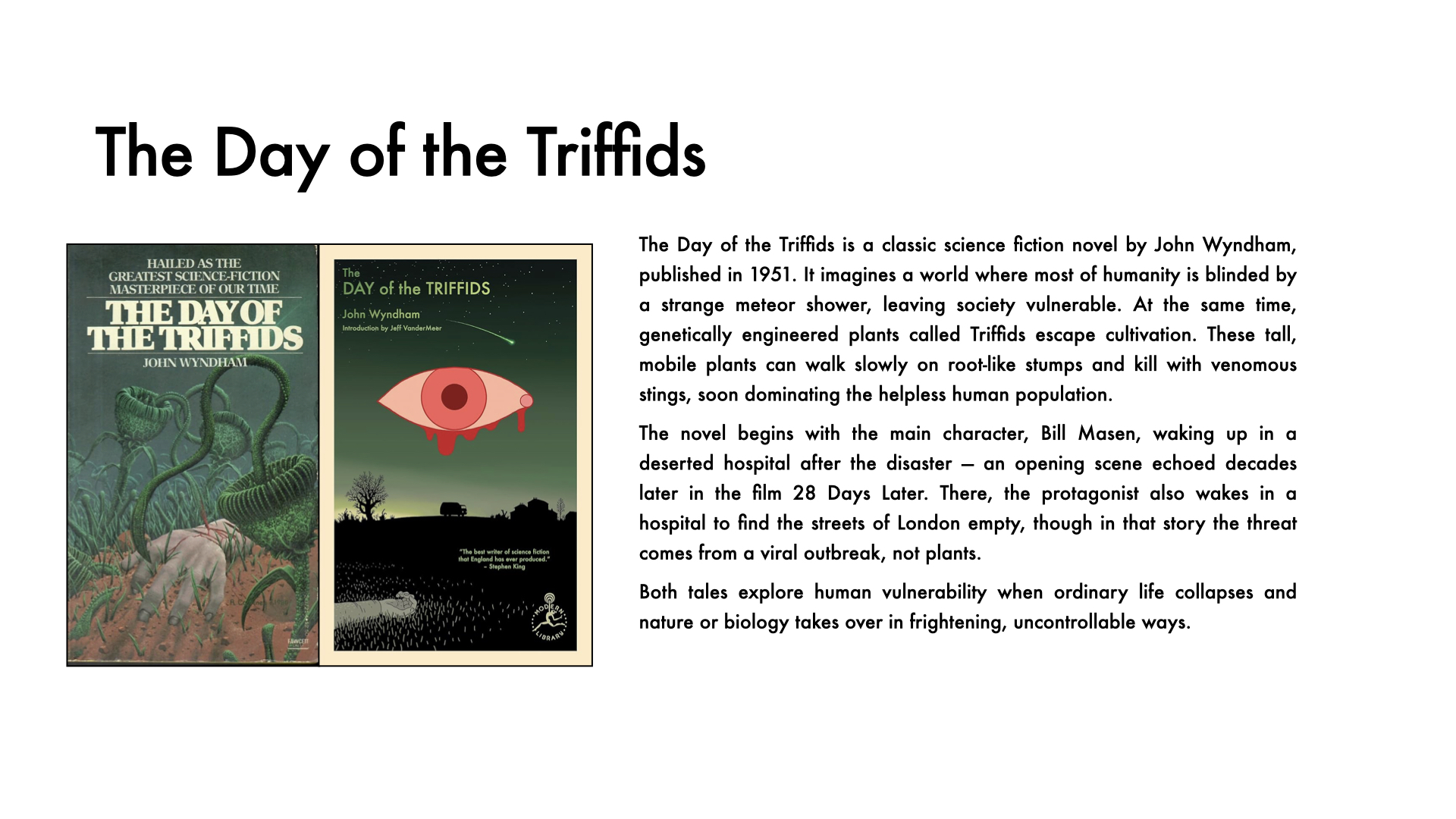
Plants have even inspired art and fiction. The Day of the Triffids imagined killer plants roaming the earth. Little Shop of Horrors gave us Audrey Two, a singing, man-eating flytrap. And in Harry Potter, the Devil’s Snare entangles its victims until they fight back with light. These stories exaggerate reality, but they echo genuine plant behaviors.
So while plants can’t walk or run, their movements — from the slow turn toward light to the explosive burst of pollen — are vital for their survival, growth, and reproduction.
📽️ Slideshow
📺 Video
🔑 Key Vocabulary
- Auxin – A plant hormone that regulates growth by controlling cell elongation and directional responses such as tropisms.
- Gravitropism – Growth response to gravity; roots grow downward, shoots grow upward.
- Heliotropism – Daily turning of plant parts, such as sunflower heads, to follow the sun.
- Mimosa pudica – The “sensitive plant” whose leaves fold rapidly when touched, an example of thigmonasty.
- Nastic movement – A rapid, non-directional movement in plants triggered by stimuli such as touch, light, or temperature.
- Nyctinasty – Daily rhythmic folding and unfolding of leaves or flowers in response to day–night cycles.
- Phototropism – Growth toward light; stems bend toward a light source.
- Polarity – The inherent spatial orientation within a plant, such as root vs. shoot or upper vs. lower leaf surface.
- Pulvini – Swollen structures at the base of leaves or leaflets that control rapid movements by changes in water pressure.
- Statoliths – Starch-filled organelles in plant cells that help detect gravity for gravitropic responses.
- Tendrils – Slender, coiling structures in climbing plants that wrap around supports.
- Thigmotropism – Growth response to touch or contact with a solid object.
- Tropism – Any directional growth response of a plant to an external stimulus.
- Venus flytrap – A carnivorous plant that snaps shut when trigger hairs are touched, an example of rapid nastic movement.
- White mulberry – A tree whose male flowers explosively launch pollen at extreme speeds.
💬 Conversation Questions
- Have you ever seen a plant move? What did it do?
- Why do you think plants move even though they cannot walk?
- Which is more surprising to you: slow growth movements or fast movements like the Venus flytrap?
- Do you know any plants that open or close their leaves or flowers at night?
- If you could grow a plant that moves in your house, which one would you choose and why?
- What are some ways plant movements help them survive in nature?
- How do you think Darwin studied plant movement without modern technology?
- Which plant movement do you think is the most useful for humans to study?
- Have you ever heard of plants in movies or stories, like Triffids or Devil’s Snare? What do you think about them?
- If plants could walk like animals, how would our world be different?