Week 2️⃣ 9️⃣
D-Day
🔊 Audio
📜 Show transcript
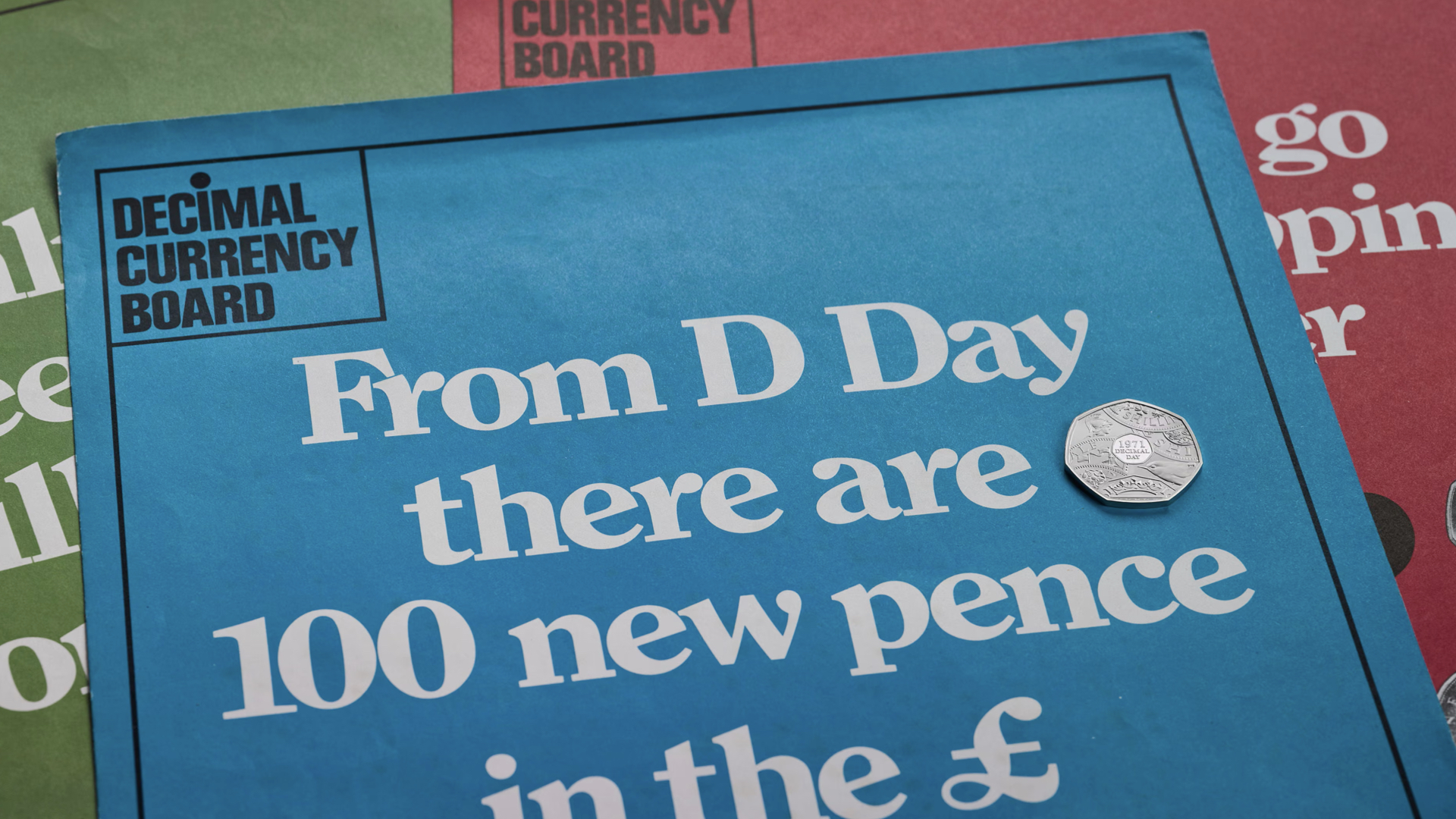
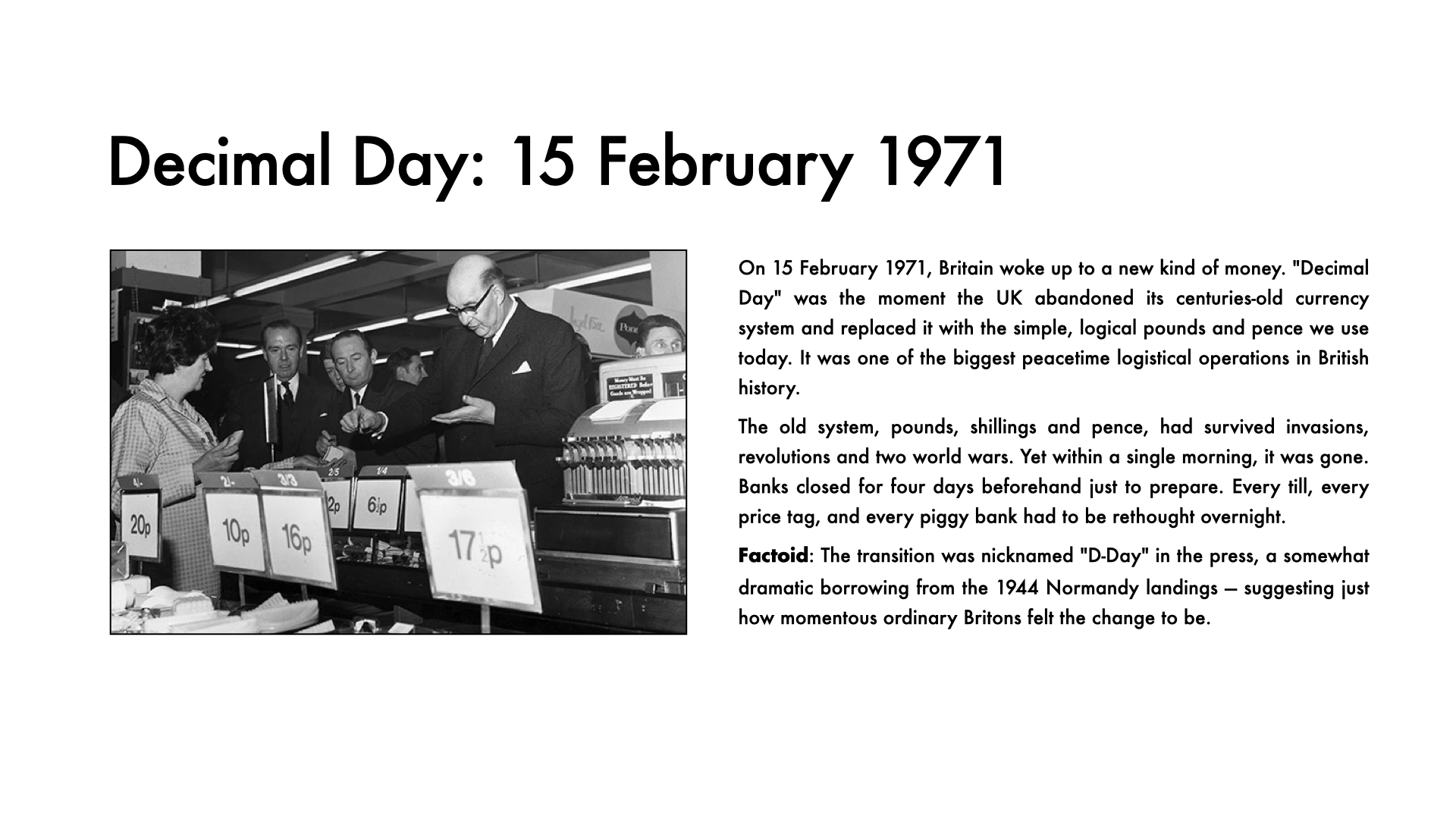
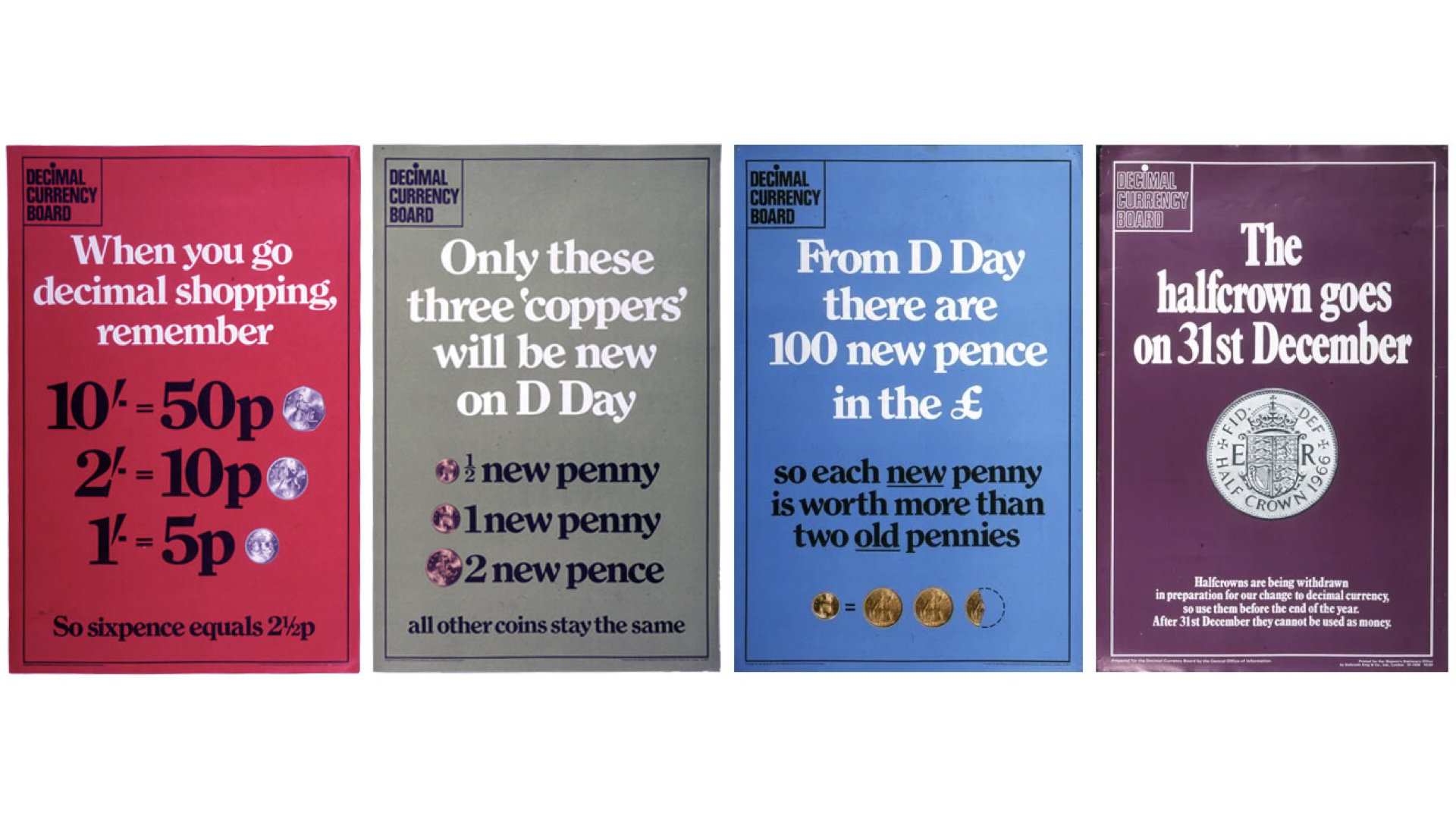
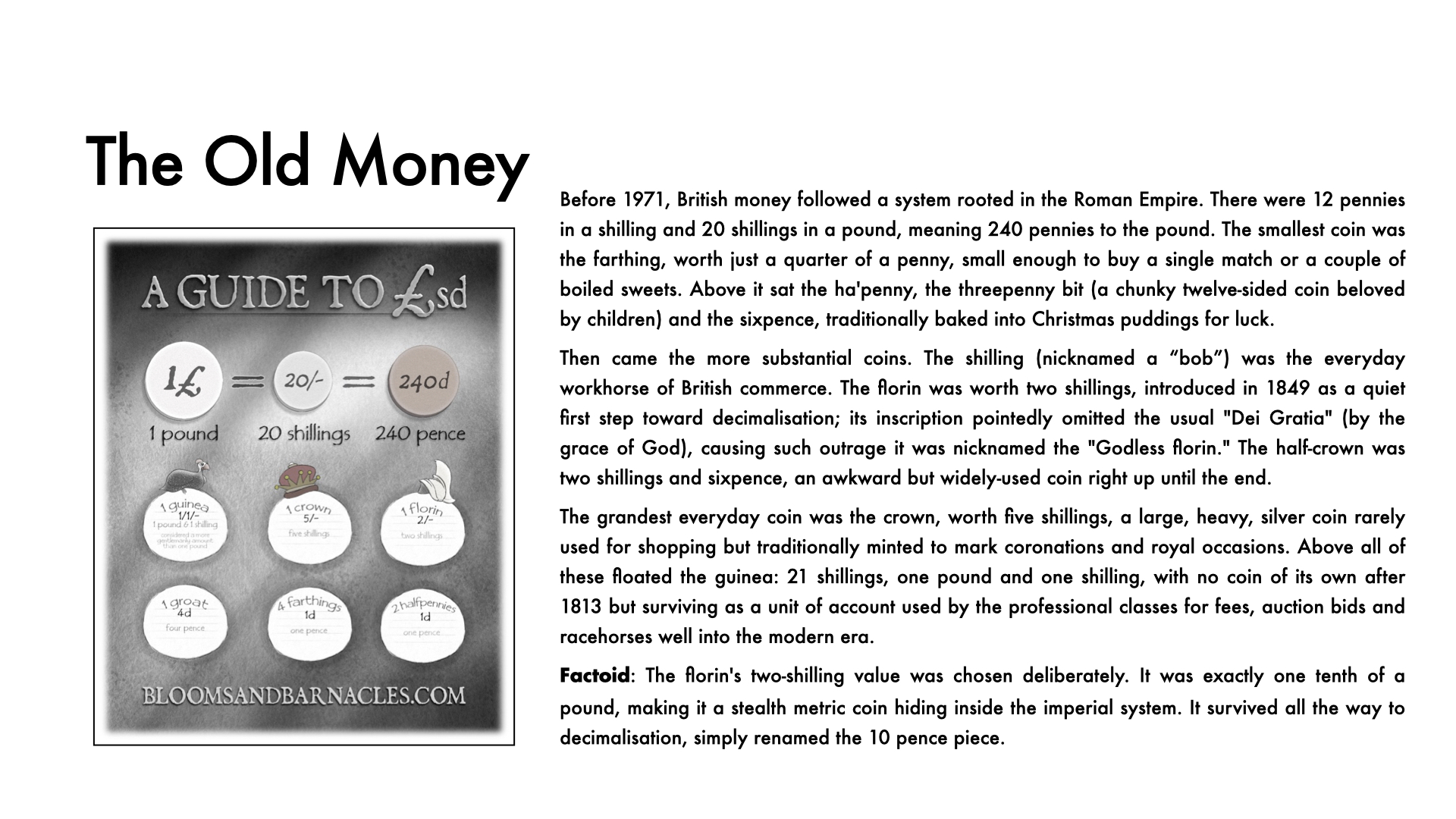
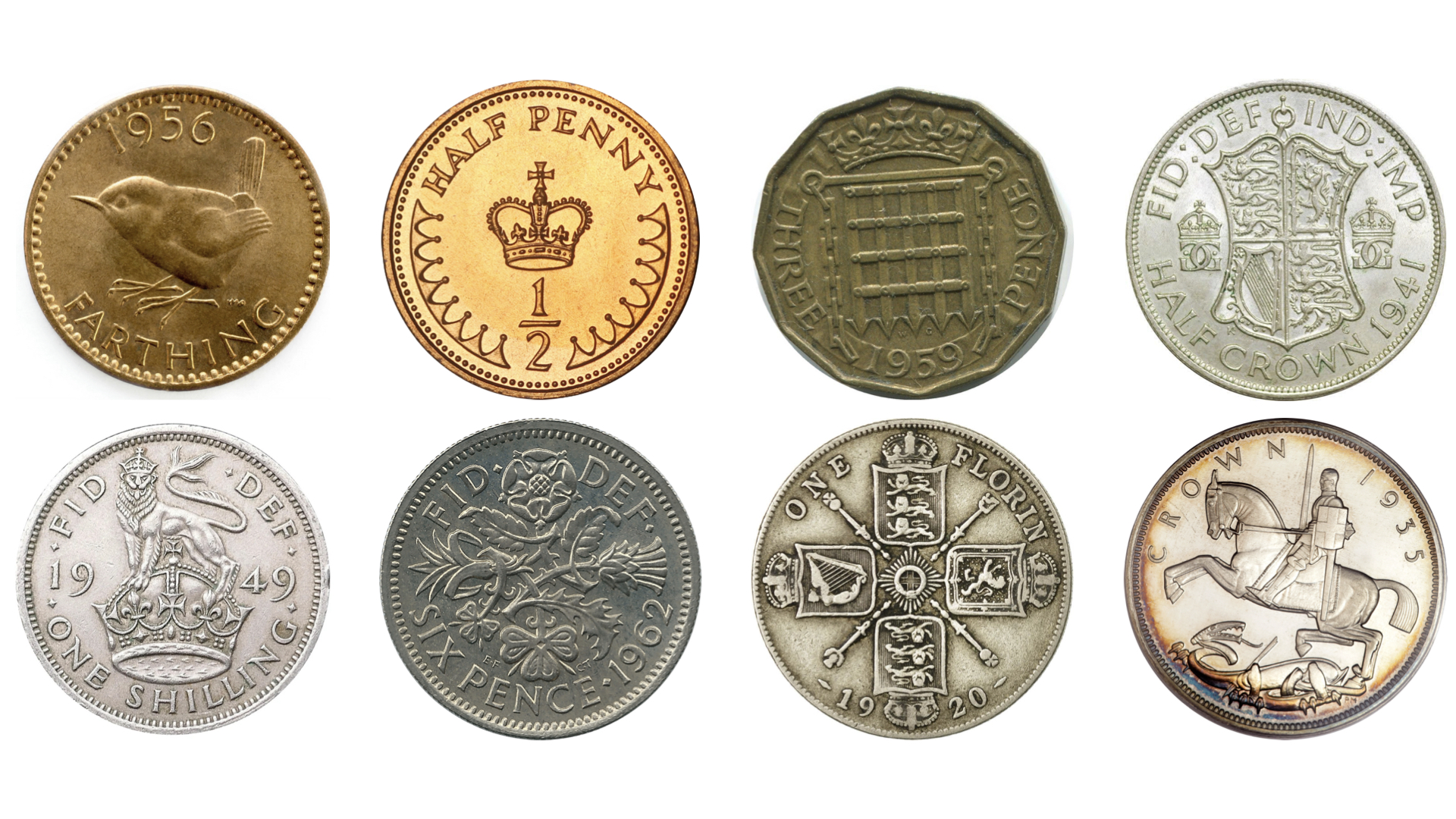
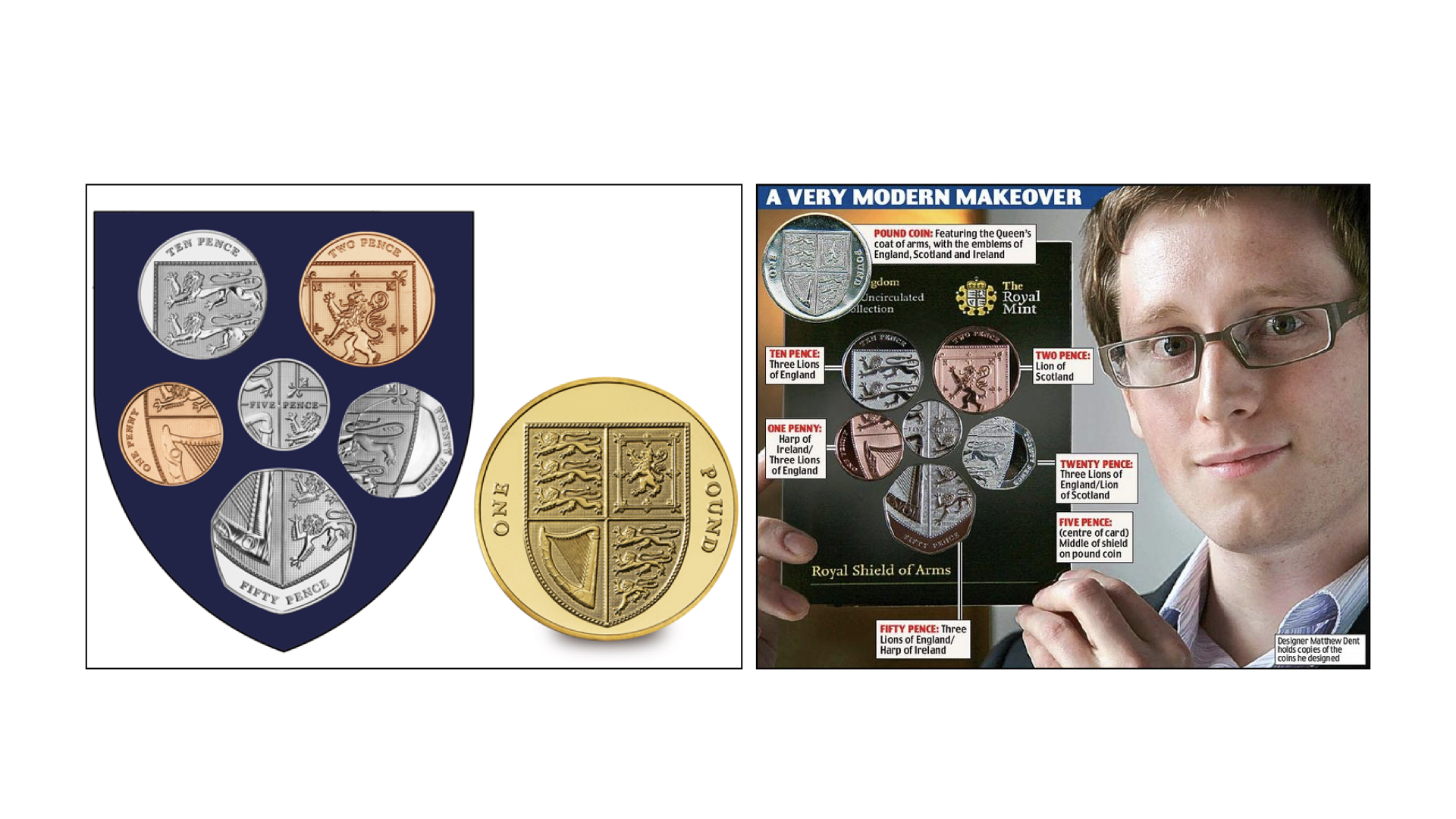
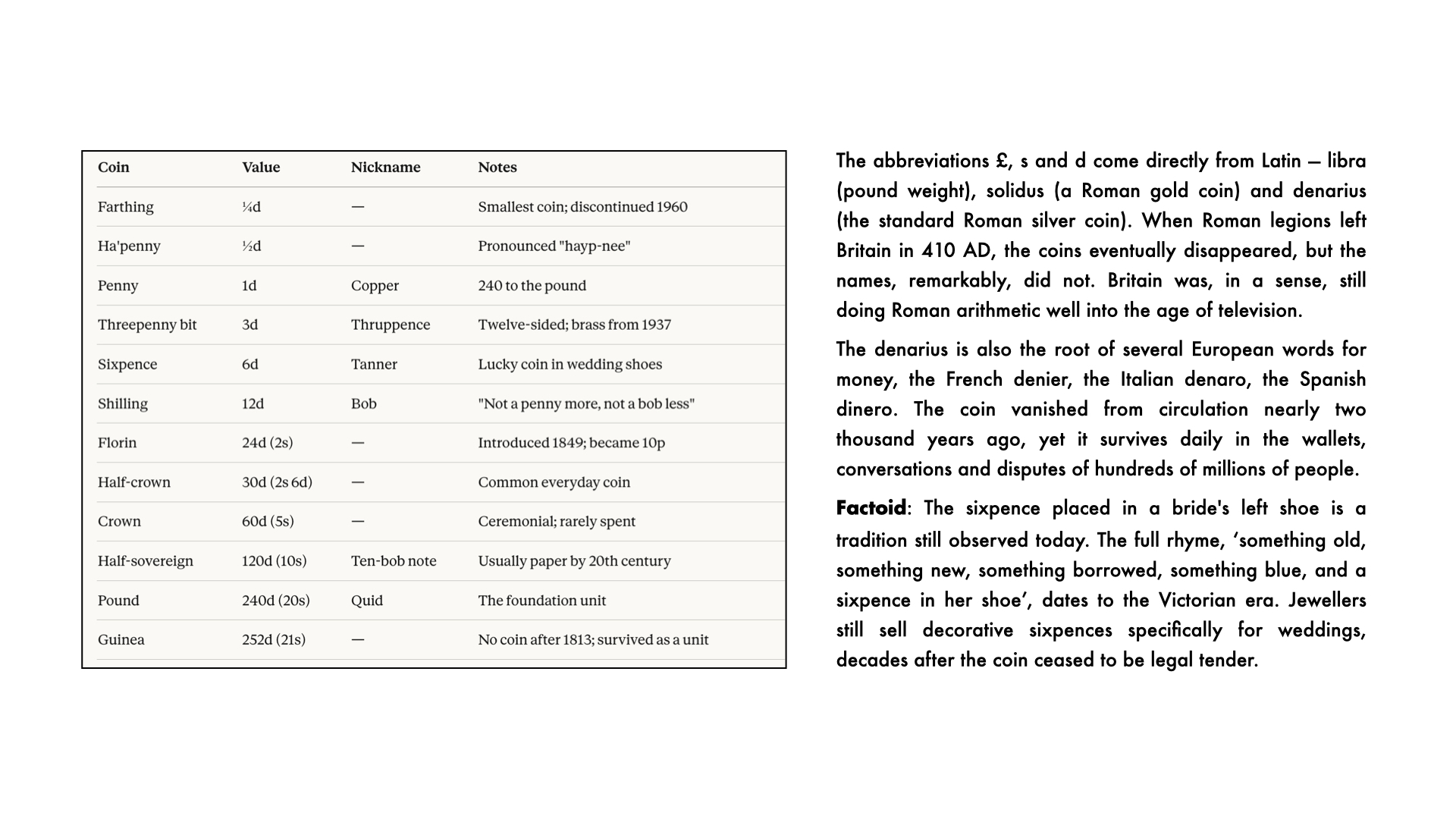
The history of our modern world is defined by a quiet tug-of-war between the clinical efficiency of the decimal system and the ancient, practical wisdom of base twelve. While we now live in a world defined by tens, hundreds, and thousands, much of our daily life is still governed by a Babylonian legacy that is thousands of years old. This conflict reached a famous turning point on the fifteenth of February 1971, known as Decimal Day, when Britain abandoned a currency system rooted in the Roman Empire. Before this moment, a pound was divided into twenty shillings, and each shilling into twelve pence. It was a complex web of guineas, half-crowns, and farthings that required a unique kind of mental arithmetic, yet it had survived invasions and world wars for centuries.
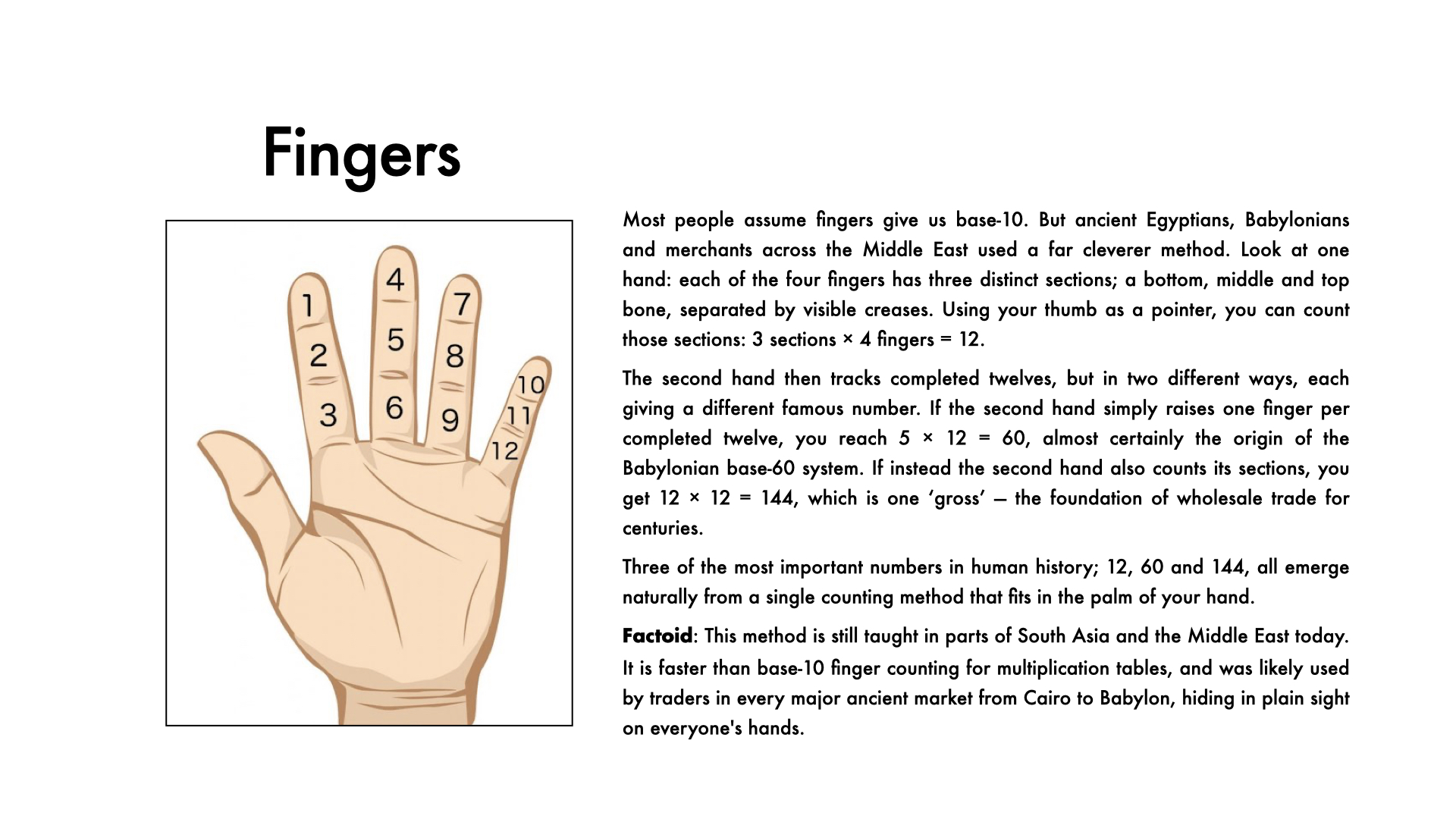
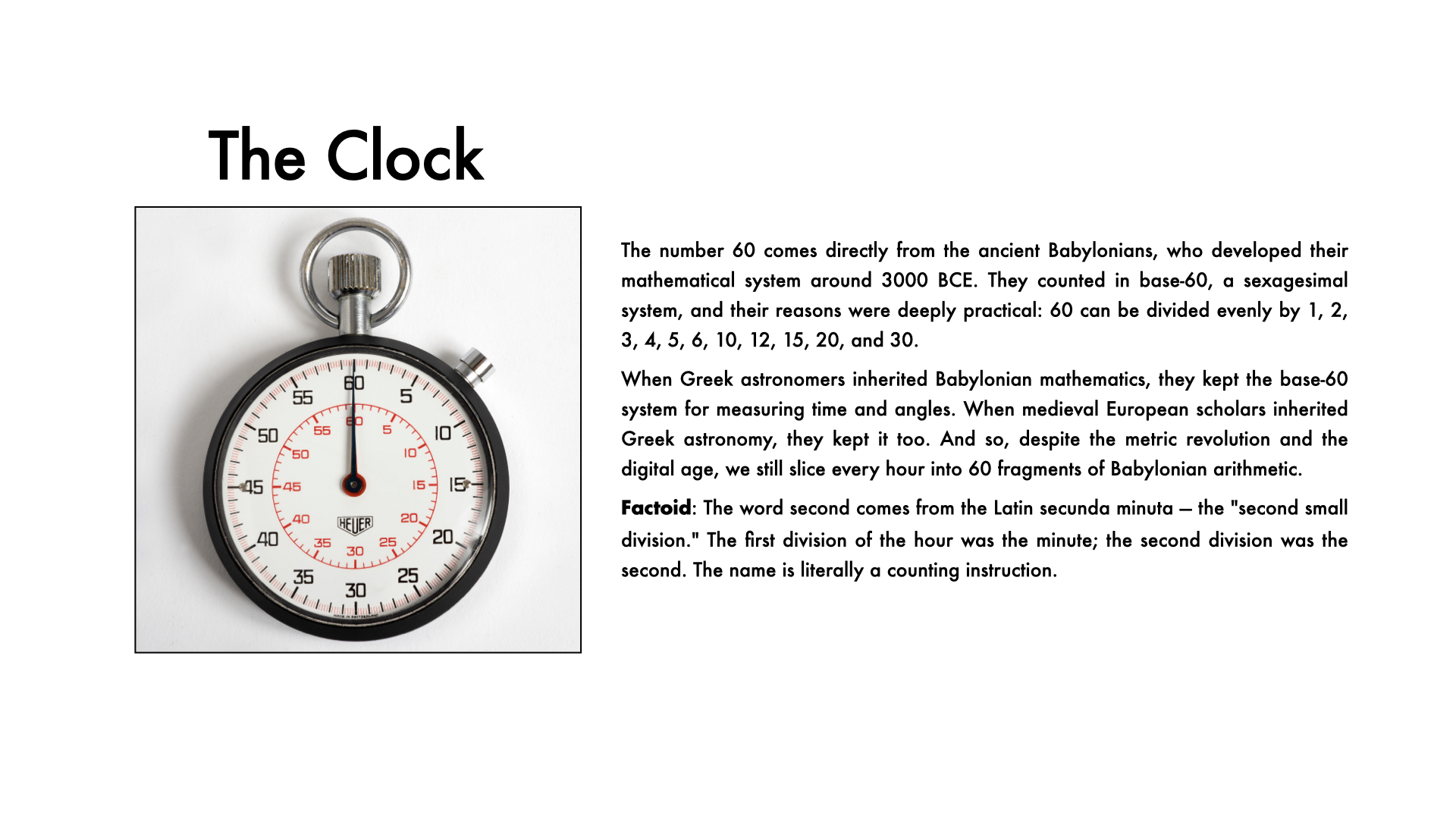
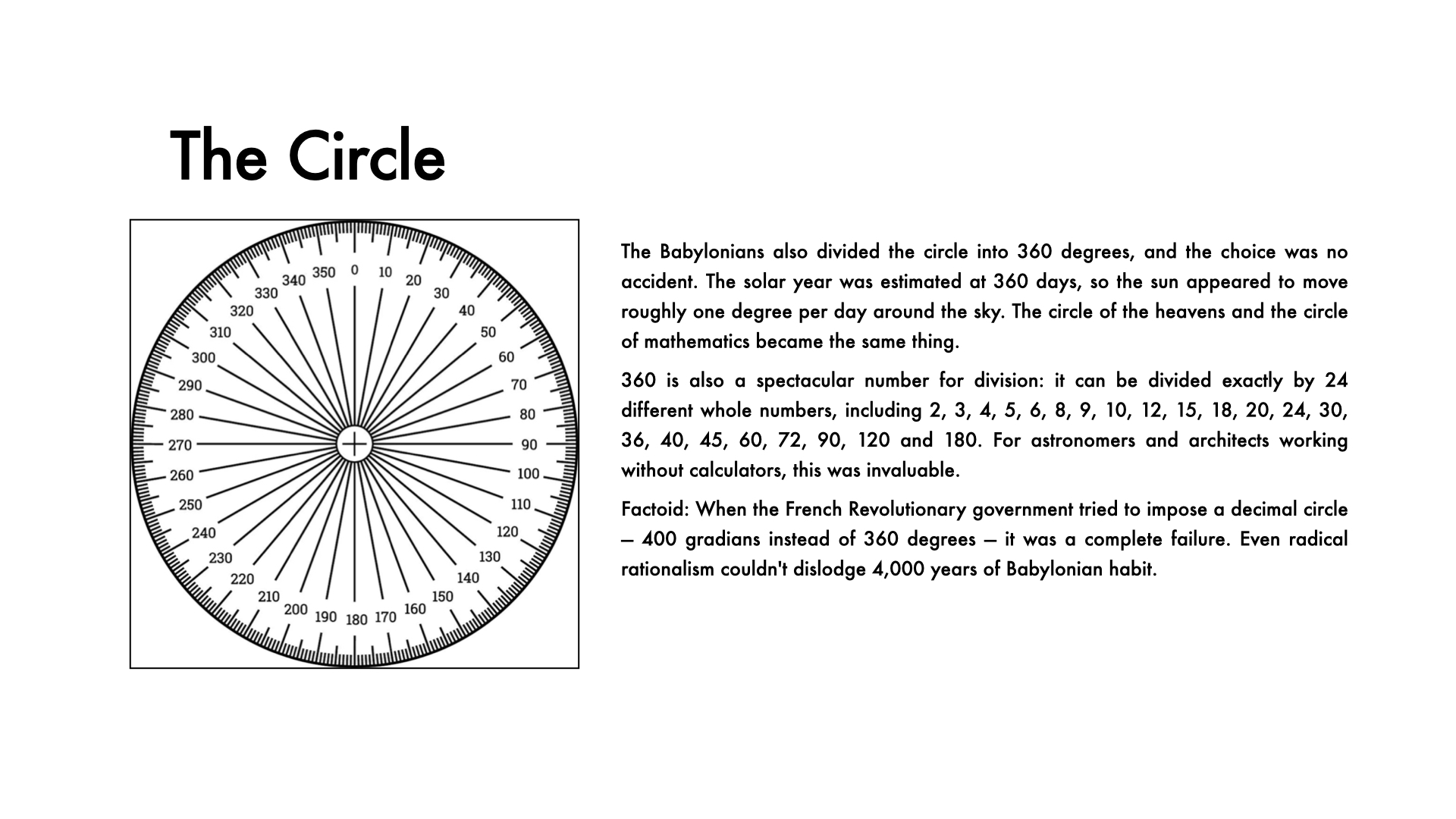
The transition to decimal currency was a triumph of logic, yet it often ignored the reason why the old numbers existed in the first place. Mathematicians refer to twelve as a highly composite number. Unlike ten, which can only be divided by two and five, twelve can be split into halves, thirds, quarters, and sixths. This made it incredibly practical for pre-industrial society. A merchant could divide a dozen eggs or a shilling in numerous ways without ever needing a fraction or a calculator. This same logic gave us the sixty-minute hour and the three hundred and sixty degree circle. We can see this history written on our own bodies. By using a thumb to count the three joints on each of the four fingers, a person can count to twelve on a single hand, a method still taught in parts of South Asia today.
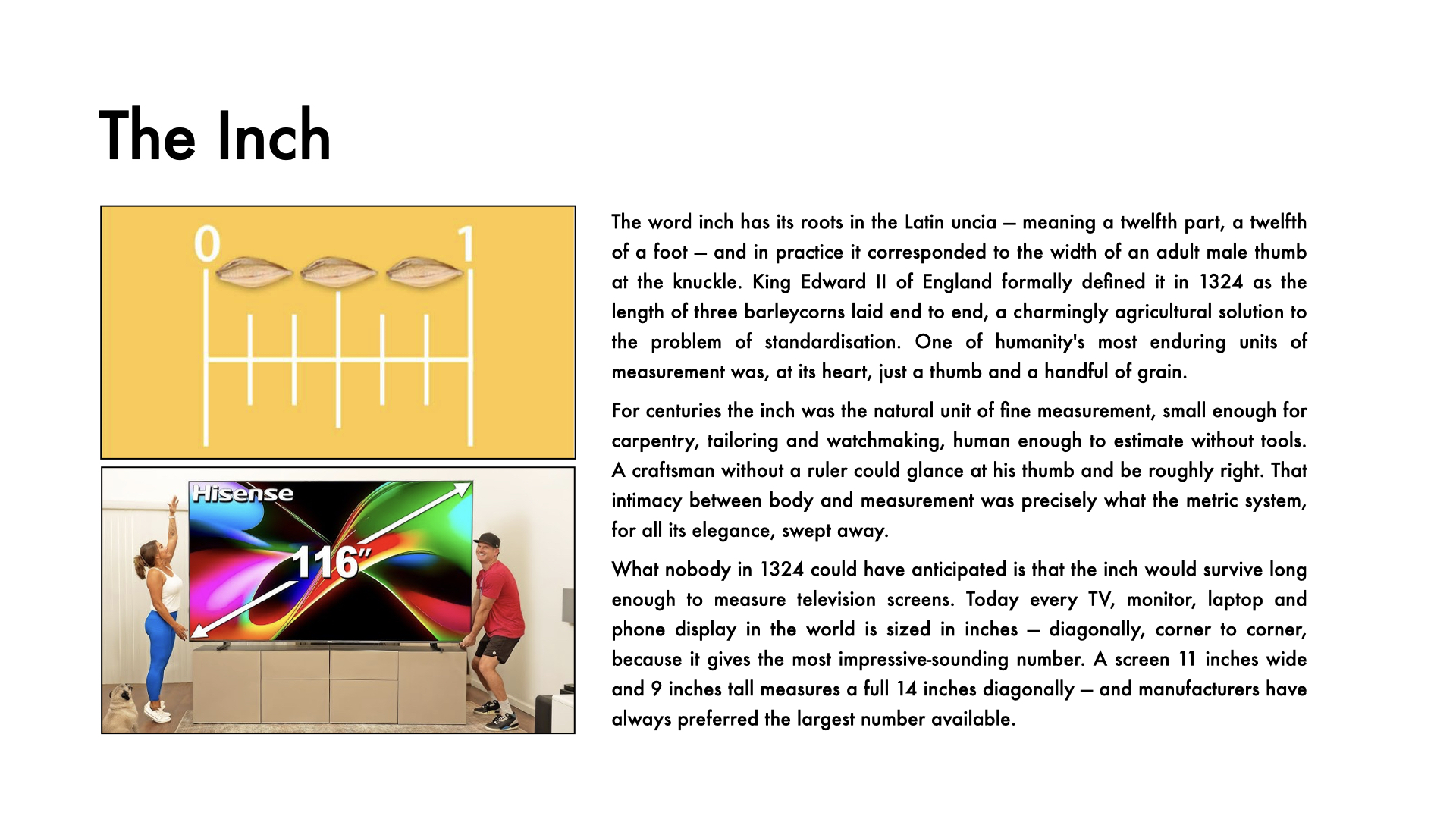
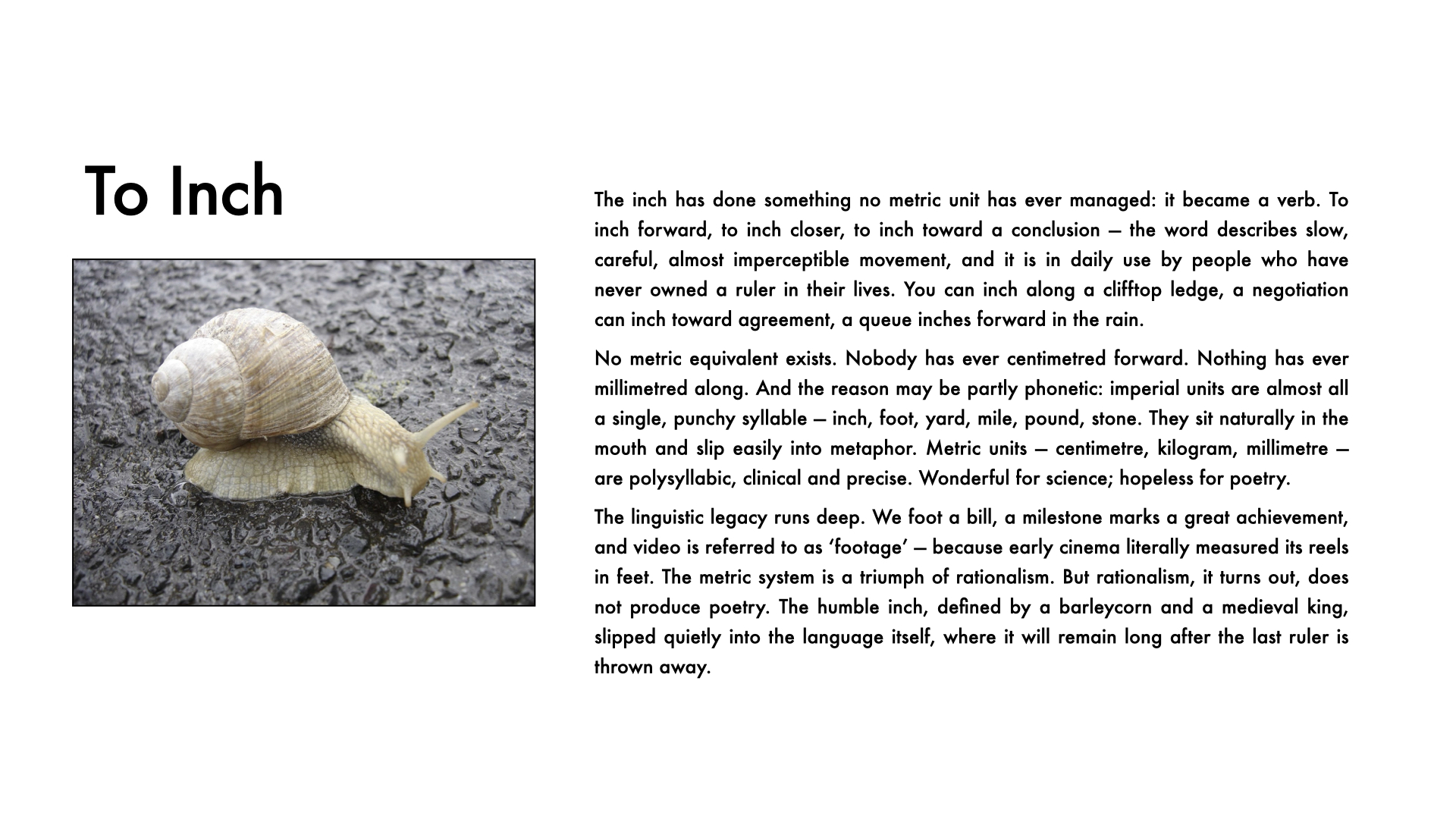
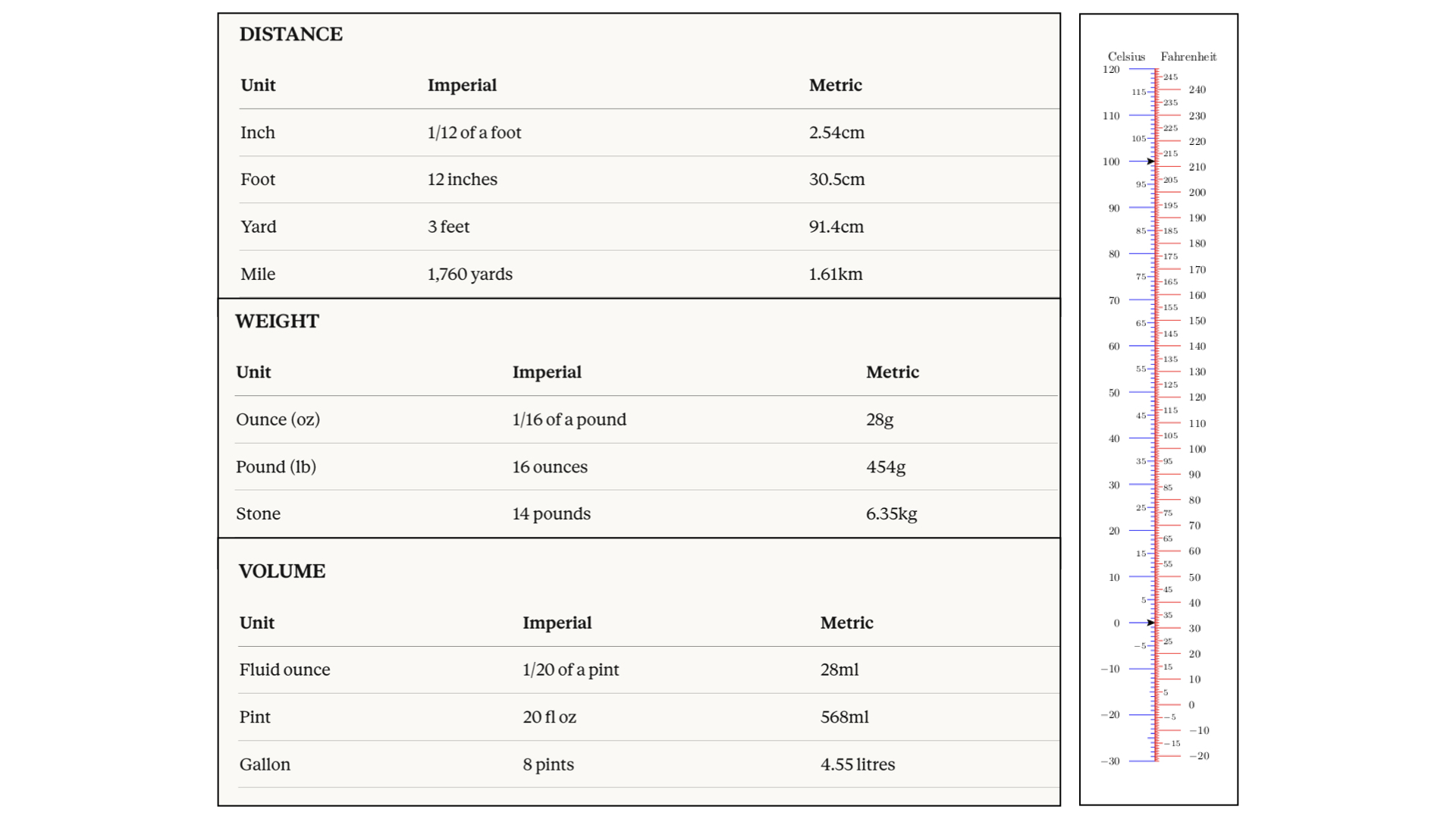
The imperial system also remains deeply embedded in our language and culture. We still describe slow progress as inching forward, and we rarely speak of giving a centimetre of effort. These units have a human scale that the metric system often lacks. An inch was once defined by the length of three barleycorns, and a foot was, quite literally, the length of an adult foot. Even in the modern era, high-stakes horse racing still uses the guinea as a unit of account, despite the coin itself being out of circulation for over two centuries.
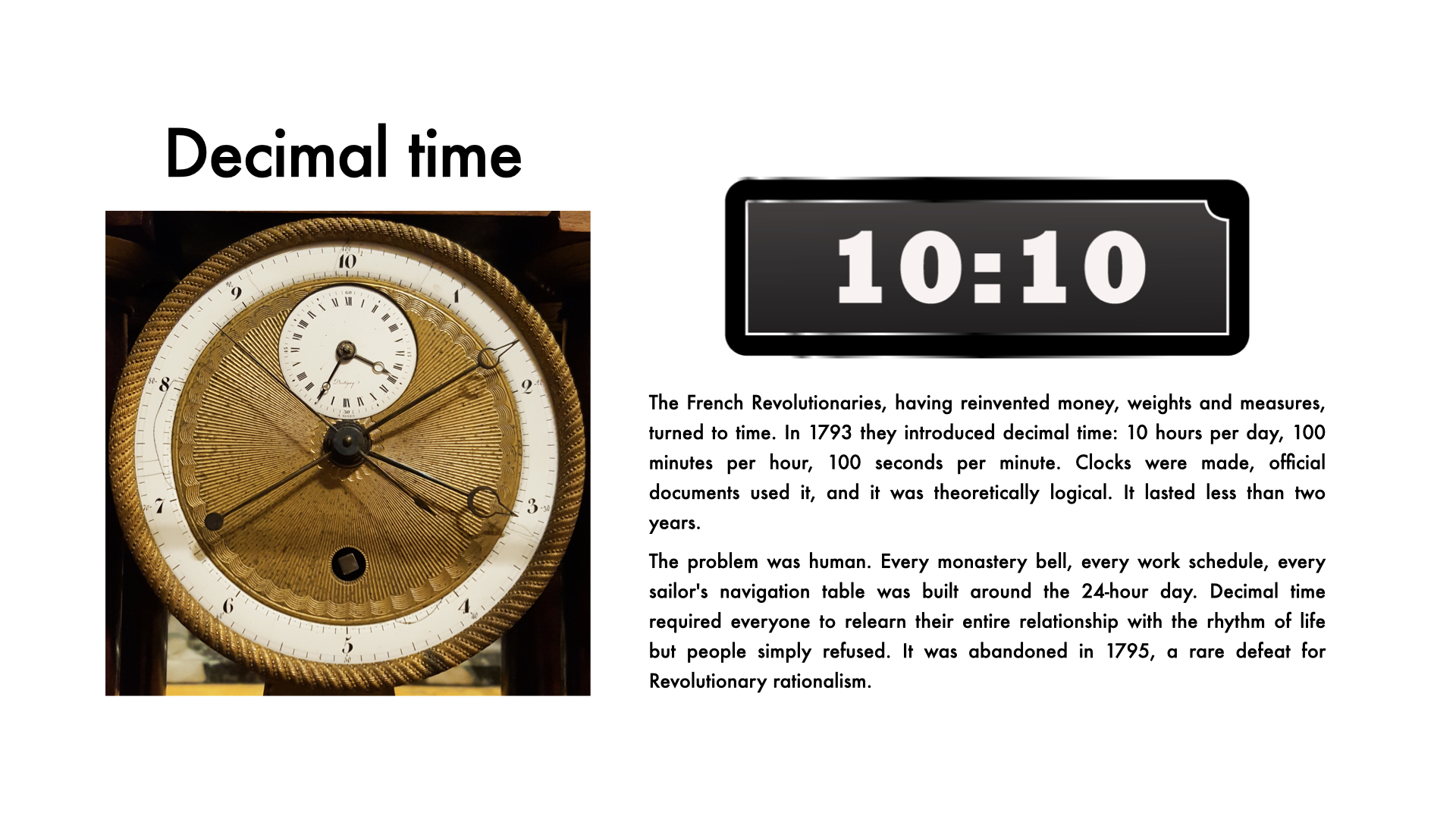
Ultimately, the story of measurement is a story of human habit. While the French Revolutionaries tried to force decimal time upon the world in 1793, the project failed because people refused to abandon the rhythmic heritage of the twenty-four hour day. We are comfortable living in a hybrid world, navigating between the digital precision of base ten and the poetic, divisible charm of the ancient systems that built our civilisation. The real lesson of history is not that simpler systems are easier to learn, but that humans have an extraordinary capacity for complexity when it is woven into the fabric of their childhood and culture.
📽️ Slideshow

📺 Video
🔑 Key Vocabulary
- Anachronistic – belonging to a period other than the one being depicted; the 2,000 Guineas horse race is anachronistic in still referencing a coin that ceased to be minted in 1813.
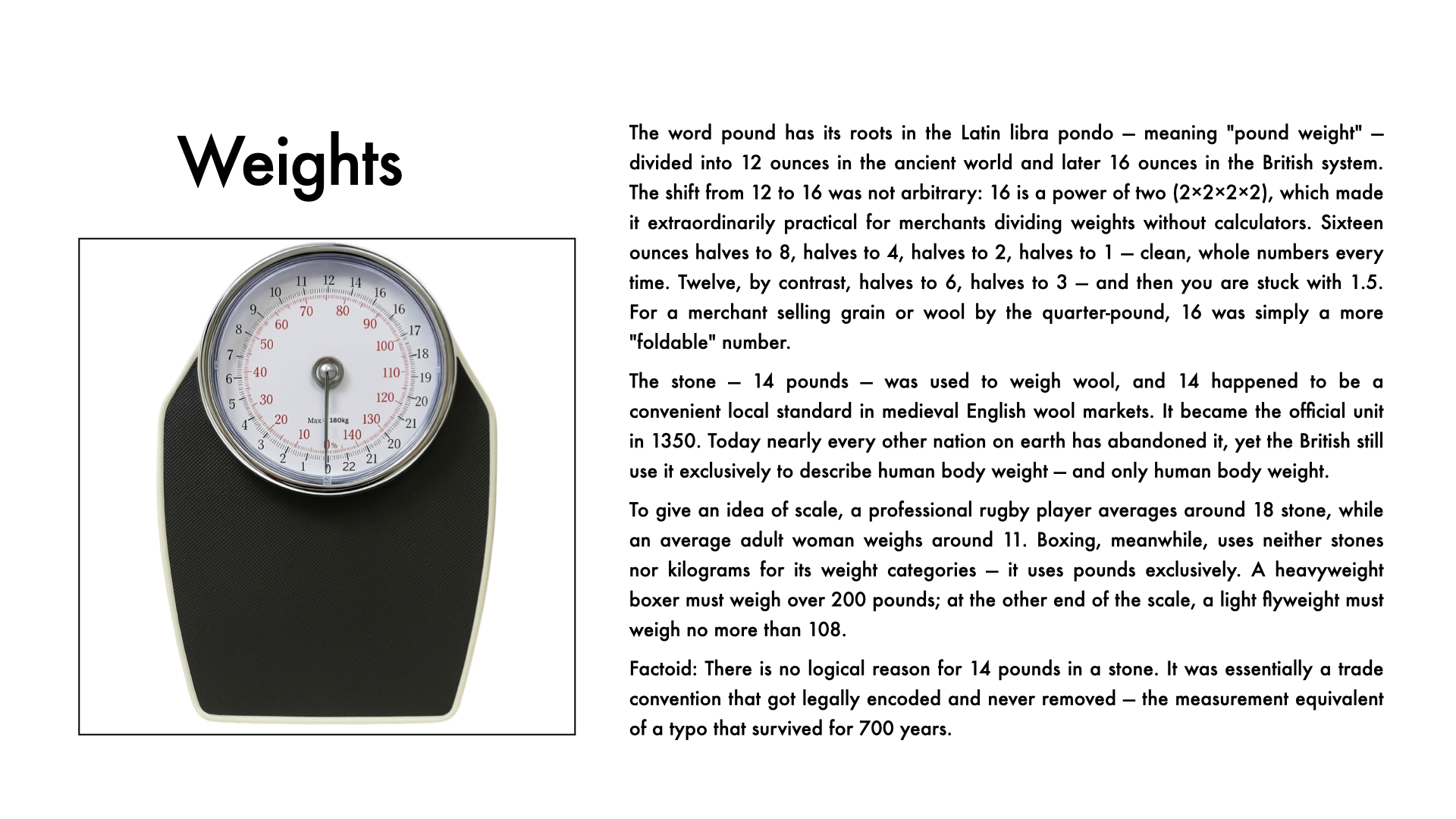
- Composite number – a number that can be divided by several whole numbers without a remainder; 12 is considered "highly composite," divisible by 1, 2, 3, 4, 6 and 12.
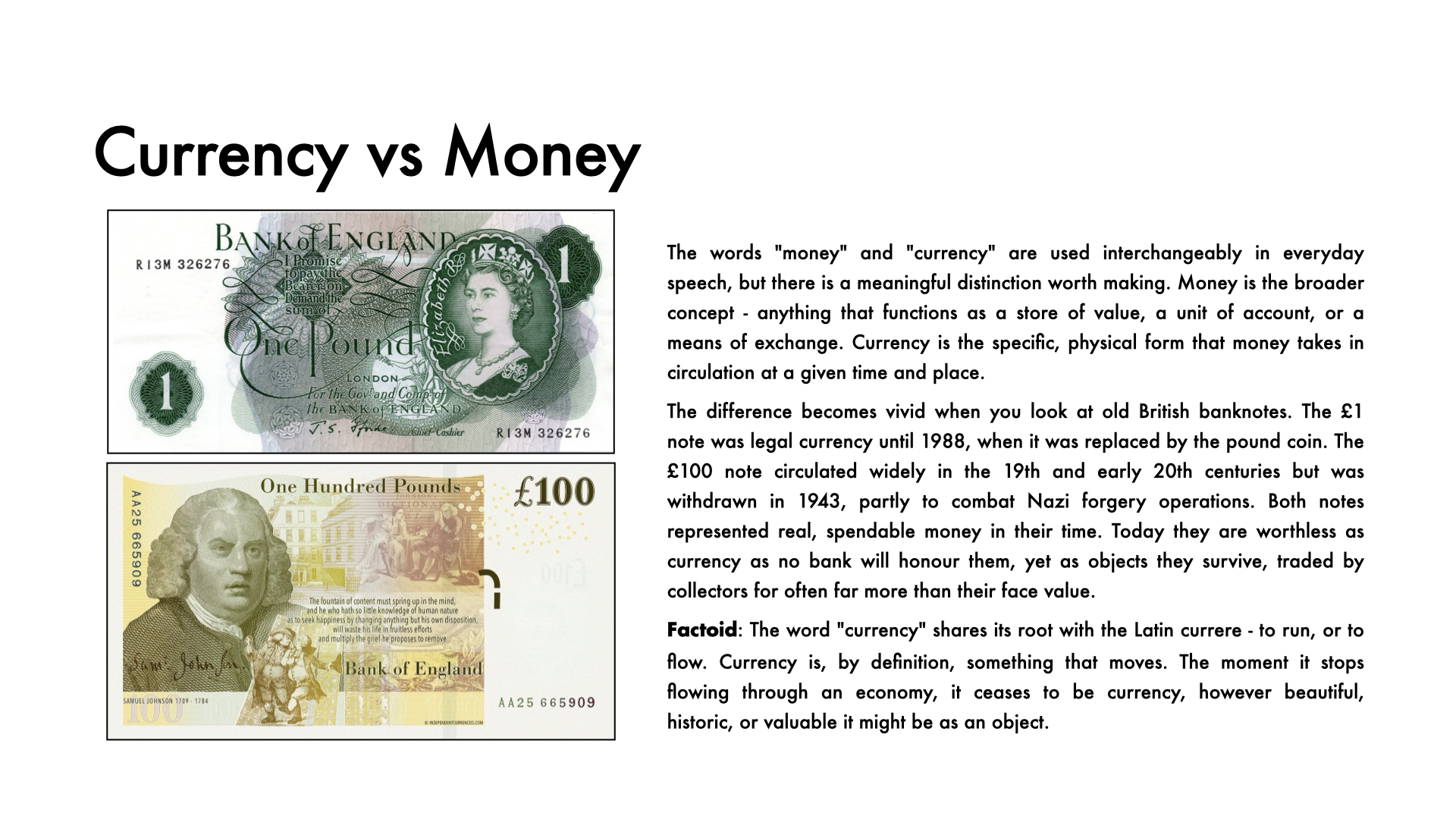
- Currency – the specific form of money in circulation at a given time; unlike "money," currency can become obsolete and lose its status as legal tender.
- Decimalisation – the process of converting a currency or system of measurement to a decimal basis; in Britain, the switch to decimal currency on 15th February 1971.
- Denomination – a specific face value of a coin or banknote, such as a shilling, a crown, or a five-pound note.
- Demonetised – withdrawn from use as currency; a coin or note that is demonetised can no longer be spent, regardless of its historical or collector value.
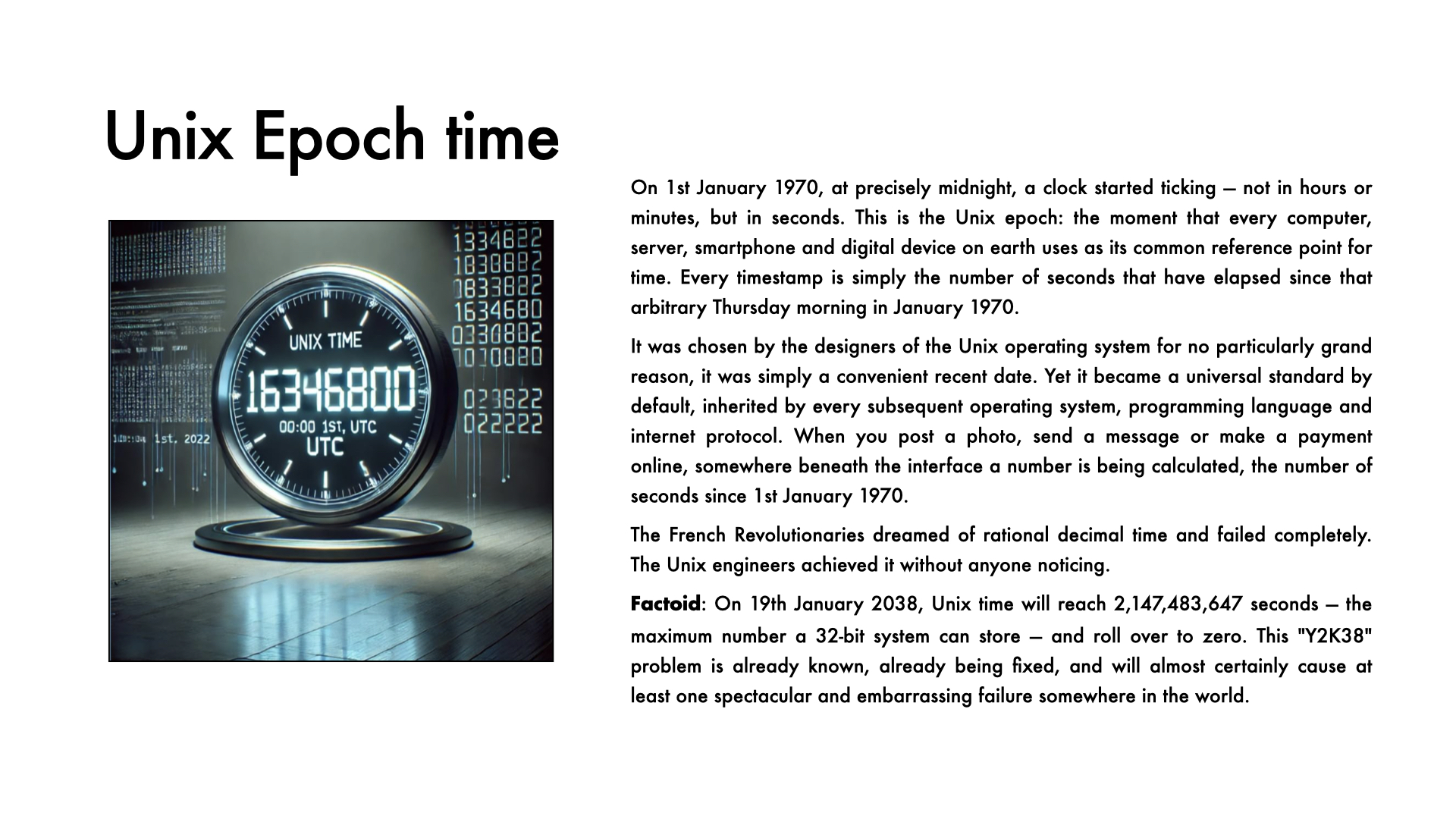
- Epoch – a fixed point in time used as a reference; in computing, the Unix epoch is 1st January 1970, from which all digital timestamps are calculated.
- Furlong – an imperial unit of distance equal to 220 yards, still used in horse racing; derived from "furrow-long," the distance an ox could plough without resting.
- Imperial – relating to the system of weights and measures traditionally used in Britain, including inches, miles, pounds and pints.
- Legal tender – money that must legally be accepted as payment; old banknotes and coins lose this status when withdrawn from circulation.
- Metrication – the process of adopting the metric system; note the correct form is "metrication," not "metrification."
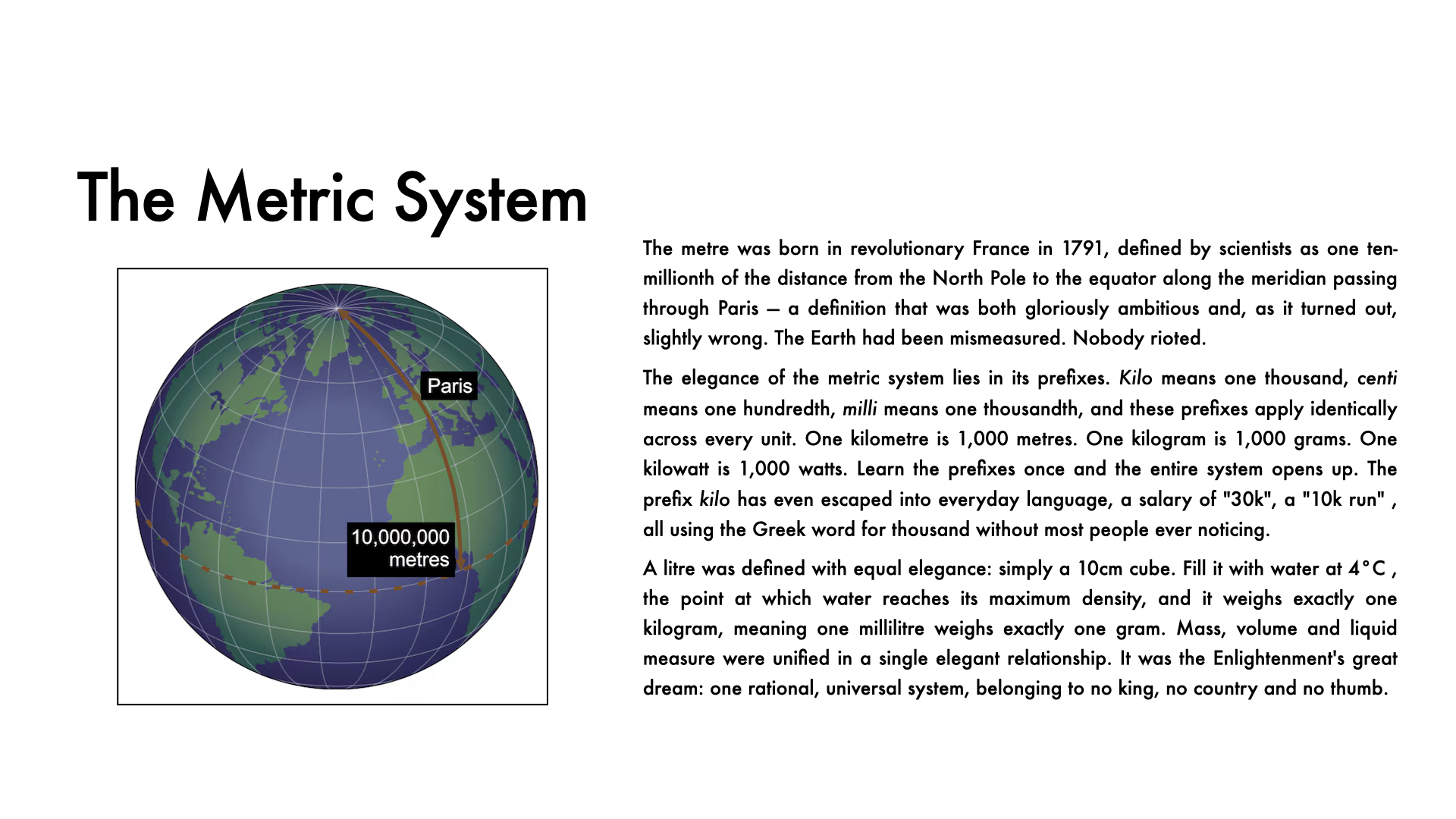
- Prefix – a word part added to the beginning of a word to modify its meaning; metric prefixes such as kilo-, centi- and milli- apply consistently across all units.
- Sexagesimal – a numbering system based on 60, used by the ancient Babylonians and still visible today in the 60 minutes of an hour and 360 degrees of a circle.
💬 Conversation Questions
- Decimal Day was described as one of the biggest peacetime changes in British history. Can you think of another moment when a government changed something so fundamental in daily life? How did people react?
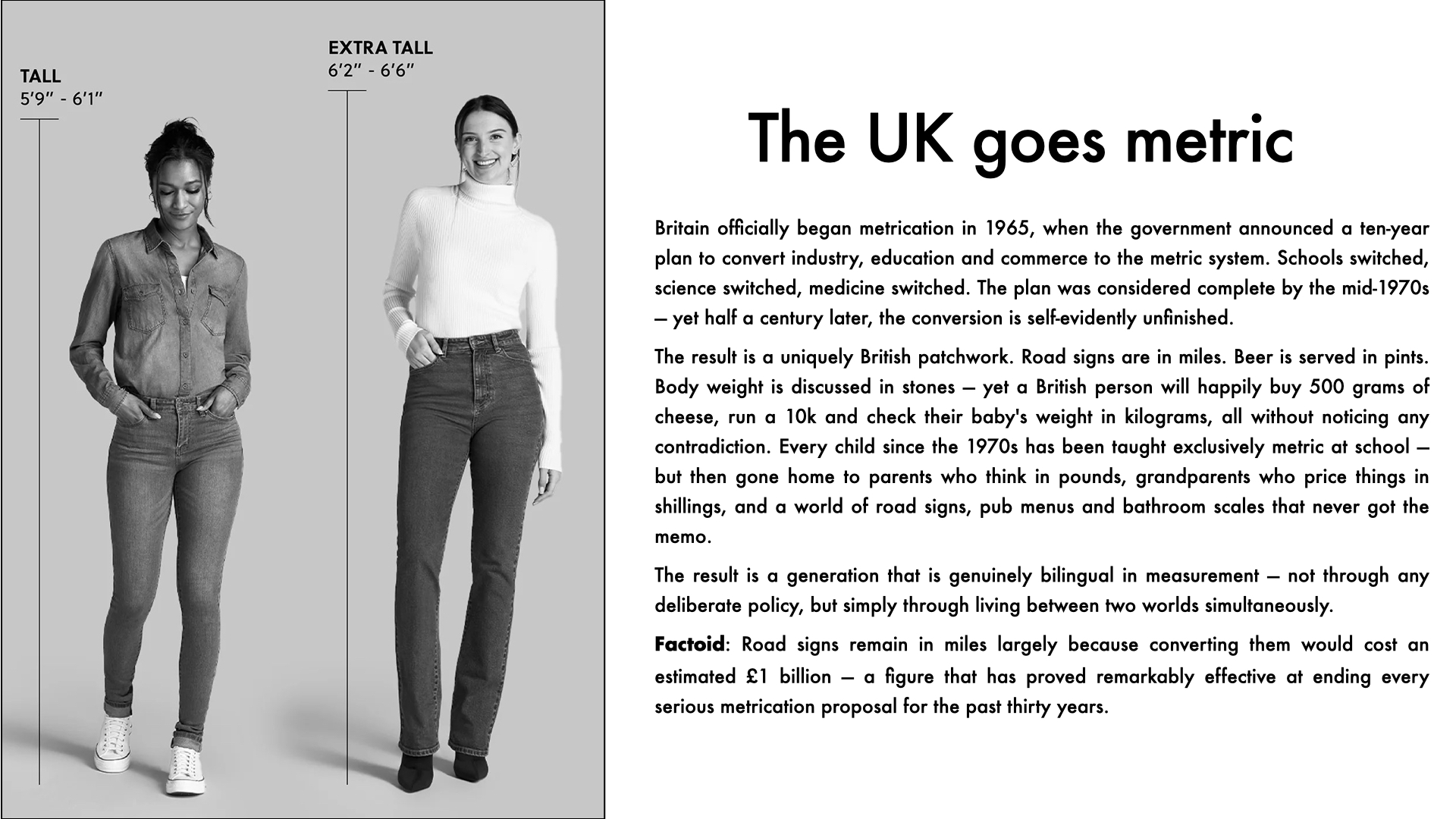
- The British still use miles, pints and stones alongside metres, litres and kilograms. Do you think this kind of mixed system is a problem, or does it show healthy cultural resistance?
- Children in Britain have been taught metric at school since the 1970s, yet still grow up understanding imperial. Do you think the system you learn at home is more powerful than the one you learn at school?
- The 2,000 Guineas horse race still uses a currency that ceased to exist over 200 years ago. Can you think of other examples in your culture where an old system, word or tradition has survived long after its original purpose disappeared?
- The French Revolutionaries tried to introduce decimal time — ten hours a day, one hundred minutes per hour. It lasted less than two years. Why do you think some rational improvements are rejected while others are accepted?
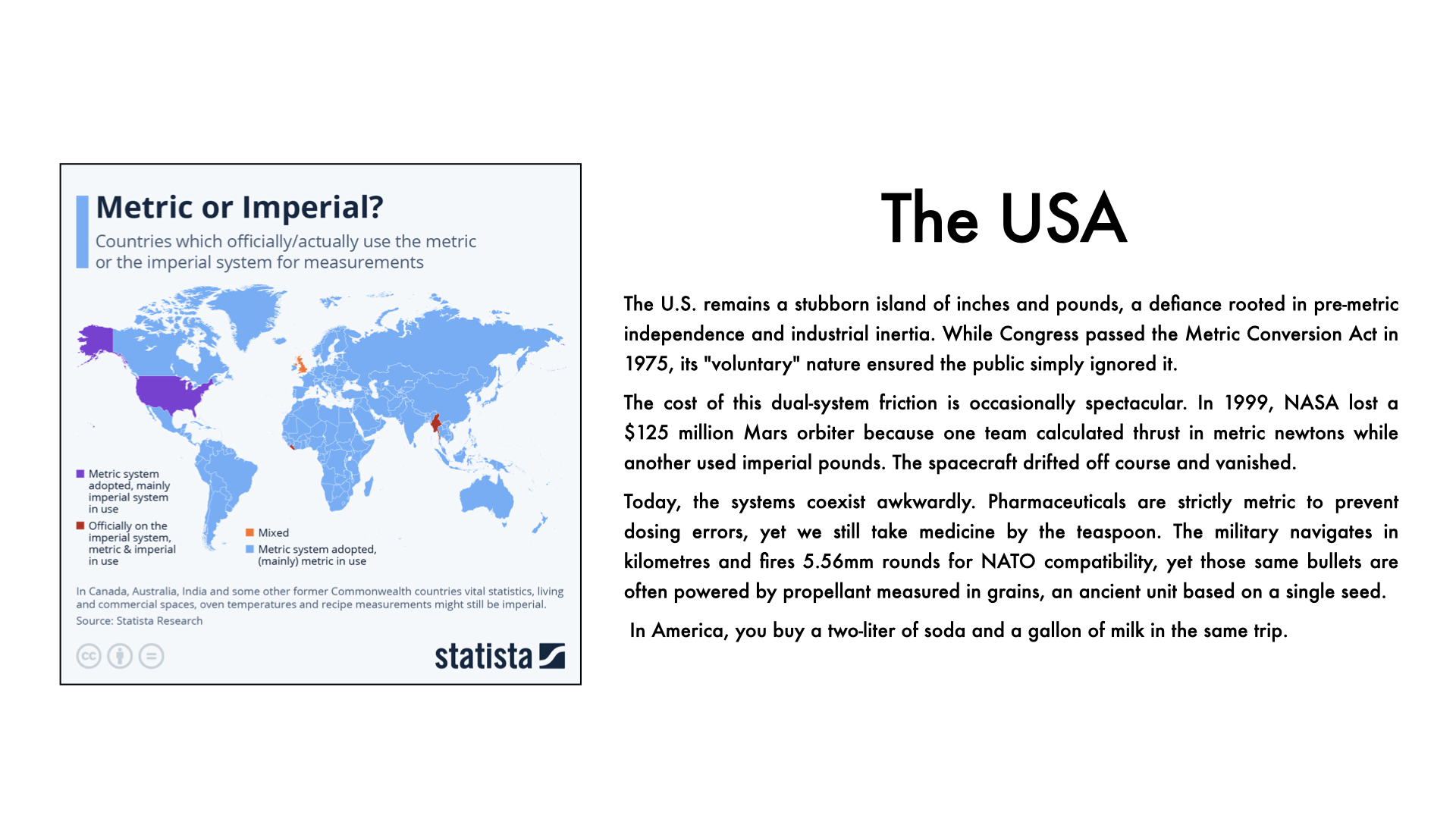
- The United States still uses imperial measurements despite being one of the most technologically advanced countries in the world. Do you think national identity can be tied to something as practical as a unit of measurement?
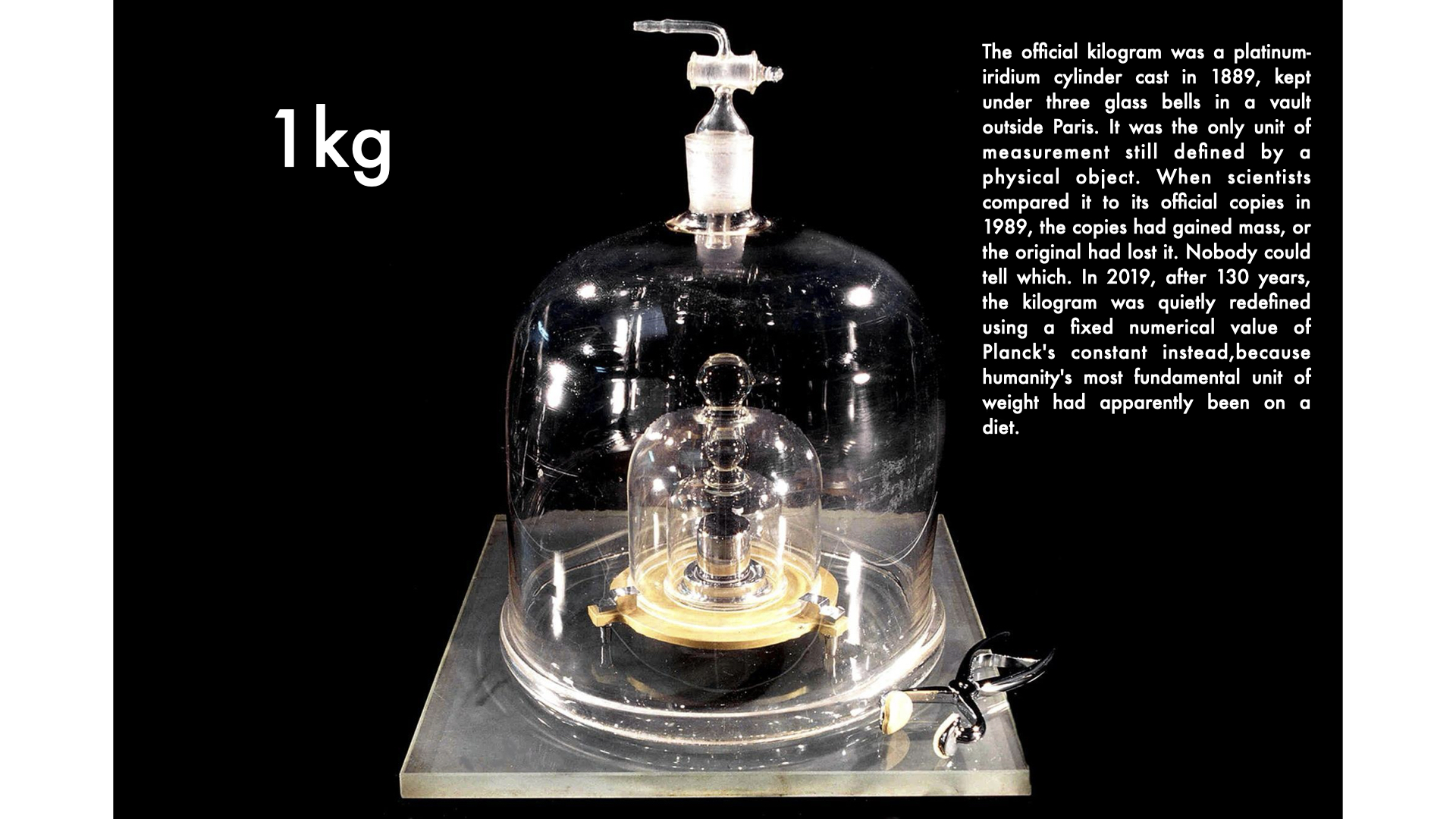
- The original kilogram — a metal cylinder in a Paris vault — was slowly losing mass, meaning every weight on earth was drifting. Does it concern you that our most fundamental measurements are, in the end, human constructions?
- The inch has become a verb — to inch forward — while no metric unit ever has. Can you think of other examples where a practical word has escaped its original meaning and become part of everyday language?
- The Babylonians gave us 60 minutes in an hour and 360 degrees in a circle — systems still in use 4,000 years later. What do you think makes a system so deeply embedded that even revolutions cannot remove it?
- We already navigate base-4, base-12, base-60 and decimal systems in a single sentence without noticing. Does this change how you think about the idea that the metric system is "simpler"?