Week 2️⃣ 8️⃣
Subs
🔊 Audio
📜 Show transcript
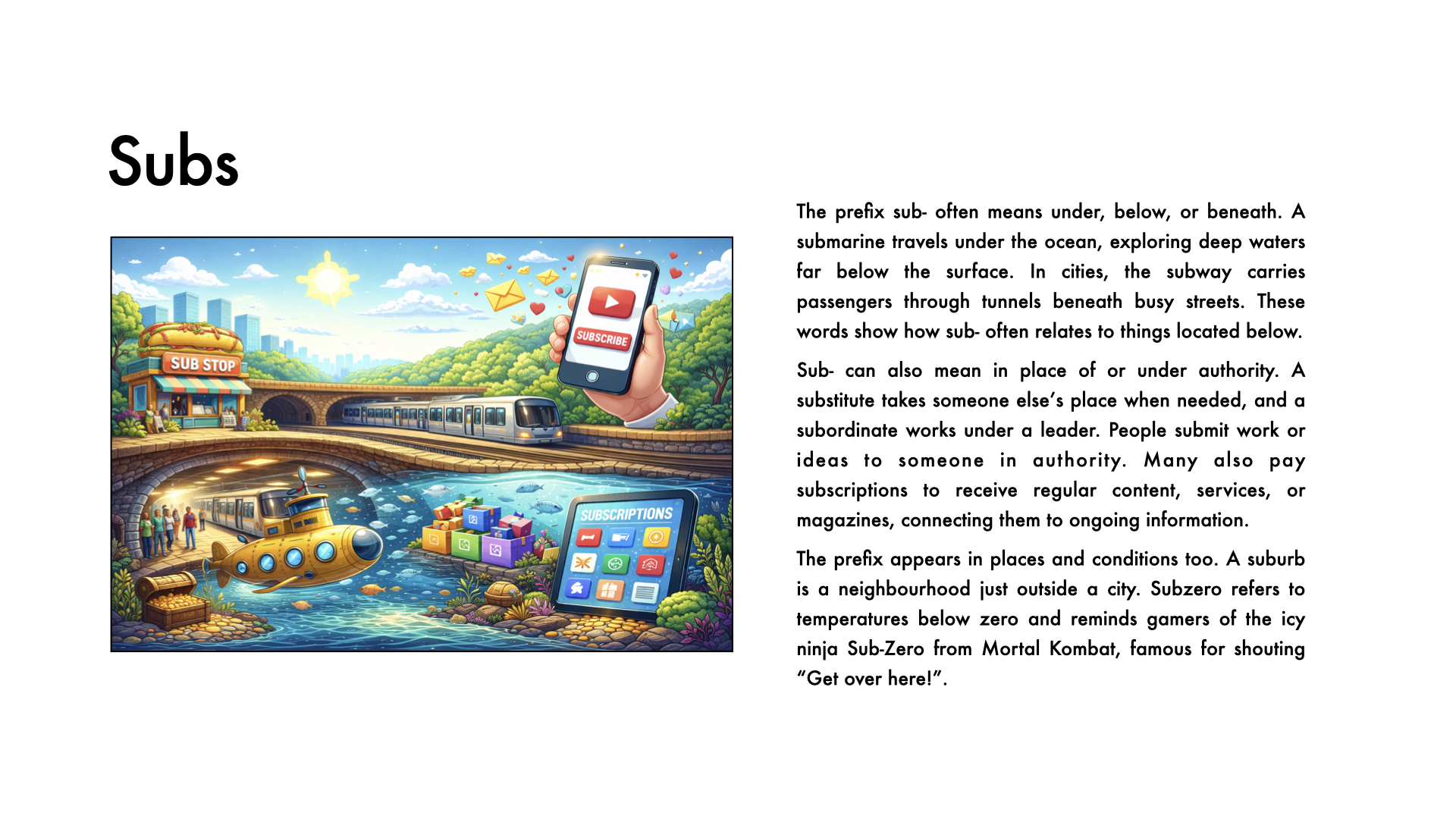
The prefix “sub” is a small but powerful part of the English language, meaning under, below, or beneath. Despite its size, it appears in a wide range of words and contexts, linking ideas across science, history, culture, and everyday life.
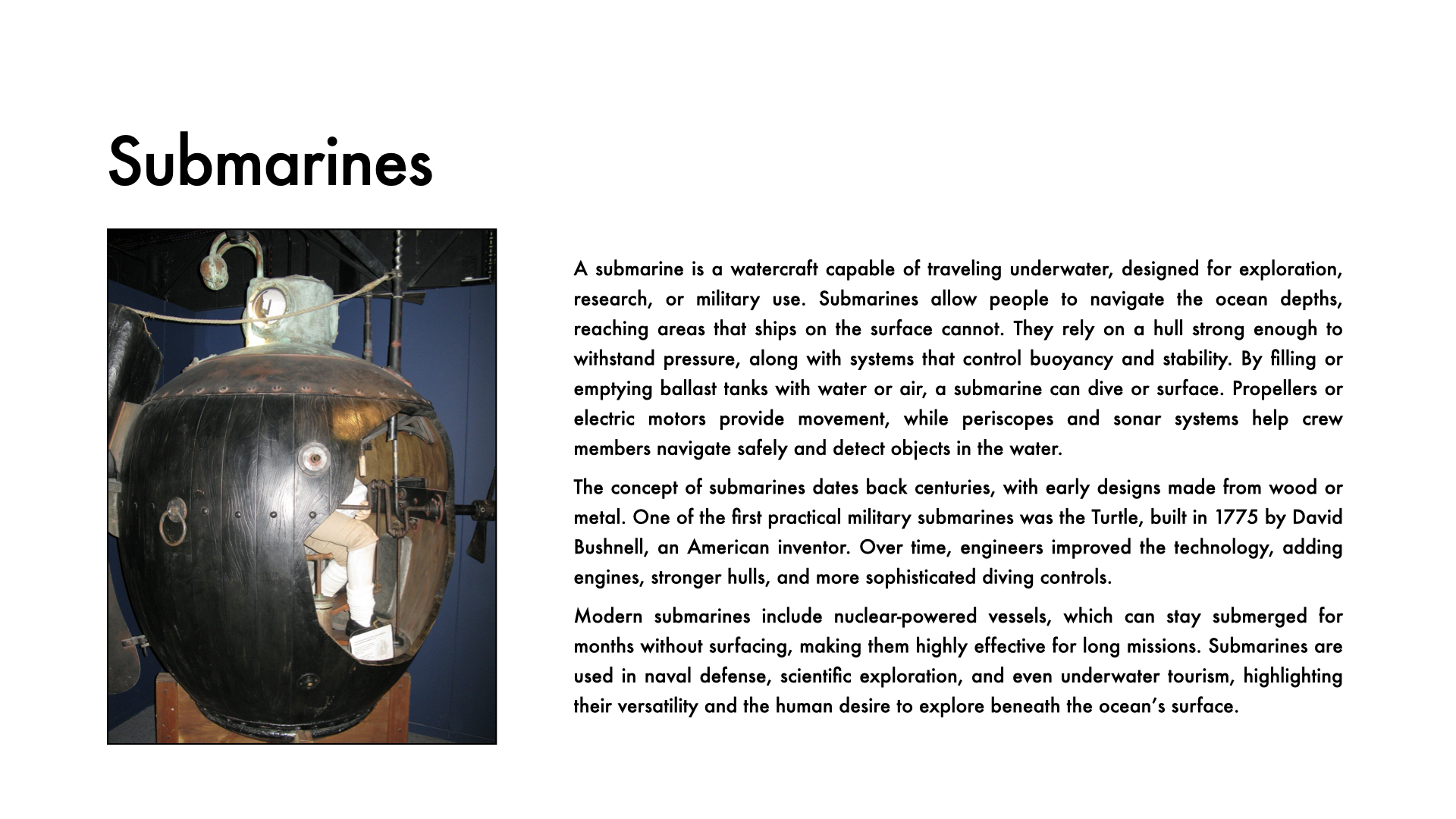
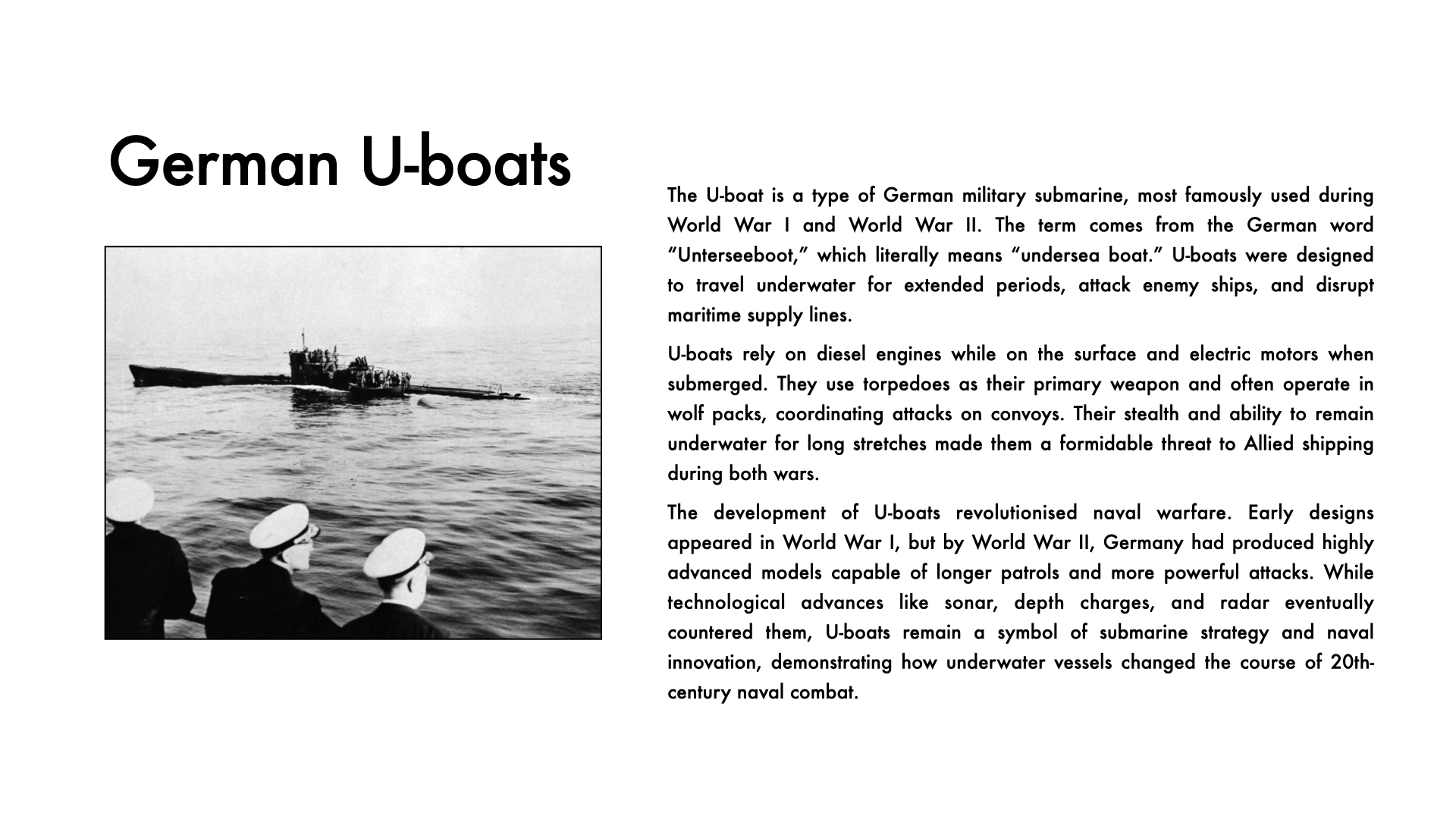
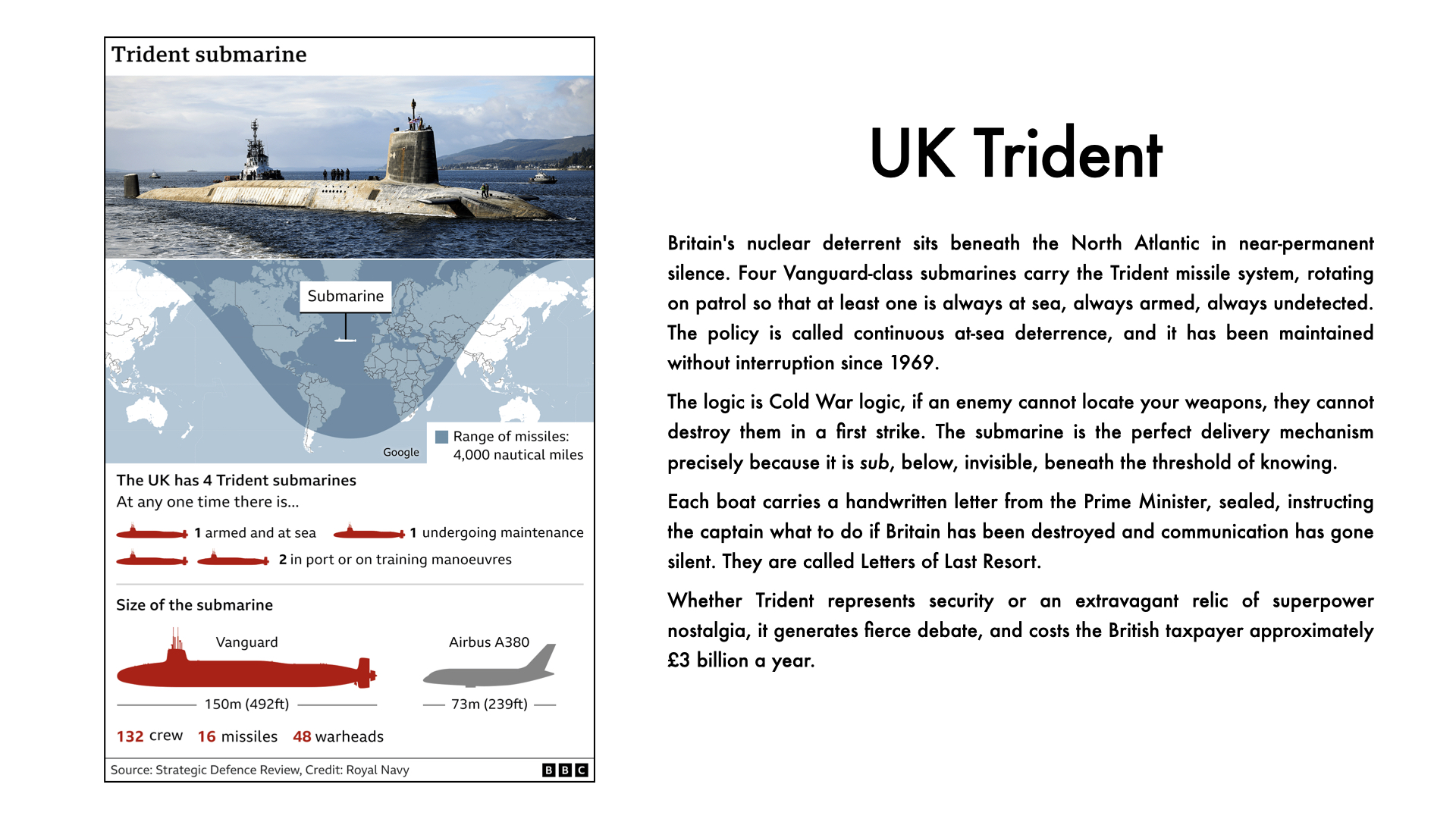
One clear example can be found underwater with submarines, vessels designed to travel beneath the surface of the sea. These machines use systems that control buoyancy, allowing them to dive and rise as needed. Submarines have played important roles in both exploration and military activity. German U-boats, for instance, were used during the World Wars to attack ships and disrupt supply routes, making them a significant force in naval conflict. In modern times, nuclear submarines such as those used in the United Kingdom’s Trident system operate silently beneath the ocean as part of a continuous defence strategy.
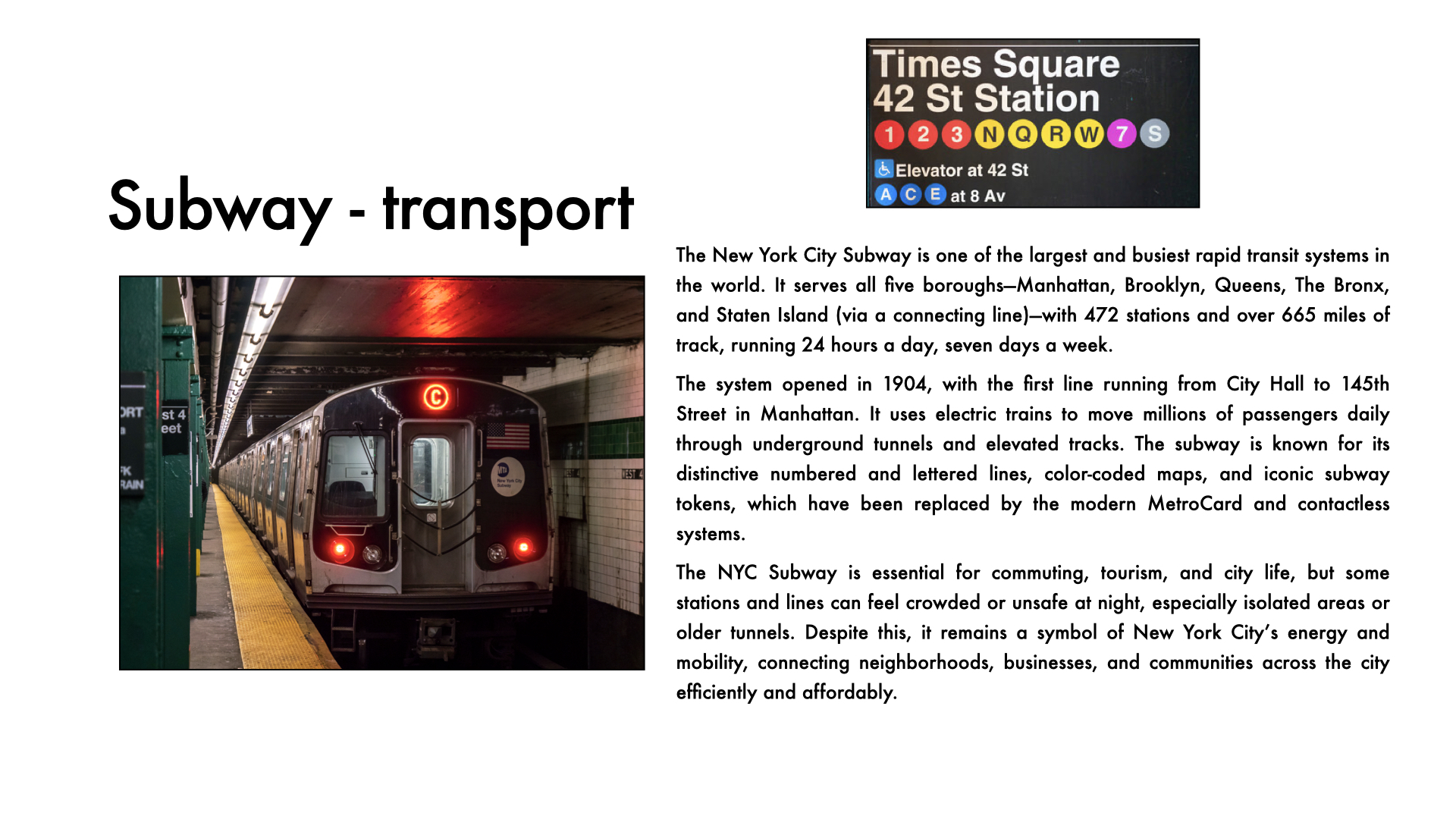
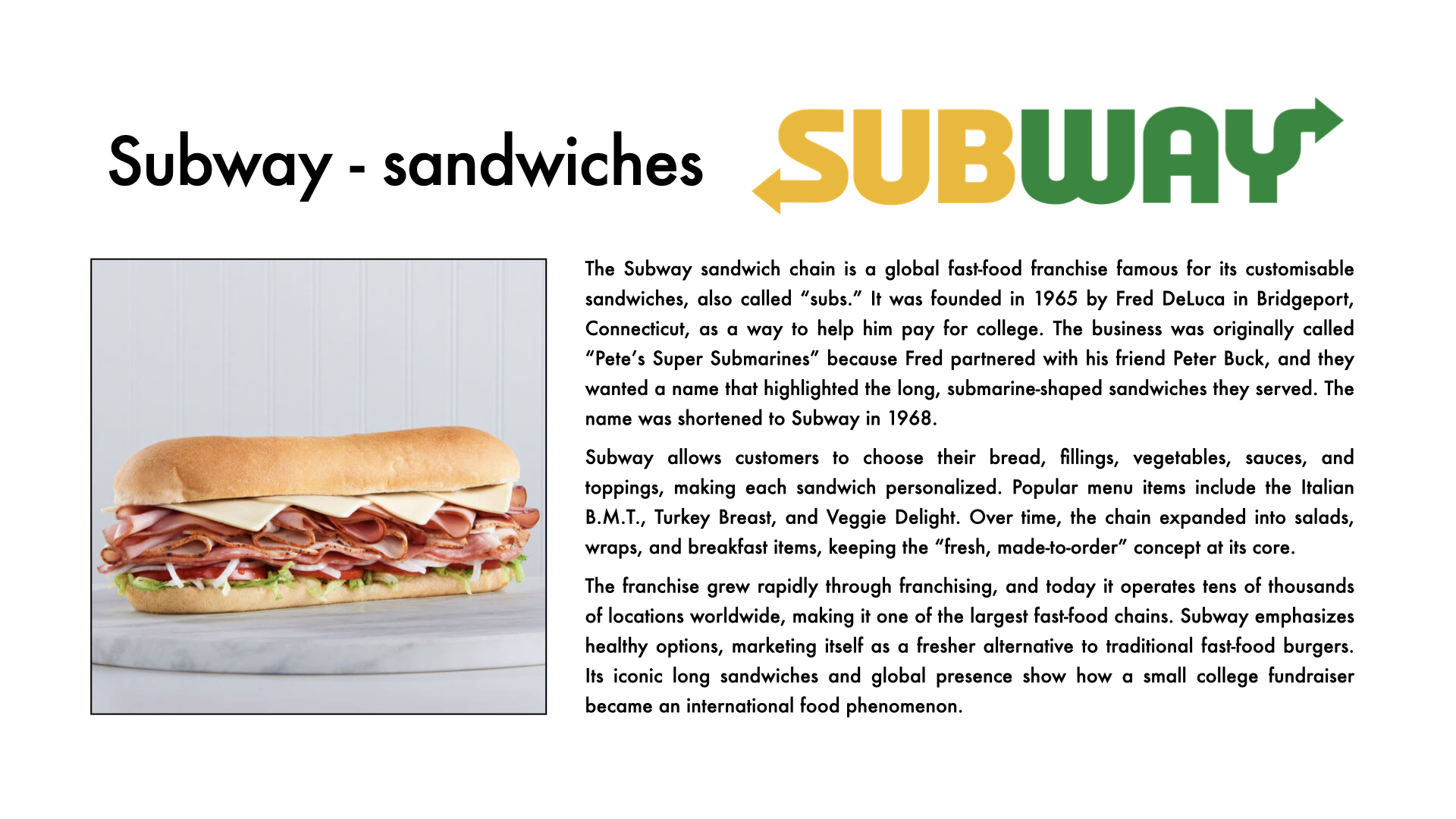
The idea of being below ground is also present in the subway, an underground railway system found in many large cities. These networks allow millions of people to travel quickly and efficiently, avoiding congestion above ground. In a more light-hearted context, the word “sub” also appears in the name of the Subway sandwich chain, which takes its name from the long, submarine-shaped bread used to make its products.
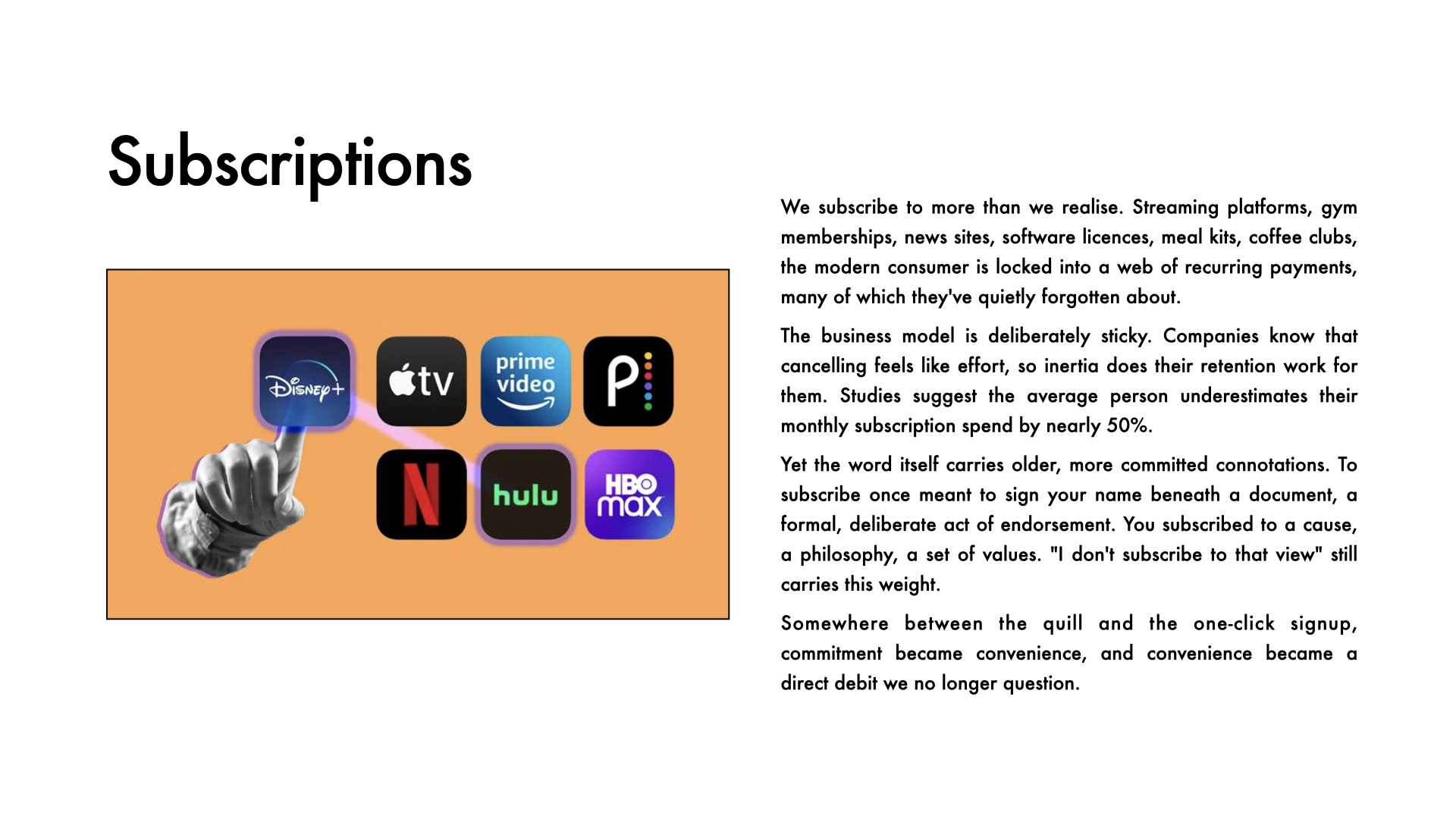
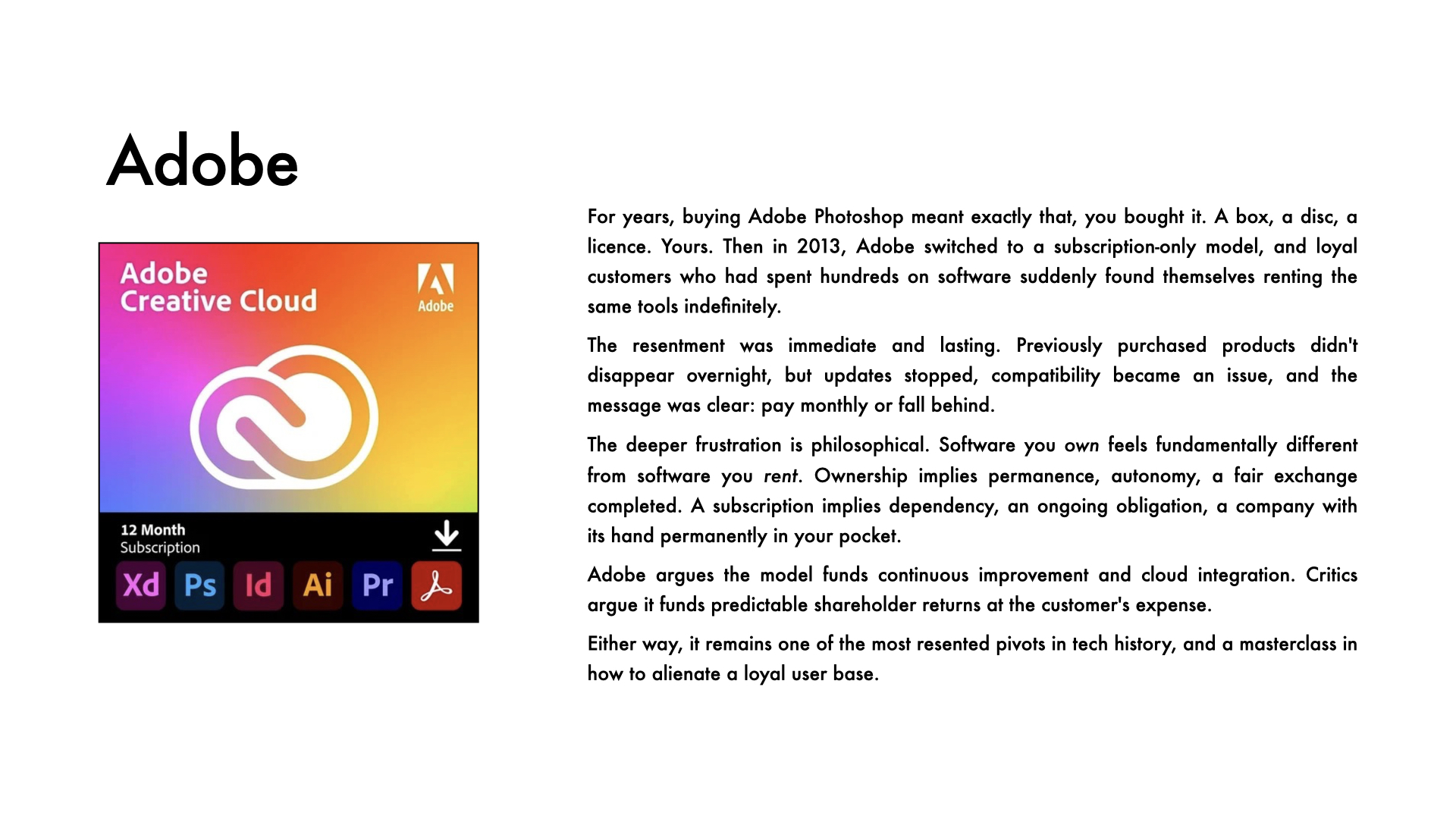
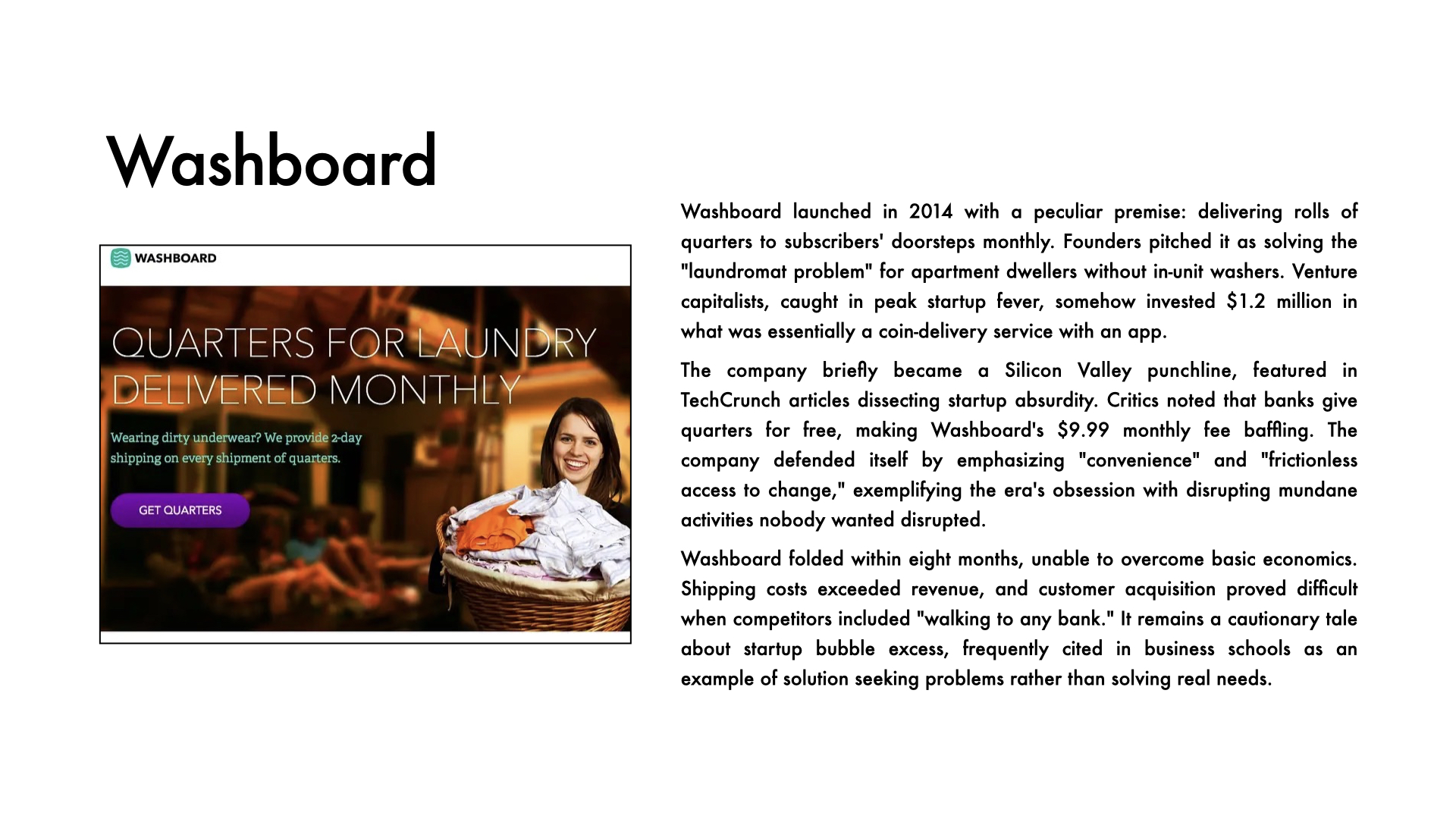
In modern life, “sub” is often linked to subscriptions, where people pay regularly for access to services rather than owning them outright. This model is common in streaming platforms, apps, and software. Companies such as Adobe have adopted subscription systems, which have changed how people use and pay for digital tools. However, not all subscription ideas succeed. One example is Washboard, a service that attempted to sell people regular deliveries of coins for use in laundry machines, but it only lasted around eight months.
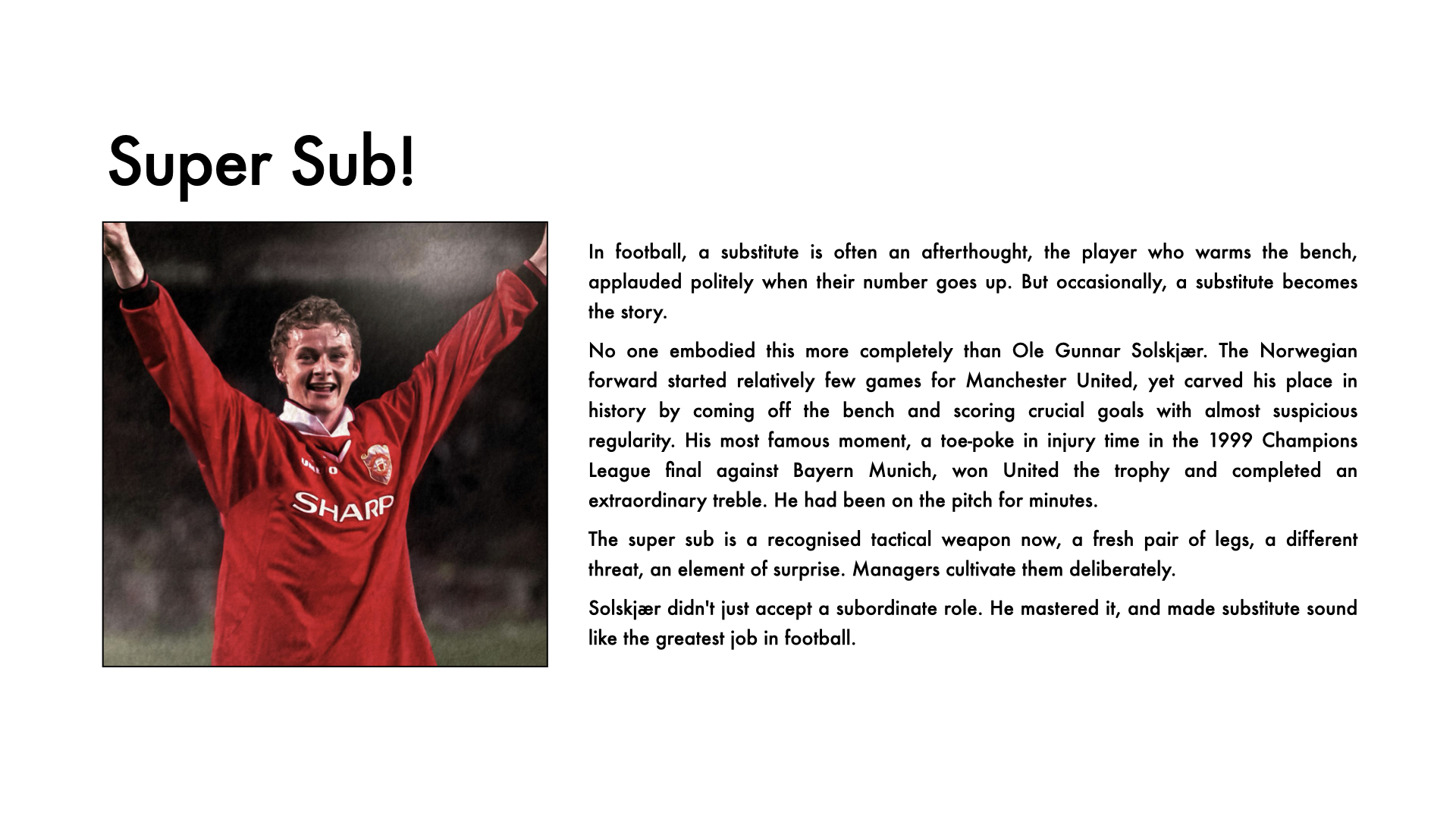
The prefix also appears in sport, where a substitute player, often called a “sub”, can influence the outcome of a match. A “super sub” is someone who makes a particularly strong impact after coming on. In geography, suburbs describe residential areas located just outside a city, offering a quieter lifestyle while remaining close to urban centres.
Finally, the word “sub” highlights interesting features of the English language itself. In words such as “subtle”, the letter “b” is silent, reflecting historical changes in pronunciation.
Overall, the prefix “sub” connects many different ideas through the simple concept of being beneath or below.
📽️ Slideshow


📺 Video
▶️ Sky News - Faslane: The Home Of Trident Nuclear Subs
▶️ Business Insider and Insider Food - The Rise And Fall Of Subway
▶️ Cold Fusion - Subscriptions Are Getting Out of Control
▶️ Linus Tech Tips - HP has Subscription Laptops Now
▶️ SportsHD - Legendary Substitutions
▶️ Crash Course - Cultures, Subcultures, and Countercultures: Crash Course Sociology #11
🔑 Key Vocabulary
- Submarine – a vessel designed to operate underwater, using controlled buoyancy to dive and surface.
- U-boat – a German military submarine used especially during the World Wars to attack ships and disrupt supply routes.
- Trident – the United Kingdom’s nuclear submarine system, which operates continuously at sea as part of its defence strategy.
- Subway – an underground railway system used for public transport in large cities.
- Sub (sandwich) – a long sandwich made with a roll shaped like a submarine, often filled with meats, cheese, and vegetables.
- Subscription – a payment model in which users pay regularly to access a product or service rather than owning it.
- Subscriber – a person who signs up and pays for ongoing access to a service or product.
- Substitute (sub) – a person who replaces another, commonly used in sport for a player who comes on during a match.
- Super sub – a substitute player who has a particularly strong or game-changing impact.
- Suburb – a residential area located on the outskirts of a city, often quieter than the centre.
- Suburban – relating to or characteristic of suburbs and their lifestyle.
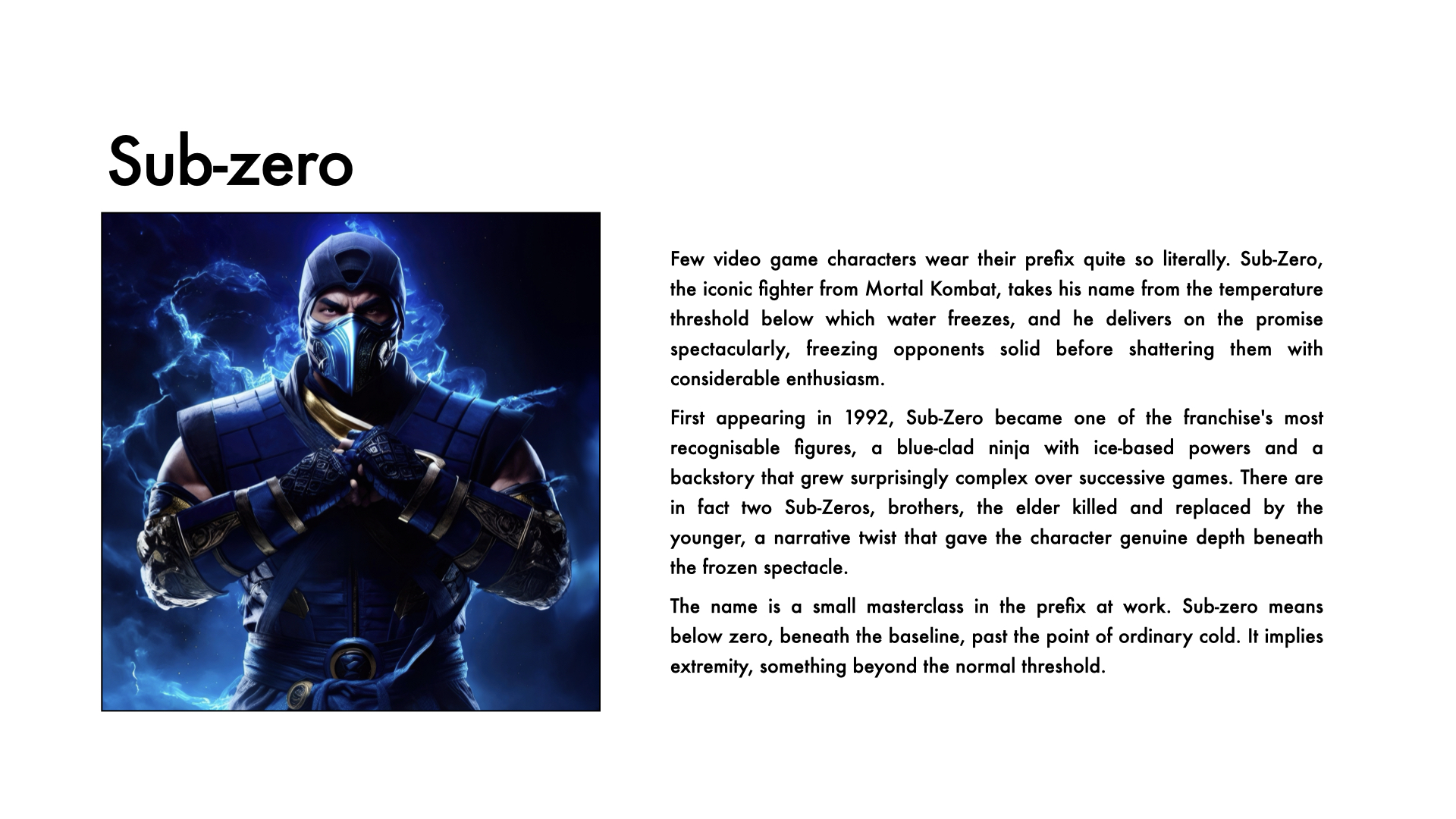
- Sub-zero – a temperature below zero, often associated with extreme cold.
- Subtle – something delicate or not immediately obvious; the “b” is silent in pronunciation.
- Subconscious – the part of the mind that influences behaviour without conscious awareness.
- Submerge – to go or put something under water.
- Subsurface – existing or occurring beneath the surface.
- Substandard – below the expected or required level of quality.
- Subheading – a smaller title within a larger section of text.
💬 Conversation Questions
- The prefix “sub” appears in many areas of life. Can you think of other words with “sub” and explain what they have in common?
- Submarines operate deep underwater and are often used in military contexts. Do you think their role in modern defence is necessary, or should countries invest in different technologies?
- German U-boats had a major impact during wartime. Do you think studying this kind of military history is important, or should education focus more on present-day issues?
- The UK’s Trident system is designed to remain hidden beneath the sea at all times. Do you think nuclear deterrence helps maintain peace, or does it create more risk?
- Subways are essential in many large cities. Do you prefer underground transport systems, or would you rather travel above ground? Why?
- The word “sub” can also refer to food, such as submarine sandwiches. Do you think global food chains like Subway are a positive influence, or do they reduce local food culture?
- Subscriptions are now a major part of everyday life. Do you prefer paying for services monthly, or would you rather own products outright?
- Some subscription ideas, like services delivering laundry coins, have failed quickly. Why do you think some business ideas succeed while others do not?
- In sport, a substitute or “sub” can completely change a game. Do you think substitutes should play a bigger or smaller role in matches?
- Many people choose to live in suburbs rather than city centres. Would you prefer suburban life or living in the middle of a city? What are the advantages of each?