Week 2️⃣ 6️⃣
Premflix
🔊 Audio
📜 Show transcript
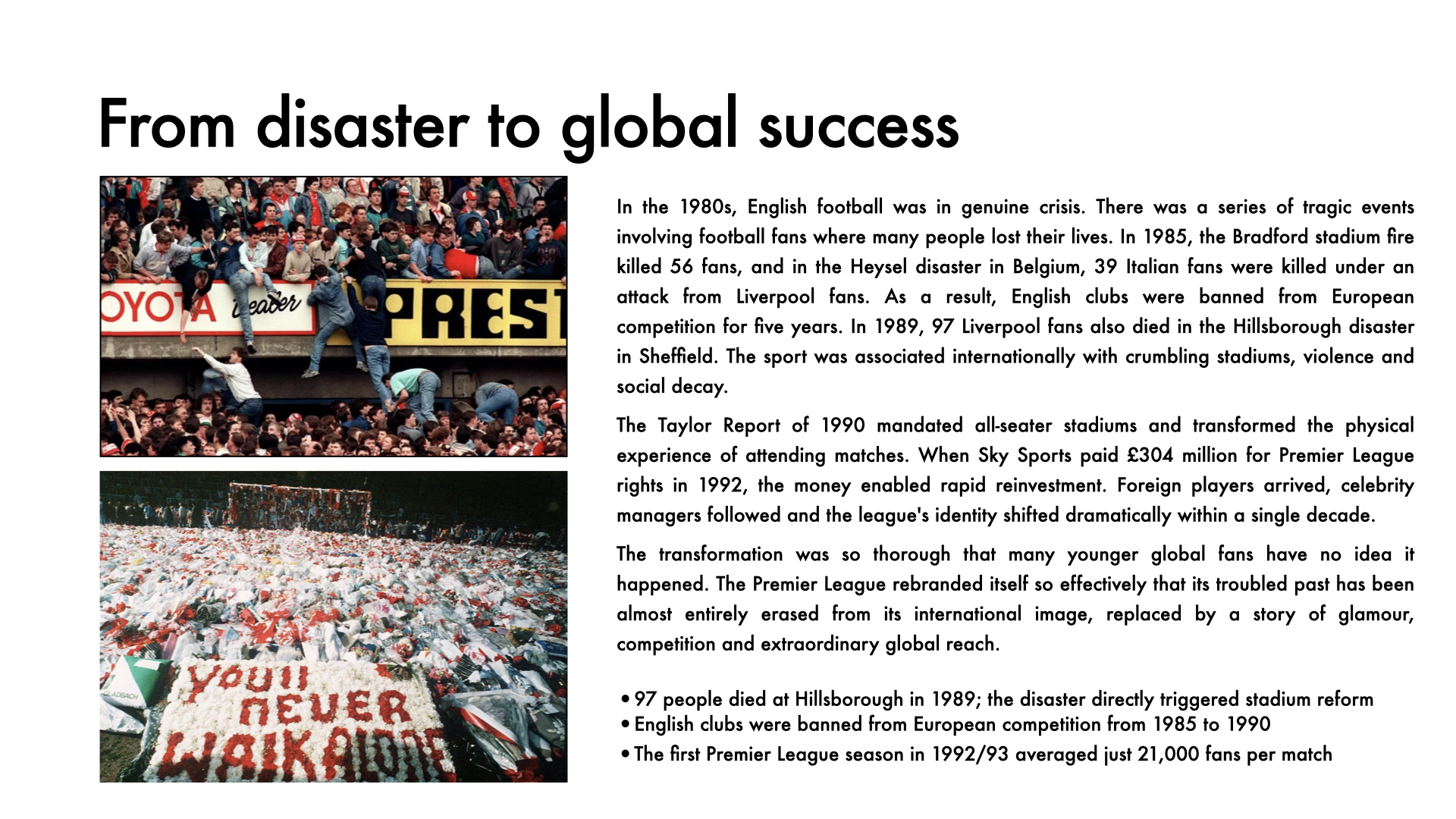
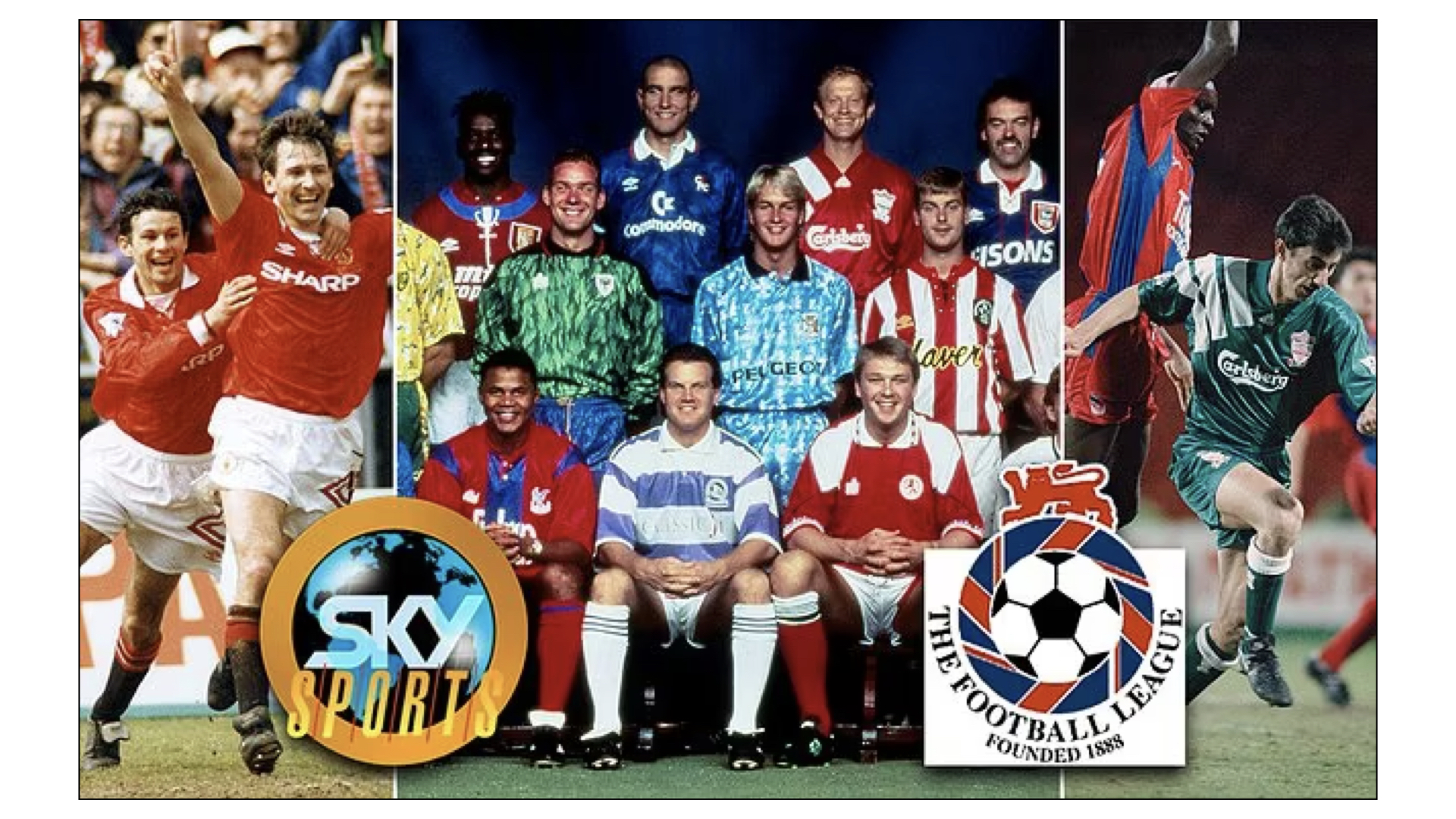
Thirty years ago, English football was rebuilding itself from the ground up. Hillsborough, Heysel, Bradford – the 1980s had been a decade of tragedy, violence and crumbling stadiums. Then came the Taylor Report, the birth of the Premier League and a cheque from Sky Sports, and everything changed. Within a decade, English football had reinvented itself as a global entertainment product, it has never looked back.
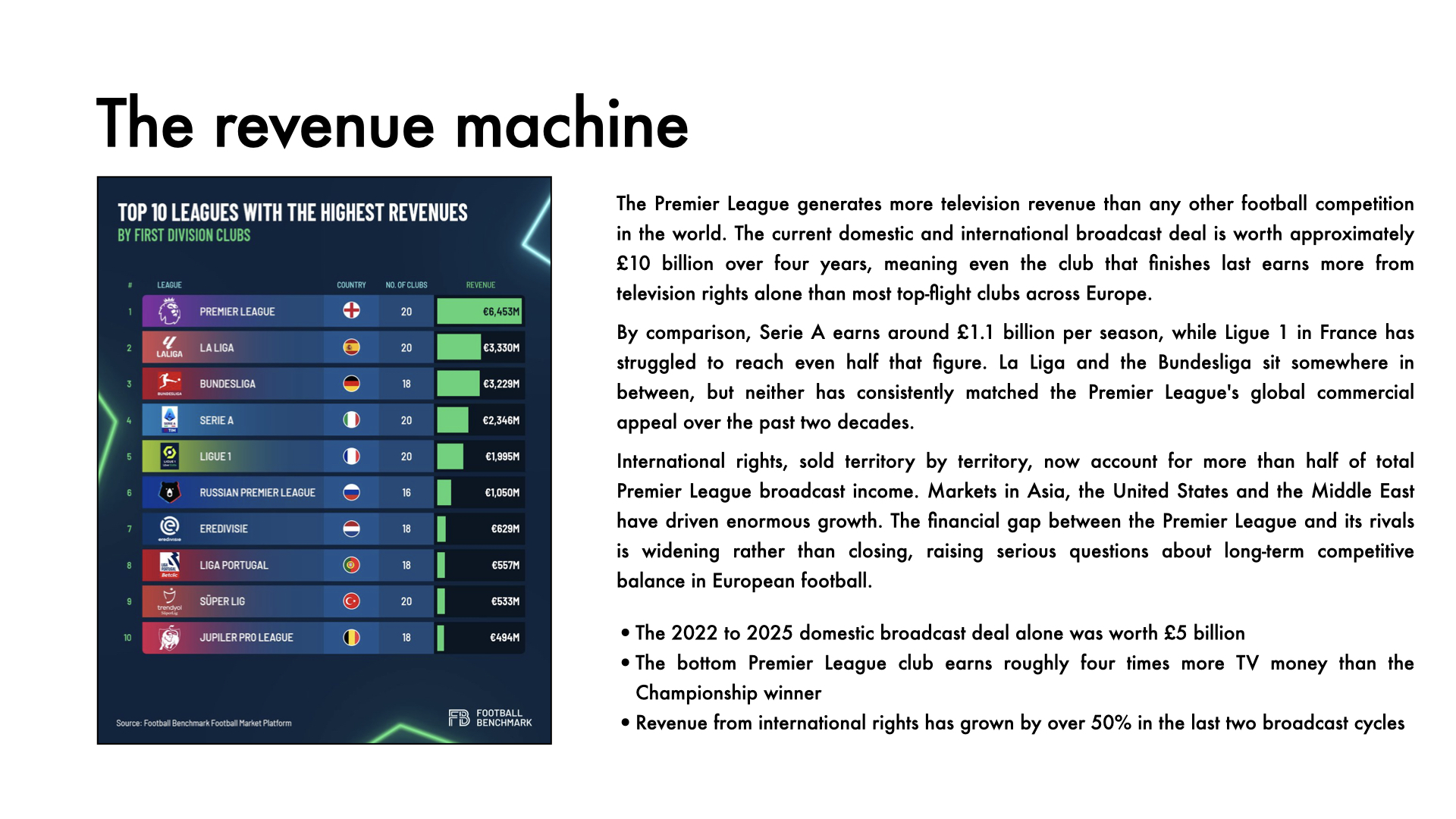
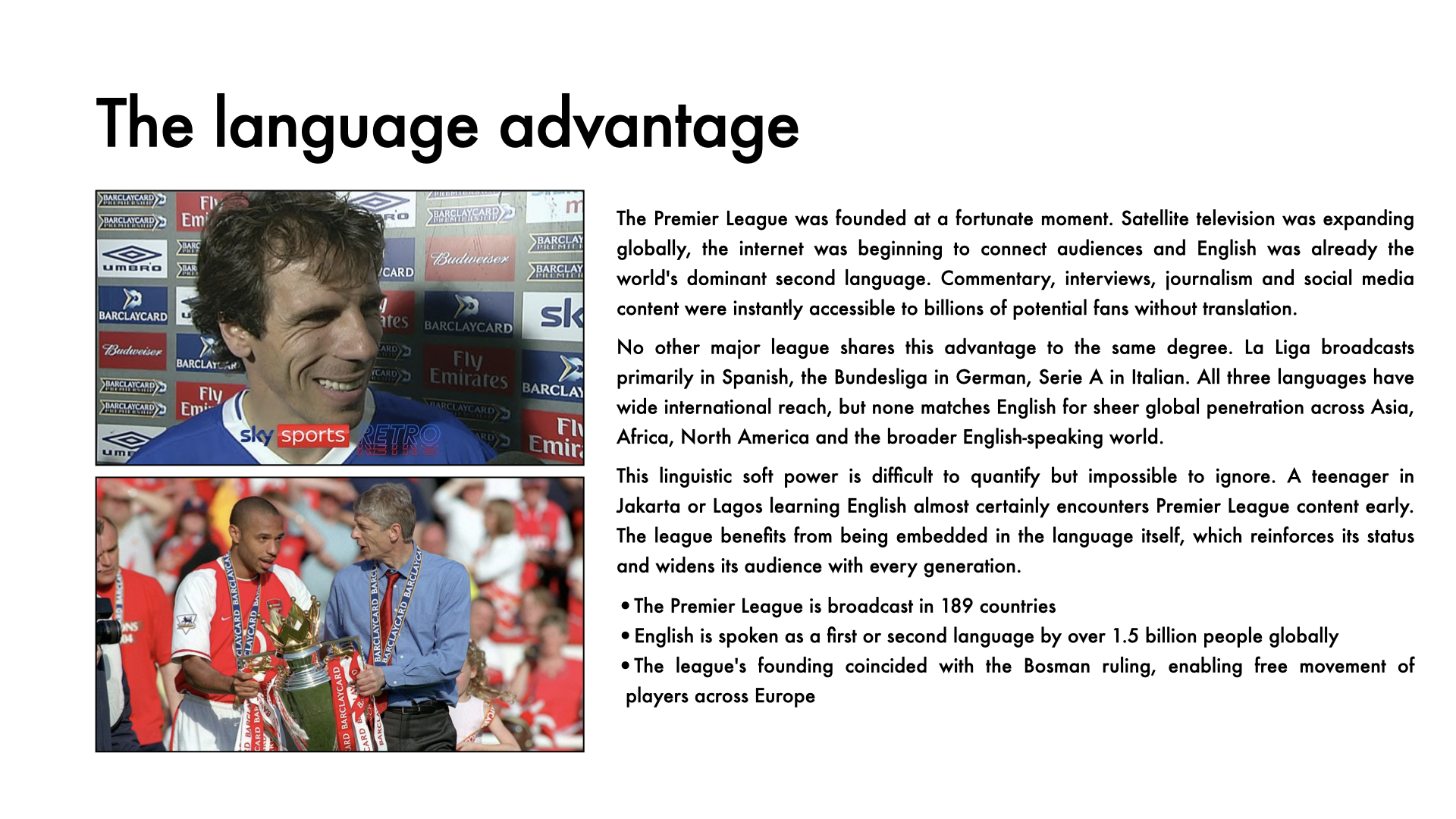
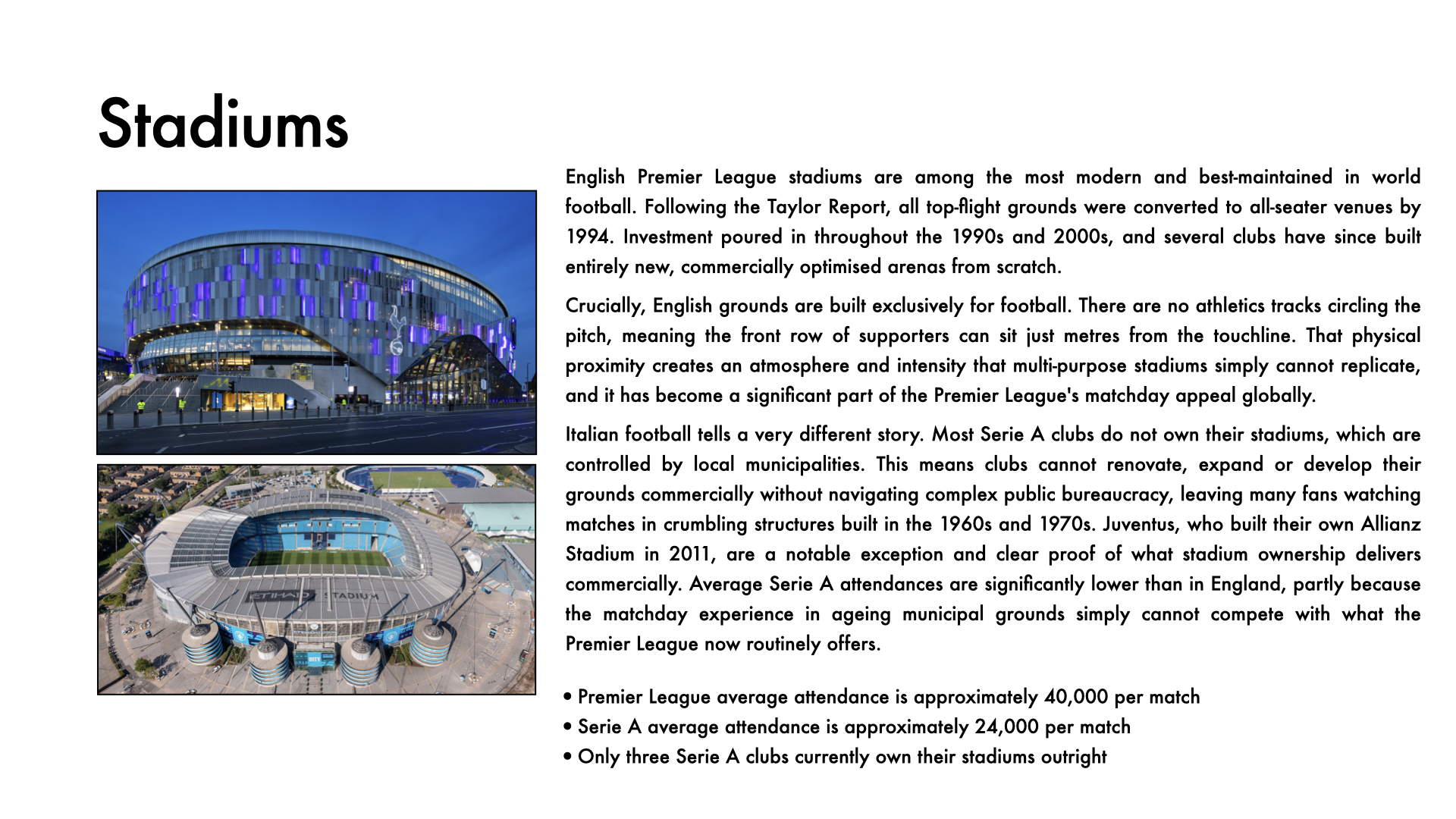
Today the Premier League is broadcast in 189 countries, generates more television revenue than any other football competition on earth, and benefits from something no rival league can easily replicate: the English language. From Buenos Aires to Beijing, a generation of football fans has grown up watching the Premier League in the language they were already learning at school. That linguistic advantage, combined with modern all-seater stadiums built exclusively for football, where fans sit metres from the pitch rather than behind an athletics track, has given the league a matchday atmosphere and a global reach that Serie A, the Bundesliga and Ligue 1 have struggled to match.
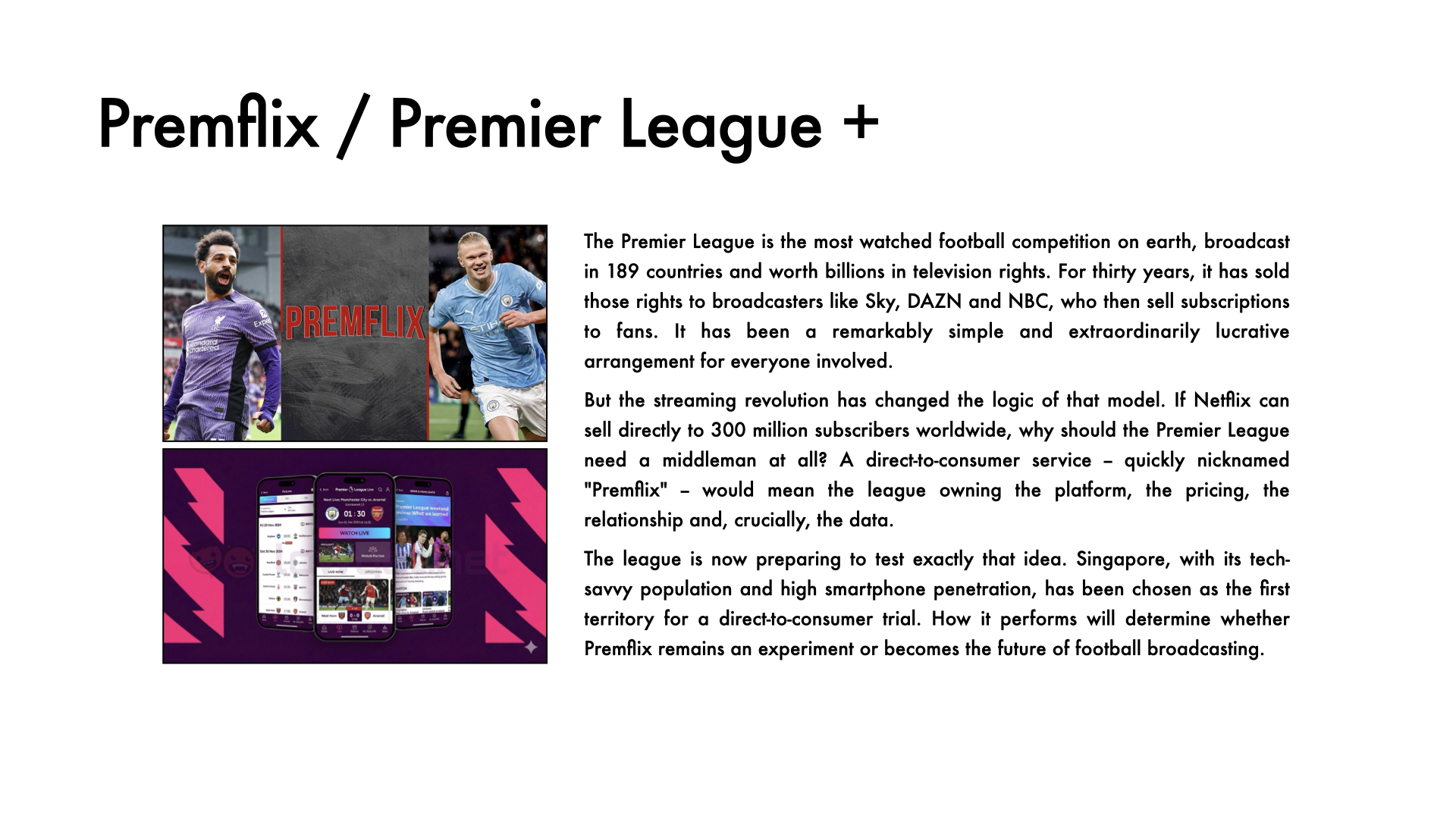
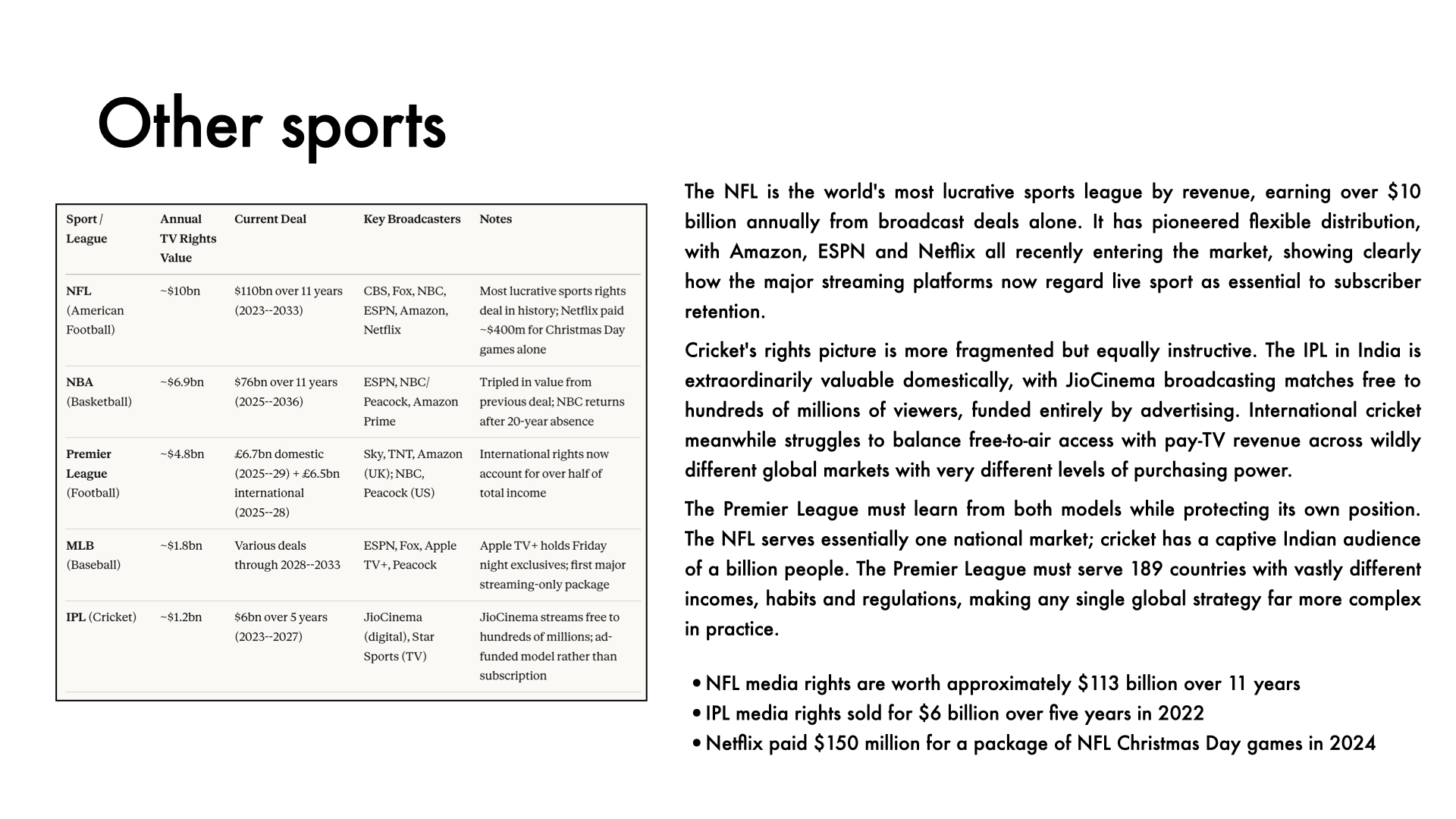
But the model that built all of this – selling rights to broadcasters like Sky, DAZN and NBC, who then sell on to fans – is beginning to look vulnerable. The streaming revolution has fundamentally changed the logic. Netflix sells directly to over 300 million subscribers worldwide. The NFL has deals with Amazon and Netflix. Cricket’s IPL streams free to hundreds of millions of Indian viewers funded entirely by advertising. The question the Premier League is now asking itself is an obvious one: why do we still need a middleman?
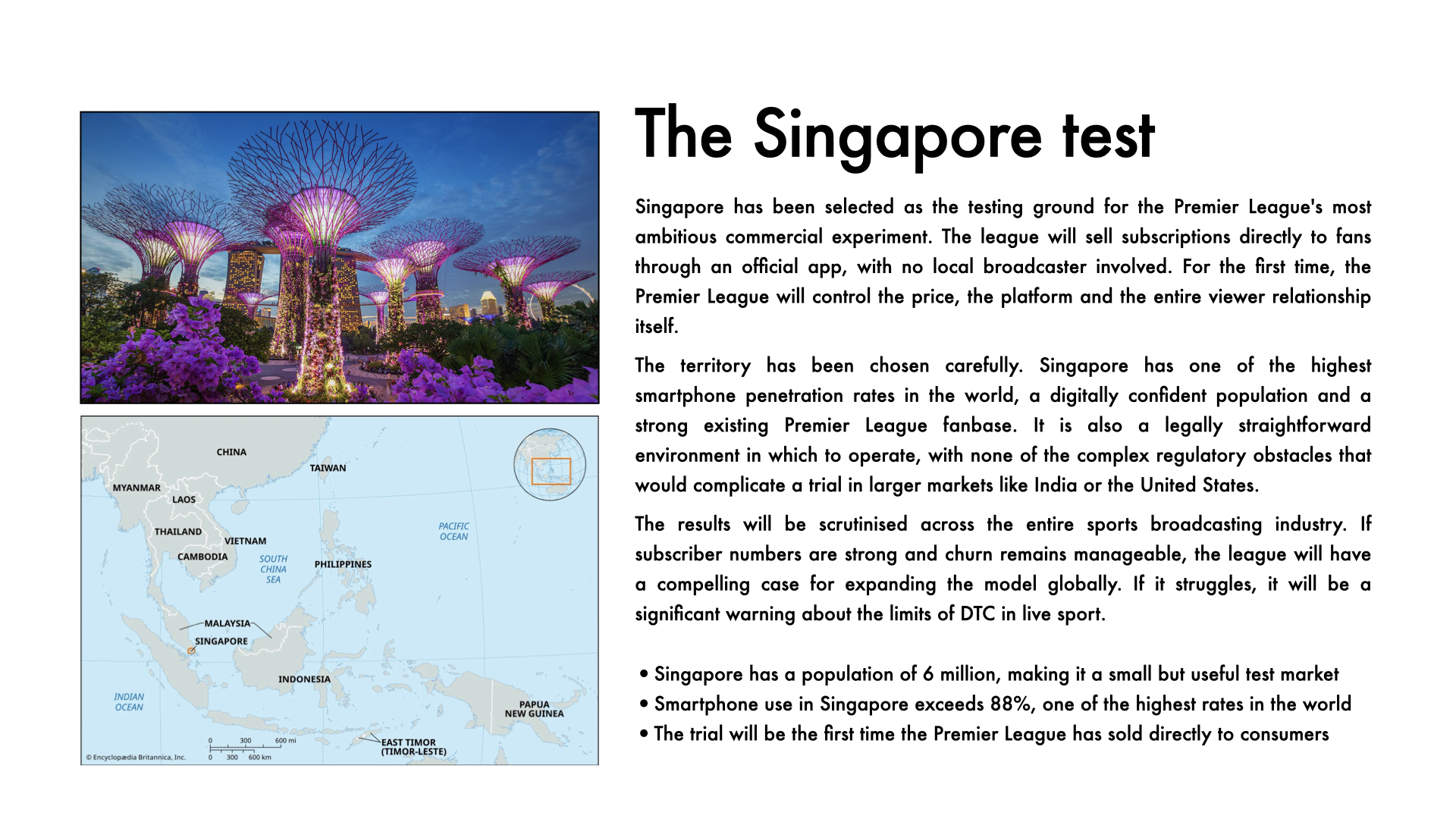
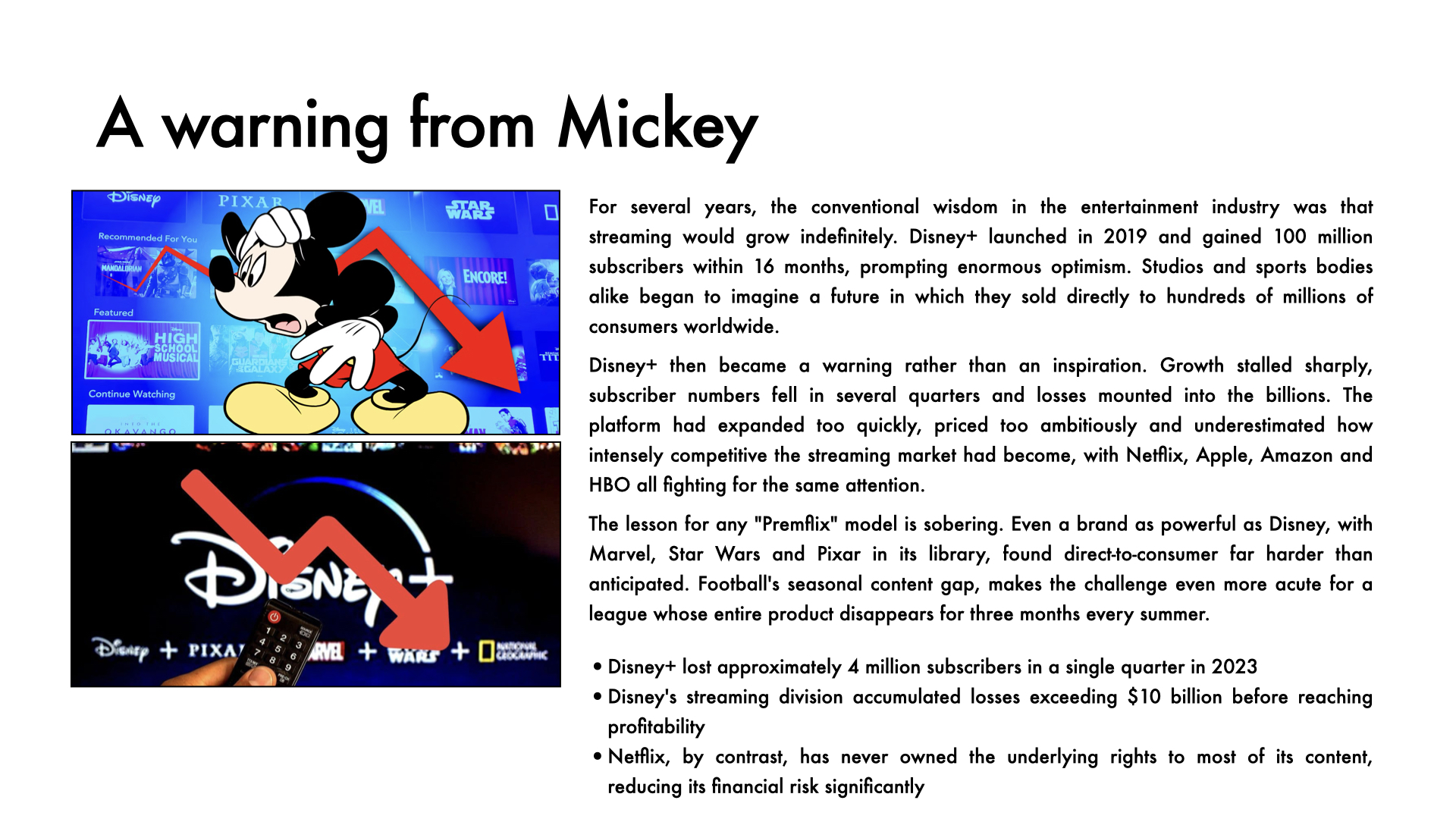
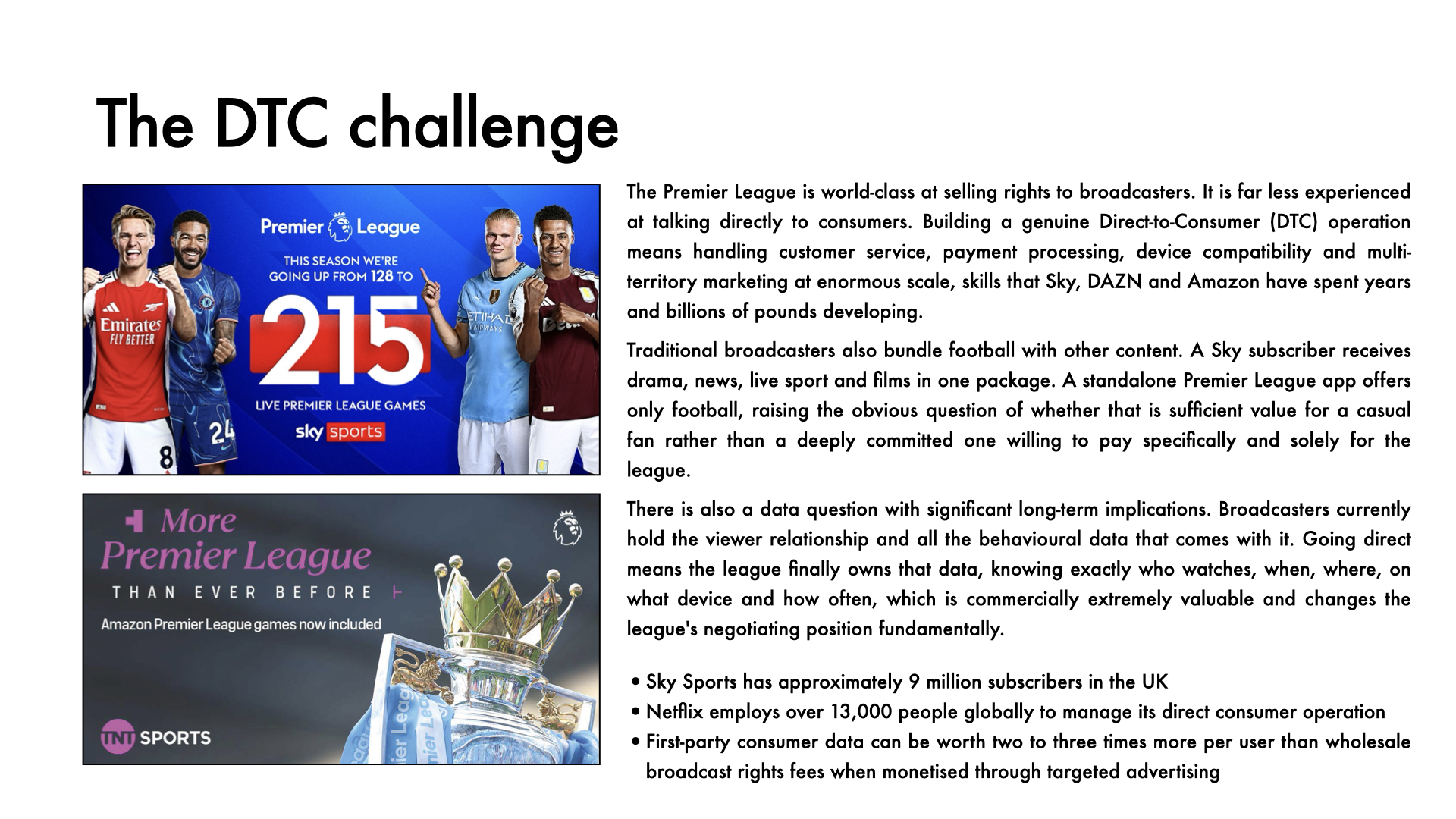
The idea of a direct-to-consumer Premier League service – Premflix – is no longer theoretical. Singapore has been chosen as the first test market, and the trial is coming. But as Disney discovered when its own streaming ambitions stalled badly, going direct is considerably harder than it looks. Pricing a global service fairly across 189 countries with wildly different incomes is a genuine puzzle. Keeping subscribers engaged through a sixteen-week summer with no live football is a structural problem no documentary series fully solves. And building the customer service, data and marketing infrastructure that Sky has spent decades developing is not something any organisation does quickly or cheaply.
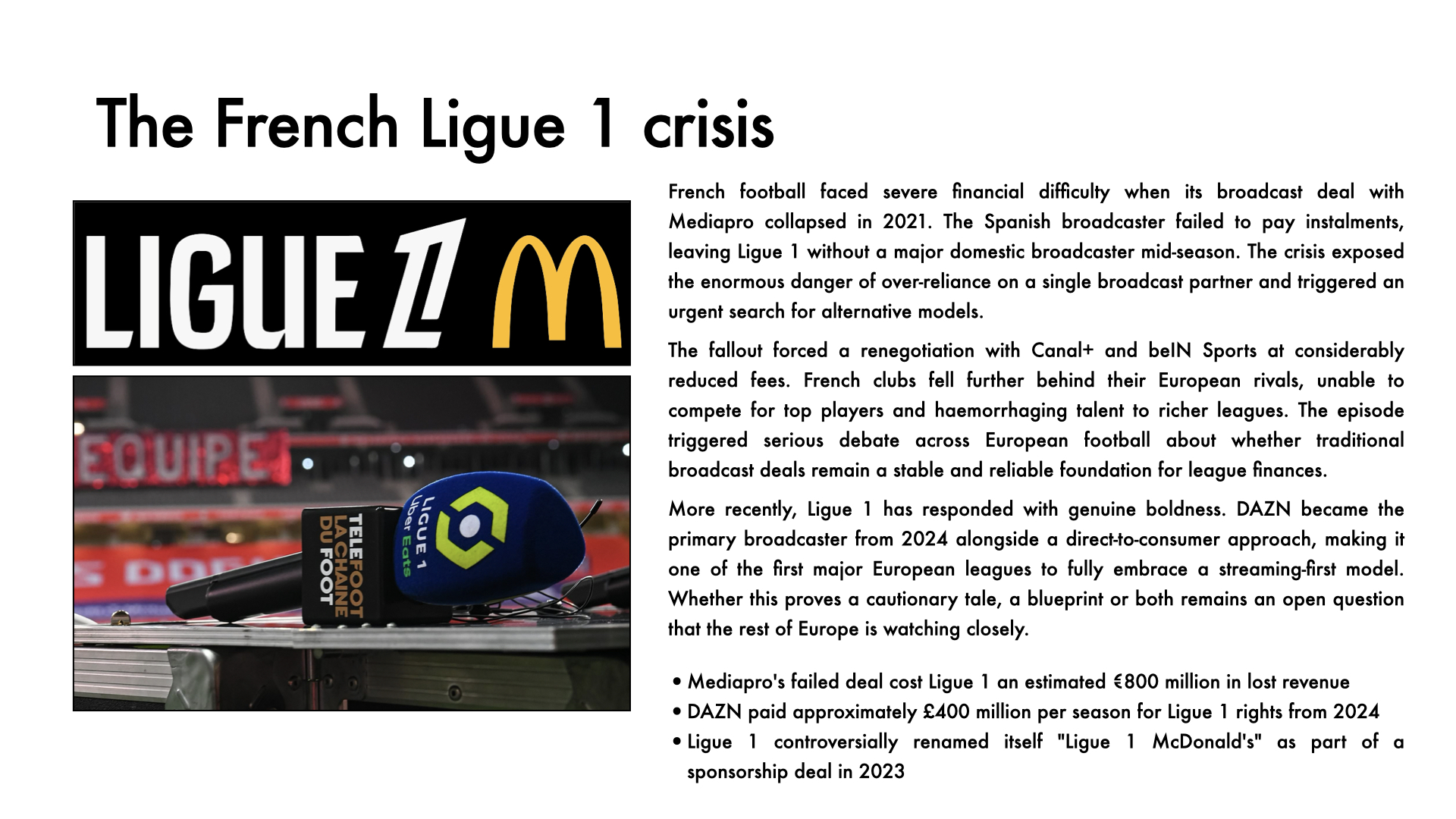
The French league’s near-collapse after the Mediapro disaster showed what happens when broadcast revenue disappears suddenly. Premflix could be the future. It could also be a very expensive lesson. That is precisely what makes it such an interesting story.
📽️ Slideshow
📺 Video
🔑 Key Vocabulary
- Ad-supported tier – a cheaper or free streaming option where viewers watch adverts instead of paying a full subscription fee.
- Broadcast rights – the legal permission to transmit a sporting event on television, radio or online platforms.
- Bundling – packaging several products or services together and selling them as a single combined offering.
- Churn – the rate at which subscribers cancel a service over a given period.
- Direct-to-consumer (DTC) – a model in which a producer sells directly to the end user, cutting out intermediaries such as broadcasters.
- Exclusive rights – a contract giving a single broadcaster sole permission to show specific content, blocking all competitors.
- First-party data – information collected directly from a company's own customers, considered more valuable than data bought from third parties.
- Gatekeepers – established companies, such as traditional broadcasters, that control access to audiences.
- Geoblocking – restricting online content to users in specific countries, commonly used to enforce territorial broadcast agreements.
- Lateral competition – rivalry between services offering different content but competing for the same consumer time and money.
- Market penetration – the extent to which a product has been adopted by consumers within a given territory.
- Middleman – a company acting as an intermediary between a producer and the end consumer.
- Price sensitivity – the degree to which consumers change their buying behaviour in response to price changes.
- Purchasing power parity – the idea that prices should reflect what consumers in different countries can realistically afford.
- Revenue share – an arrangement in which income from a deal is divided between two or more parties according to an agreed formula.
- Rights holder – the organisation that legally owns the rights to a competition and controls how it is distributed and sold.
- Solidarity payments – funds distributed by a league to smaller or lower-division clubs as a share of centrally negotiated broadcast income.
- Streaming – delivering video or audio content over the internet in real time, without downloading a file in advance.
💬 Conversation Questions
- Do you currently pay for a streaming service? How many do you subscribe to, and do you feel you get good value?
- Have you ever cancelled a subscription and then resubscribed a few months later? What made you do it?
- How do you usually watch Premier League football? Through a broadcaster, a pub, a stream, or something else?
- Would you pay directly for a Premier League app, or would you only watch if it were included in a package you already have?
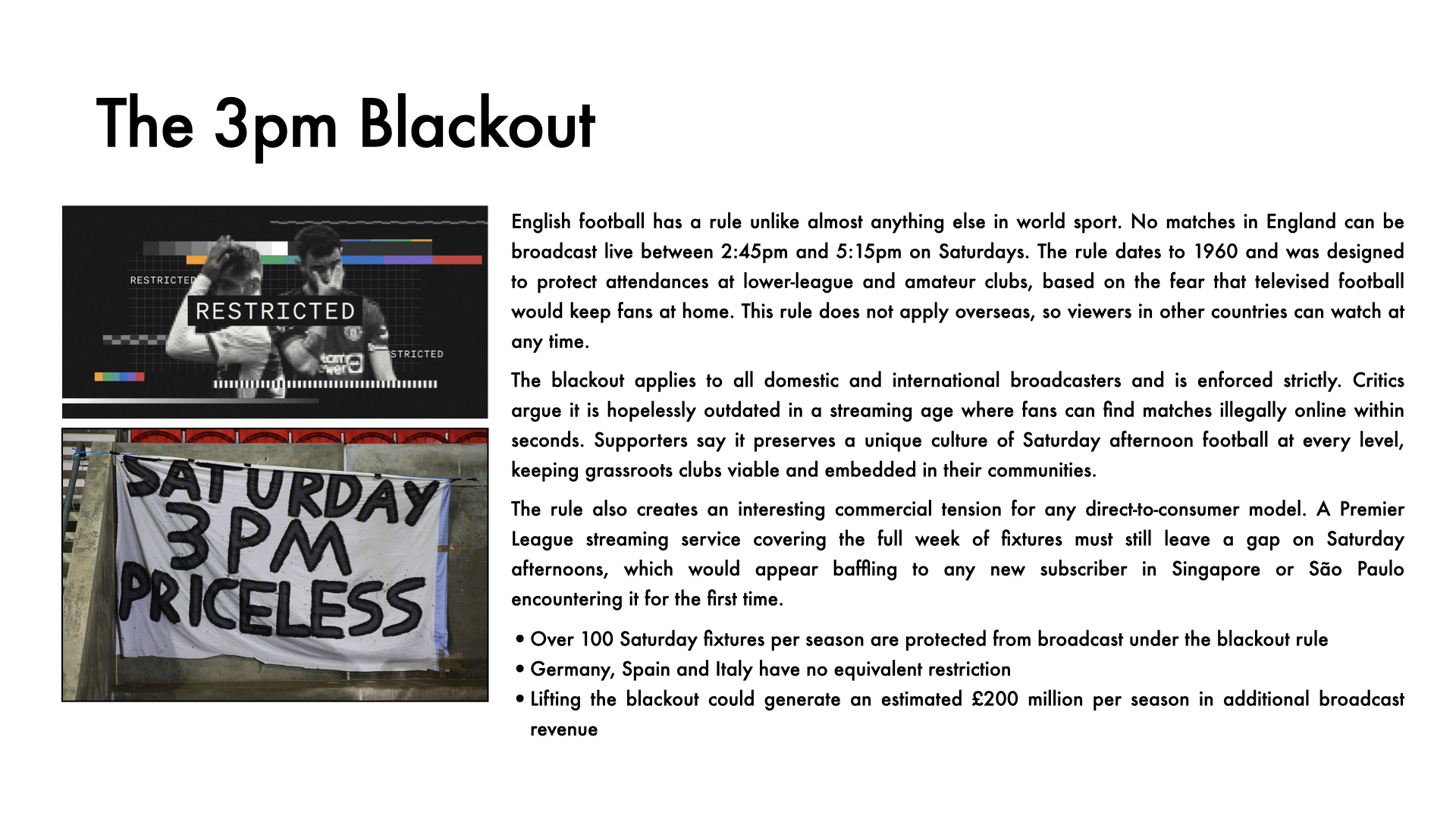
- Do you think the 3pm Saturday blackout is a good rule or an outdated one? Does it affect you personally?
- The Premier League earns far more from TV rights than Serie A or Ligue 1. Does that feel fair to you, or does it damage European football overall?
- Disney spent billions on streaming and still struggled. Does that surprise you? What does it tell us about the limits of big brands?
- If you lived in Singapore, would you be an early adopter of Premflix, or would you wait to see how it developed?
- Do you think promotion and relegation makes football more exciting, or does the uncertainty make it harder to follow a club long-term?
- If you could redesign how football is broadcast from scratch, what would your ideal model look like?