Week 2️⃣ 2️⃣
Gorpcore
🔊 Audio
📜 Show transcript
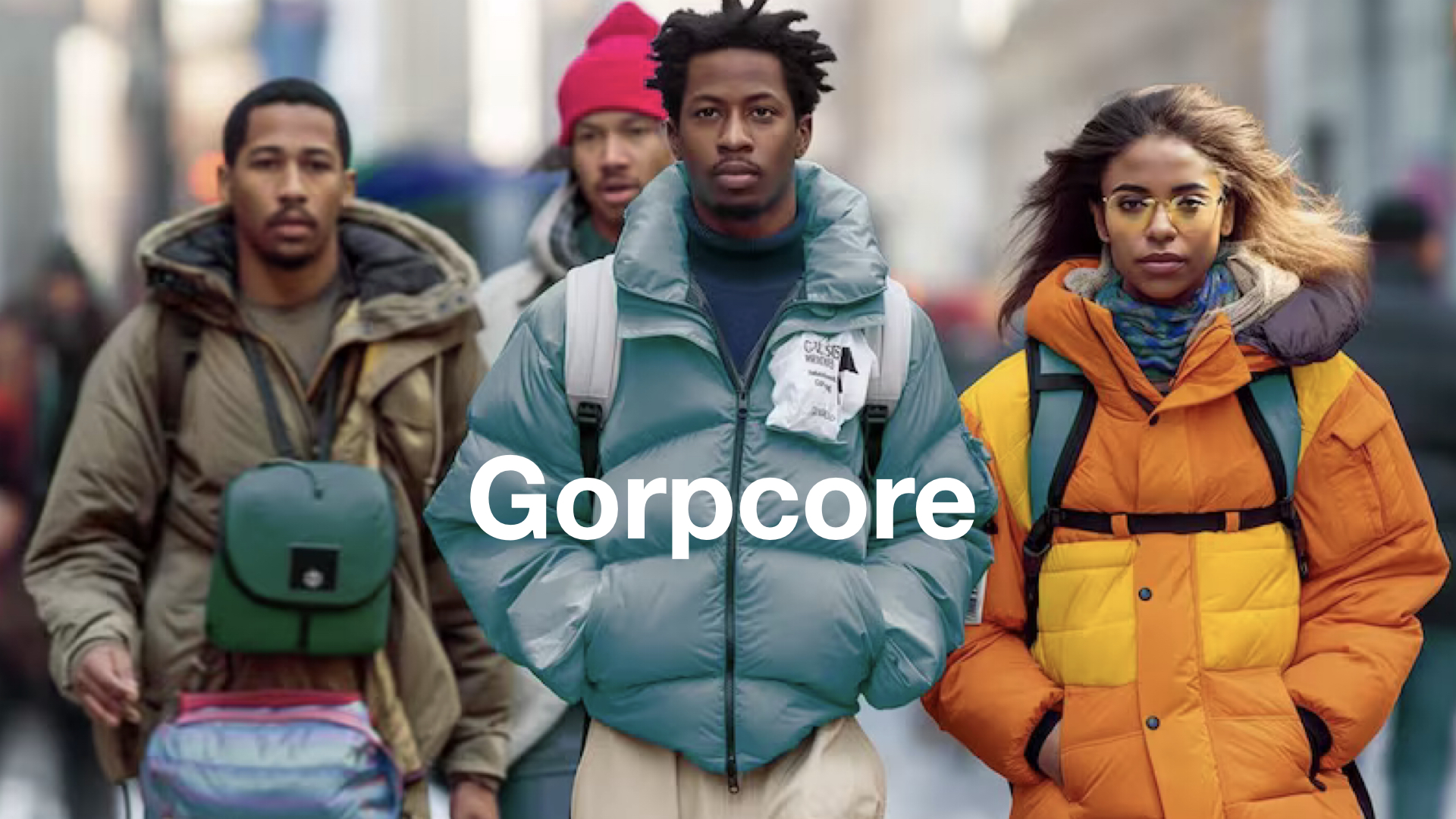
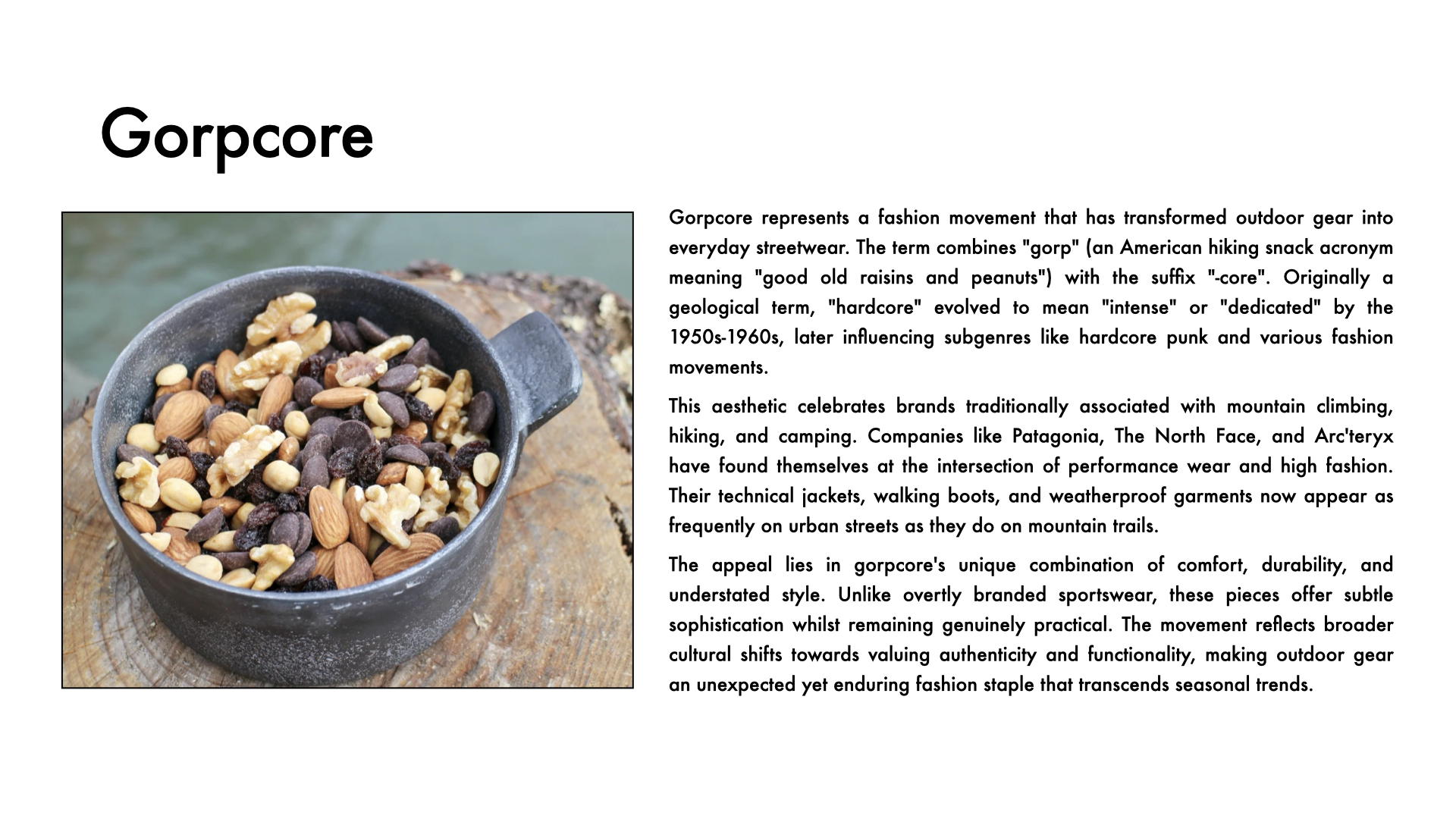
Gorpcore represents one of fashion’s most unexpected movements: the transformation of hiking boots and technical jackets into everyday style. The term combines “gorp,” an American hiking snack acronym meaning “good old raisins and peanuts,” with “core,” originally from geology but later meaning “intense” or “dedicated,” as seen in hardcore punk. Today, outdoor brands dominate both mountain trails and city streets.
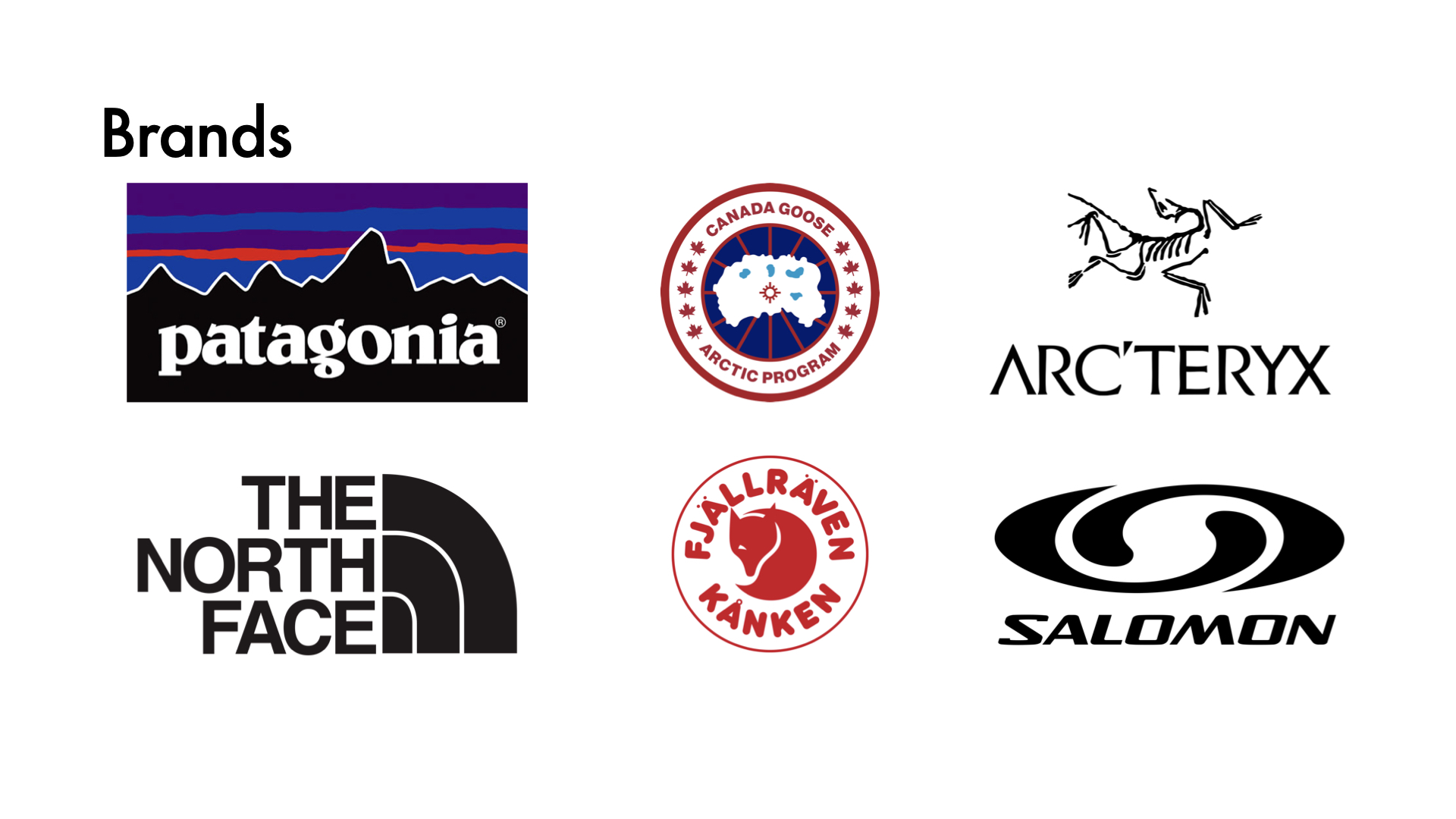
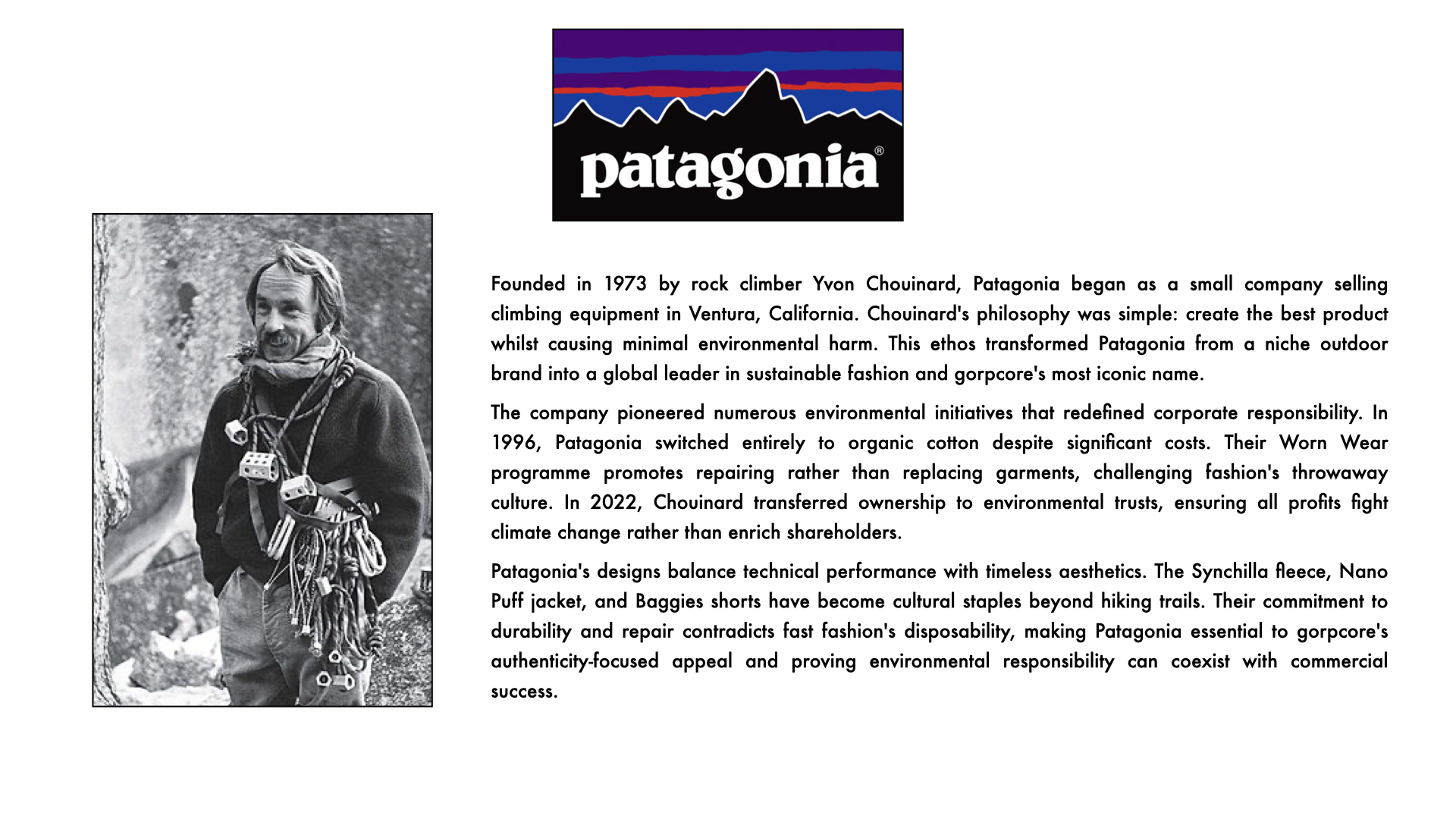
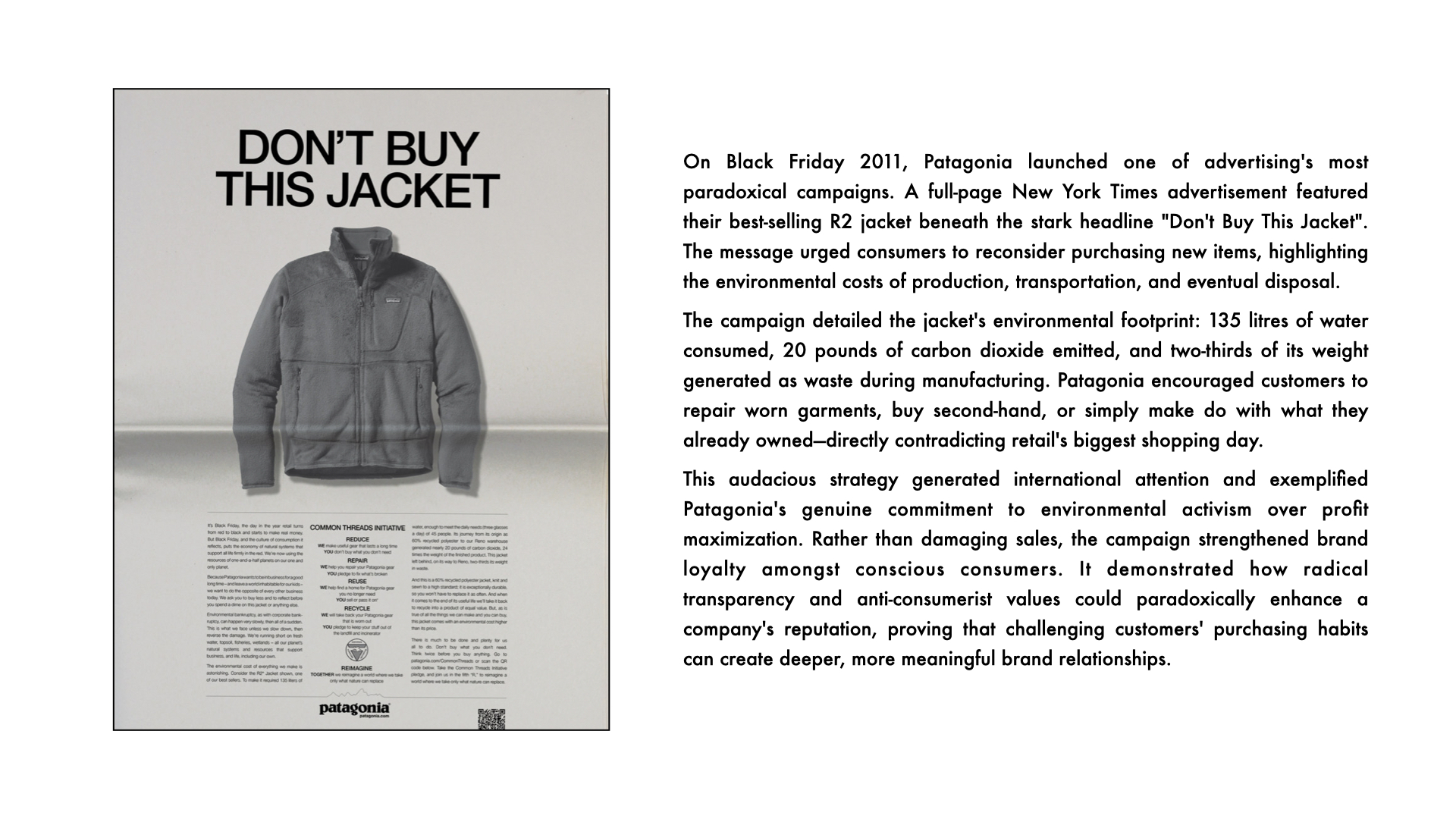
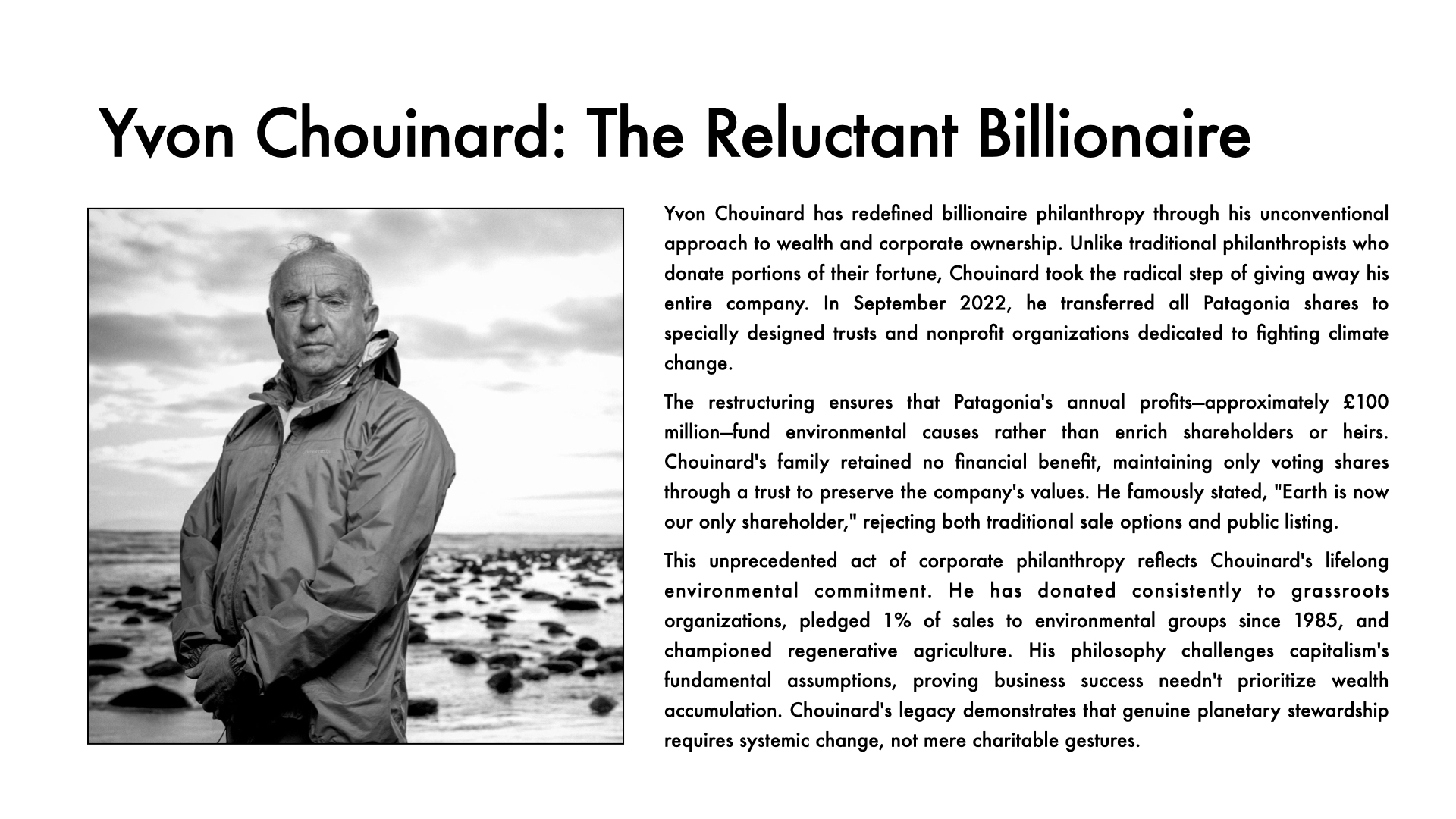
Patagonia leads this revolution. Founded in 1973 by rock climber Yvon Chouinard, the company pioneered environmental responsibility in fashion. In 2011 on Black Friday, Patagonia ran a full page advertisement in The New York Times with the headline “Don’t Buy This Jacket,” encouraging customers to think about the environmental cost of clothing and to buy less. Despite this message, the campaign increased sales and strengthened customer loyalty. Chouinard’s 2022 decision to transfer ownership to environmental trusts reflected his long term vision: Earth became Patagonia’s only shareholder, with all profits used to fight climate change.
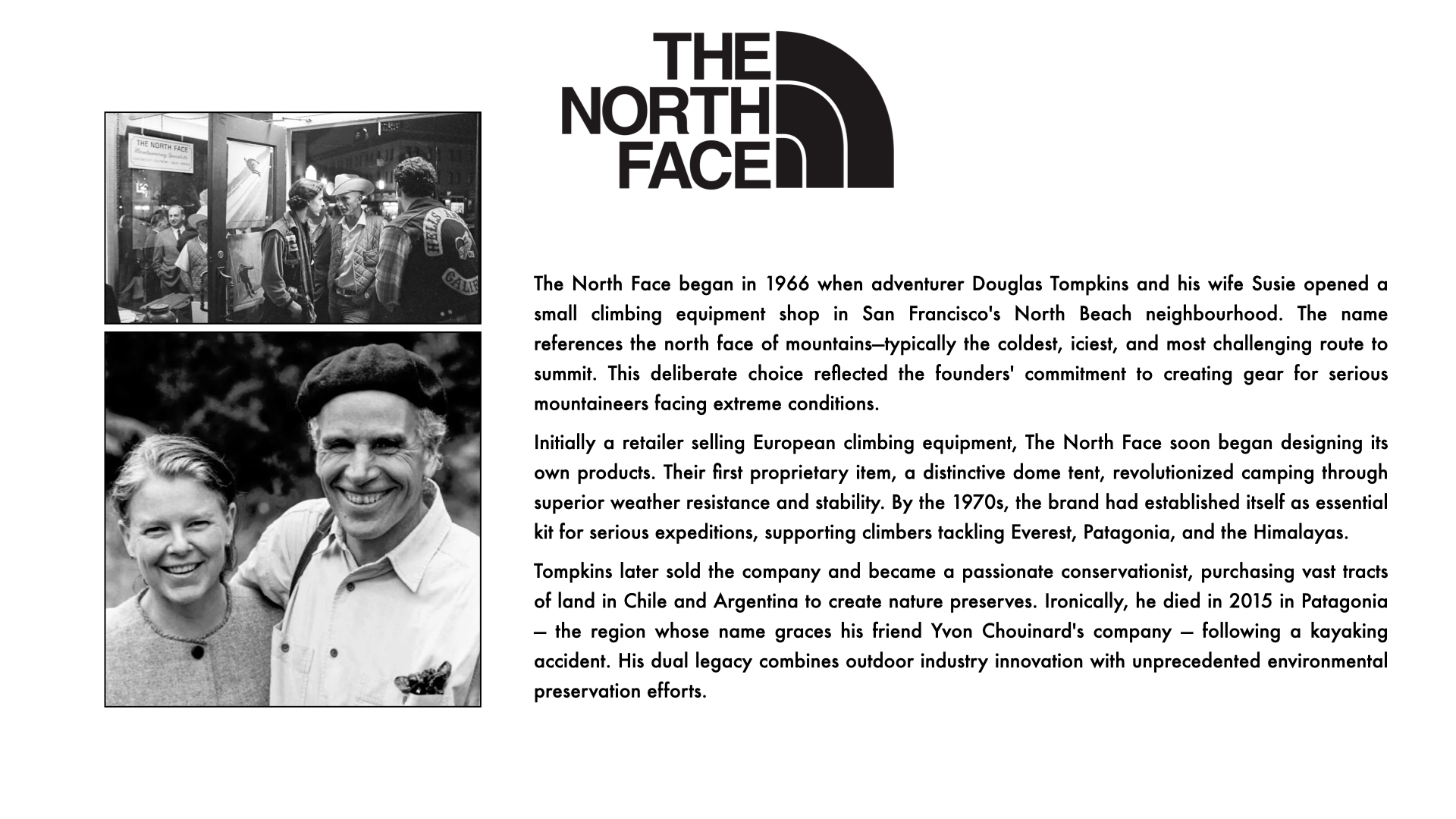
The North Face followed a similar trajectory. Douglas Tompkins opened his San Francisco shop in 1966, naming it after the most challenging side of a mountain. Tompkins later became a committed conservationist, and he died in Patagonia whilst kayaking in 2015, after buying large areas of land in Chile and Argentina to protect nature.
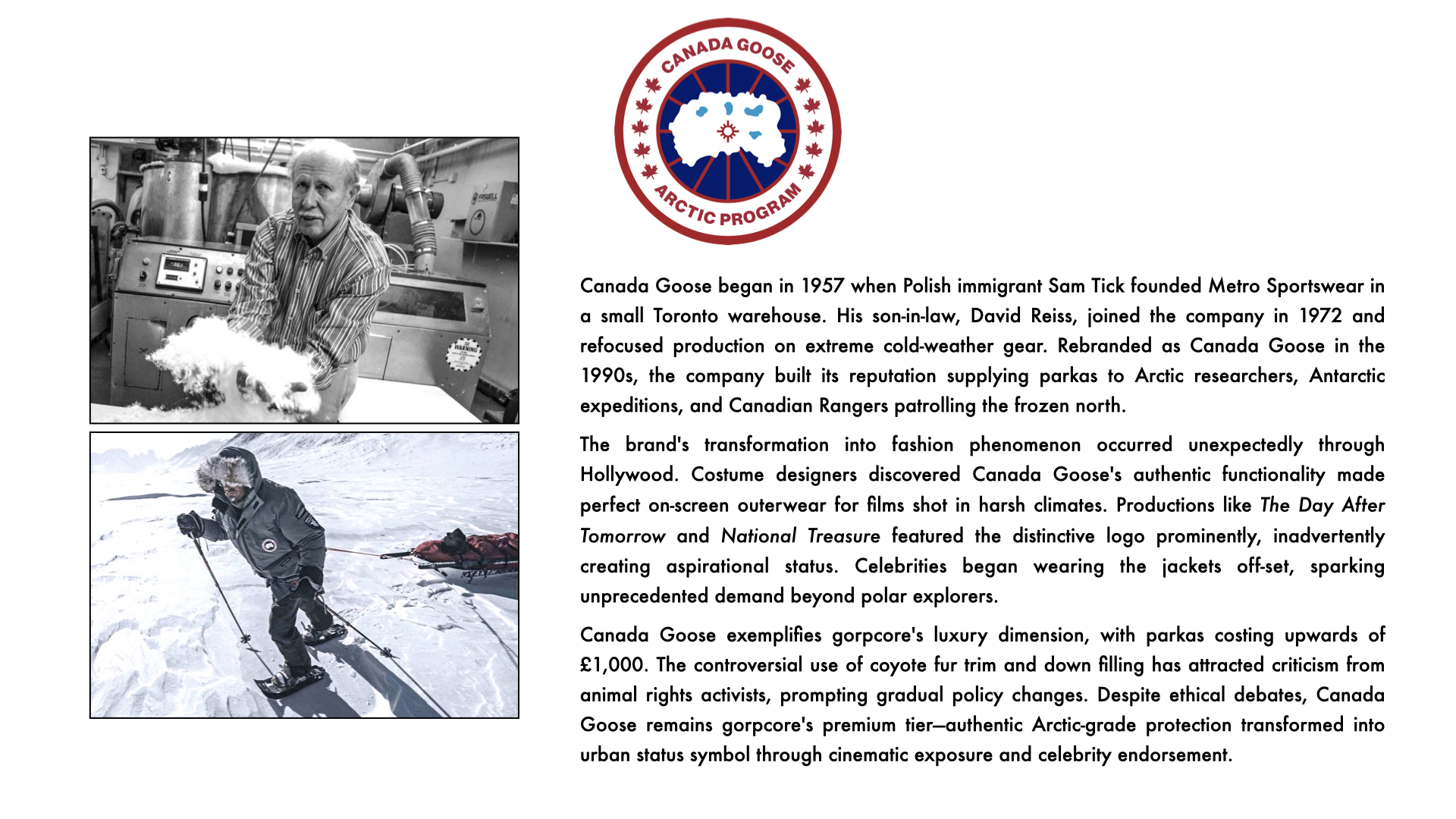
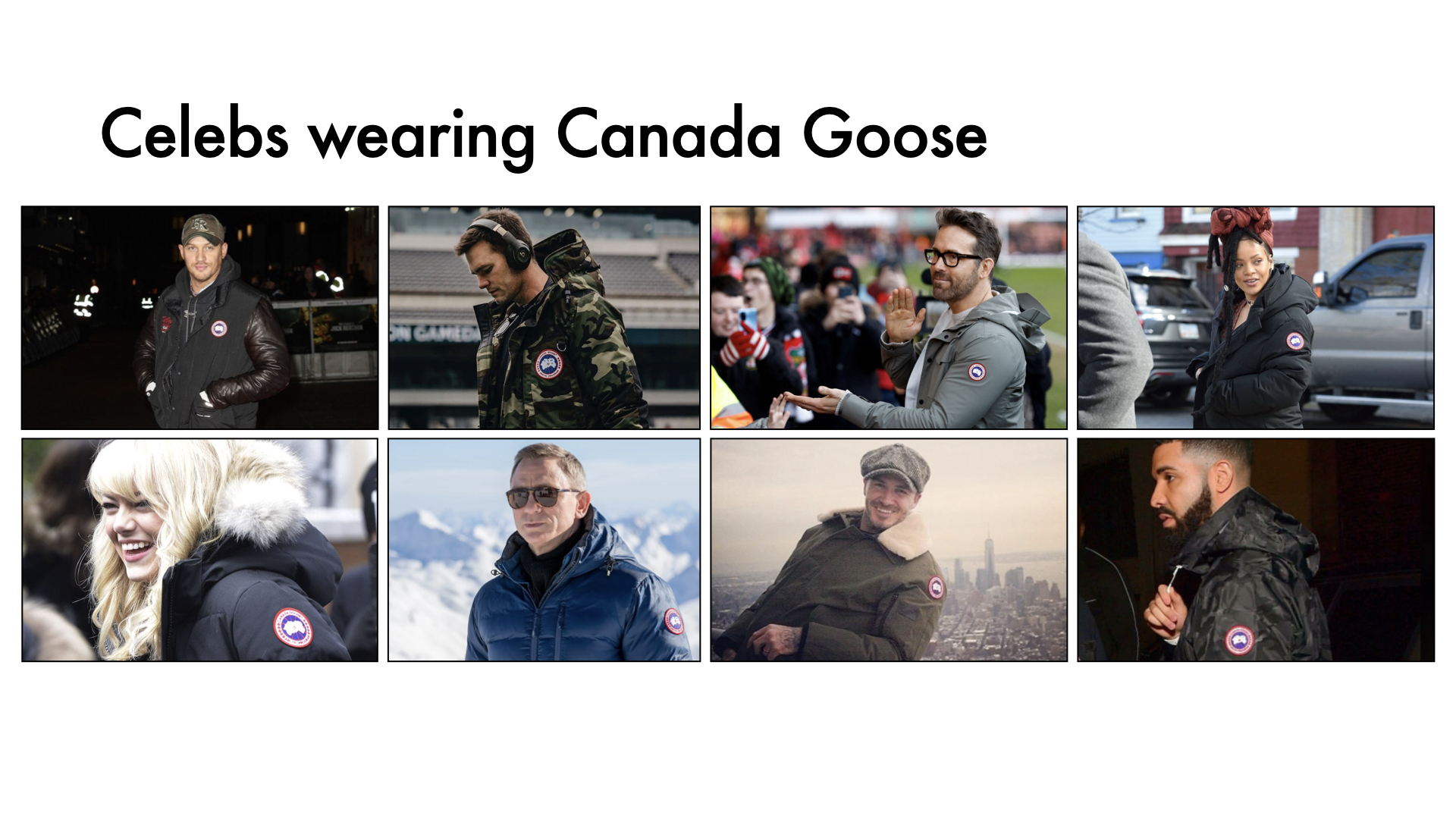
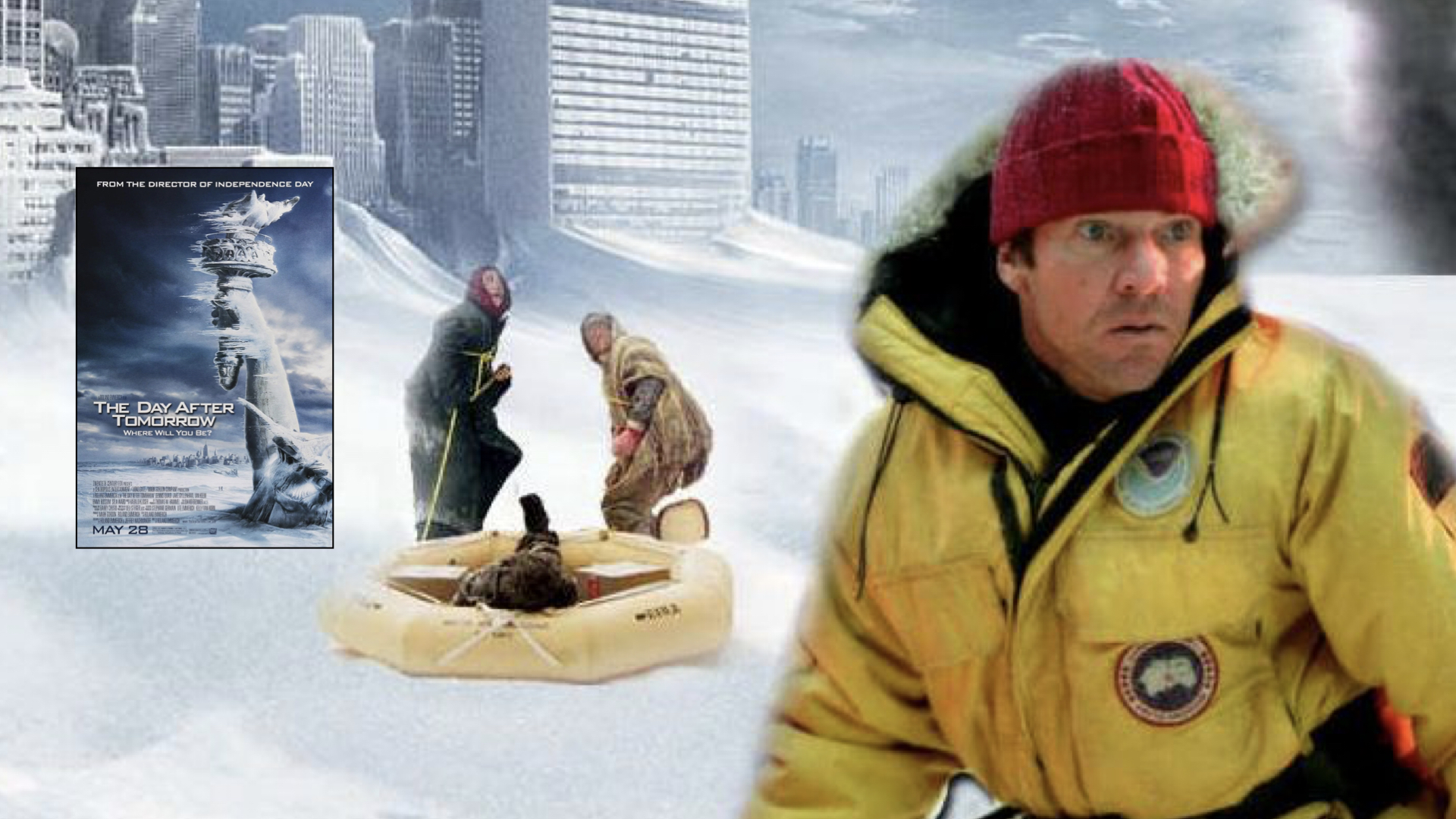
Canada Goose took a different path, moving from supplying Arctic expeditions to Hollywood fame. Founded in Toronto in 1957, the brand gained attention through film costume departments. Movies shot in extreme climates featured the brand’s distinctive logo, turning practical research parkas into luxury status symbols.
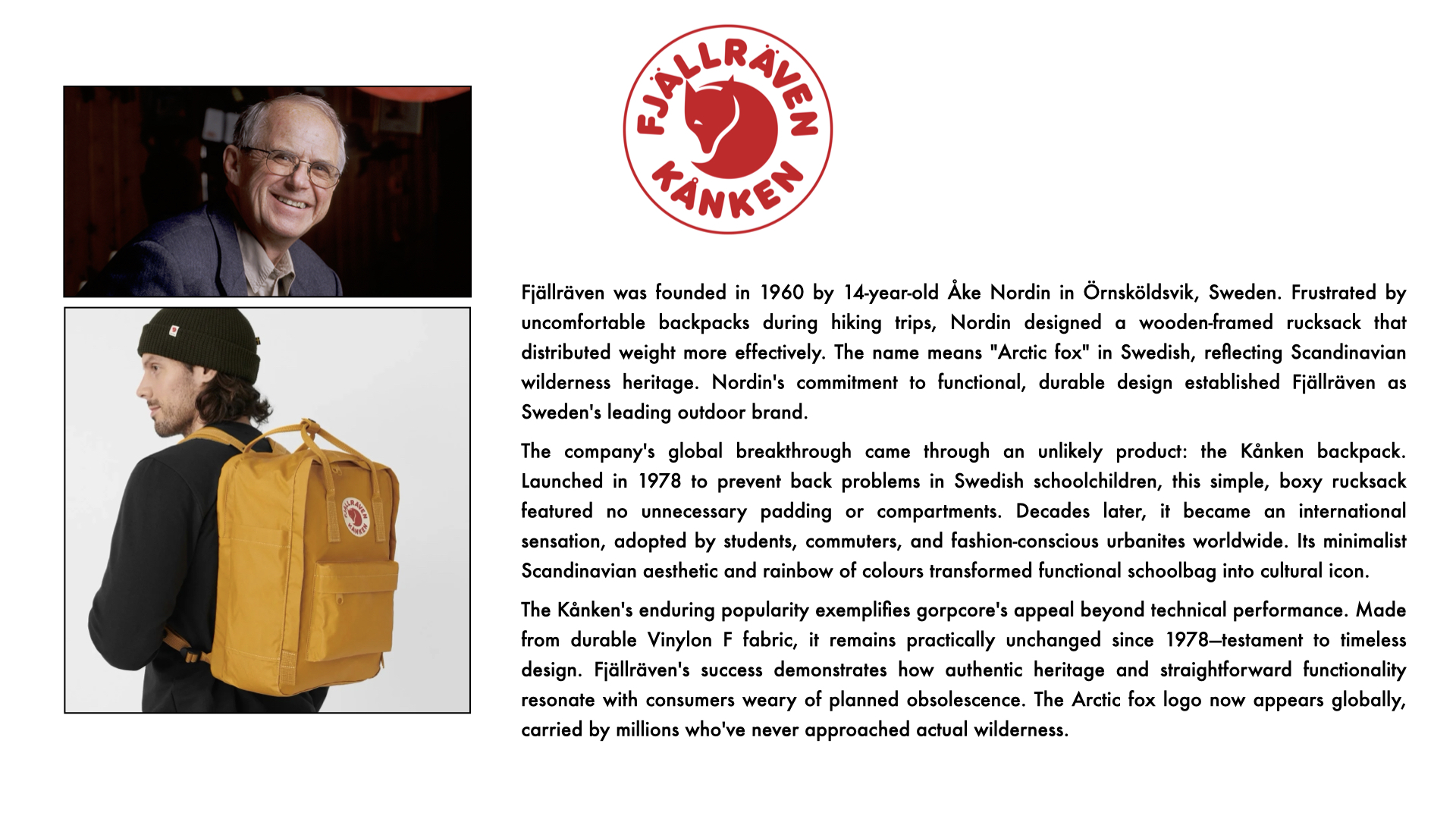
Sweden’s Fjällräven achieved global success through simplicity. Fourteen year old Åke Nordin founded the company in 1960, but the 1978 Kånken backpack, designed to prevent back problems in schoolchildren, became an international success. Its boxy, minimalist design has remained unchanged, showing that practical design can outlast trends.
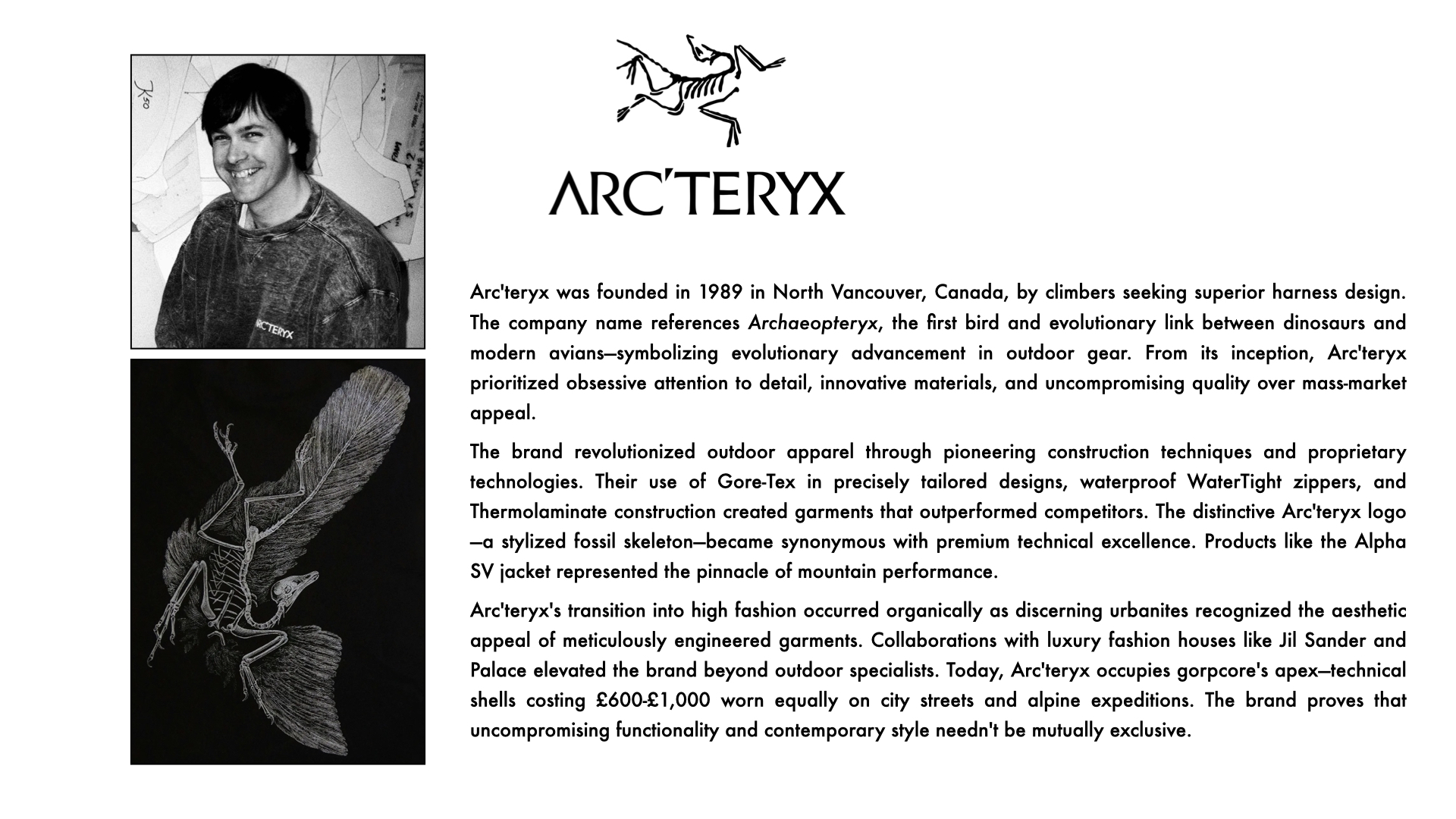
Arc’teryx represents gorpcore’s premium tier. Founded in 1989 in Vancouver, the brand focuses intensely on technical quality. Named after the first known bird, Archaeopteryx, Arc’teryx pushed outdoor clothing forward through innovations such as precisely fitted Gore Tex construction.
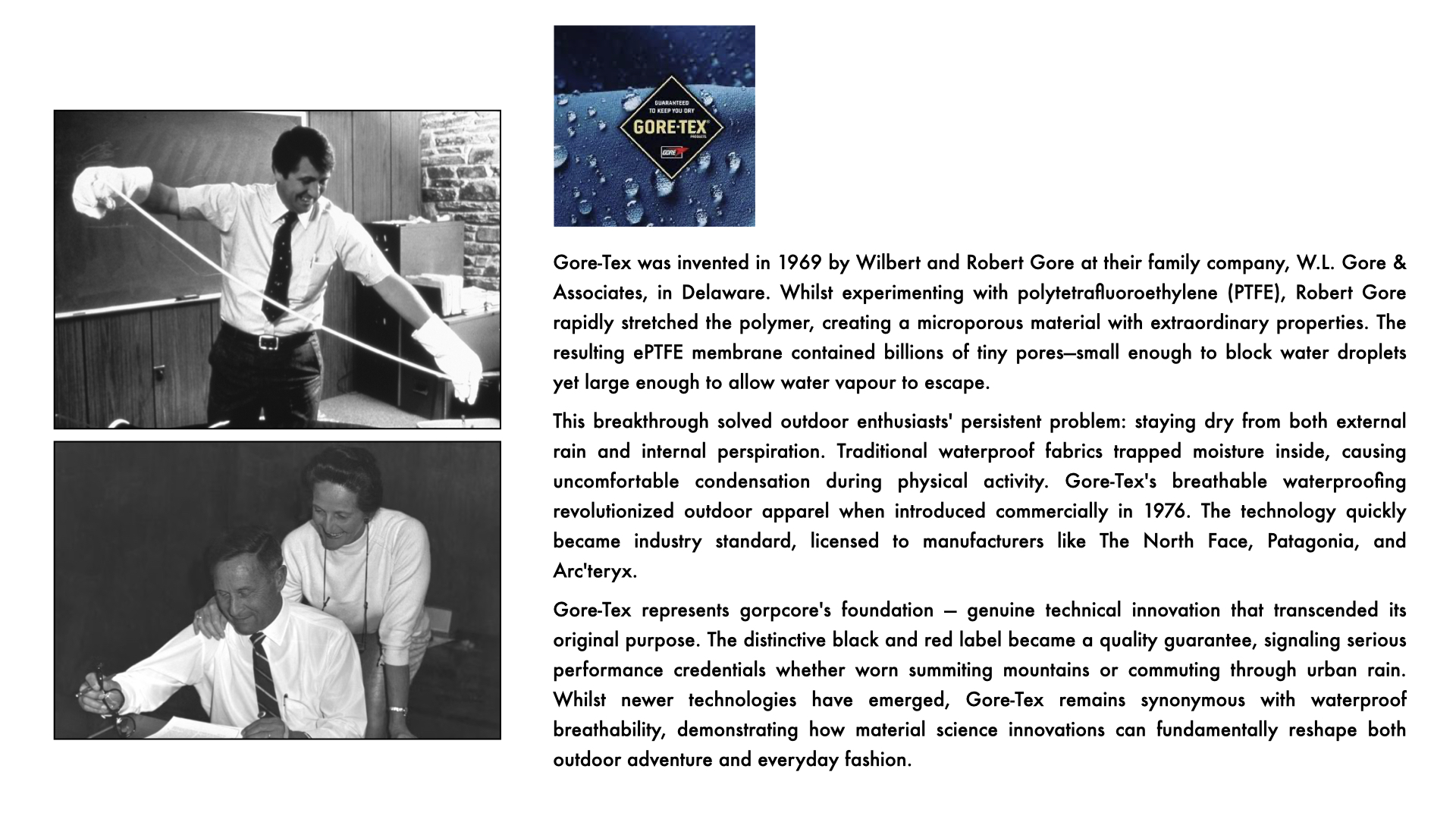
Gore Tex itself changed everything. Robert Gore’s 1969 discovery created fabric that was both waterproof and breathable, blocking rain while allowing sweat to escape. This invention made modern outdoor fashion possible.
Together, these brands show that real functionality, environmental responsibility, and modern style can exist together, turning outdoor clothing into one of fashion’s most lasting movements.
📽️ Slideshow
📺 Video
🔑 Key Vocabulary
- Conservationist – a person who works to protect nature and the environment.
- Core – used to describe strong interest or dedication to a style or activity.
- Functionality – how well something works for its intended purpose.
- Gore-Tex – a material that is waterproof but breathable, used in outdoor clothing.
- Gorp – an American hiking snack name meaning “good old raisins and peanuts.”
- Gorpcore – a fashion trend that turns outdoor and hiking clothing into everyday style.
- Minimalist – simple in design, with few details.
- Philanthropic – relating to giving money or support to help others or the environment.
- Preserve – to protect something so it is not damaged or destroyed.
- Status symbol – something expensive or fashionable that shows wealth or social position.
- Technical – designed for a specific practical purpose, often using special materials.
- Timeless – not affected by changing fashion or trends.
💬 Conversation Questions
- Why do you think outdoor clothing has become fashionable in everyday city life?
- Do you think people wear gorpcore more for style or for practicality?
- Is it a problem when expensive outdoor brands become status symbols?
- Can fashion brands be truly environmentally responsible and still make large profits?
- Would you buy less clothing if a brand encouraged you to do so, like Patagonia did?
- Do trends like gorpcore show a real connection to nature, or just a lifestyle image?
- Is it important to know a brand’s values before buying its products?
- Do you think functional design is more important than appearance in fashion?
- Why do you think films and celebrities have helped popularise outdoor brands?
- Do you see gorpcore as a long-term movement or just a passing trend?