Week 2️⃣ 1️⃣
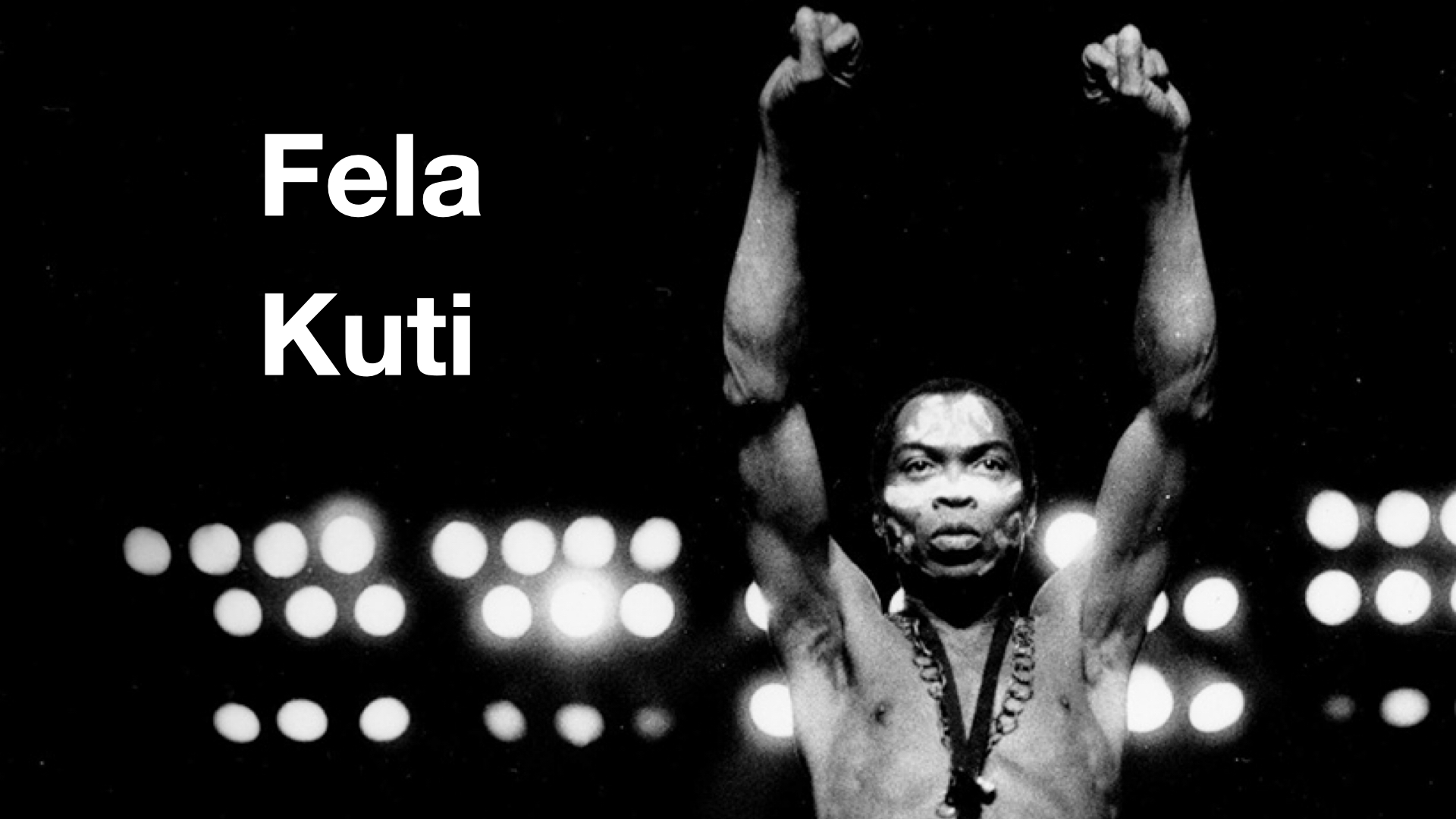
Fela
🔊 Audio
📜 Show transcript
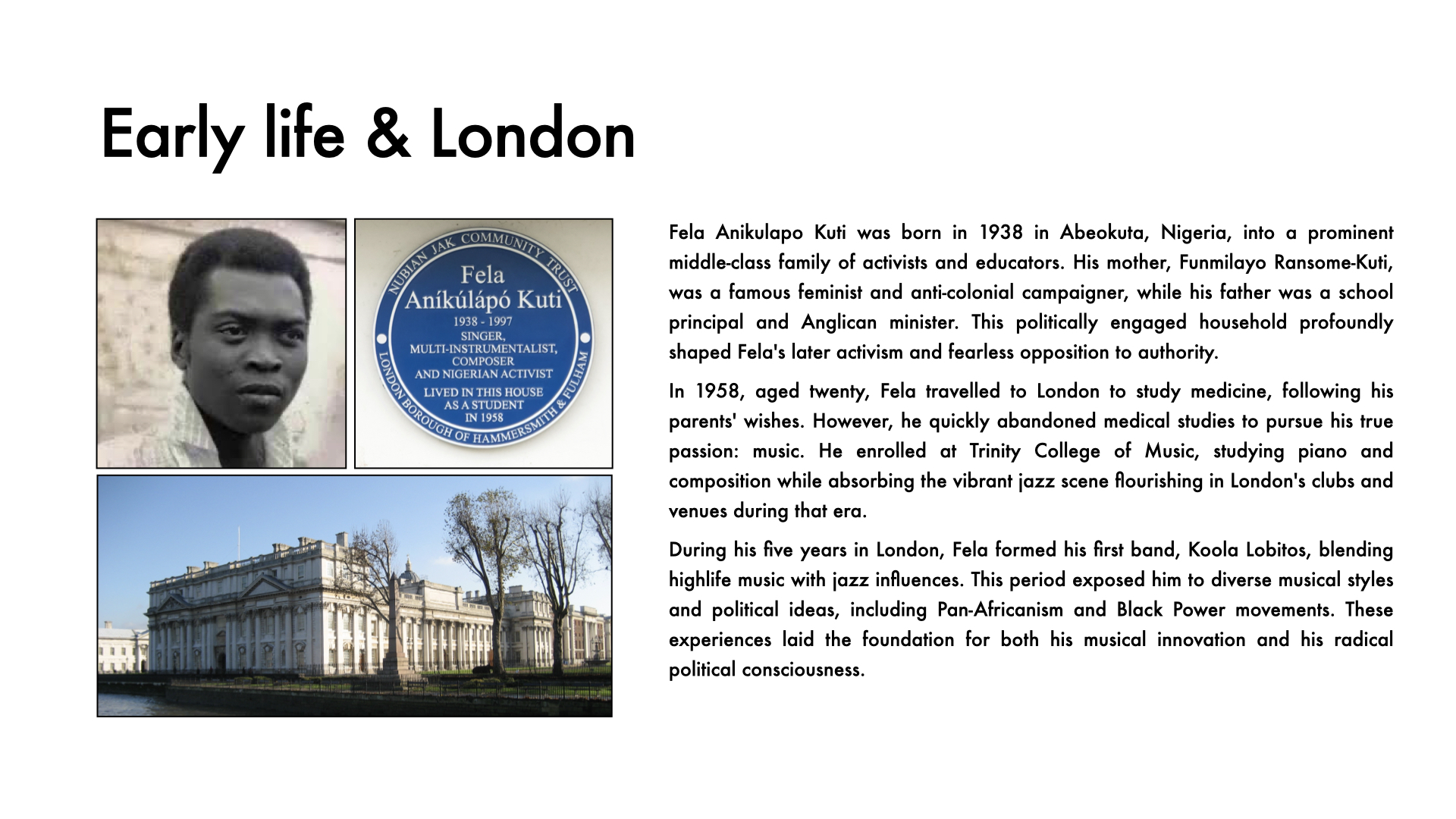
Fela Anikulapo Kuti was born in 1938 in Abeokuta, Nigeria, into a family of activists. His mother, Funmilayo Ransome-Kuti, was a renowned feminist and anti-colonial campaigner. In 1958, Fela travelled to London to study medicine but quickly abandoned it for music, enrolling at Trinity College whilst absorbing the city’s vibrant jazz scene.
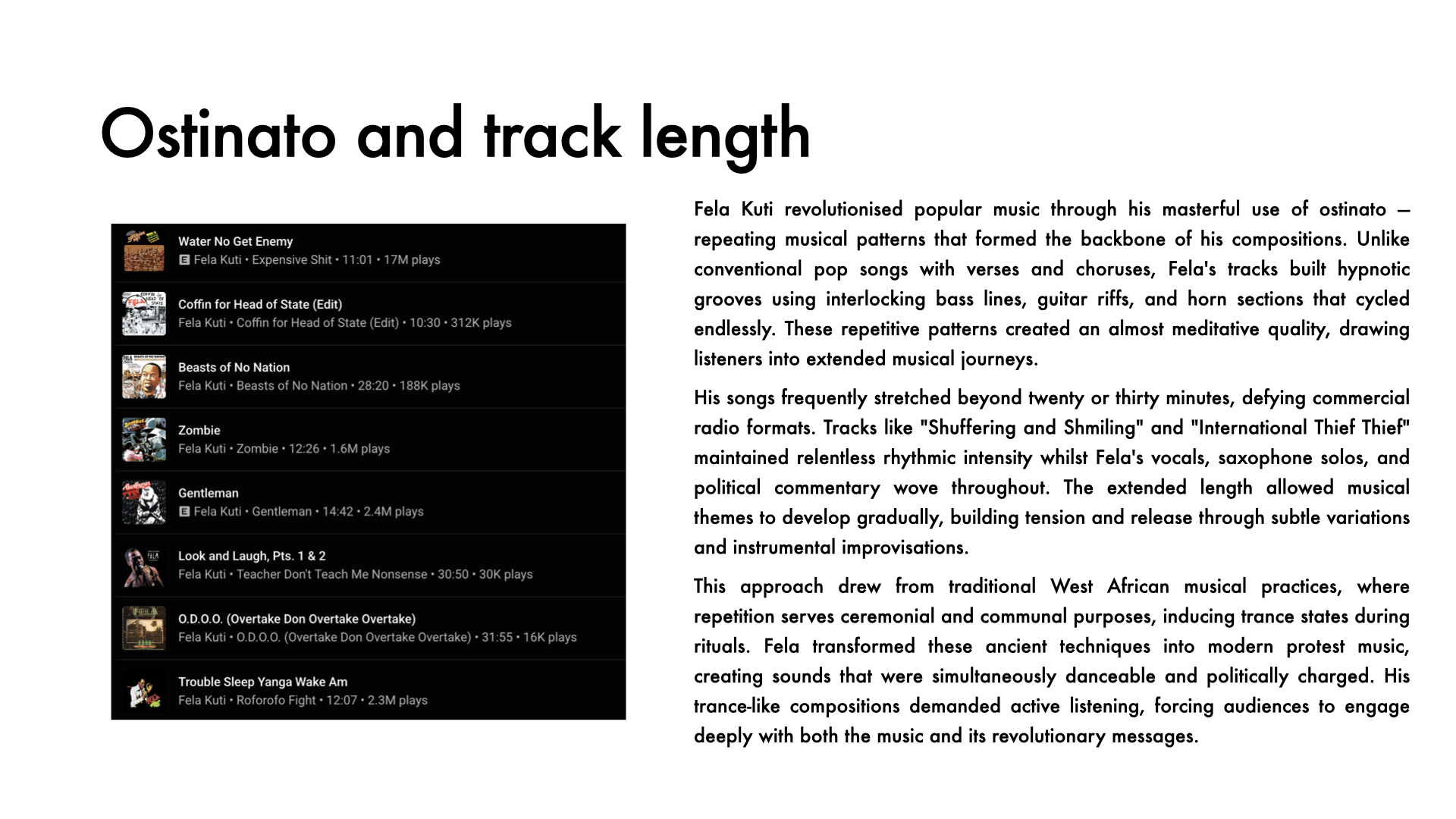
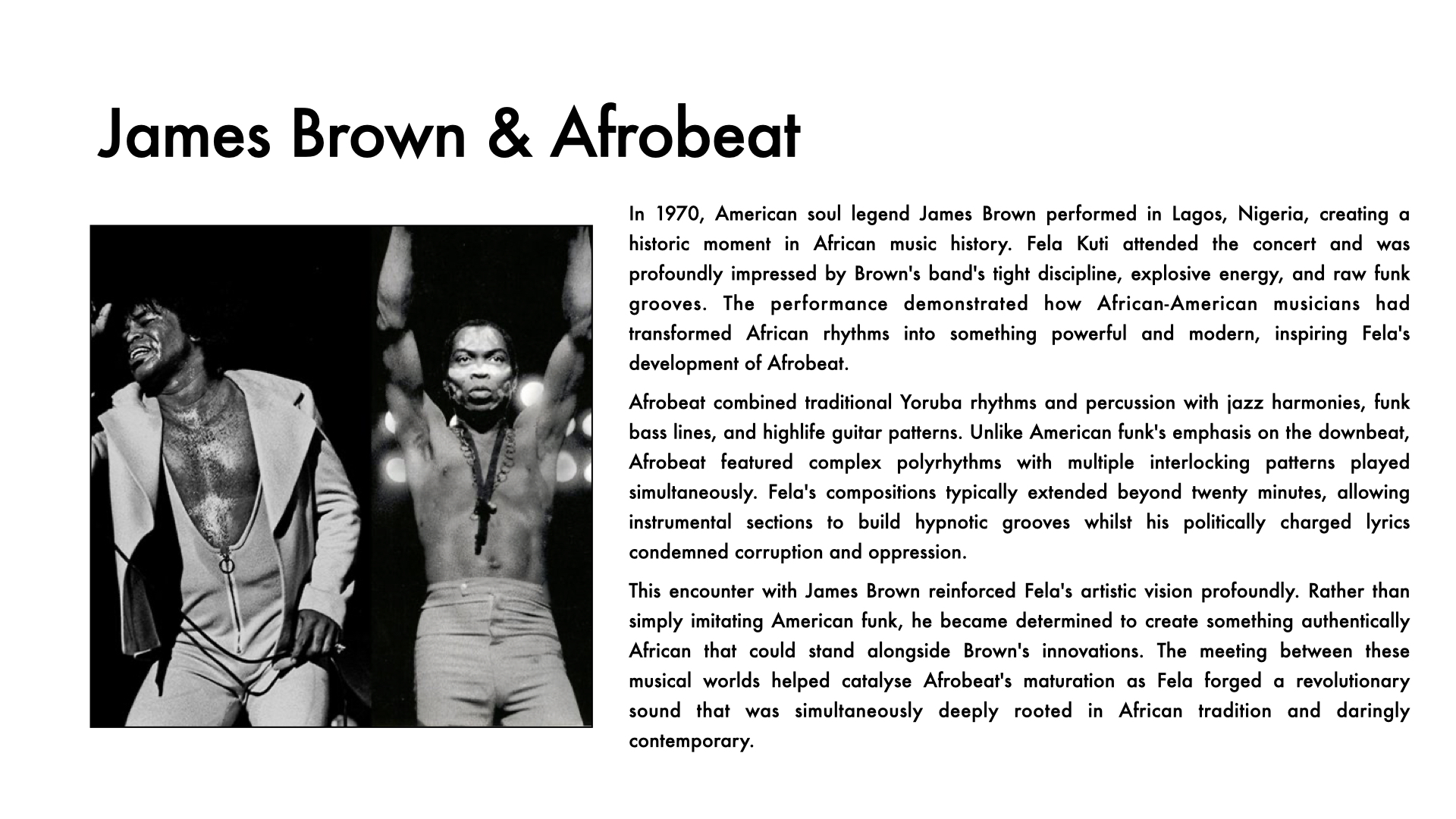
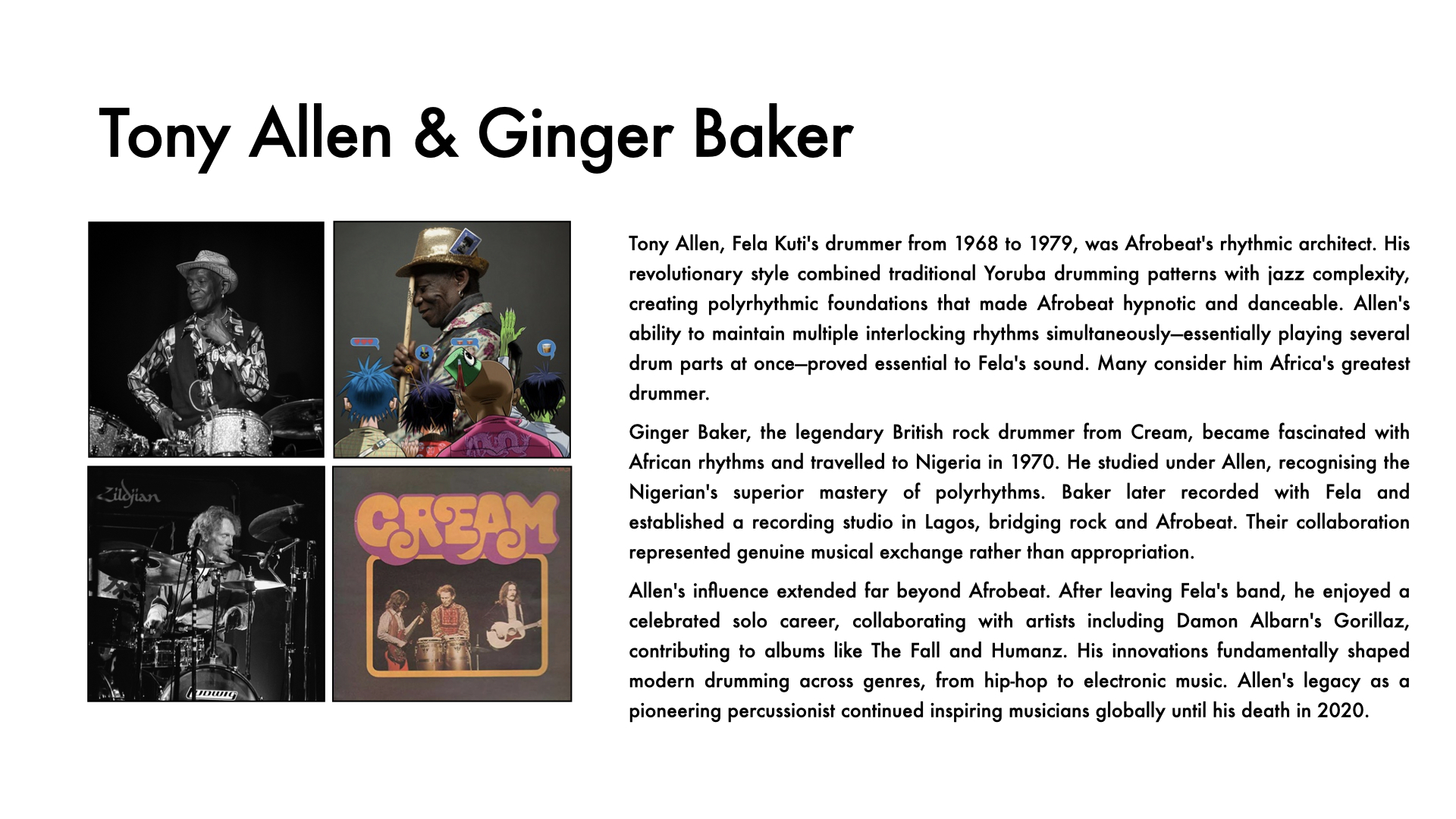
During his five years in London, Fela formed his first band, blending highlife with jazz influences. In 1970, American soul legend James Brown performed in Lagos, profoundly inspiring Fela. Rather than copying American funk, Fela created Afrobeat — combining traditional Yoruba rhythms with jazz harmonies, funk bass lines, and steady, hypnotic grooves. His drummer, Tony Allen, became Afrobeat’s rhythmic architect, creating complex polyrhythms that made the music powerful and distinctive.
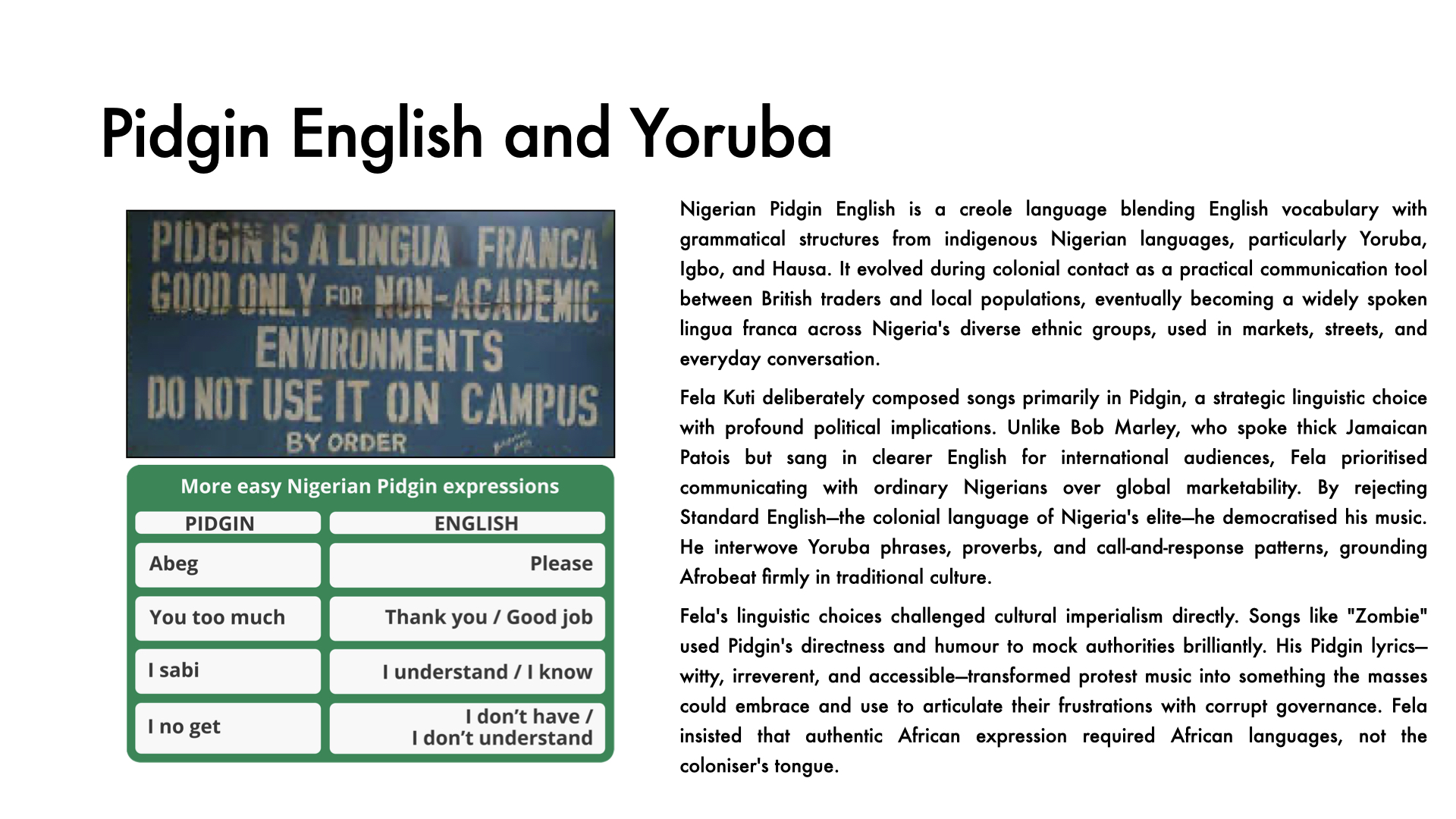
Fela deliberately sang in Nigerian Pidgin English and Yoruba rather than Standard English. Unlike Bob Marley, who sang in clearer English for international audiences, Fela focused on communicating with ordinary Nigerians, using language that challenged colonial power and made his political messages more accessible.
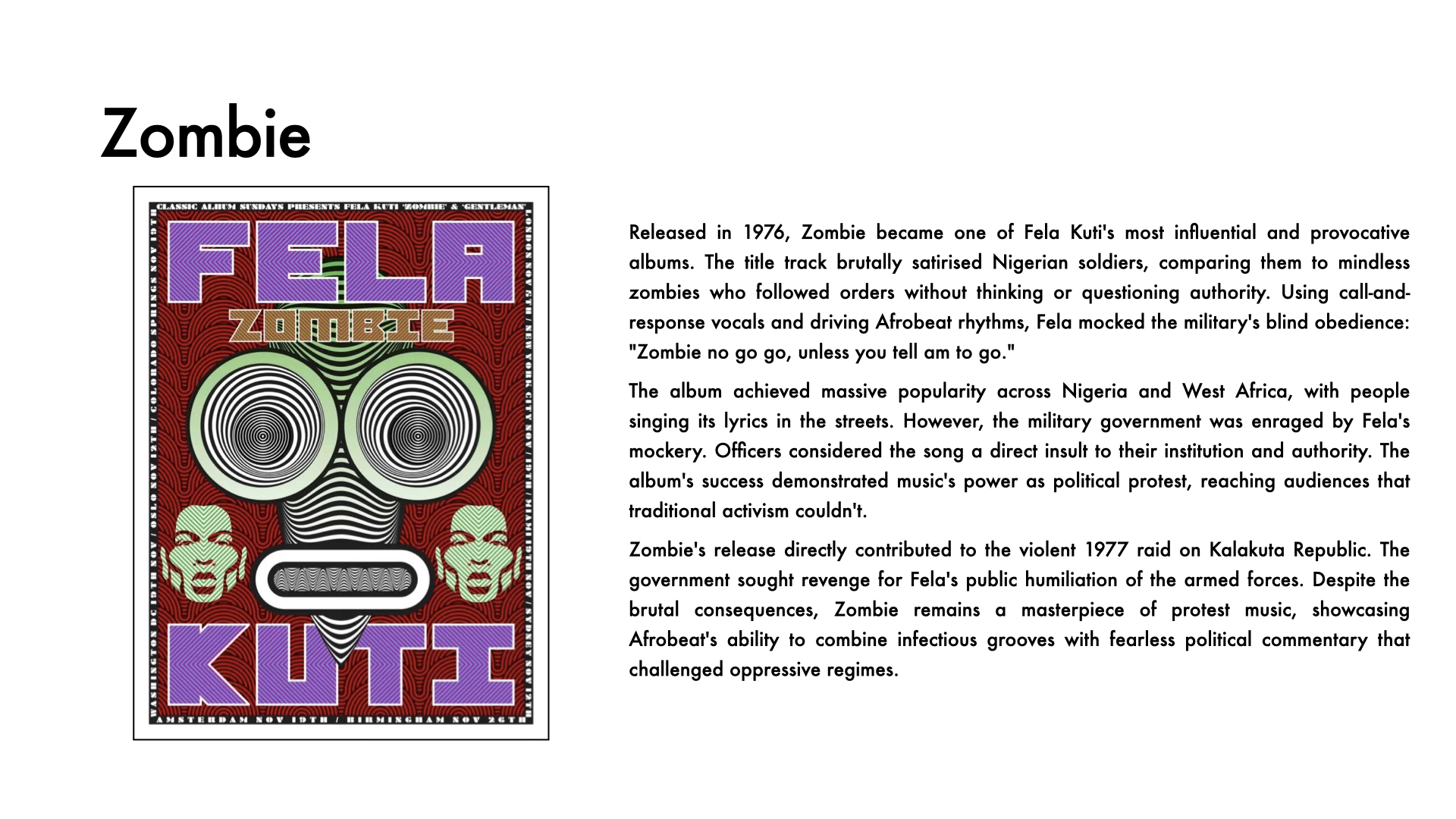
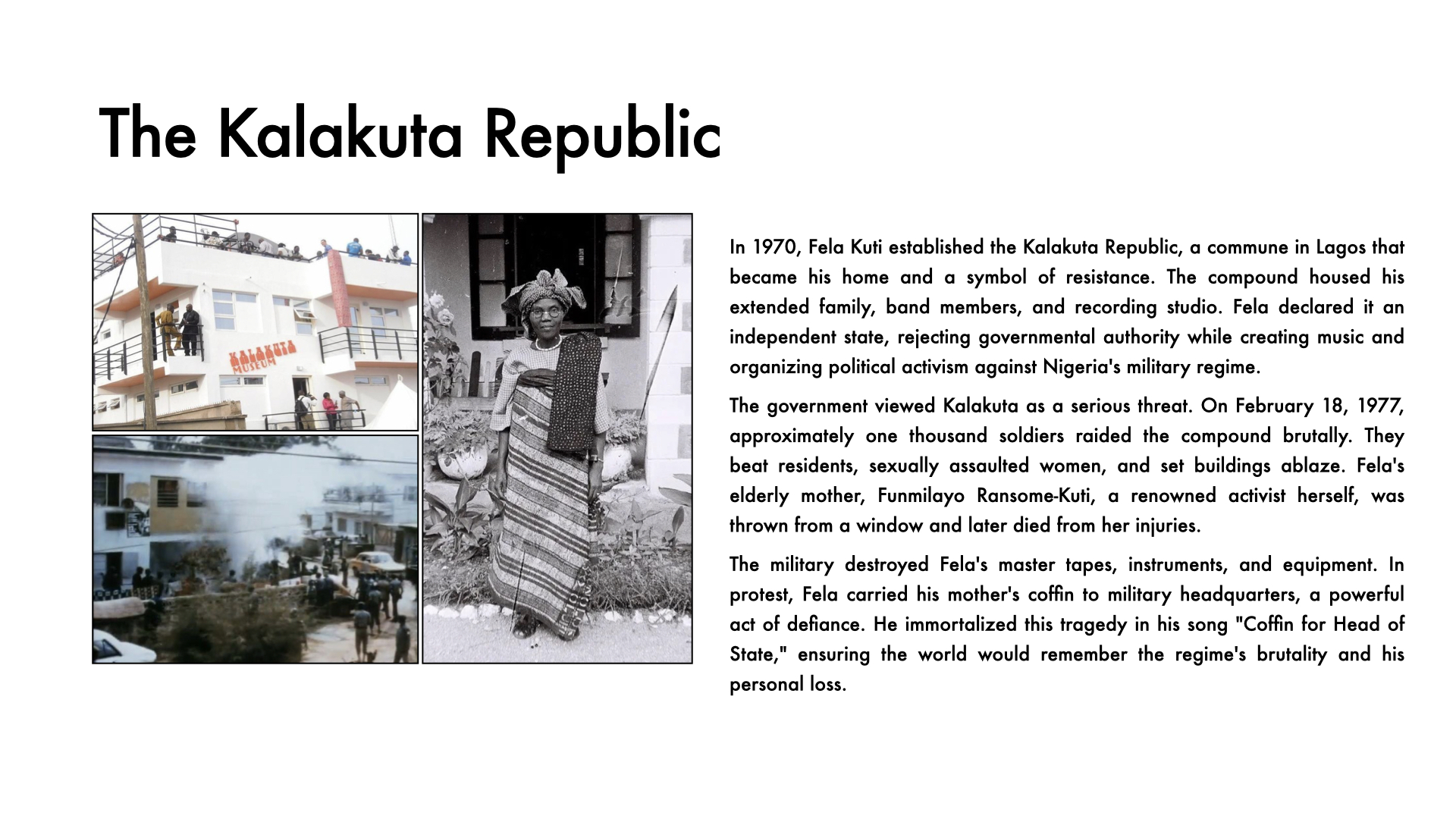
In 1970, Fela established the Kalakuta Republic, a commune in Lagos that acted as a self-declared independent state. His 1976 album Zombie strongly criticised Nigerian soldiers as people who blindly followed orders. The military was enraged. On February 18th, 1977, approximately one thousand soldiers raided Kalakuta, brutally beating residents and setting buildings ablaze. Fela’s mother was thrown from a window and later died. In protest, Fela carried her coffin to military headquarters.
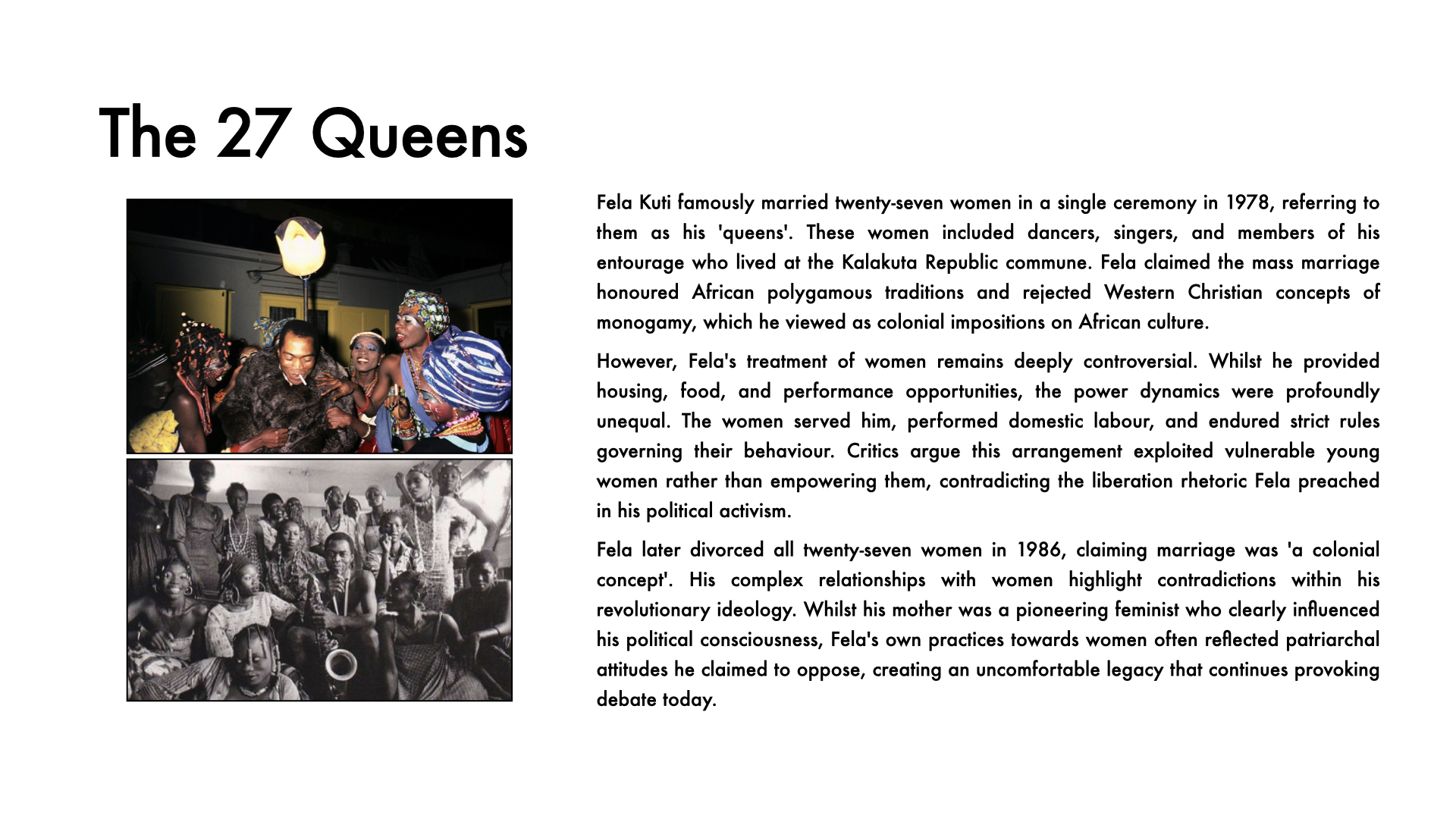
Fela was also a controversial figure in his personal life. In 1978, he married 27 women in a single ceremony, many of whom were dancers and singers in his band. He said this action rejected Western ideas about marriage, but it caused serious debate and criticism, especially about gender roles and power.
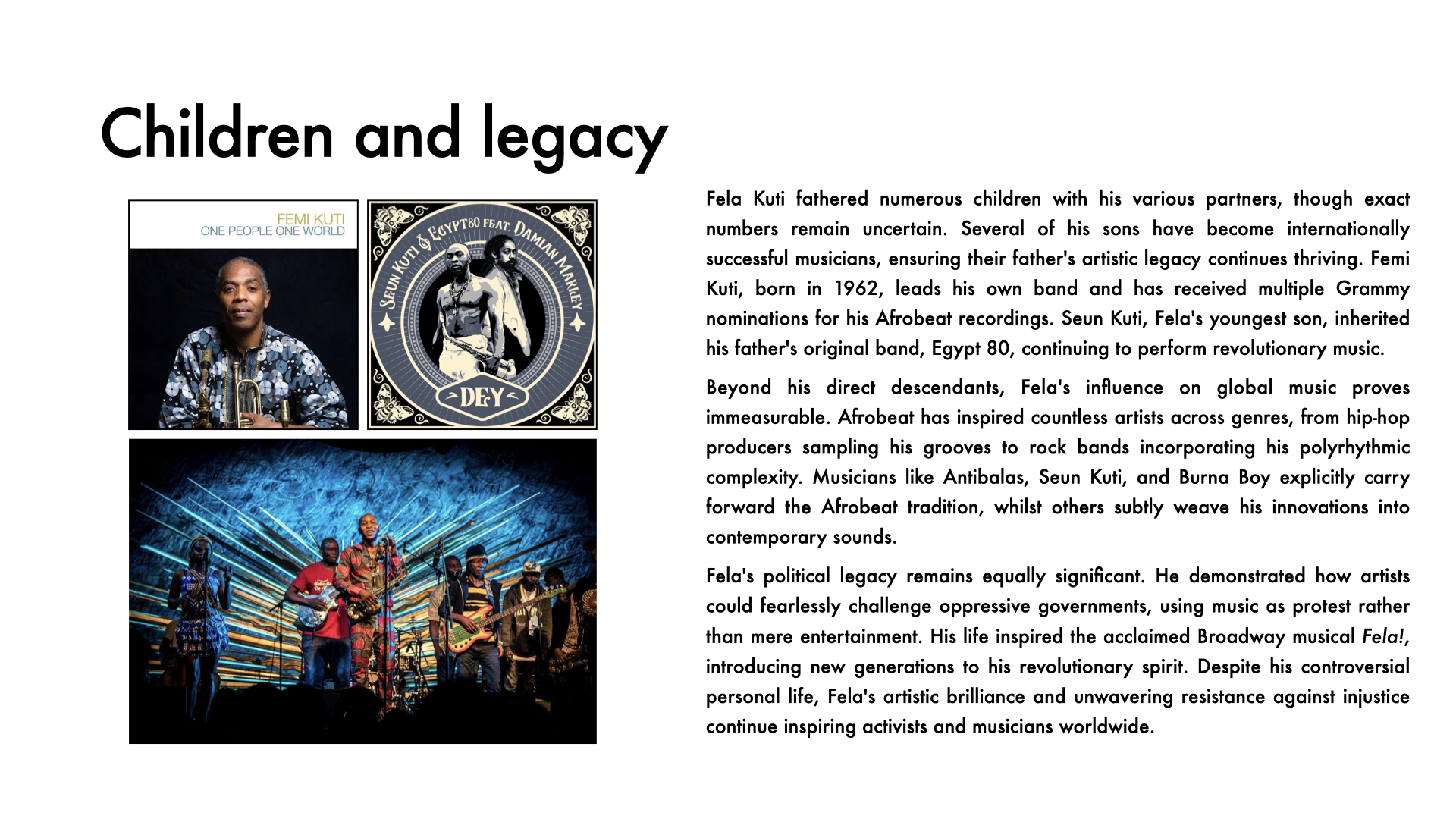
Fela died in 1997, but his legacy continues. His sons Femi and Seun still perform Afrobeat, and artists around the world — from Gorillaz to Burna Boy — are influenced by his revolutionary music. Fela showed how musicians could challenge oppressive governments and turn music into a powerful form of protest.
📽️ Slideshow

📺 Video
🔑 Key Vocabulary
- Afrobeat – musical genre created by Fela Kuti combining traditional Yoruba rhythms with jazz, funk, and highlife.
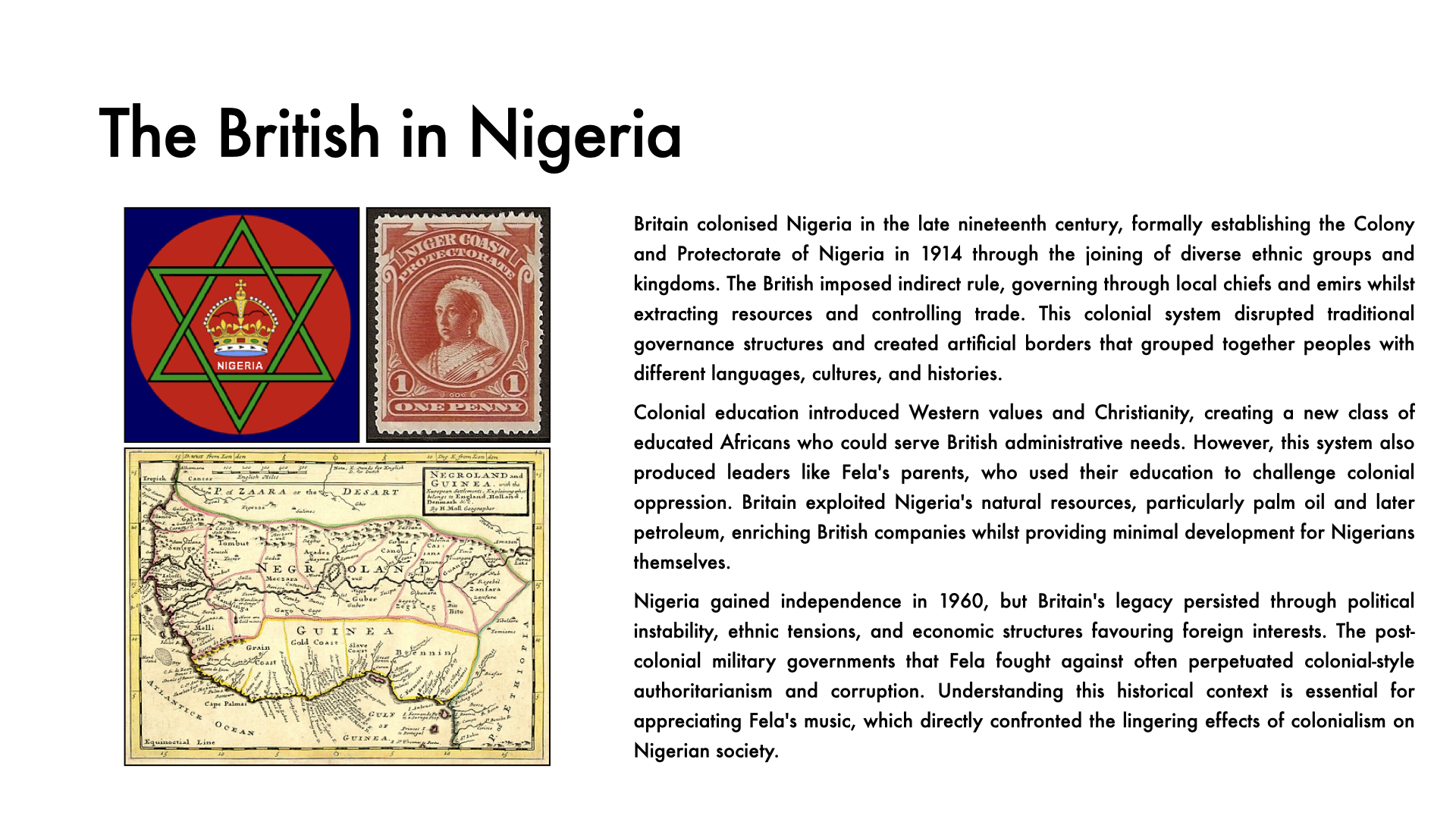
- Amalgamation – the act of combining or uniting separate elements; Britain amalgamated Nigeria's territories in 1914.
- Anti-colonial – opposed to colonialism and the control of one country by another.
- Autonomous – independent and self-governing; Kalakuta Republic declared itself autonomous from Nigeria.
- Call-and-response – musical pattern where a leader's phrase is answered by a chorus, common in African music.
- Colonial – relating to colonialism, when one country controls and exploits another territory.
- Commune – a community where people live together and share resources and responsibilities.
- Creole language – a stable language developed from mixing two or more languages, with its own grammar.
- Defiance – bold resistance or disobedience to authority.
- Democratise – to make something accessible to everyone, not just elites.
- Harassment – aggressive pressure, intimidation, or persistent unwanted attention.
- Hypnotic – producing a trance-like, mesmerising effect.
- Interlocking – fitting together or meshing; used to describe Afrobeat's multiple simultaneous rhythm patterns.
- Lingua franca – a common language used for communication between groups with different native languages.
- Oppression – prolonged cruel or unjust treatment or control.
- Ostinato – a continually repeated musical phrase or rhythm.
- Pidgin English – Nigerian creole blending English vocabulary with indigenous grammatical structures.
- Polyrhythmic – featuring multiple contrasting rhythms played simultaneously.
- Post-colonial – occurring in the period after a colony gains independence from colonial rule.
- Satirise – to use humour, irony, or exaggeration to criticise or mock something.
💬 Conversation Questions
- Have you heard any of Fela Kuti's music before? What did you think of it?
- Do you think musicians have a responsibility to address political issues in their work?
- How important is it for artists to use their native language rather than English?
- Can you think of any musicians from your country who have challenged the government?
- What do you know about Nigeria or Nigerian culture?
- Do you think Fela's treatment of women contradicts his message of liberation? Why or why not?
- Would you describe Fela as brave or reckless? Can you explain your opinion?
- How does music from your country address social or political problems?
- Have you ever listened to Afrobeat or modern Afrobeats music? What's the difference?
- Do you think protest music can actually change society, or is it just symbolic?
- Which is more important for an artist: reaching a global audience or staying true to local culture?
- Can you think of other examples where colonial history still affects countries today?
- Would you have had the courage to stand up to authority the way Fela did?
- What role should former colonial powers play in their former colonies today?
- Do you think it's acceptable for artists to break laws to make political statements?