Week 2️⃣ 0️⃣
Supermarionation
🔊 Audio
📜 Show transcript
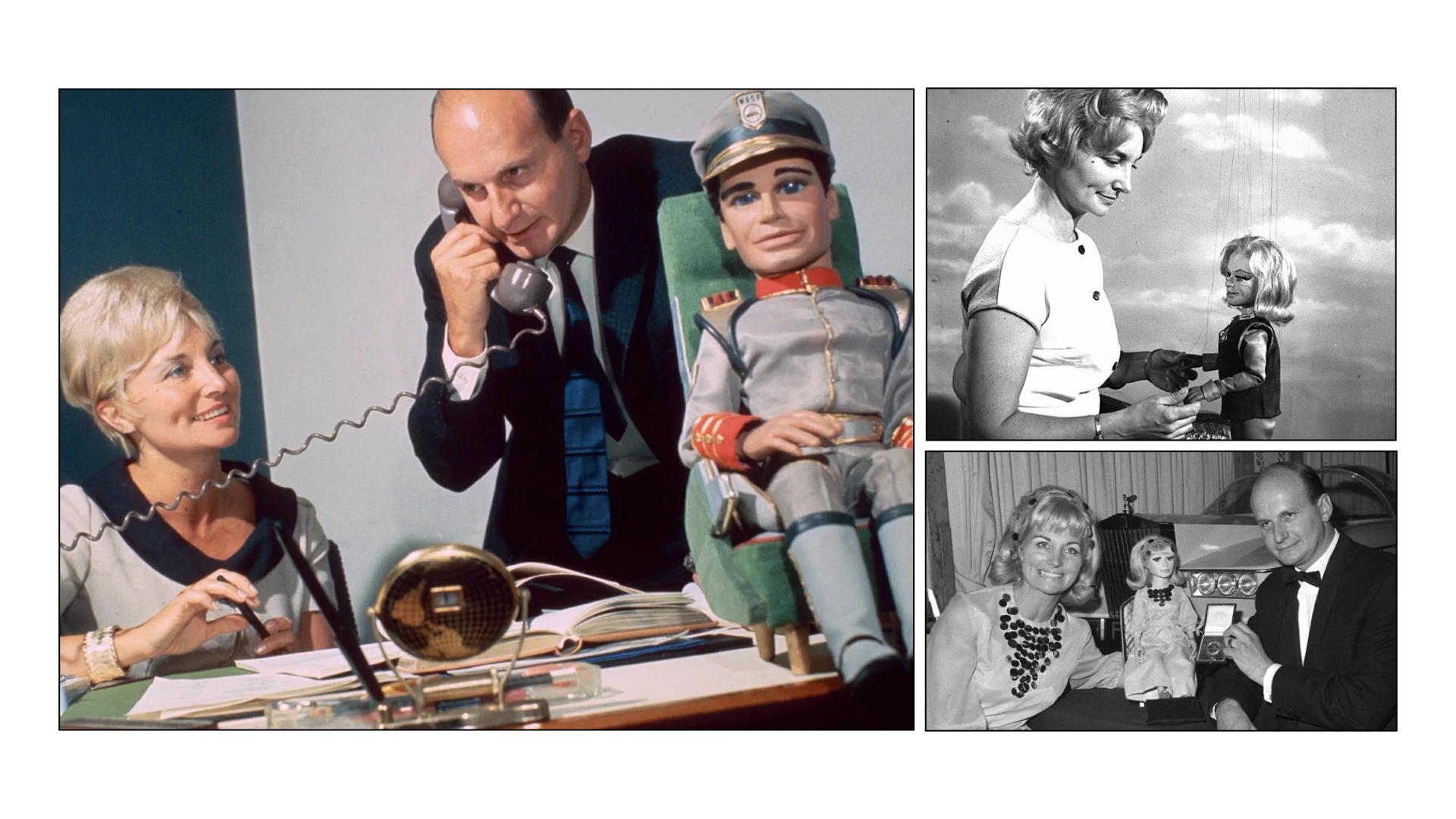
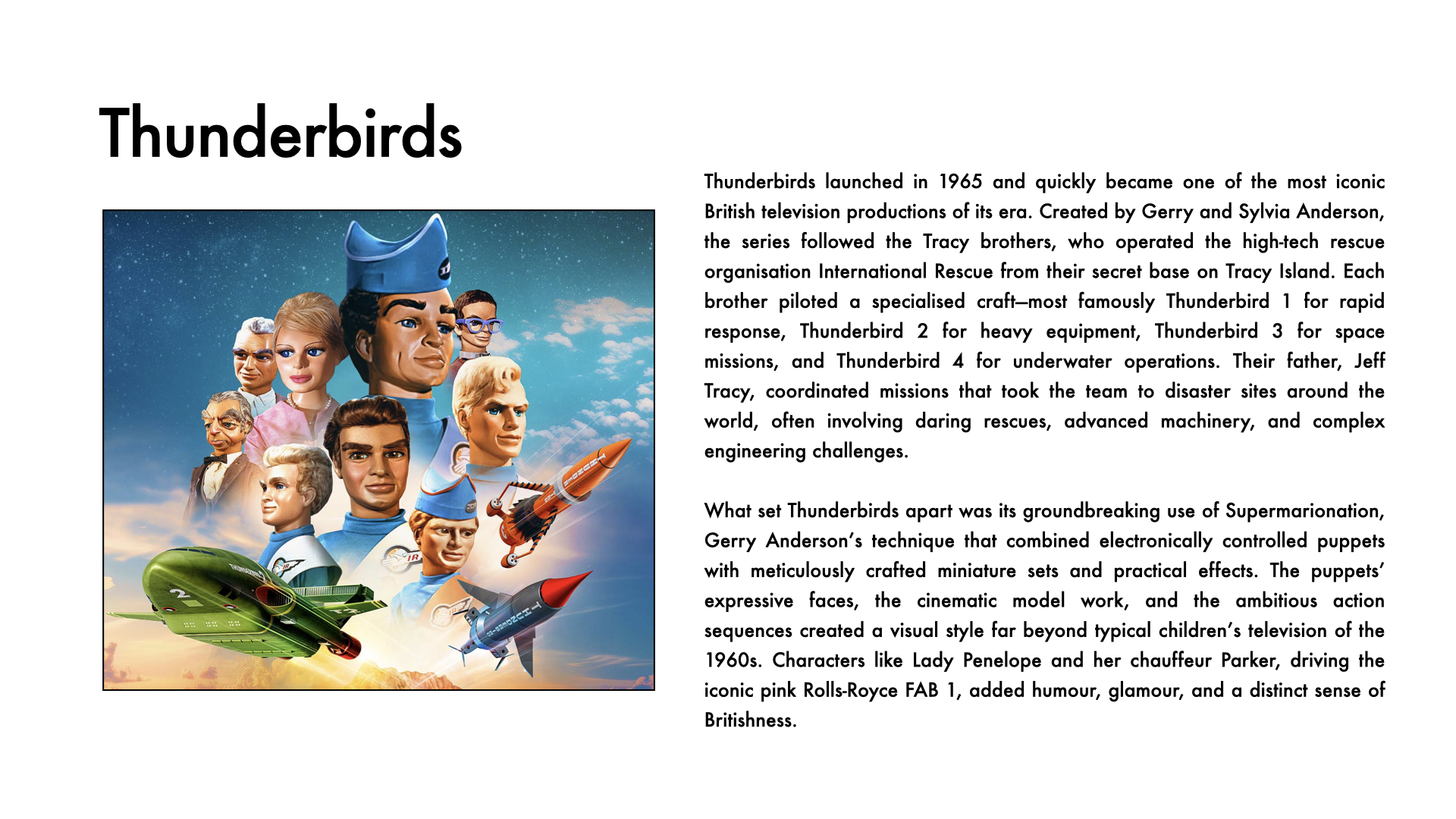
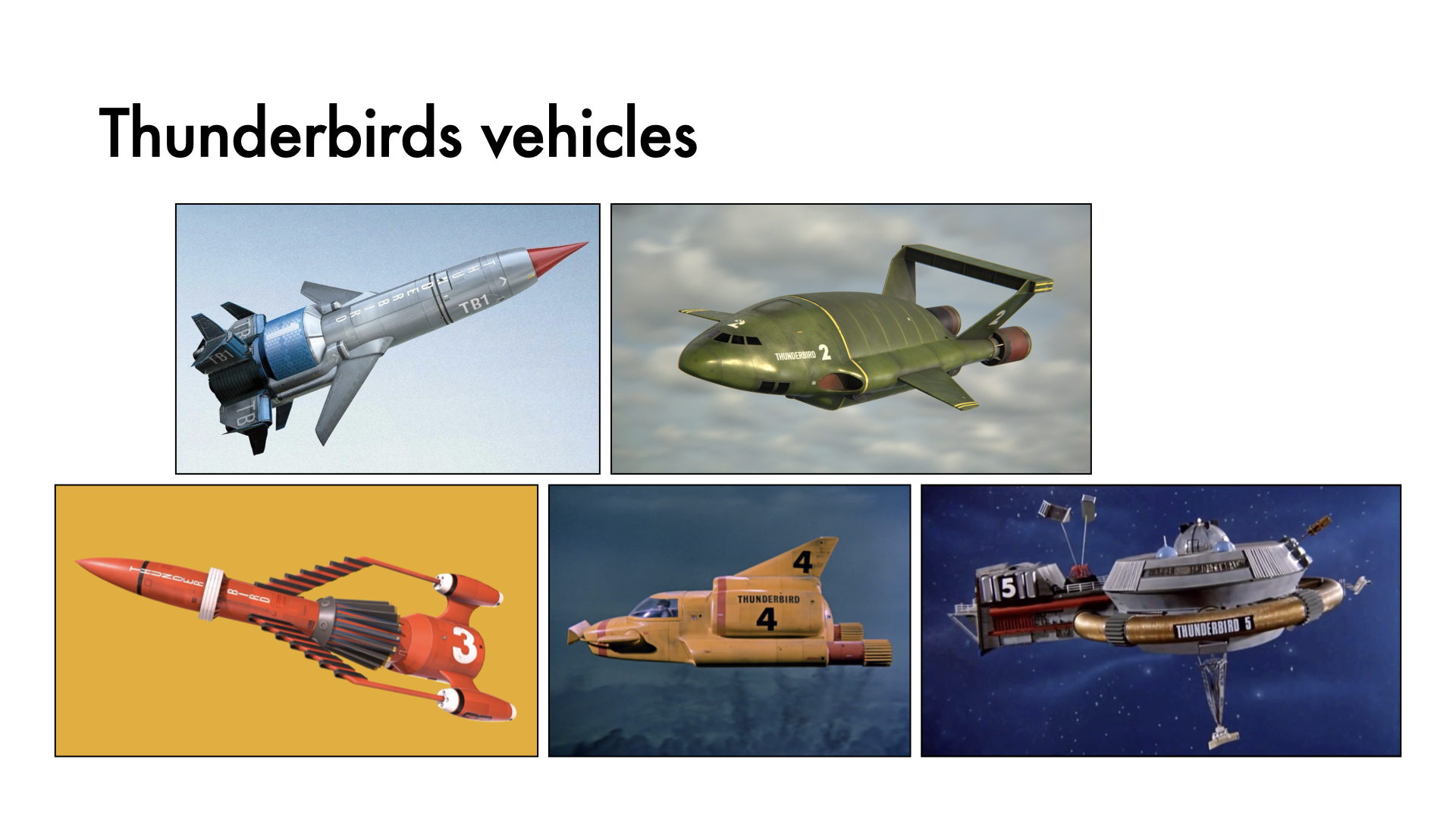
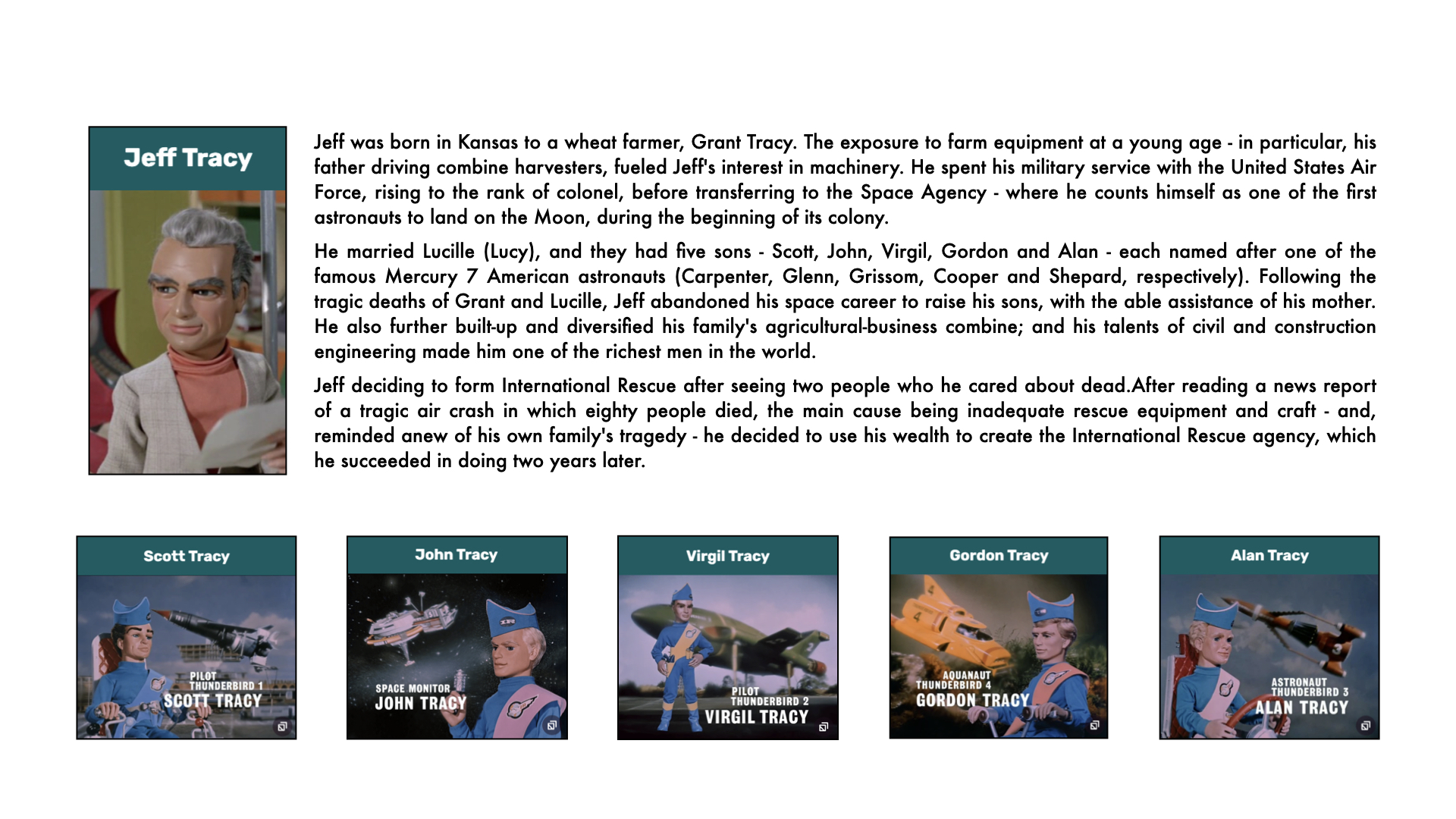
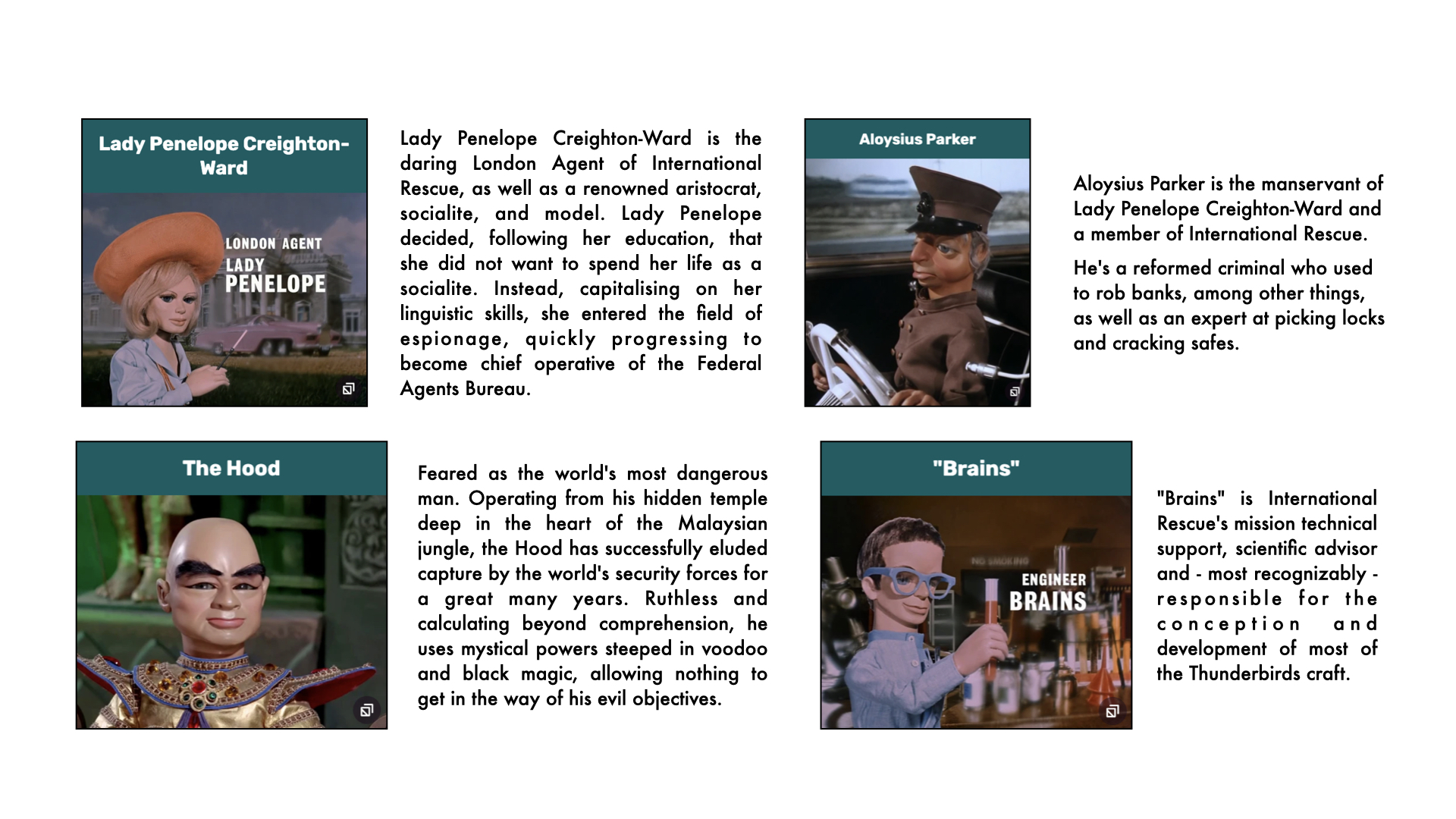
In the 1960s, British television took an unexpected leap forward with the arrival of Thunderbirds, created by Gerry Anderson and his then-wife Sylvia Anderson. First broadcast in 1965 — and marking its 60th anniversary in 2025 — the series followed the Tracy brothers, who operated the futuristic rescue organisation International Rescue from their hidden base on Tracy Island. With its heroic missions and distinctive vehicles — Thunderbird 1, Thunderbird 2, Thunderbird 3, the submarine Thunderbird 4, and the orbiting space station Thunderbird 5 — the show presented a vision of global cooperation that felt almost like a science-fiction version of the United Nations.
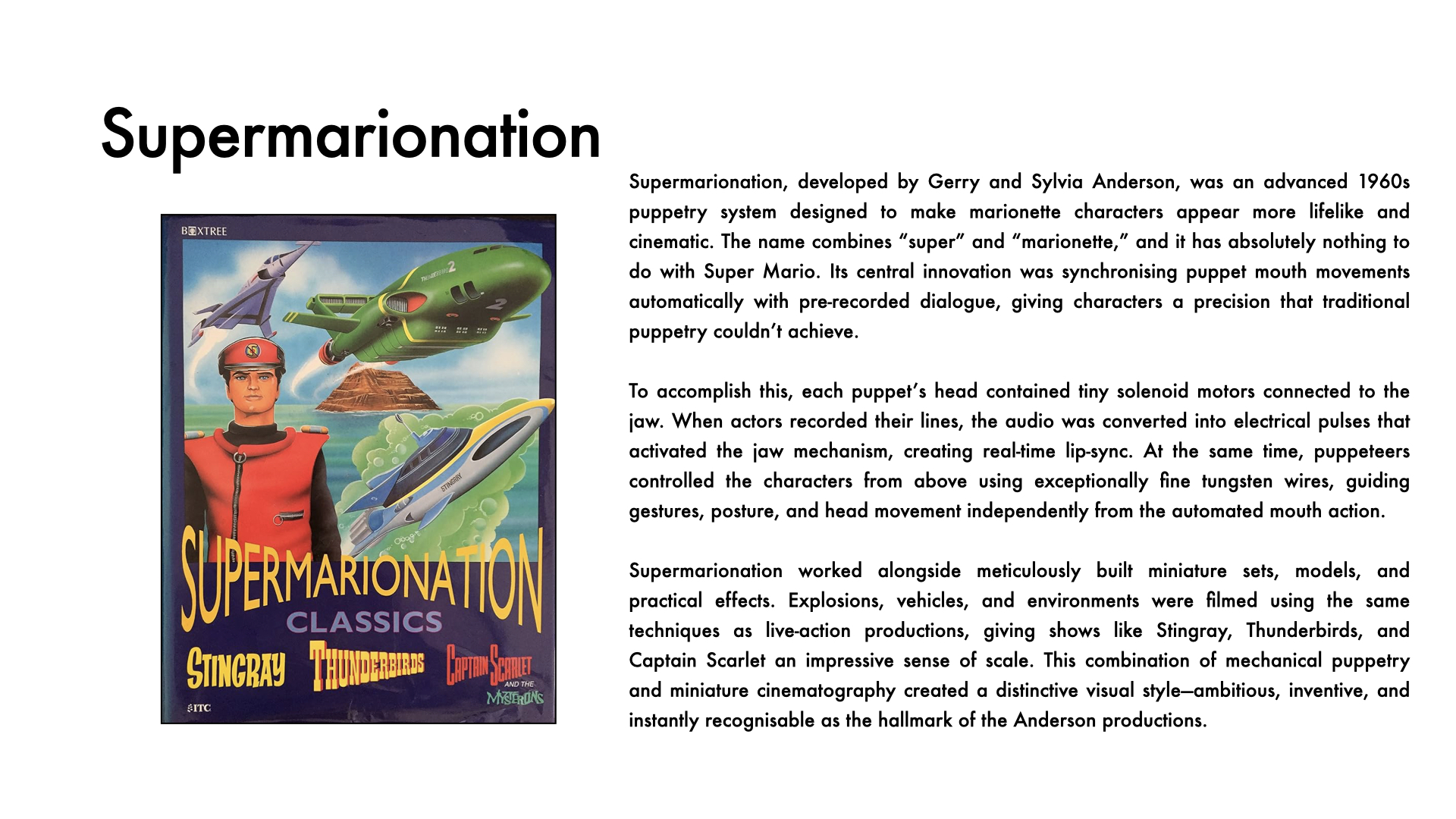
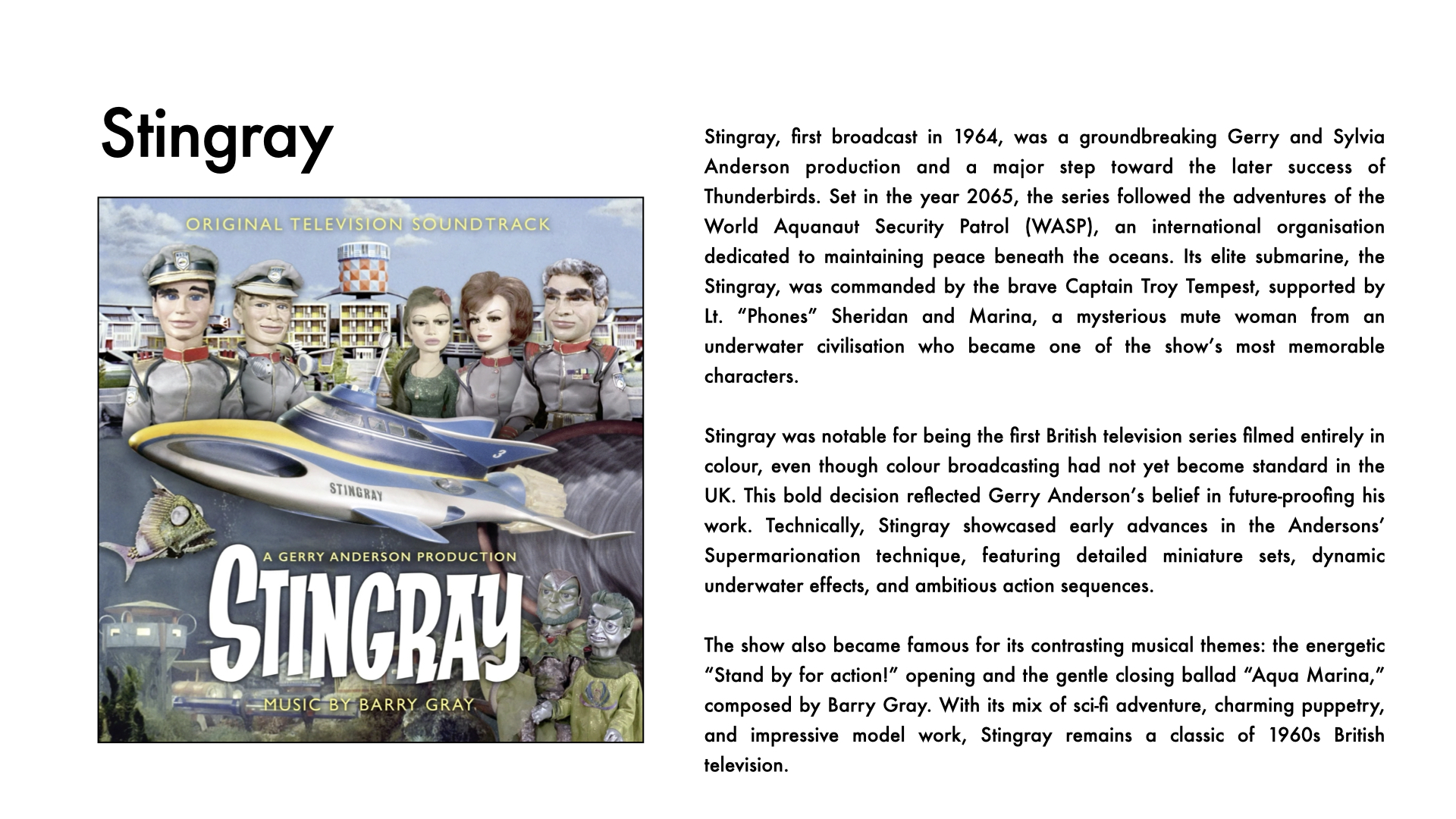
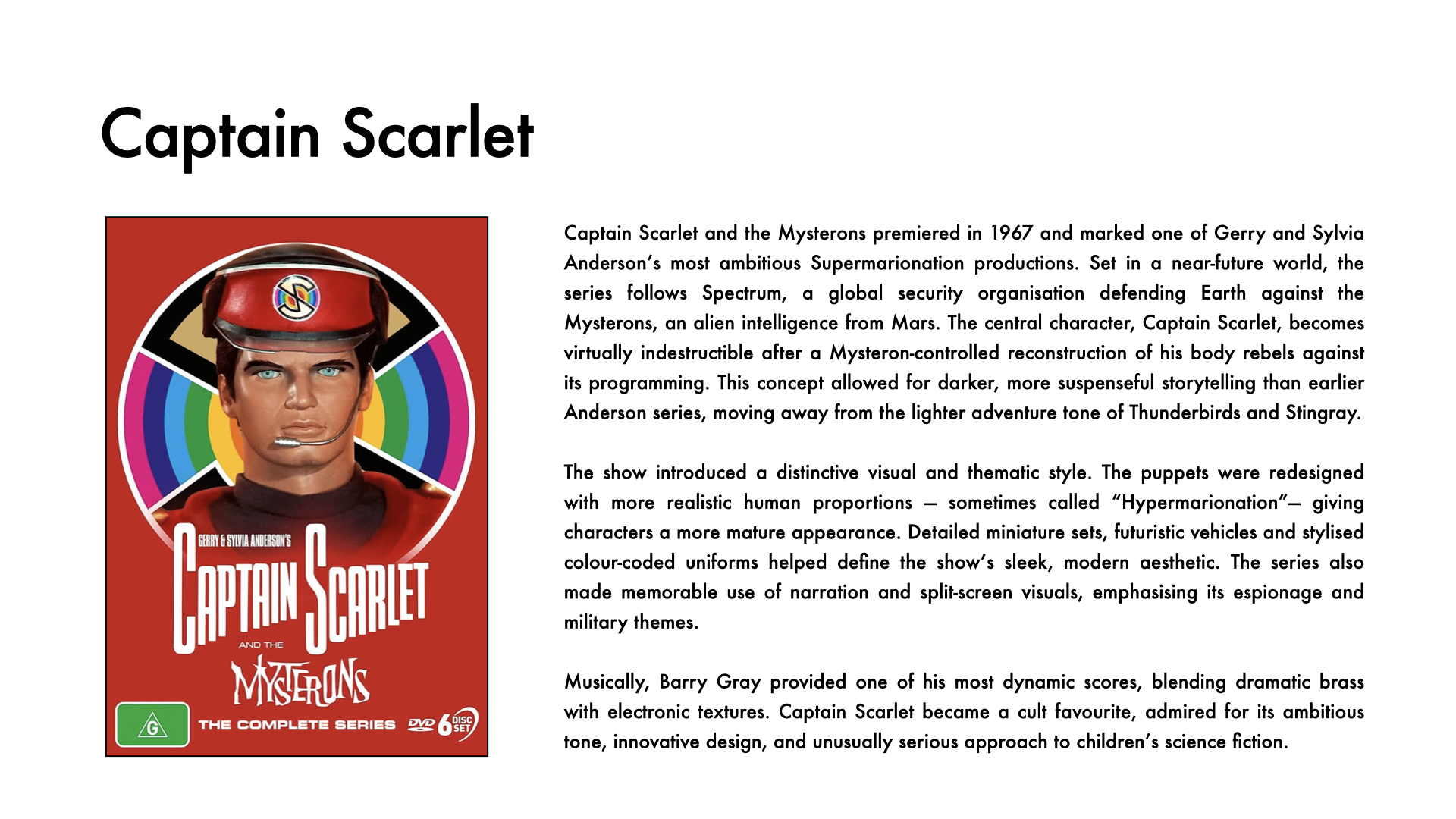
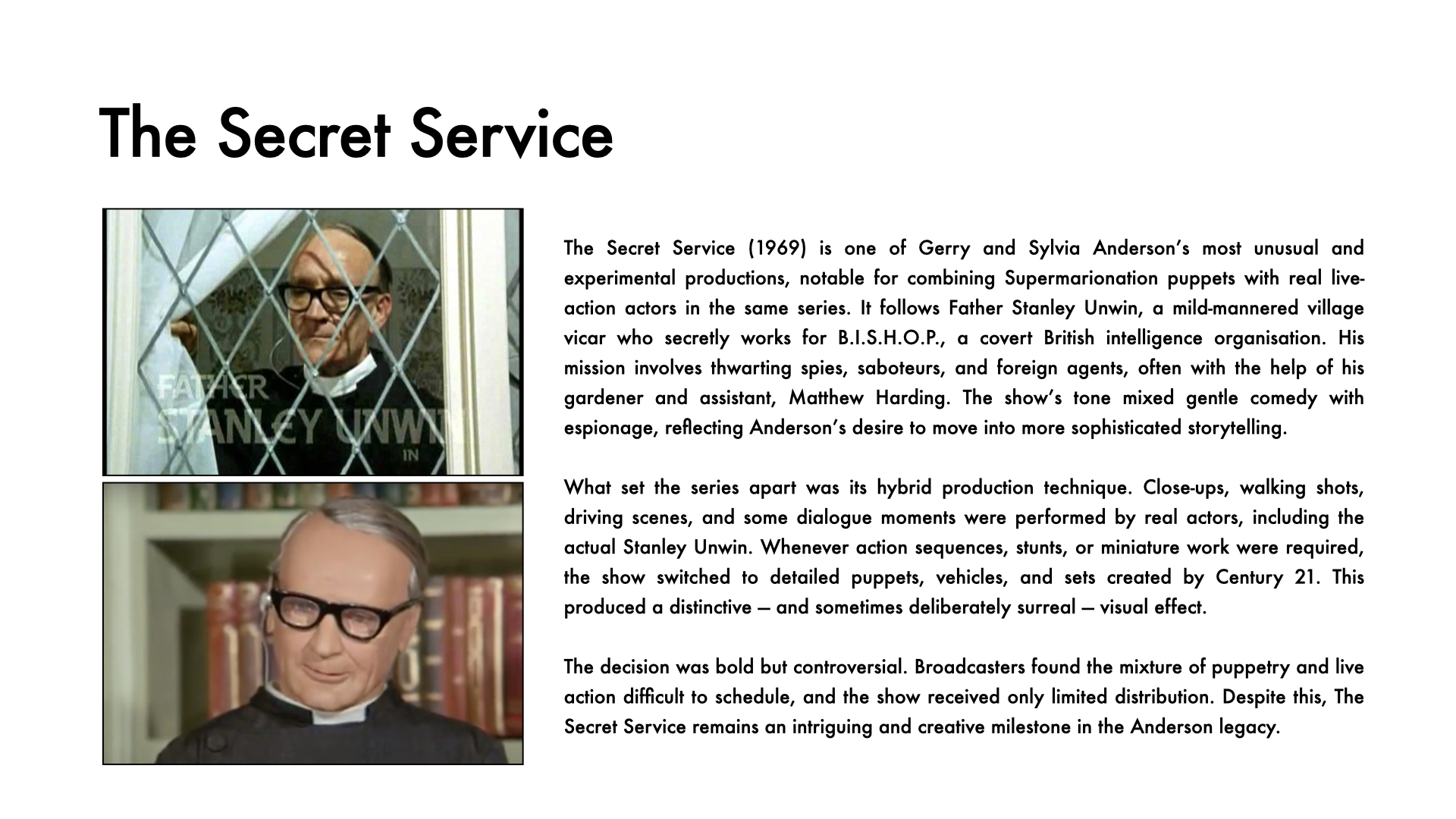
What truly set Thunderbirds apart was Anderson’s pioneering use of Supermarionation, a technique involving electronically controlled puppets synchronised with pre-recorded dialogue. Combined with miniature sets, model effects, and bold design, it created a cinematic, larger-than-life world made entirely by hand. Anderson had already experimented with this approach in earlier productions, especially Stingray, the first British TV series filmed entirely in colour, long before colour broadcasting was common.
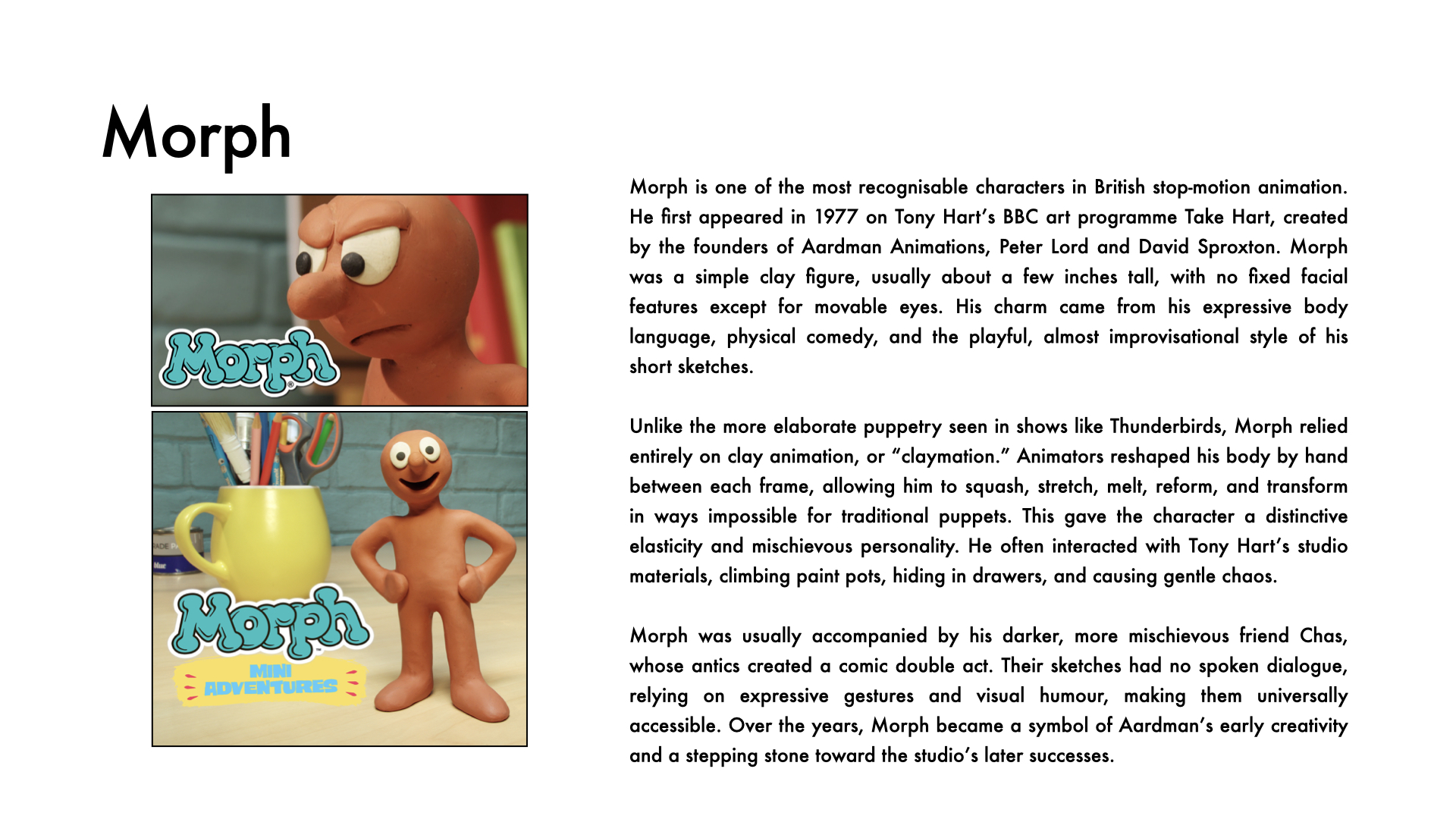
During the same era, British children were also discovering other forms of inventive, model-based storytelling. In the 1970s, a new kind of stop-motion character appeared on Tony Hart’s art programme: a simple clay figure named Morph, created by the young Aardman Animations team. Morph was expressive, playful, and completely different from Anderson’s mechanical puppets, but both shared the same spirit of tactile, handcrafted creativity.
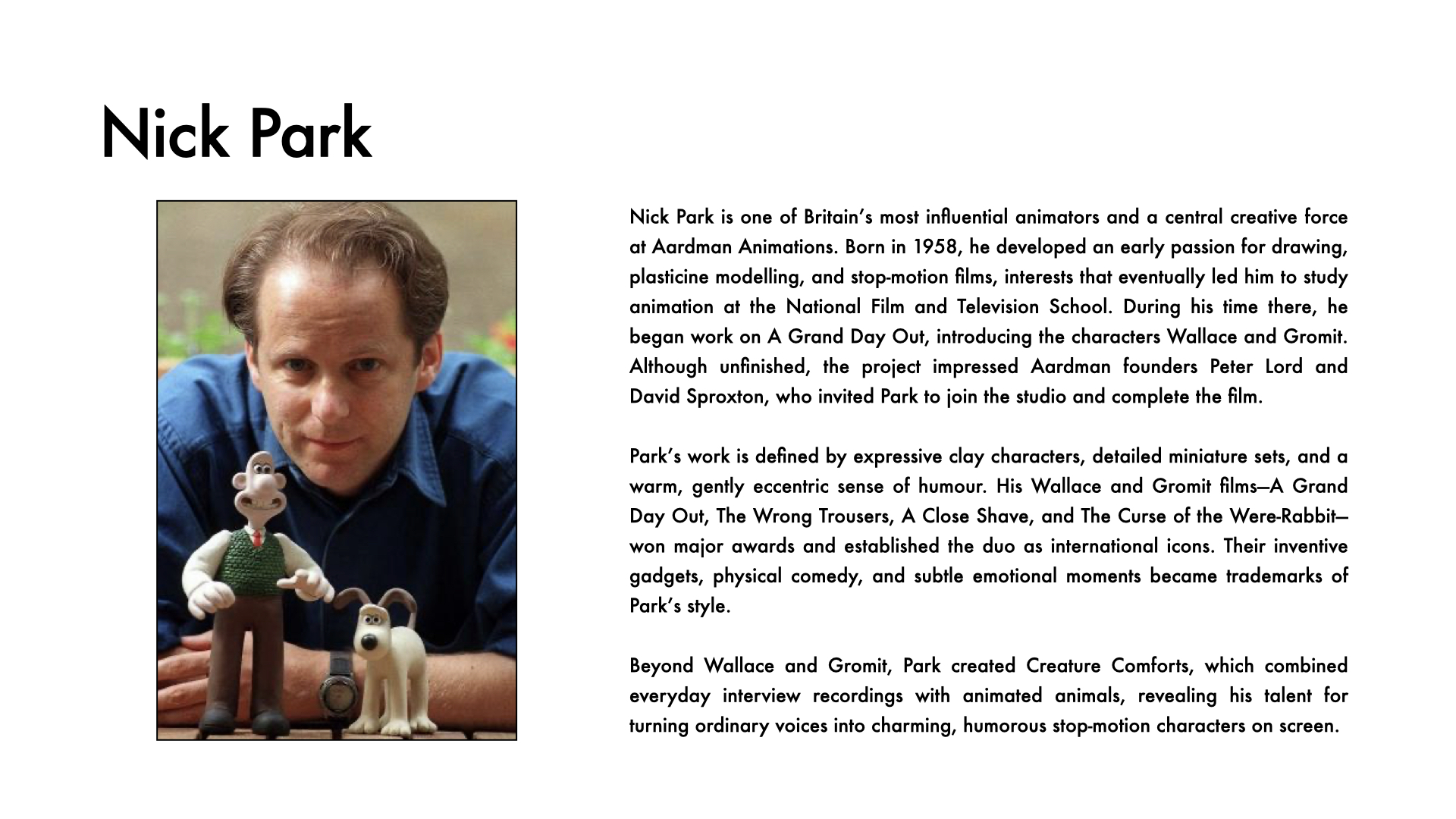
This connection deepened when Nick Park joined Aardman in the 1980s. While Anderson had built worlds of rockets, rescue craft, and high-tech bases, Park created the eccentric inventor Wallace and his loyal dog Gromit, characters brought to life through painstaking clay animation. Films like A Grand Day Out, The Wrong Trousers, and A Close Shave showed how detailed models, charming characters, and imaginative storytelling could thrive in a completely different style from Anderson’s sci-fi adventures, yet still feel unmistakably British.
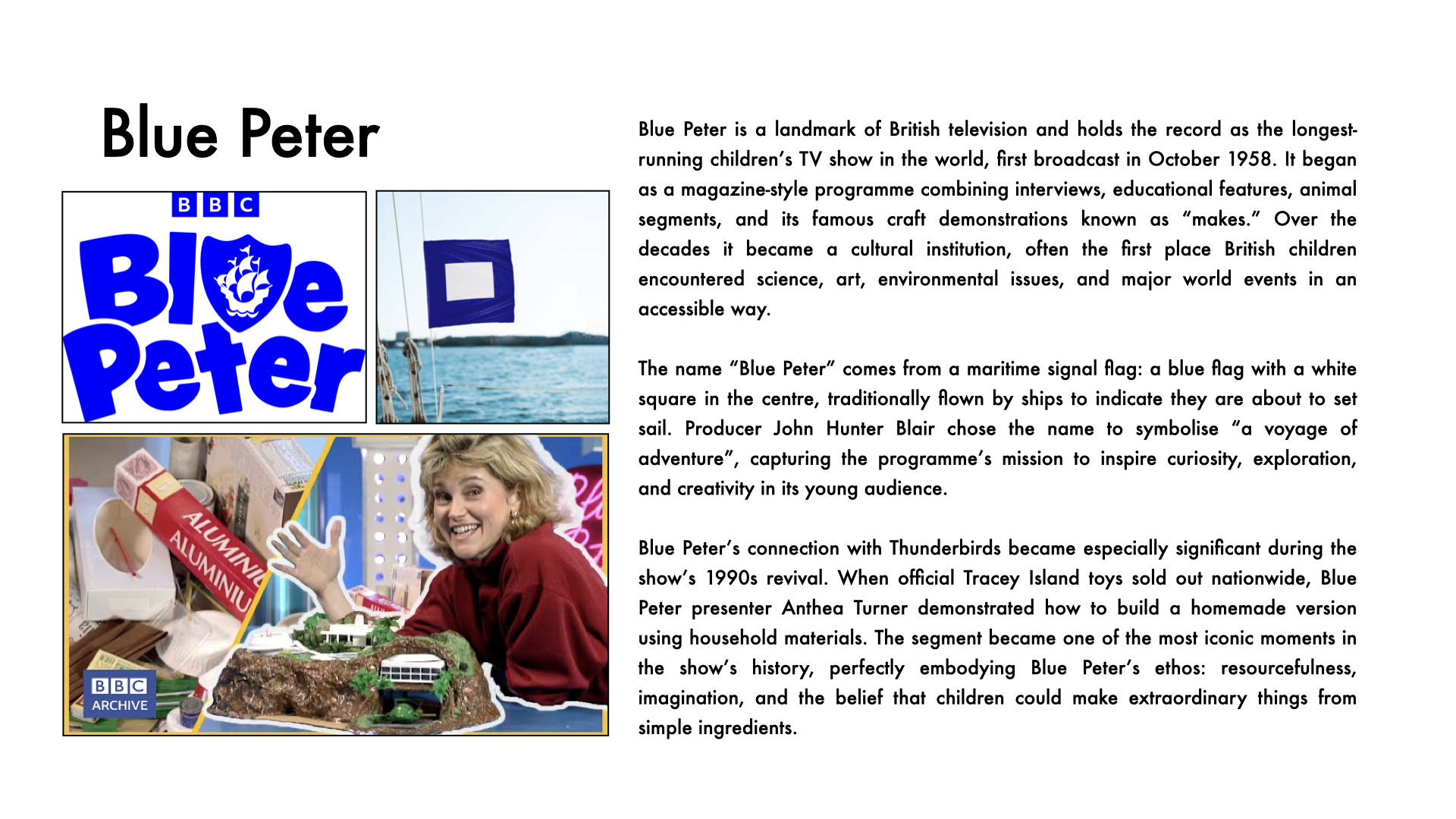
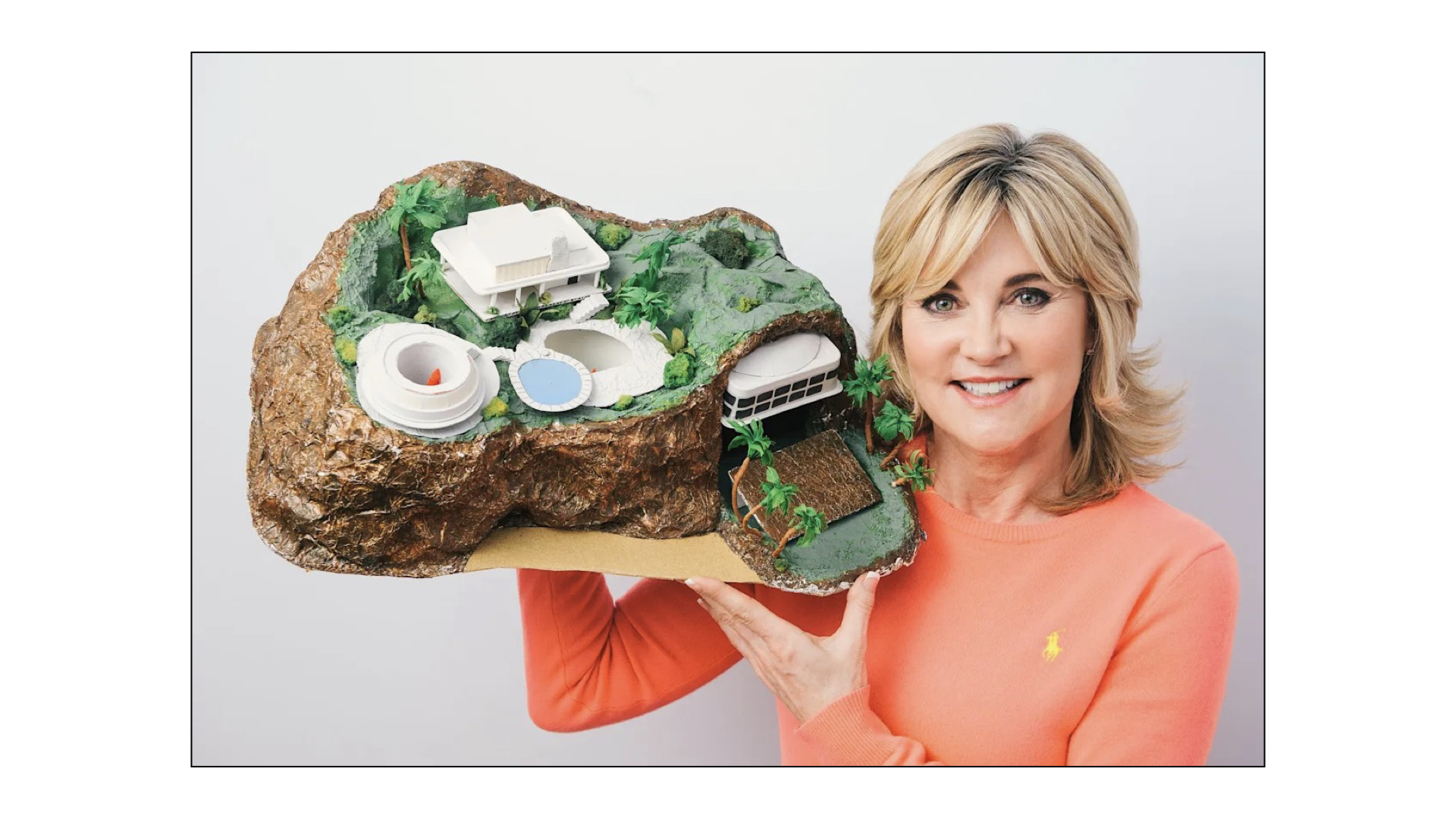
Thunderbirds itself enjoyed a major revival in the 1990s, fuelled partly by a famous Blue Peter segment showing children how to build their own Tracey Island model. The instructions became so popular that the BBC had to reissue them repeatedly.
By tracing a line from Supermarionation to Morph and then to Wallace and Gromit, you can see a clear tradition of British visual craftsmanship — an evolution from electronic puppets, to clay figures, to award-winning animated films — all built by hand, one frame at a time.
📽️ Slideshow
📺 Video
▶️ Gerry Anderson's Thunderbirds (1965) - HD Opening Titles
▶️ The official YouTube account of Anderson Entertainment & the Gerry Anderson Estate.
▶️ Century 21 Films - drama to documentary, miniature effects to puppet shows.
▶️ BBC Archive - Make your own THUNDERBIRDS TRACY ISLAND | Blue Peter
▶️ Century 21 Films - VOICE ARTISTS: Behind the Scenes with Voice Actors
▶️ Thunderbirds March Played Live at the Birmingham Symphony Hall
🔑 Key Vocabulary
- Animatronics – the use of robotic systems to create lifelike movement in models or creatures for film and television.
- Aqua Marina – the closing theme song from the 1964 series Stingray, composed by Barry Gray.
- Barry Gray – composer who created the orchestral music for many Gerry Anderson series.
- Blue Peter – the world’s longest-running children’s TV show, famous for its creative “makes” and the Tracey Island model segment.
- Captain Scarlet – a 1967 Gerry Anderson series featuring Spectrum, a defence agency fighting the Mysterons from Mars.
- Claymation – stop-motion animation using clay figures that are reshaped between frames.
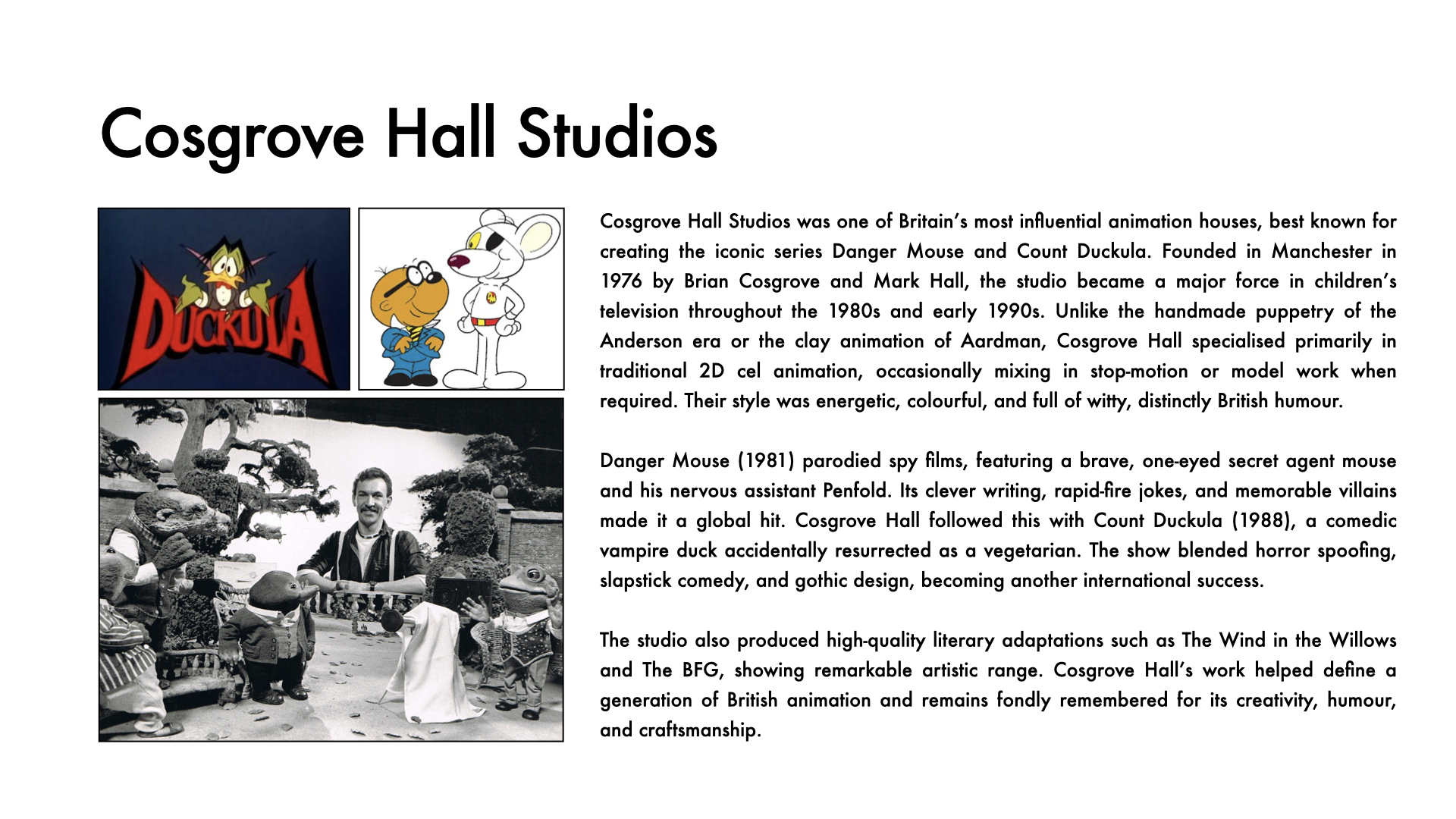
- Cosgrove Hall – British animation studio behind Danger Mouse and Count Duckula.
- Dynamation – Ray Harryhausen’s stop-motion technique combining animated models with live-action footage.
- FAB – catchphrase from Thunderbirds, used as an acknowledgment similar to “Roger” or “OK.”
- Gerry Anderson – British producer and director who pioneered Supermarionation television series.
- International Rescue – the secret organisation in Thunderbirds operated by the Tracy family.
- Jim Henson – American puppeteer and creator of the Muppets and Sesame Street characters.
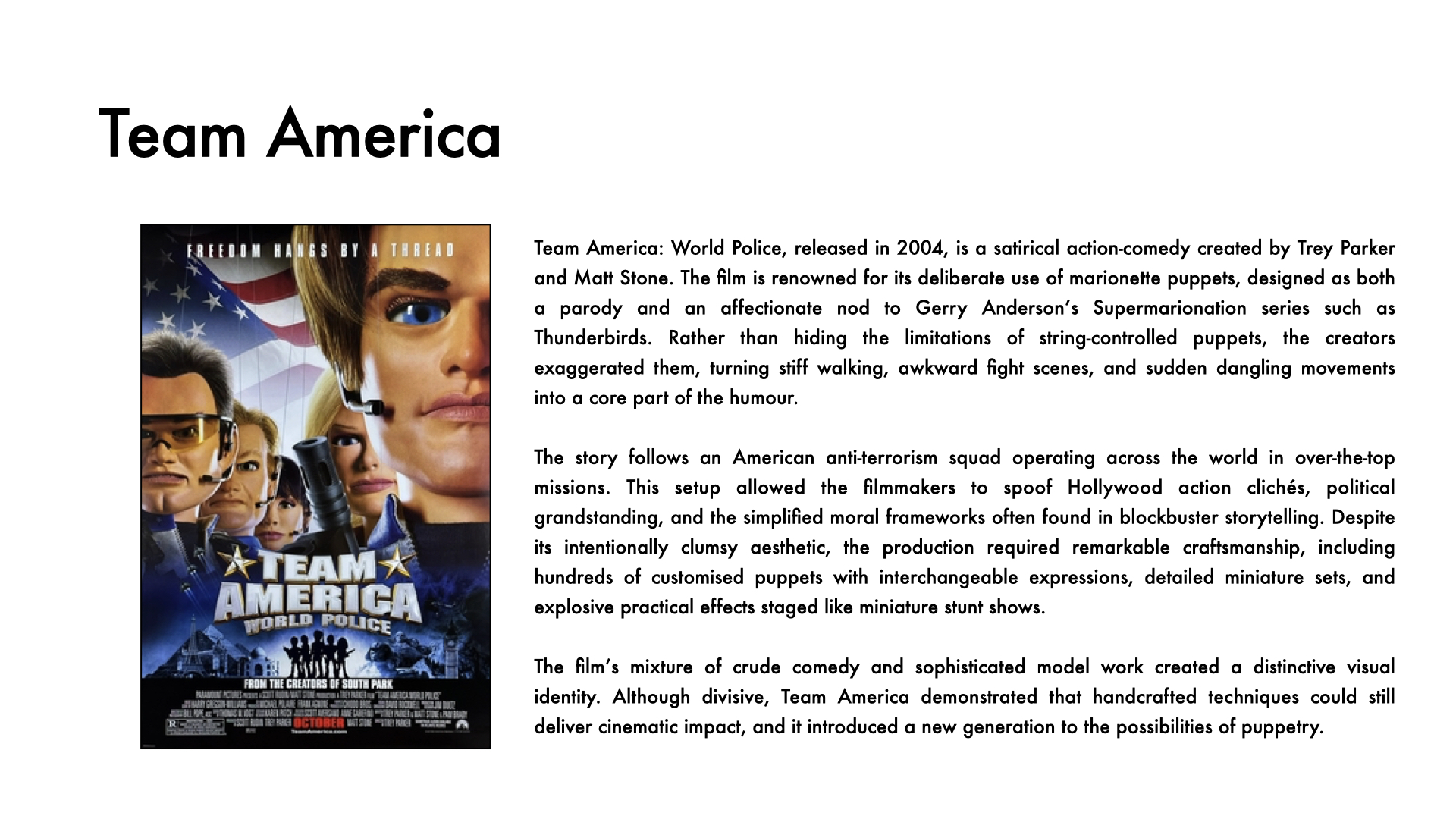
- Marionette – a string-operated puppet controlled from above.
- Morph – Aardman Animations’ clay character first seen on Take Hart in 1977.
- Muppet – portmanteau of “marionette” and “puppet,” describing Jim Henson’s unique hand puppets.
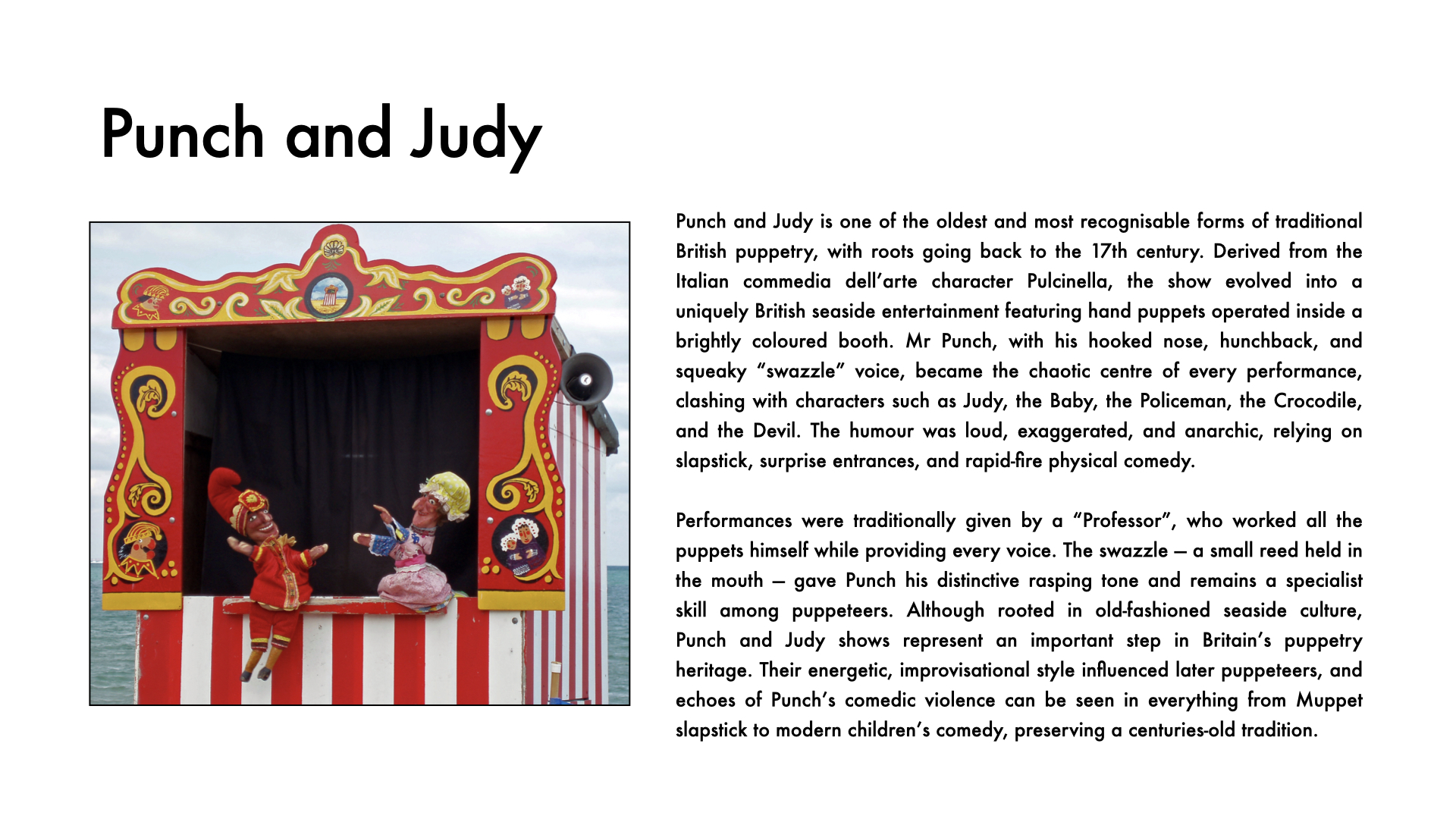
- Punch and Judy – traditional British seaside puppet show featuring the mischievous Mr Punch and his wife Judy.
- Ray Harryhausen – legendary stop-motion animator known for fantasy films like Jason and the Argonauts.
- Supermarionation – Gerry Anderson’s electronic marionette system that synchronised puppet mouths to recorded dialogue.
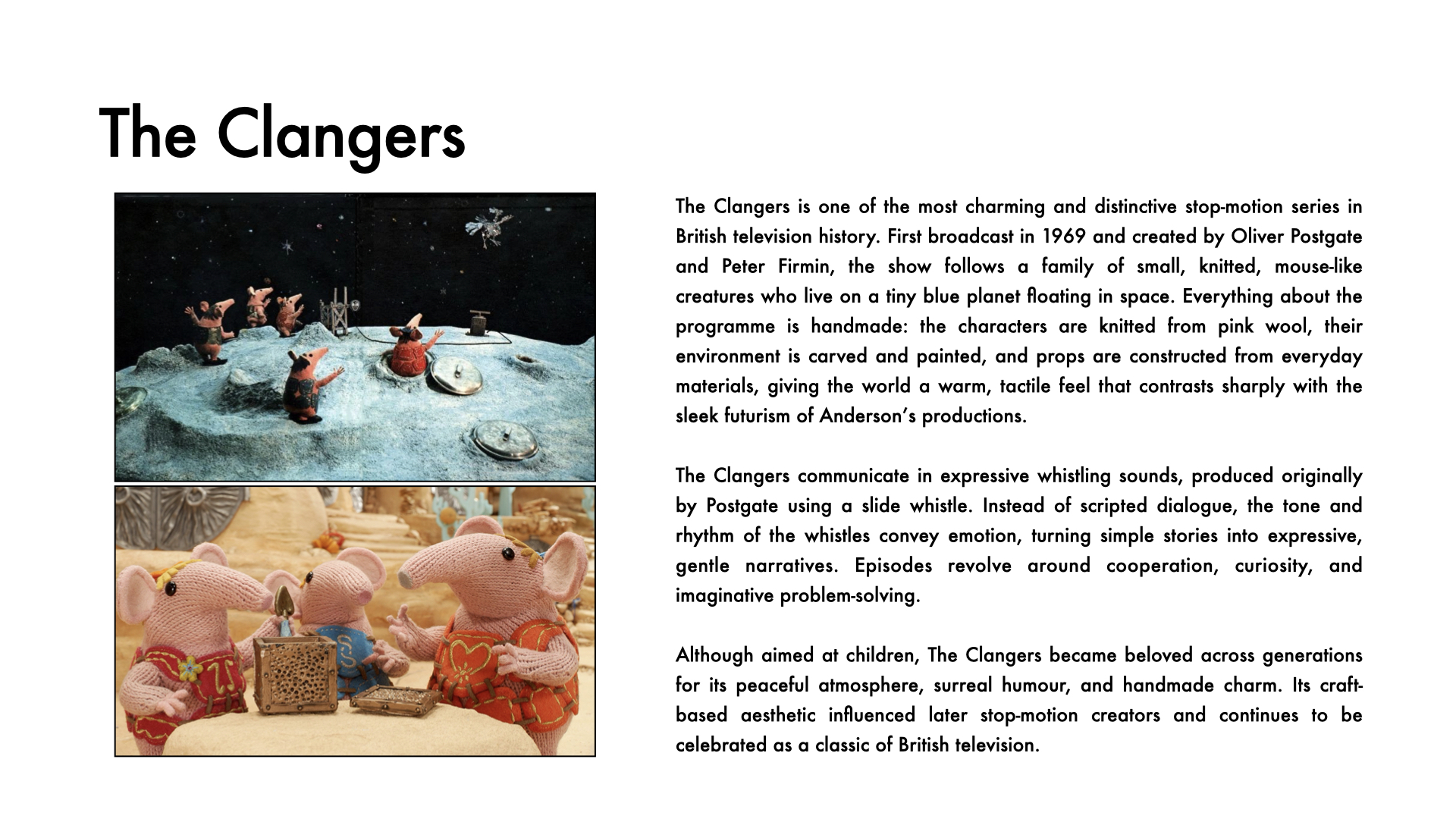
- The Clangers – 1969 stop-motion series about knitted creatures living on a small blue planet in space.
- Thunderbirds – 1965 Gerry Anderson series about the Tracy brothers and their futuristic rescue missions.
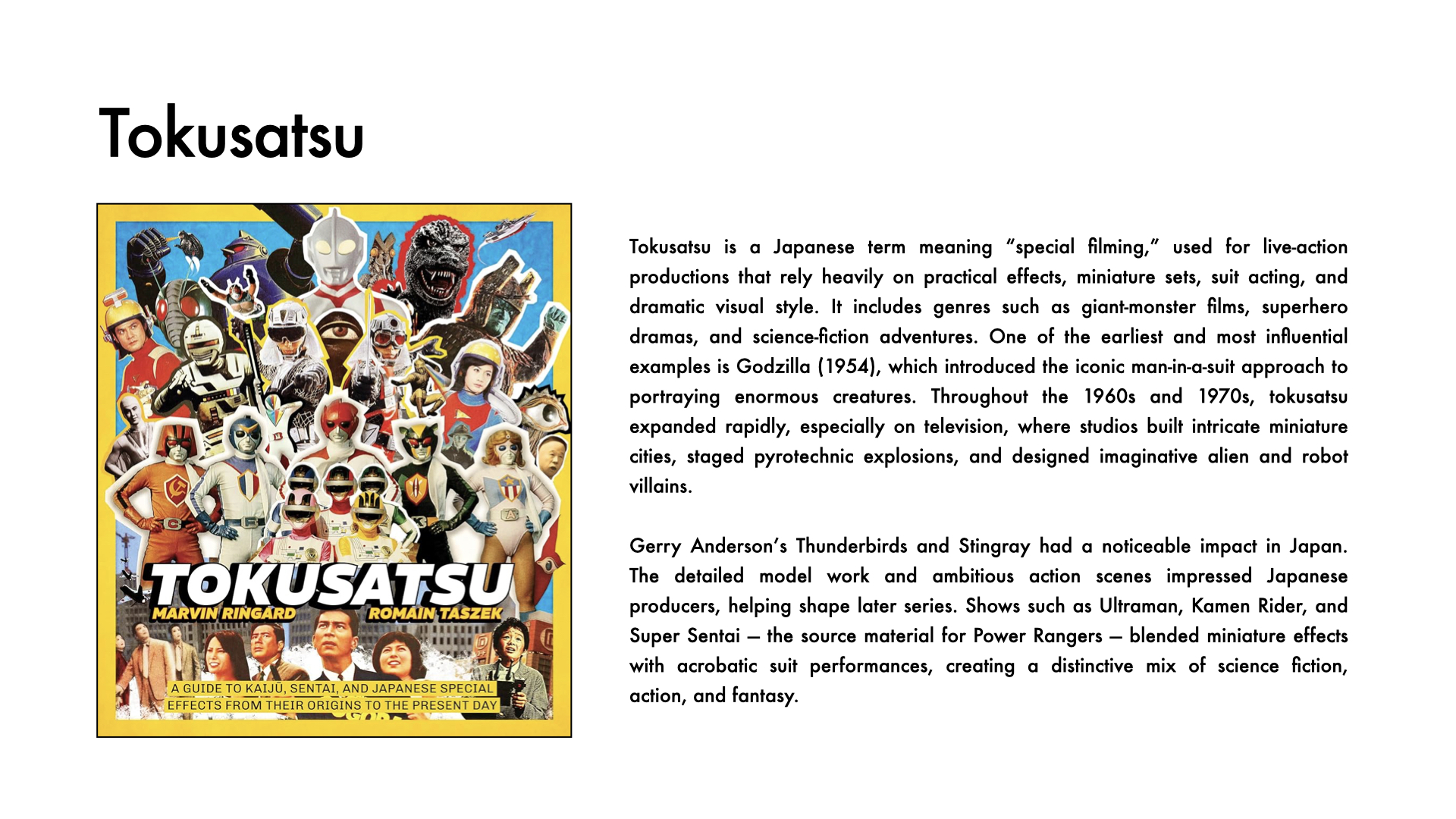
- Tokusatsu – Japanese live-action genre known for practical effects, giant monsters, and superhero shows.
- Tracey Island – fictional base of International Rescue in Thunderbirds; also the subject of Blue Peter’s famous 1990s craft project.
- Tracy Brothers – the five sons of Jeff Tracy who operate the Thunderbird rescue vehicles.
- Supermarionation – the Andersons’ combination of electronic puppetry and miniature filmmaking techniques.
- WASP – World Aquanaut Security Patrol, the underwater defence organisation in Stingray.
💬 Conversation Questions
- What images or memories come to mind when you hear the word “Thunderbirds”? If you never watched it, what do you imagine it was like?
- Which TV shows from your childhood do you remember most vividly? Why do you think they stayed in your mind?
- Did you ever watch any shows with puppets, animation, or stop-motion characters? How did they feel different from live-action series?
- In Thunderbirds, International Rescue is like a secret United Nations of heroes. Did any childhood show give you a similar feeling of “global adventure” or “saving the world”?
- Many people remember being scared or unsettled by certain characters (for example, villains or strange puppets). Was there a TV character that frightened you as a child?
- Did you ever try to build or copy something from a TV show (for example, Tracey Island, a spaceship, a costume, a gadget)? How did it go?
- How do you think the special effects in shows like Thunderbirds or older sci-fi series compare to modern CGI? Which do you find more charming or impressive, and why?
- Some people feel that older children’s TV shows were “darker” or more serious than modern ones. Do you agree or disagree? Can you give examples?
- If you could bring back one TV show from your childhood for a modern reboot, which would you choose, and what would you change or keep the same?
- Thunderbirds often focuses on teamwork and technical problem-solving. Did any childhood show influence what you were interested in later (for example, science, art, travel, technology)?
- Do you think TV shows from your childhood were more innocent, more creative, or just different from what children watch today? What has changed the most?
- How important were theme tunes or opening credits for you? Can you still remember any songs or melodies from childhood TV, and what emotions do they bring back?
- Would you show Thunderbirds or your favourite childhood series to a child today? Why or why not?