Week 1️⃣ 9️⃣
Cricket
🔊 Audio
📜 Show transcript
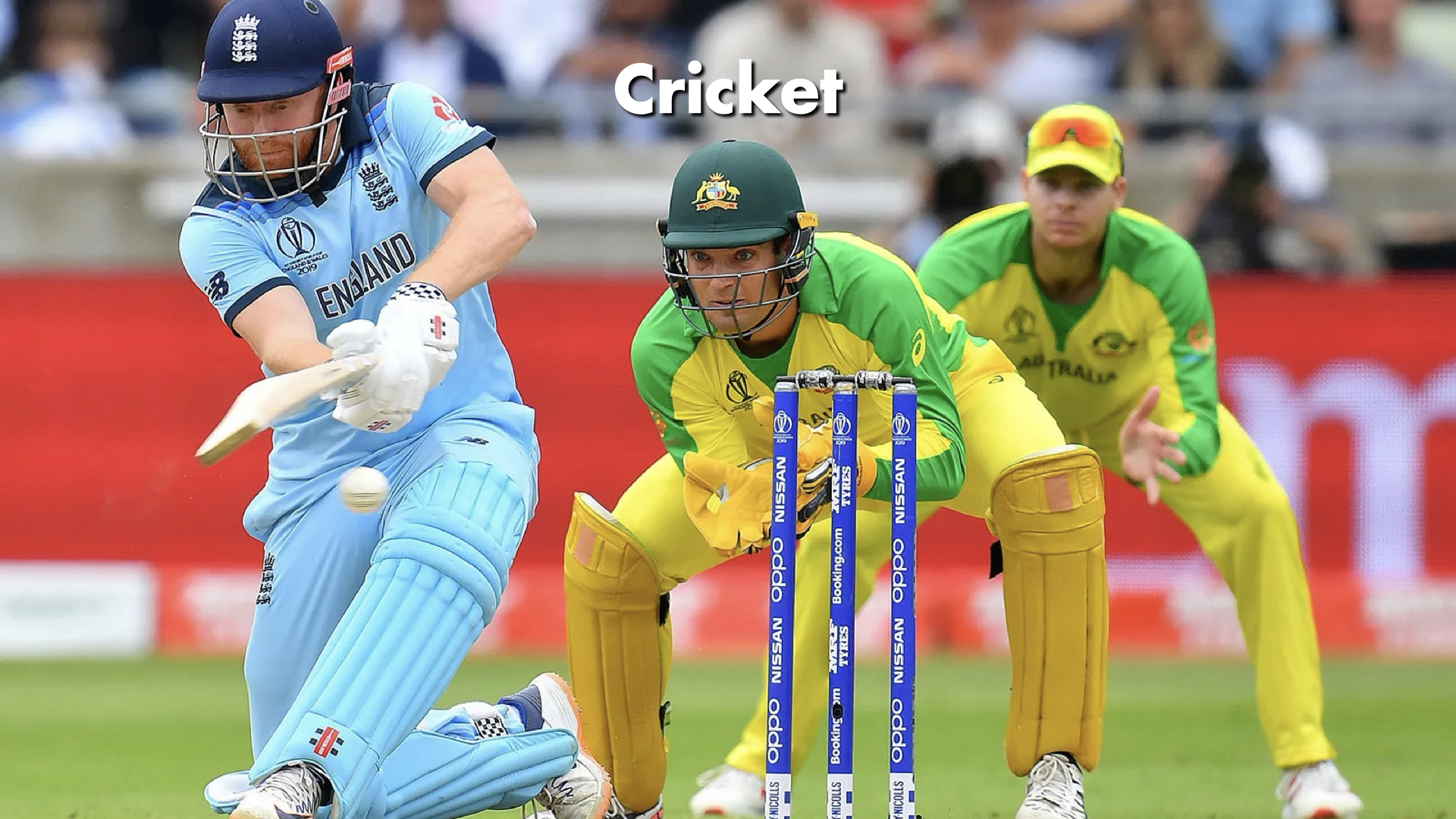
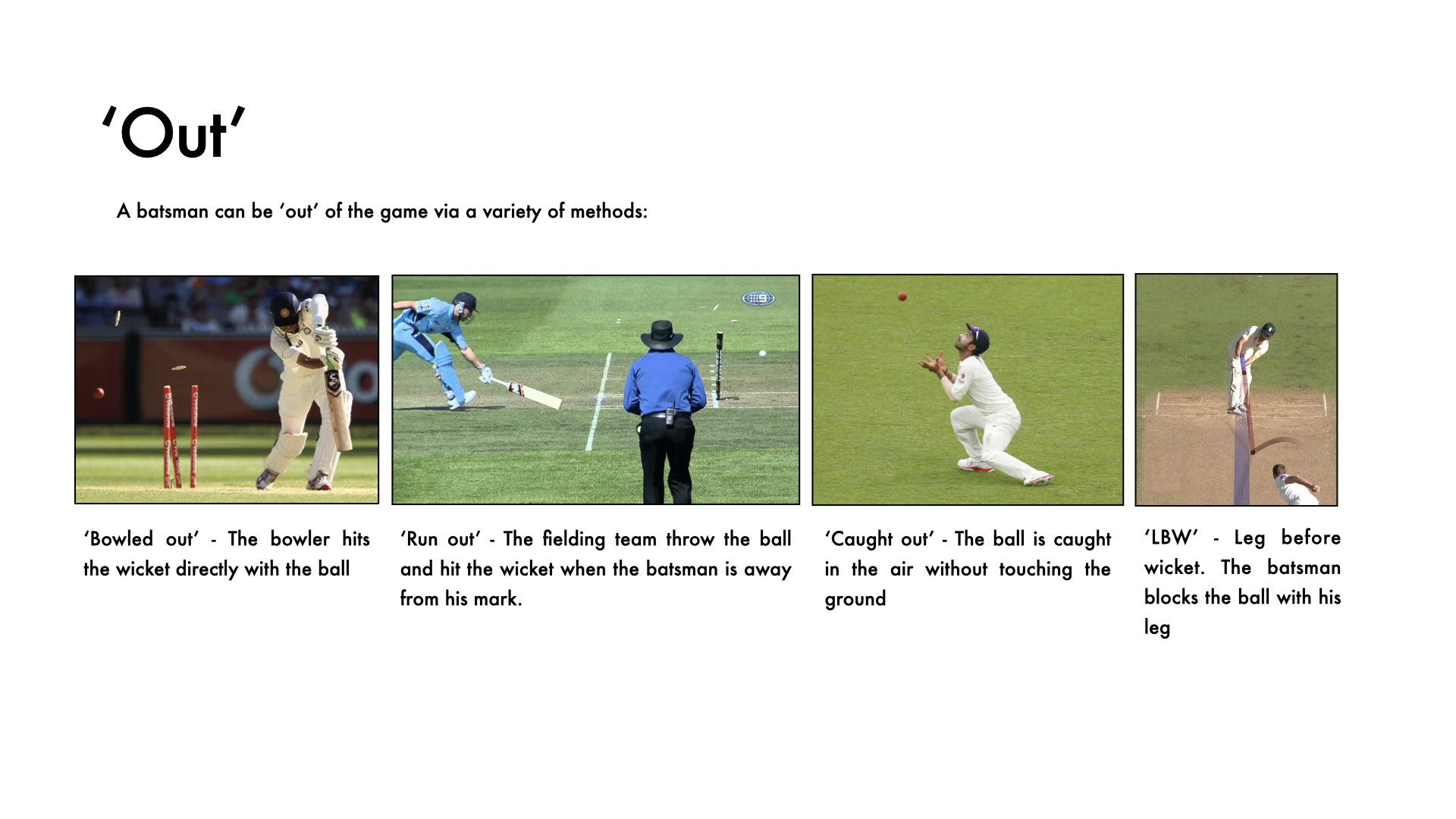
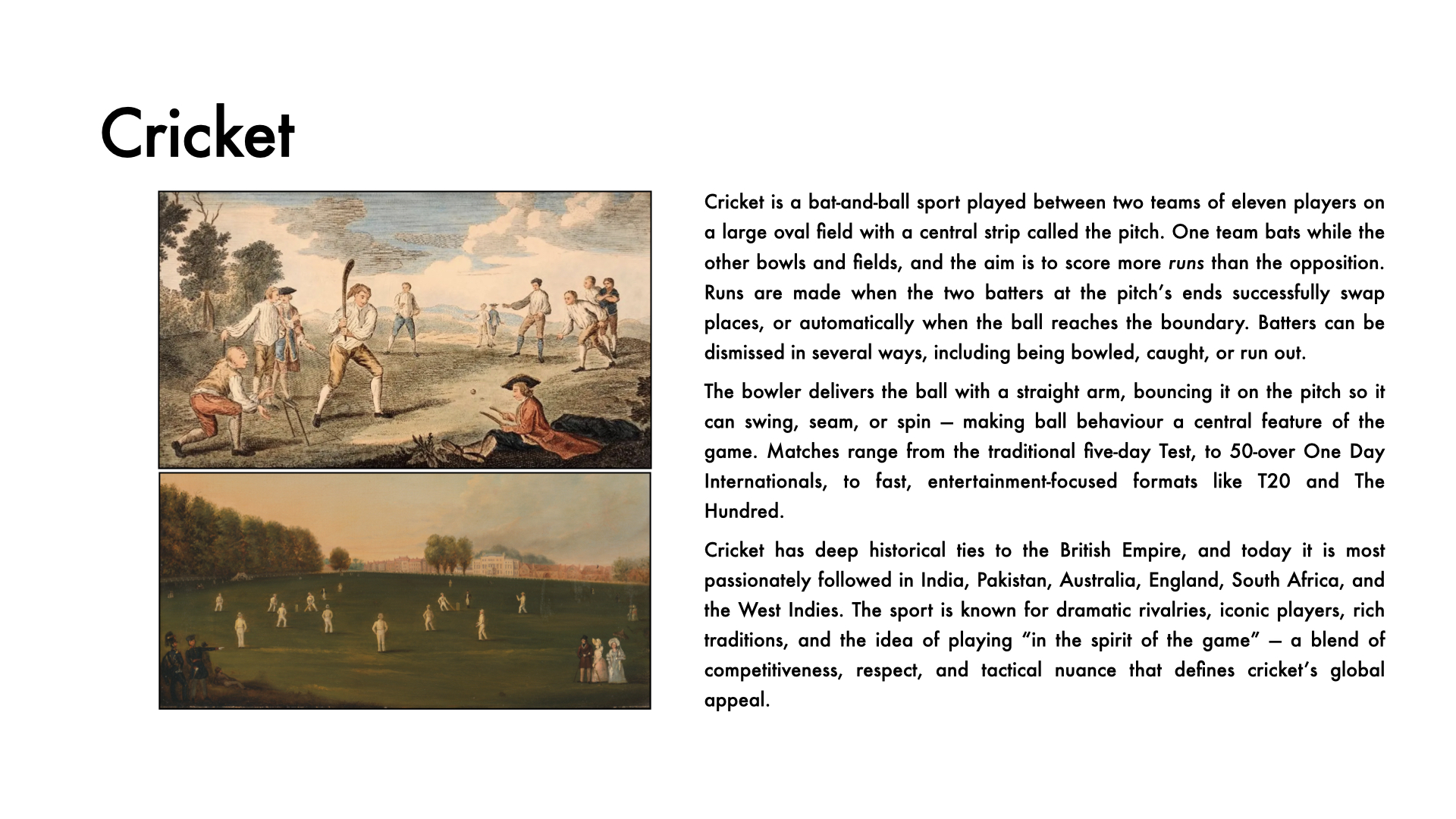
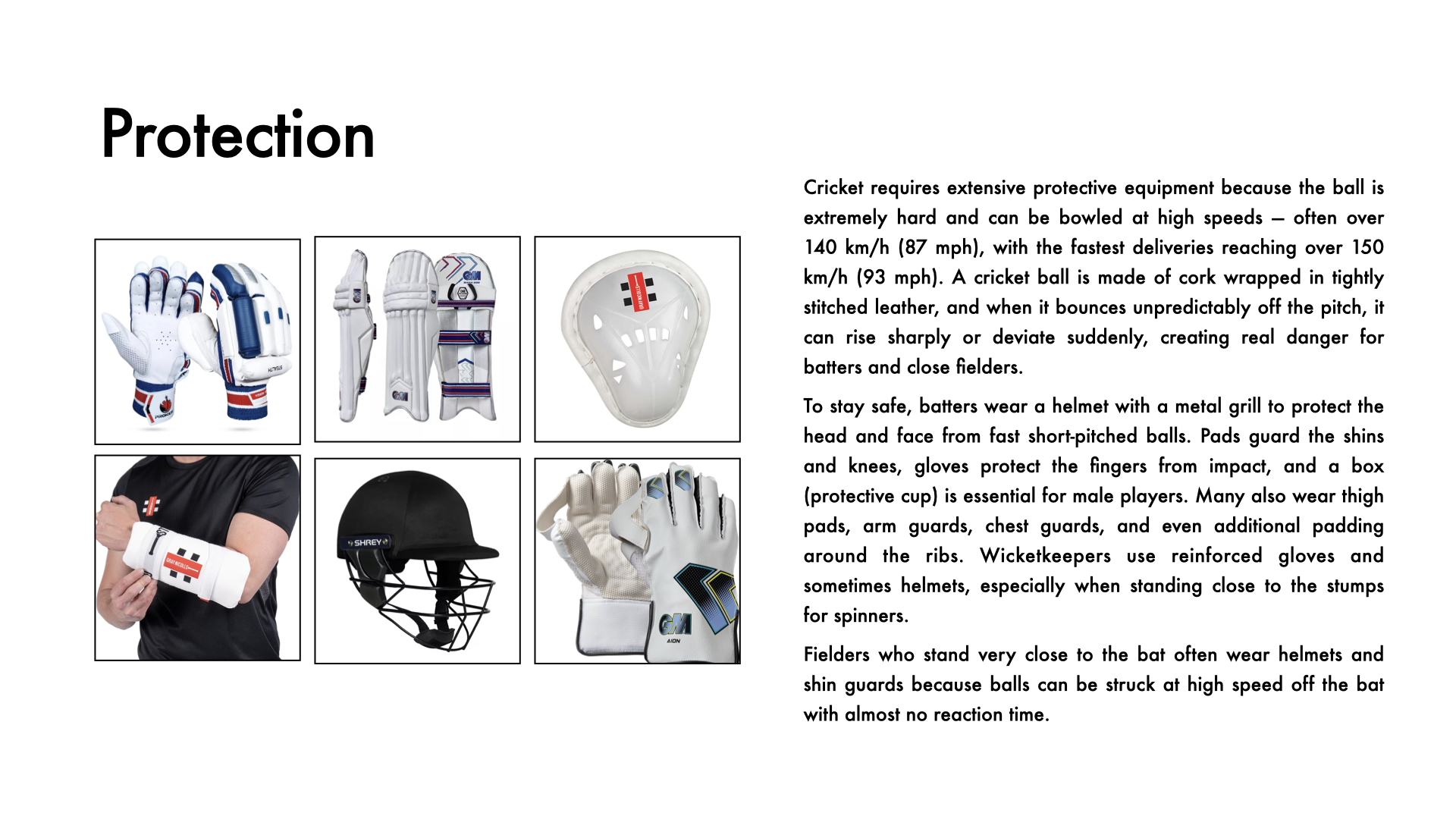
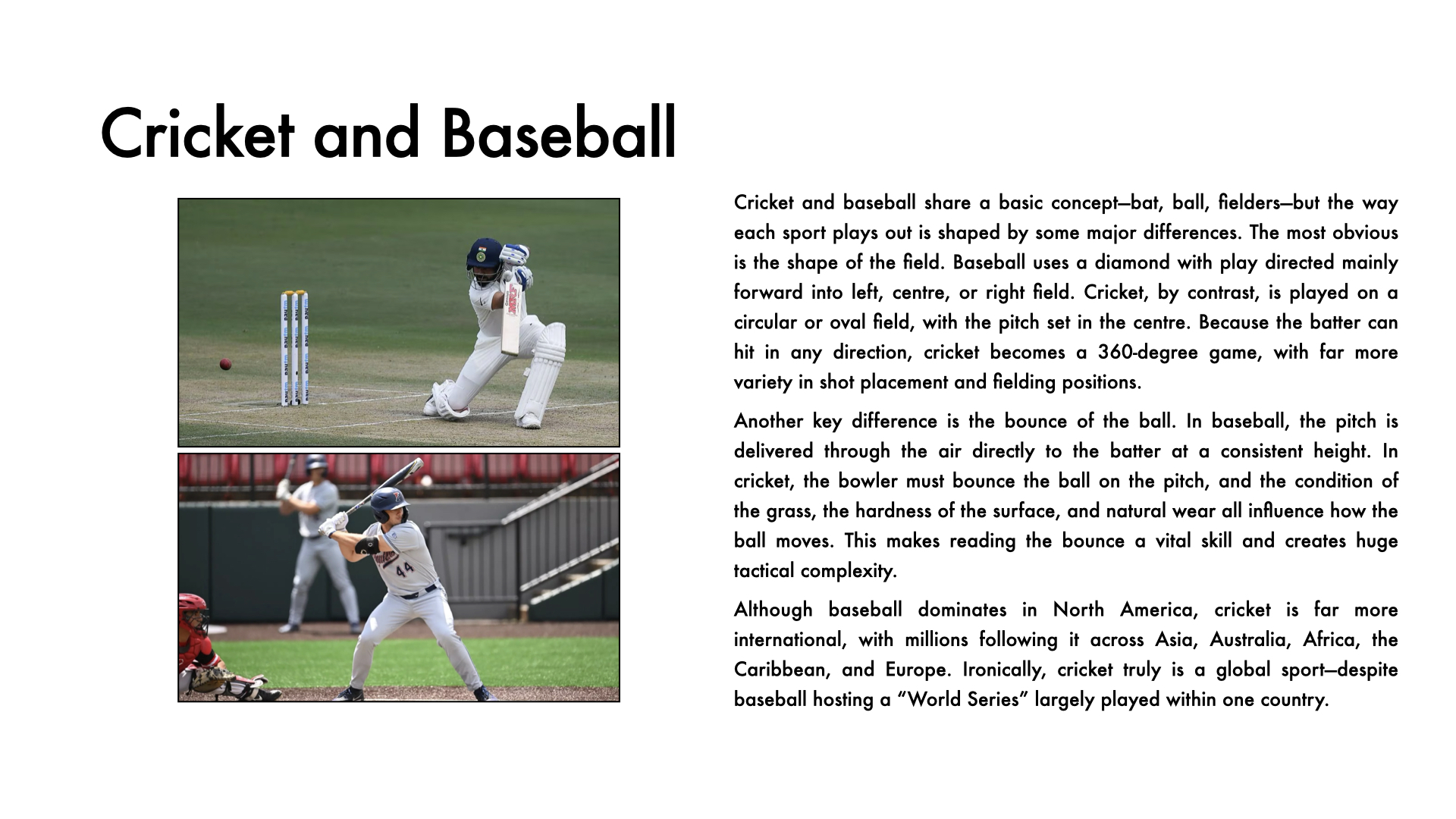
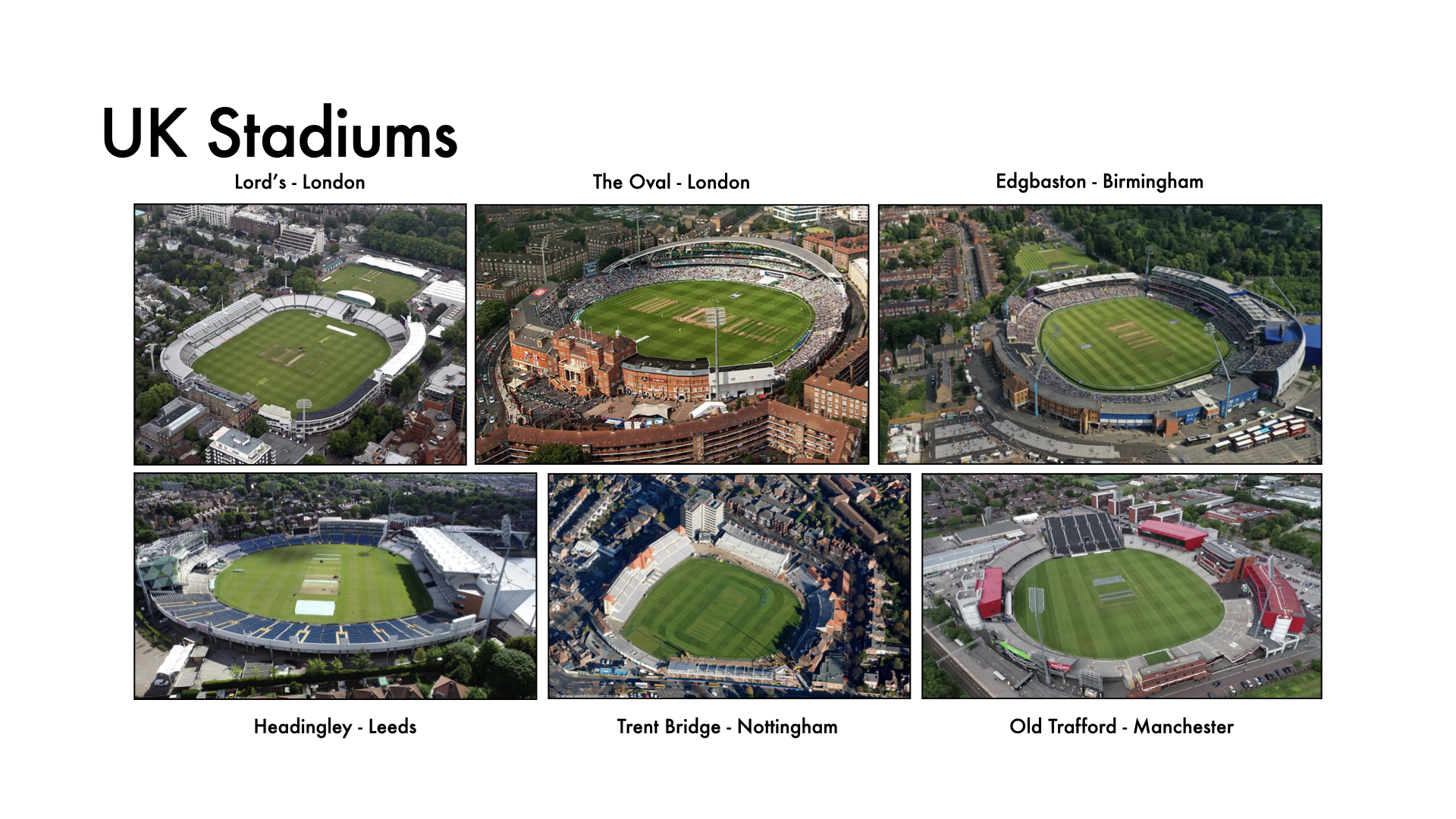
Cricket is one of the world’s most international sports, played on a large oval field with the pitch set directly in the centre. This design creates a 360-degree game in which the batter can hit the ball in any direction, including behind them. This contrasts strongly with baseball, which uses a forward-facing diamond and a pitch delivered through the air at a fixed height. In cricket, the ball must bounce before reaching the batter, and the condition of the grass, the hardness of the surface, and natural wear all influence how the ball behaves. Despite baseball hosting a “World Series,” cricket is followed passionately across India, Australia, England, Pakistan, South Africa and the Caribbean, making it by far the more global sport.
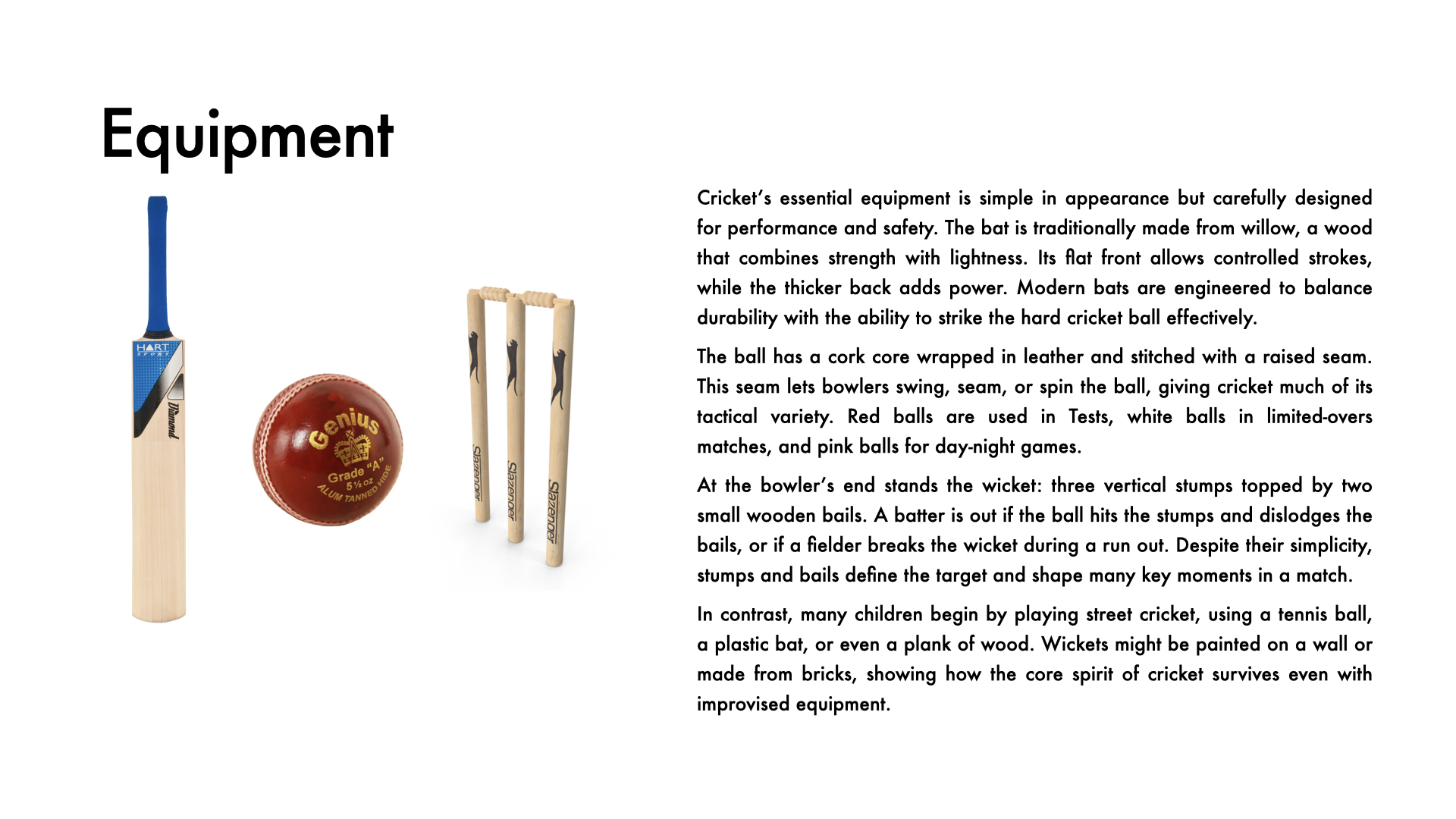
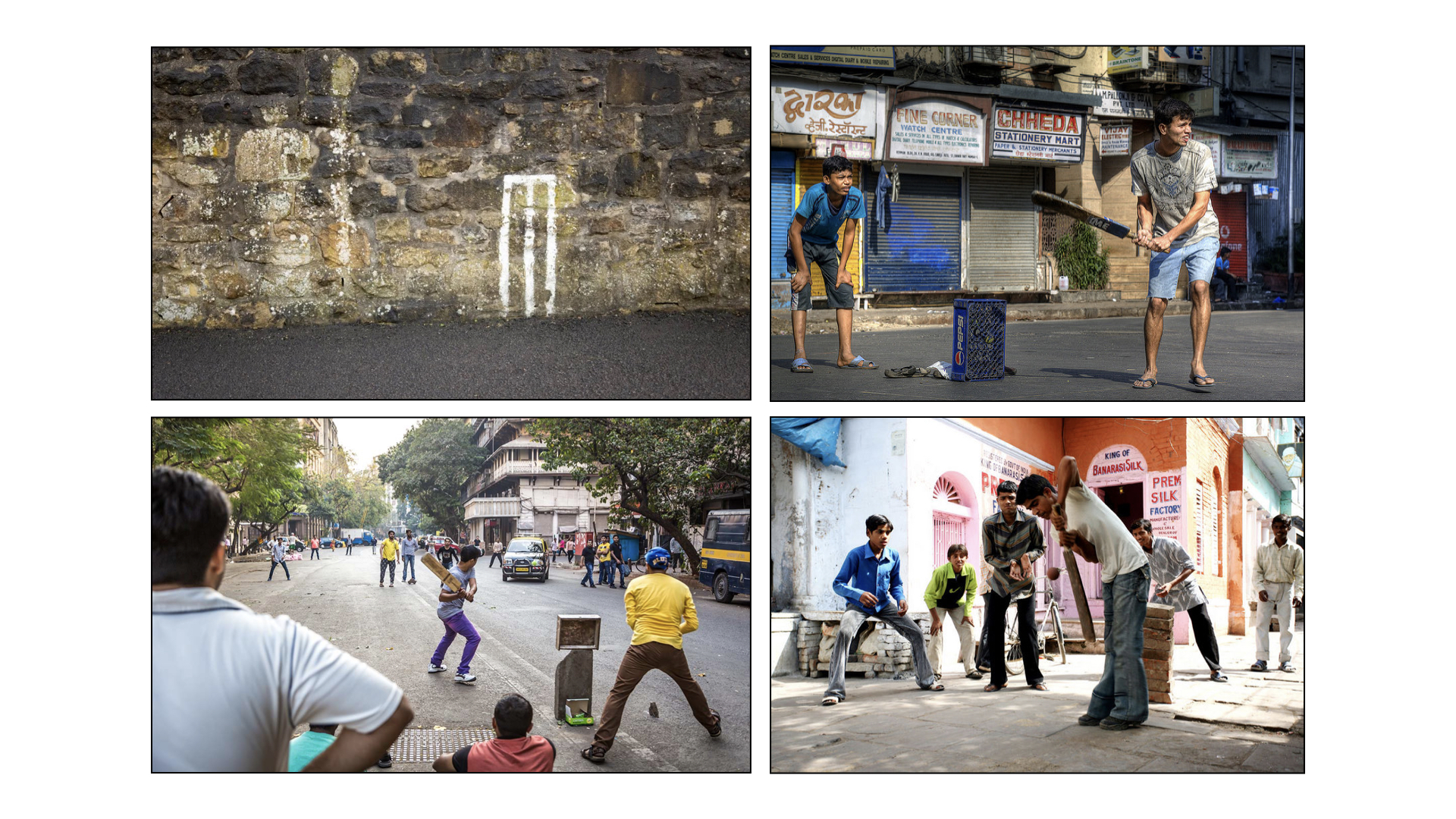
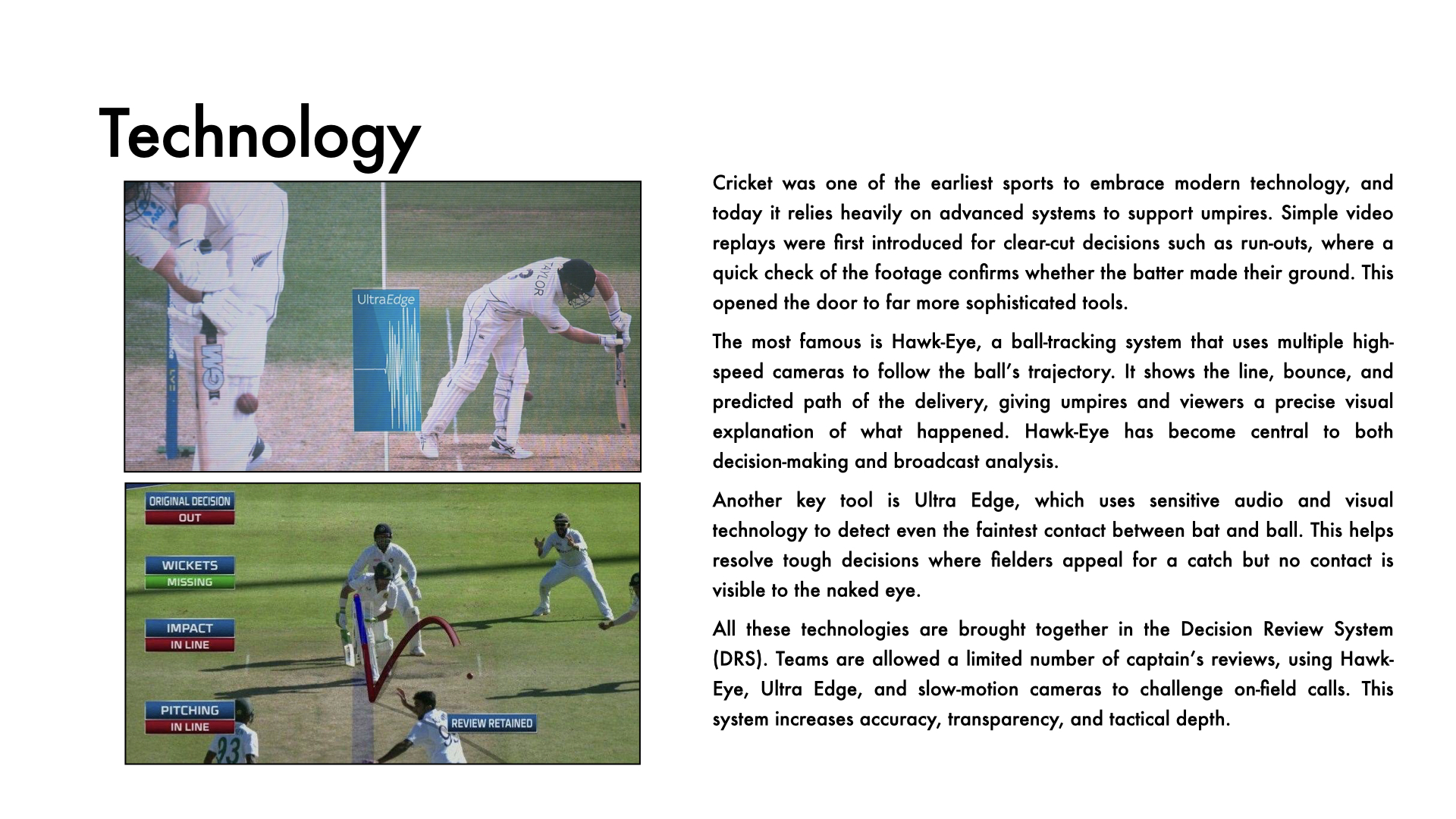
Cricket’s basic equipment includes a willow bat, a hard leather ball, and a wicket of three stumps topped with two bails. Many young players around the world first learn the sport by playing street cricket, with a tennis ball, a plastic bat and wickets painted onto walls or made from piles of bricks. At professional level, the sport now relies heavily on technology: Hawk-Eye tracks the trajectory and bounce of the ball. Ultra Edge detects even the faintest contact, and captains can challenge on-field decisions through the review system.
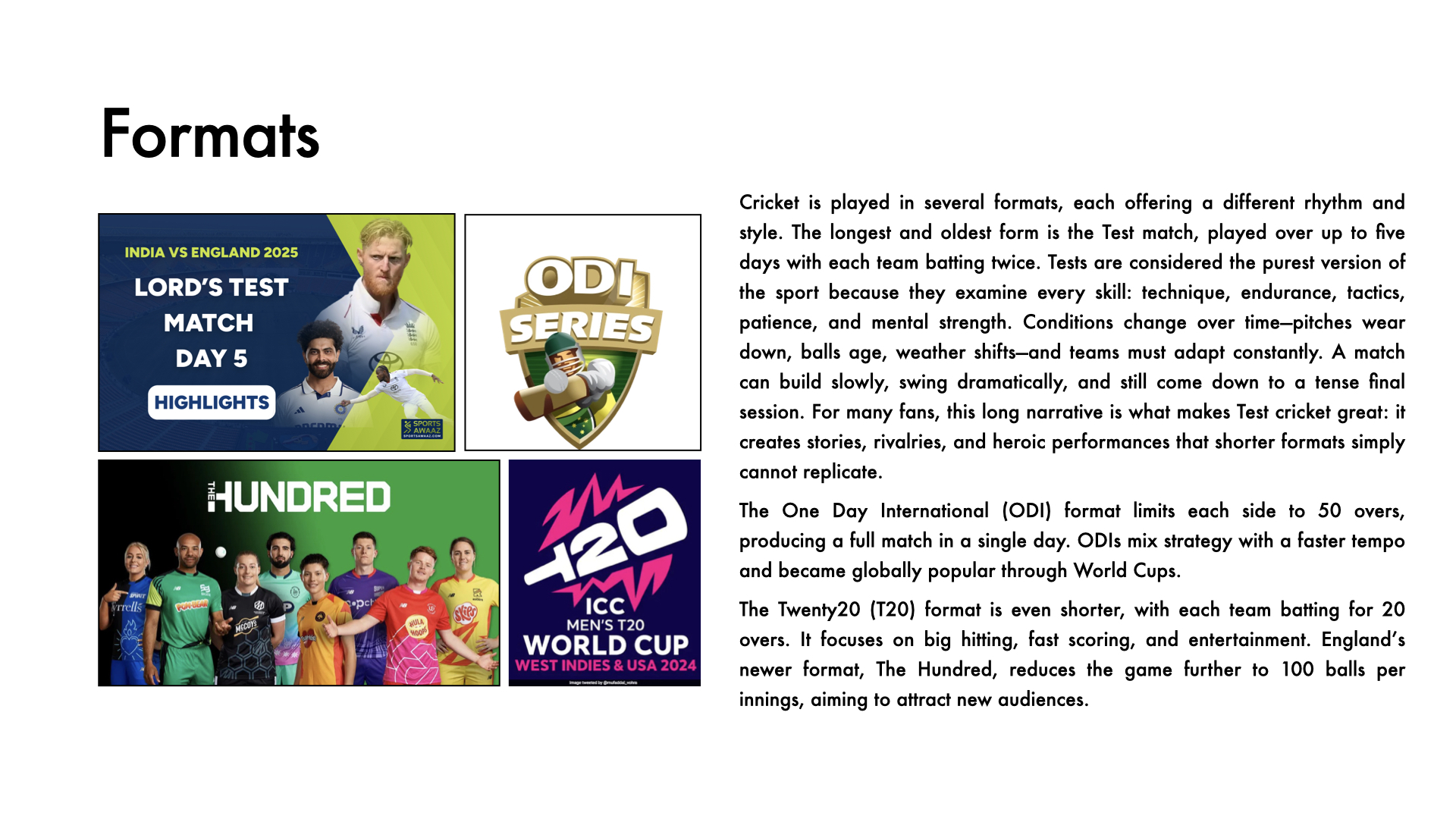
Cricket comes in several formats. Five-day Test matches remain the most respected because they examine technique, patience, concentration and decision making as conditions change throughout the match. One-day cricket offers a full game in a single day, and Twenty20 provides an even faster, more entertainment-driven experience. The Indian Premier League, or IPL, has transformed the financial landscape of cricket, attracting global stars with enormous salaries, packed stadiums and huge television audiences.
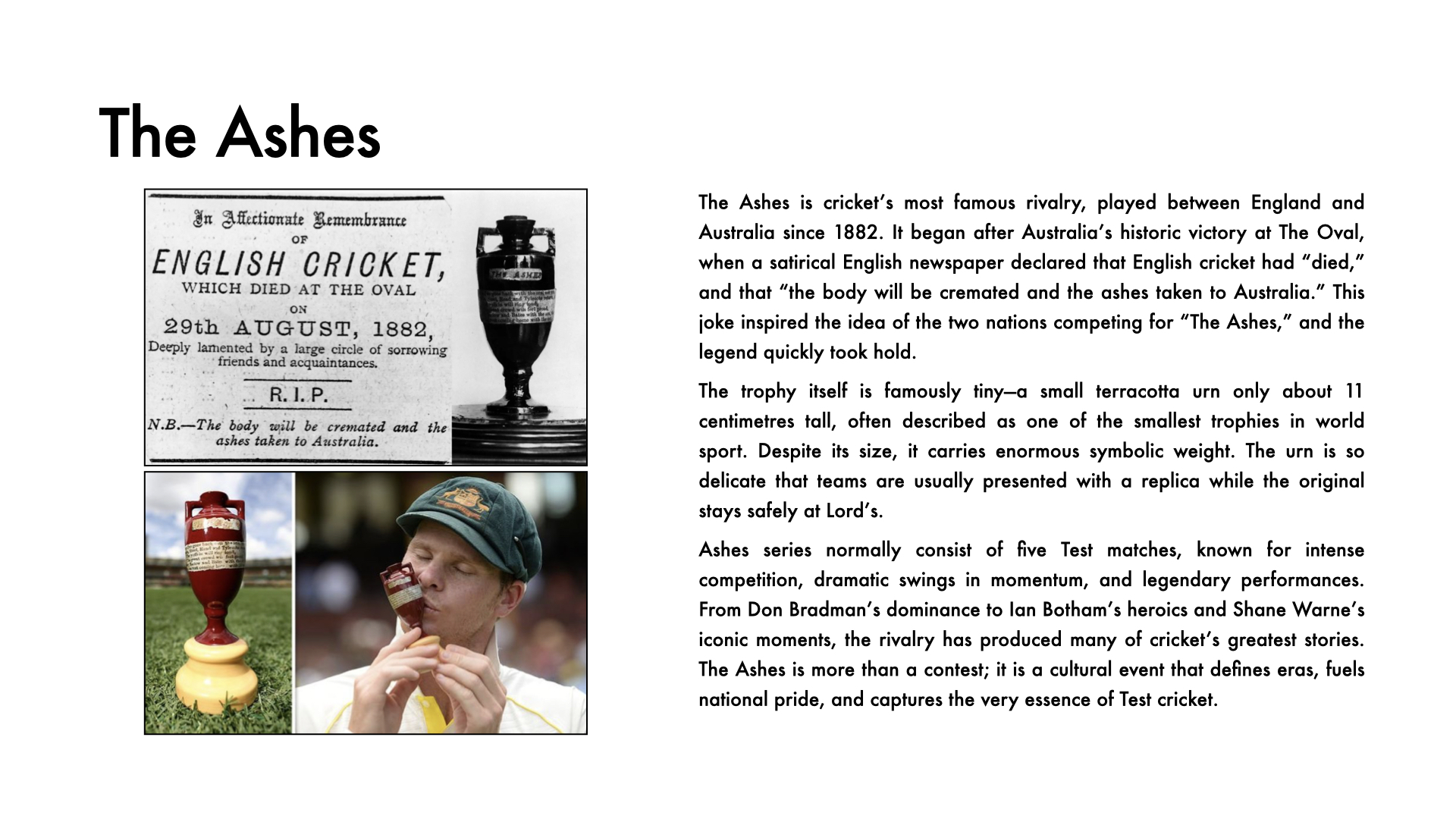
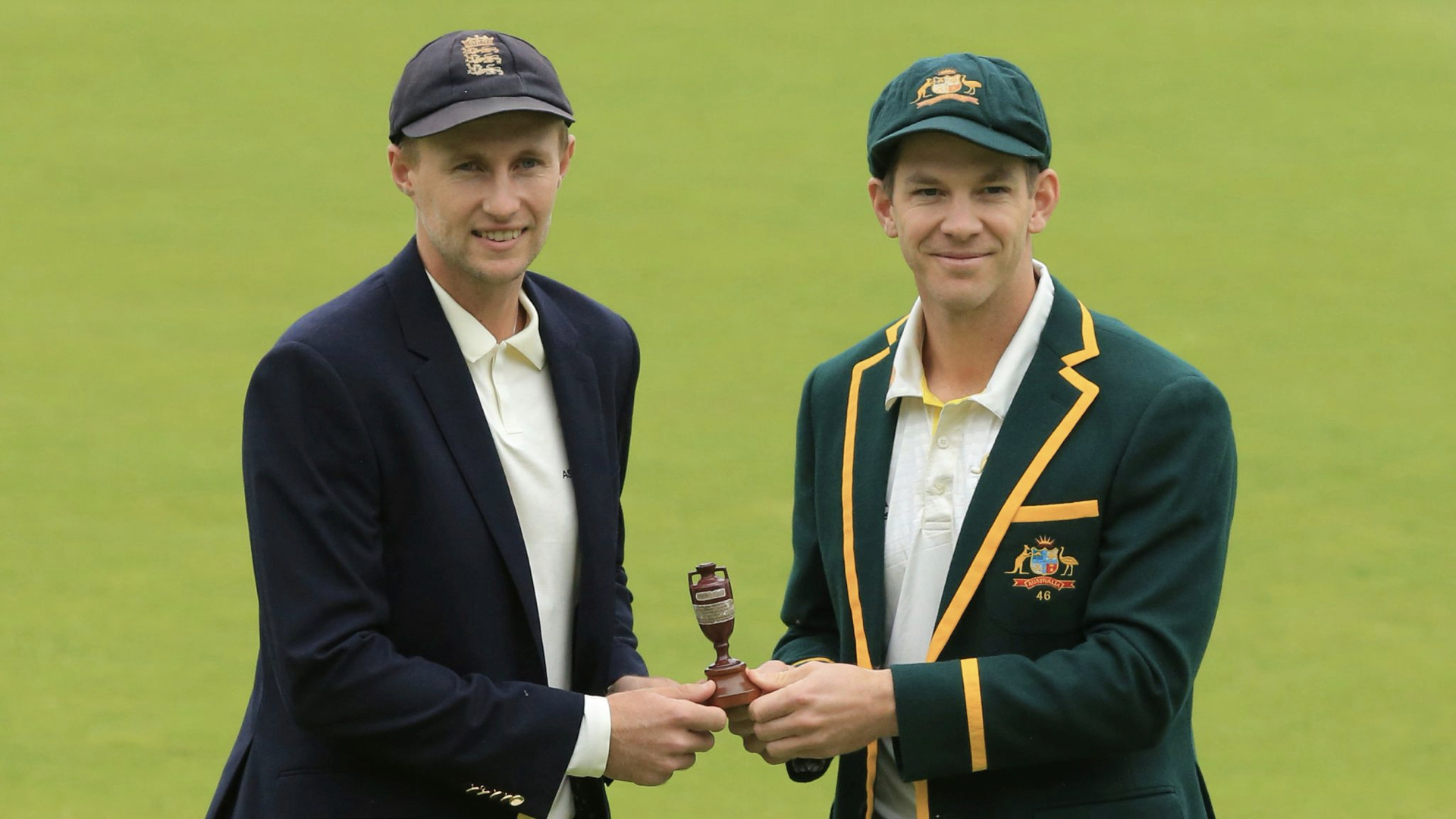
One of cricket’s greatest traditions is The Ashes, the historic Test series between England and Australia. It began in 1882 when Australia defeated England at The Oval for the first time on English soil. A satirical newspaper declared that English cricket had “died” and that “the ashes” would be taken to Australia. This joke inspried the tiny 11-centimetre urn that symbolises the rivalry today.
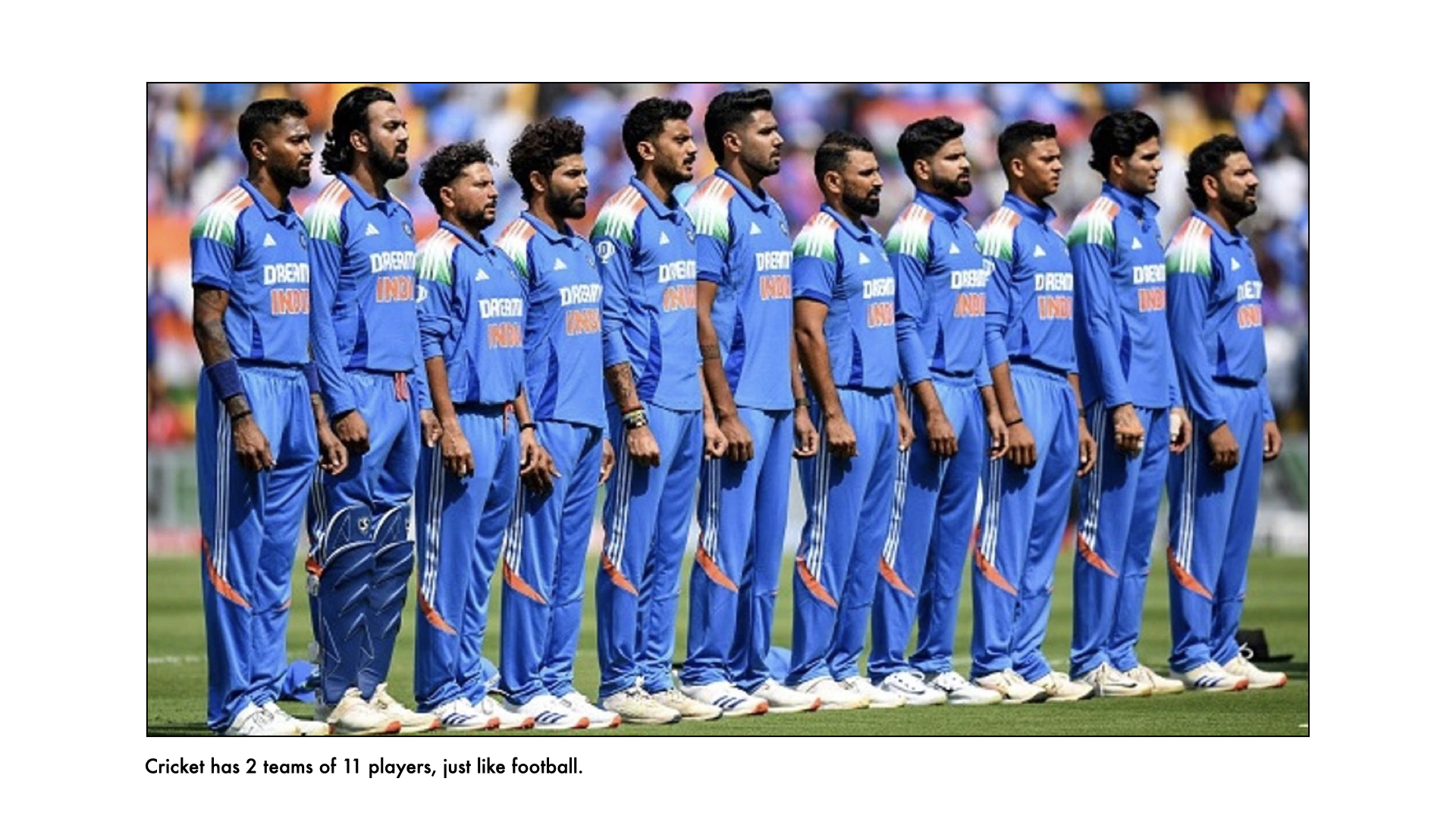
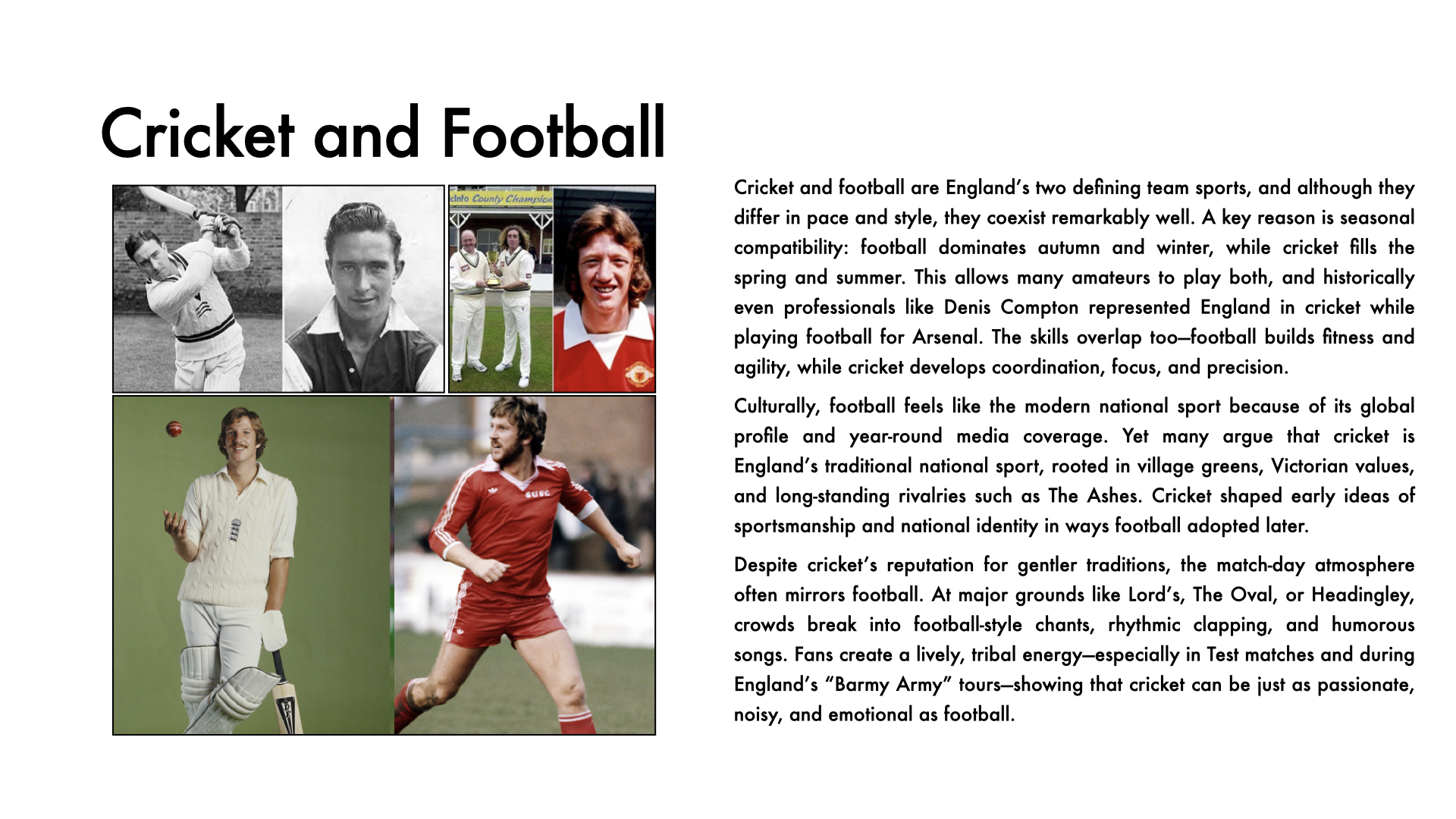
Cricket also sits naturally alongside football in English culture: football fills the winter, cricket fills the summer, and crowds at major matches often break into football-style chants. Together these elements make cricket one of the world’s most distinctive and captivating sports.
📽️ Slideshow



📺 Video
🔑 Key Vocabulary
- Ashes – the historic Test series between England and Australia, symbolised by a tiny urn.
- Bails – two small pieces of wood that sit on top of the stumps to form the wicket.
- Bat – a flat wooden tool made of willow used by the batter to hit the ball.
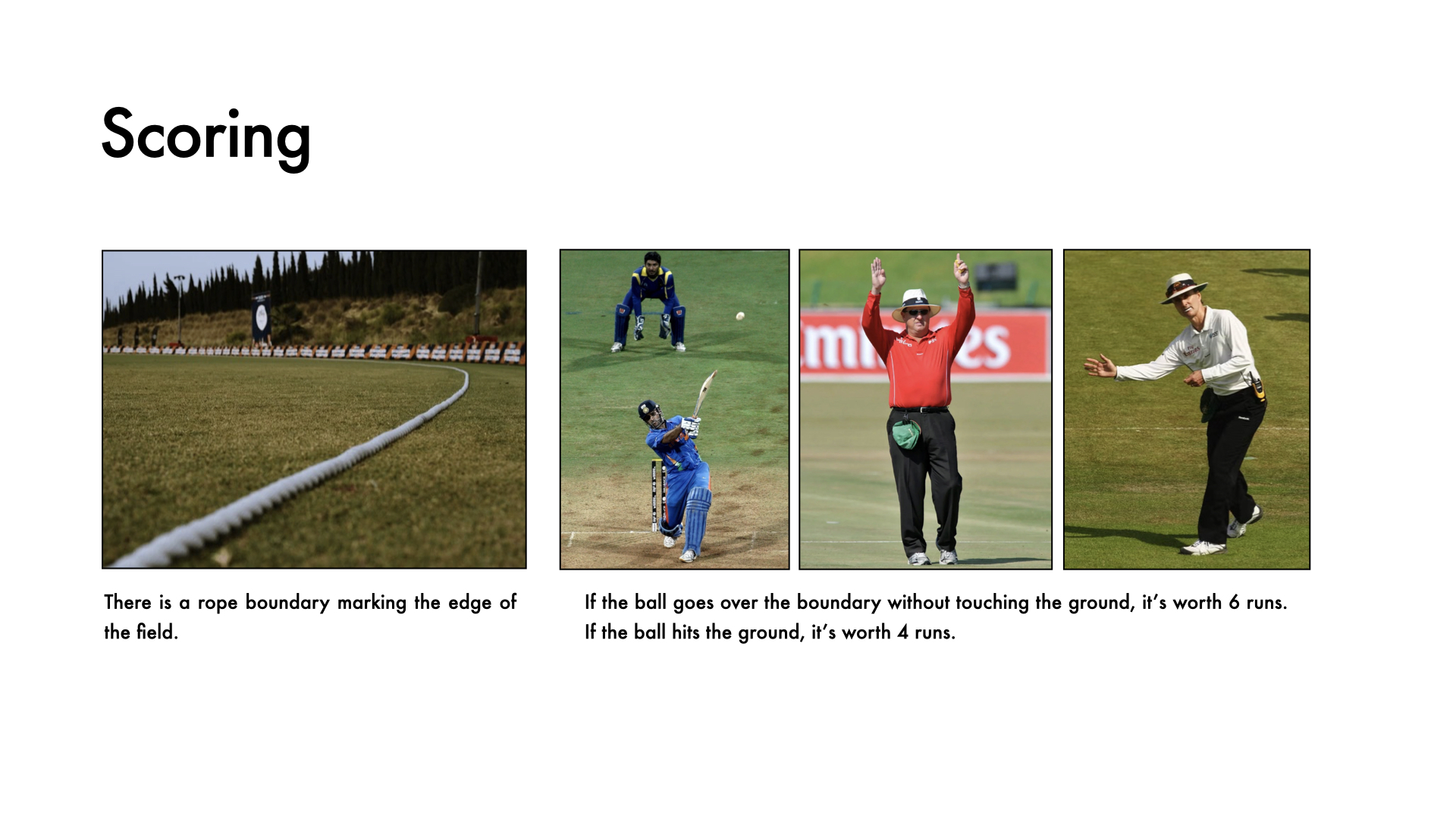
- Boundary – the edge of the field; hitting the ball to it scores four runs, over it scores six.
- Captain’s Review – a challenge system that allows teams to request a video review of an umpire’s decision.
- Hawk-Eye – ball-tracking technology that shows the path, bounce, and predicted movement of a delivery.
- IPL (Indian Premier League) – the world’s richest T20 cricket league, known for high salaries and big crowds.
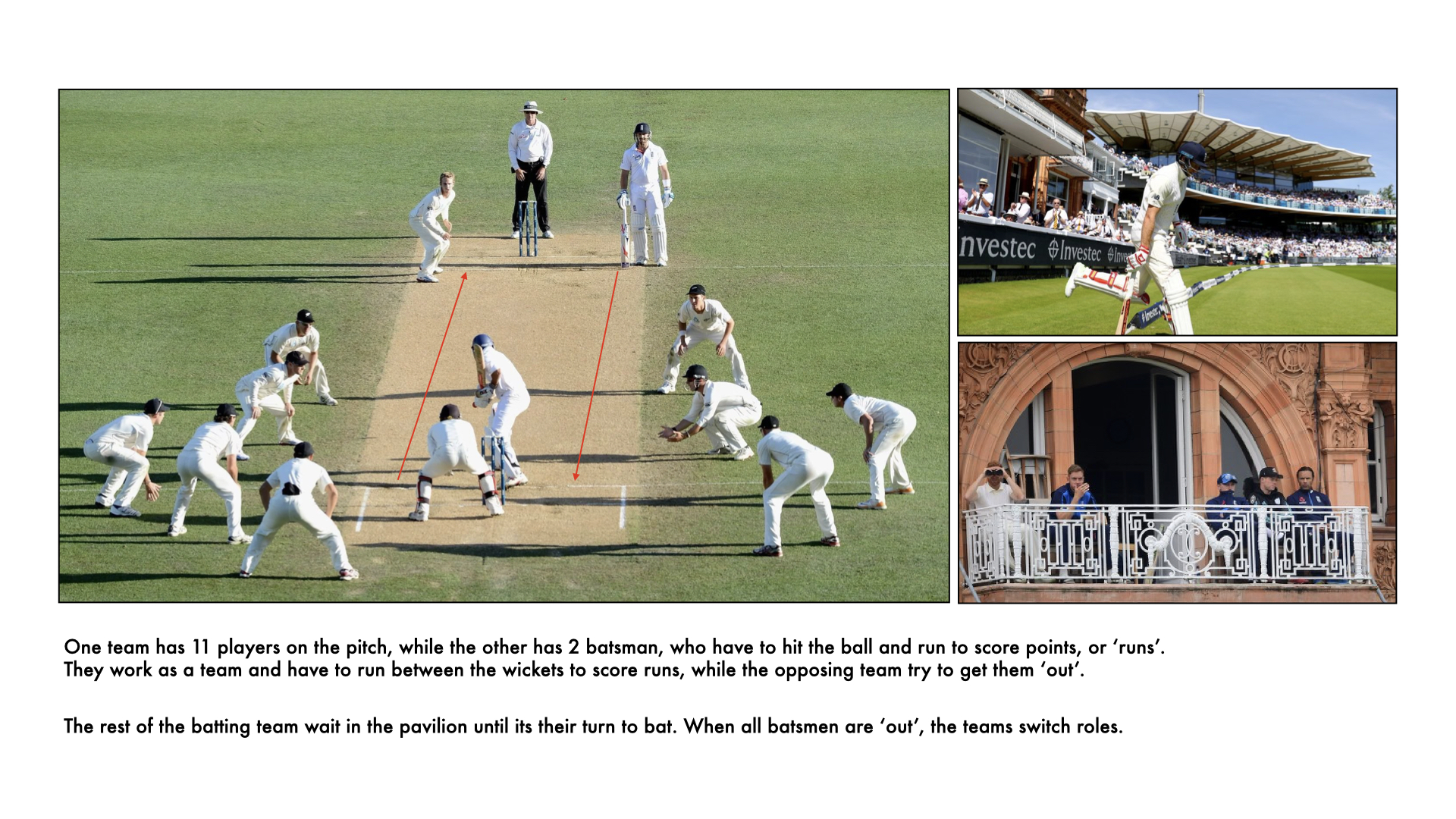
- Pitch – the central 22-yard strip where the bowler delivers the ball and the batters run.
- Run – the basic unit of scoring; earned when batters successfully switch ends of the pitch.
- Street Cricket – informal cricket played with simple or improvised equipment such as tennis balls and painted wickets.
- Stumps – the three vertical wooden posts that form part of the wicket.
- Test Match – the longest cricket format, played over up to five days and considered the most traditional.
- T20 (Twenty20) – a fast, short cricket format where each team bats for 20 overs.
- Ultra Edge – audio-visual technology that detects tiny touches between bat and ball.
- Wicket – the combination of stumps and bails; also used to mean a batter’s dismissal.
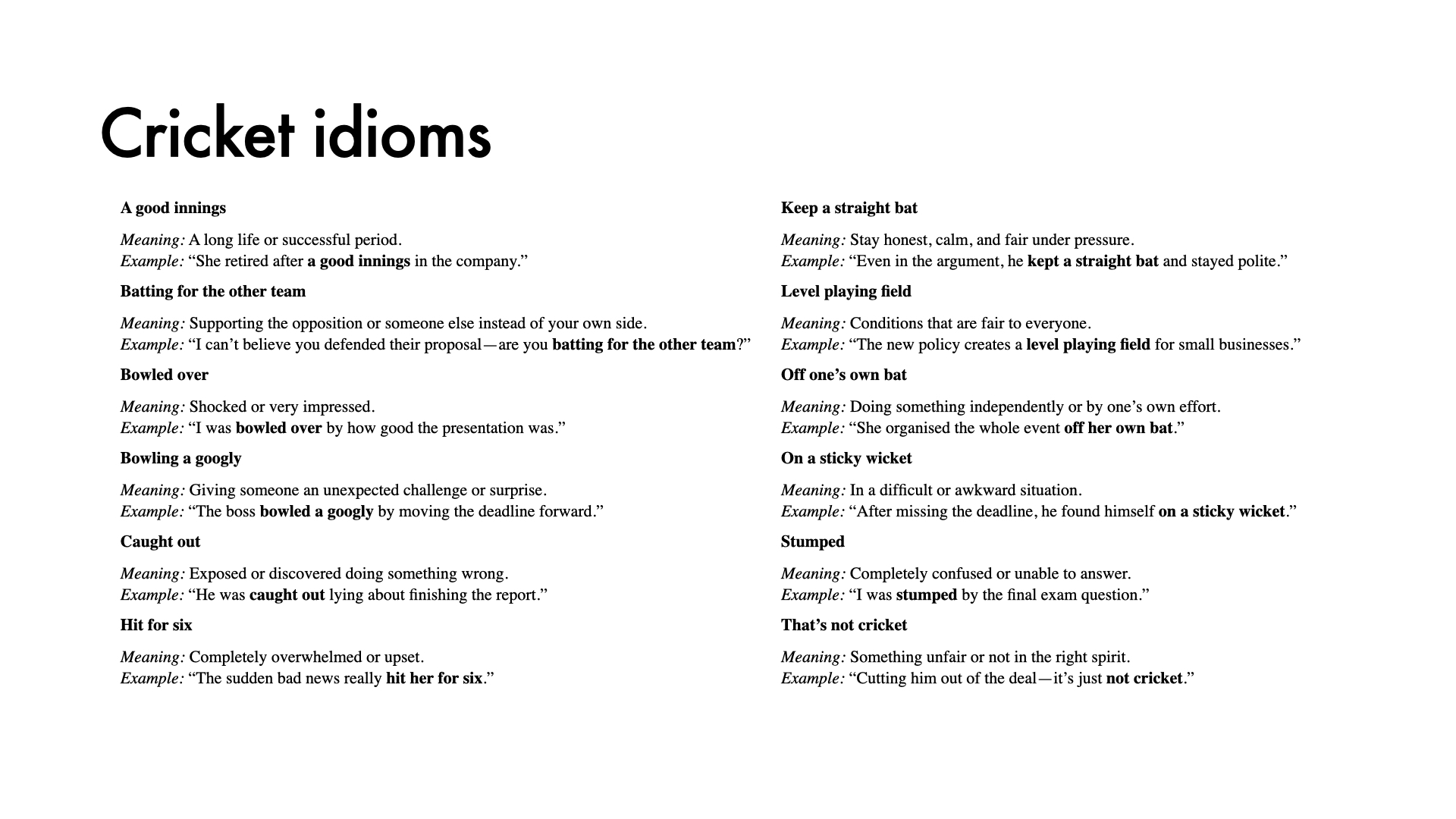
- A good innings – a long life or a successful period of time.
- Batting for the other team – supporting someone else instead of your own side.
- Bowled over – shocked, amazed, or extremely impressed.
- Bowling a googly – presenting someone with an unexpected challenge or surprise.
- Caught out – exposed or discovered doing something wrong.
- Hit for six – overwhelmed or badly affected by news or events.
- Keep a straight bat – remain honest, calm, or fair under pressure.
- Level playing field – a situation where everyone has a fair and equal chance.
- Off one’s own bat – doing something independently or through your own effort.
- On a sticky wicket – in a difficult or awkward situation.
- Stumped – completely confused or unable to answer.
- That’s not cricket – behaviour that is unfair or not in the right spirit.
Idioms from Cricket
💬 Conversation Questions
- What images or ideas come to mind when you hear the word “cricket”? Do you think they are accurate?
- Why do you think cricket is extremely popular in some countries but not in others?
- Have you ever watched a sport without understanding the rules? How did that affect your enjoyment?
- Cricket matches can last from three hours to five days. Which style of sporting experience do you prefer, and why?
- Do you think a sport needs to be fast and high-scoring to be exciting? Why or why not?
- Many people learn cricket by playing with basic equipment in the street. What games did you play as a child with improvised equipment?
- Technology now plays a big role in cricket decisions. Do you think technology should be used more or less in sports?
- Cricket is sometimes seen as connected to British history and culture. Do sports in your country have similar cultural associations?
- How important is atmosphere in sport? Would football-style chants make a game more enjoyable for you?
- If you had the chance to try cricket once—batting, bowling, or fielding—which part would you choose and why?