Week 1️⃣ 8️⃣
Three Magnets
🔊 Audio
📜 Show transcript
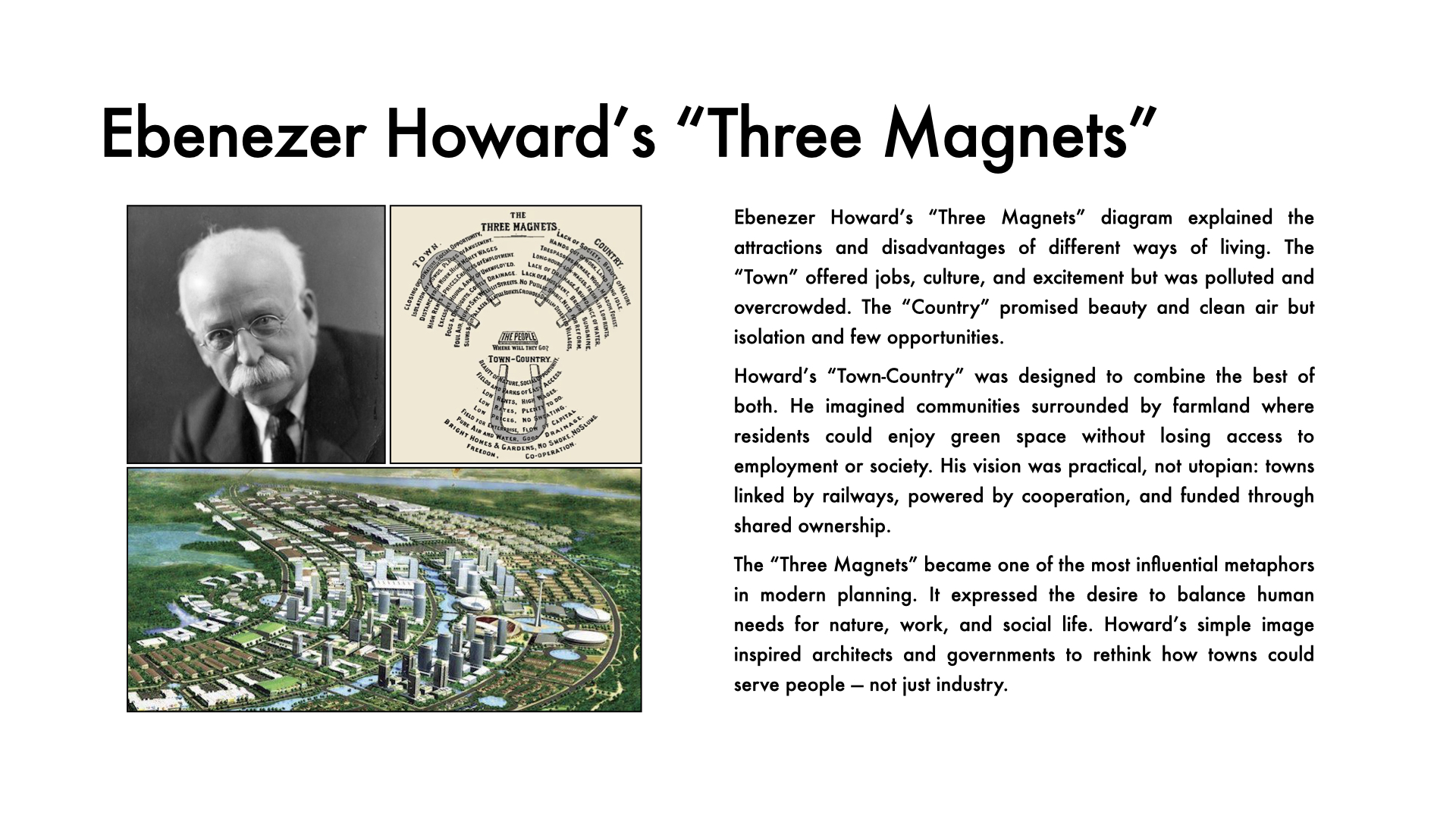
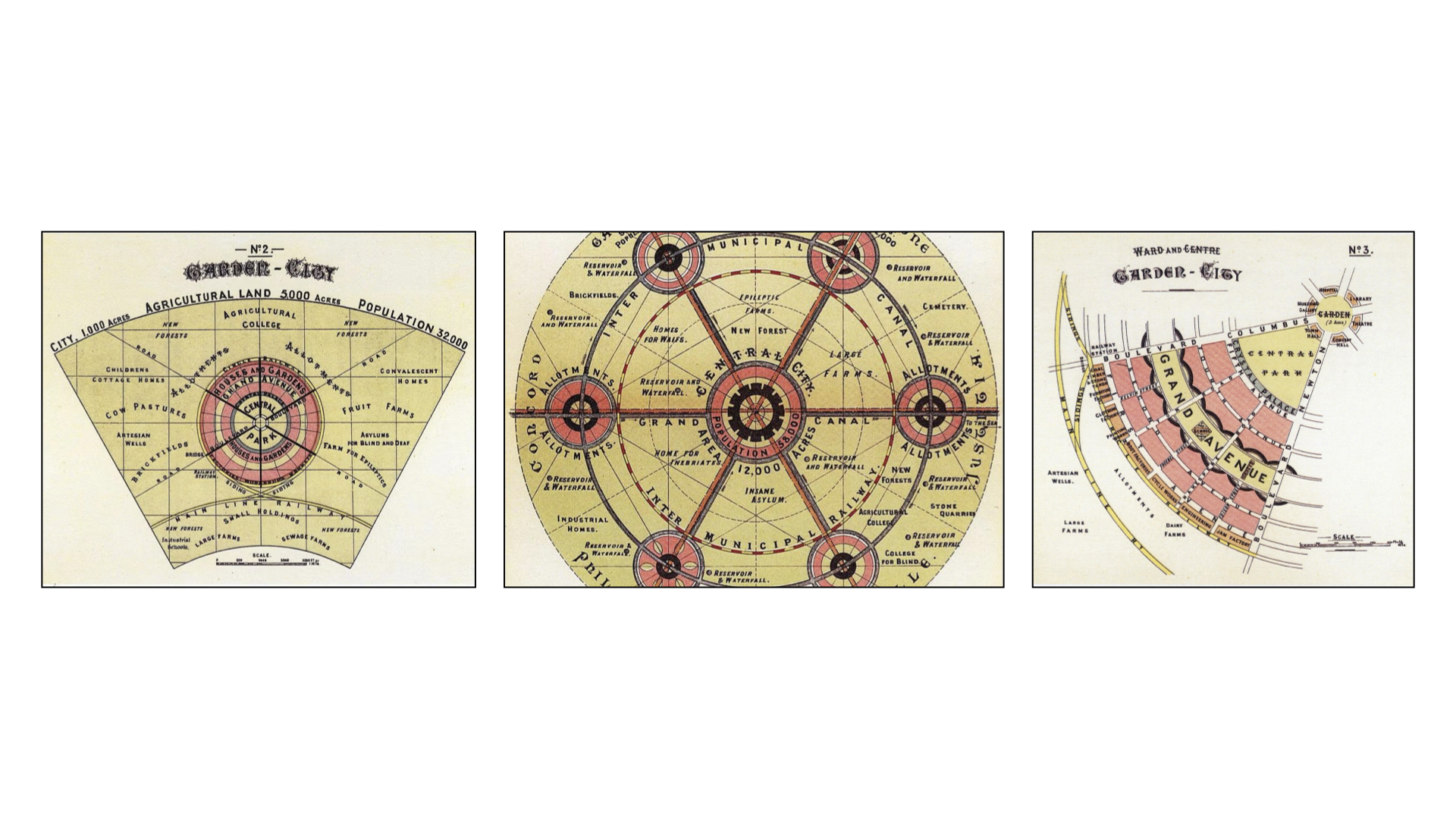
In the late nineteenth century, urban reformer Ebenezer Howard proposed a new vision for how people could live. He believed that both the crowded industrial city and the isolated countryside had serious drawbacks. The city offered jobs, excitement, and culture, but suffered from pollution, overcrowding, and poor health. The countryside provided beauty, clean air, and peace, but lacked opportunities for work and social life. Howard’s solution was what he called the “Town-Country” — a new type of settlement combining the best of both environments. This idea, illustrated in his famous “Three Magnets” diagram, became the foundation for the Garden City Movement.
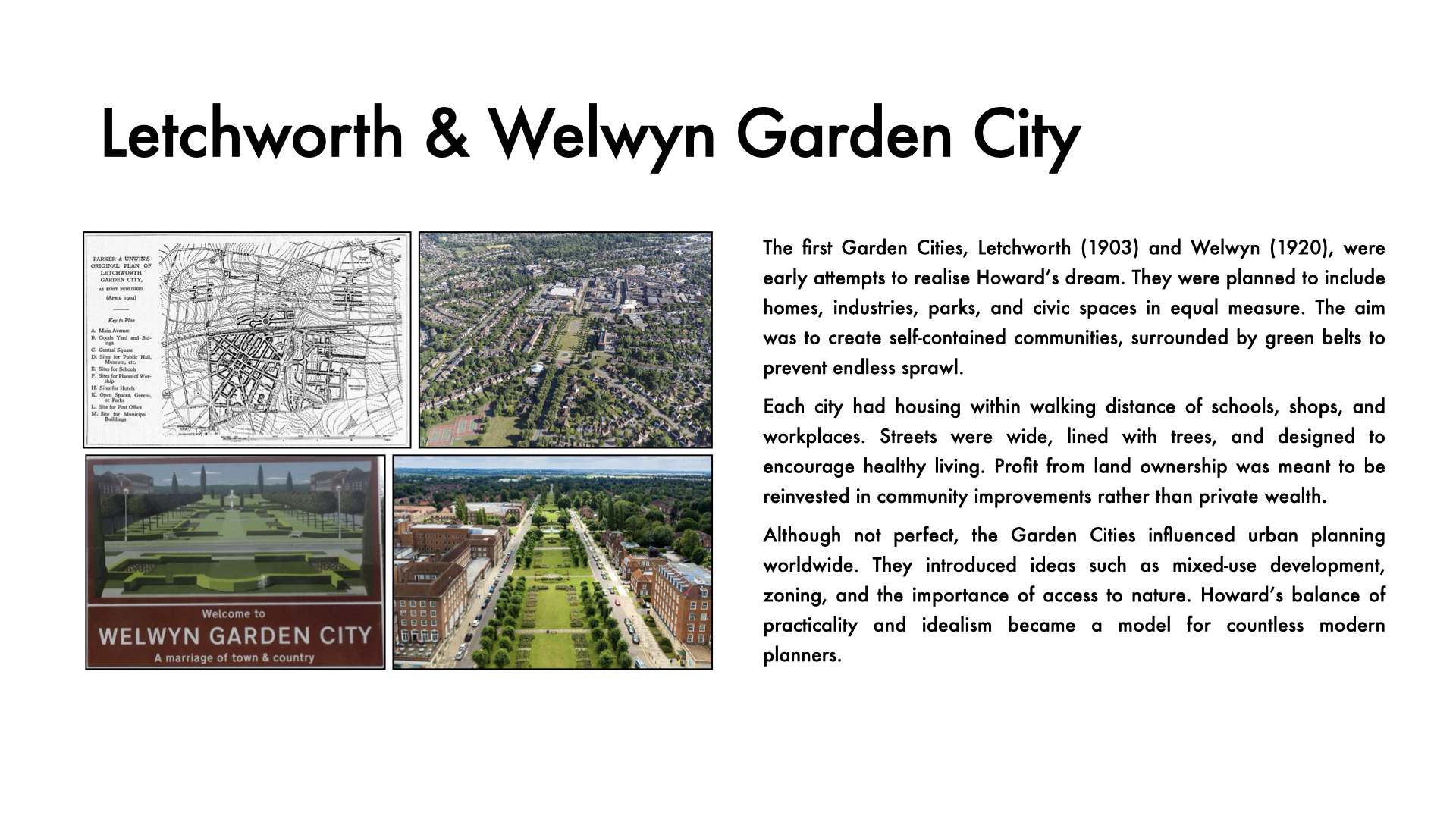
The first Garden Cities, such as Letchworth and Welwyn, were carefully planned communities built in the early twentieth century. They aimed to balance homes, industry, and green space, creating places where people could live, work, and enjoy nature in harmony. Surrounded by farmland to prevent sprawl, they were designed to be self-contained with their own jobs, schools, and services. These ideas shaped modern planning worldwide, introducing concepts like zoning, green belts, and mixed-use development.
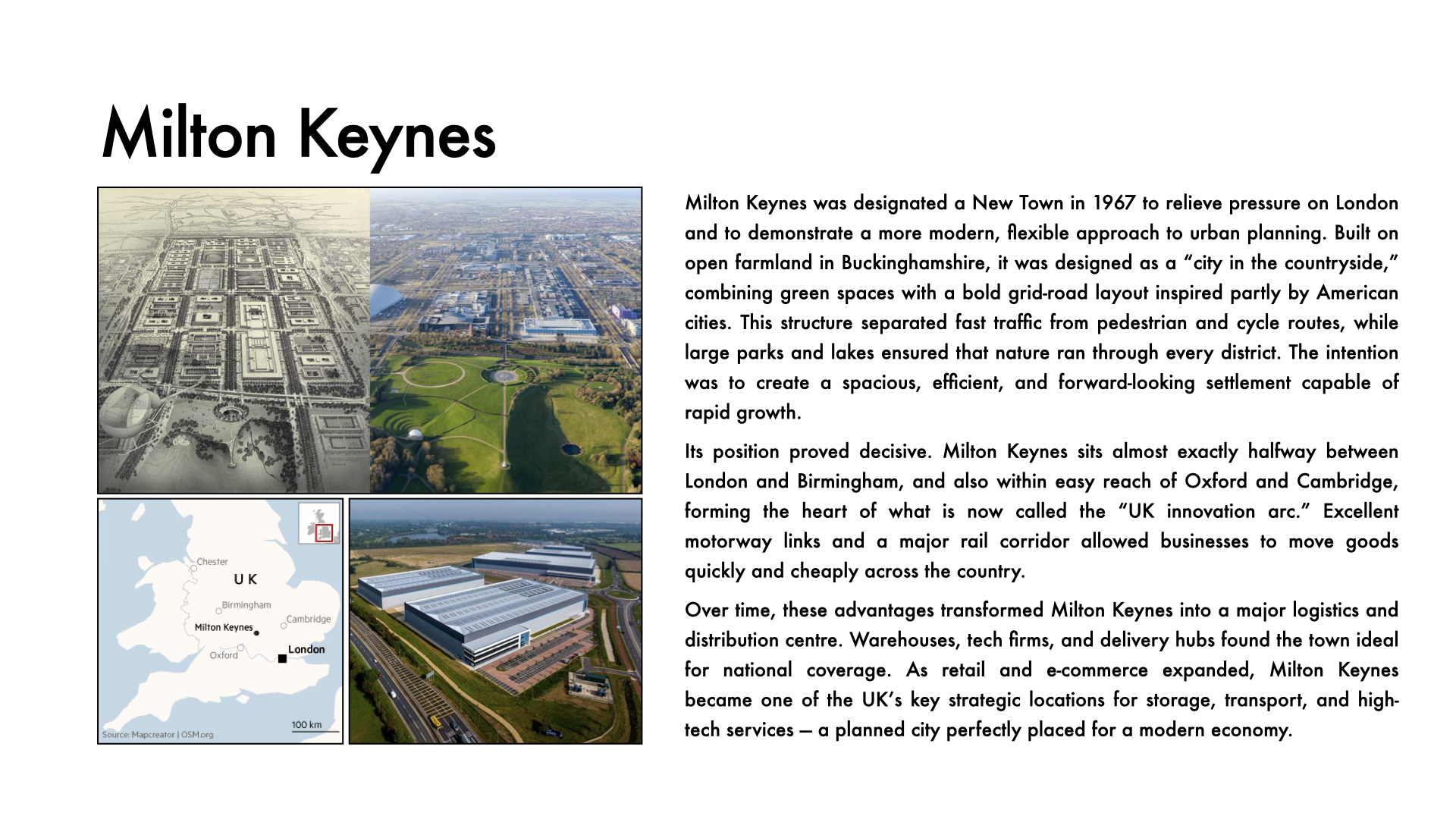
After the Second World War, the British government adopted similar principles in the New Towns Act of 1946, creating places such as Stevenage, Harlow, and Milton Keynes. Although some were criticised as sterile or overly planned, they provided much-needed housing and reflected Howard’s influence on social reform. More recently, the government has announced plans for a new generation of towns designed to integrate nature, housing, and transport — proof that Howard’s vision still inspires debate about sustainable living.
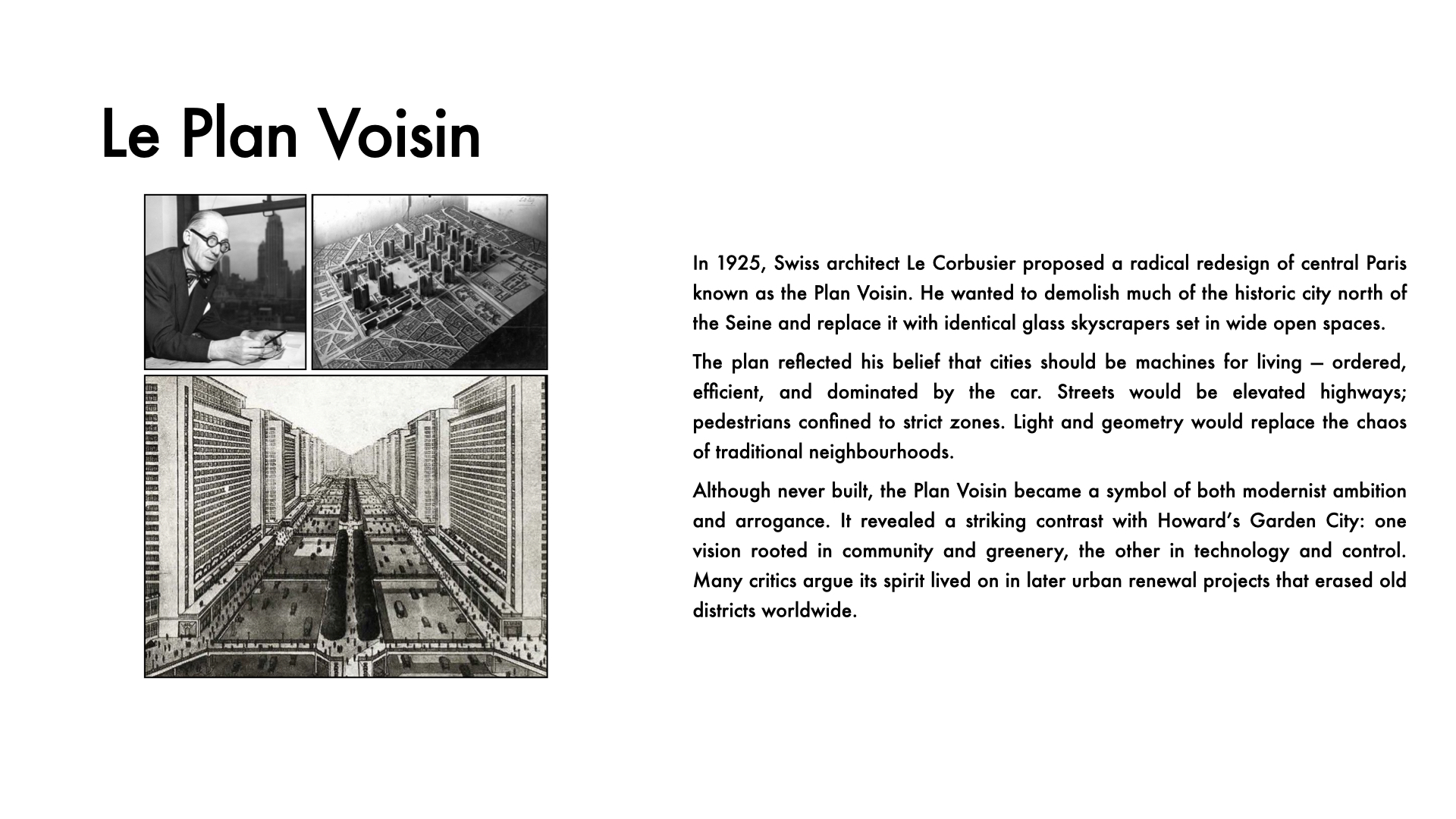
In contrast, architect Le Corbusier imagined a very different urban future. His 1925 Plan Voisin for Paris proposed demolishing much of the historic city and replacing it with vast glass towers, highways, and open plazas. Where Howard sought community and greenery, Le Corbusier pursued order, efficiency, and the dominance of the machine — a vision often criticised as cold and dehumanising.
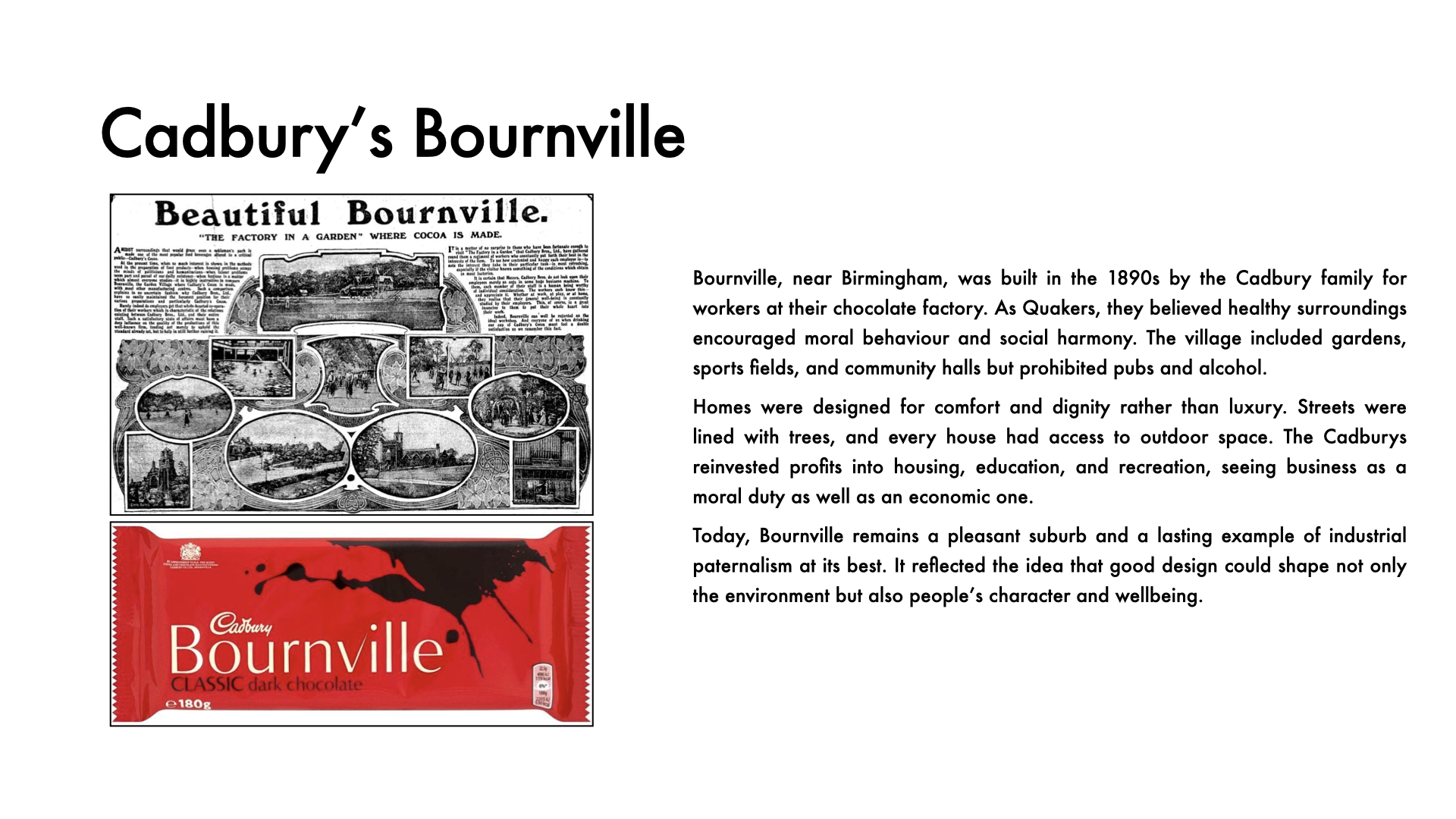
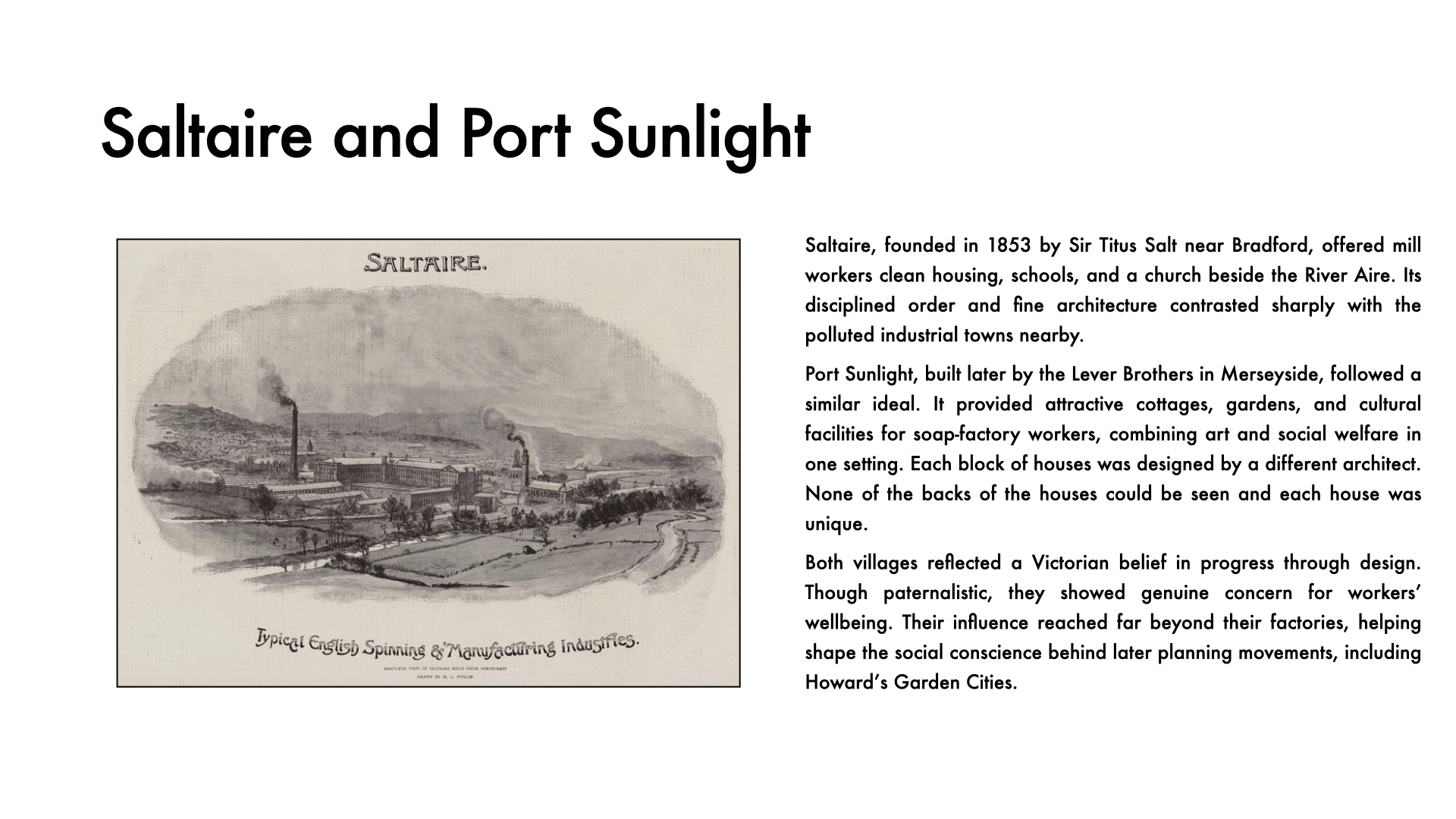
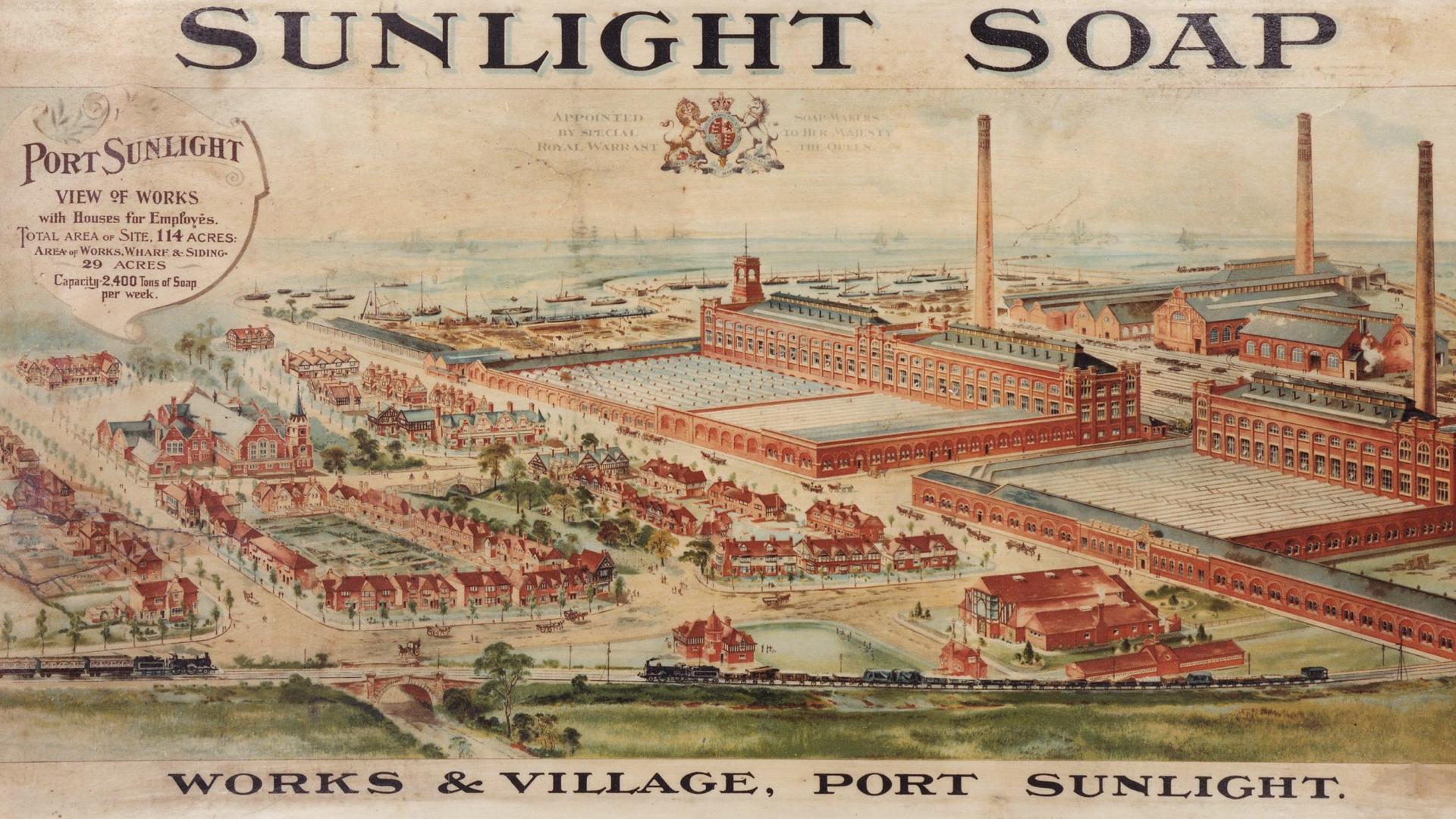
Earlier “model villages” like Bournville, Saltaire, and Port Sunlight also shared Howard’s social ideals, offering healthy housing and recreation for workers. Built by enlightened industrialists such as the Cadbury and Lever families, these villages provided clean streets, gardens, schools, and social clubs, reflecting a belief that attractive surroundings could improve moral character and wellbeing. They were pioneering experiments in corporate social responsibility, demonstrating that industrial progress and human welfare did not have to be in conflict.
Today, the dream of blending city and countryside remains powerful. From eco-towns to sustainable urban planning, the search continues for a humane balance between progress, nature, and community.
📽️ Slideshow
📺 Video
▶️ Jimmy The Giant - How Britain Made a Dystopian City
▶️ Paul And Sanja - Why Britain Built a “Soviet” Town
▶️ ITN Archive - Building a City From Scratch - The New Town of Milton Keynes (1967)
▶️ BBC Archive - Living in Britain in 1984
▶️ Harlow New Town, Home Town 1979
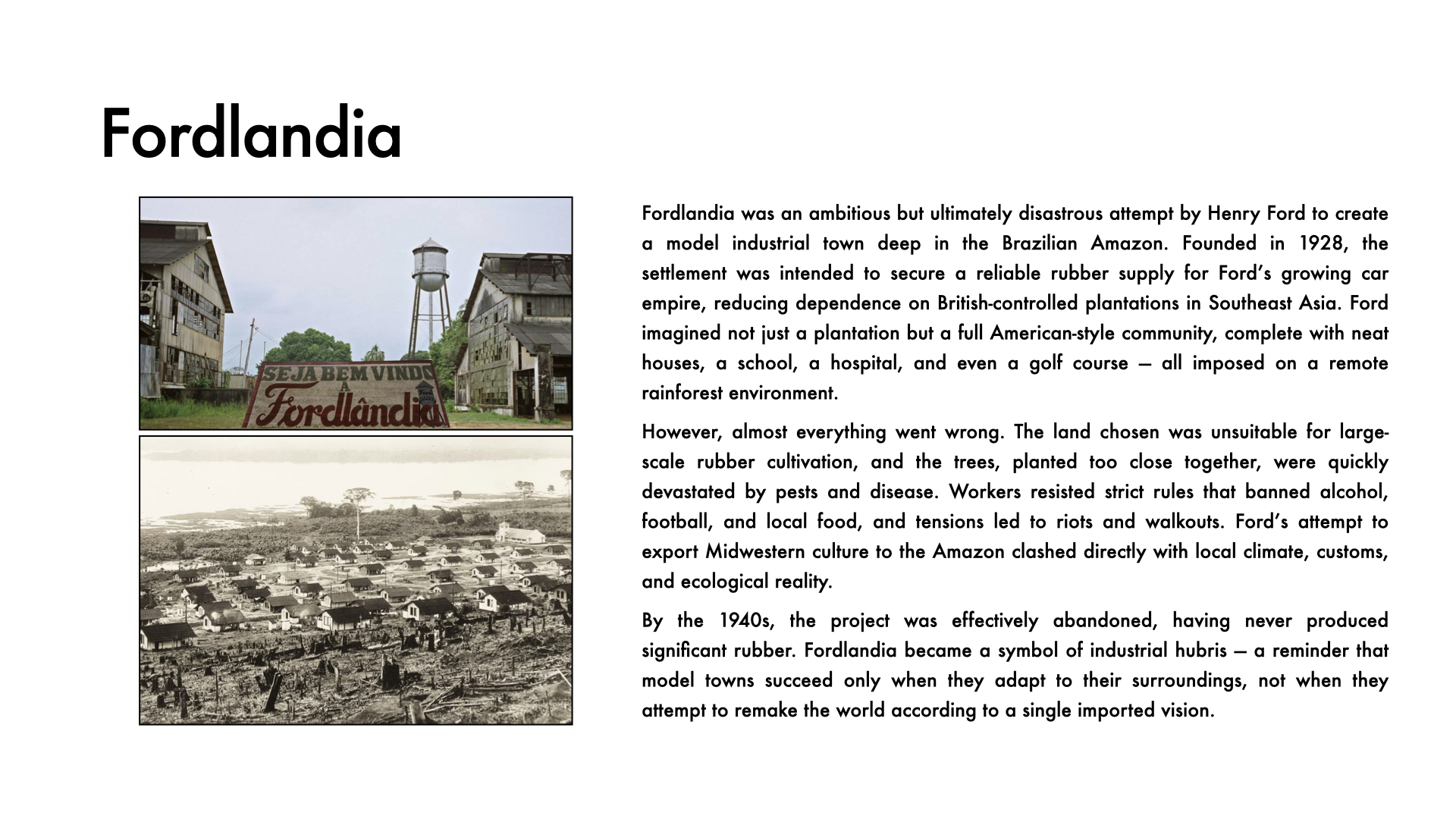
▶️ Business Insider - Inside Henry Ford's Failed Amazon City | Rise And Fall
🔑 Key Vocabulary
- Commuter belt – an area surrounding a major city where many people live and travel into the city for work.
- Commuter town – a town where many residents travel to work in a nearby city.
- Decentralisation – moving people or industry away from overcrowded city centres into new towns or suburbs.
- Garden City – a planned town designed to balance housing, industry, and green space within a self-contained community.
- Green belt – protected land around a town or city where development is restricted to prevent urban sprawl.
- Green corridor – a strip of natural or landscaped land connecting parks and open spaces across a town.
- Infrastructure – essential physical systems of a town, such as roads, transport, water, and power.
- Logistics hub – a centre for storage, distribution, and transport of goods, often linked to major roads and railways.
- Masterplan – an overall design or long-term plan for how a town or urban area will be built or developed.
- Mixed-use development – an area that combines residential, commercial, and recreational spaces.
- Model village – a purpose-built settlement created by industrialists to provide healthier living conditions for workers.
- Modernism – an architectural movement favouring clean lines, new materials, and large-scale planning.
- New Town – a town built after World War II to manage growth and provide modern housing.
- Pedestrianisation – the process of removing cars from streets to make them safer for walking and cycling.
- Planned community – a town or neighbourhood designed with a specific layout, purpose, or social vision.
- Self-contained community – a settlement designed so residents can live, work, and access services locally.
- Social reform – efforts to improve living and working conditions through policy or design.
- Sustainability – designing towns in a way that protects the environment and supports long-term ecological health.
- Urban sprawl – the uncontrolled expansion of cities into surrounding countryside.
- Utopian vision – an idealised plan for a perfect society or community, often difficult to achieve in reality.
- Zoning – planning regulations that divide land into areas for specific uses such as housing, industry, or parks.
💬 Conversation Questions
- Would you rather live in a big city, a small town, or the countryside? What influences your preference most?
- What makes a neighbourhood feel “liveable” to you? Consider green space, transport, noise, and community.
- How much do you think a city’s design affects people’s behaviour or mood? Can good planning make people happier?
- What are the biggest challenges facing modern cities today? For example, housing, pollution, transport, or inequality.
- Do you think governments should limit how far cities can grow? Why or why not?
- What role should cars play in future cities? Should more streets be pedestrianised or kept accessible?
- Would you live in a planned town like Milton Keynes or a Garden City? What would appeal to you, and what might not?
- How important is a sense of history or identity in a city? Should old buildings always be preserved?
- Do you think people living in commuter towns or new towns lose something socially compared with traditional cities?
- If you could redesign your hometown from scratch, what three changes would you make first?
🌐 Links
- SLATE – These Utopian City Maps Have Influenced Urban Planners for Over a Century
- BBC News – New signs celebrate Welwyn Garden City's centenary in county first
- BBC News – Building of three new towns will start before election, Labour pledges
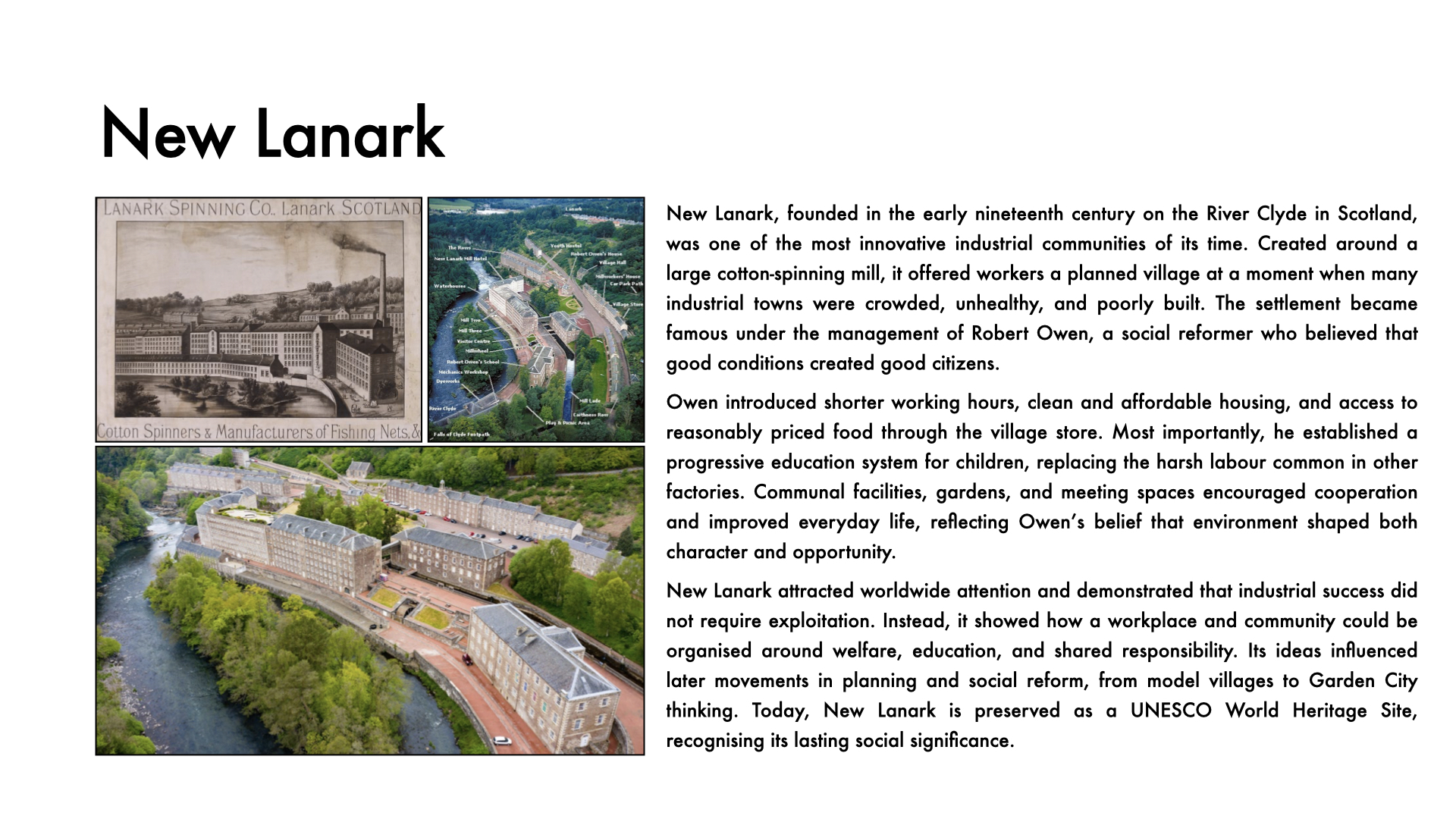
- The Scotsman – New Lanark: When the industrial powerhouse became an abandoned ghost town
- Messy Nessy – The Paris of Tomorrow That Thankfully Never Was
- GOV.UK – New Towns Taskforce: Report to government