Week 1️⃣ 7️⃣
Alex Polizzi
🔊 Audio
📜 Show transcript
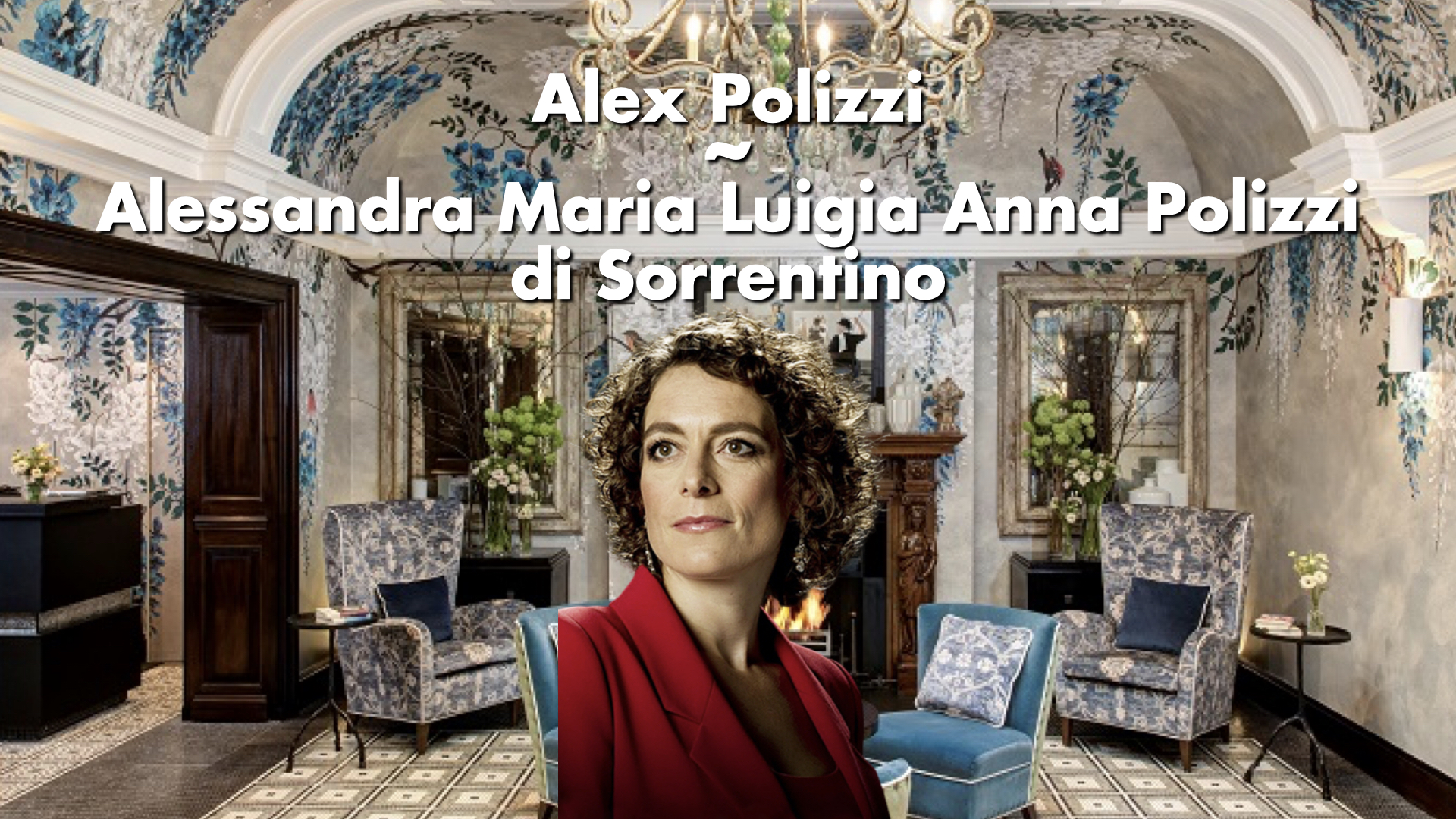
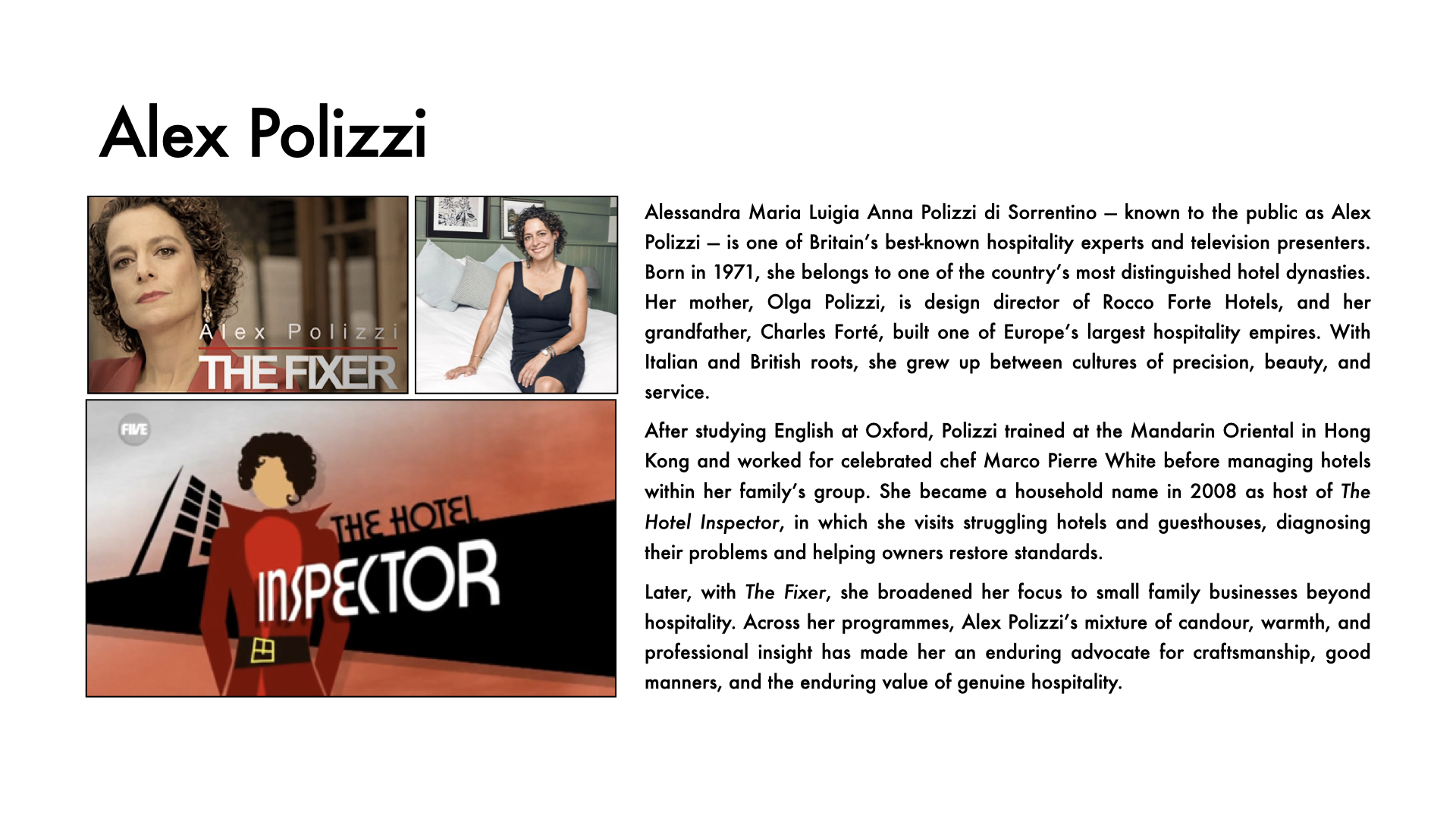
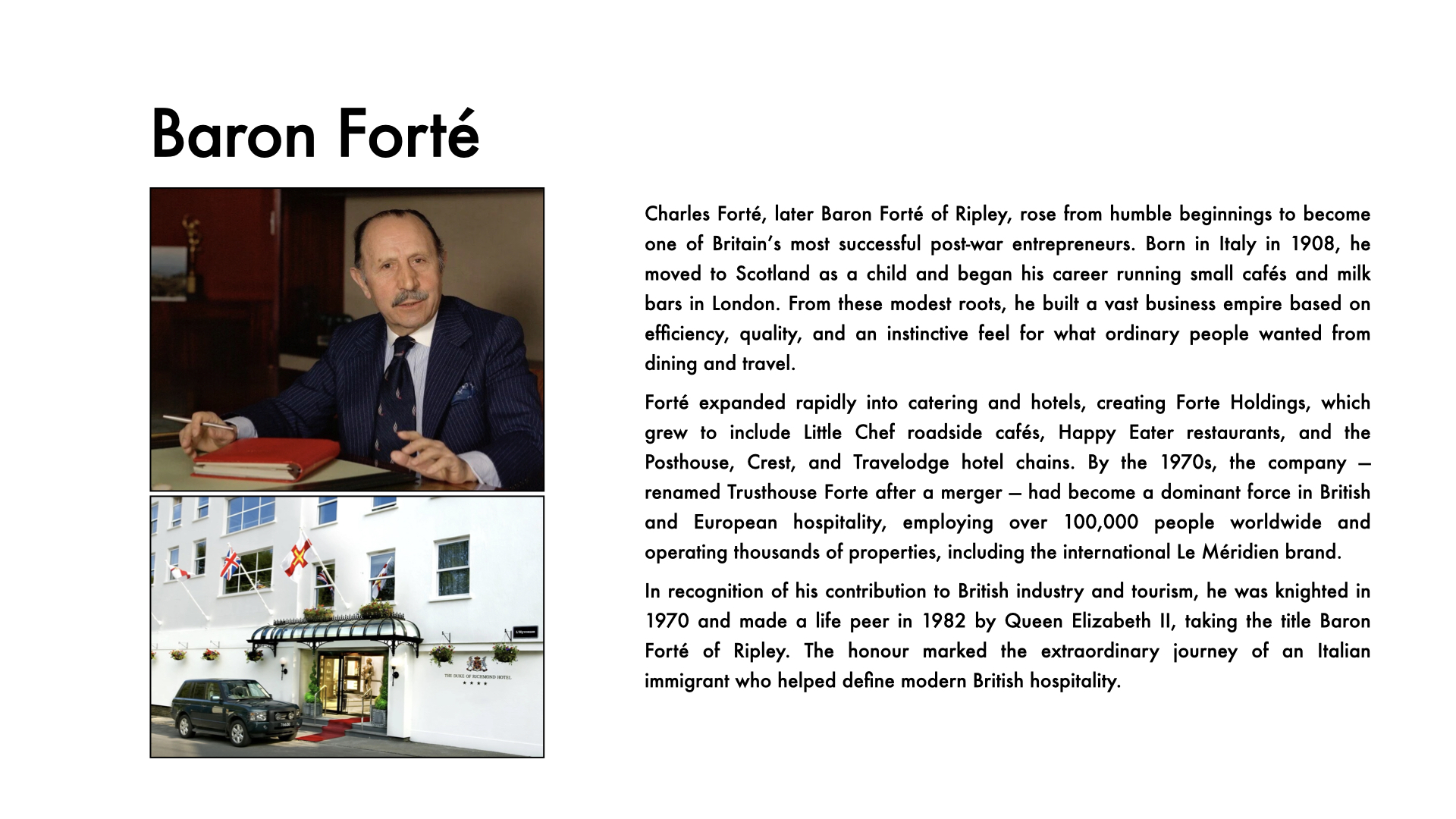
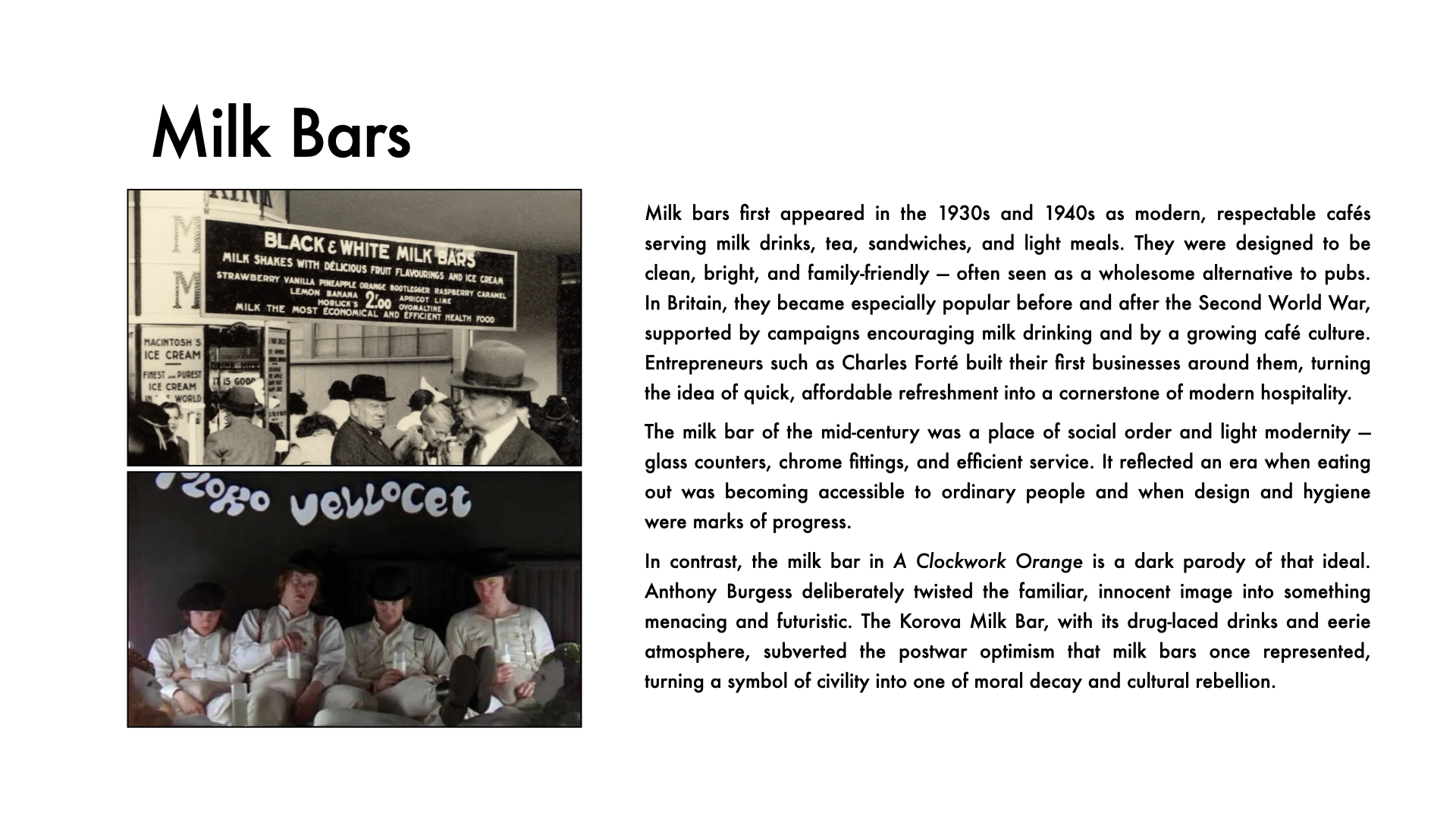
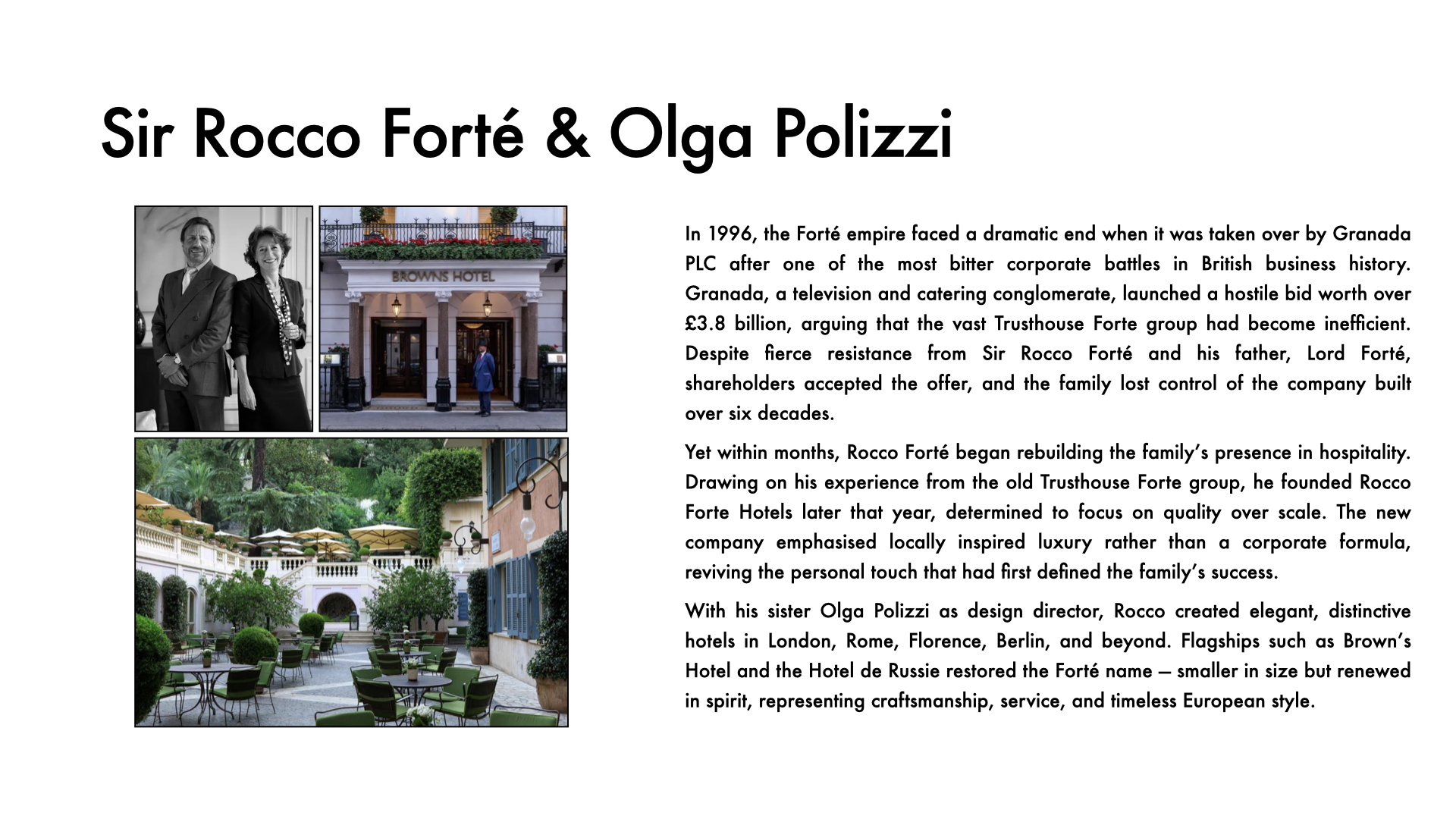
Alex Polizzi comes from one of Britain’s most renowned hospitality families. Her grandfather was Charles Forté, later Baron Forté of Ripley, who built the vast Forté Hotels empire from a single London milk bar. Milk bars were popular in the 1930s — small, bright cafés that served milk drinks, tea, and light snacks in a clean, modern setting. From that simple beginning, he created one of Europe’s greatest hotel groups, built on the principles of comfort, consistency, and good service. Her mother, Olga Polizzi, is design director of Rocco Forté Hotels, and her uncle, Sir Rocco Forté, runs that luxury chain today.
With such a background, Alex grew up immersed in the rhythm of hospitality — how to make guests feel welcome, and how design and detail shape experience. She first appeared on screen in 2008 as host of The Hotel Inspector, where she visits struggling hotels and guesthouses to help them recover. Her calm authority and sharp eye for design made her a trusted figure in British television.
She later expanded her reach with The Fixer, a programme that took her beyond hotels into the world of small, failing family businesses. In each episode, she guided owners through tough decisions, offering a blend of candour and compassion. The format often drew comparisons with Gordon Ramsay’s Kitchen Nightmares and Hotel Hell: both diagnose what’s gone wrong and drive change, though in very different styles.
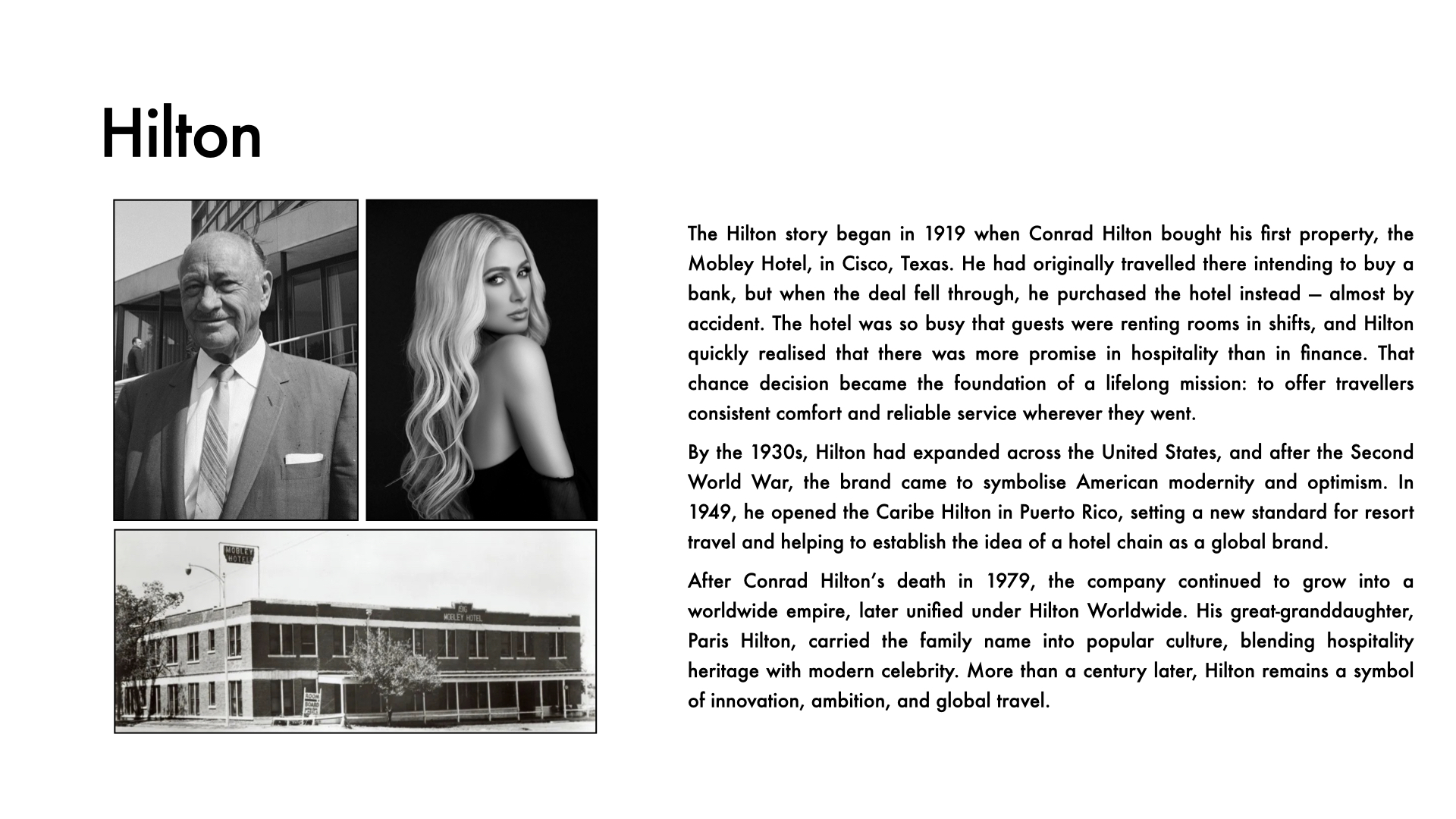
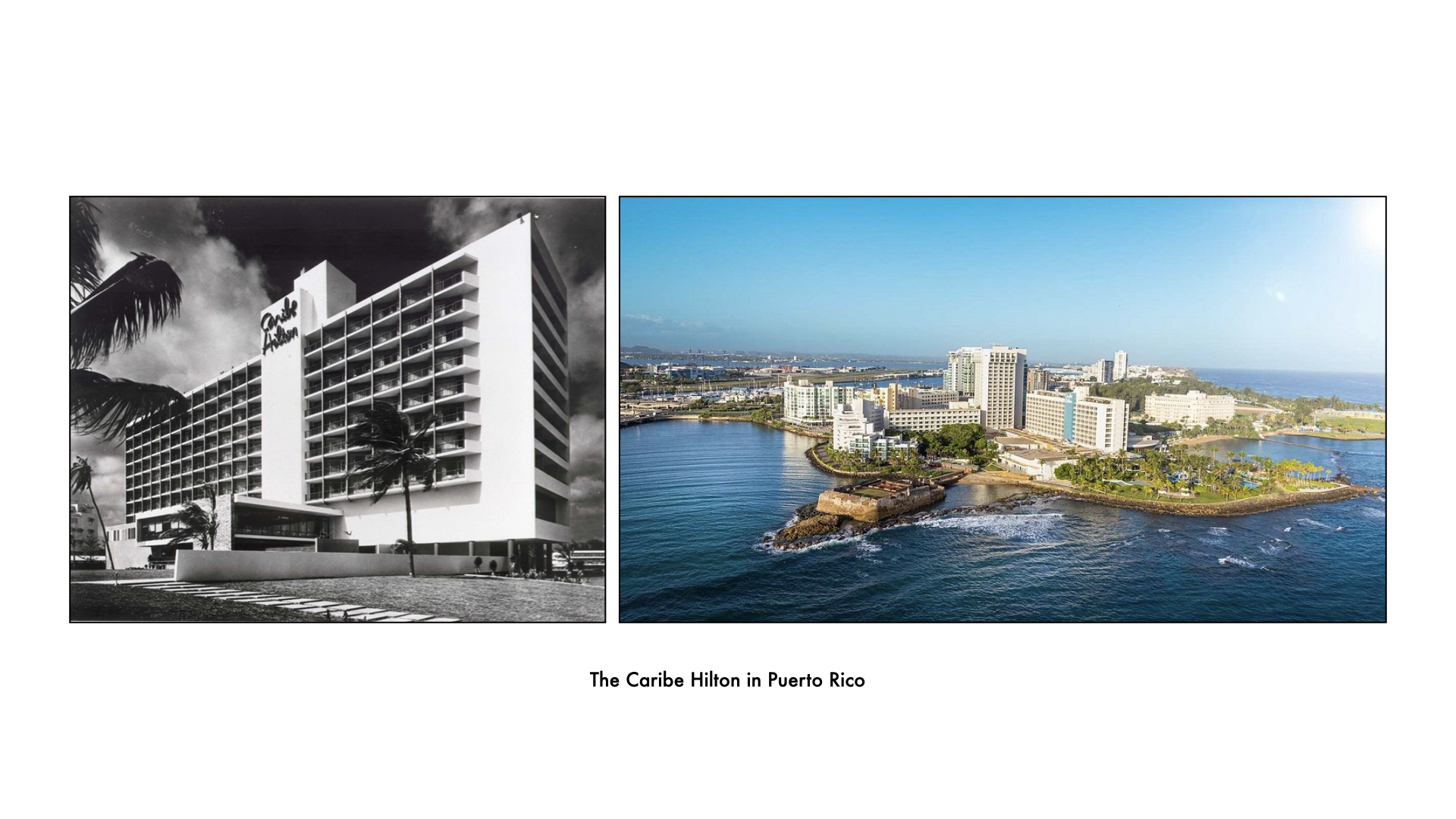
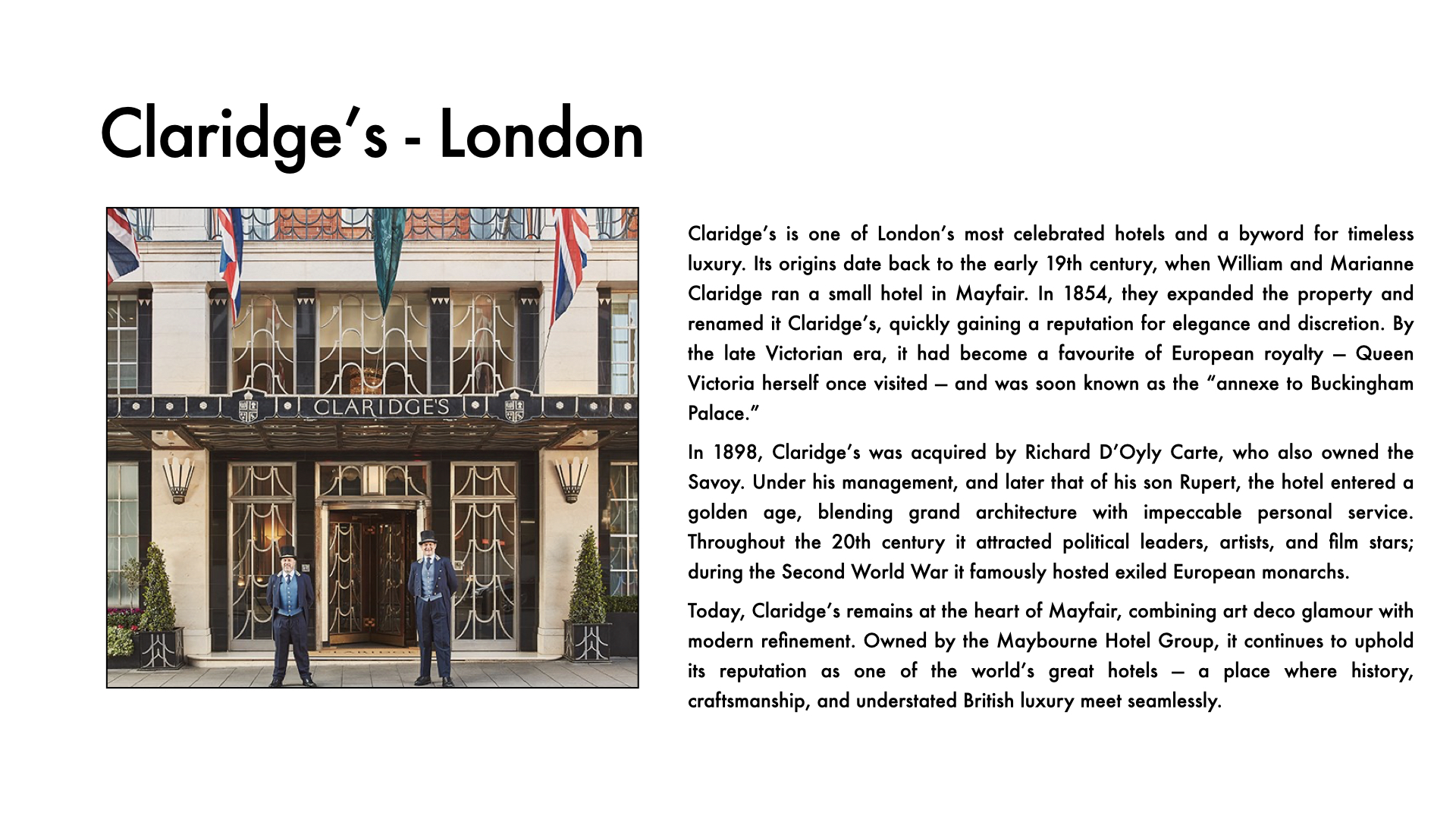
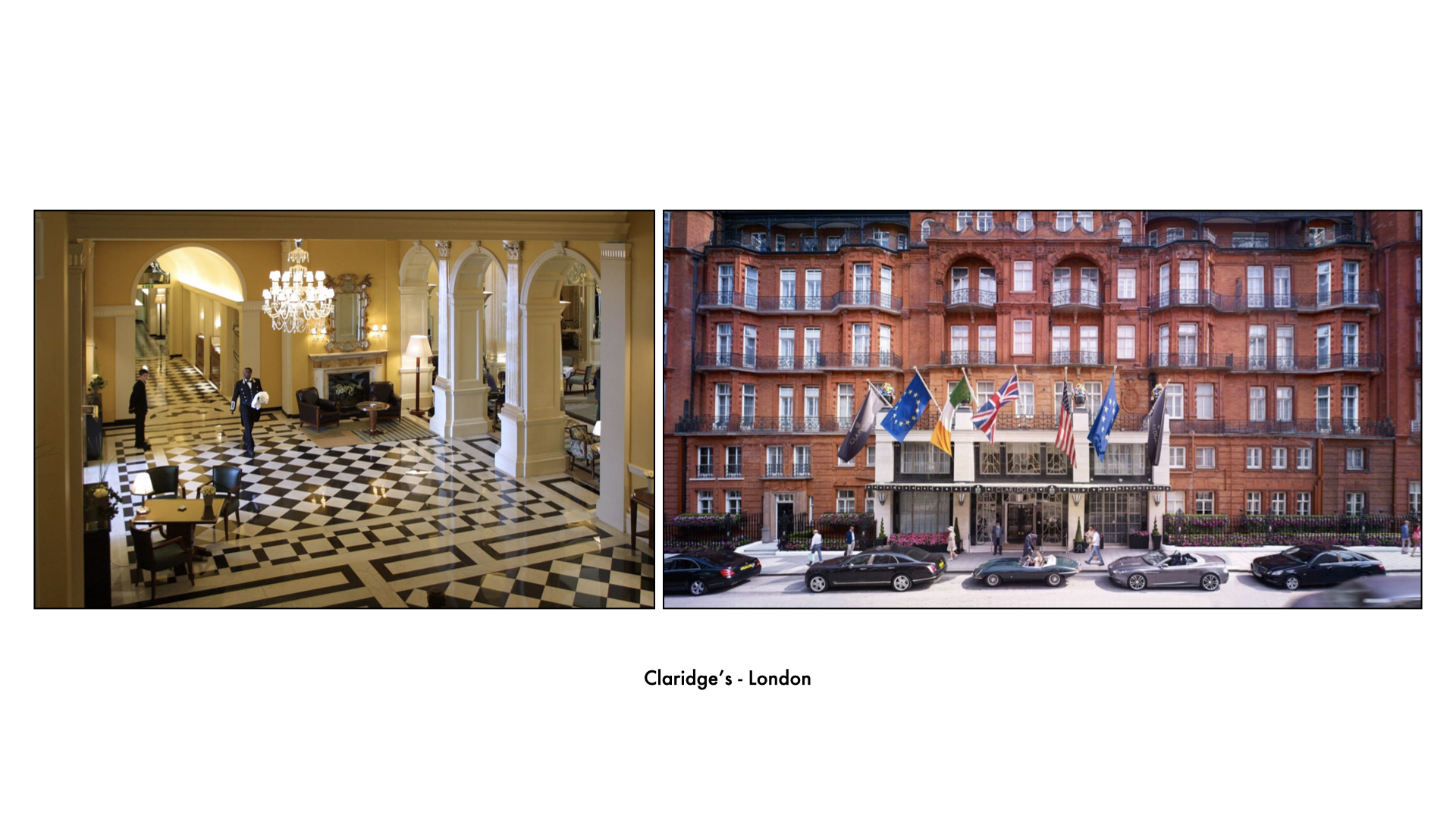
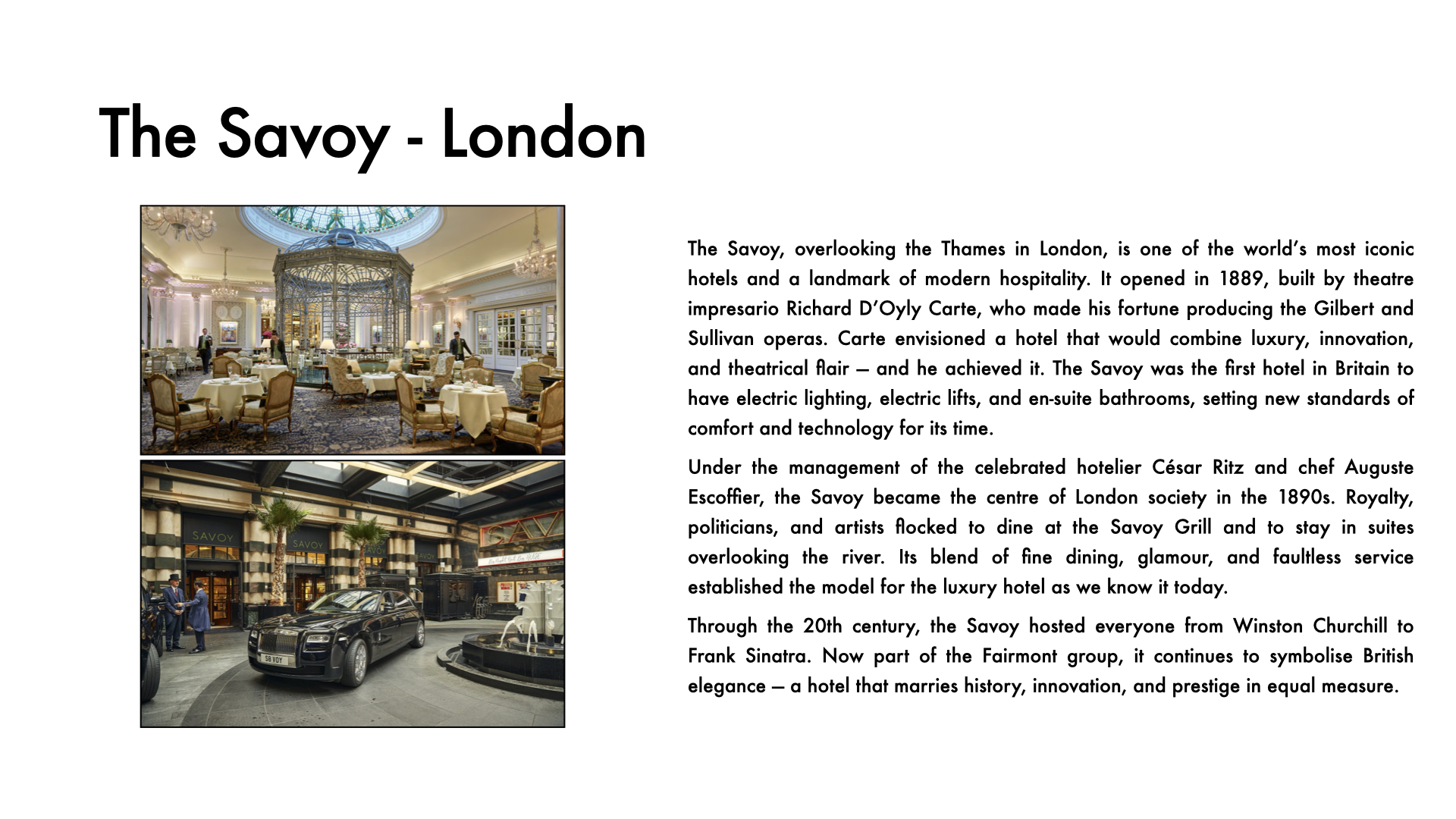
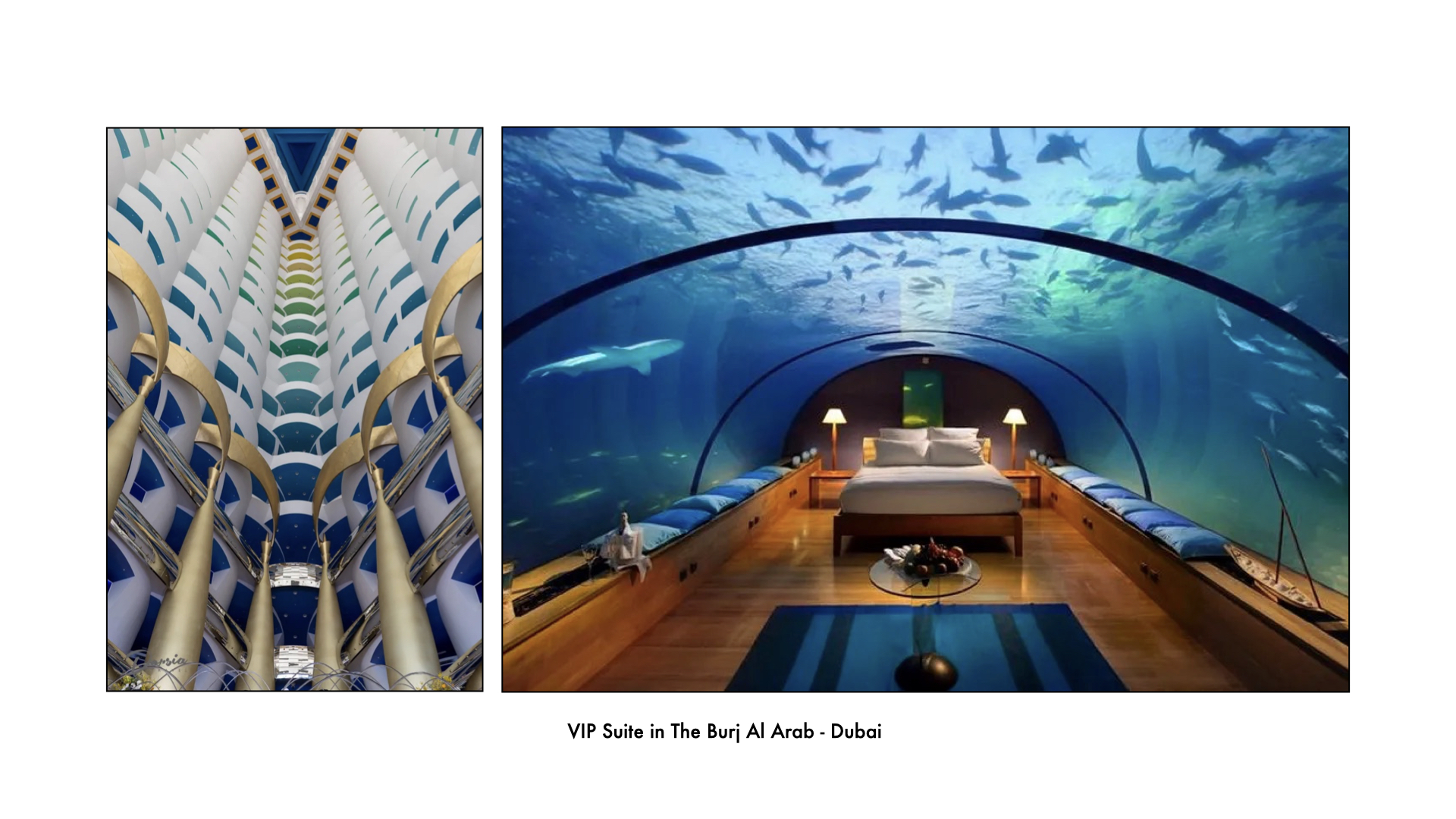
The name Forté has long been synonymous with hotels — just as Hilton, Savoy, and Claridge’s are around the world. These great families and institutions helped define modern travel, creating standards of service and comfort that shaped the twentieth century.
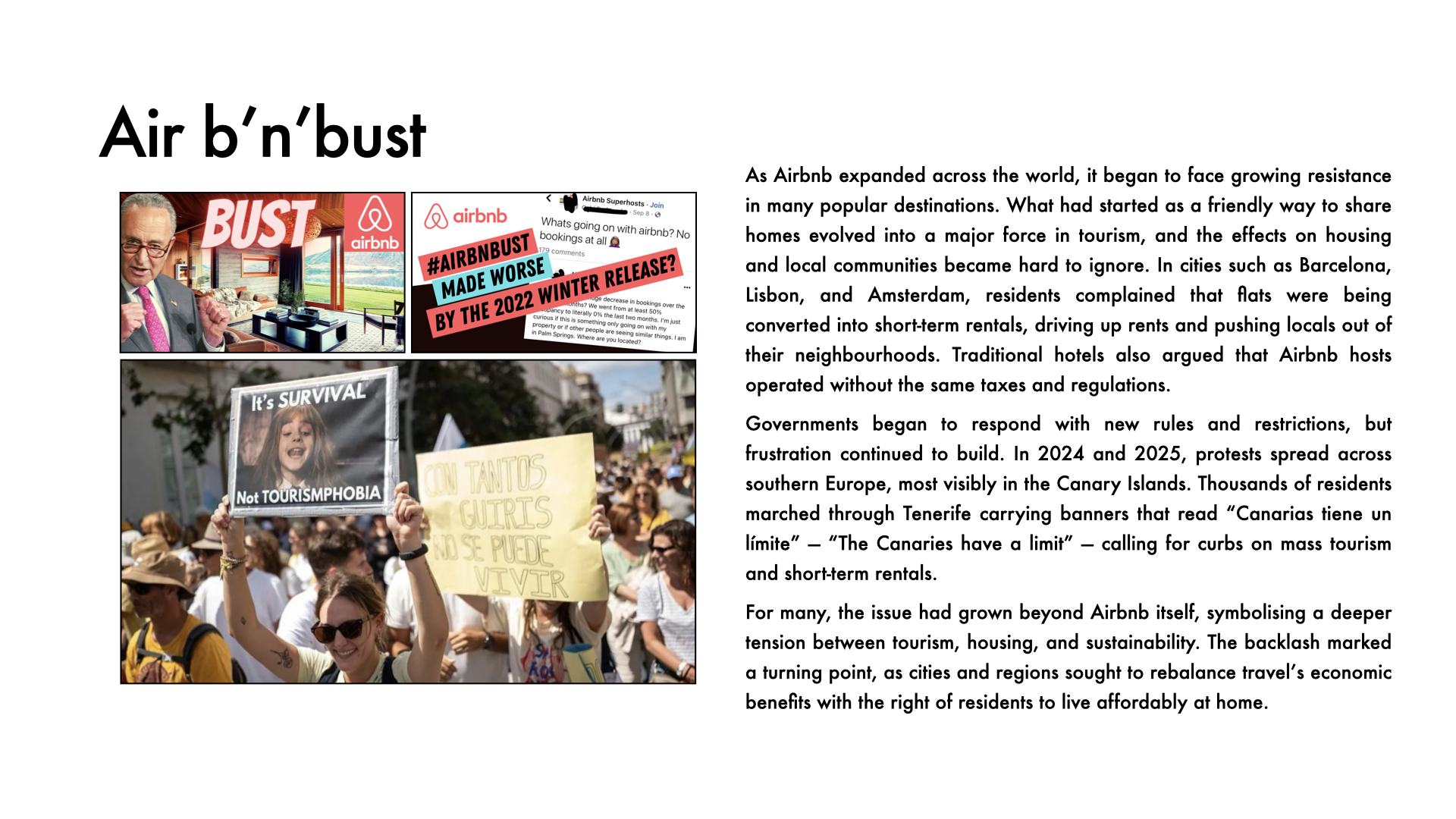
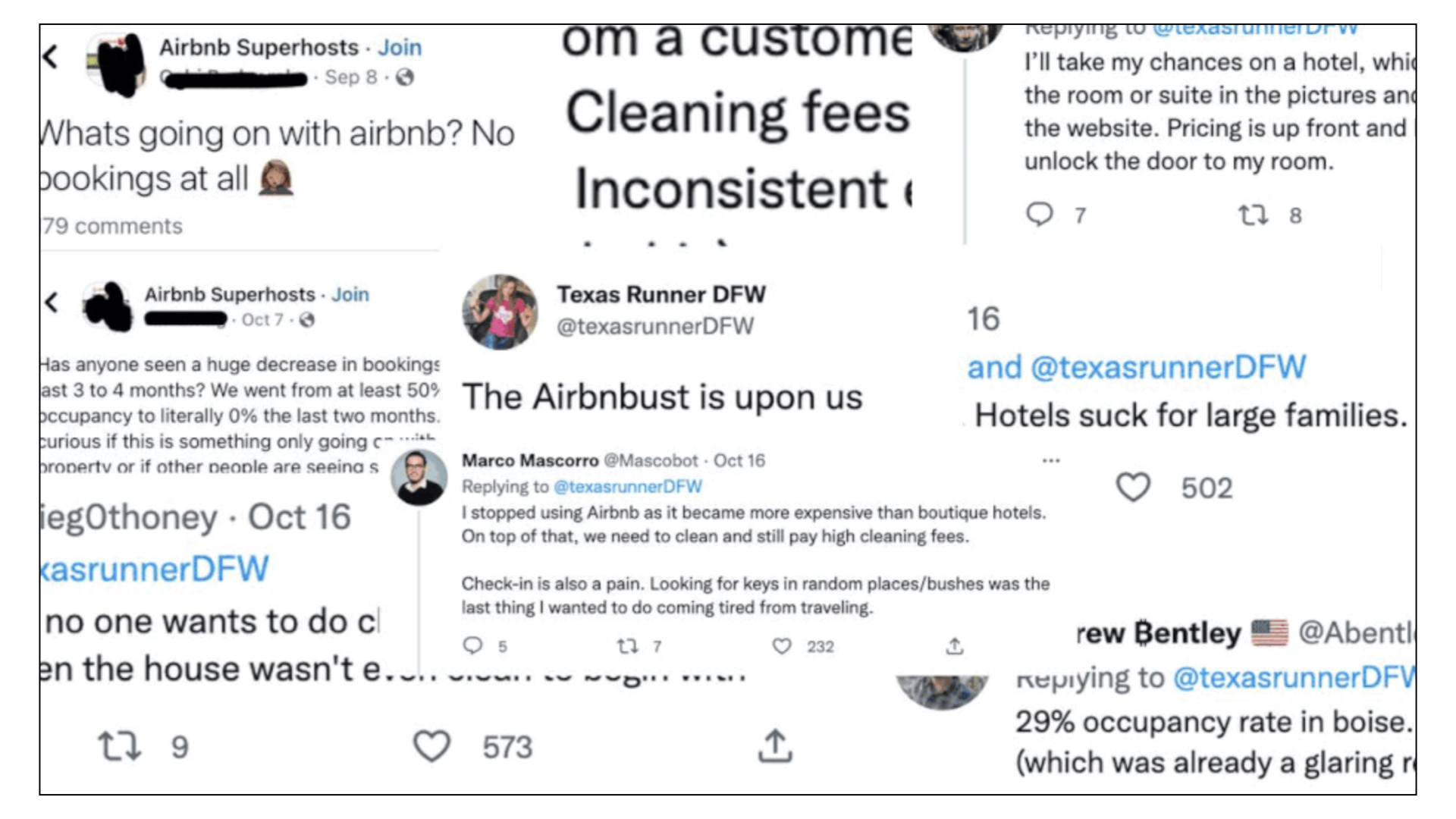
But the landscape has changed. Airbnb, founded in 2008, revolutionised accommodation by allowing anyone to rent out a spare room or entire home. What began as a quirky start-up quickly became a global phenomenon, challenging traditional hotels and reshaping housing markets. Yet in recent years, the so-called “Airbnbust” has begun to bite: oversupply, rising costs, and tighter regulations have slowed the boom. At the same time, residents in tourist-heavy destinations — from Lisbon to Tenerife — have staged demonstrations against mass tourism and the flood of short-term rentals driving up rents and hollowing out communities.
If you’re curious to see Alex Polizzi in action, many of her programmes — including The Hotel Inspector and The Fixer — can be found online, offering an insightful, often entertaining glimpse into the business of hospitality.
📽️ Slideshow
📺 Video
🔑 Key Vocabulary
- Amenities – the extra features or services that make a stay more comfortable, such as Wi-Fi, a gym, or toiletries.
- Bed and breakfast (B&B) – a small lodging offering overnight accommodation and a morning meal, often family-run.
- To book – to reserve a room, table, or service in advance.
- Booking – a reservation made for a hotel room, restaurant table, or service.
- Boutique hotel – a small, stylish hotel that focuses on design, individuality, and personal service.
- Chain hotel – a hotel that is part of a larger group or brand, such as Hilton or Marriott.
- Check-in – the process of registering and receiving your room when you arrive at a hotel.
- Check-out – the process of leaving a hotel and paying your bill at the end of your stay.
- Complimentary – provided free of charge, such as breakfast, toiletries, or a welcome drink.
- Concierge – a hotel employee who helps guests with services like bookings, directions, or recommendations.
- Front desk – the main reception area where guests check in, check out, and ask for assistance.
- Hospitality – the friendly and generous reception of guests or visitors.
- Housekeeping – the department responsible for cleaning and maintaining rooms and public areas in a hotel.
- Overbooking – when a hotel accepts more reservations than it has rooms available, expecting some cancellations.
- Reservation – an arrangement made in advance to secure a room or service at a specific time.
- Room service – food or drinks delivered directly to a guest’s room by hotel staff.
- Star rating – a system used to measure the quality and luxury level of hotels, often from one to five stars.
- Suite – a large or luxurious hotel room, often with a separate living area or multiple bedrooms.
- Turn-down service – an evening service where hotel staff prepare the bed and room for the night, often leaving a small treat.
💬 Conversation Questions
- Have you ever stayed in a hotel that left a strong impression on you — good or bad? What made it memorable?
- What do you think makes a great hotel experience: the design, the service, or the atmosphere?
- Have you ever had a problem in a hotel that needed to be “inspected” like in The Hotel Inspector? How was it solved?
- If you were Alex Polizzi, what advice would you give to a struggling hotel owner?
- Do you prefer big international hotel chains or small, family-run places? Why?
- How important is interior design in a hotel? Can design alone make guests feel welcome?
- What role do you think reviews and online ratings play in modern hospitality?
- Have you ever stayed in accommodation booked through Airbnb? How did it compare to a hotel?
- Why do you think people enjoy watching shows like The Hotel Inspector or Kitchen Nightmares?
- If you could design your own dream hotel, what would it be like — location, style, and atmosphere?
🌐 Links
- BBC – Spain clamps down on Airbnb as tourism backlash returns for summer
- Forbes – Has Airbnb CEO Brian Chesky Become An ‘Undercover Boss?’
- Condé Nest – The Best Hotels and Resorts in the World: The Gold List 2025
- The Guardian – EU to propose short-term rental rules to tackle ‘social crisis’ in housing