Week 1️⃣ 2️⃣
St Louis
🔊 Audio
📜 Show transcript
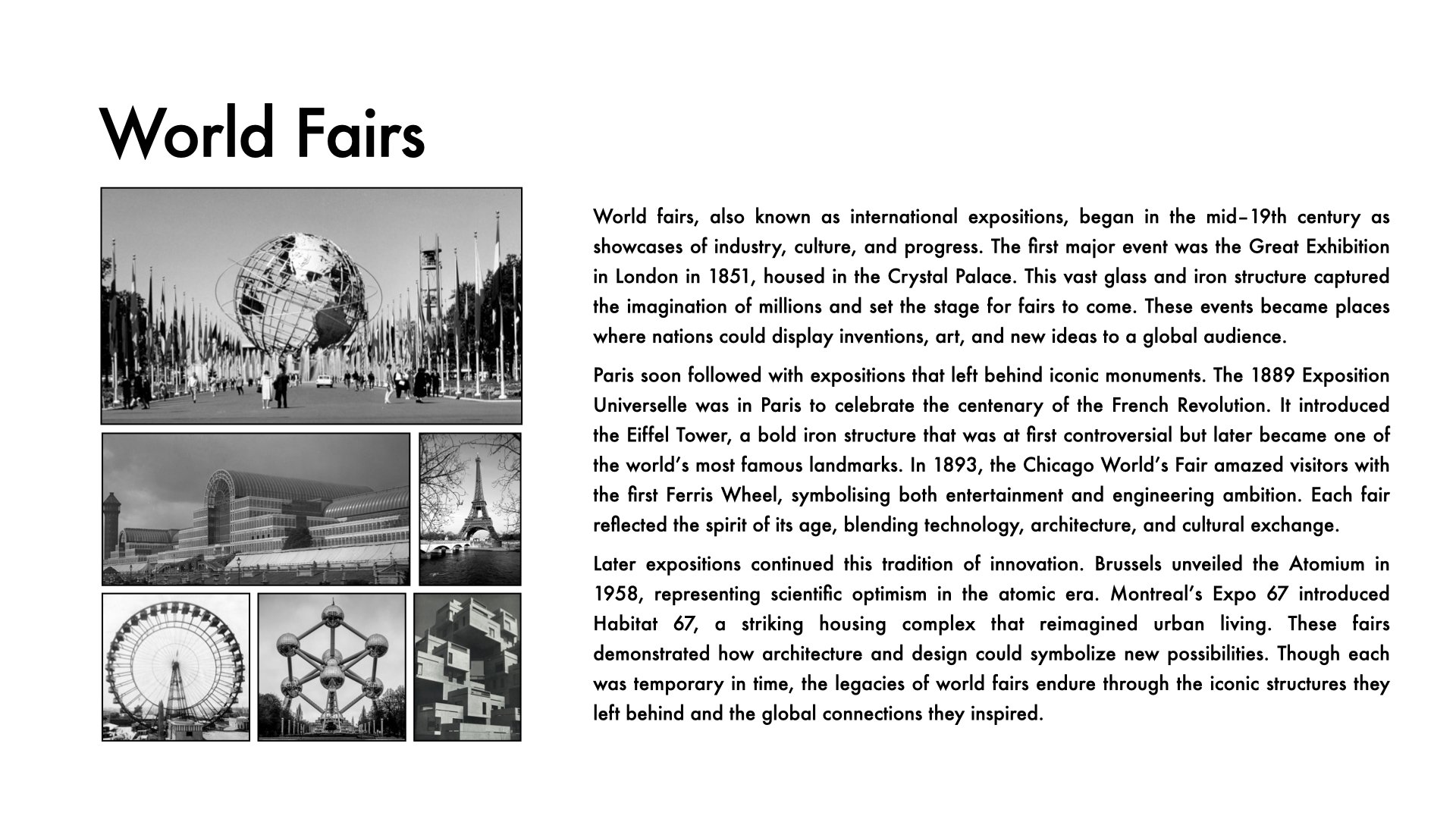
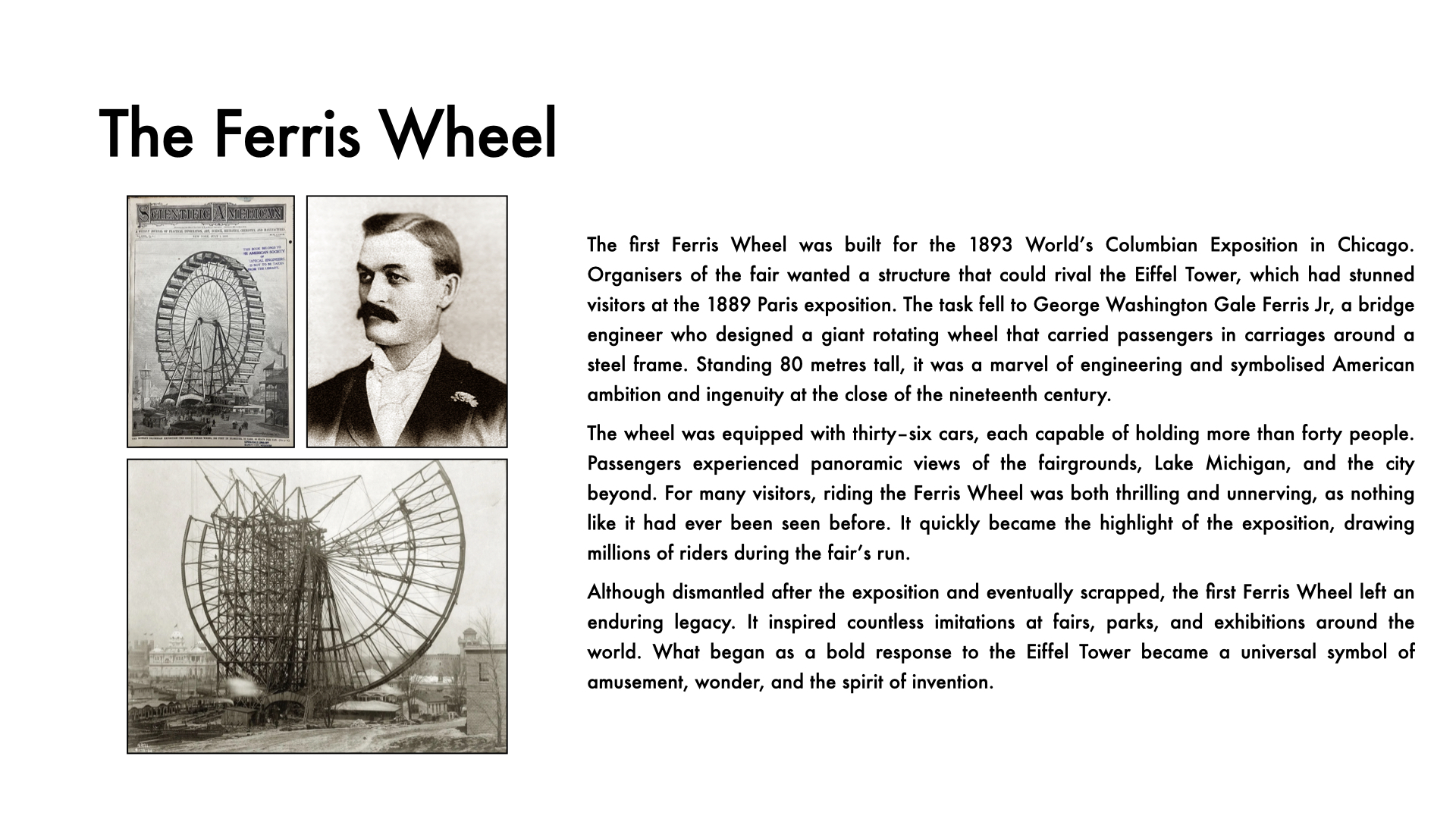
World fairs began in the nineteenth century as grand international expositions, designed to showcase industry, science, culture, and progress. The 1851 Great Exhibition in London set the pattern, held inside the glittering Crystal Palace, a glass and iron marvel that symbolised the age of invention. Later fairs followed with their own iconic landmarks: Paris gave the world the Eiffel Tower in 1889, Chicago introduced the first Ferris Wheel in 1893, and Brussels unveiled the Atomium in 1958. Each fair was a stage for nations to demonstrate both their technological power and their cultural aspirations.
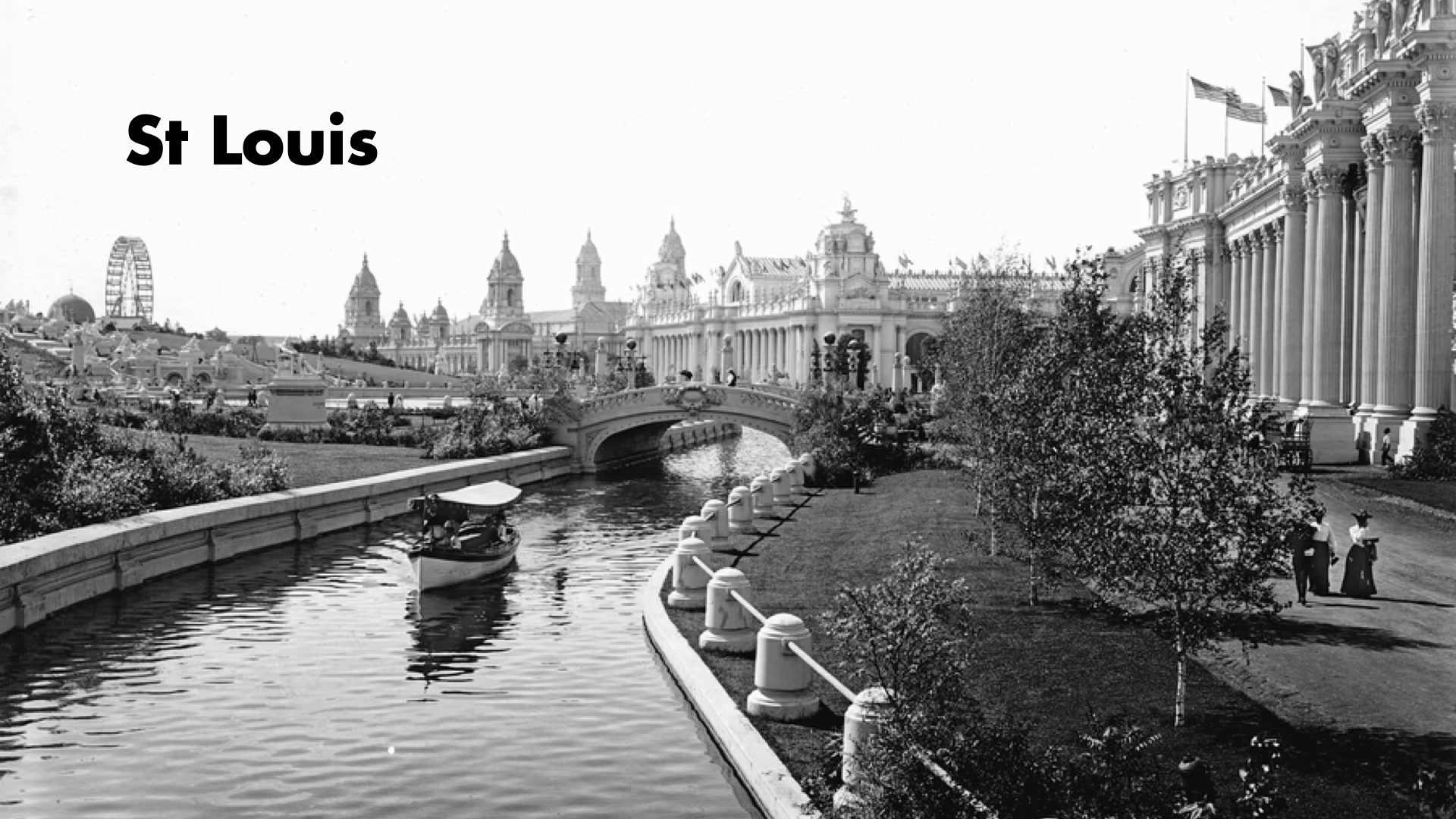
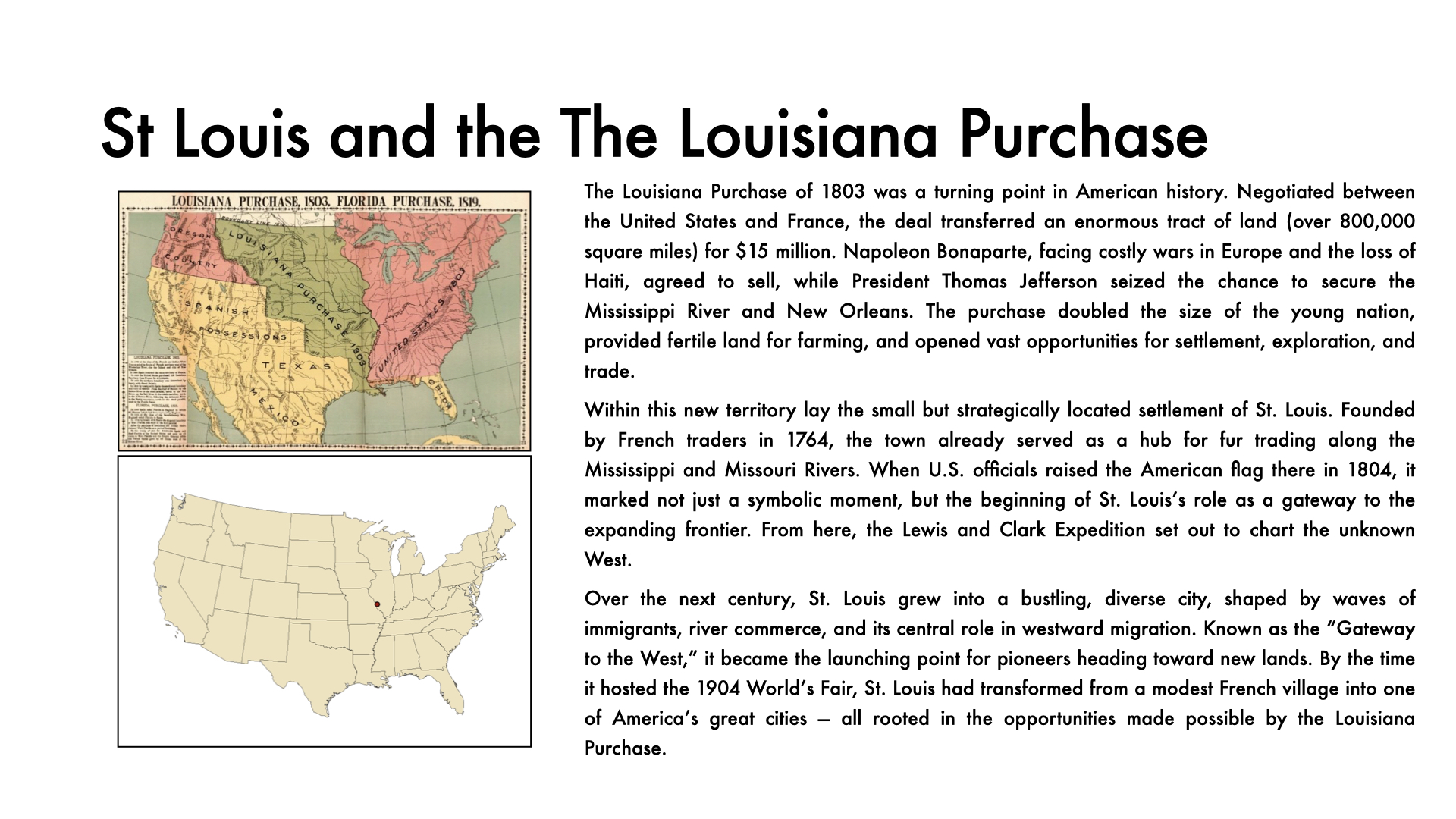
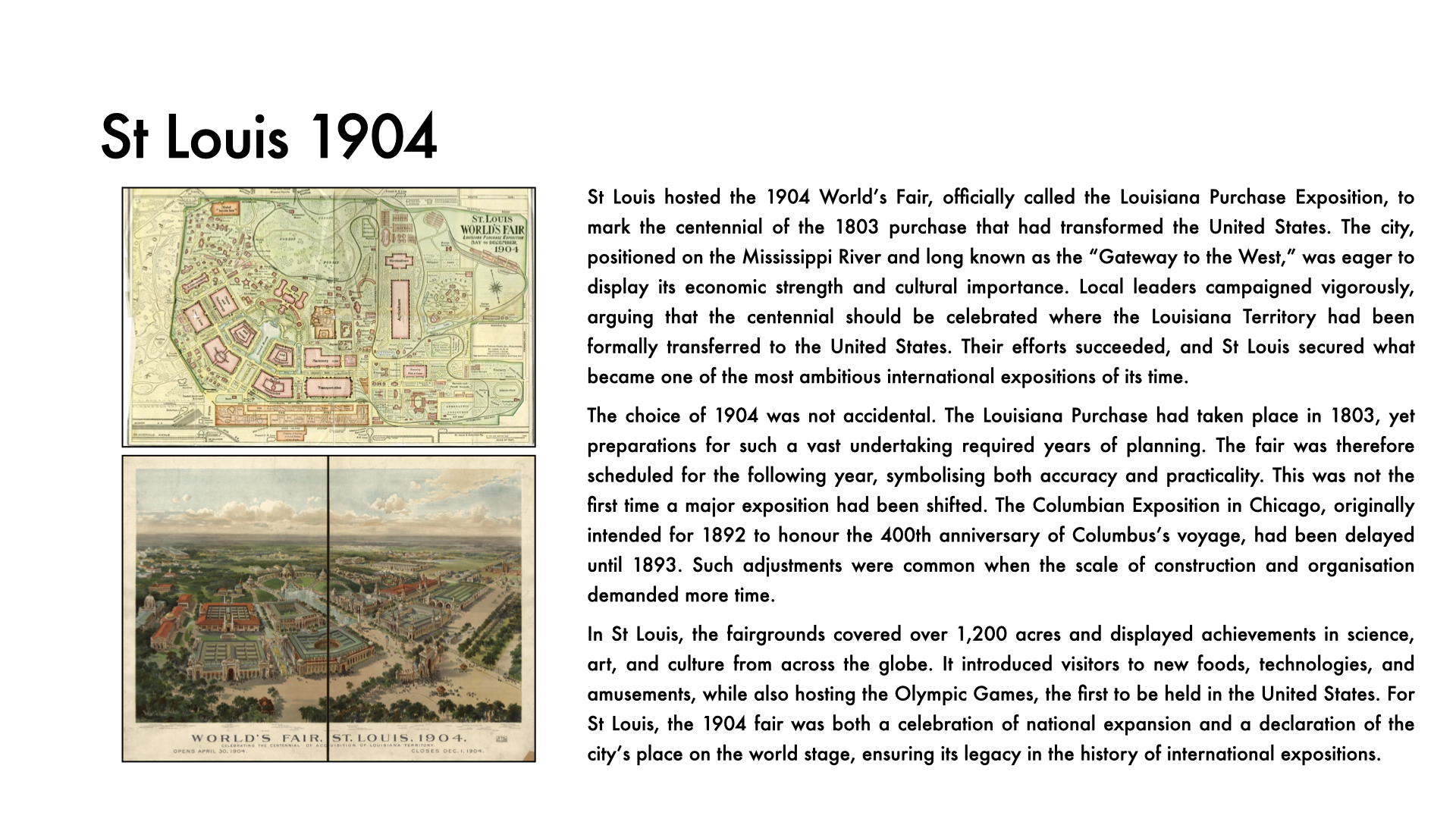
In 1904, St Louis hosted its own world’s fair, the Louisiana Purchase Exposition, timed to celebrate the centennial of the 1803 land deal that had doubled the size of the United States. St Louis was chosen because it had been the site of the official handover of the Louisiana Territory, and because it styled itself the “Gateway to the West.” The fair spread over 1,200 acres and attracted millions of visitors, who marvelled at its grand white palaces, cultural exhibits, and celebrations of modern life. It was both a tribute to American expansion and a declaration of the city’s importance on the world stage.
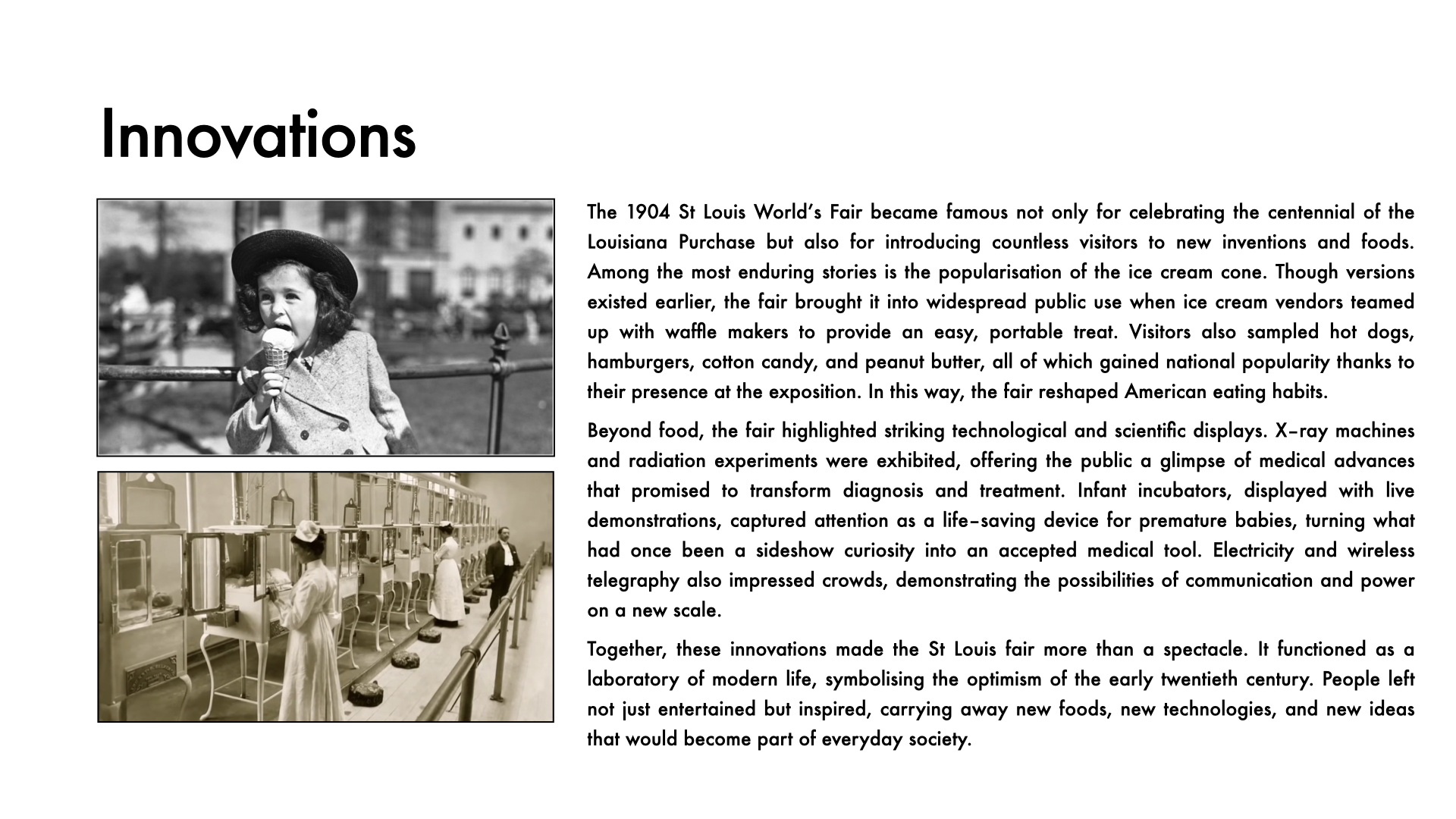
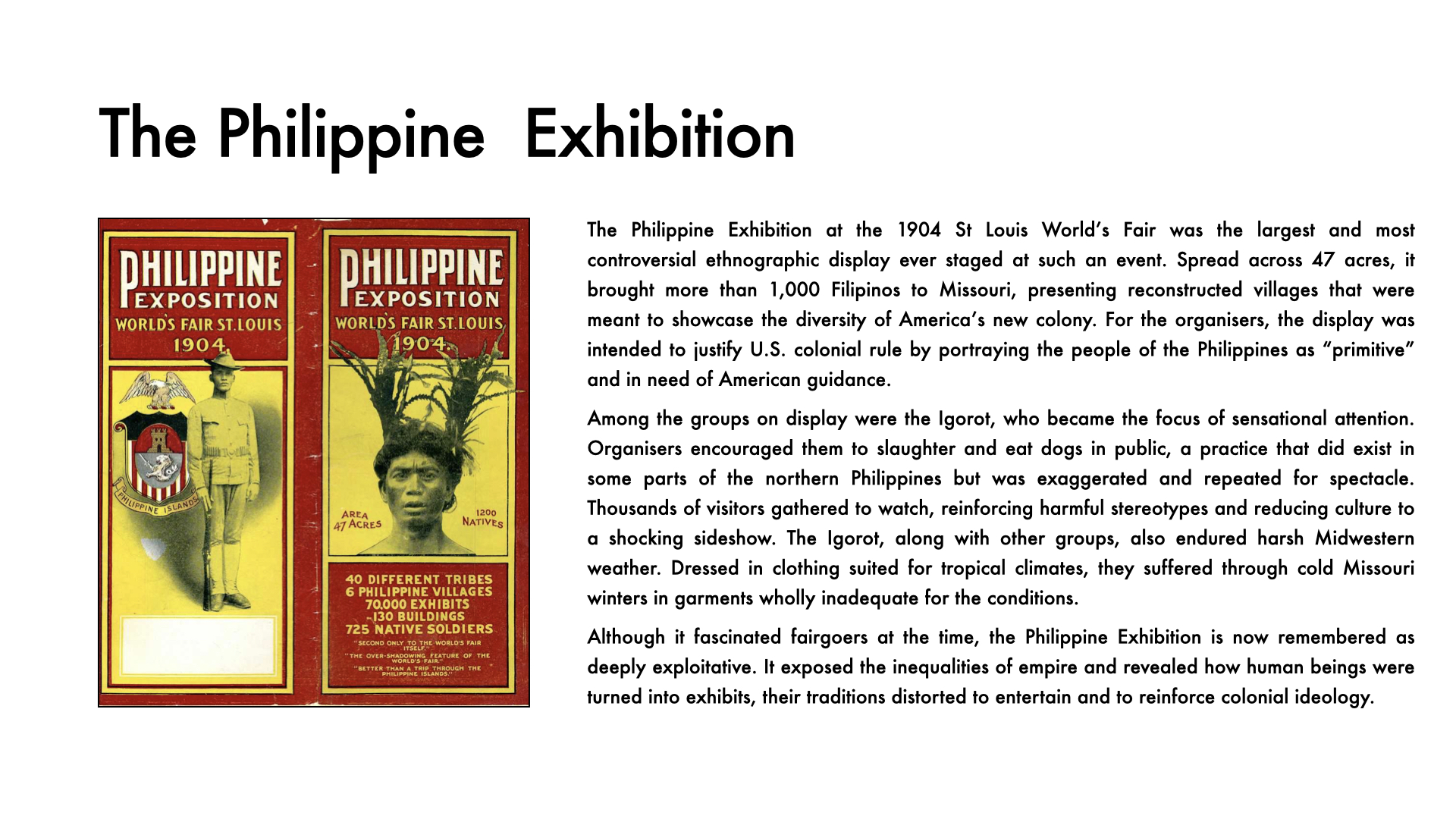
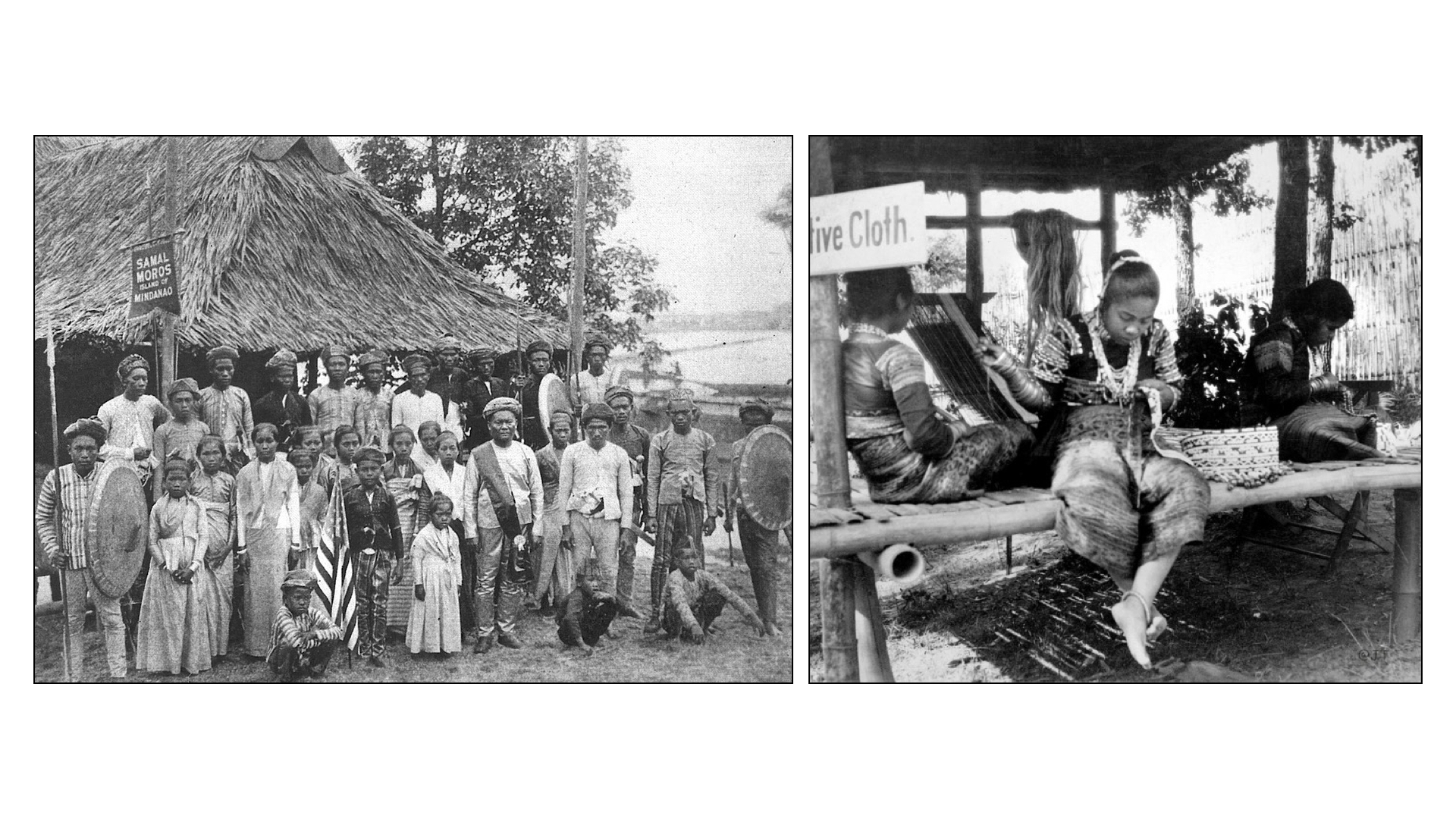
The 1904 fair became famous for its innovations, both real and legendary. Visitors tasted ice cream cones, hot dogs, and cotton candy, all popularised there. Scientific displays featured X-rays, infant incubators, and wireless telegraphy, showing how technology could save lives and connect people across distance. Yet the fair was also controversial: the Philippine Exhibition placed over 1,000 Filipinos in staged “villages,” sometimes made to eat dogs in public or endure Missouri winters in inadequate clothing, reinforcing stereotypes and colonial attitudes.
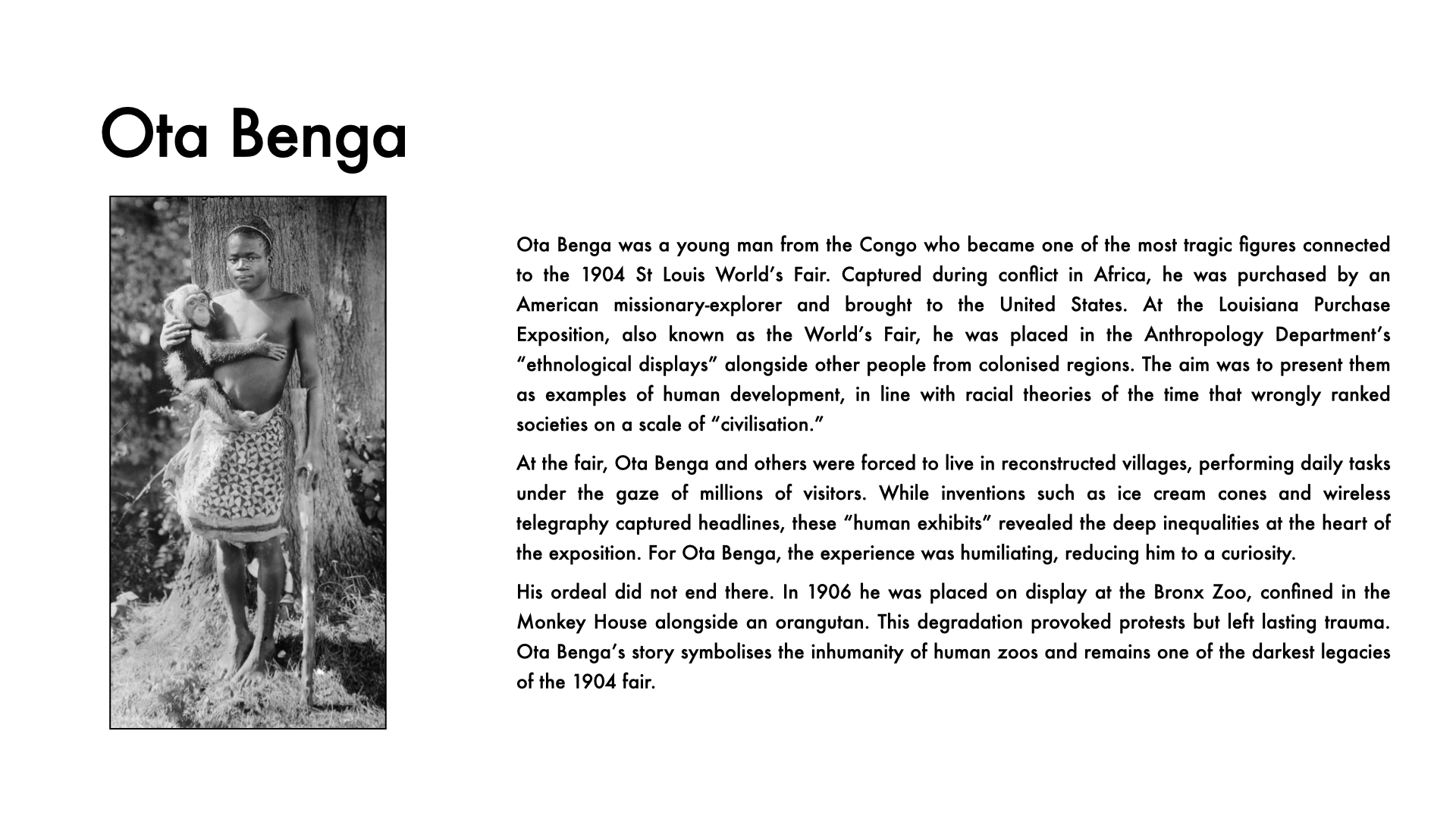
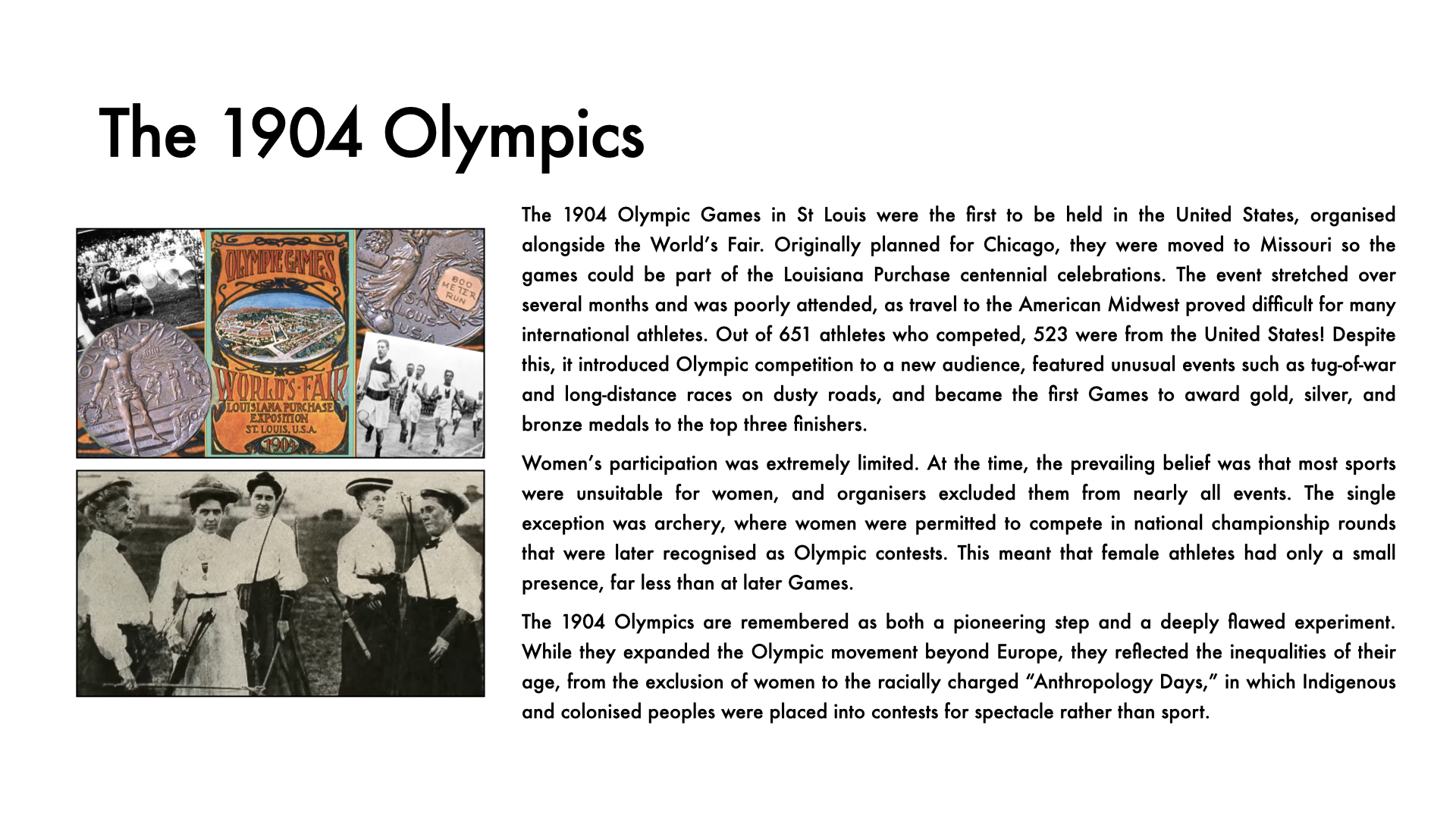
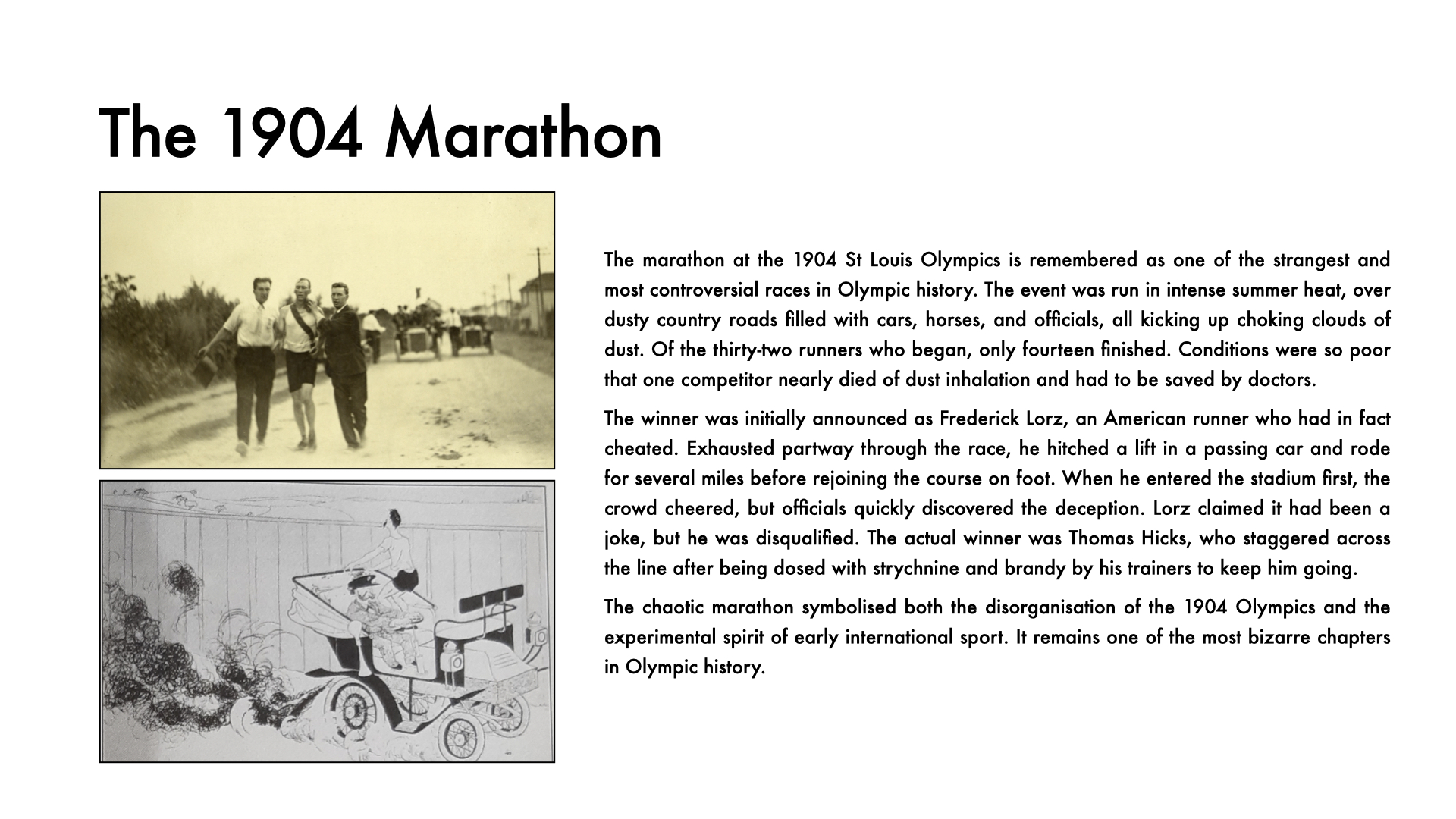
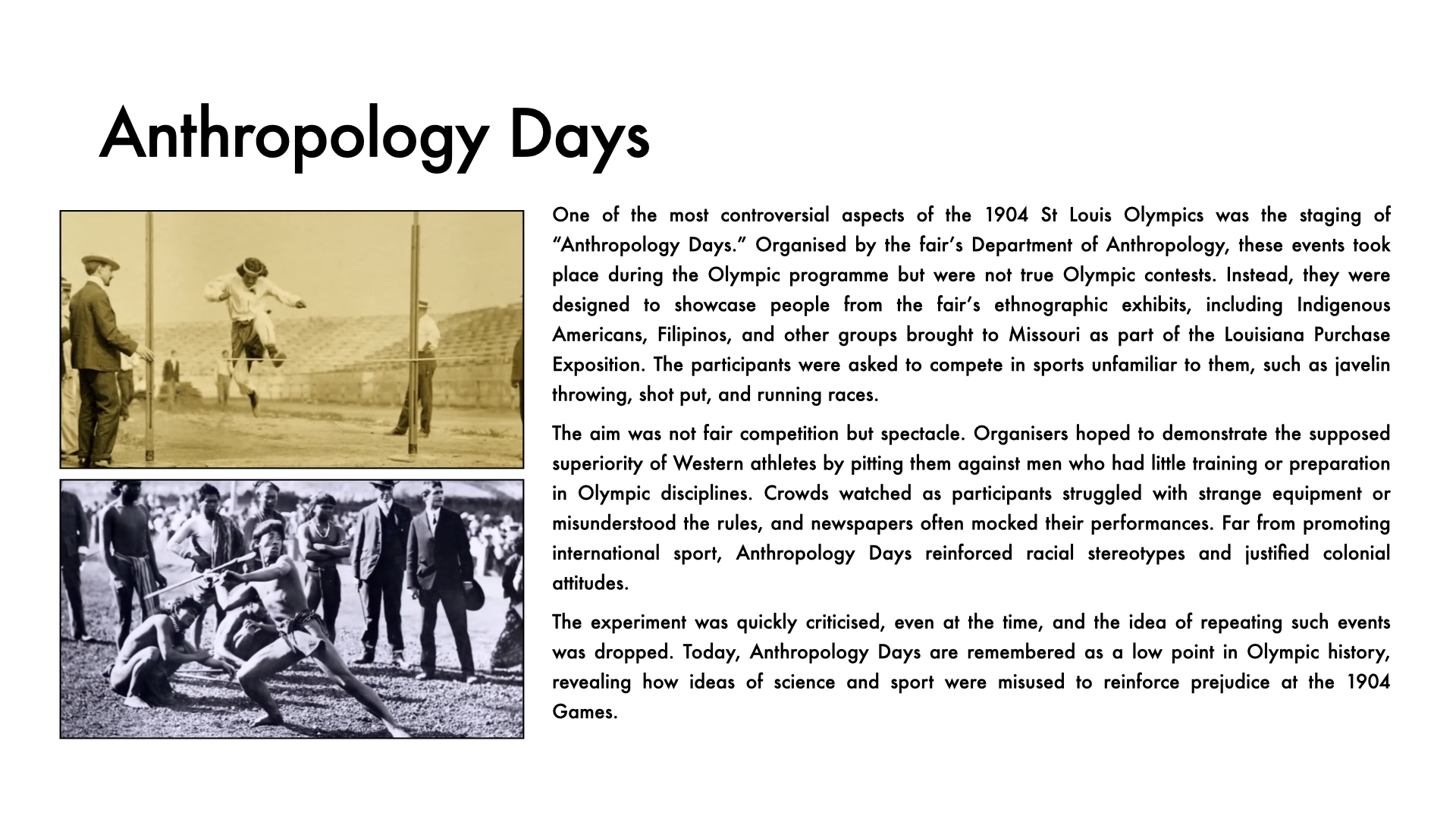
At the same time, the 1904 Olympics unfolded alongside the exposition. These Games introduced the now-familiar gold, silver, and bronze medals, but they were chaotic. Most athletes were American, as few could afford the journey. Women competed only in archery, reflecting the restrictions of the age. The marathon became notorious: one runner cheated by hitching a ride in a car, while the eventual winner was carried to the finish line half-poisoned with strychnine. The organisers even staged “Anthropology Days,” forcing Indigenous people and colonised subjects to take part in athletic contests for the amusement of the crowd.
The St Louis World’s Fair remains a fascinating paradox: a celebration of progress and innovation, but also a mirror of the prejudices and inequalities of its time.
📽️ Slideshow
📺 Video
🔑 Key Vocabulary
- Anthropology Days – pseudo-athletic contests forcing Indigenous and colonised people to compete
- Archery – the only Olympic event in 1904 open to women
- Atomium – futuristic Belgian pavilion built for Expo 1958 in Brussels
- Candy floss – spun sugar treat introduced to many visitors in 1904
- Crystal Palace – glass and iron structure built for the 1851 Great Exhibition in London
- Eiffel Tower – iron structure built for the 1889 Paris Exposition Universelle
- Exposition – another word for a large exhibition or fair
- Ferris Wheel – giant rotating wheel first built in Chicago in 1893
- Gateway to the West – nickname for St Louis, reflecting its role in expansion
- Gold, silver, bronze medals – first awarded in 1904 to honour first, second, and third place
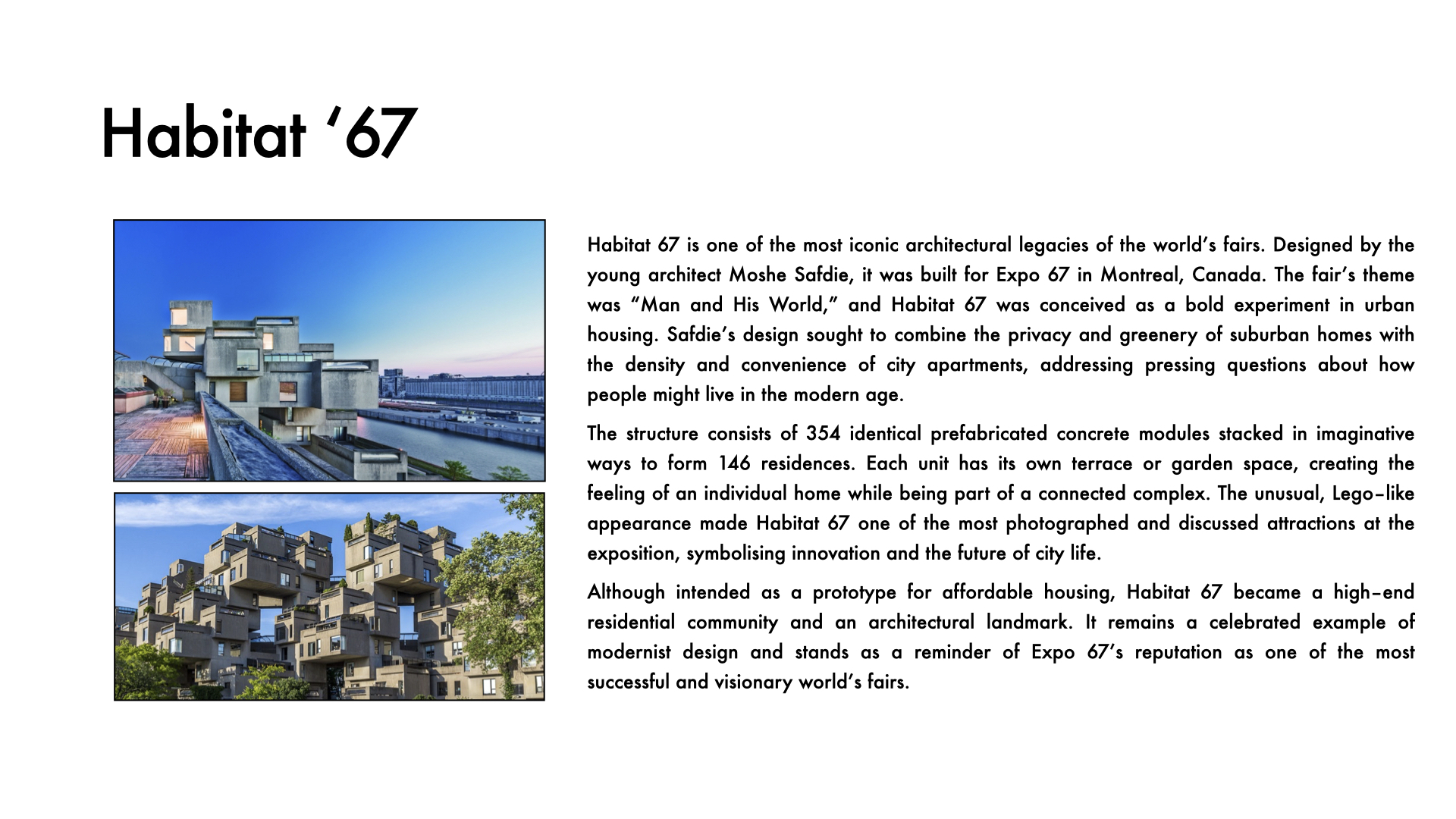
- Habitat 67 – modular housing complex built for Expo 1967 in Montreal
- Hot dog – sausage in a bun widely promoted at the fair
- Ice cream cone – popularised at the 1904 fair as a portable dessert
- Innovation – new invention or cultural trend introduced to the public
- Infant incubator – device to support premature babies, shown at the fair
- Louisiana Purchase – the 1803 land deal that doubled the size of the United States
- Louisiana Purchase Exposition – official name of the 1904 St Louis World’s Fair
- Marathon – long-distance Olympic race in 1904 marked by chaos and cheating
- Olympic Games – international sports competition held alongside the fair
- Philippine Exhibition – ethnographic display of more than 1,000 Filipinos at the fair
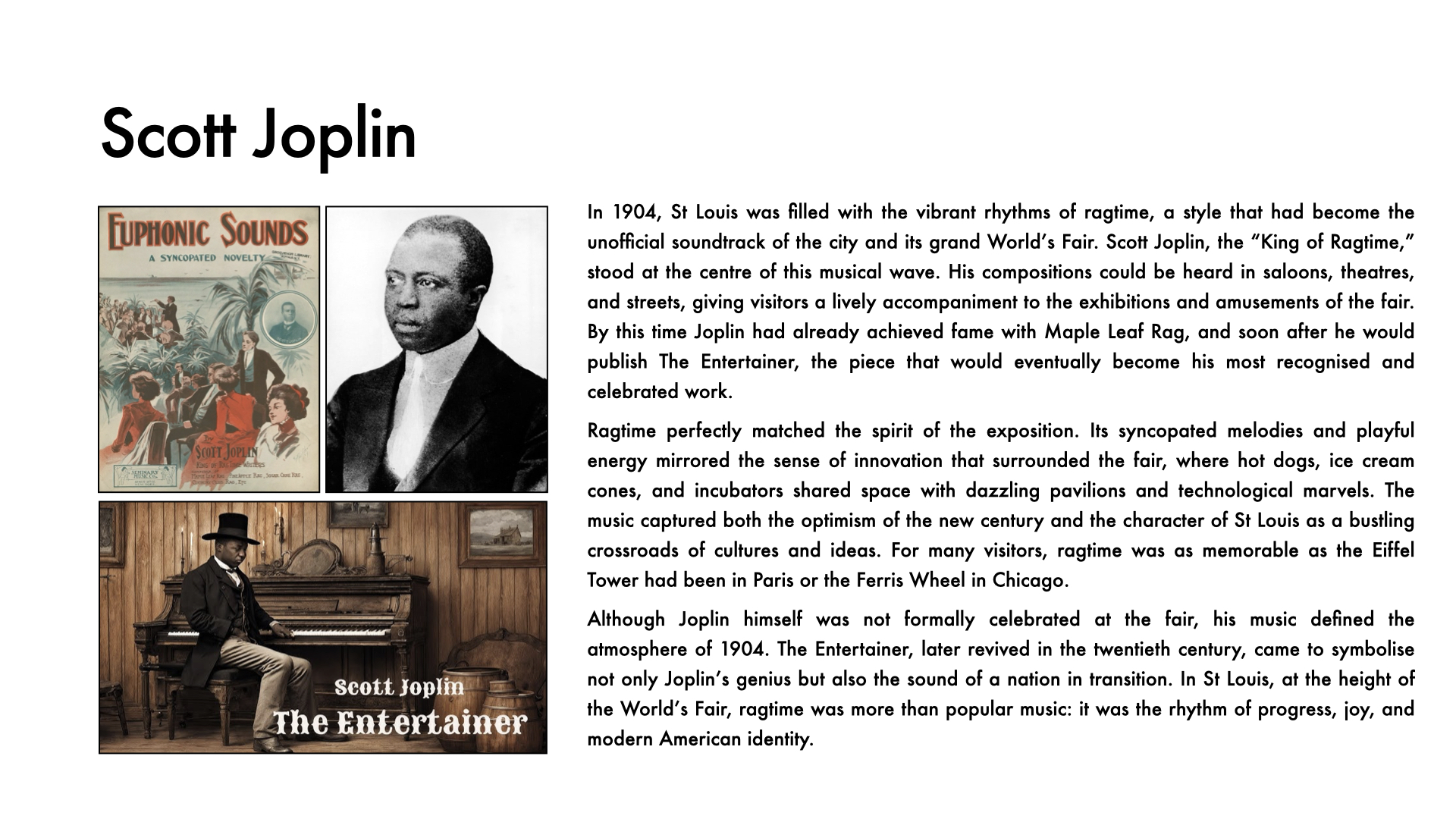
- Ragtime – syncopated musical style associated with St Louis and the 1904 fair
- Strychnine – a poison used as a stimulant during the 1904 marathon
- Wireless telegraphy – early form of radio communication demonstrated in 1904
- World’s Fair – a large international exposition showcasing industry, culture, and innovation
- X-ray – medical imaging technology displayed at the exposition
💬 Conversation Questions
- Would you have enjoyed visiting the 1904 St Louis World’s Fair?
- Which invention from the fair (ice cream cone, X-ray, incubator, wireless telegraphy) would have impressed you most?
- Do you think foods like hot dogs and candy floss became popular because of the fair?
- How would you feel about seeing people displayed in “villages” at the Philippine Exhibition?
- Do you think world fairs were more about education or entertainment?
- Should women have been allowed to compete in more sports at the 1904 Olympics?
- What do you think about the marathon scandal, where one runner cheated with a car ride?
- Do you think the use of strychnine to keep athletes going was brave or dangerous?
- Is ragtime music, like Scott Joplin’s “The Entertainer,” a good symbol for 1904 St Louis?
- Do you think hosting both a world fair and the Olympics at the same time was a good idea?