Week 1️⃣ 0️⃣
Jeans & Genes
🔊 Audio
📜 Show transcript
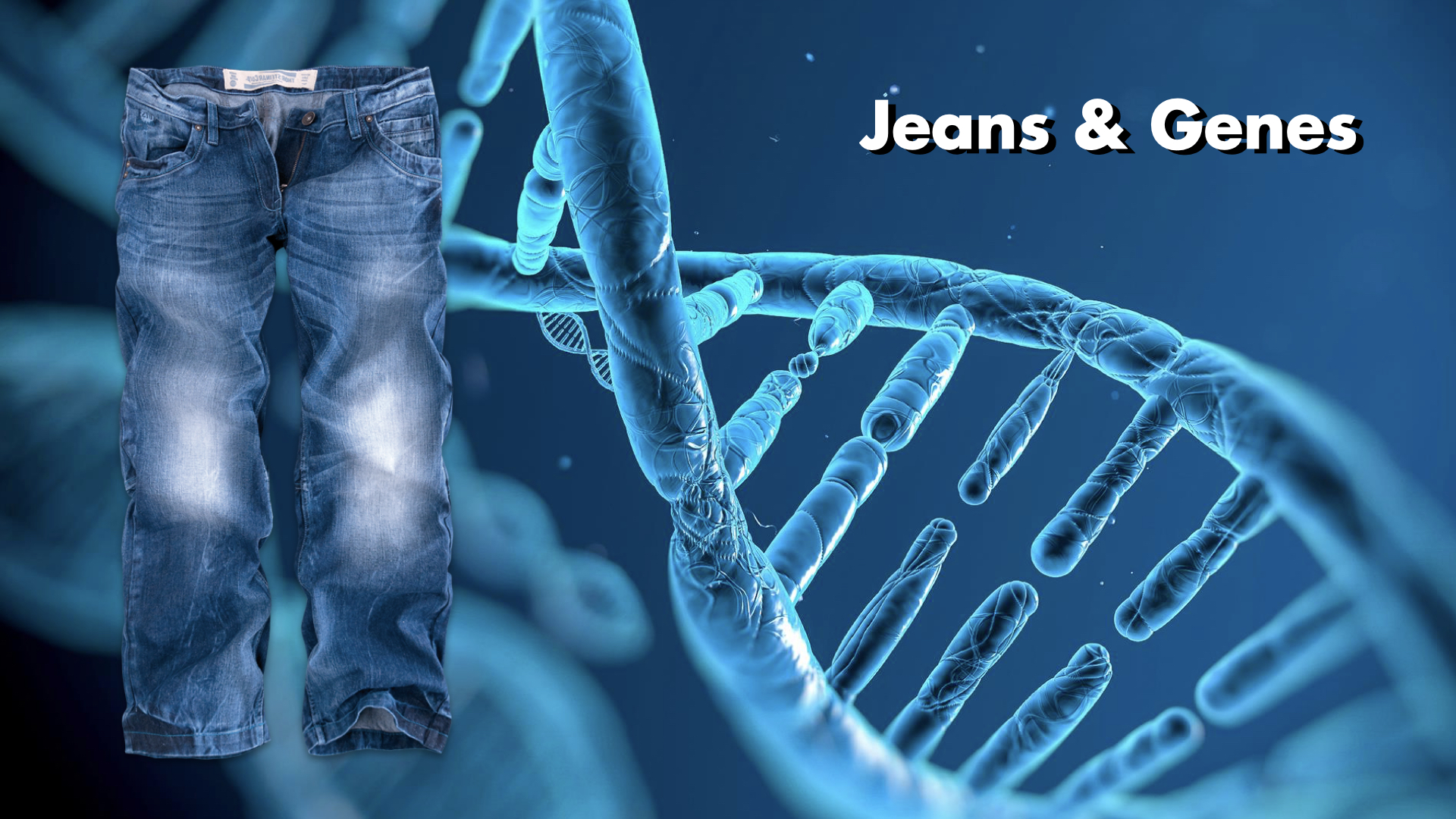
What do jeans and genes have in common? In English, they are homonyms: words that sound identical but mean completely different things. The pun has been used in fashion advertising for decades, sometimes to clever effect, but often with controversial results.
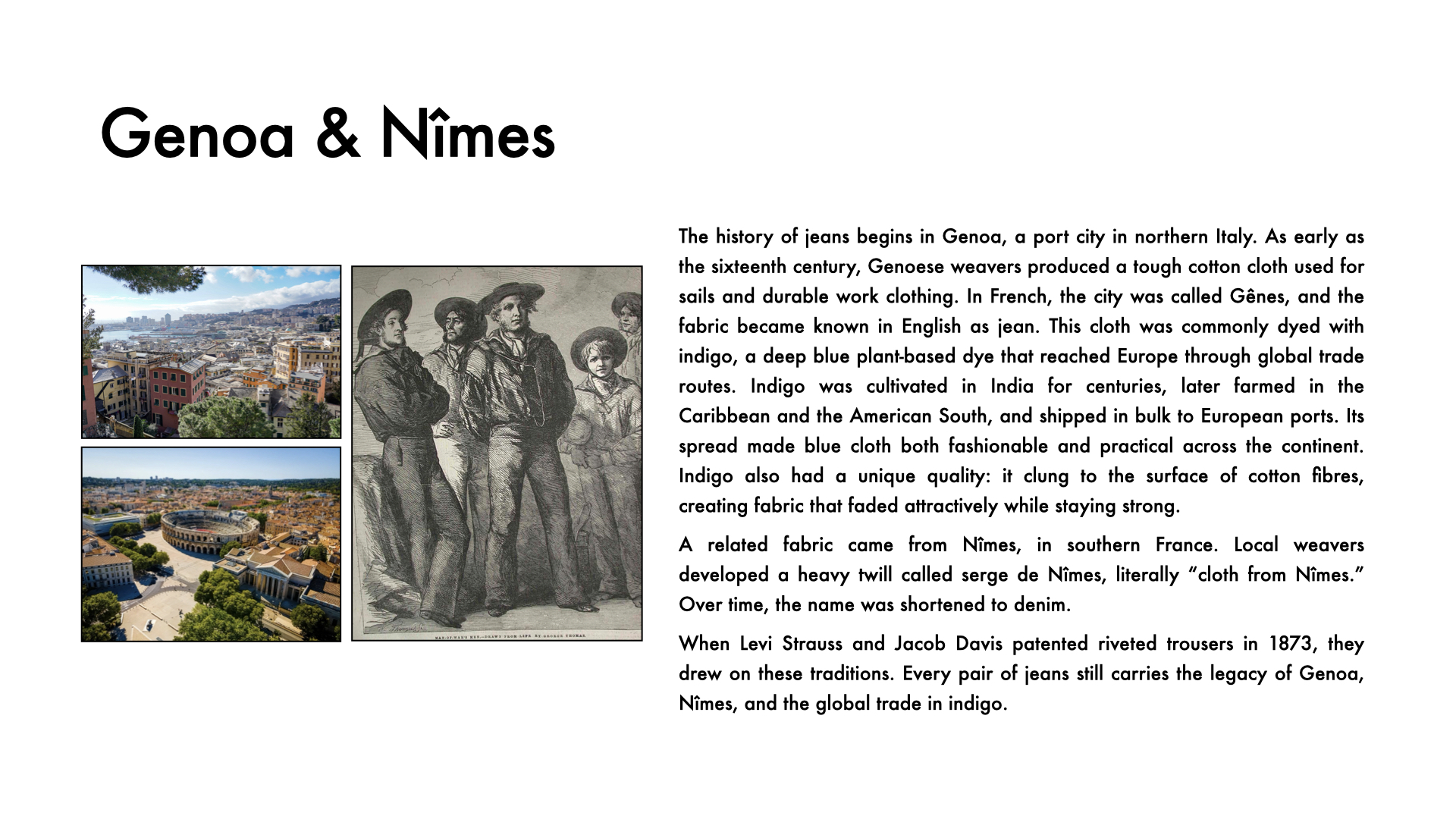
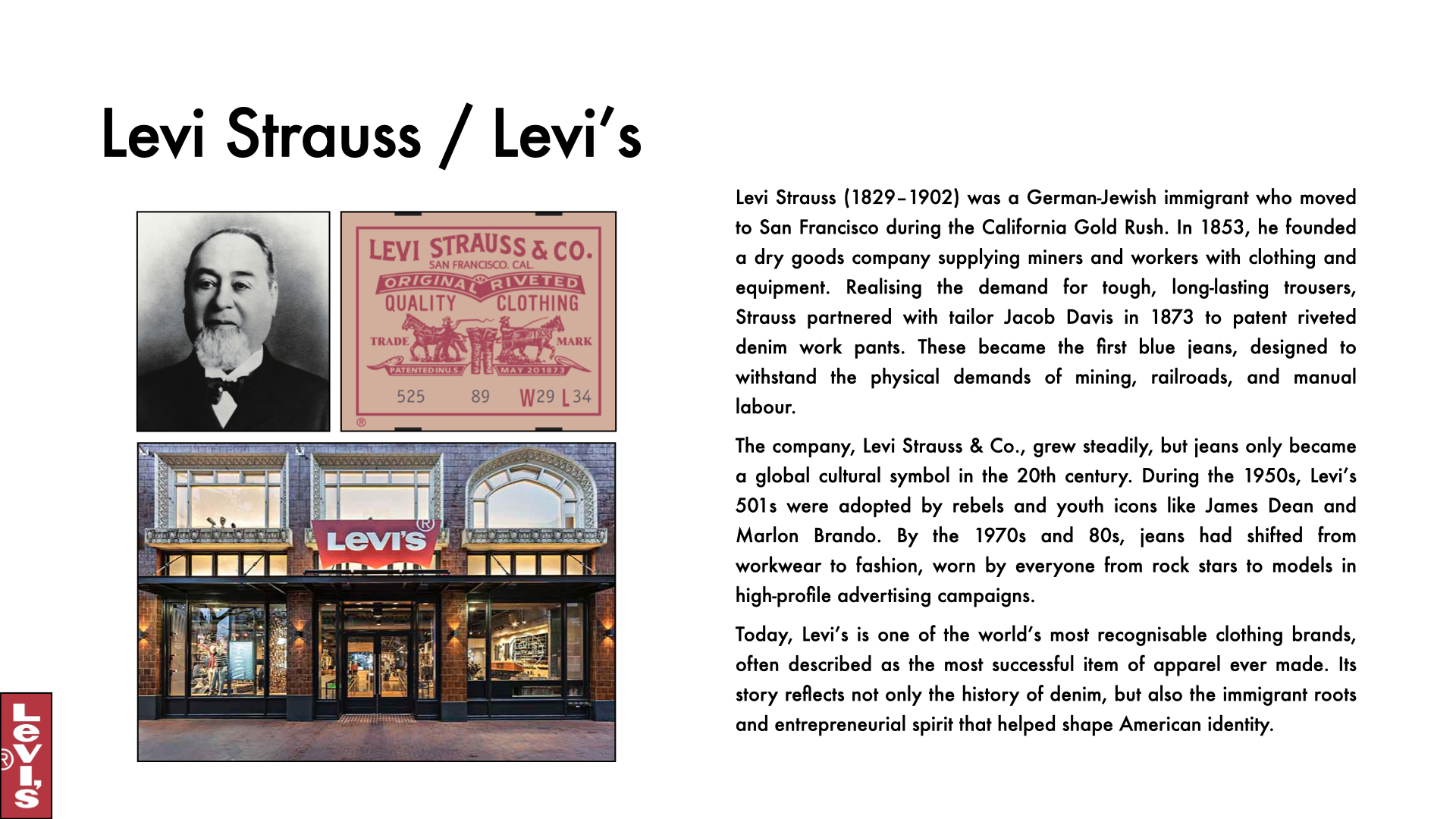
The word jeans comes from Genoa (Gênes in French), an Italian city where a durable cotton cloth was produced in the sixteenth century for work clothes. Later, another sturdy fabric, serge de Nîmes from France, gave rise to the term denim. In the mid-nineteenth century, a German-Jewish immigrant named Levi Strauss arrived in San Francisco during the Gold Rush. He began selling tough trousers made from denim, and in 1873, together with tailor Jacob Davis, patented riveted pants. These became the first blue jeans. Originally designed for miners, Levi’s jeans evolved into a global fashion symbol of youth, rebellion, and style. Unlike most garments of that era, denim has never disappeared. Jeans remain a fabric relic of the nineteenth century, still worn in the twenty-first.
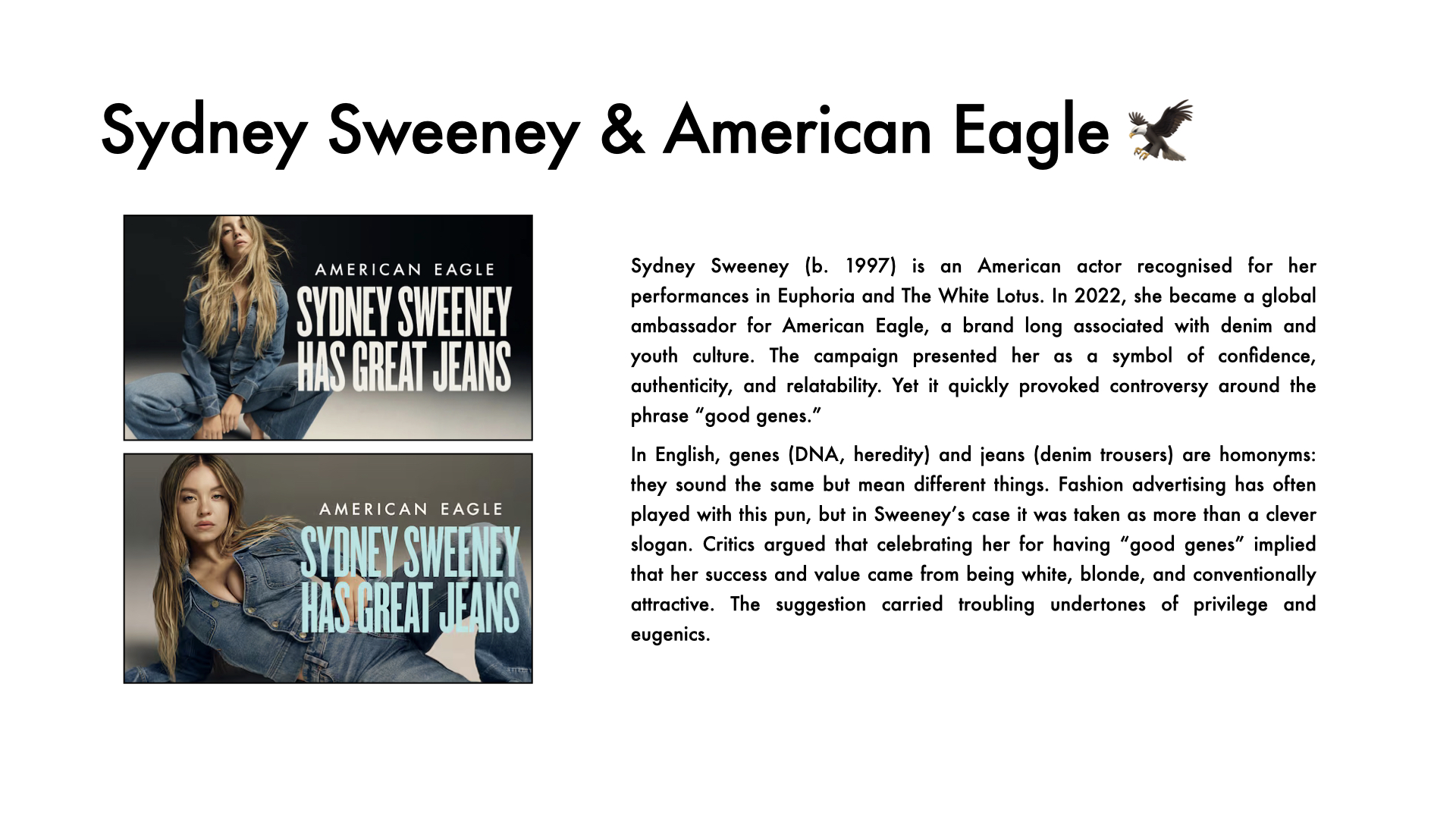
A century later, another company tapped into that enduring popularity. American Eagle Outfitters, founded in 1977, built its identity around casual style and affordable denim, targeting a younger audience. In 2022, the brand chose actor Sydney Sweeney as a global ambassador. Born in 1997, she is known for roles in Euphoria and The White Lotus. The campaign, however, was criticised for celebrating her as having “good genes.” Many argued this implied that her whiteness, blonde hair, and conventional beauty were being presented as superior, echoing troubling ideas of privilege and eugenics.
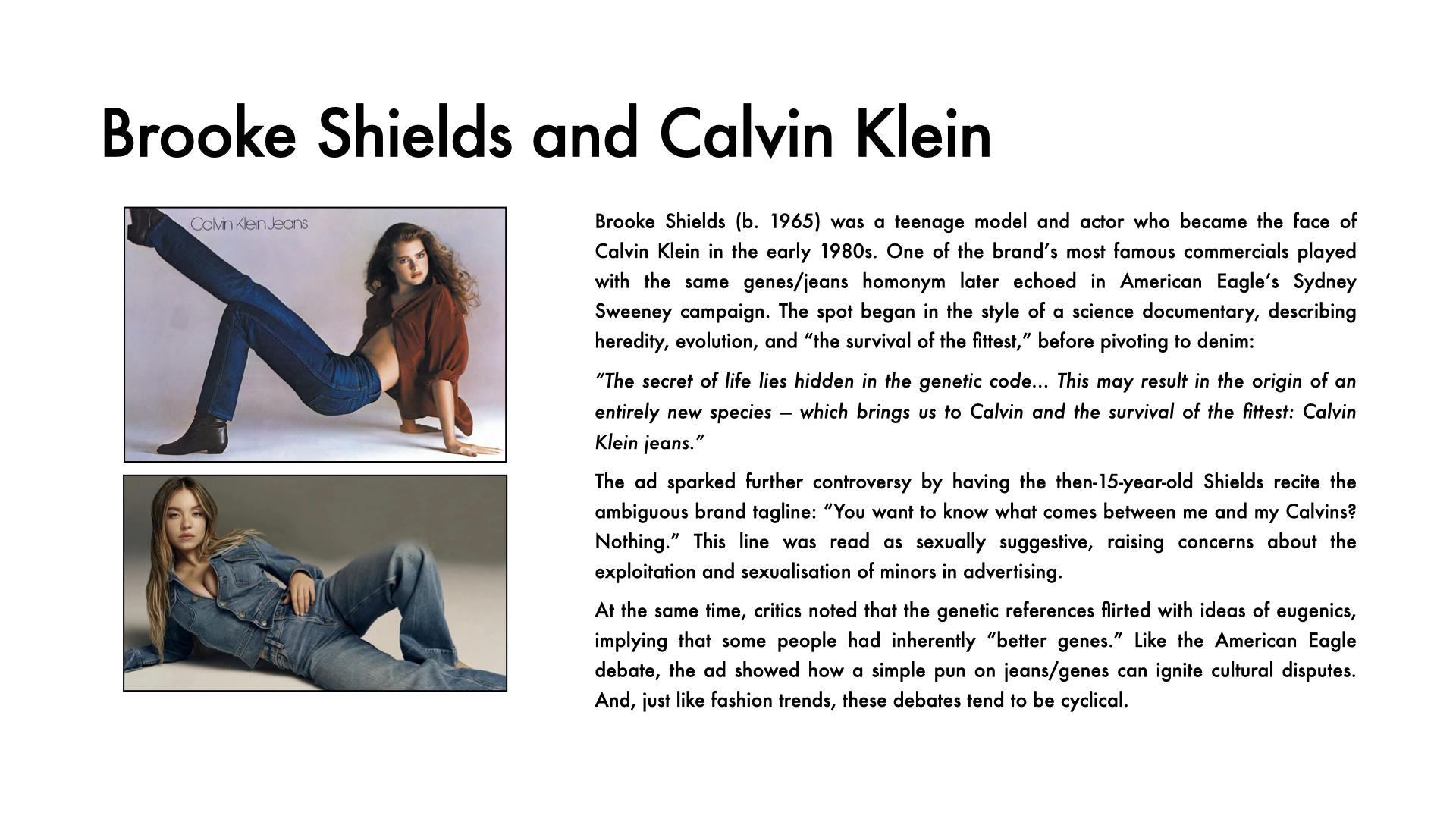
This was not the first time fashion advertising linked jeans and genes. In the 1980s, Brooke Shields, then fifteen, appeared in Calvin Klein’s infamous “Genes” commercial. The voiceover spoke in the style of a science documentary: “Occasionally certain conditions produce a structural change in the gene which will bring about the process of evolution. Selective mating, in which a single gene type proves superior in transmitting its genes to future generations…” The commercial ended with the punning line: “which brings us to Calvin, and the survival of the fittest: Calvin Klein Jeans.”
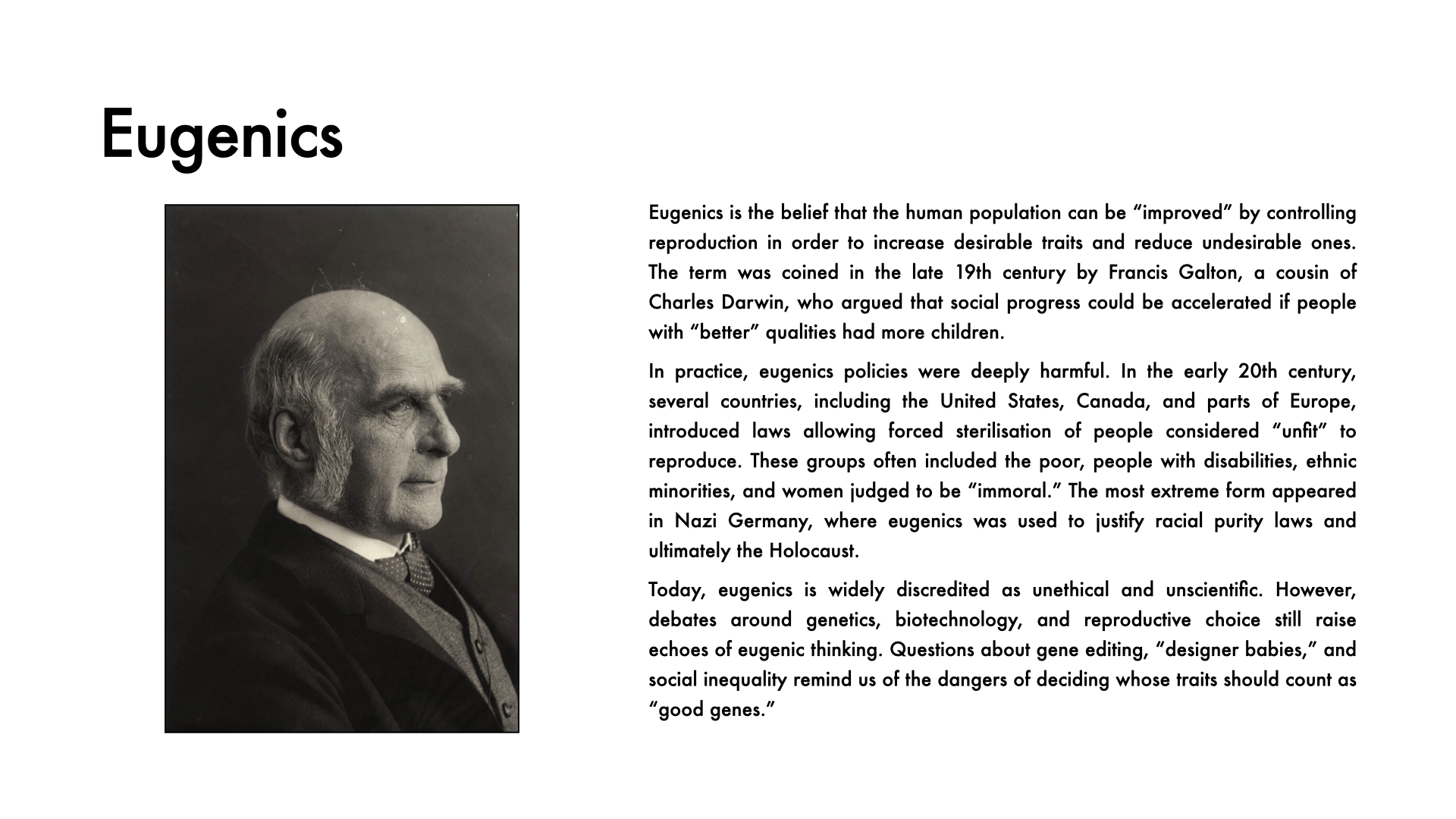
These references to “superior genes” reminded many of the eugenics movement. In the early twentieth century, the United States passed sterilisation laws to prevent people considered “unfit” from having children, while similar policies appeared in Canada, Sweden, and elsewhere. The most extreme case came in Nazi Germany, where eugenics fed into racial laws and the Holocaust.
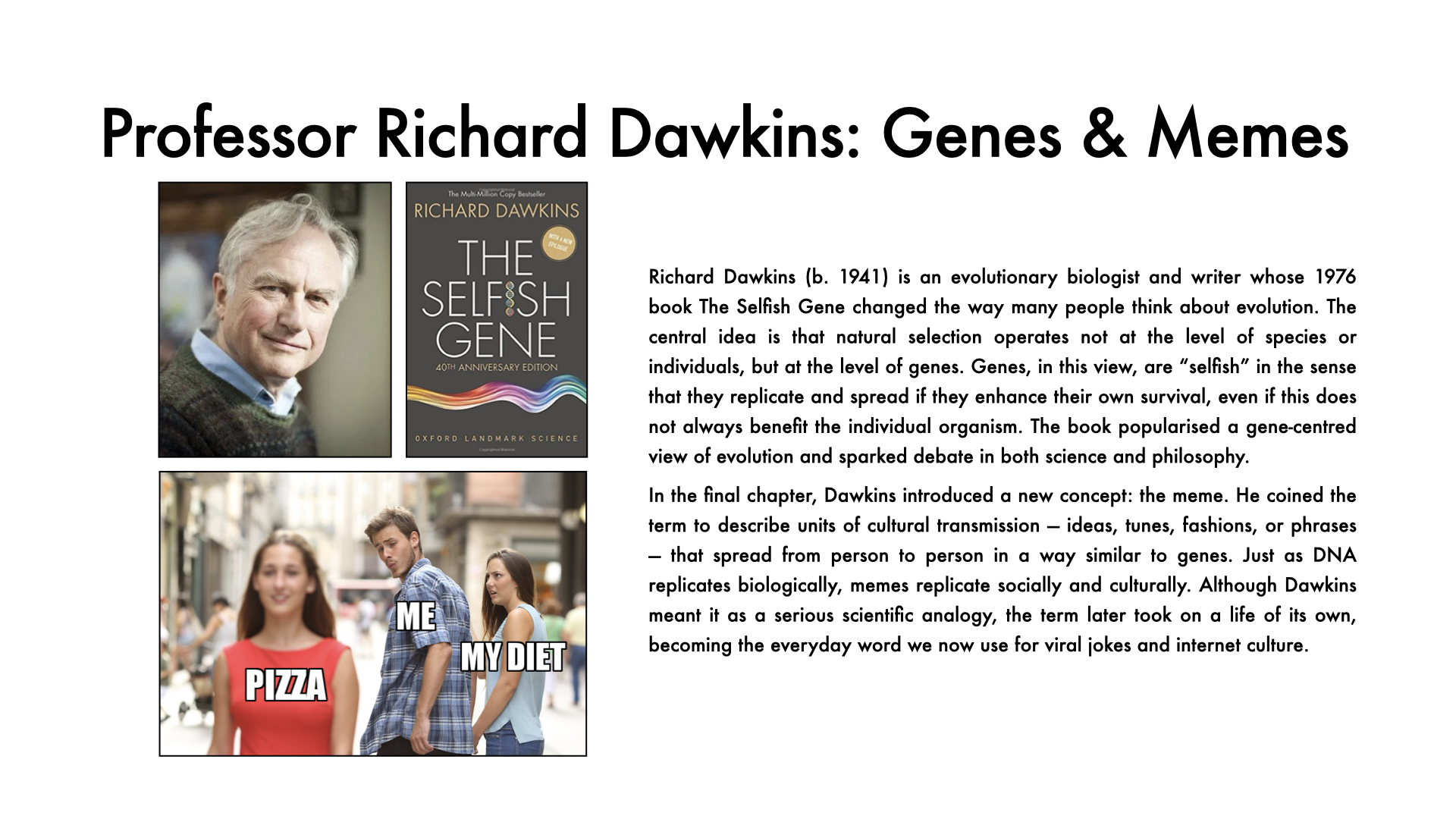
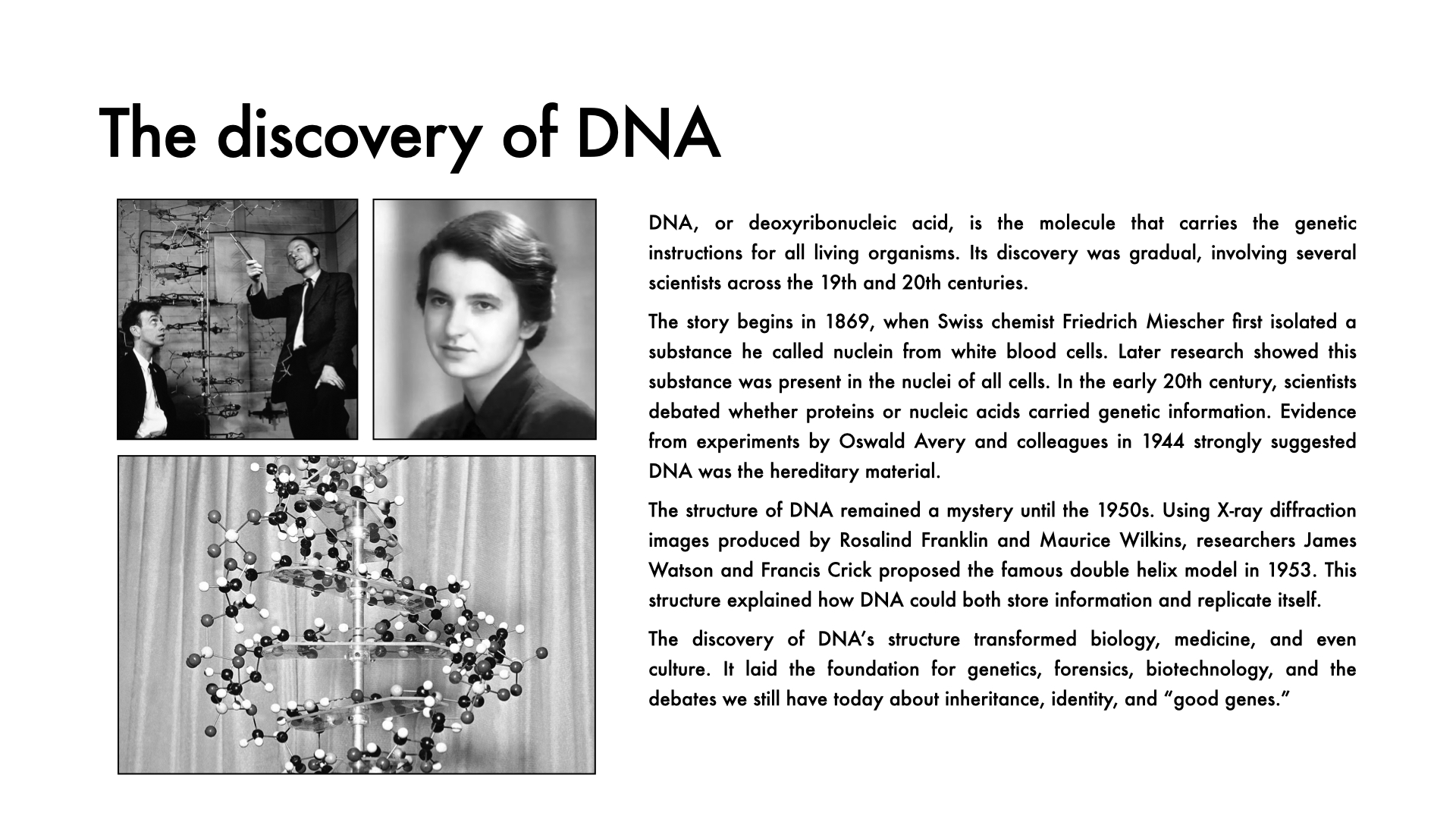
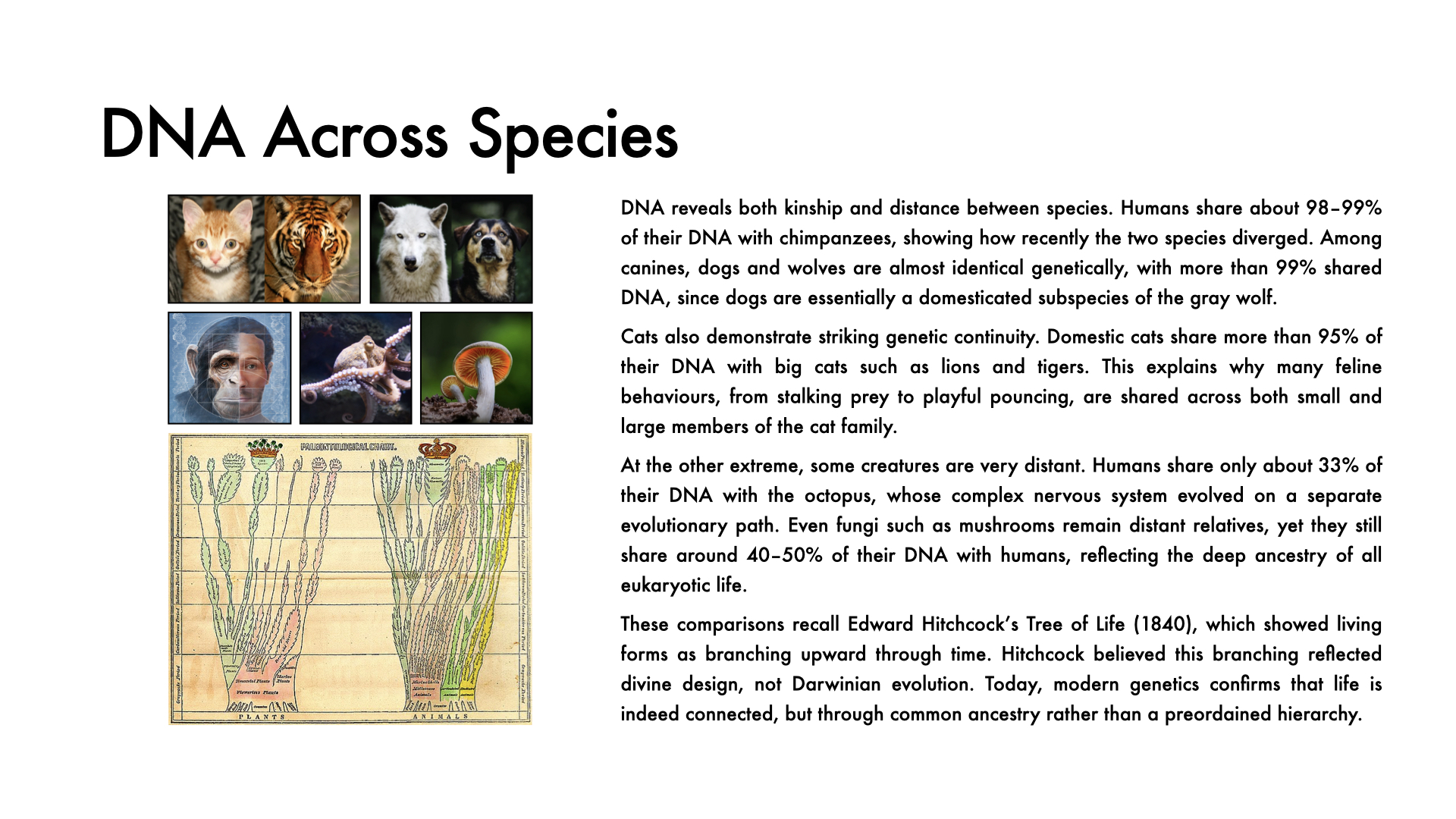
At the same time, real science was moving in a very different direction. In 1953, James Watson, Francis Crick, and Rosalind Franklin revealed the double helix structure of DNA, showing how genetic information is stored and copied. We now know that species share surprising amounts of DNA: humans and chimpanzees share almost 99 percent, dogs and wolves over 99 percent, and even mushrooms share around half their code with us.
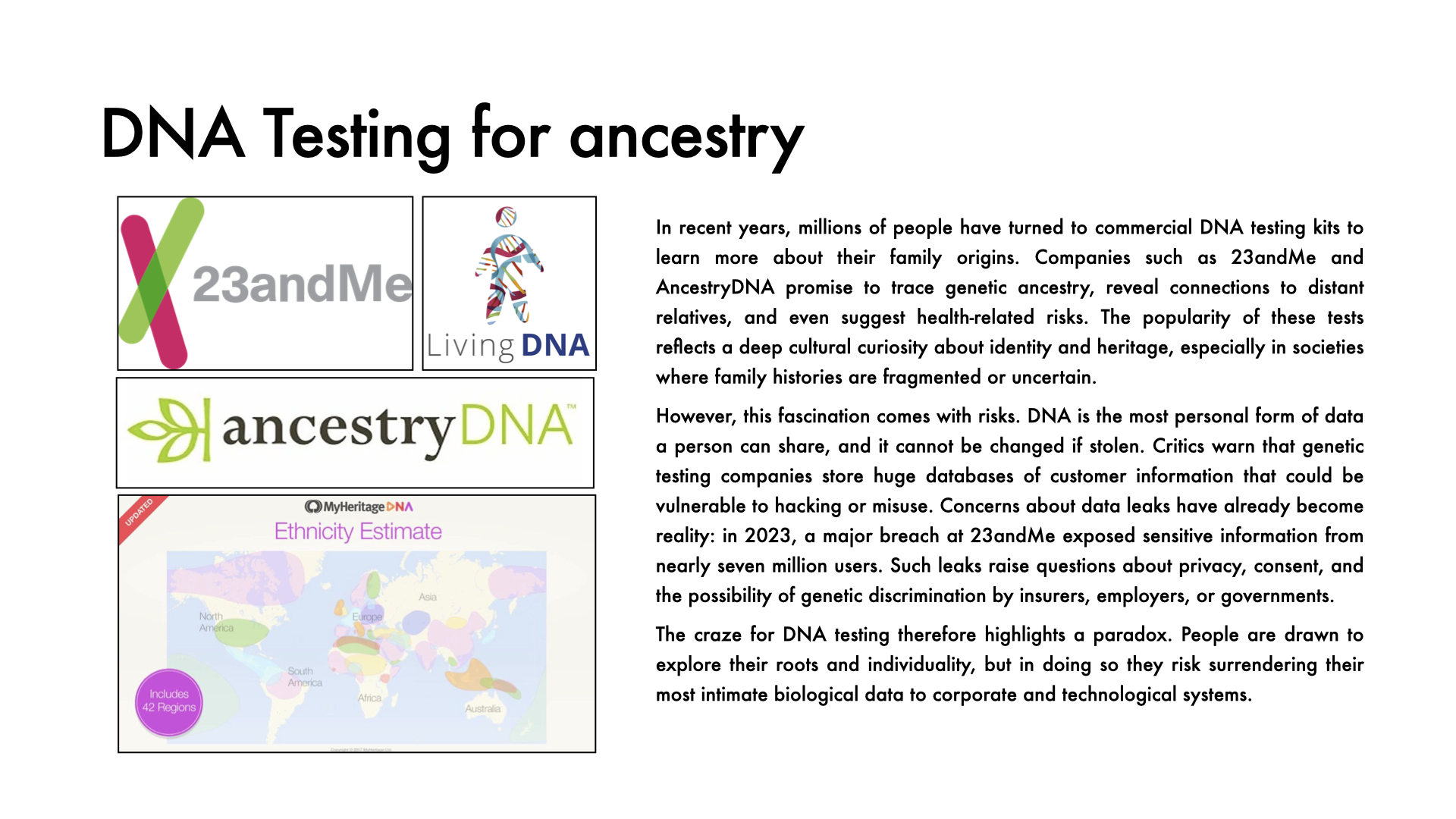
This fascination has become a modern obsession. Millions of people buy ancestry DNA kits to trace their roots and find long-lost relatives. Yet risks remain. In 2023, a massive data breach at 23andMe exposed genetic information from millions of customers, raising concerns about privacy, surveillance, and discrimination.
From Levi Strauss to Sydney Sweeney, from eugenics to DNA testing, the story of jeans and genes shows how fashion and science can unexpectedly overlap in debates about beauty, identity, and belonging.
📽️ Slideshow
📺 Video
🔑 Key Vocabulary
- Advertising campaign – A series of messages created to promote a product, brand, or idea.
- Brand ambassador – A celebrity or influencer chosen to represent and promote a company’s products.
- Consumer – A person who buys and uses goods or services.
- Controversy – A public disagreement or heated debate about an issue.
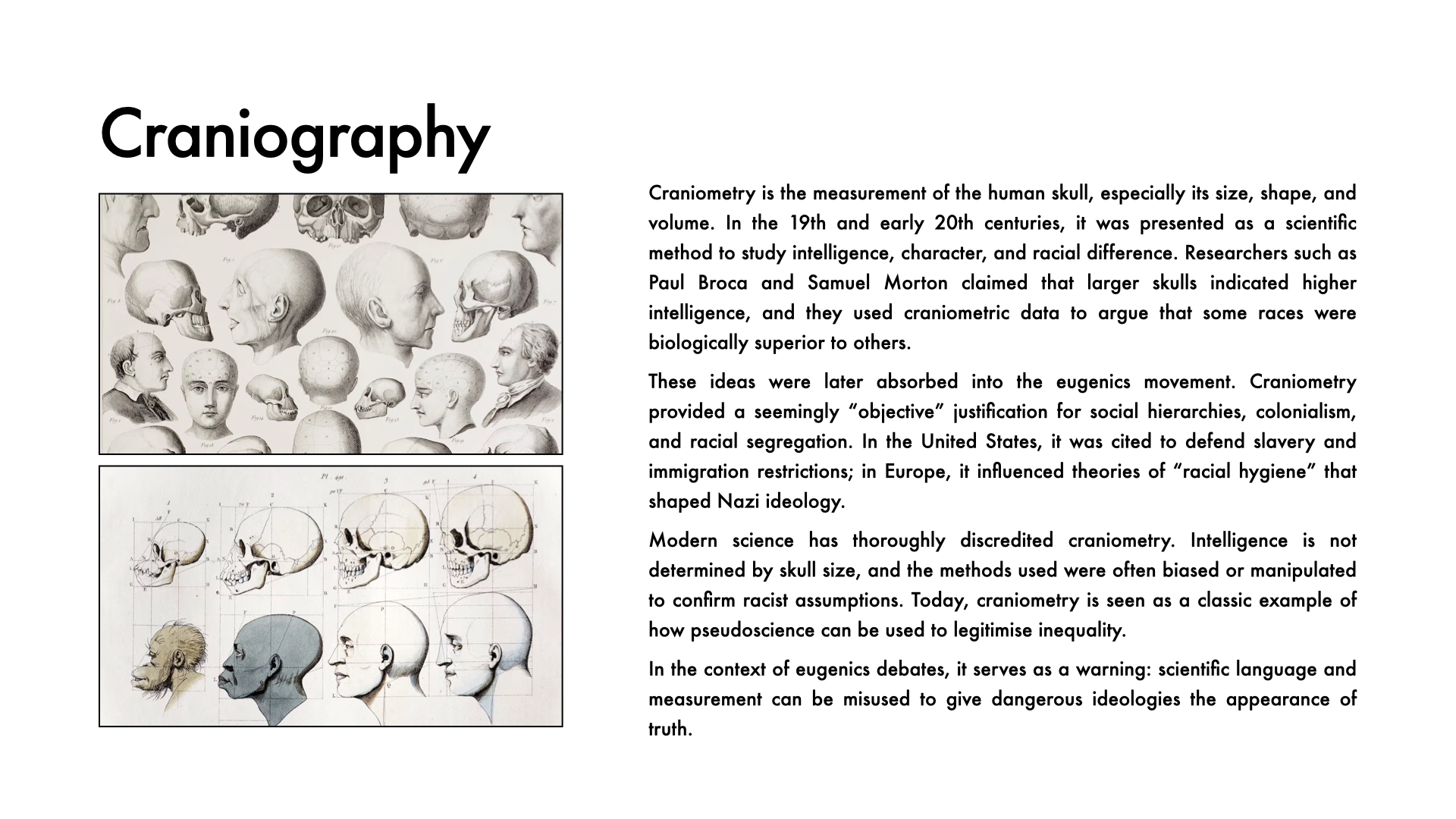
- Craniography – The outdated practice of measuring skulls to claim differences in intelligence or worth between groups of people; linked to eugenics and racism.
- DNA – The molecule that carries genetic information in living organisms.
- Data breach – When private or sensitive information is stolen or exposed without permission.
- Denim – A strong cotton fabric, often blue, used to make jeans.
- Double helix – The twisted ladder shape of DNA discovered in 1953.
- Eugenics – A now-discredited movement that aimed to improve society by controlling who could reproduce, based on ideas of “superior” and “inferior” genes.
- Fashion symbol – Clothing or accessories that represent an idea, movement, or lifestyle (e.g., jeans as rebellion).
- Genes – Units of heredity in DNA that determine traits such as eye color, height, or hair color.
- Good genes – A phrase suggesting that beauty, health, or talent is inherited; often controversial in ads.
- Heritage testing – A type of DNA test that shows where a person’s ancestors came from.
- Homonym – A word that sounds the same as another word but has a different meaning (e.g., jeans / genes).
- Identity – The qualities, beliefs, or characteristics that make a person or group unique.
- Jeans – Durable trousers usually made of denim, first designed as work clothes and later a global fashion item.
- Pun – A joke or play on words that uses double meanings or similar sounds.
- Rivets – Small metal fasteners used to strengthen jeans at stress points.
- Stereotype – A fixed idea about people or groups, often oversimplified or unfair (e.g., linking “good genes” with certain beauty standards).
- Symbolism – The use of objects, images, or ideas to represent larger meanings.
💬 Conversation Questions
- Why do you think jeans have remained popular for more than 150 years?
- Do you prefer jeans for fashion, comfort, or durability?
- Have you ever owned a pair of jeans that felt like a “second skin”?
- What do you think about advertising campaigns that play on the pun between “jeans” and “genes”?
- Do you believe fashion ads should avoid references to genetics, or can it sometimes be clever?
- How do you feel about the controversy around Sydney Sweeney’s “good genes” campaign?
- Can you think of other puns in advertising that were funny or problematic?
- Do you think jeans still symbolize rebellion and youth, or have they become mainstream?
- What’s the most unusual color or style of jeans you’ve ever worn?
- Would you try making your own jeans if you had the materials?
- When did you first learn about DNA and genes in school, and what fascinated you most?
- Do you think genetic testing kits (like 23andMe) are more exciting or more risky?
- How do you feel about companies holding personal DNA data?
- If you could trace your family tree through genetics, what would you hope to discover?
- How do you think the idea of “genes” influences how people see beauty, talent, or identity?
🌐 Links
- American Eagle’s ‘good jeans’ ads with Sydney Sweeney spark a debate on race and beauty standards
- 'This is what plus-sized women have needed'
- Born in the USA: Is American Eagle really using whiteness to sell jeans?
- It’s not just ‘good genes.’ It’s a dark reminder of history.
- Sydney Sweeney Fronts Ad Campaign for Jeans—Sparks Debate About Eugenics
- Using Genes to Sell Eujeanics?
- What does the history of eugenics teach us about how wordplay or marketing can cross ethical lines?
- Where Are Your Jeans From?
- American Eagle’s ‘good jeans’ ads with Sydney Sweeney spark a debate on race and beauty standards