Week 2️⃣ 5️⃣
Boots
🔊 Audio
📜 Show transcript
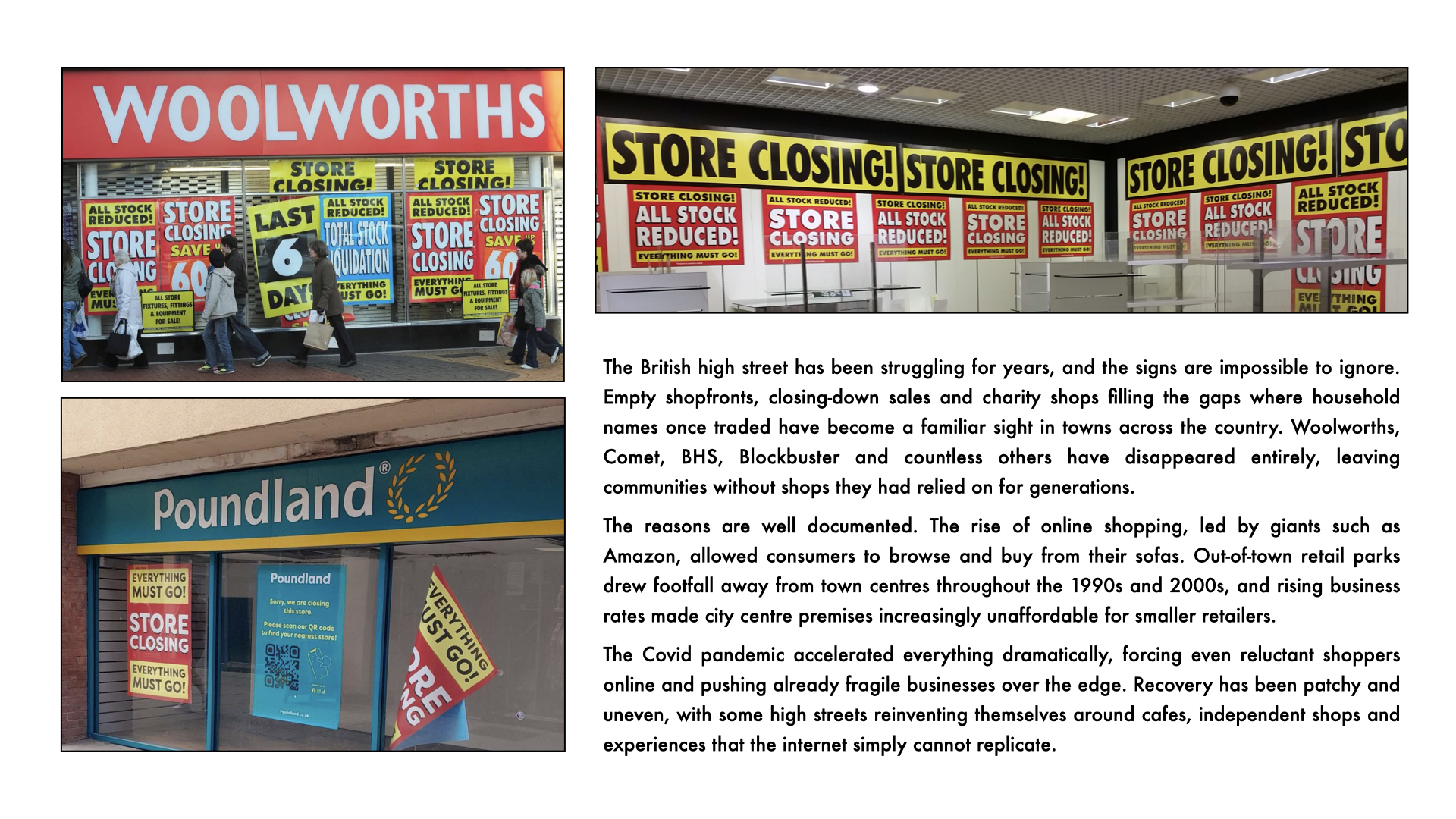
The British high street has shaped everyday life for generations, but in recent decades it has come under intense strain. Rising business rates, out-of-town retail parks and the growth of online shopping have all taken their toll, with the Covid pandemic accelerating the decline. Yet some names have endured for more than a century, including Boots, Currys and Marks and Spencer, each with surprisingly modest beginnings.
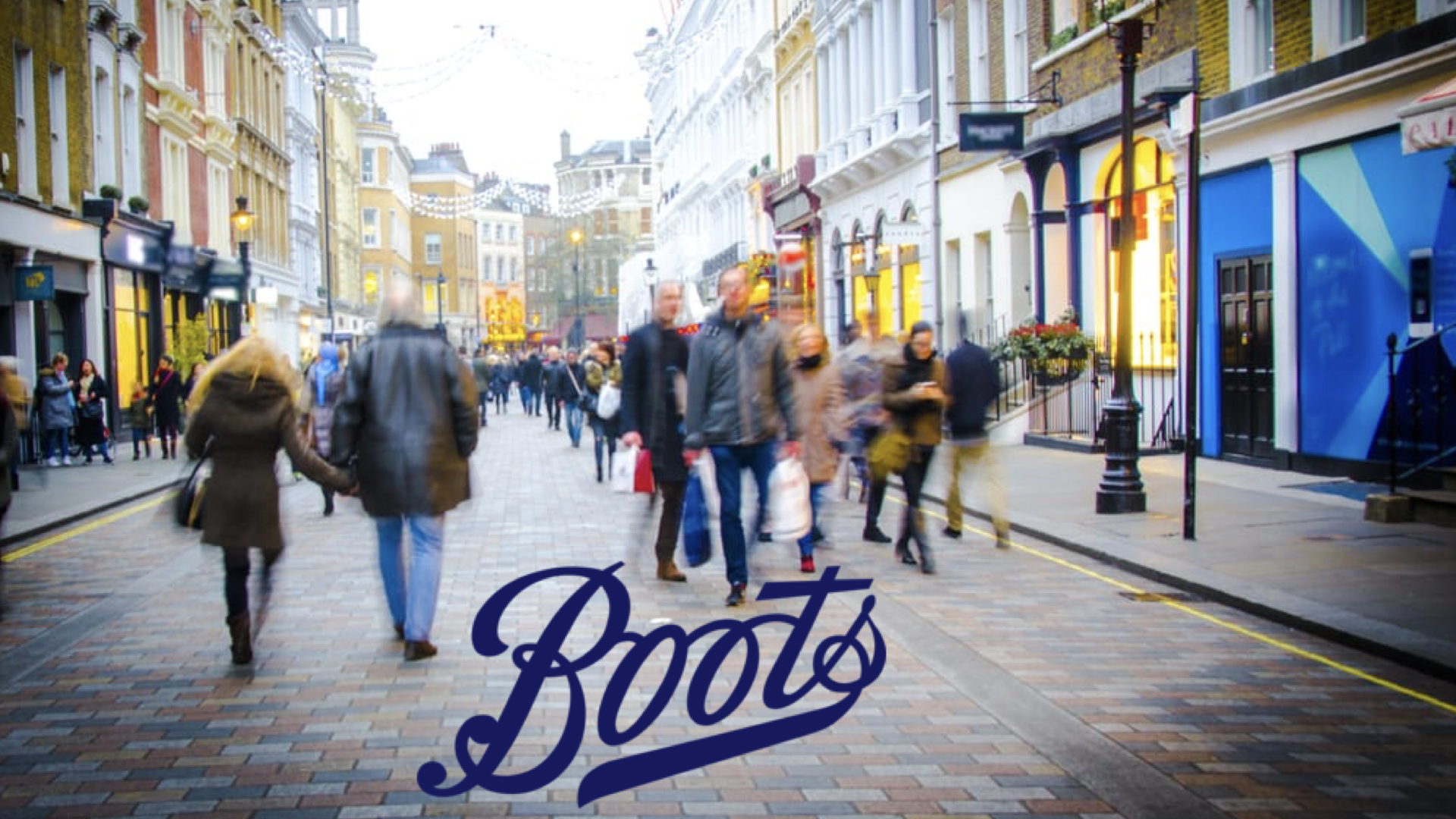
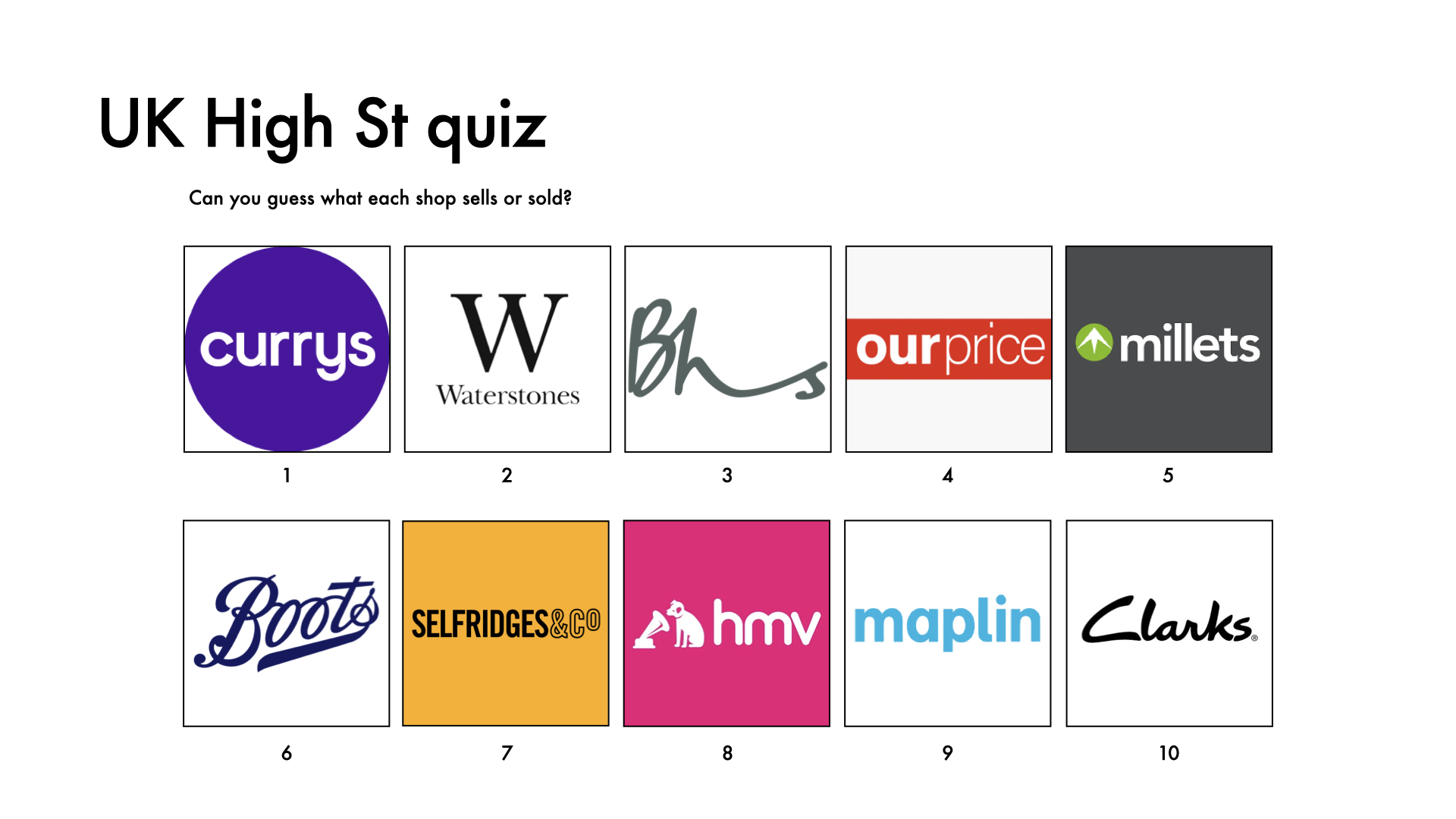
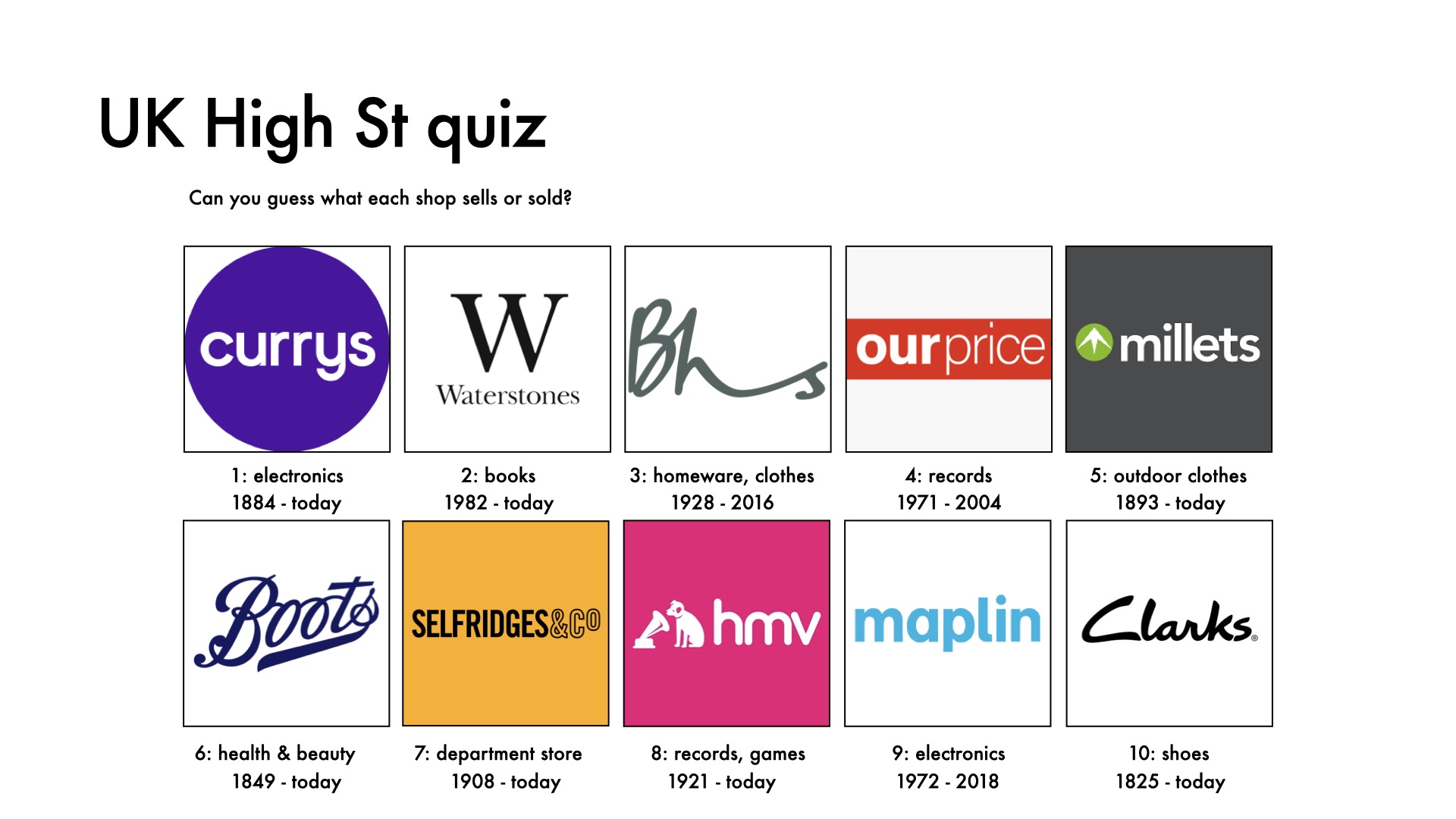
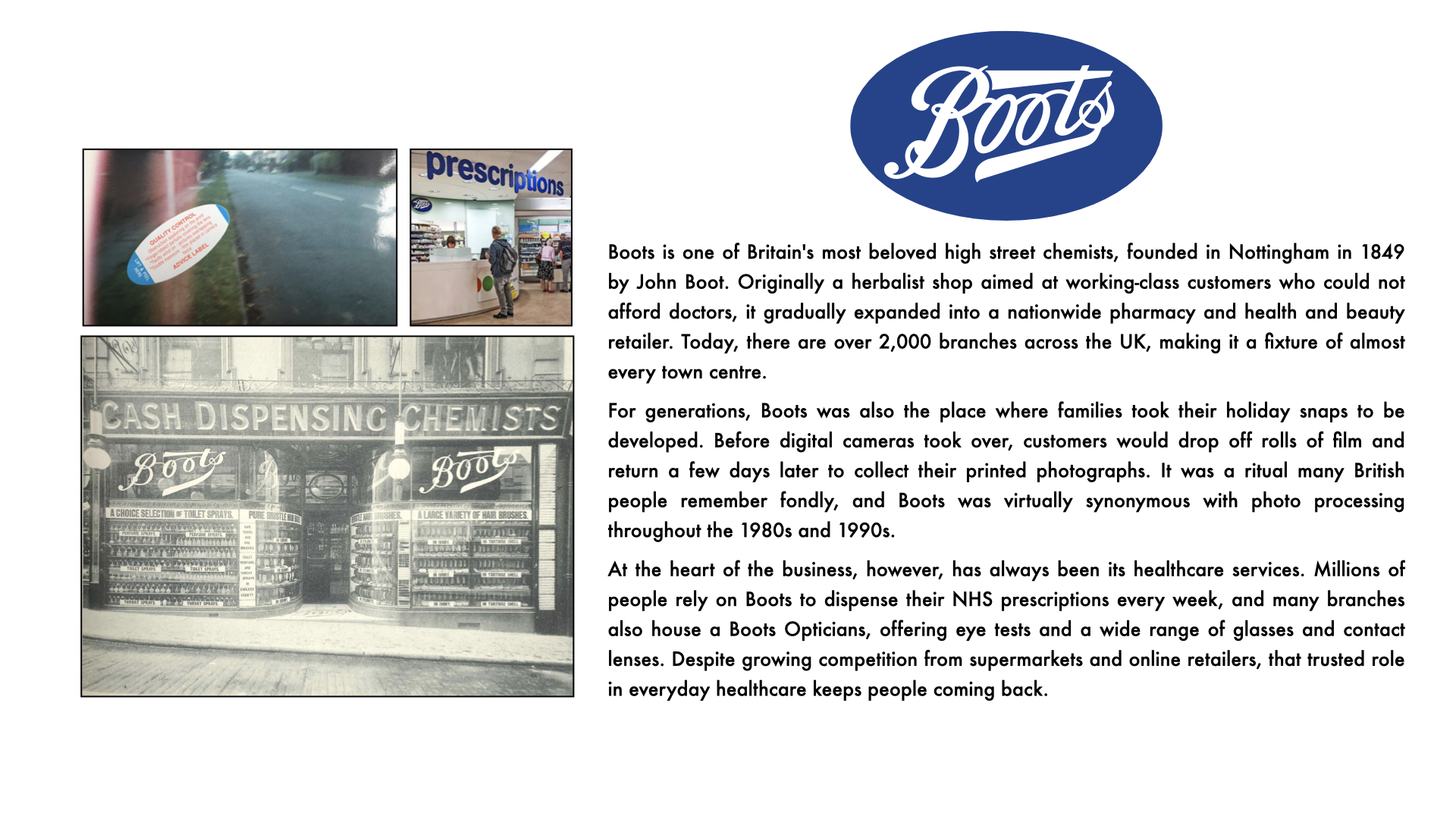
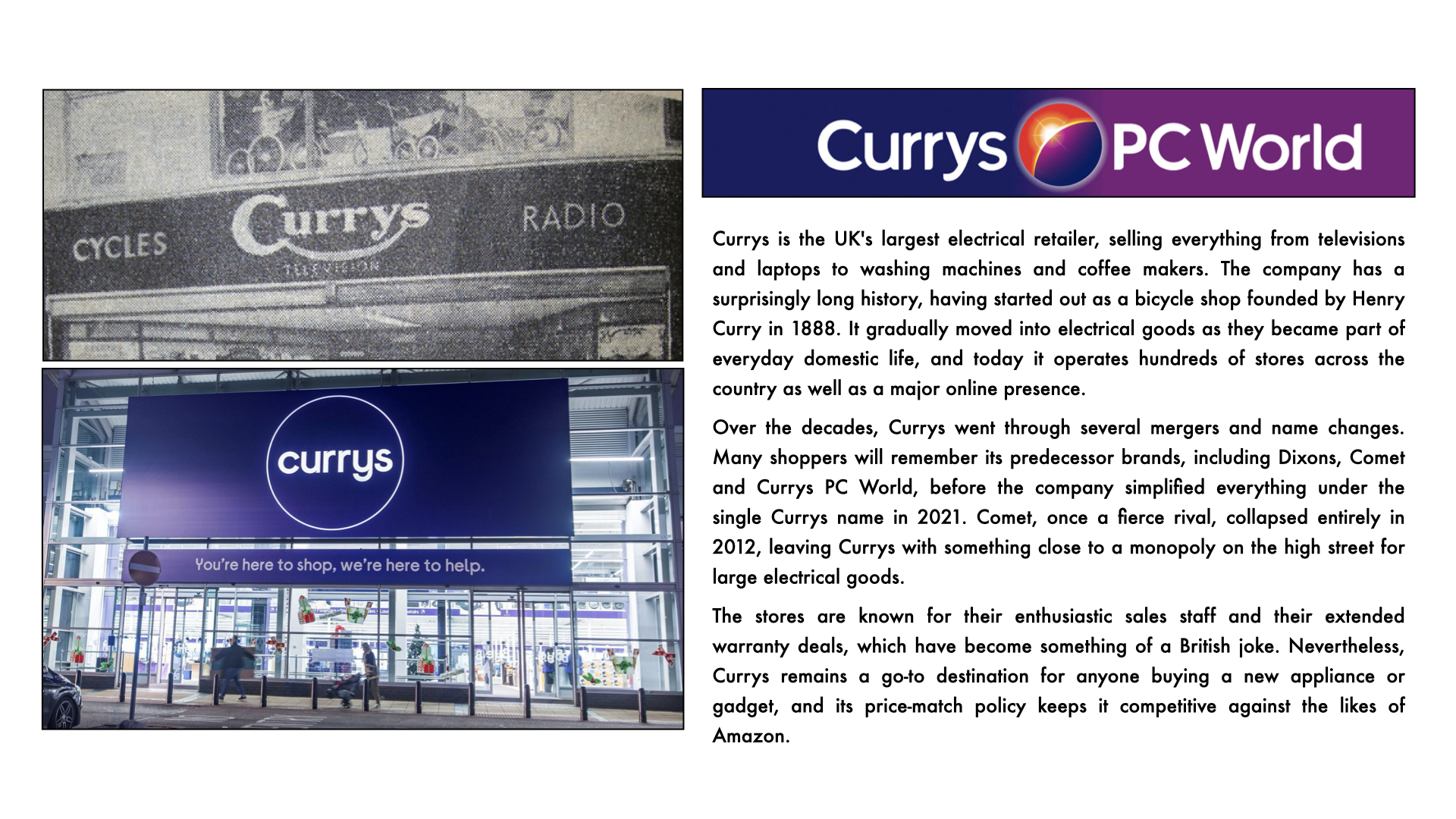
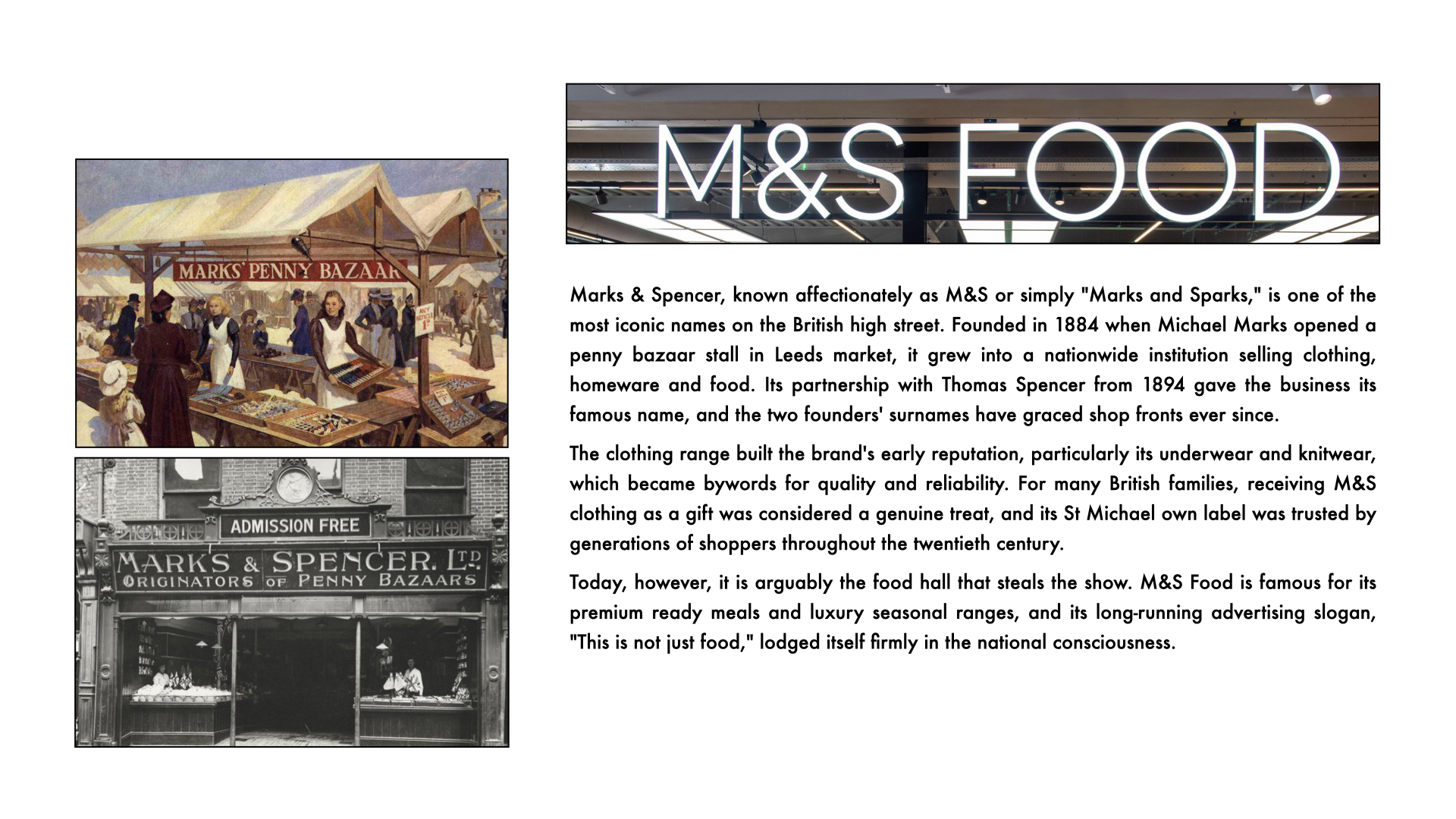
Boots started as a herbalist stall in Nottingham in 1849, serving working-class customers who could not afford doctors. It grew into a national institution, known for dispensing prescriptions, testing eyesight and even developing family holiday photographs. Currys began as a bicycle shop founded in 1888 before reinventing itself as an electrical retailer, eventually absorbing rivals and consolidating under a single brand in 2021. Marks and Spencer’s origins were simpler still, beginning as a penny bazaar stall in Leeds market in 1884.
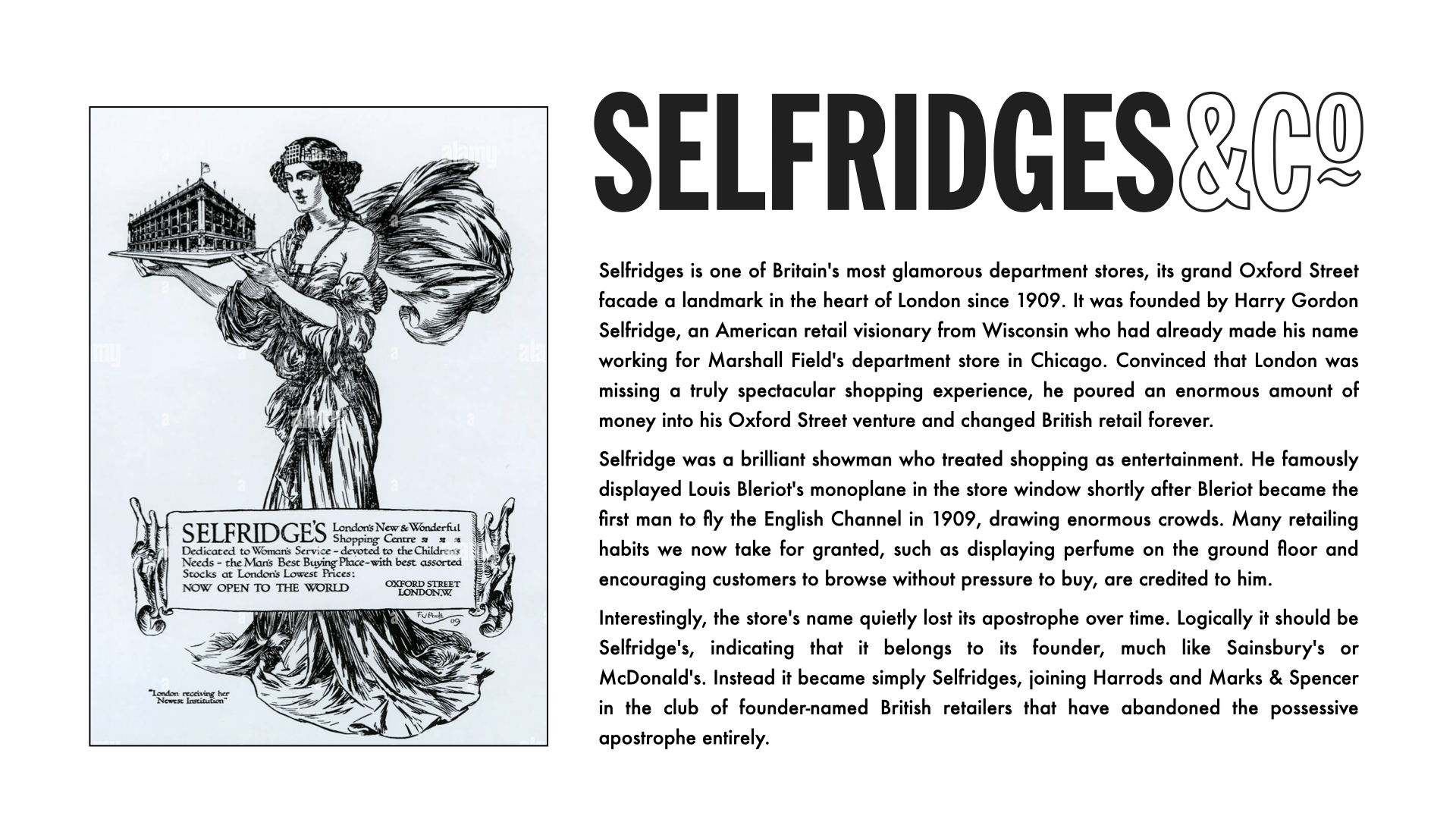
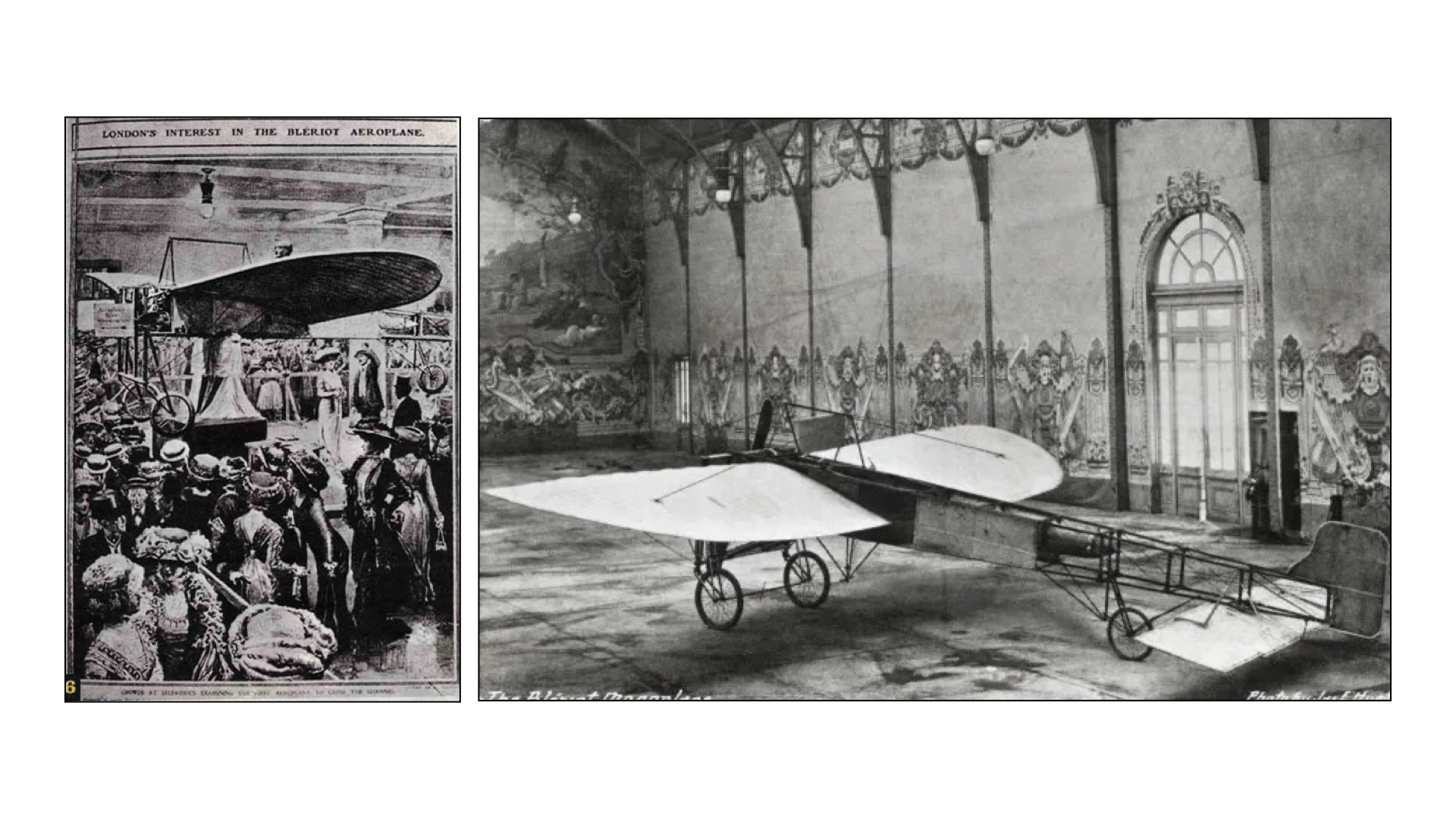
Selfridges took a different path. When it opened on Oxford Street in 1909, it was already a fully realised retail spectacle. Its founder, Harry Gordon Selfridge, believed shopping should be an experience. He drew crowds with bold displays, including Louis Blériot’s monoplane, and helped pioneer ideas now standard in retail, such as encouraging customers to browse freely.
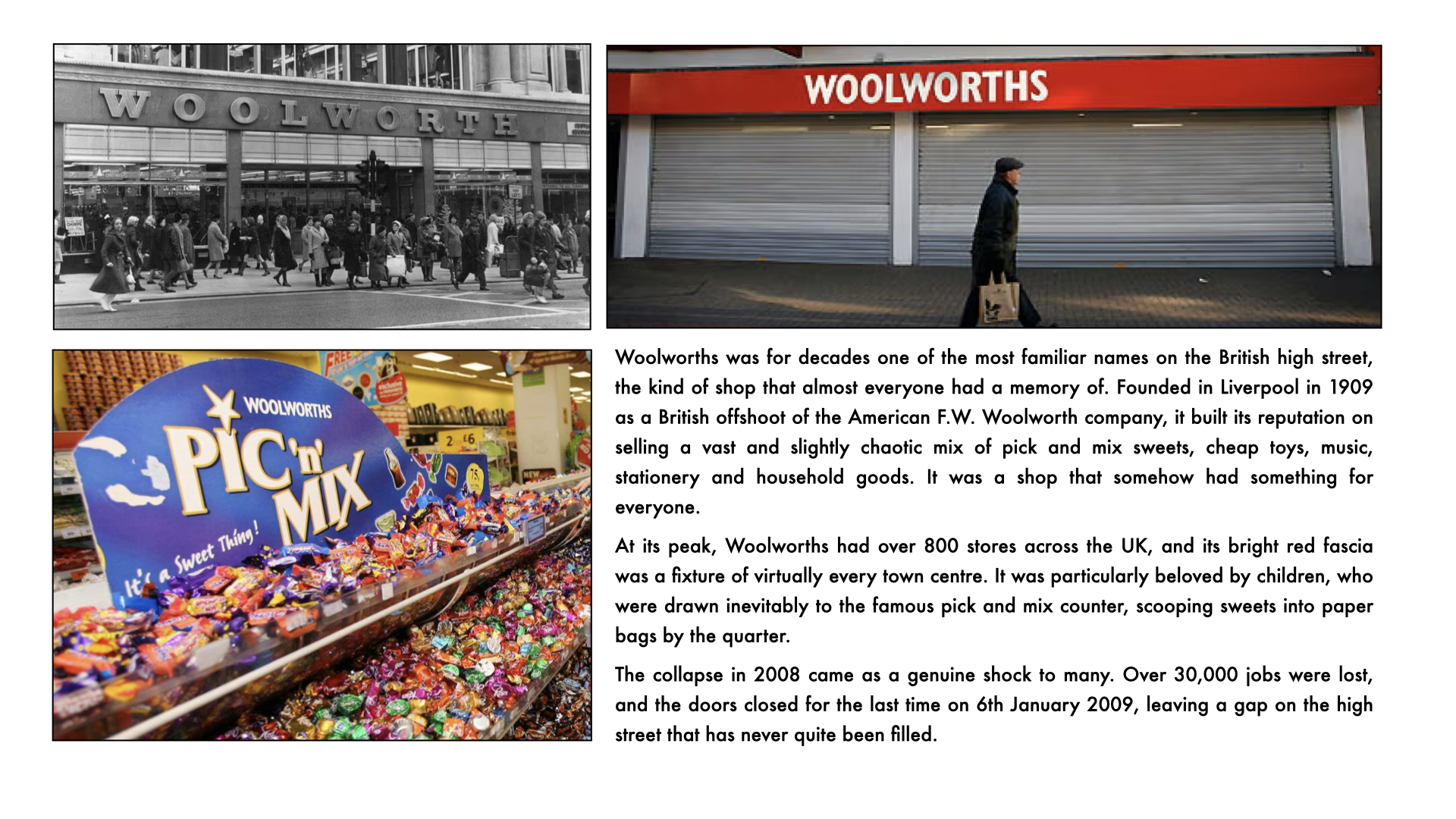
Not every high street story has a happy ending. Woolworths, once a staple of over 800 towns, collapsed in 2008, with tens of thousands of jobs lost. Comet, BHS and Blockbuster followed, each leaving a gap that has never quite been filled.
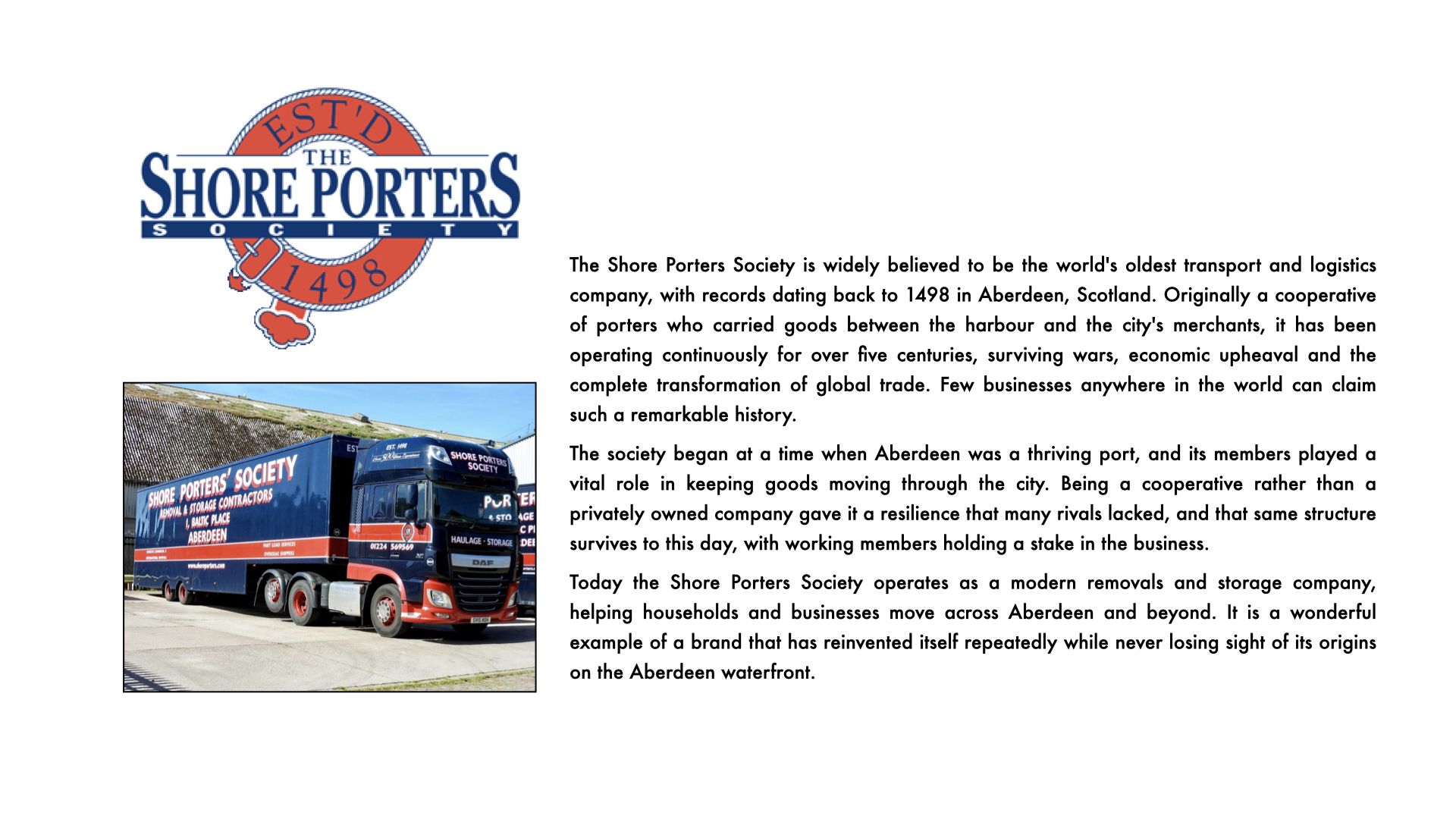
Beyond the high street, the Shore Porters Society in Aberdeen offers a different kind of longevity. Dating back to 1498, it began as a cooperative of harbour workers and still operates today.
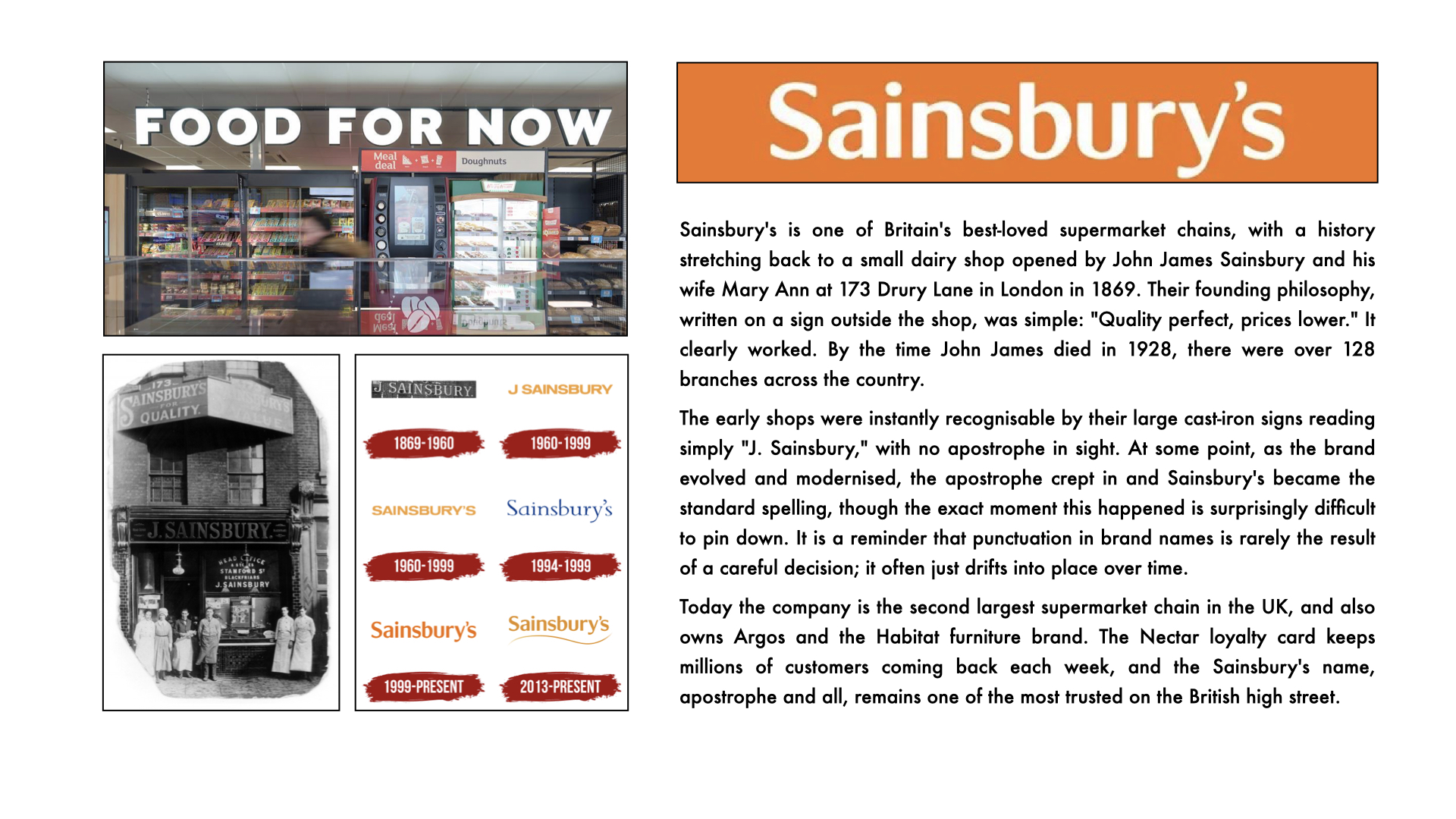
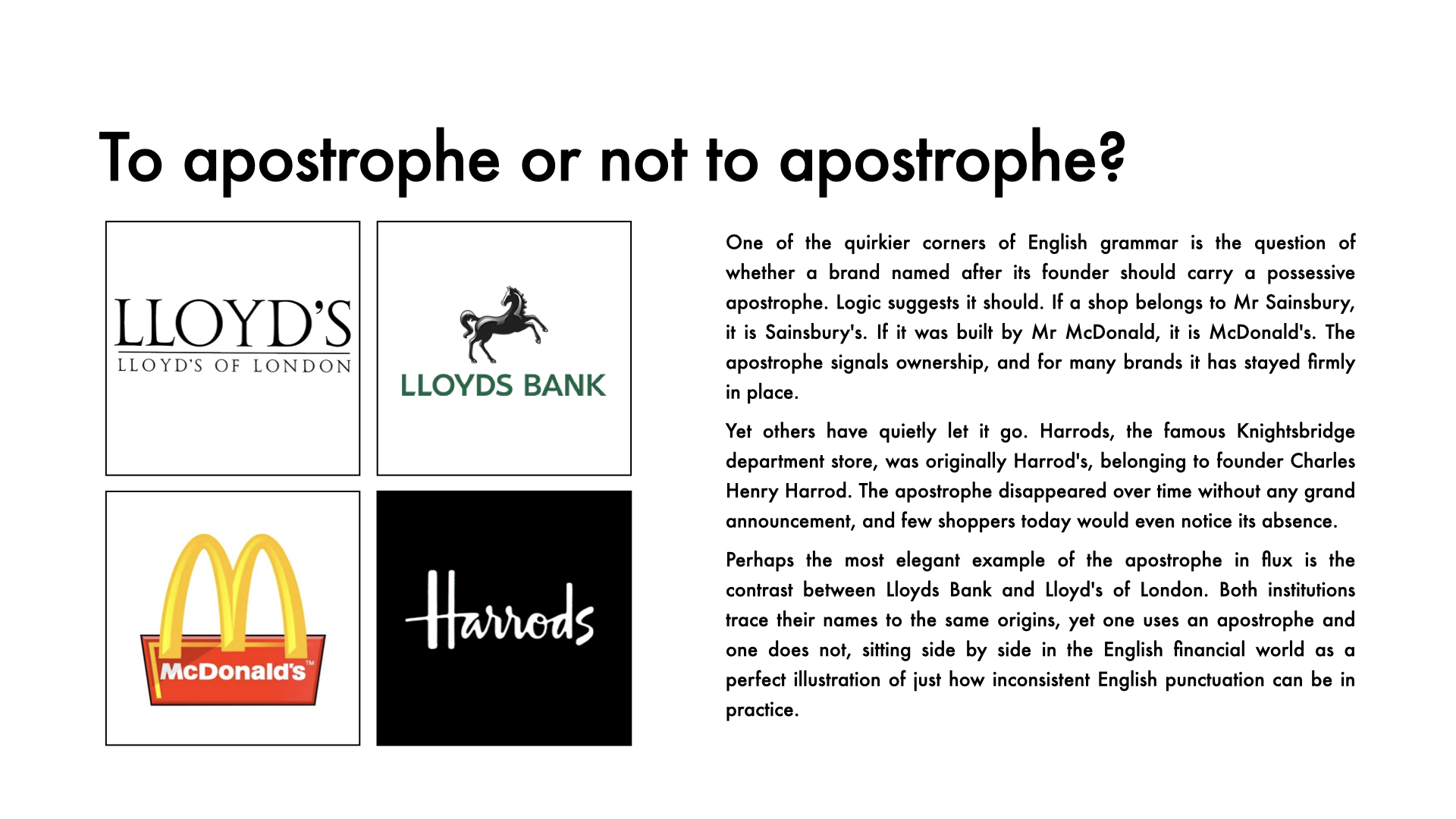
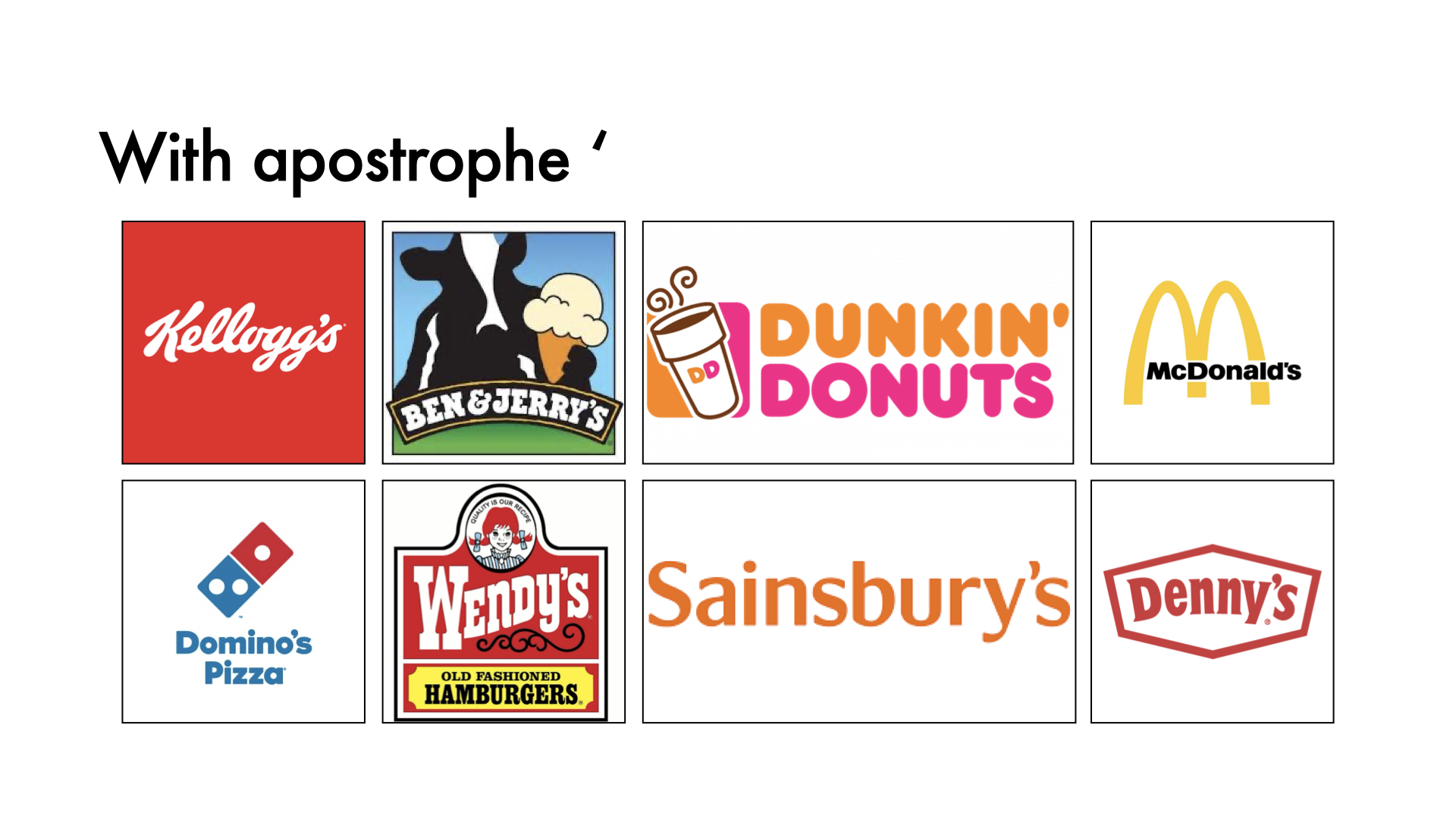
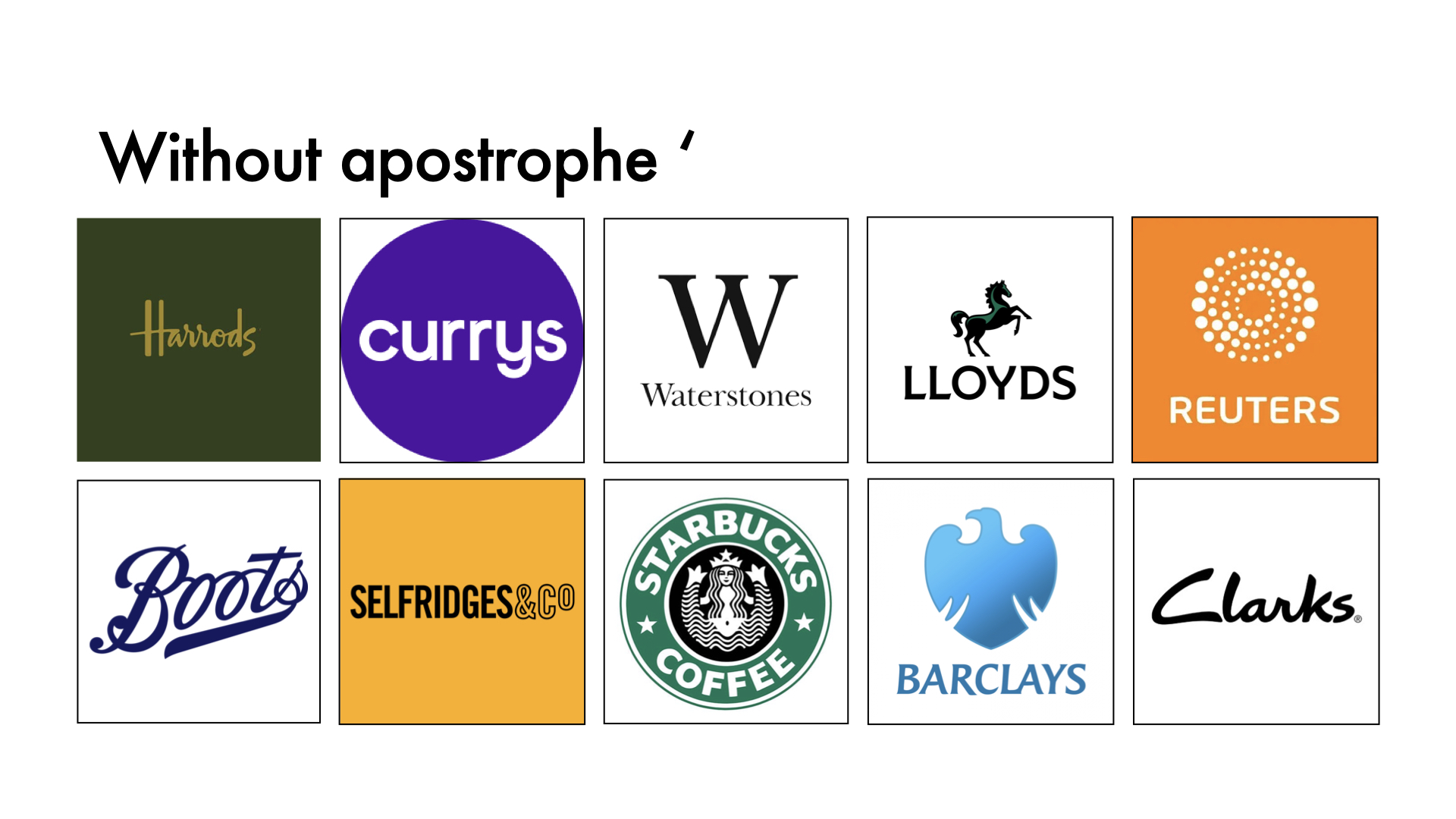
Even punctuation tells a story. Some brands, like Sainsbury’s and McDonald’s, retain their apostrophes, while others, including Harrods and Selfridges, have quietly dropped them, reflecting how tradition and change continue to shape British retail.
📽️ Slideshow

📺 Video
🔑 Key Vocabulary
- Apostrophe – a punctuation mark used to indicate possession or a contraction, and in brand names, often used to show that a business belongs to or was founded by a named individual.
- Brand identity – the combination of visual, verbal and stylistic elements that make a company instantly recognisable to consumers.
- Collapse – the sudden and complete failure of a business, often resulting in the closure of all its stores and the loss of jobs.
- Cooperative – a business or organisation that is owned and managed jointly by its members, who share the profits and responsibilities.
- Department store – a large retail shop divided into sections, each selling a different category of goods such as clothing, furniture or food.
- Fascia – the signage or frontage of a shop, typically displaying the brand name and logo above the entrance.
- Footfall – the number of people entering a shop or passing through a particular area, used as a measure of retail activity.
- Founder – the person who established or set up a company, organisation or institution.
- High street – the main commercial street of a town, traditionally home to shops, banks and other businesses serving the local community.
- Loyalty card – a card issued by a retailer that rewards customers with points or discounts each time they make a purchase.
- Pharmacy – a shop or department within a shop where medicines and healthcare products are dispensed and sold.
- Possessive – a grammatical form indicating that something belongs to someone, typically marked in English by an apostrophe and the letter s.
- Prescriptivism – the view that language should follow strict, established rules of grammar and usage, regardless of how it evolves in practice.
- Retail park – a large out-of-town shopping area consisting of multiple stores, usually accessible by car, which drew customers away from traditional high streets.
- Merger – the combining of two or more companies into a single new organisation.
💬 Conversation Questions
- Do you have a favourite shop on the high street, and how often do you actually visit it in person?
- When did you last buy something in a physical shop rather than online? What made you go in person?
- Do you remember going to a chemist or pharmacy as a child? What do you associate with the experience?
- Have you ever had a shoe fitting in a shop? Do you think it matters to try shoes on before you buy them?
- Is there a shop from your childhood that no longer exists? How did you feel when it closed?
- Do you think it matters whether a brand name has an apostrophe or not? Would you ever notice?
- Sainsbury's, McDonald's and Domino's all use an apostrophe. Can you think of any brands in your country that have a similar punctuation quirk?
- Do you think big supermarkets like Sainsbury's have done more harm than good to smaller, local shops?
- The Shore Porters Society has been running since 1498. What do you think is the oldest company in your country, and what do you know about it?
- If you could bring back one dead brand from the high street, which would it be and why?
🌐 Links
- BBC - Have we murdered the apostrophe?
- Sainsbury's timeline
- Alfred Gillett Trust - The History of Clarks
- M & S Archive
- The Guardian - The UK’s high streets have reached a tipping point – and Reform will reap the benefits
- Myers Clark - Six Reasons Behind the Decline Of The UK High Street
- Logo Creative - The Process of Boots Logo Redesign With Rob Clarke