Week 1️⃣ 4️⃣
Public Art
🔊 Audio
📜 Show transcript
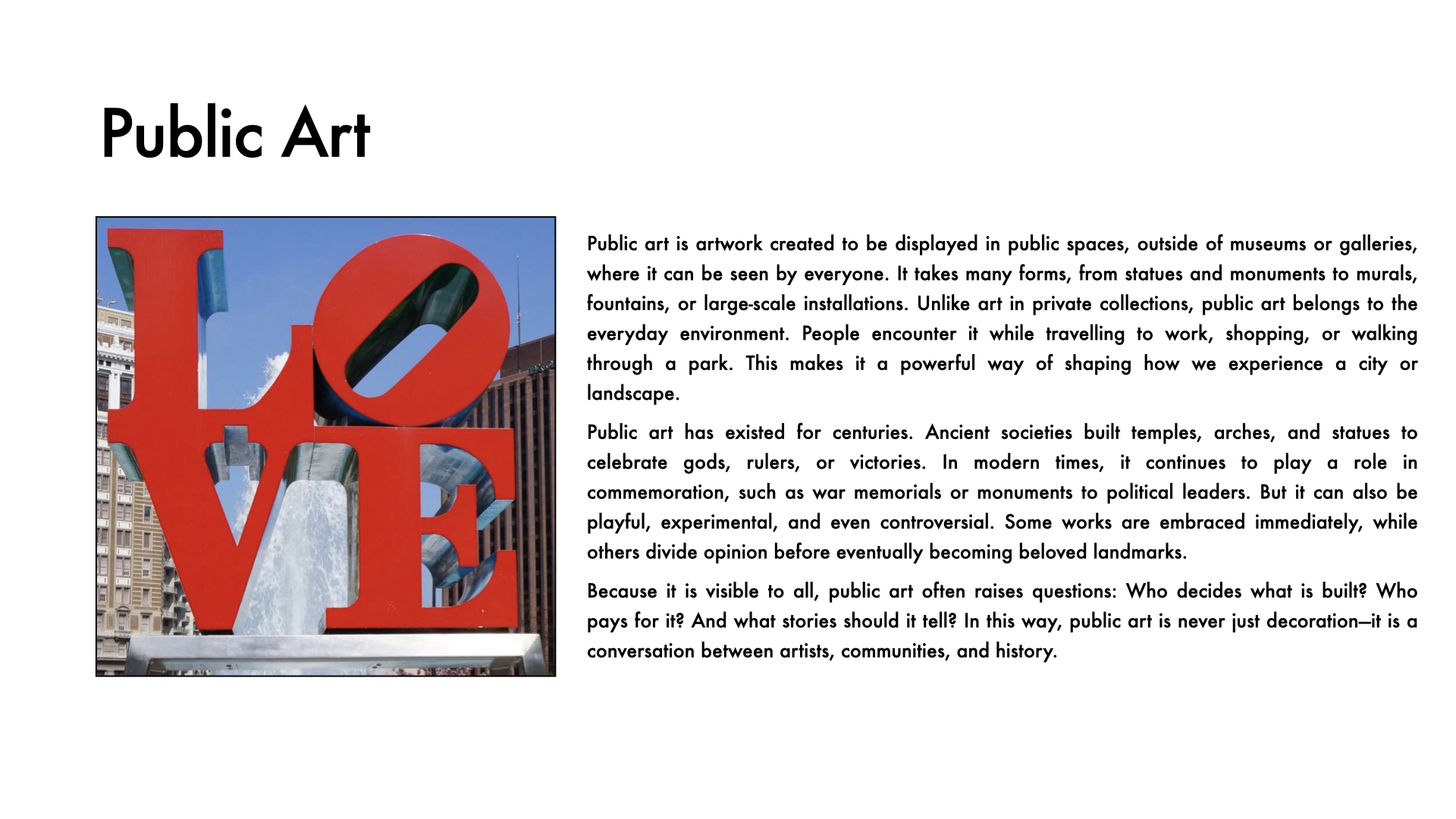
Public art is artwork placed where everyone can see it, not just in museums or galleries. Because it is always visible, it sparks discussion, becoming part of how a community presents itself and remembers its history.
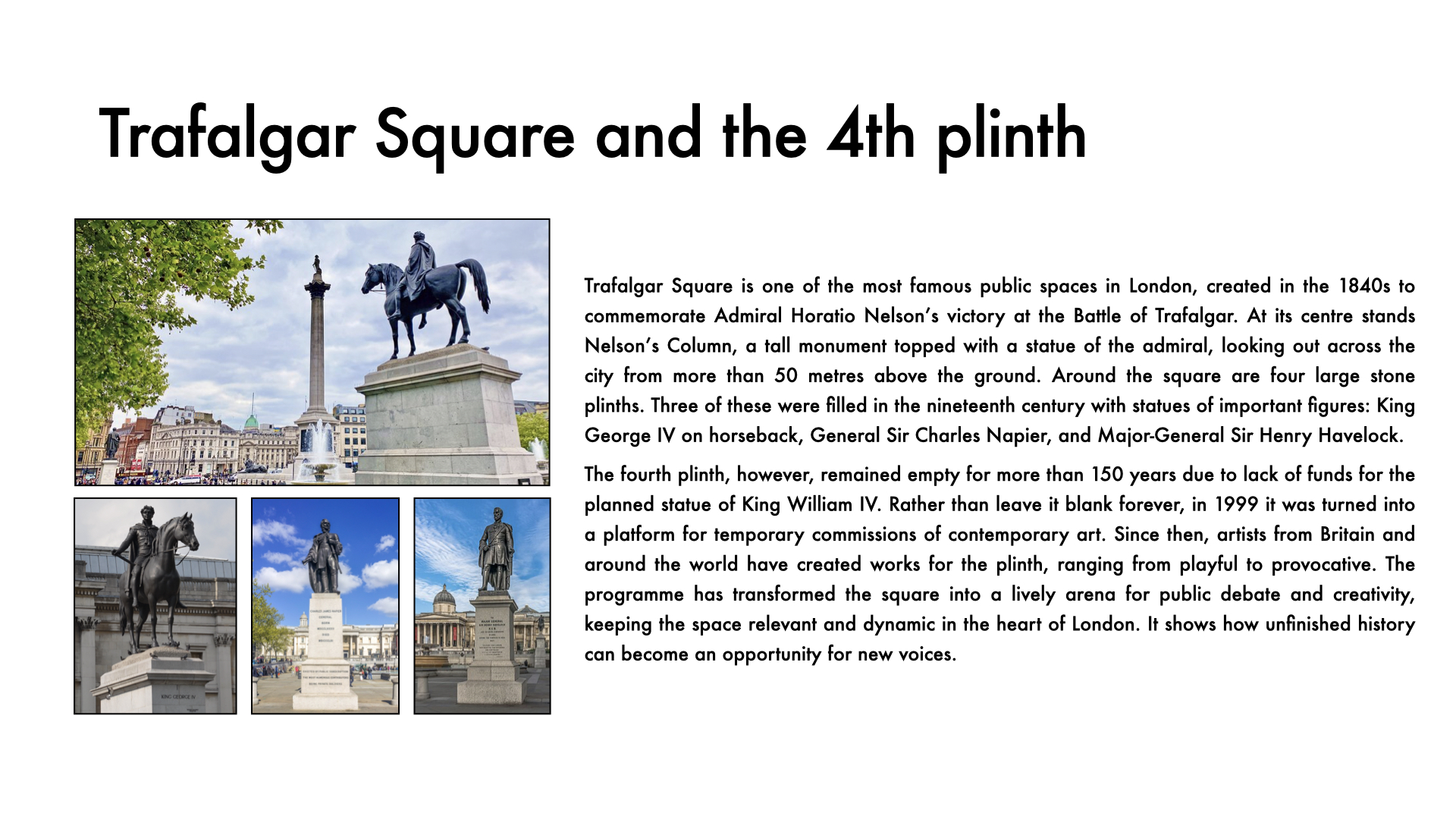
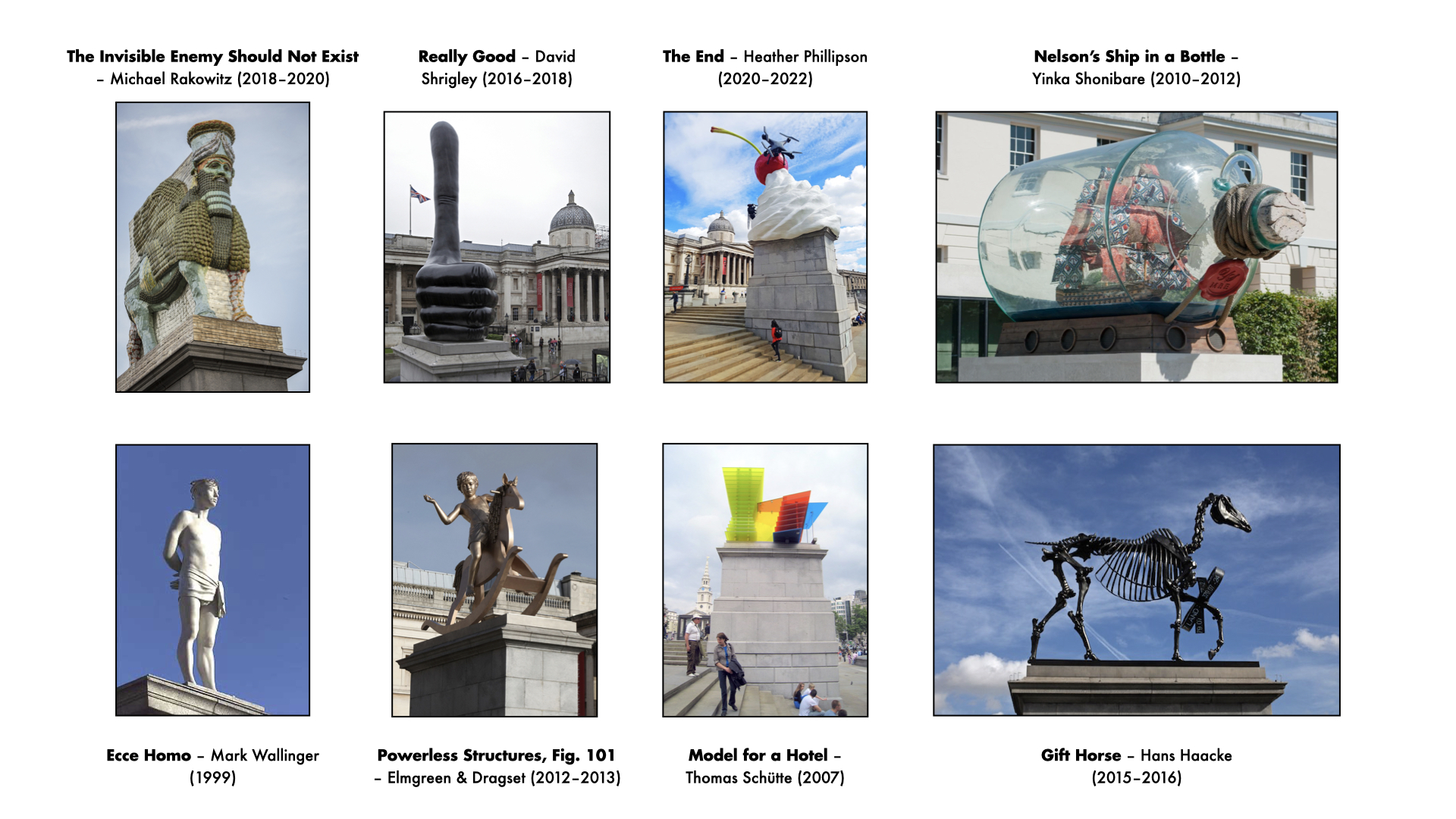
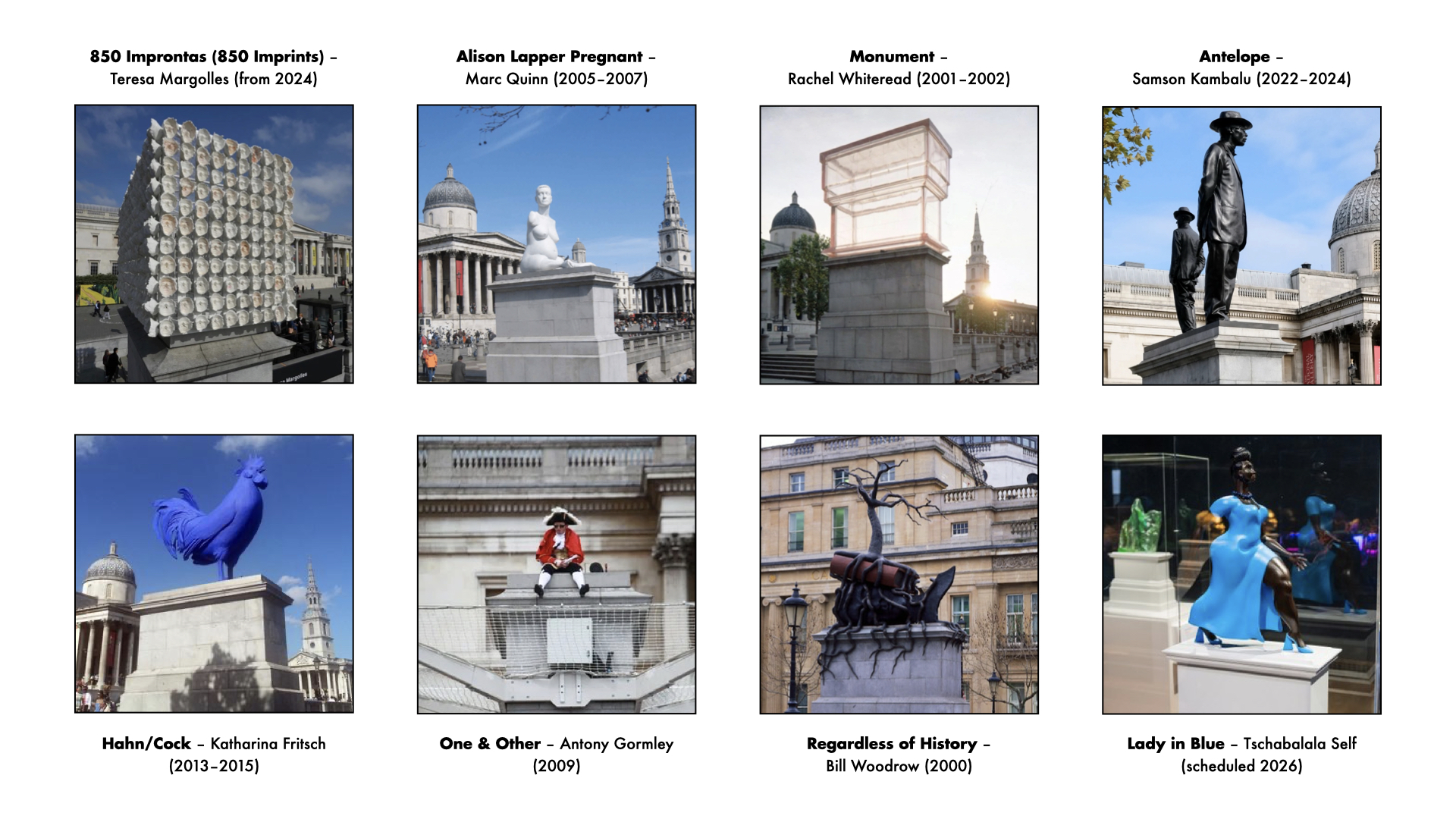
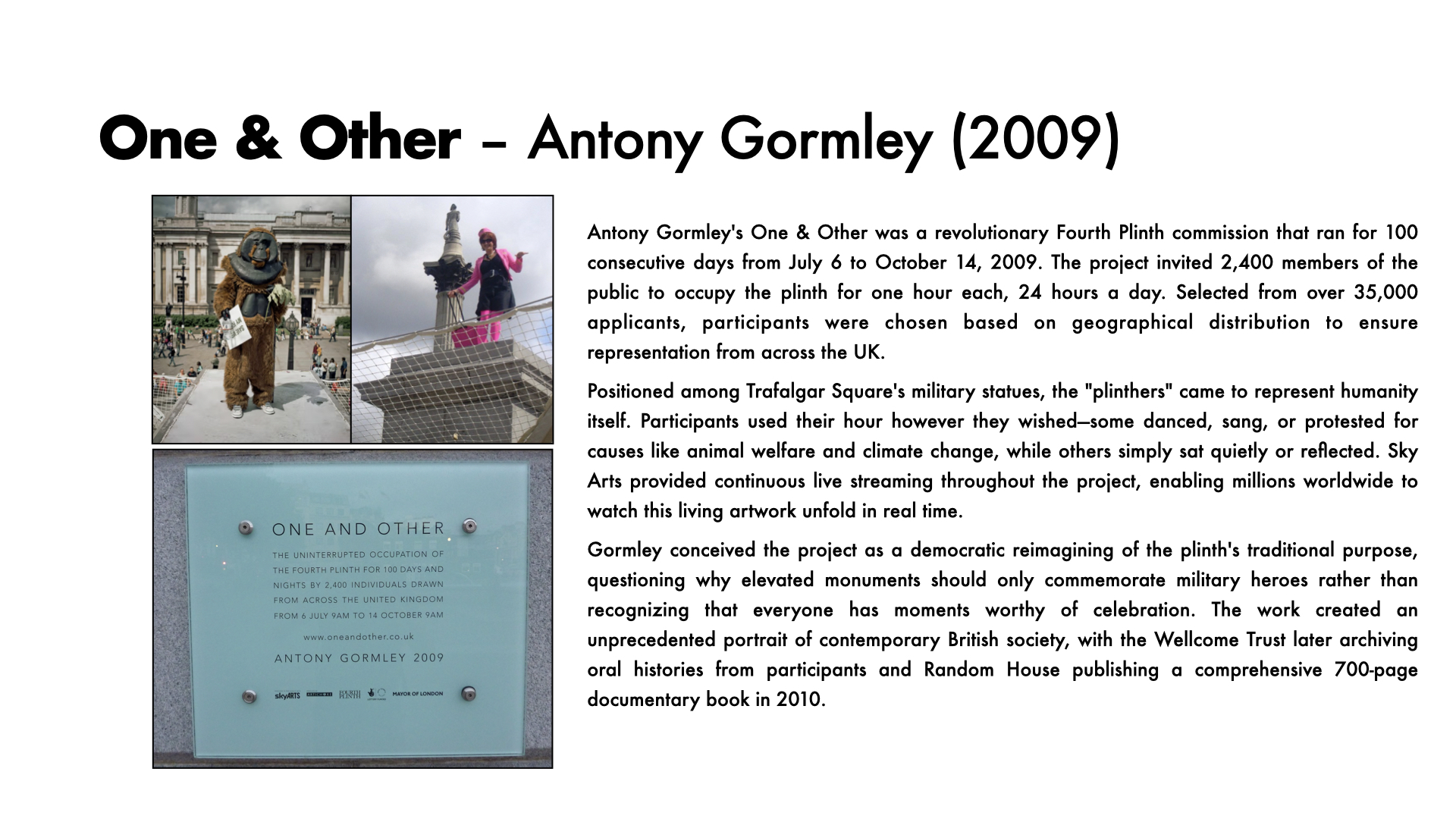
One of the most interesting examples is the Fourth Plinth in Trafalgar Square, London. Originally meant to hold a statue of a king, it remained empty for over a century before becoming a platform for rotating temporary artworks in 1999, prompting ongoing debate about what kind of art belongs in such an important space.
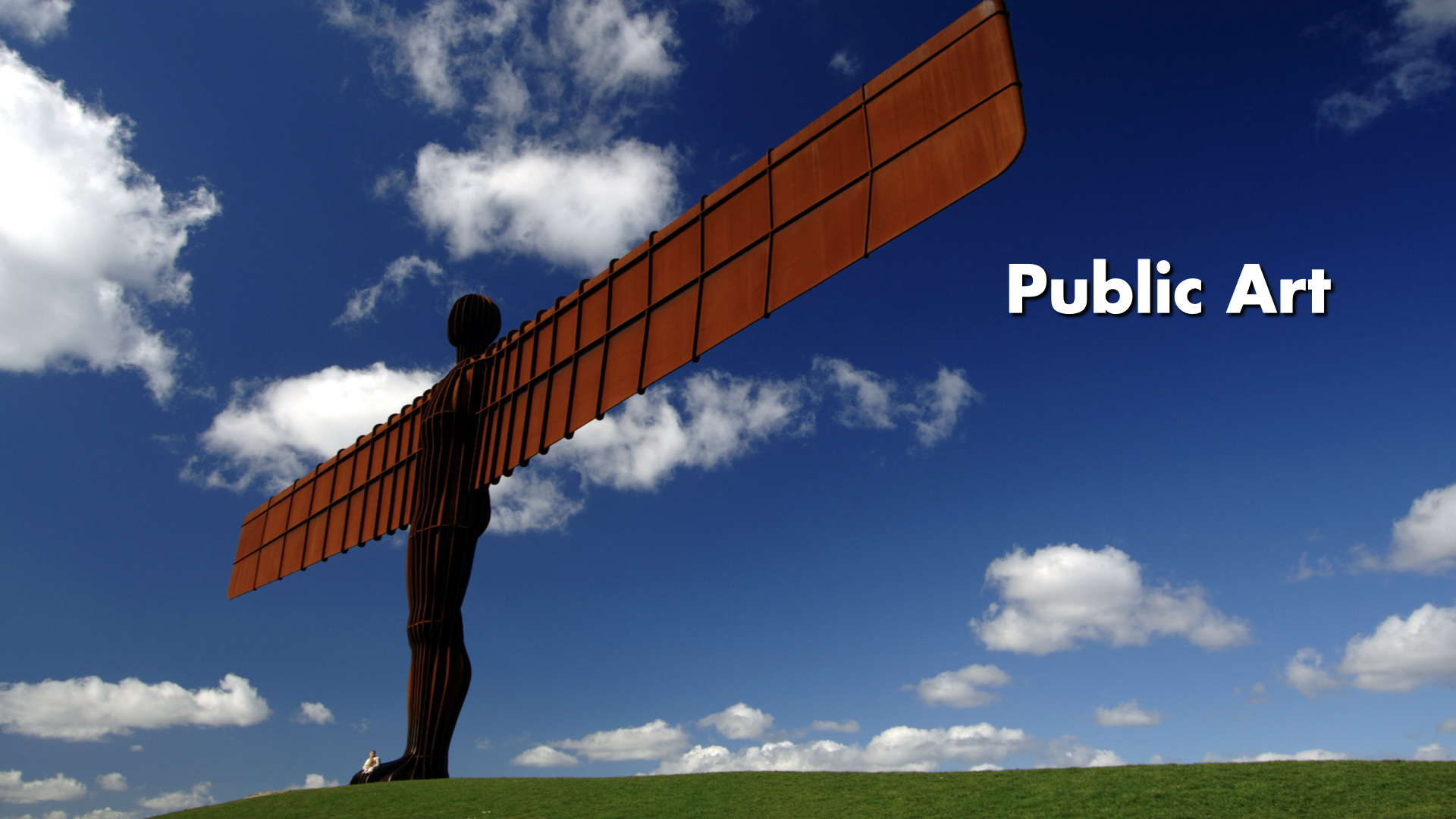
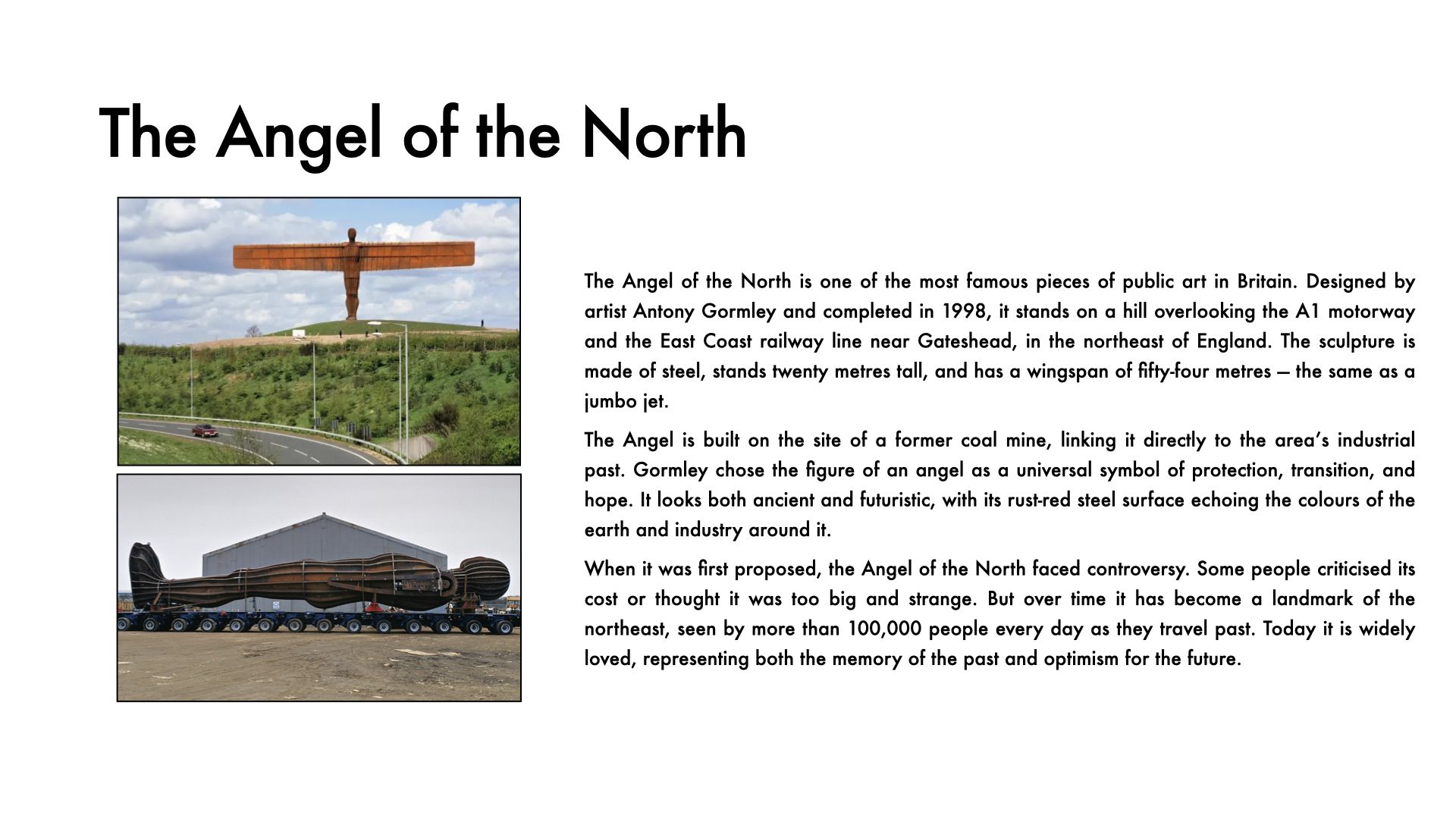
Antony Gormley's Angel of the North shows how a sculpture can move from controversy to acceptance. Completed in 1998, the giant steel sculpture watches over a former coal mining site in the north of England, and is now one of the most recognisable landmarks in Britain.
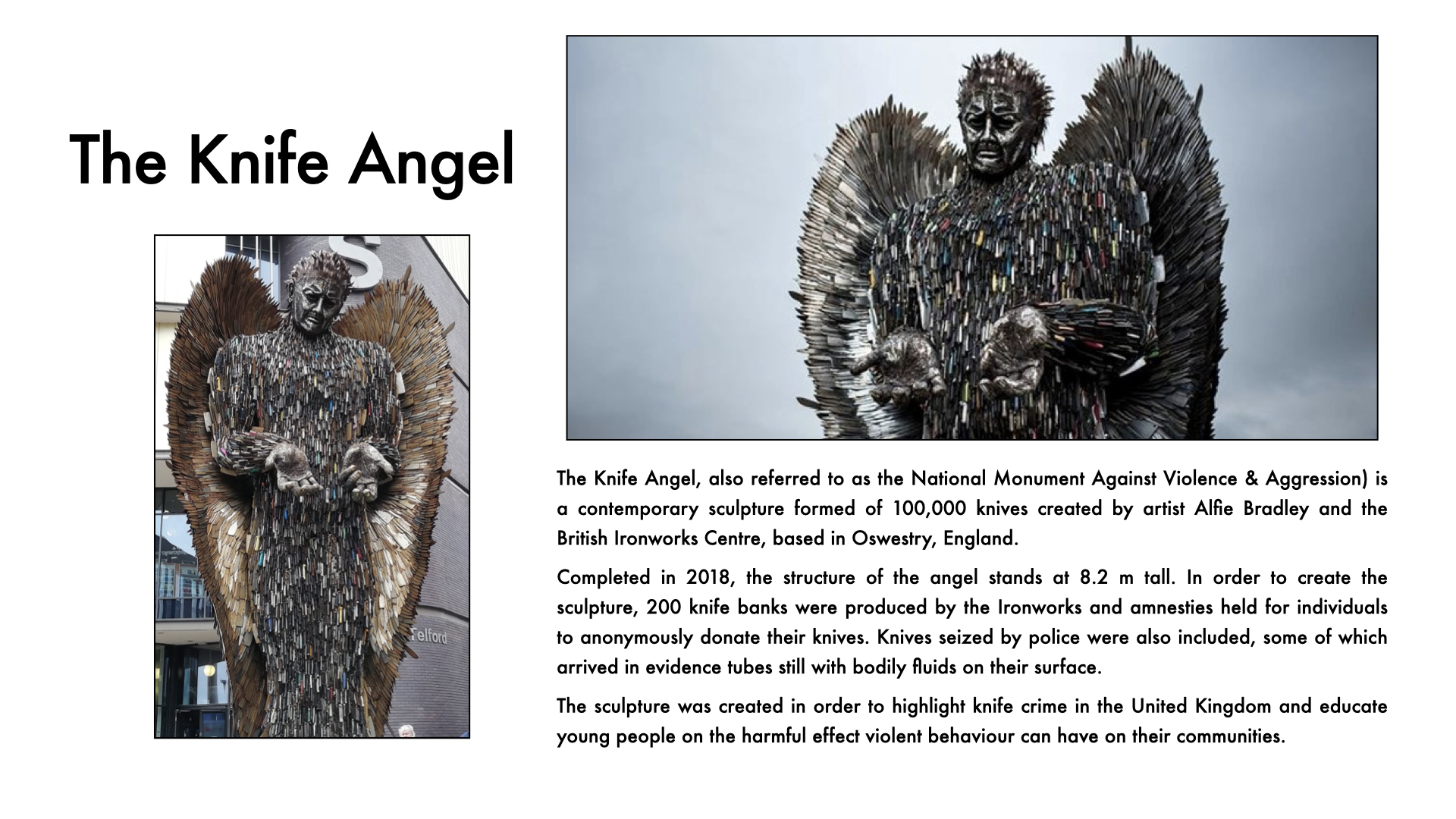
A very different angel stands at the other end of the emotional spectrum. The Knife Angel, completed in 2018 by artist Alfie Bradley, is an eight-metre sculpture made from 100,000 knives collected through amnesties and police seizures across Britain. It tours cities as a monument against violence, its material making the message impossible to ignore.
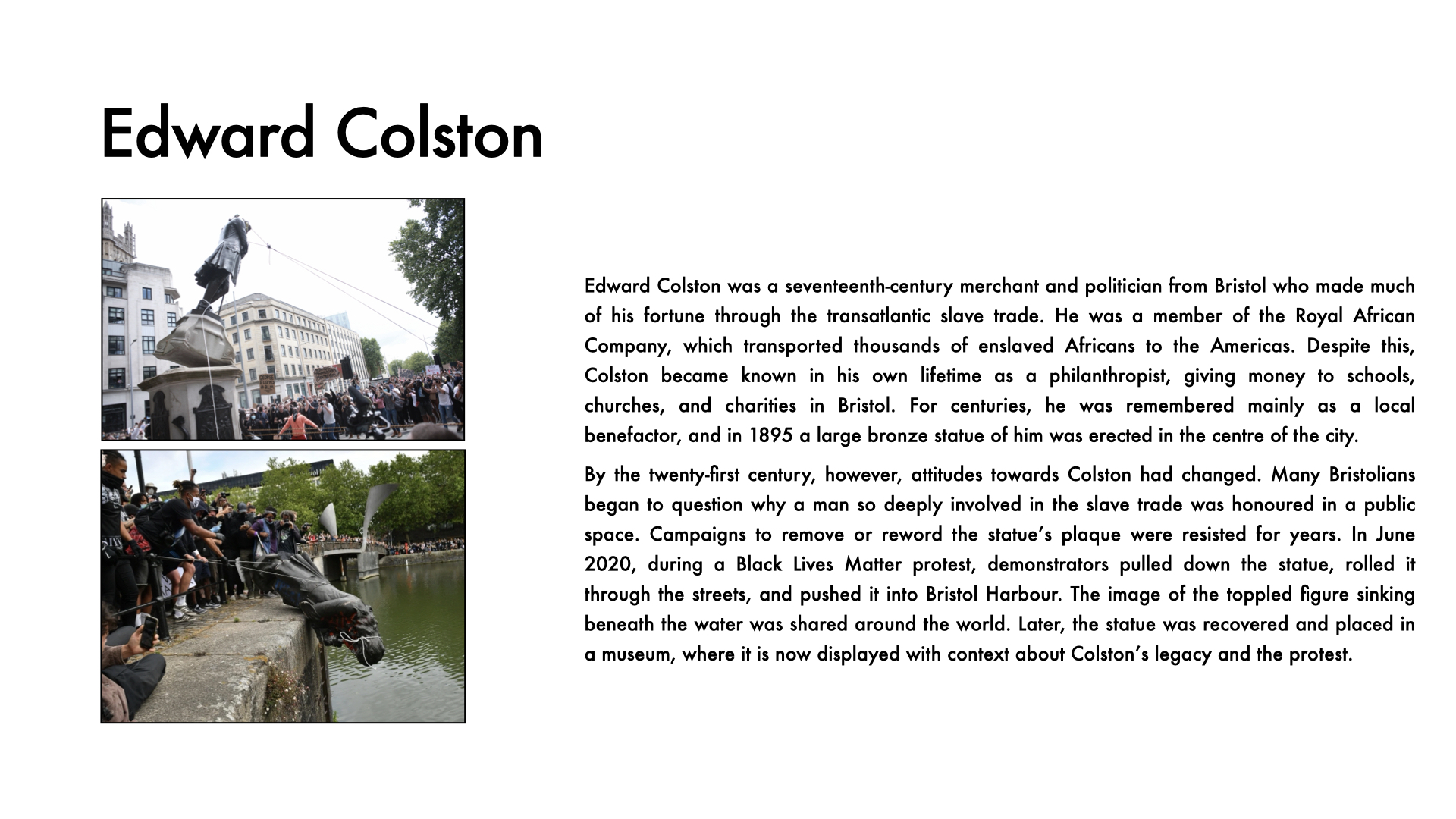
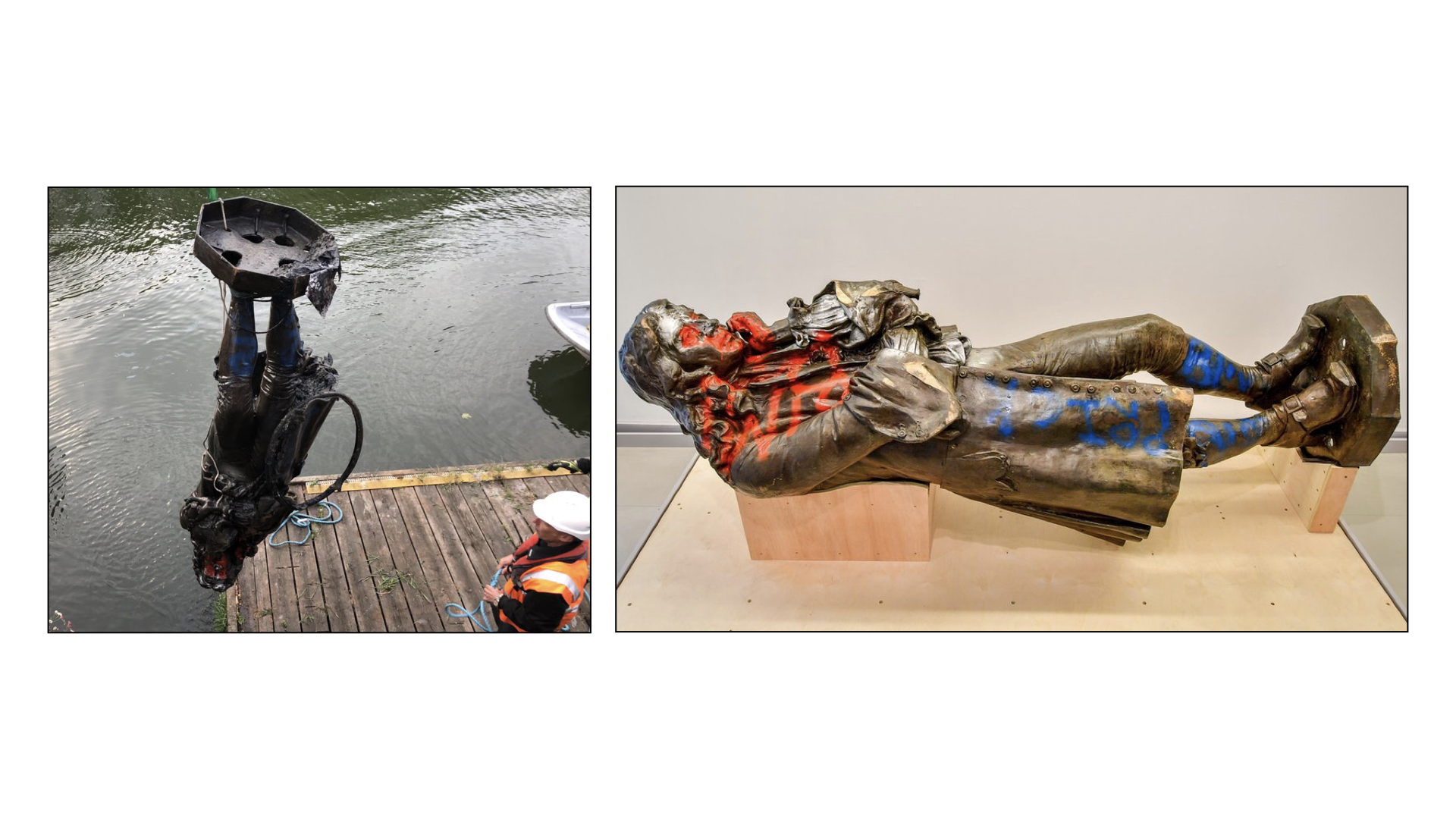
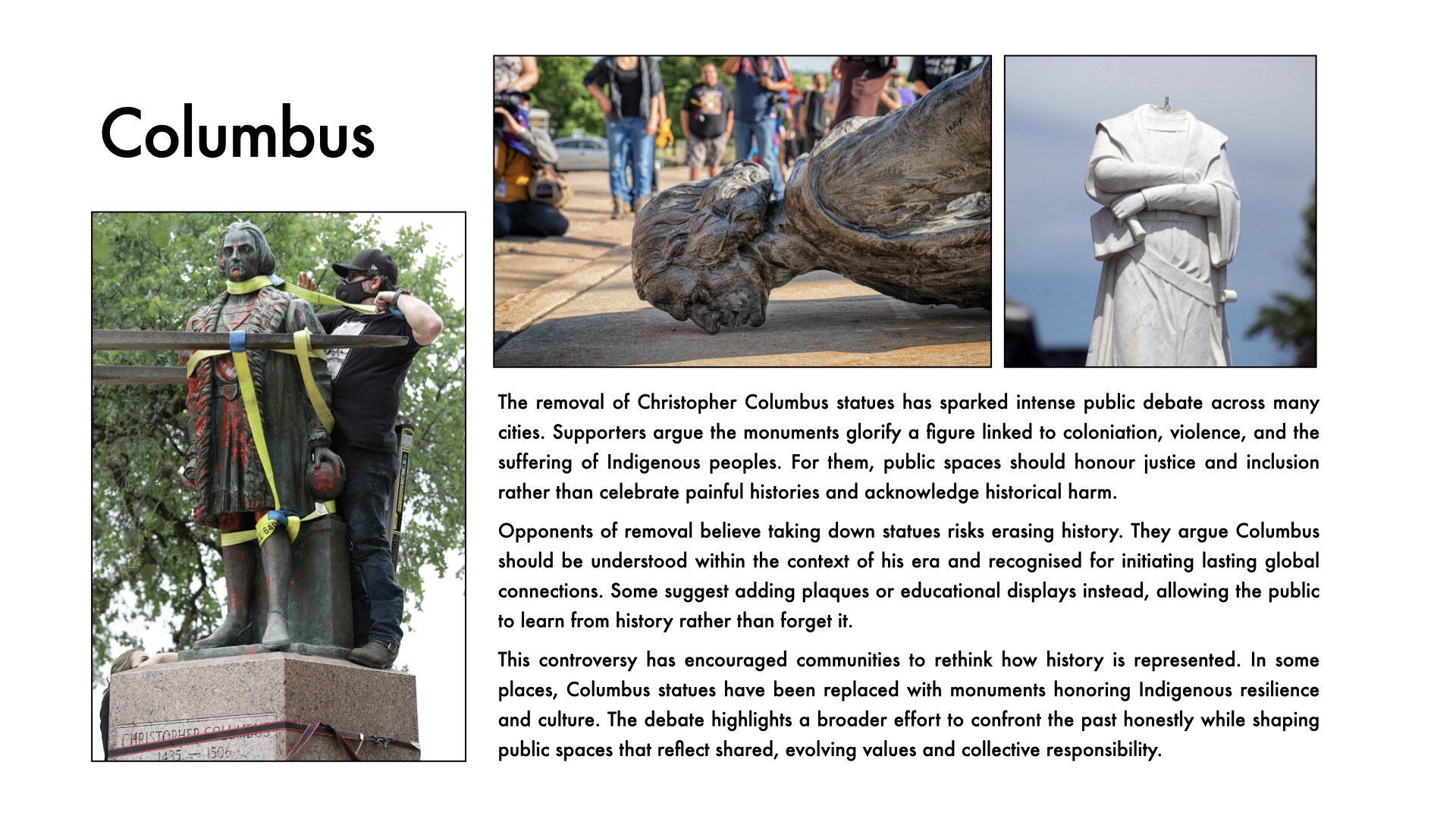
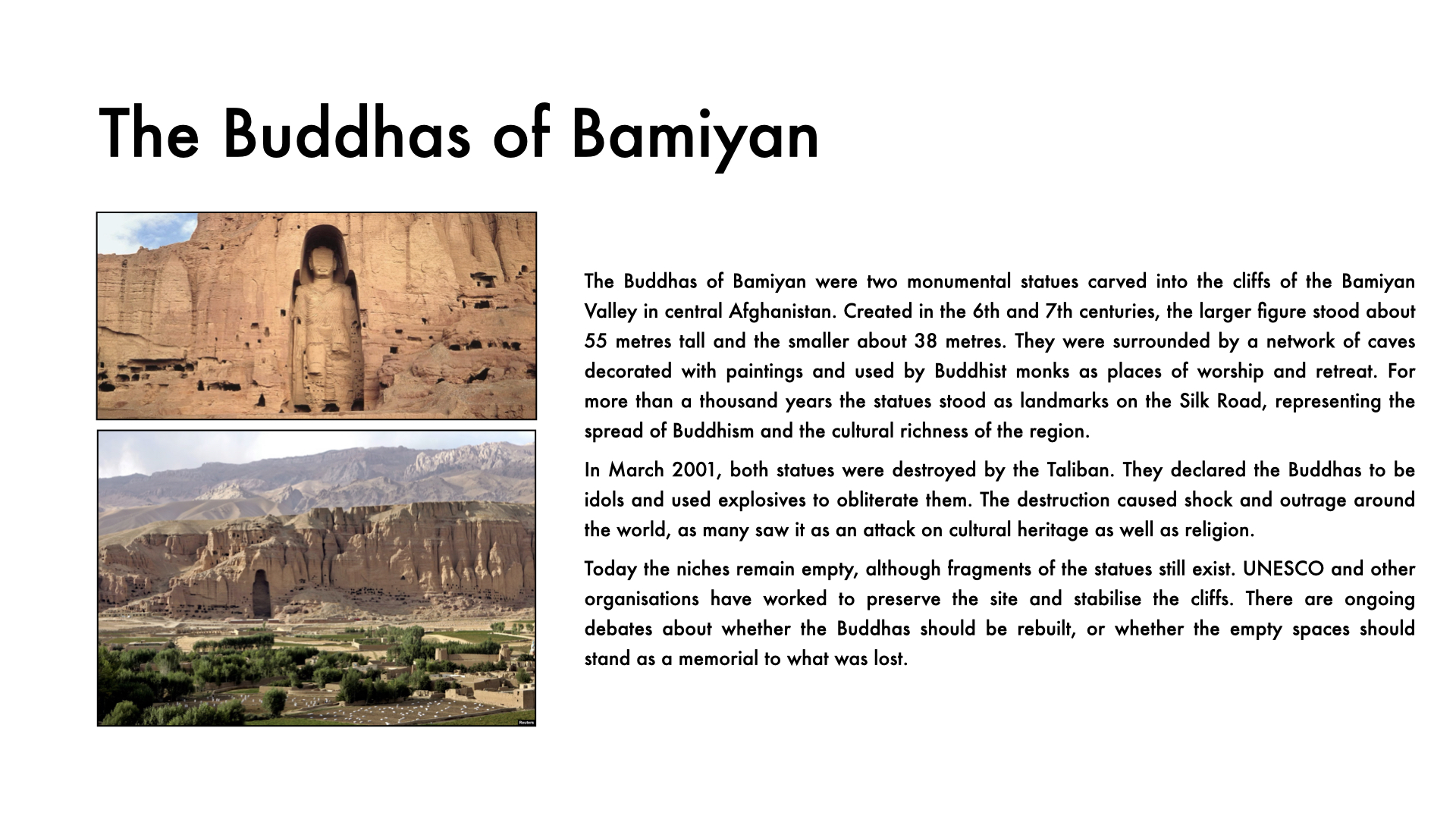
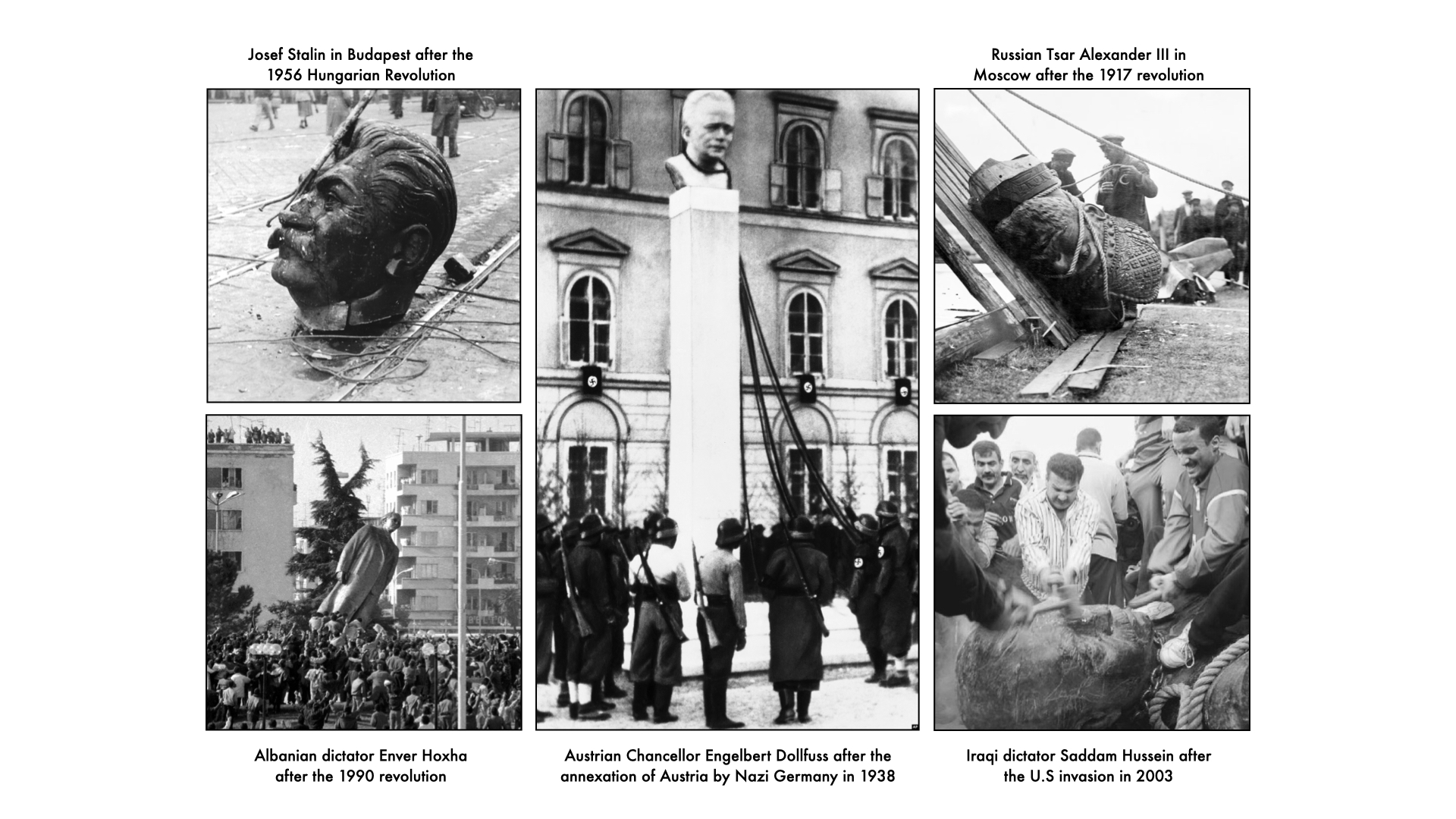
Public art can also be contested. The toppling of Edward Colston's statue in Bristol shows how monuments to figures linked to slavery can become flashpoints for arguments about history and memory. Statues of Christopher Columbus have also been torn down across the world. For many, especially Indigenous communities, Columbus is not a discoverer but a symbol of colonialism and the genocide of native populations.
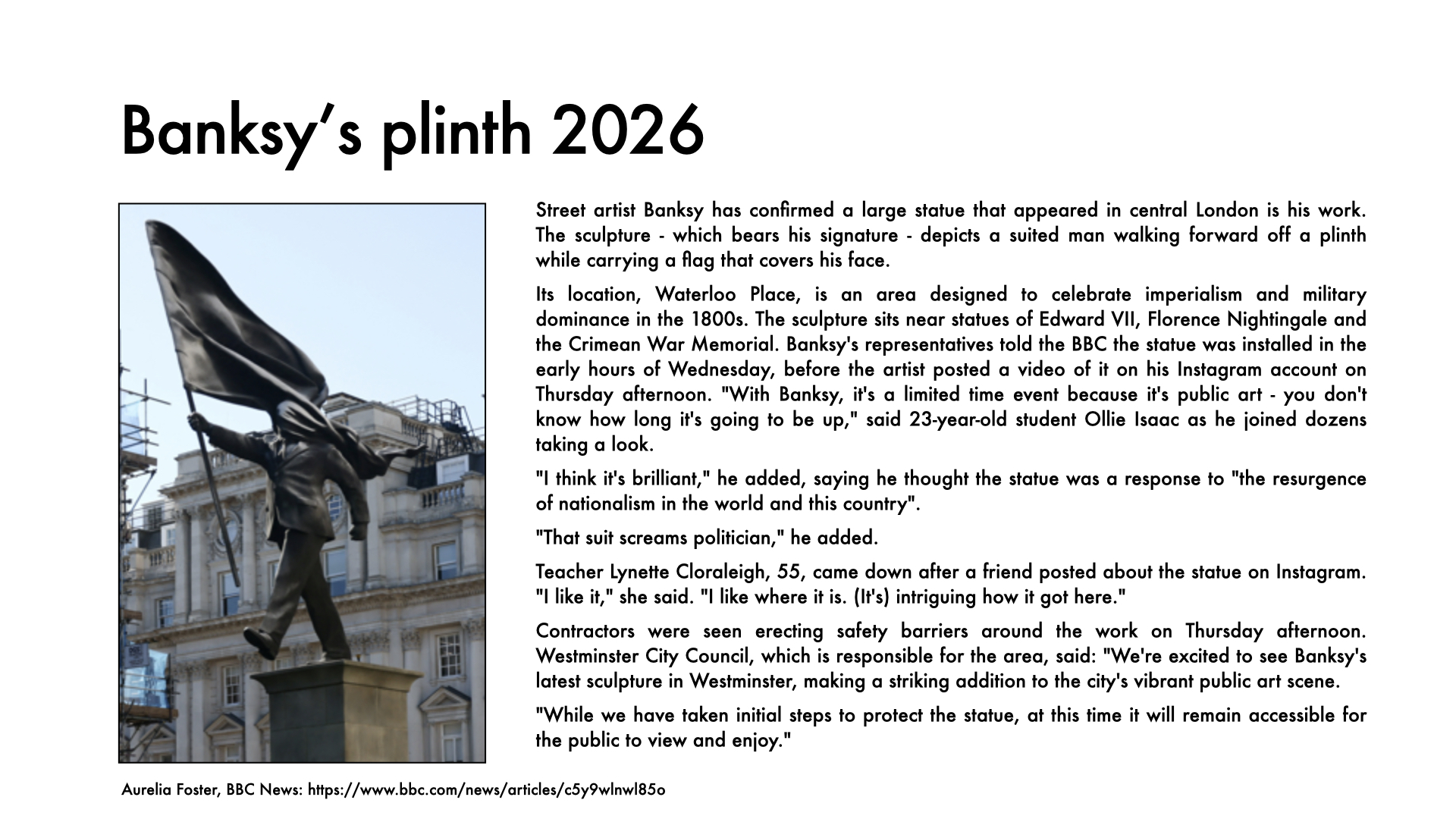
Not all public art is sanctioned. Banksy continues to use the streets of London as his canvas. In April 2026, a large public artwork was unveiled in Waterloo Place, an area designed to celebrate imperialism and military dominance in the nineteenth century. The sculpture depicts a suited man walking forward off a plinth while carrying a flag that covers his face. Unlike the other works mentioned, Banksy's art is mostly unsanctioned and actively anti-establishment.
Public art is easy to walk past, but sometimes impossible to ignore. It tells us not only about the past, but about how people in the present choose to remember it.
📽️ Slideshow
📺 Video
🔑 Key Vocabulary
- Abstract – Art that does not try to represent real objects or people in a realistic way
- Commission – When an artist is formally asked and paid to create a piece of art
- Commemoration – Remembering and honouring a person or event, often through a monument
- Figurative – Art that clearly shows real objects, people, or animals
- Installation – A large artwork created for a specific space, often involving the whole environment
- Landmark – A building, statue, or feature that is easily recognised and represents a place
- Memorial – A structure that reminds people of someone who has died or an event in history
- Monument – A statue or structure built to honour a person or event
- Plinth – A heavy base or block on which a statue or sculpture stands
- Public art – Art placed in outdoor or public spaces, free for everyone to see
- Sculptor – An artist who makes three-dimensional works of art
- Sculpture – A three-dimensional artwork, often carved, modelled, or constructed
- Site-specific – Artwork designed for one particular place, often linked to its history or surroundings
- Statue – A figure of a person or animal made from stone, metal, or other material
- Symbolism – The use of images or forms to represent ideas or qualities beyond the literal
💬 Conversation Questions
- Do you have a favourite statue or monument in your town?
- Have you ever visited a famous piece of public art on holiday?
- Do you usually notice statues in the street, or walk past them without looking?
- Which do you prefer: modern abstract sculptures or traditional statues?
- Do you think public art should always be beautiful, or is it okay if it is strange?
- Would you like to have a big sculpture near your home? Why or why not?
- Who do you think should decide what kind of public art is made?
- Do you think public money should be used to pay for monuments and sculptures?
- What happens if people disagree about a statue or monument? How should the city respond?
- Some old statues are ignored because no one remembers the person anymore. Should they be removed?
- What do you think about removing statues of people with controversial histories?
- Can a piece of public art change the image of a whole city or region? Give an example.
- Is it more important for public art to celebrate the past, or to say something about the present?
- Do you think temporary works, like those on the Fourth Plinth, are more interesting than permanent ones?
- If your town commissioned a new sculpture, what would you suggest and where would it go?
🌐 Links
- BBC News - Angel of the North: The icon that was nearly never built
- BBC News - Lancaster flypast mirrors replica sculpture
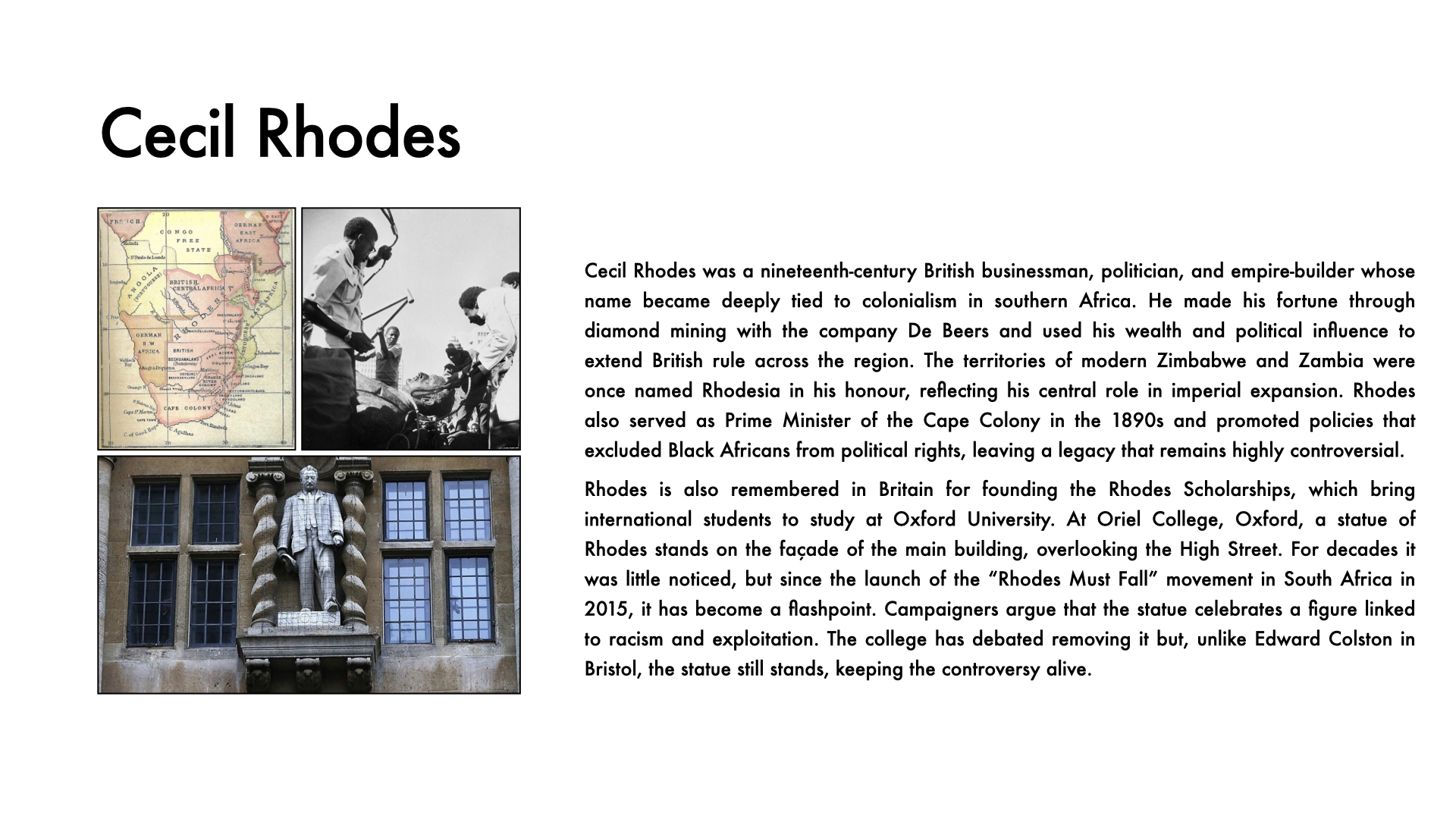
- BBC News - Cecil Rhodes statue will not be removed by Oxford College
- Artsper Magazine - Public Art From Around The World
- Oriel College Oxford - The Rhodes Legacy
- BBC News - Banksy confirms he's behind statue in central London
- BBC News - British Ironwork Centre: The Knife Angel