Week 0️⃣ 9️⃣
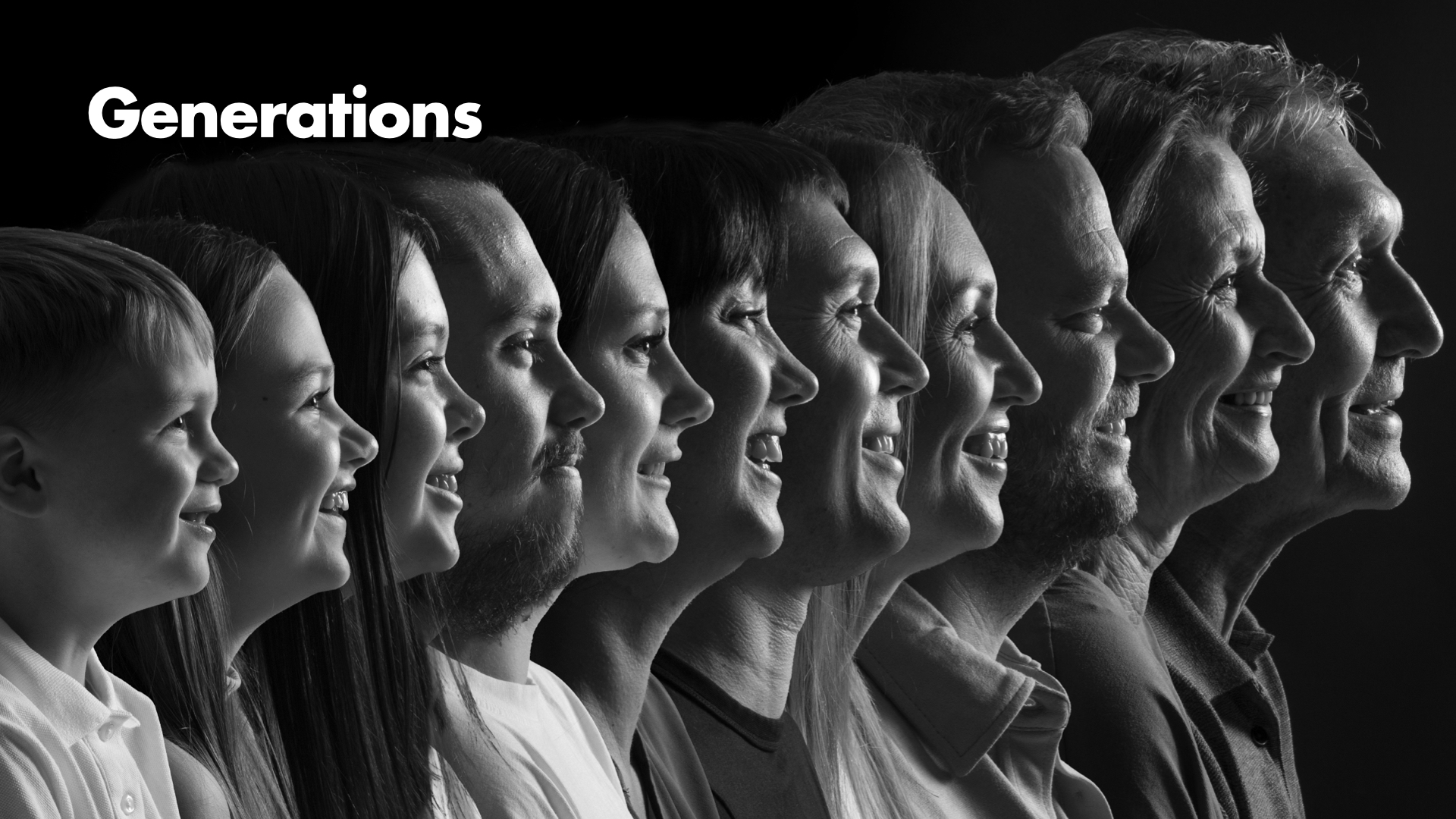
Generations
🔊 Audio
📜 Show transcript
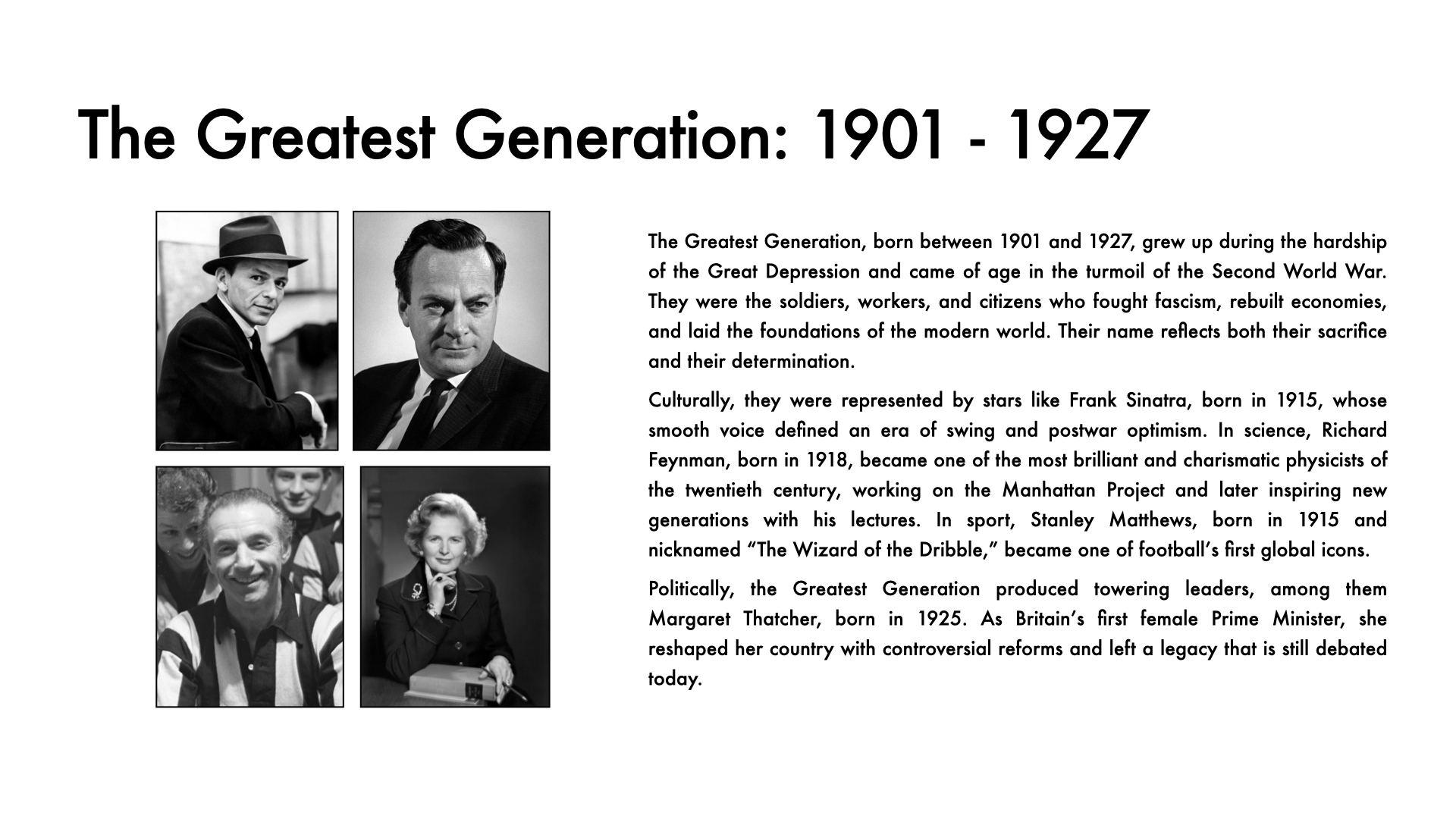
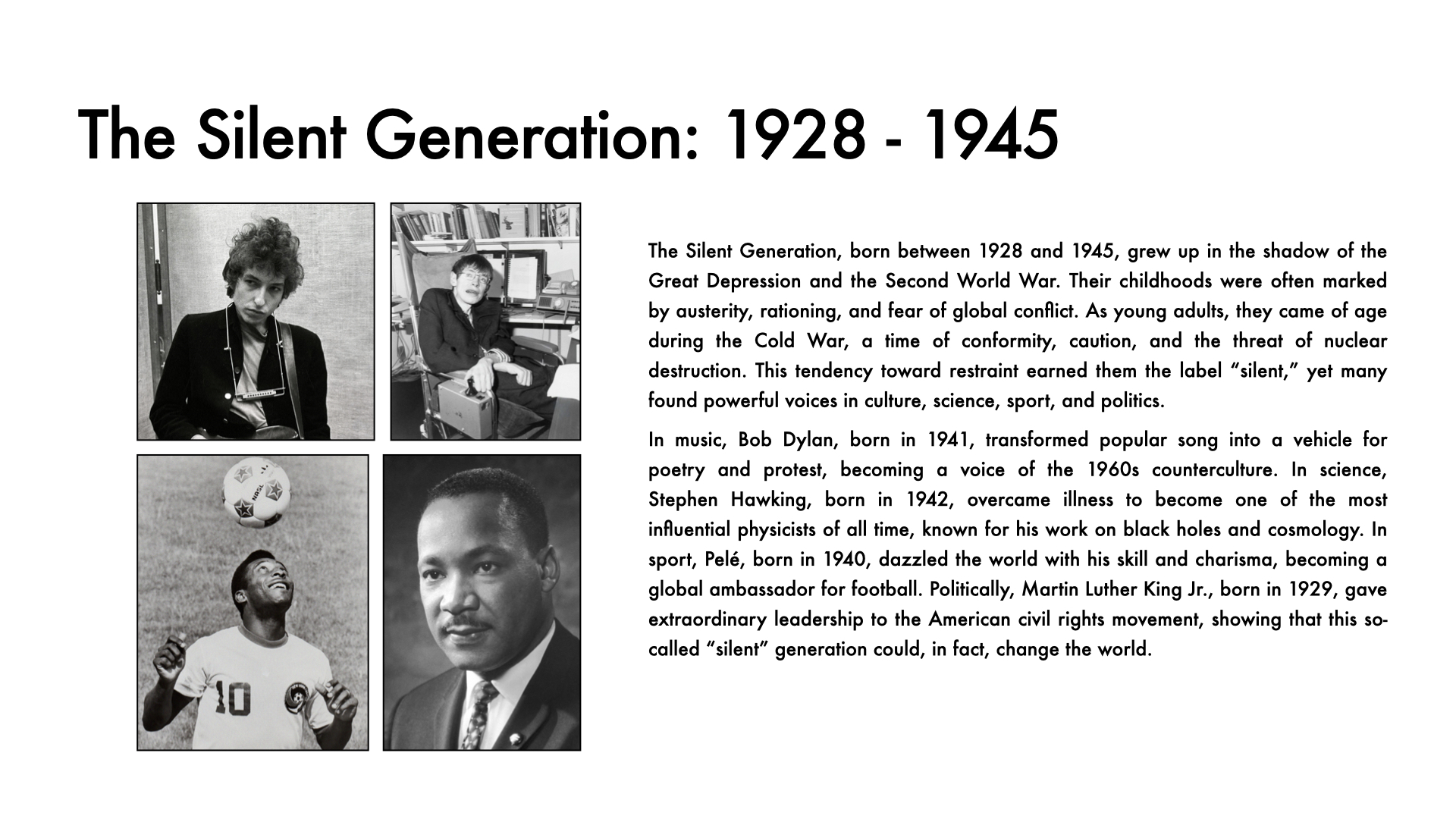
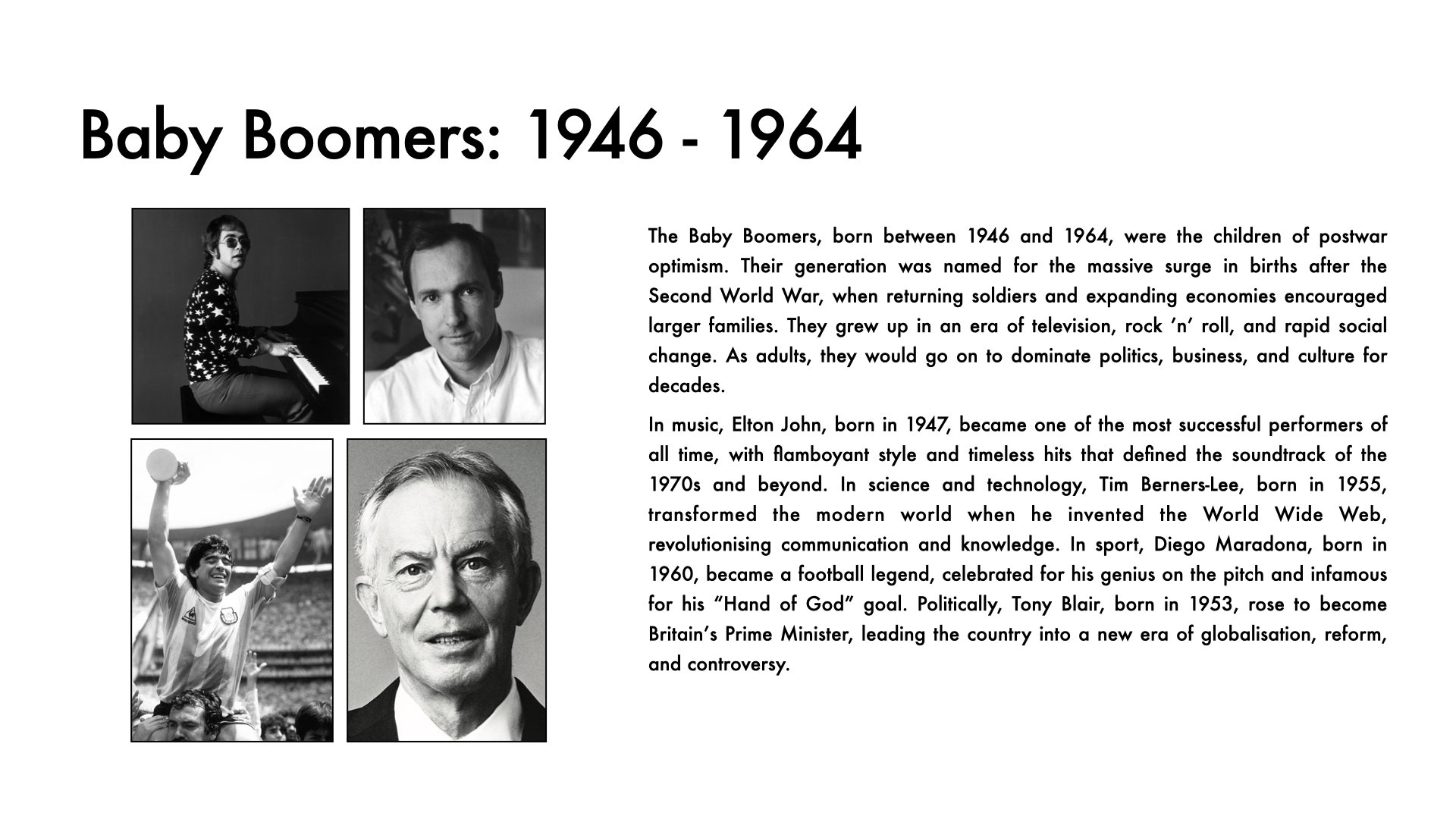
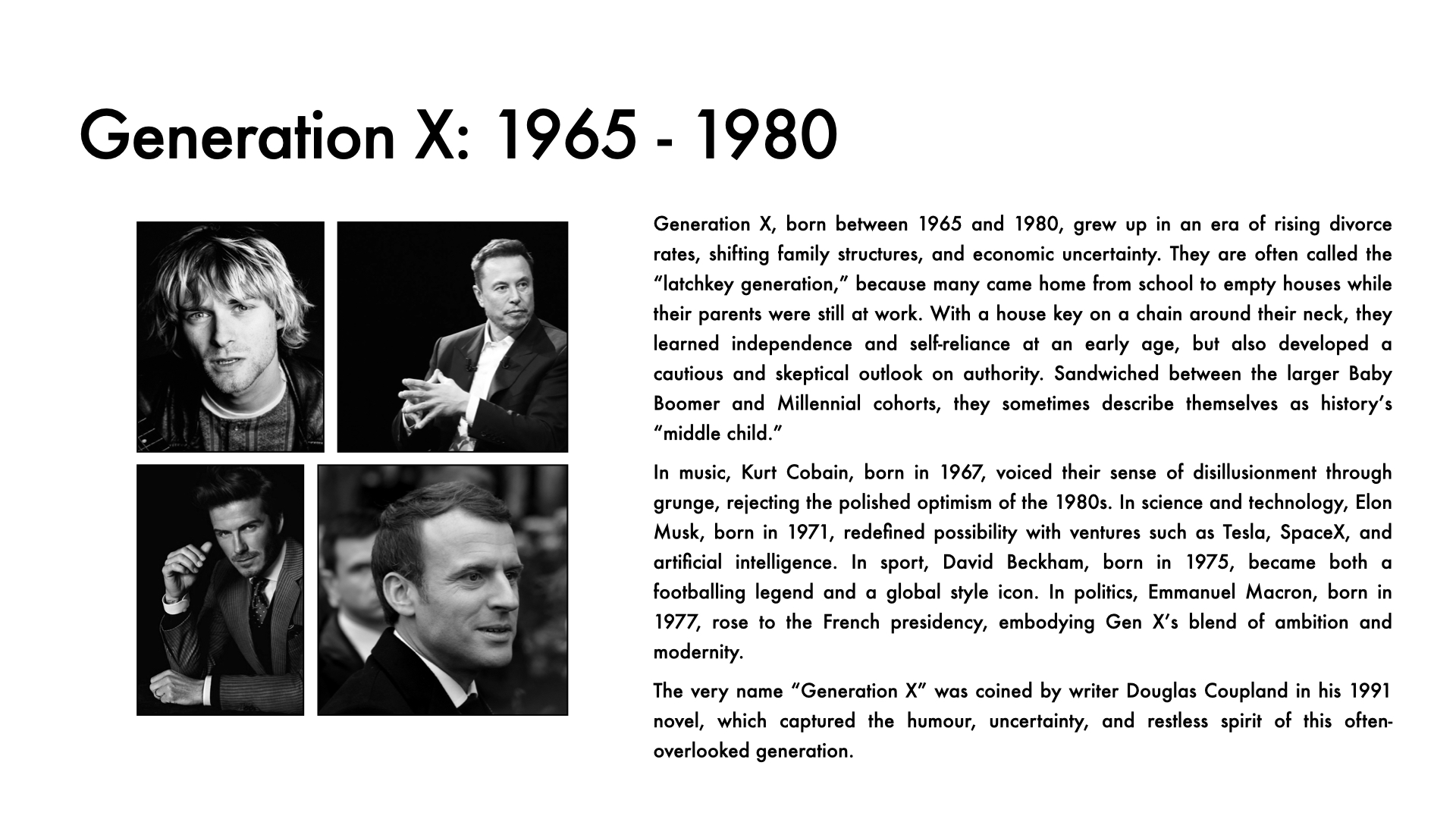
Every generation is shaped by the events it lives through, and understanding those events helps explain why people of different ages think and behave differently. This matters more than ever in the modern workplace, where Baby Boomers, Generation X, Millennials, and Generation Z can all find themselves in the same meeting room, with very different attitudes towards authority, technology, work-life balance, and loyalty to employers.
The labels themselves are largely American in origin, which means they do not always travel well. In Spain, for example, the Franco dictatorship ended only in 1975, meaning that the generation which in America was busy with Woodstock and Vietnam was in Spain living under censorship and political repression. That difference in lived experience creates very different generational identities, even among people born in the same year.
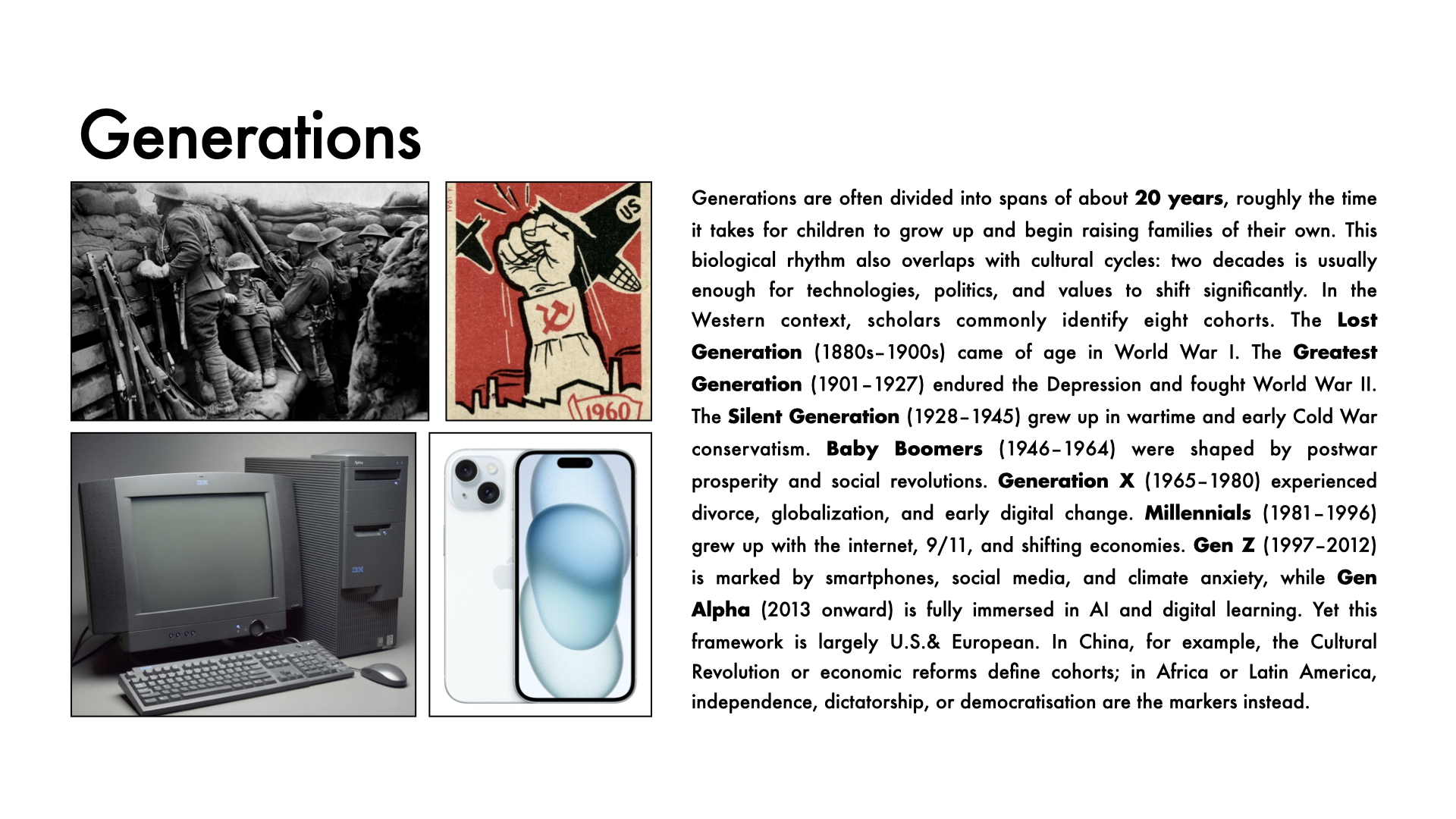
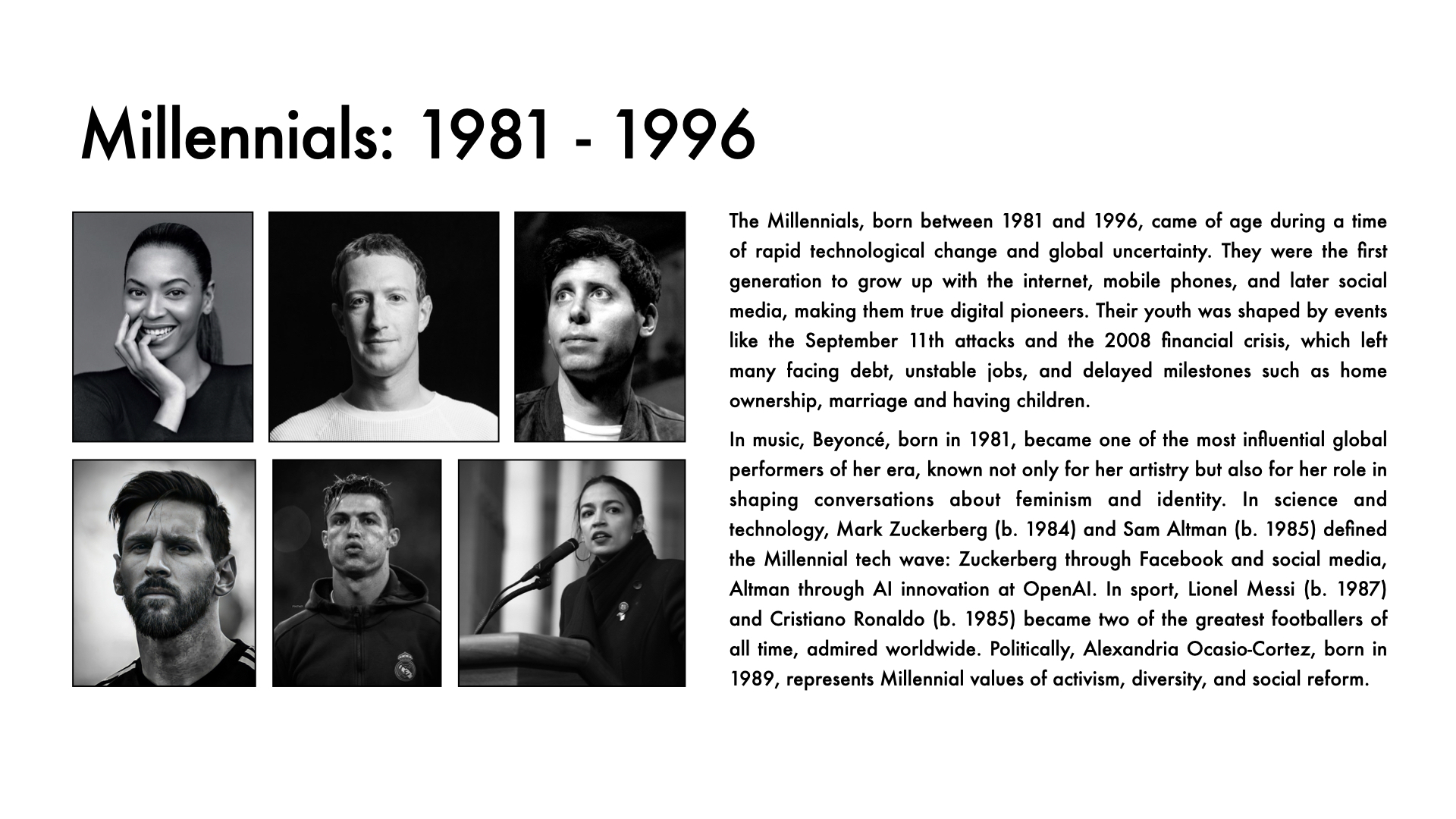
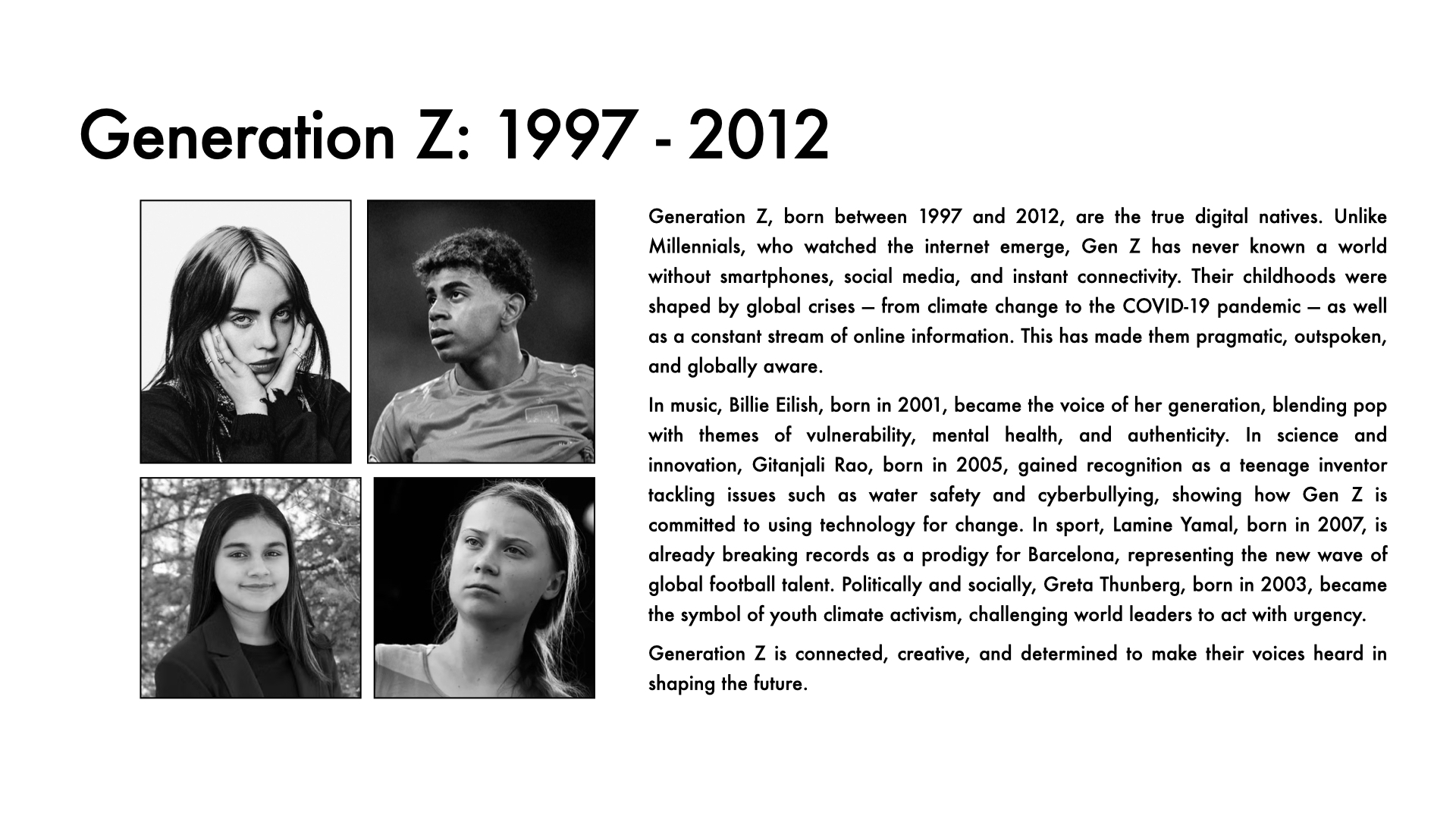
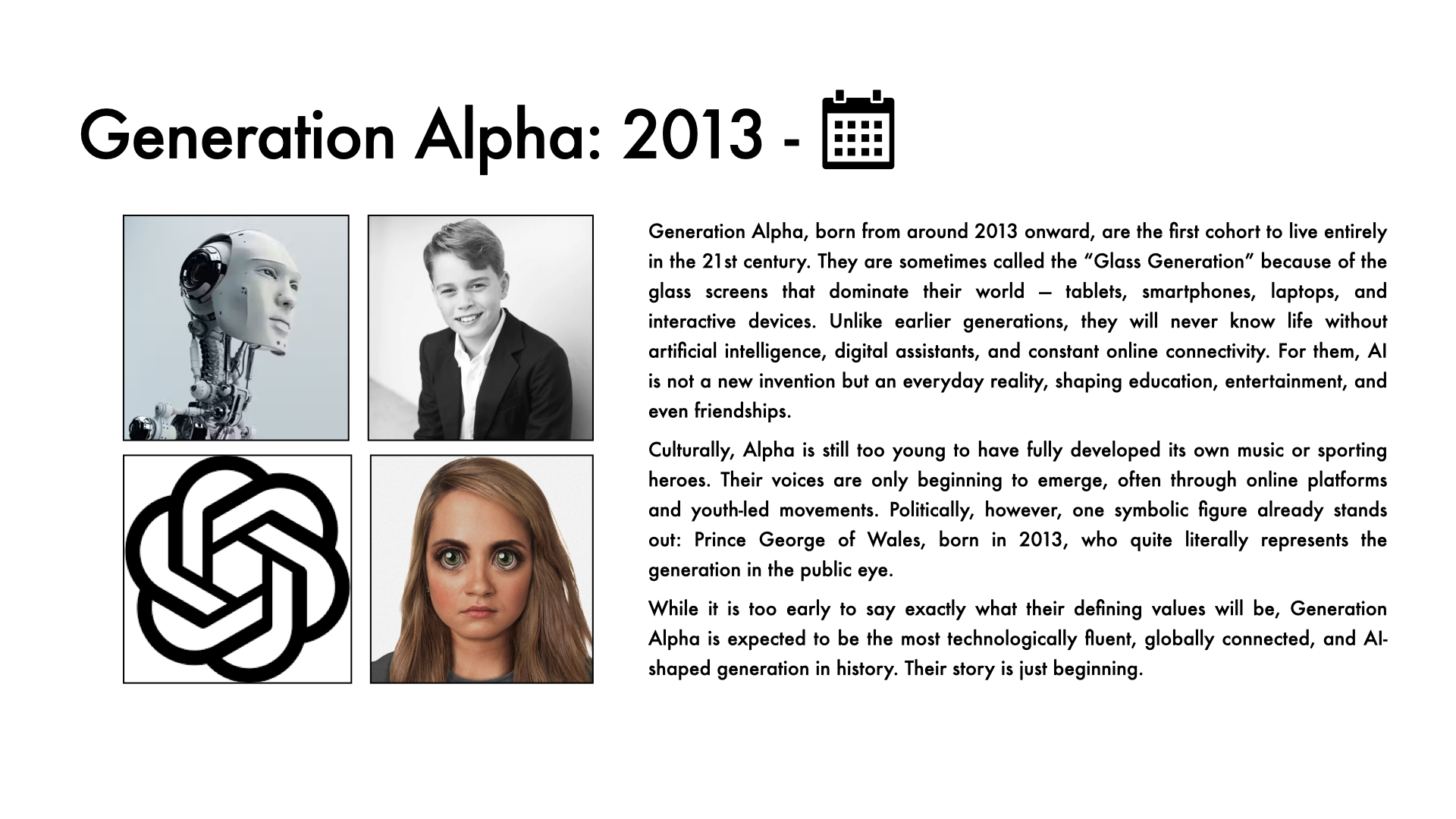
Still, the broad outlines hold across much of the world. The Baby Boomers, born between 1946 and 1964, grew up in postwar prosperity and shaped the counterculture. Generation X, born 1965 to 1980, were the latchkey kids who came of age through grunge, rave, and hip hop. Millennials, born 1981 to 1996, bridged the analogue and digital worlds, shaped by September Eleventh and the 2008 financial crisis. Generation Z, born from 1997, are true digital natives who have never known a world without smartphones.
Each generation carries its own assumptions about how the world works, and those assumptions do not disappear when people go to work. A Boomer manager and a Gen Z employee may share the same office but inhabit very different ideas about what work is for, how communication should happen, and what counts as success. Understanding where those differences come from is the first step toward bridging them.
📽️ Slideshow
📺 Video
🔑 Key Vocabulary
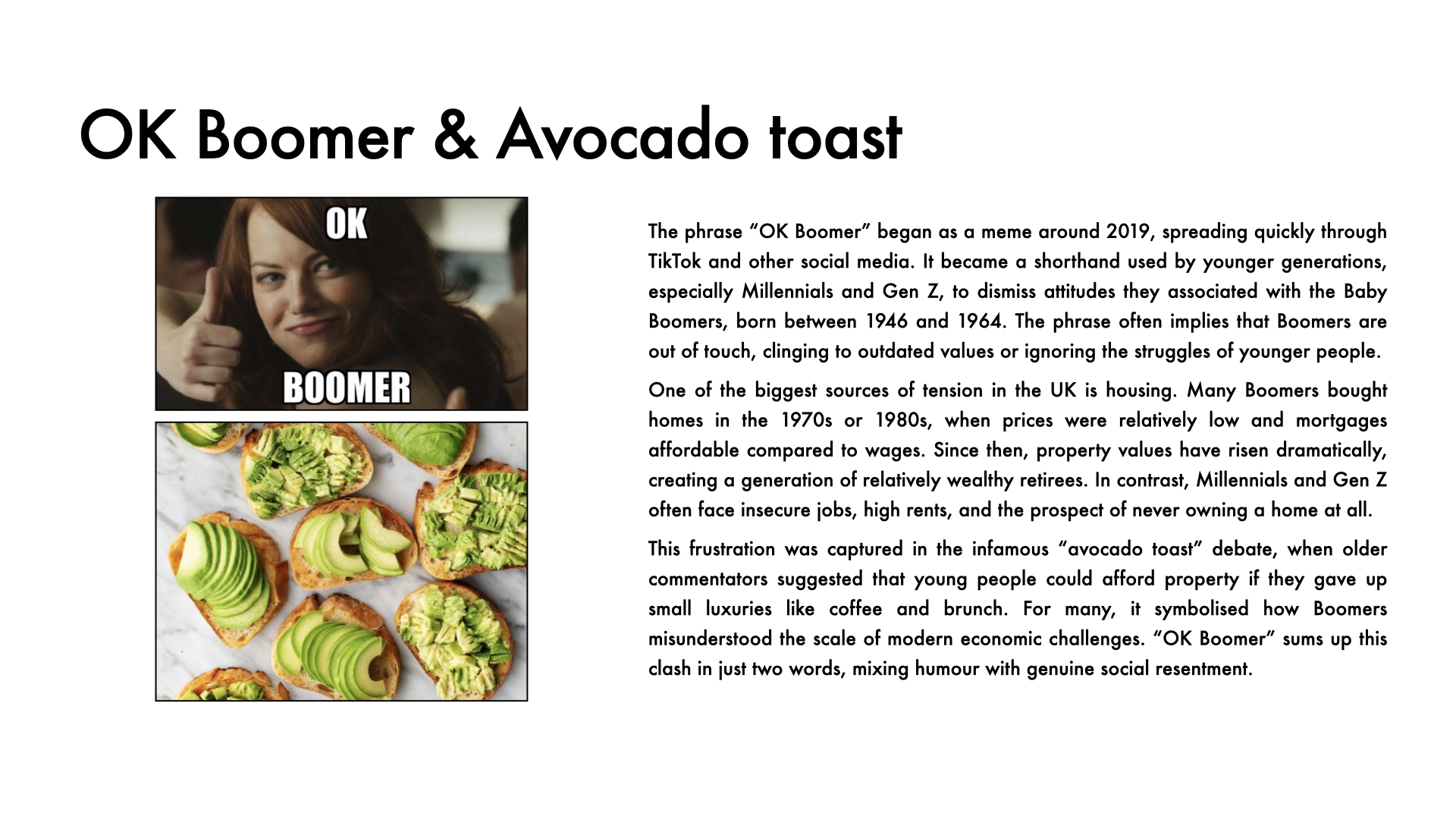
- Avocado toast – A modern food trend often used as a symbol of Millennial spending habits.
- Baby Boom – The sharp rise in birth rates after World War II (1946–1964).
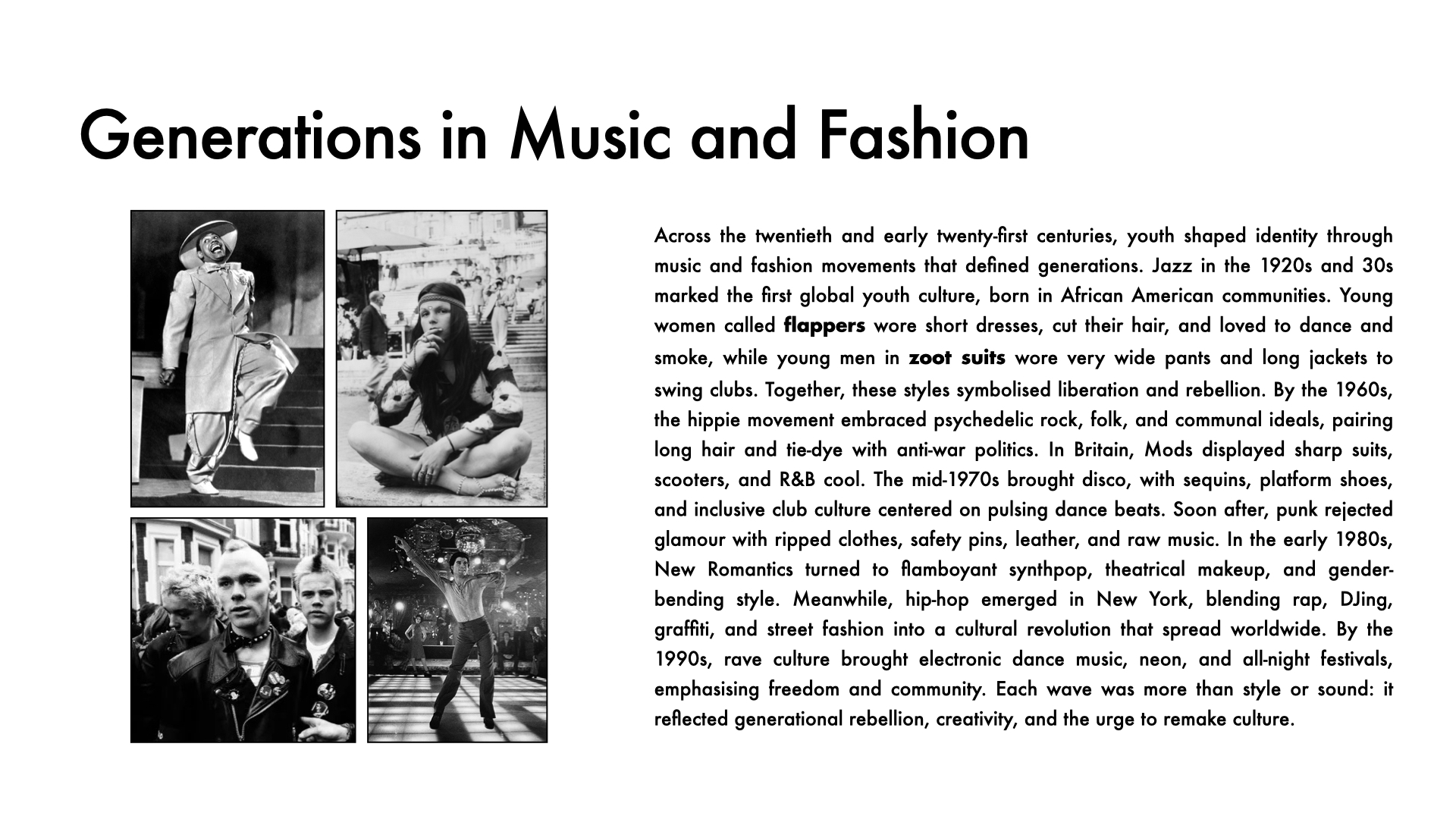
- Counterculture – A social movement that rejects mainstream values, such as the hippies in the 1960s.
- Disillusionment – A feeling of disappointment after discovering something is not as good as expected.
- Flapper – A fashionable young woman of the 1920s known for bold behaviour and style.
- Generational divide – Differences in attitudes or opportunities between younger and older generations.
- Glass Generation – A term for Generation Alpha, surrounded by glass screens like smartphones and tablets.
- Grunge – A 1990s music and fashion movement with heavy guitar sounds and thrift-shop style.
- Hip hop – A cultural movement from the 1970s combining rap, DJing, graffiti, and breakdancing.
- Hippie – A member of the 1960s counterculture, known for peace protests, long hair, and colourful clothes.
- Latchkey kid – A child who returns from school to an empty home because parents are at work.
- Meme – A cultural idea or joke spread online, often using images and text.
- New Romantics – An early 1980s music and fashion movement with flamboyant, theatrical style.
- Punk – A late 1970s music and fashion subculture, known for loud, rebellious songs and ripped clothing.
- Ragtime – A lively piano style popular in the early 1900s, a forerunner of jazz.
- Rave culture – A late 1980s–90s movement centred on electronic music, dance clubs, and MDMA use.
- Silent Generation – People born between 1928 and 1945, often seen as cautious and traditional.
- Subculture – A smaller cultural group within society, with its own music, fashion, and values.
- Wealth gap – The unequal distribution of assets and income between different groups.
- Zoot suit – A flamboyant style of suit from the 1930s–40s, with wide shoulders and baggy trousers.
💬 Conversation Questions
- Which generation do you belong to, and do you feel the description of your generation is accurate?
- Do you think generational labels (Boomers, Gen X, Millennials, etc.) are useful or just stereotypes?
- What are the biggest differences you notice between your generation and your parents’ generation?
- How has technology shaped the identity of younger generations like Gen Z and Alpha?
- Do you think housing and property ownership are a fair source of tension between Boomers and Millennials?
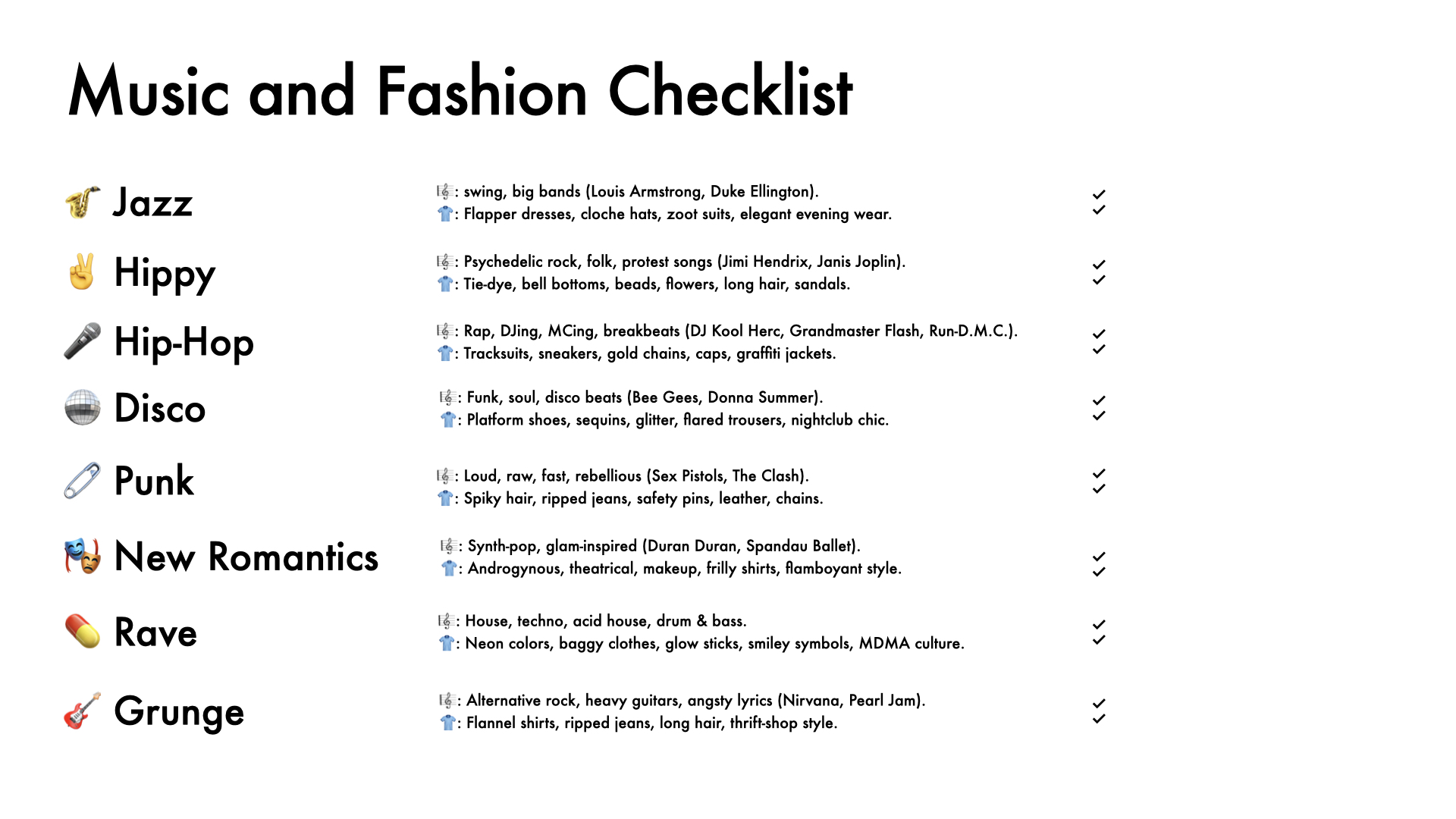
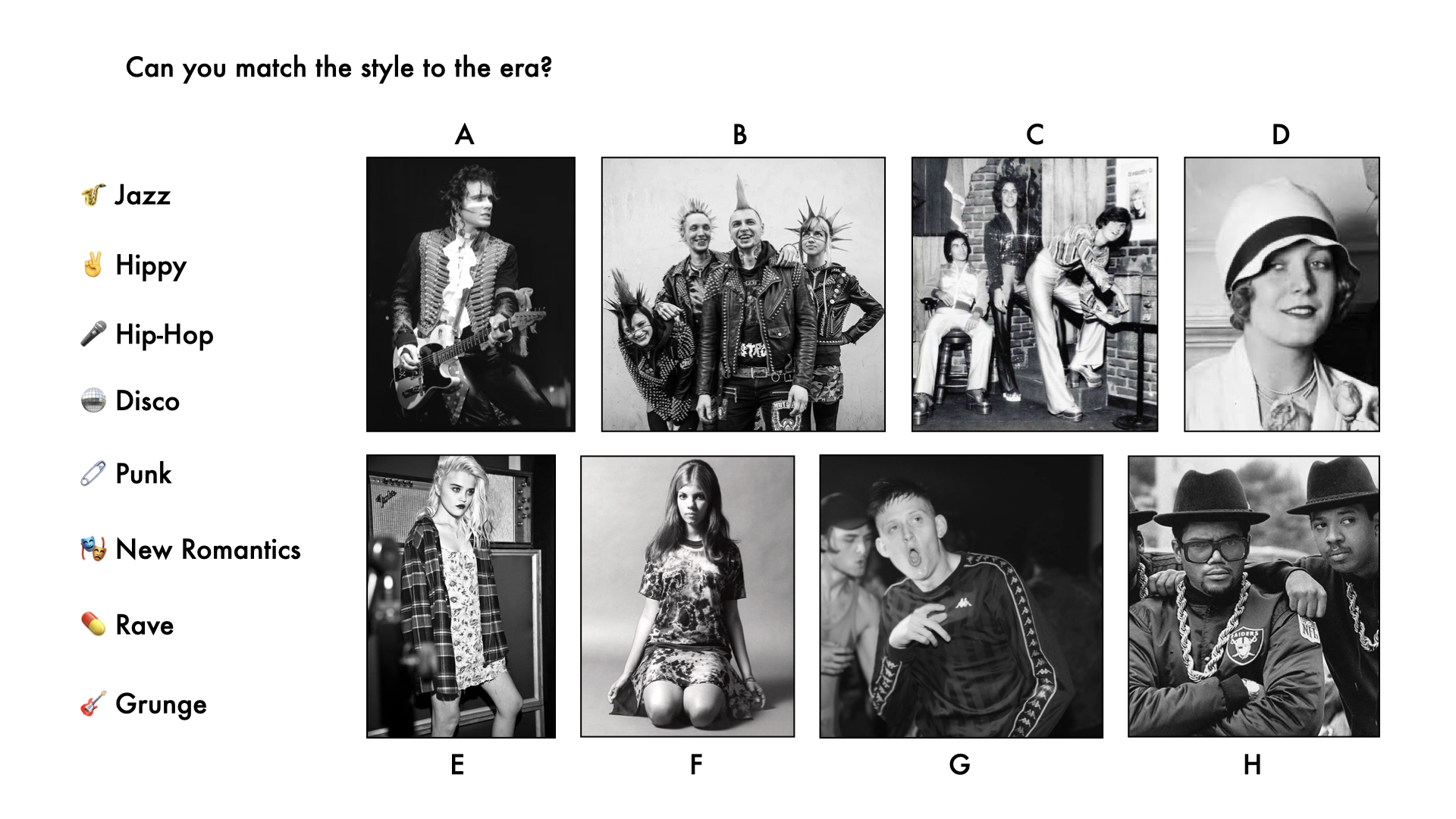
- Which cultural style (hippies, punk, disco, hip hop, rave, grunge, New Romantics, jazz) do you find most interesting, and why?
- If you could live in one cultural era, which would you choose — and would you fit in?
- Do you think today’s youth culture has the same power to shock society as punk or hippies once did?
- How do fashion and music reflect the values of a generation?
- Can memes like “OK Boomer” really capture generational conflict, or do they oversimplify it?
- What role do sport and celebrity figures play in defining a generation’s identity?
- Which generation do you think has had the most influence on global culture?
- How do you think Generation Alpha will be remembered in the future?
- Do you feel closer culturally to people of your generation in other countries, or to older/younger people in your own country?
- What fashion trend from the past would you bring back, and why?