Week 0️⃣ 4️⃣
WWE
🔊 Audio
📜 Show transcript
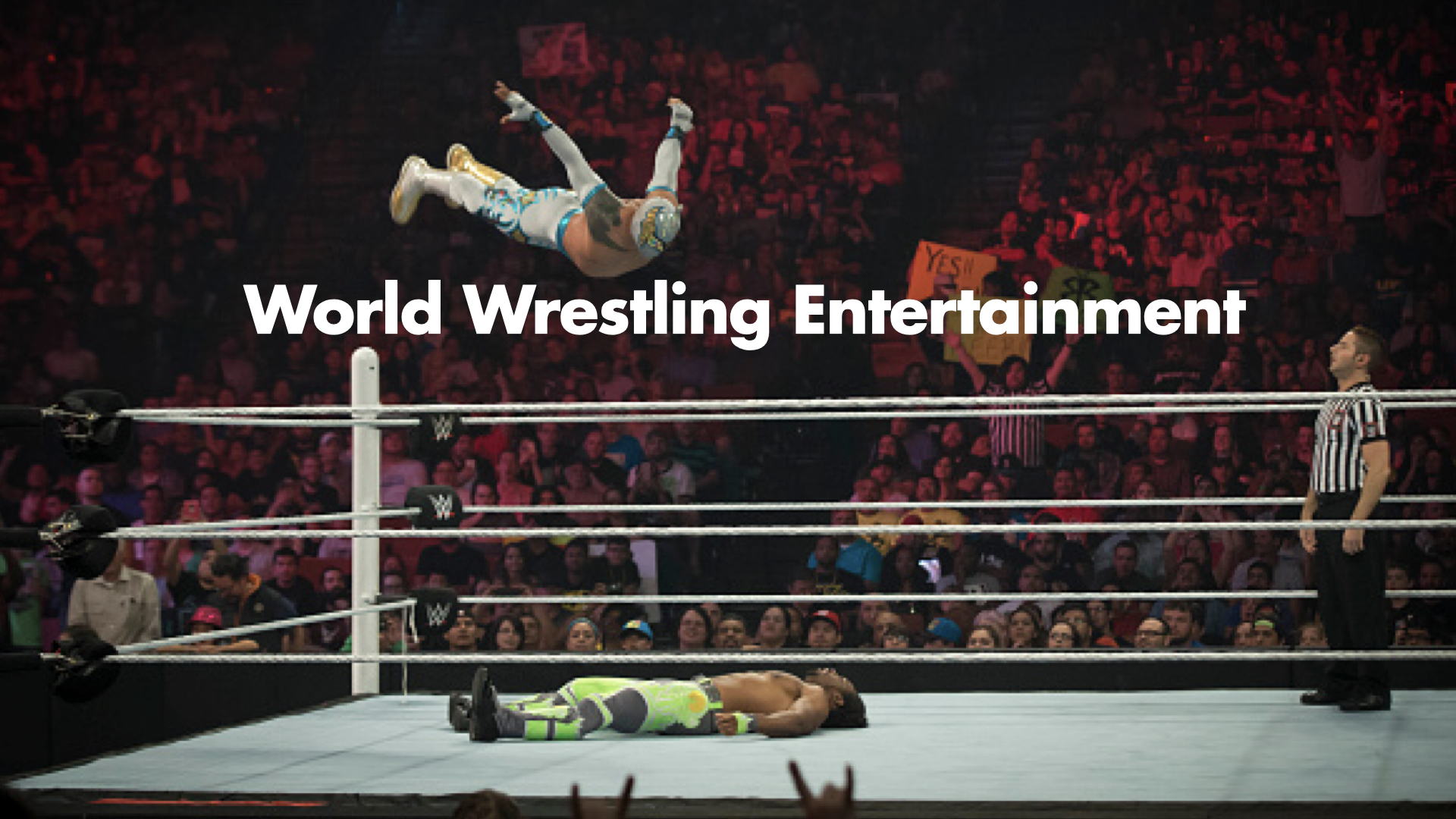
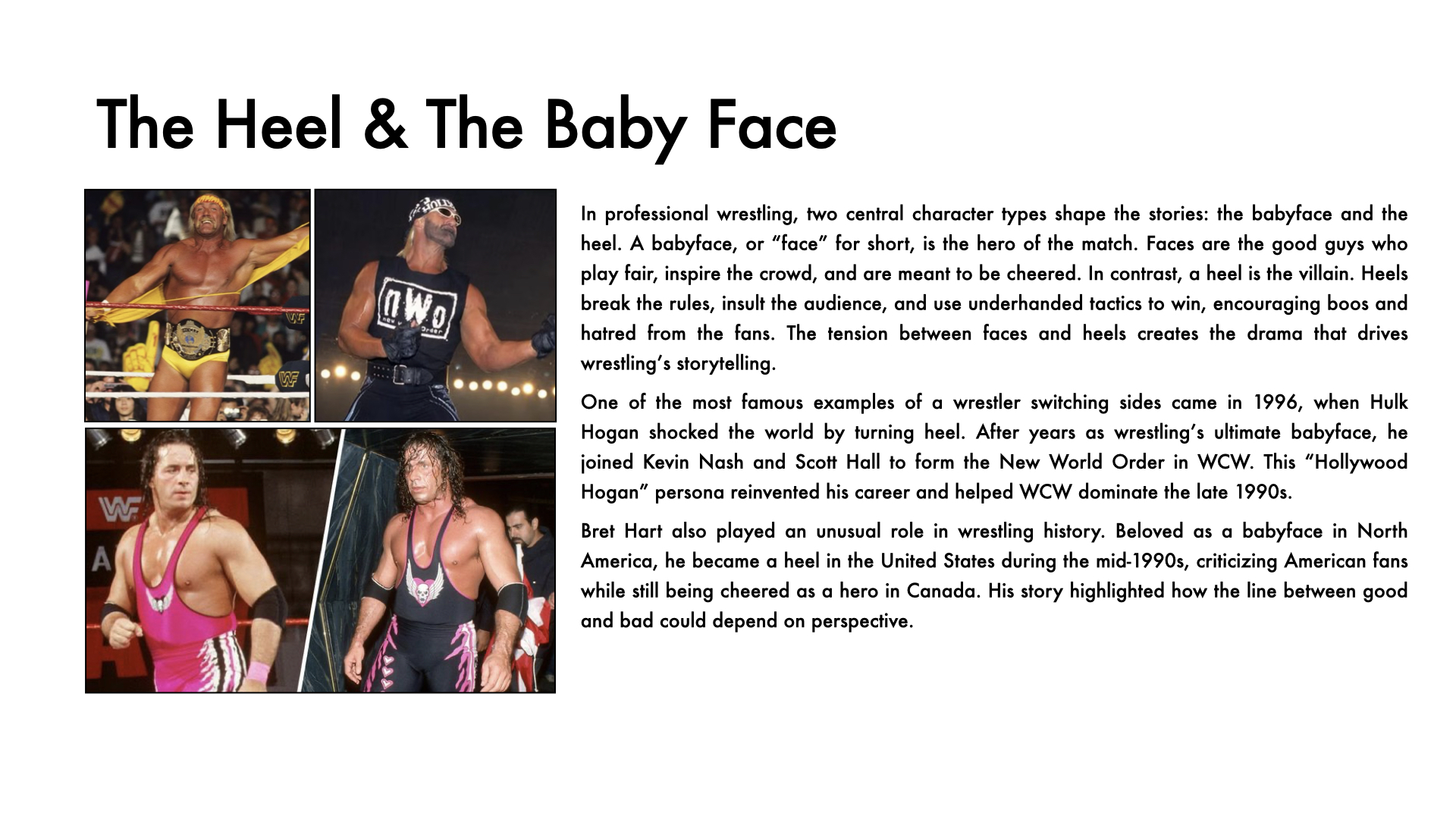
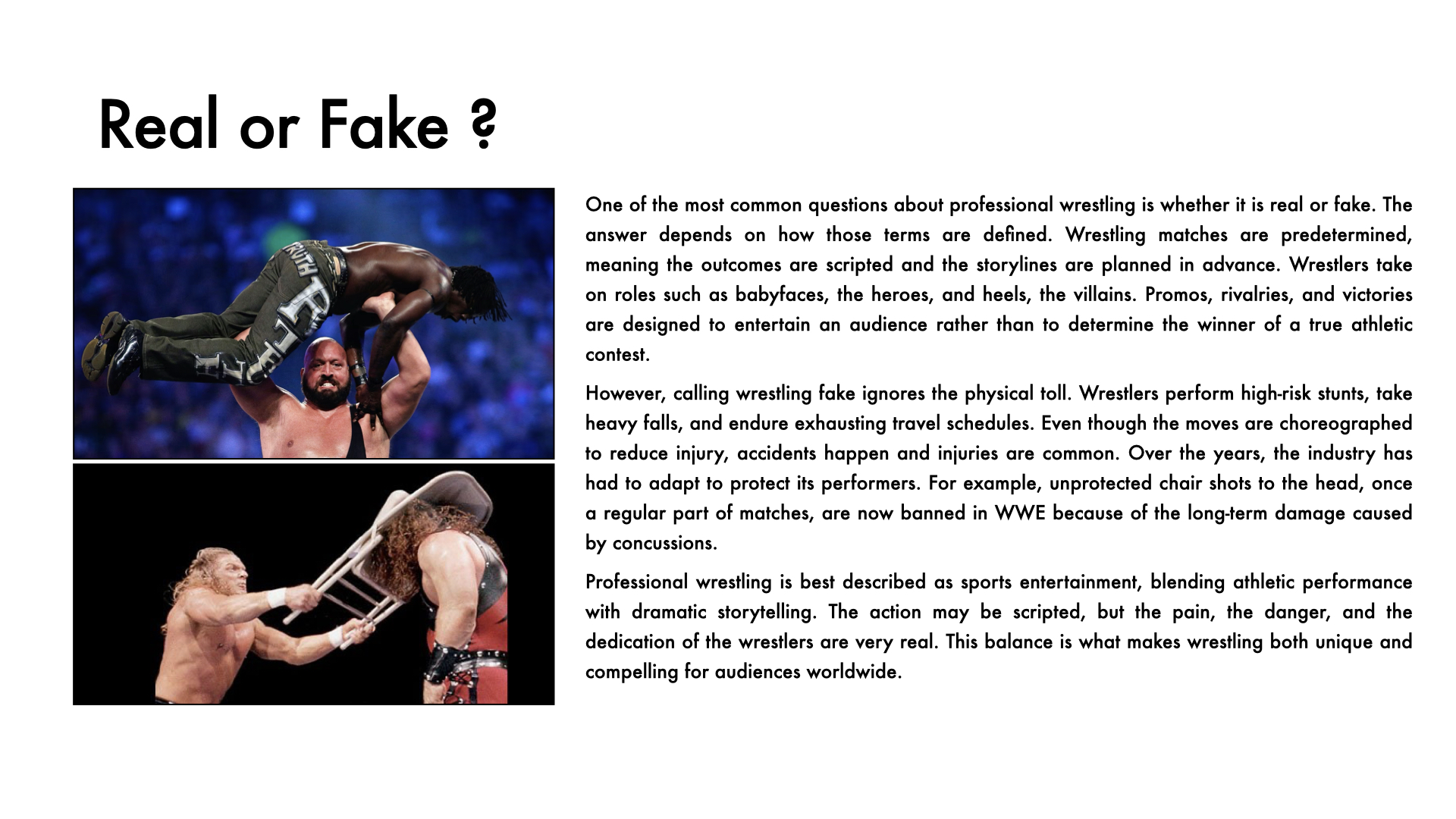
Professional wrestling has always combined athletic performance with storytelling, and two classic roles define its drama. The babyface, or face, is the hero that fans cheer. The heel is the villain who cheats or insults the crowd. These roles create the tension that drives every storyline, and some wrestlers switch sides during their careers to surprise the audience.
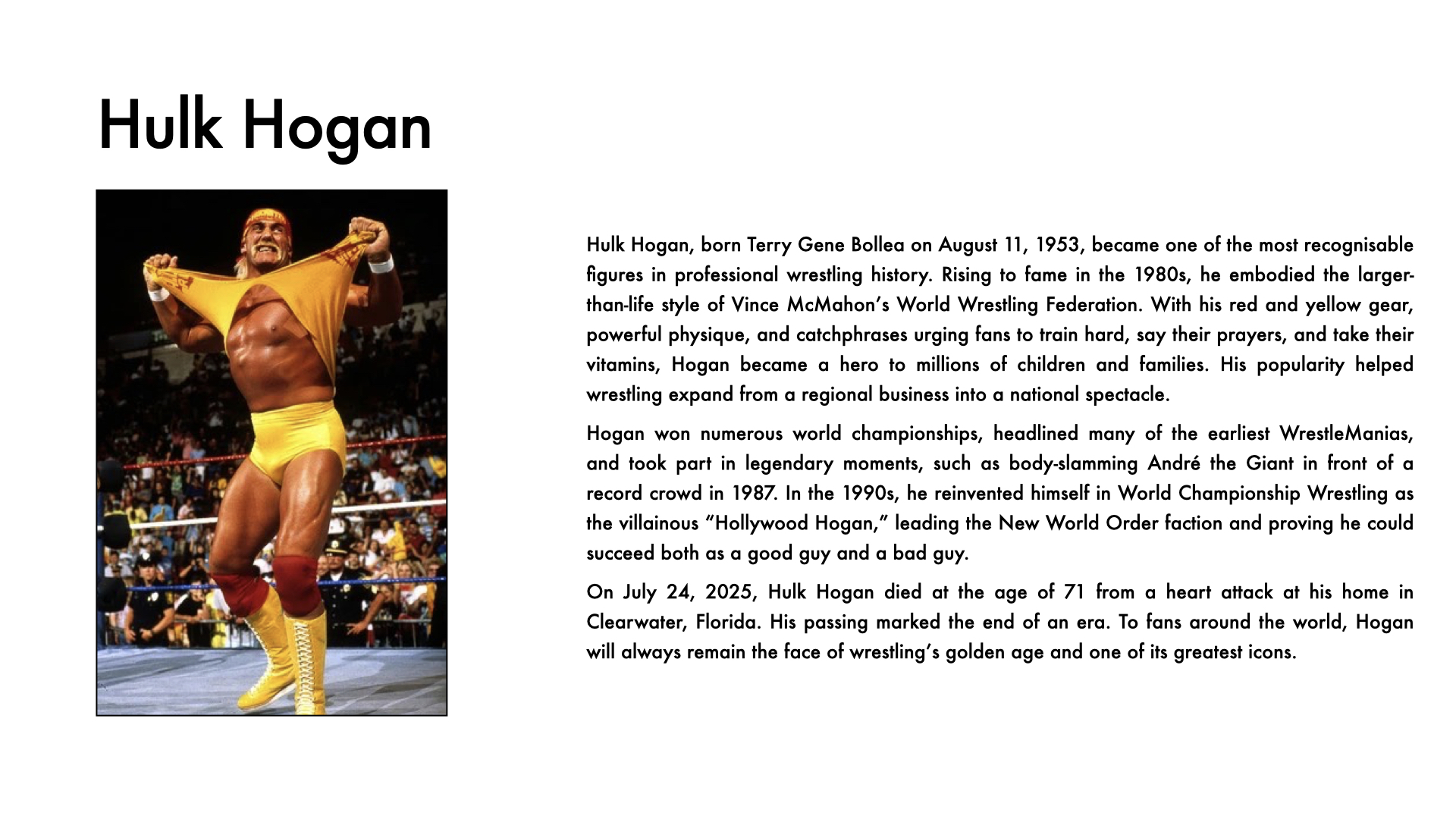
No one symbolised the babyface role more than Hulk Hogan in the 1980s. With his red and yellow gear and his message to train, say prayers, and eat vitamins, Hogan became a global hero and the biggest star of Vince McMahon's World Wrestling Federation. He died of a heart attack in July 2025, aged 71, marking the end of an era.
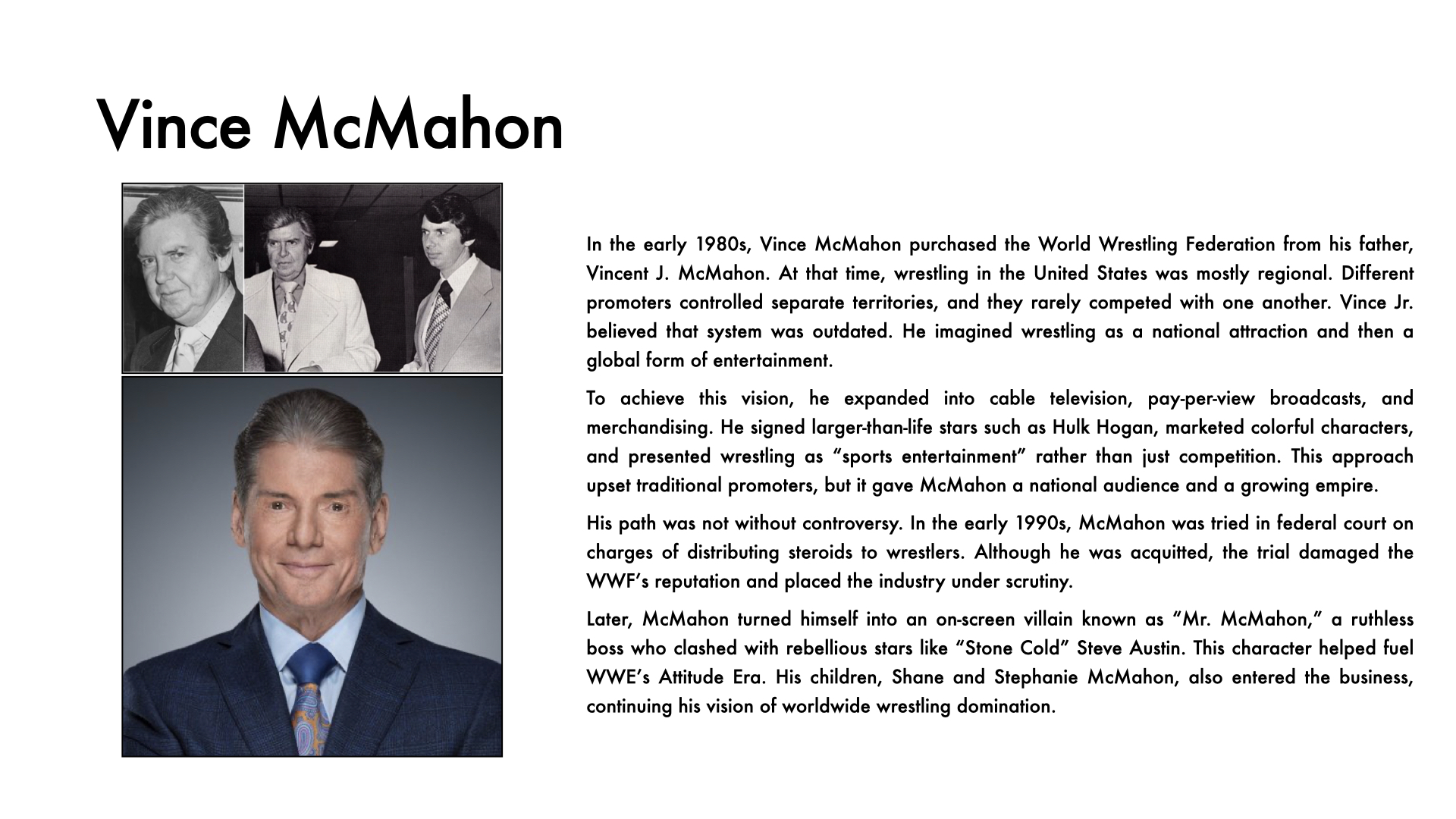
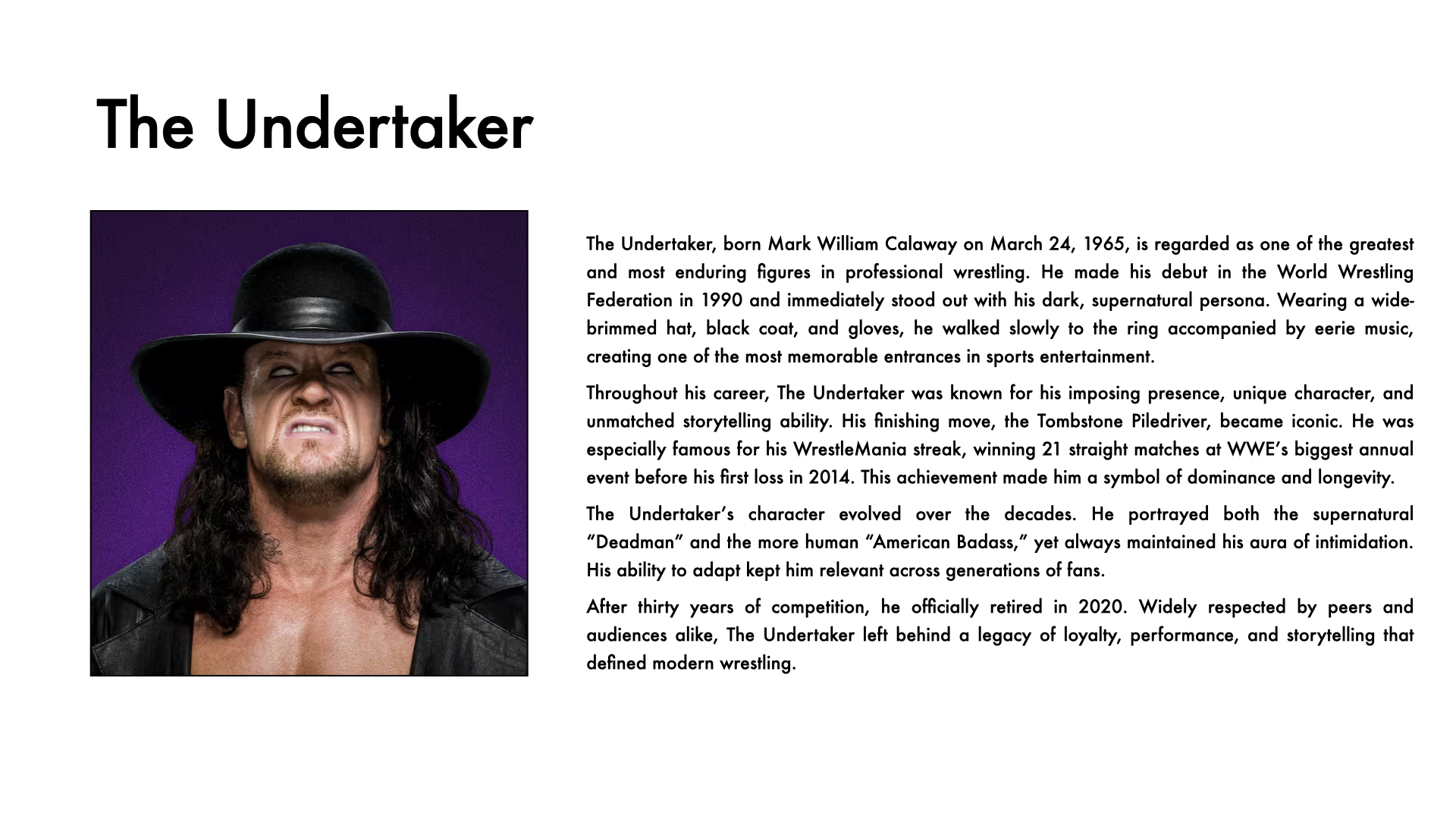
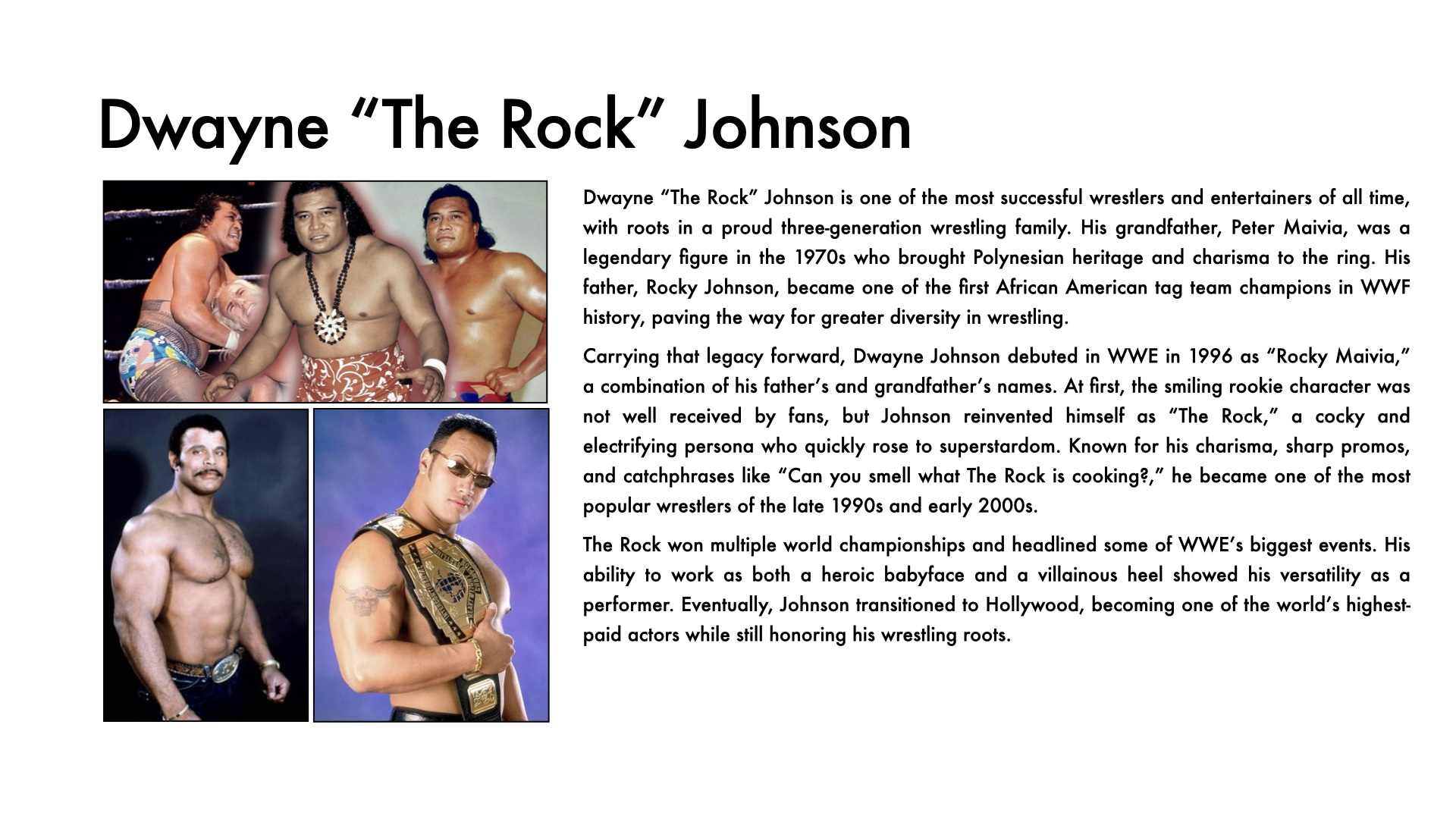
McMahon bought the WWF from his father in the early 1980s, when wrestling was still regional. He changed everything by going national through cable television, pay-per-view, and merchandising, creating stars such as Hogan, The Undertaker, and The Rock, who went on to become a Hollywood icon.
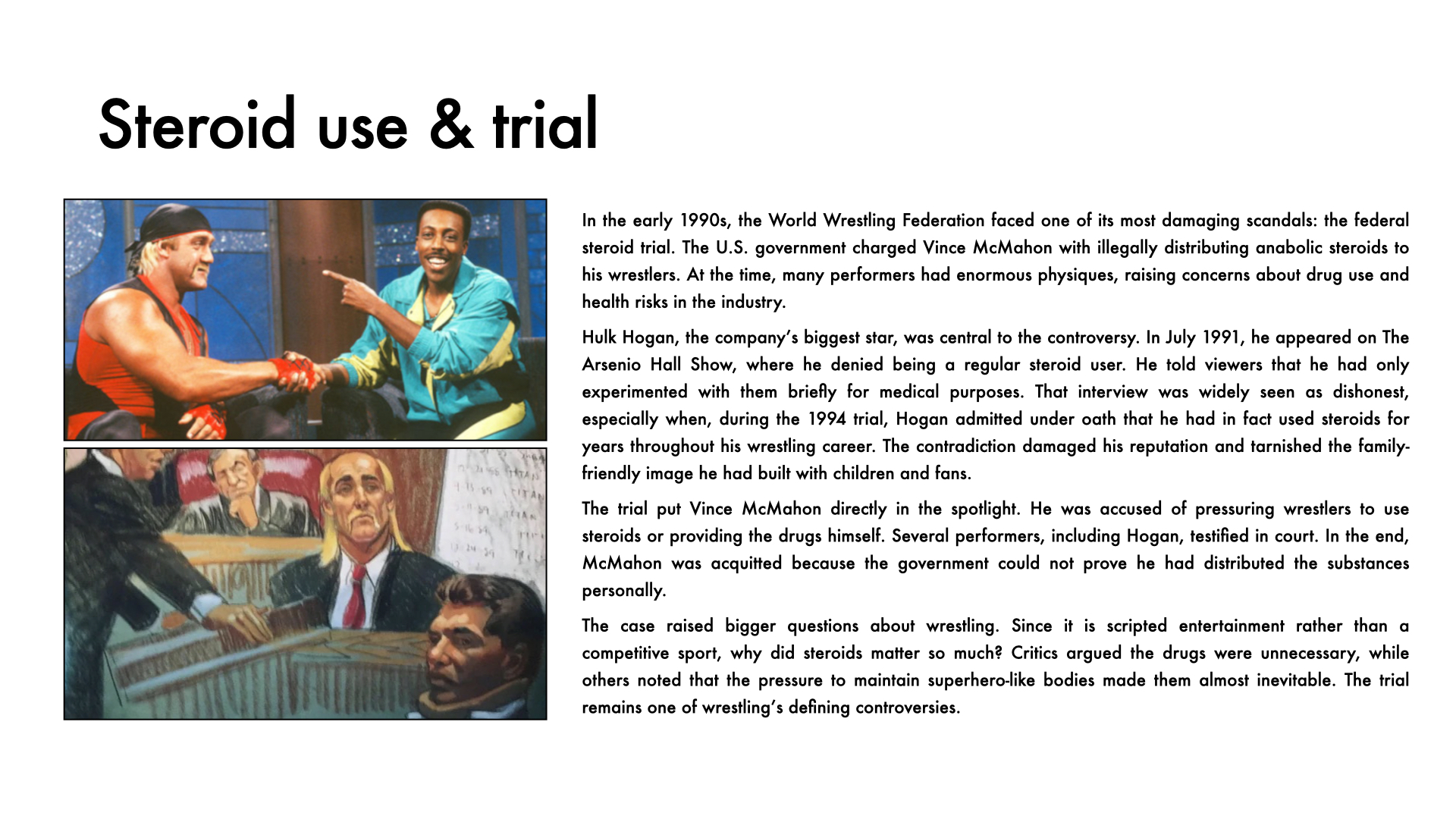
There were controversies too. In 1994, Hogan admitted under oath that he had taken steroids for years, having previously denied it on television. McMahon was accused of distributing steroids to his wrestlers but was acquitted. The scandal damaged the company's image significantly.
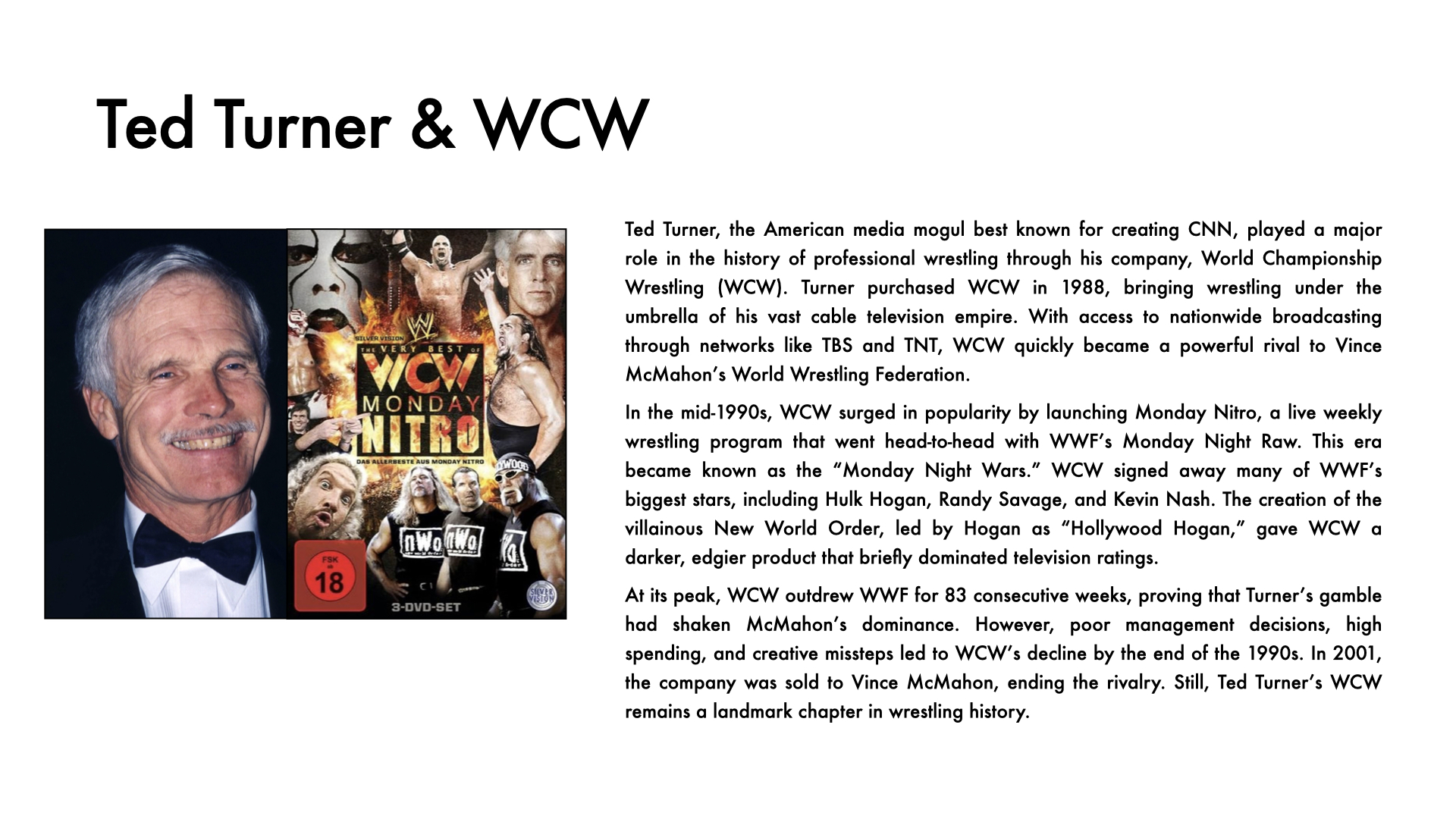
The 1990s brought fierce competition when Ted Turner purchased WCW and launched Monday Nitro. For several years WCW beat McMahon's Raw in the ratings, particularly after Hogan shocked fans by turning heel and joining the villainous New World Order. This period, known as the Monday Night Wars, ended when McMahon bought WCW in 2001.
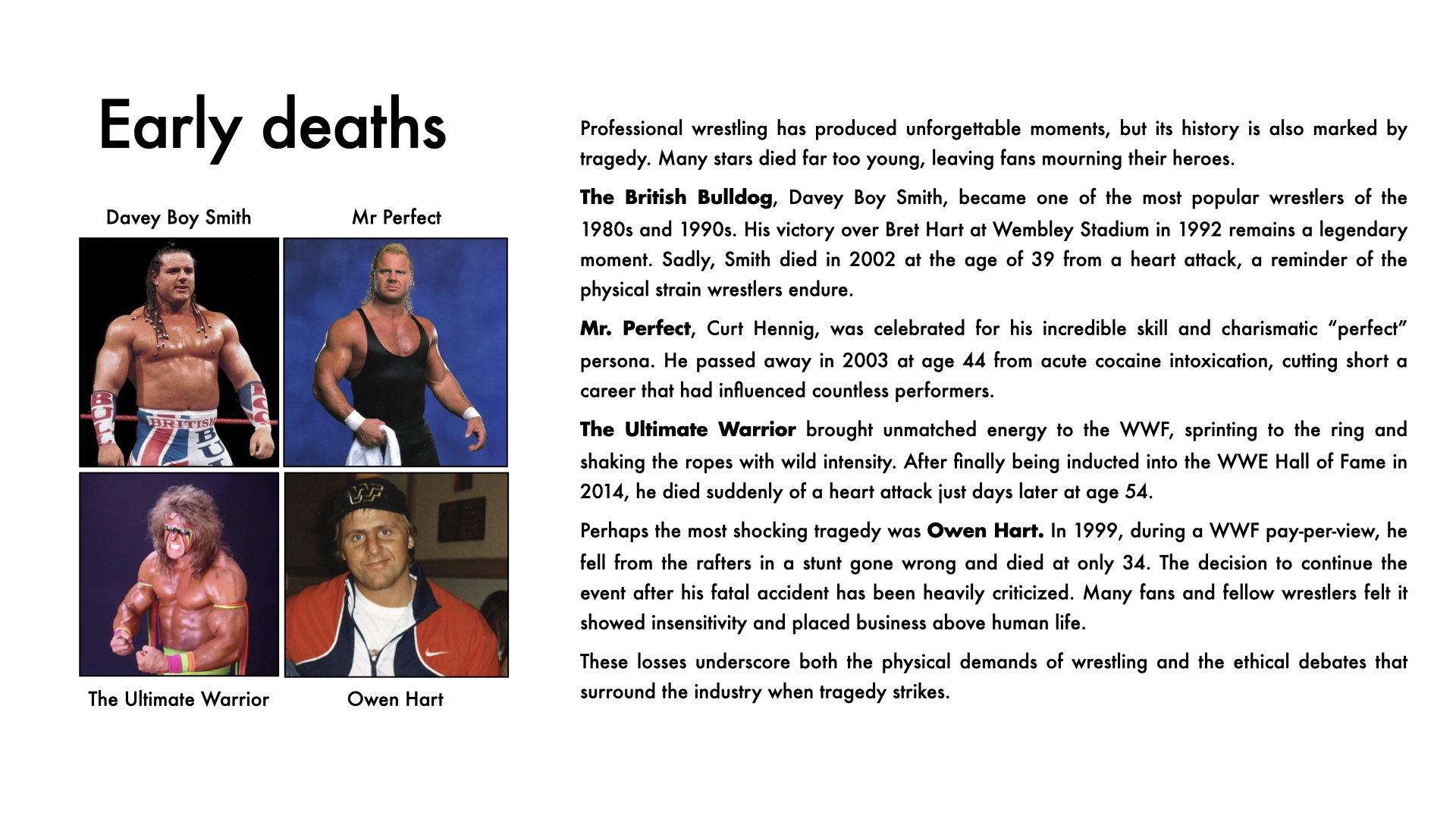
Wrestling has also been marked by tragedy. Several performers died young, including The British Bulldog, Mr. Perfect, and The Ultimate Warrior, their bodies worn down by years of physical punishment and, in some cases, substance abuse. Perhaps the most shocking moment came in 1999 when Owen Hart fell to his death from the rafters of a Kansas City arena during a live event. The show continued afterwards, a decision that drew widespread criticism.
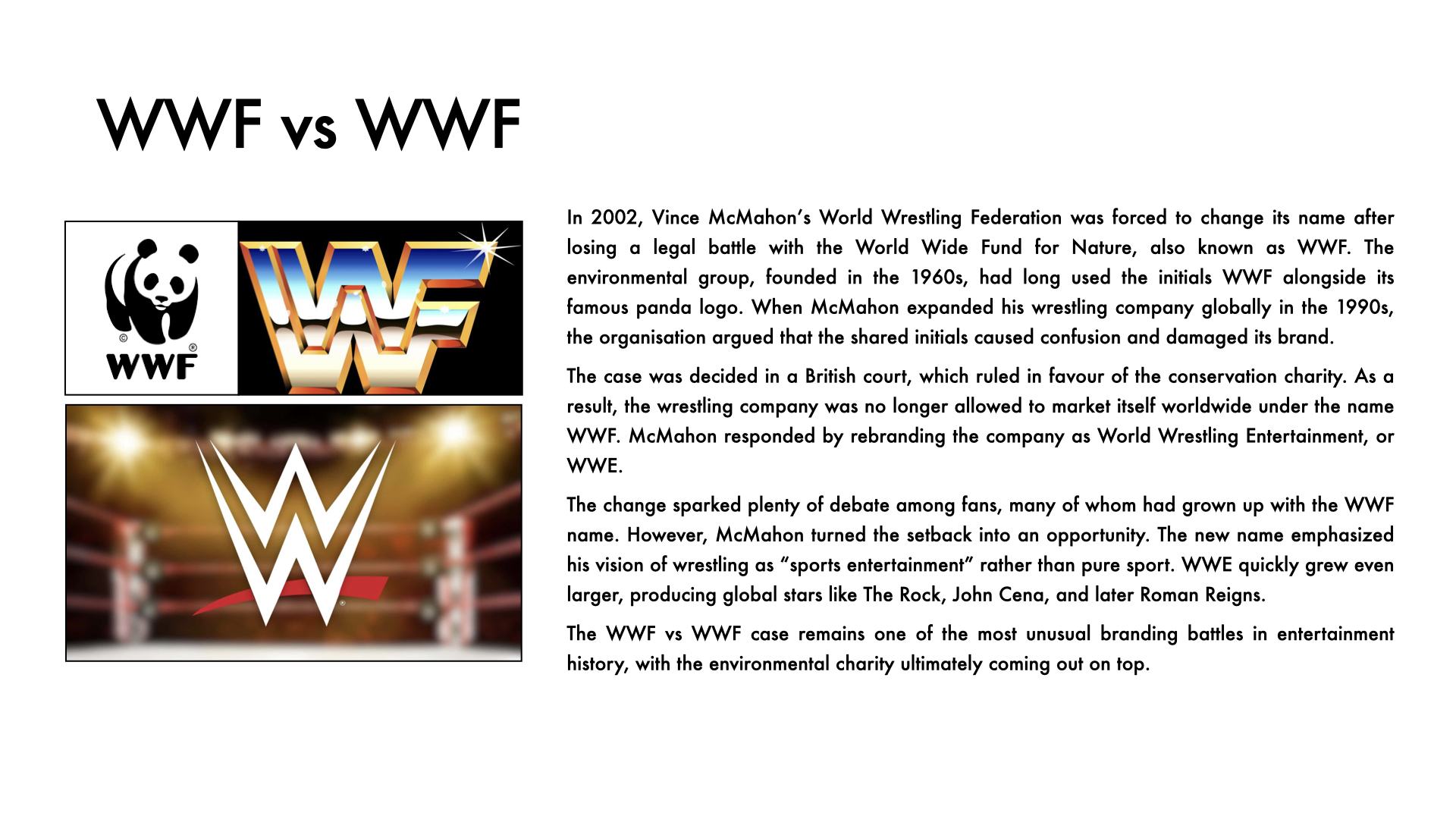
In 2002, after losing a court case to the World Wide Fund for Nature, WWF became WWE, World Wrestling Entertainment, cementing McMahon's vision of wrestling as scripted but physically real sports entertainment.
📽️ Slideshow
📺 Video
🔑 Key Vocabulary
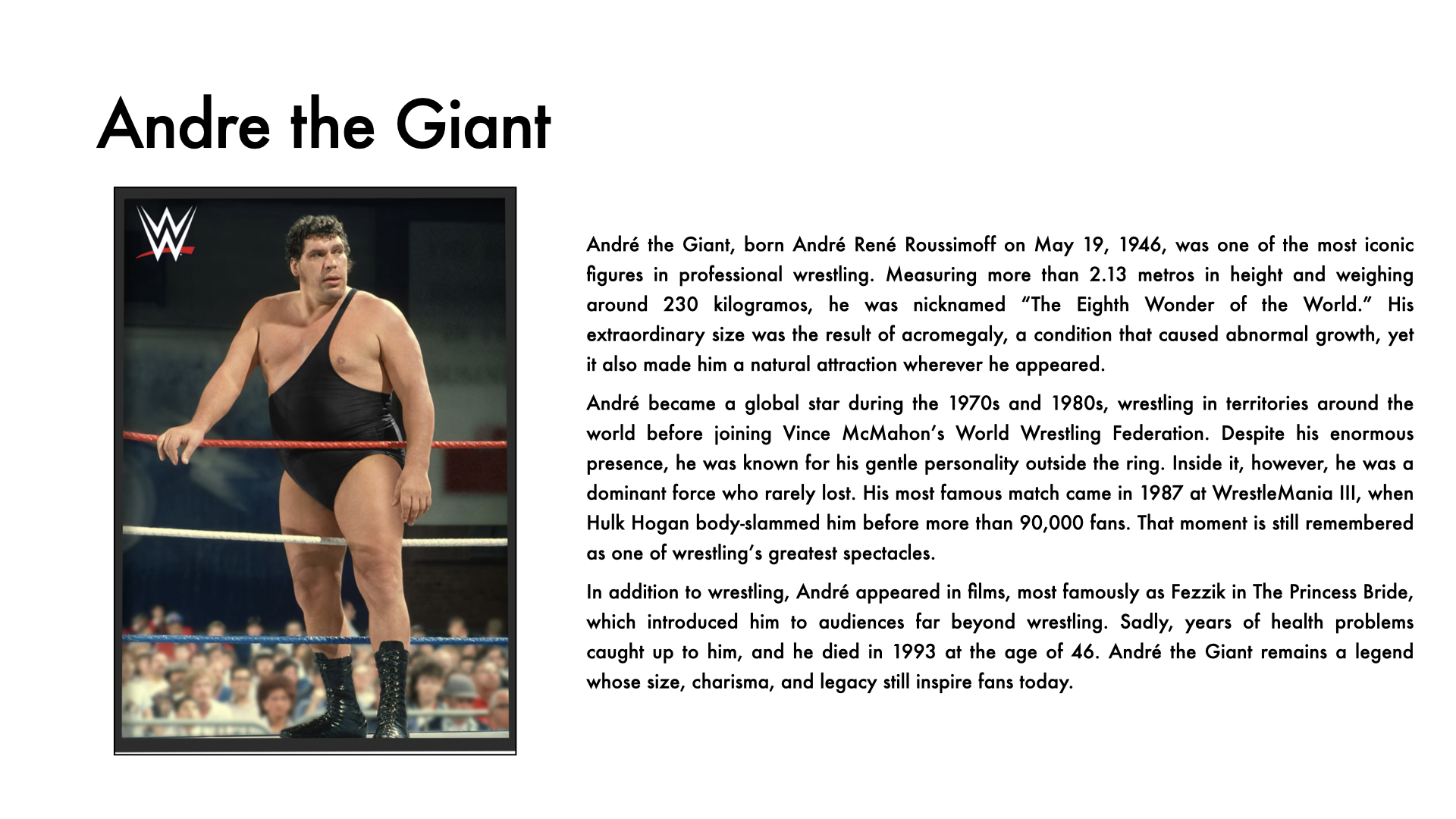
- Acromegaly – A hormonal condition that causes abnormal growth, which gave André the Giant his extraordinary size.
- Babyface (Face) – The “good guy” in wrestling, meant to be cheered by the audience.
- Branding – The use of names, logos, and images to create a recognizable identity for a company or product.
- Controversy – Public disagreement or debate, often caused by a scandal or sensitive issue.
- Feud – A long-term storyline rivalry between two wrestlers or groups.
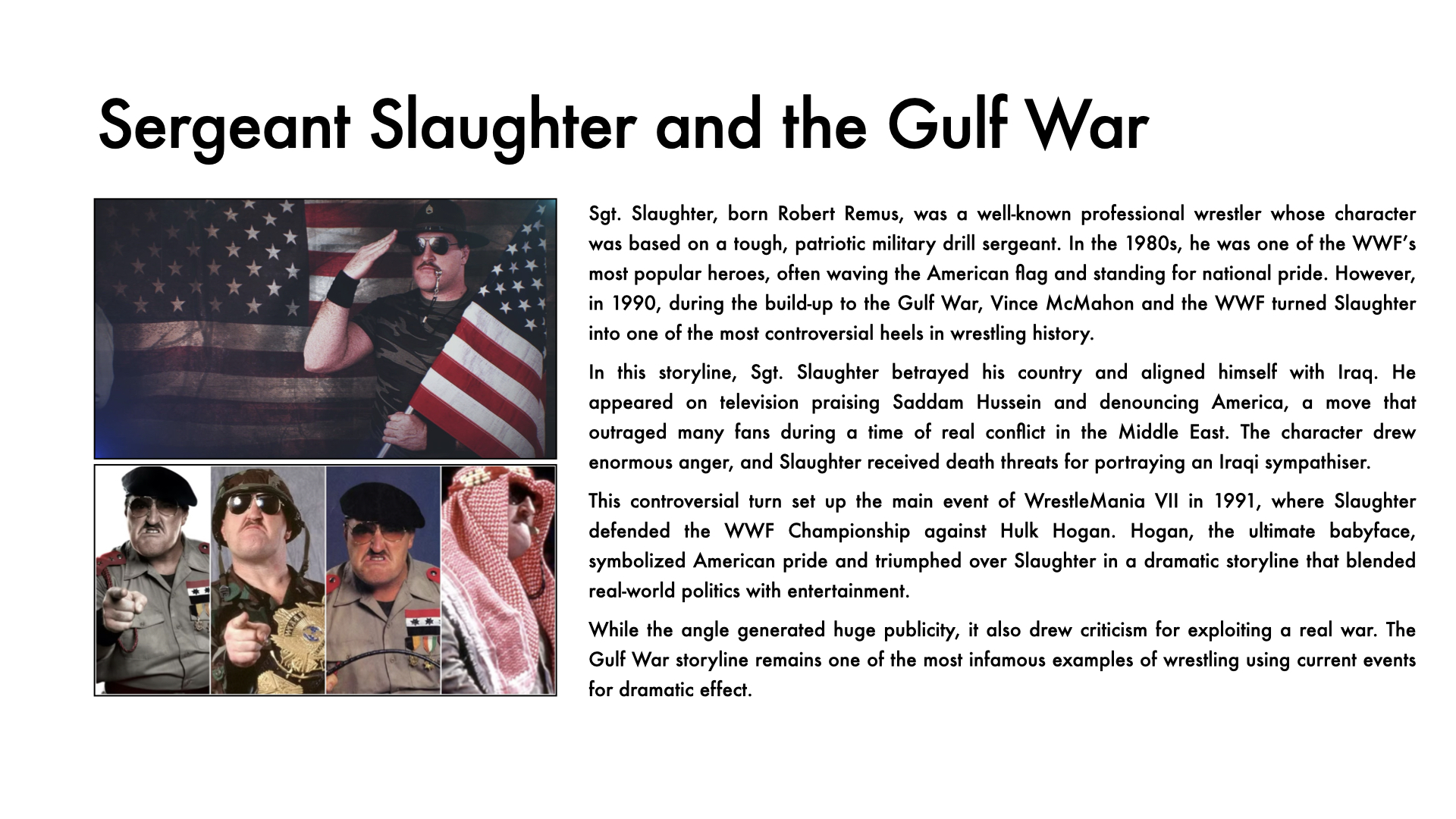
- Heel – The “bad guy” in wrestling, meant to be booed by the audience.
- Kayfabe – The portrayal of staged wrestling events as real, keeping the illusion of authenticity.
- Merchandising – Selling products such as shirts, toys, or posters connected to wrestlers or a wrestling company.
- Pay-Per-View (PPV) – A special event broadcast that fans pay to watch, such as WrestleMania.
- Predetermined – Decided in advance; wrestling match outcomes are scripted before the performance.
- Promo – A wrestler’s speech or interview used to promote a storyline or feud.
- Sports Entertainment – Vince McMahon’s term for professional wrestling, highlighting its mix of athletic performance and drama.
- Steroid Trial – The 1994 federal court case accusing Vince McMahon of distributing steroids to wrestlers.
- Storyline – The scripted plot or narrative that develops between wrestlers over time.
- Turn – When a wrestler switches roles, such as a babyface becoming a heel or vice versa.
- Wellness Policy – WWE’s health and drug-testing program introduced to protect performers after past controversies.
- WrestleMania – WWE’s biggest annual event, first held in 1985.
💬 Conversation Questions
- Who is your favorite wrestler of all time, and why?
- Do you think Hulk Hogan was more interesting as a hero or as “Hollywood Hogan” the villain?
- If you could create your own wrestling character, what would they be like?
- Do you think wrestling is fake, real, or something in between?
- What is more fun to watch: a big character like The Undertaker or a more realistic wrestler?
- Would you have kept the WWF name or do you like WWE better?
- How do you feel about wrestlers taking dangerous risks in matches?
- What do you think made the 1980s wrestling boom so popular with kids and families?
- Would you rather watch an old-school match with Hulk Hogan and André the Giant or a modern WWE match?
- Why do you think wrestling still attracts so many fans after all these years?