Week 0️⃣ 1️⃣
Reduplication
🔊 Audio
📜 Show transcript
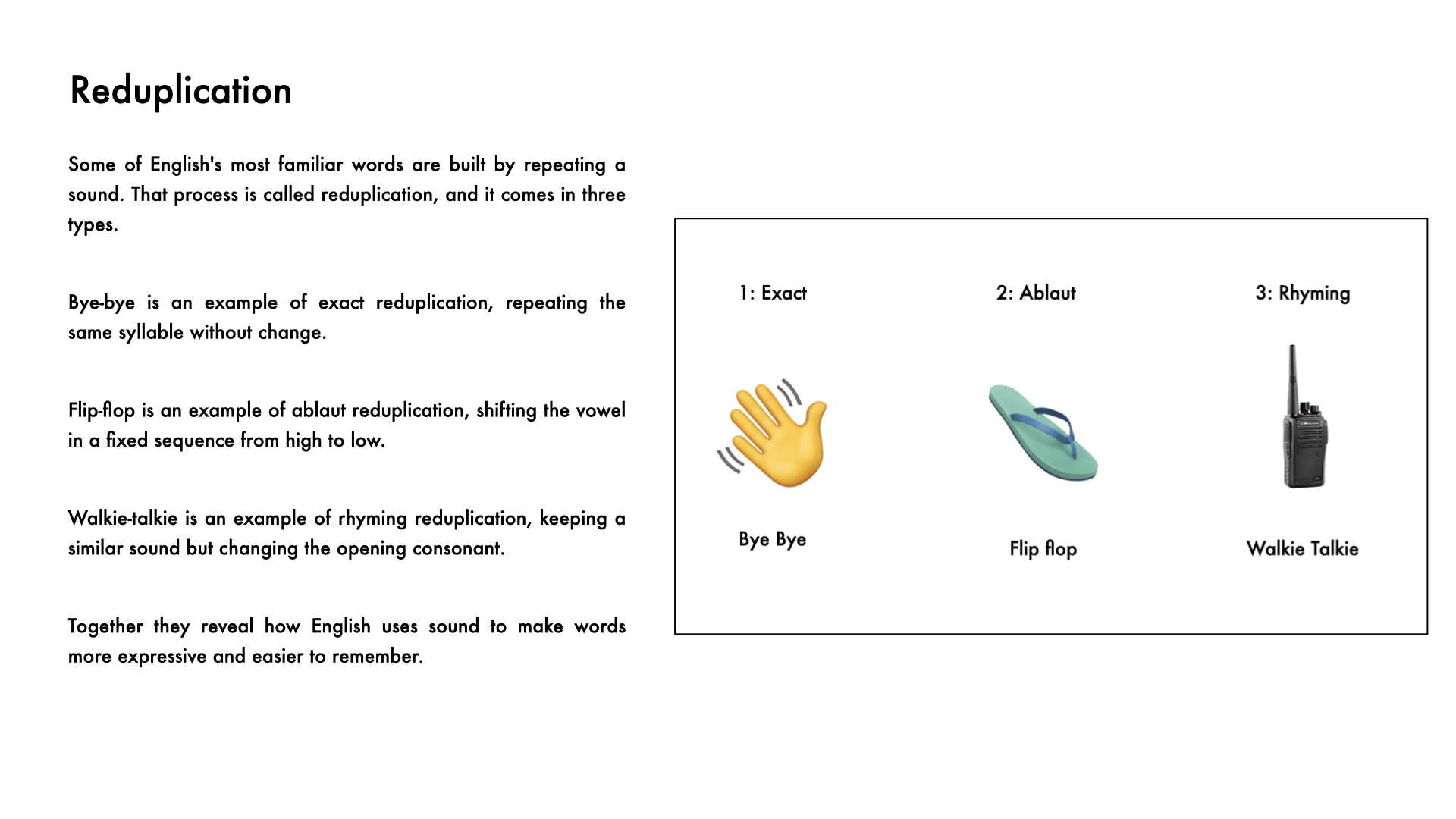
The word reduplication in English refers to a linguistic pattern where a sound, syllable, or word is repeated, either exactly or with a small variation, to create a new word or expression, and it comes in three distinct forms.
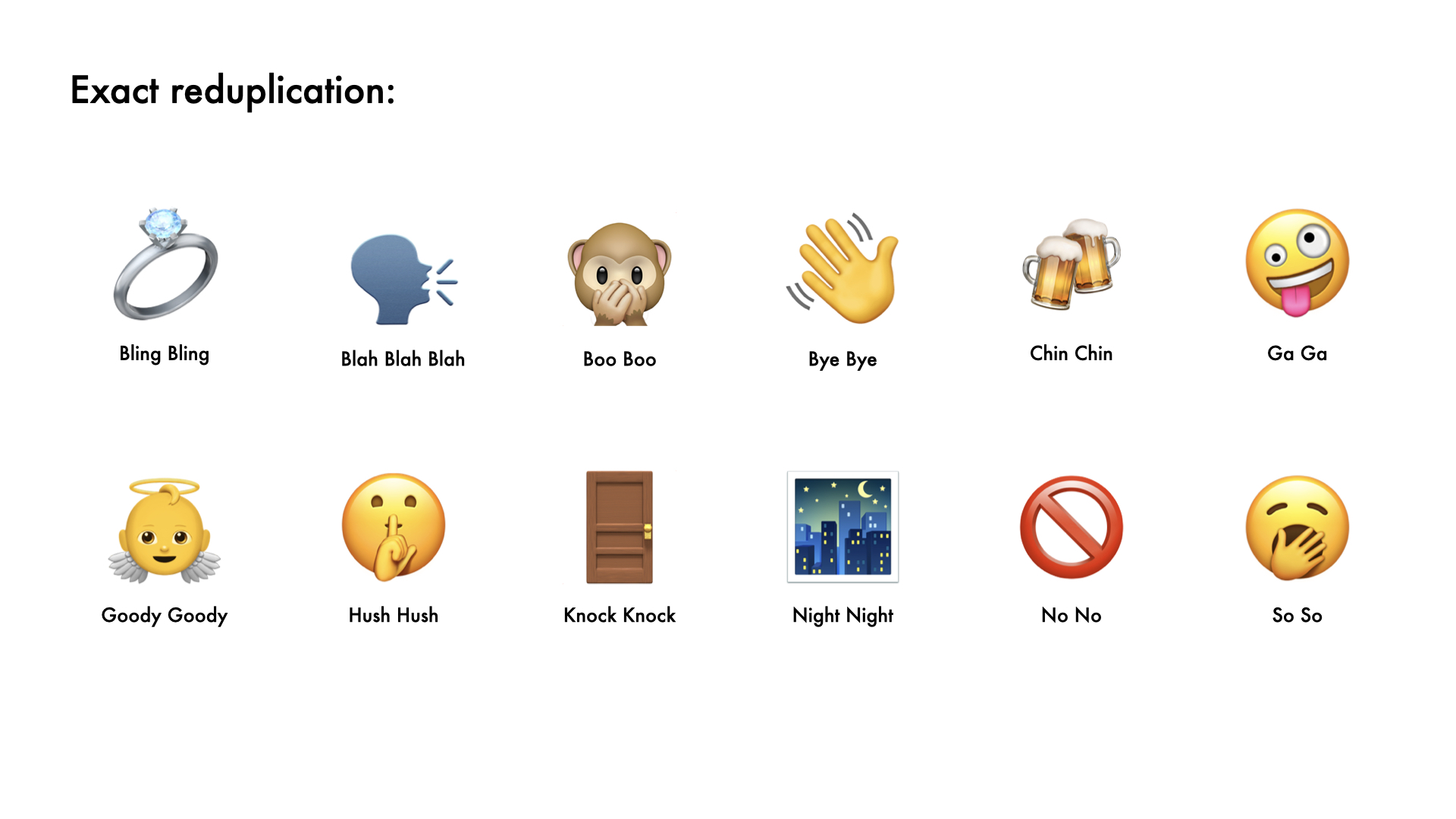
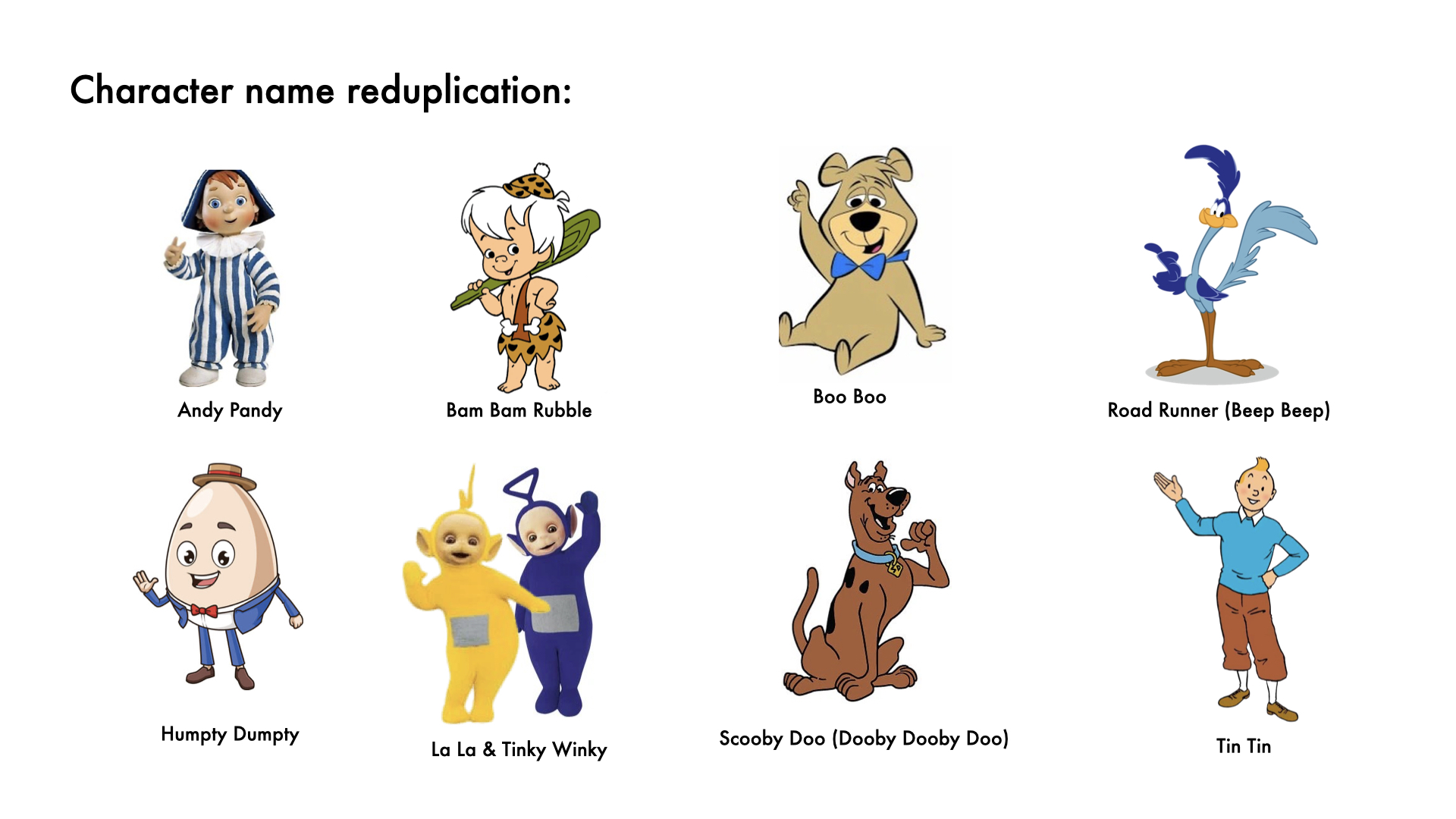
The most straightforward form is called exact reduplication, where the element is repeated without change. Bye-bye is a familiar and friendly way to say farewell. A no-no is something that must not be done. A goody-goody describes a person who behaves in an irritatingly proper way. These words are short, emphatic, and instantly recognisable.
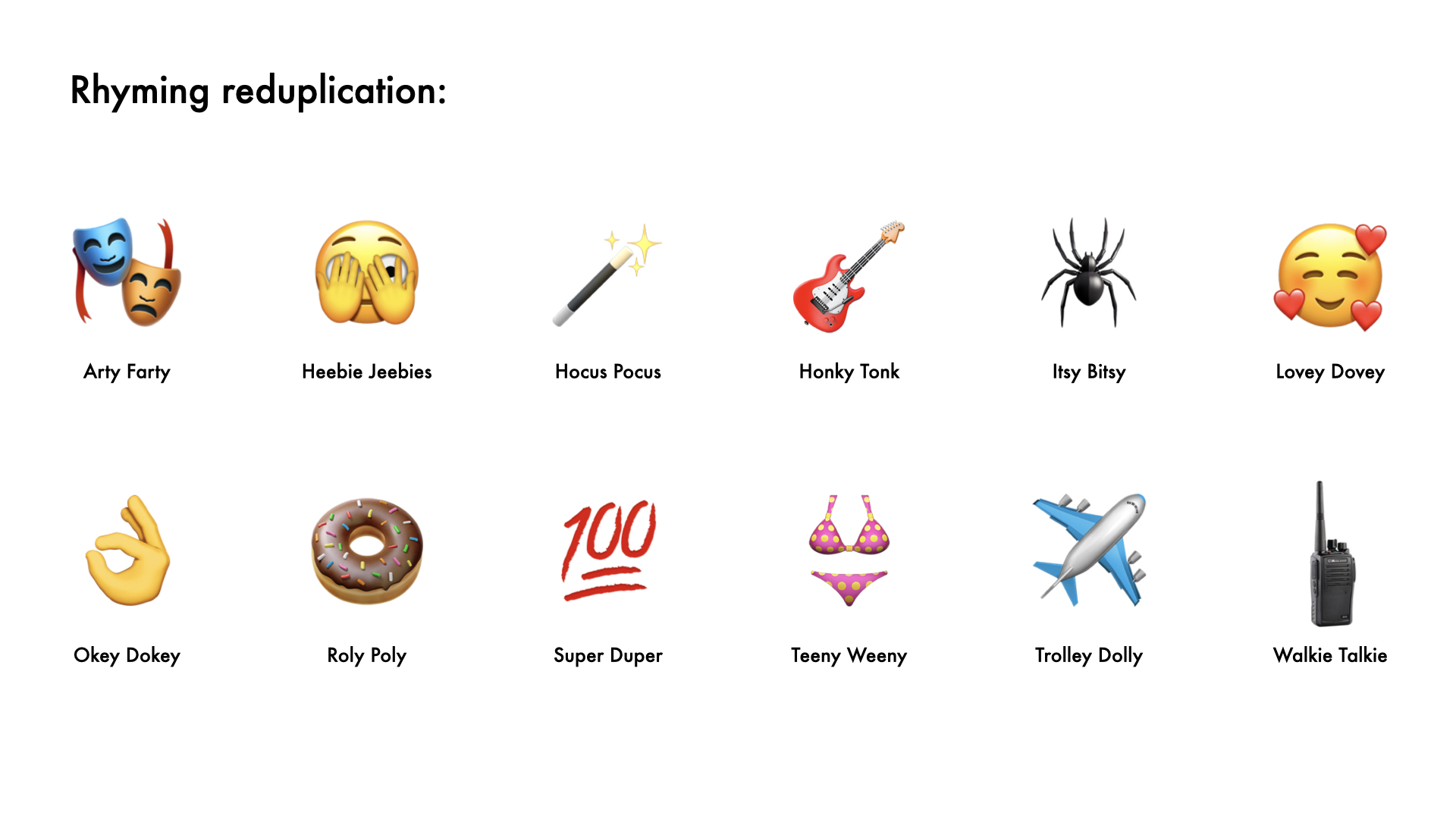
The second type is called rhyming reduplication. Here the repeated part changes slightly but keeps the rhyme. Humdrum means boring or routine. Hocus-pocus suggests trickery or nonsense. Super-duper is an informal way of saying something is very good. These expressions feel playful and add colour to everyday speech.
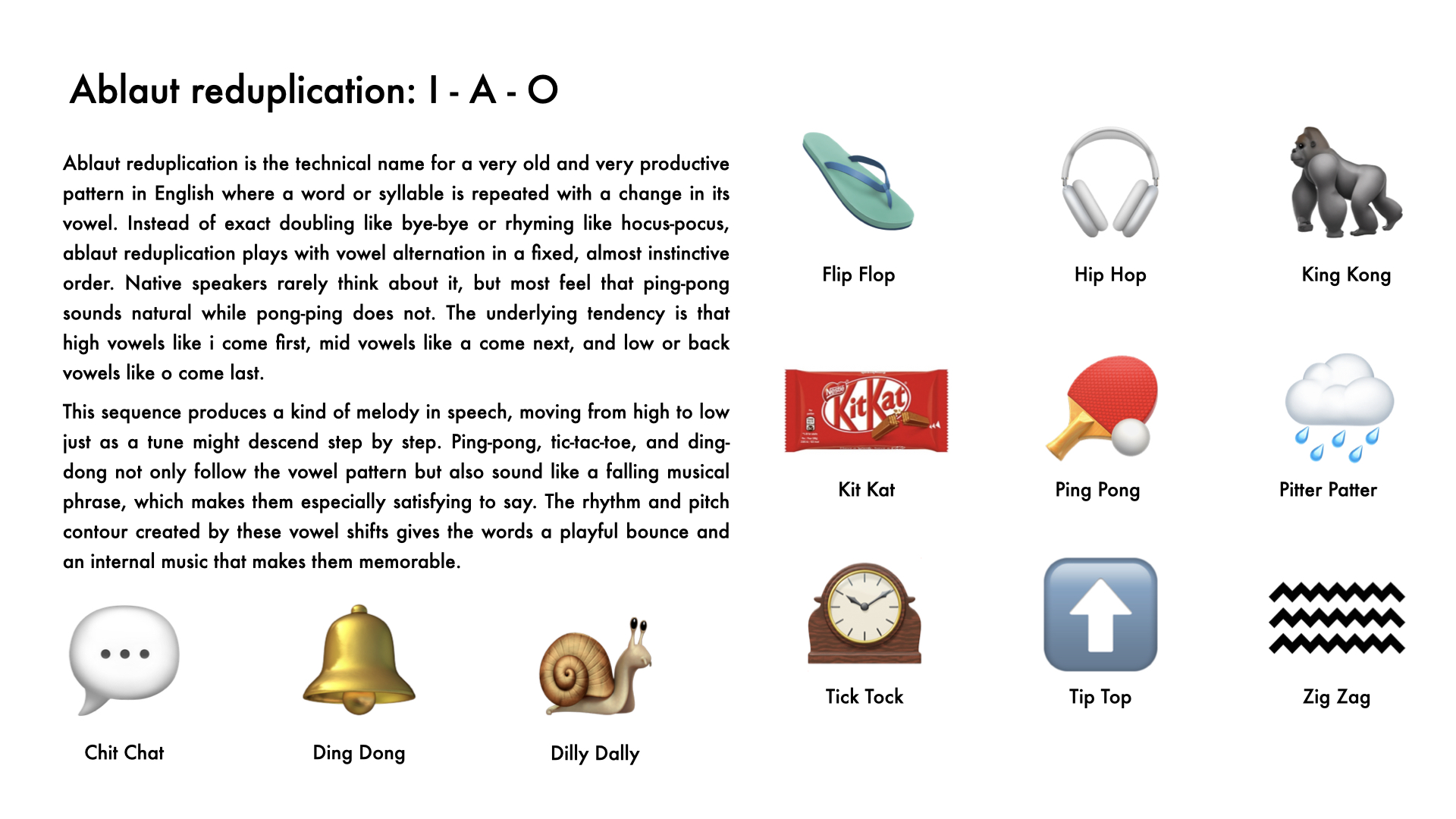
The third type is called ablaut reduplication, which works through vowel change. English follows a strong pattern here: the vowel sequence goes i, then a, then o. That is why we say flip-flop and not flop-flip, zig-zag and not zag-zig, tick-tock and not tock-tick. Native speakers follow this rule instinctively, even though it is rarely taught.
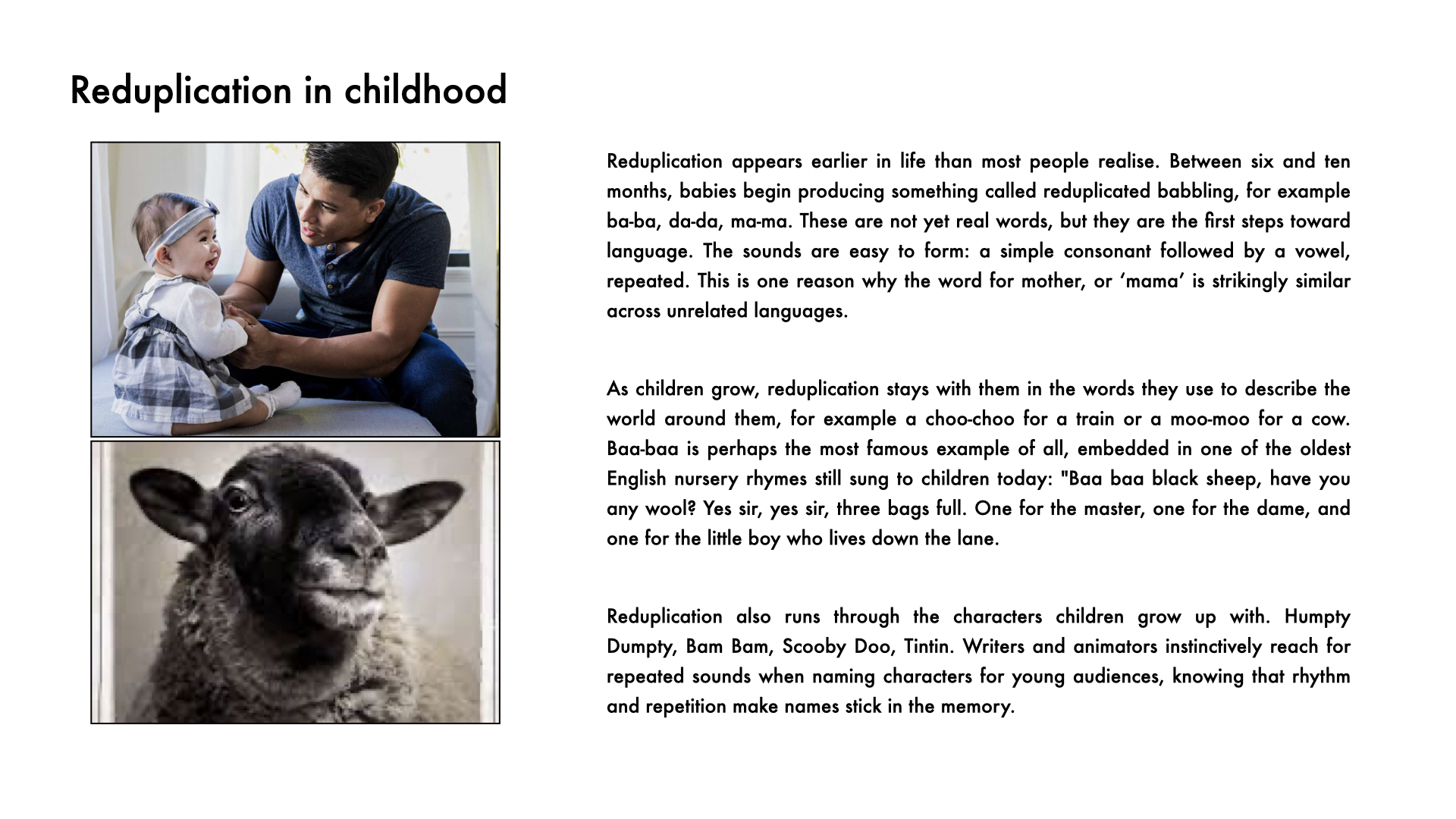
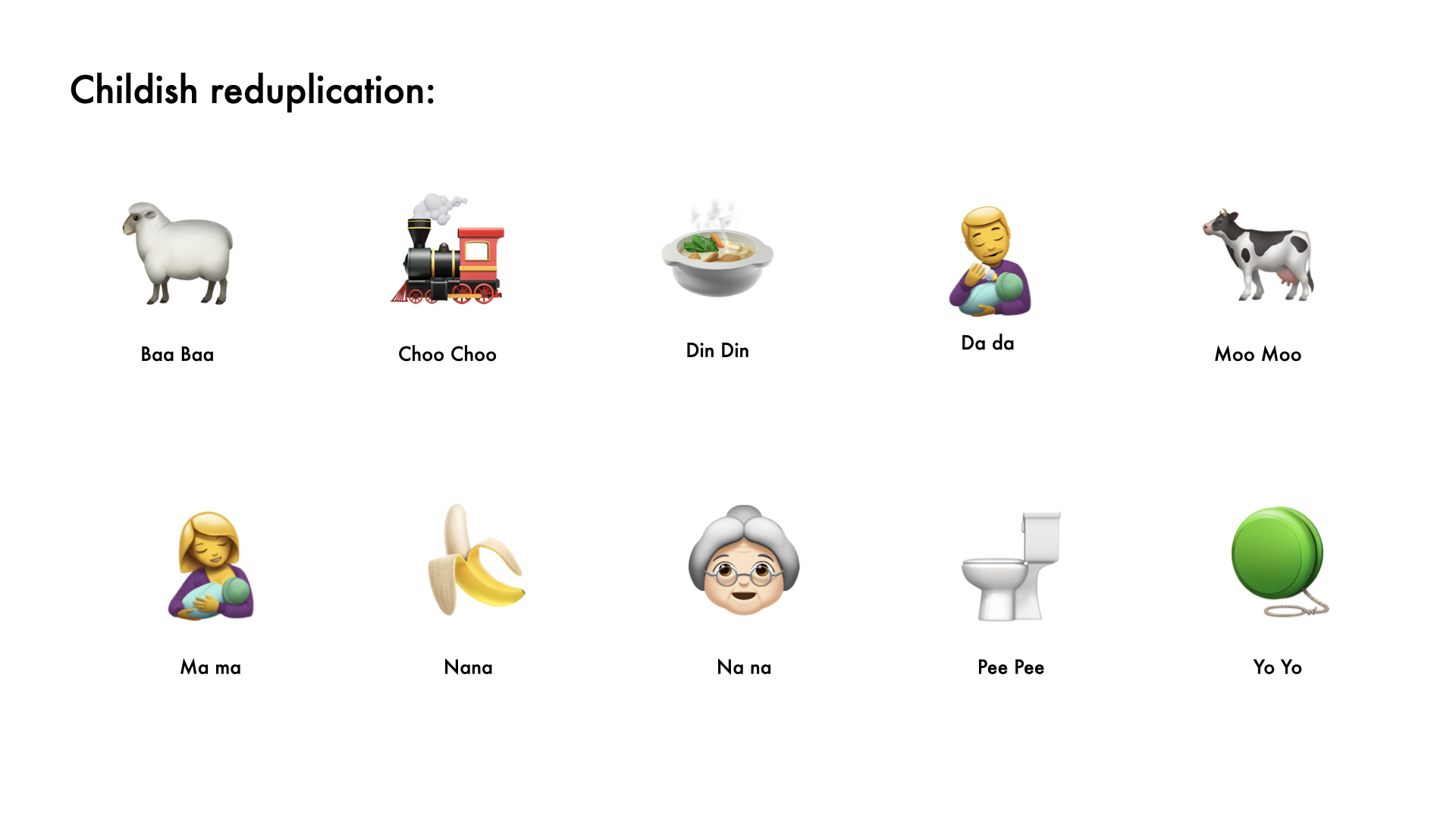
Reduplicated words appear across many areas of life. Advertisers use them because they are catchy and easy to remember. Children use them naturally in early speech. They also appear in informal conversation, where they make language feel warmer and less formal.
Beneath their playful surface, reduplicated words follow consistent rules. Those rules govern sound, rhythm, and the order of vowels. They reveal something important: even the most casual-sounding expressions in English have a hidden structure. Reduplication is a small but revealing window into how sound and meaning work together in the language.
📽️ Slideshow
📺 Video
🔑 Key Vocabulary
Exact reduplication
- boo-boo: a small mistake or a minor injury (esp. with children)
- bye-bye: a casual way of saying goodbye
- chin chin: a toast when drinking; similar to “cheers”
- choo-choo: the sound of a train; also used by children to mean a train
- frou-frou: very fancy or frilly decoration
- goody-goody: someone overly well-behaved or eager to please authority
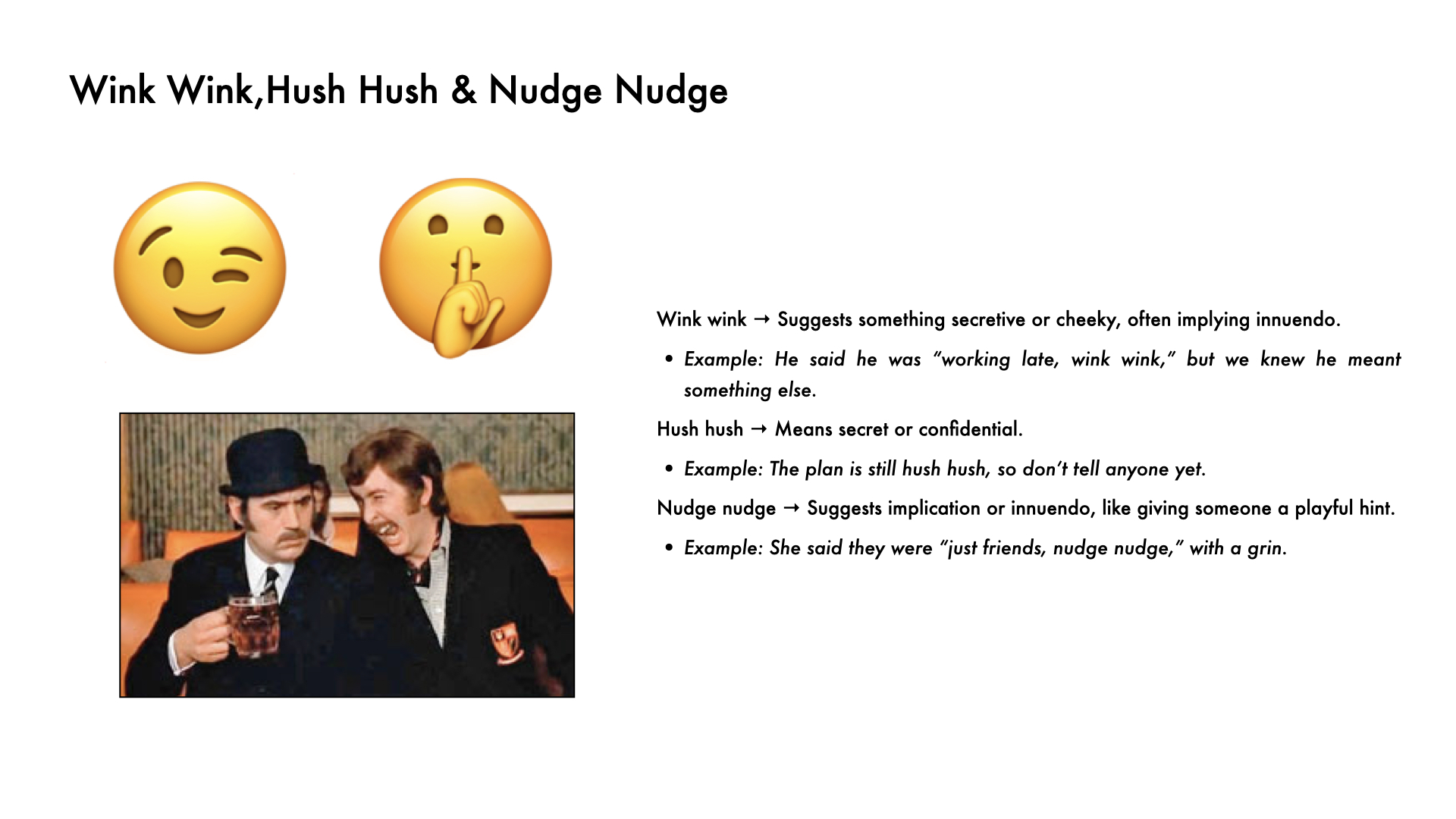
- hush-hush: something confidential secretive
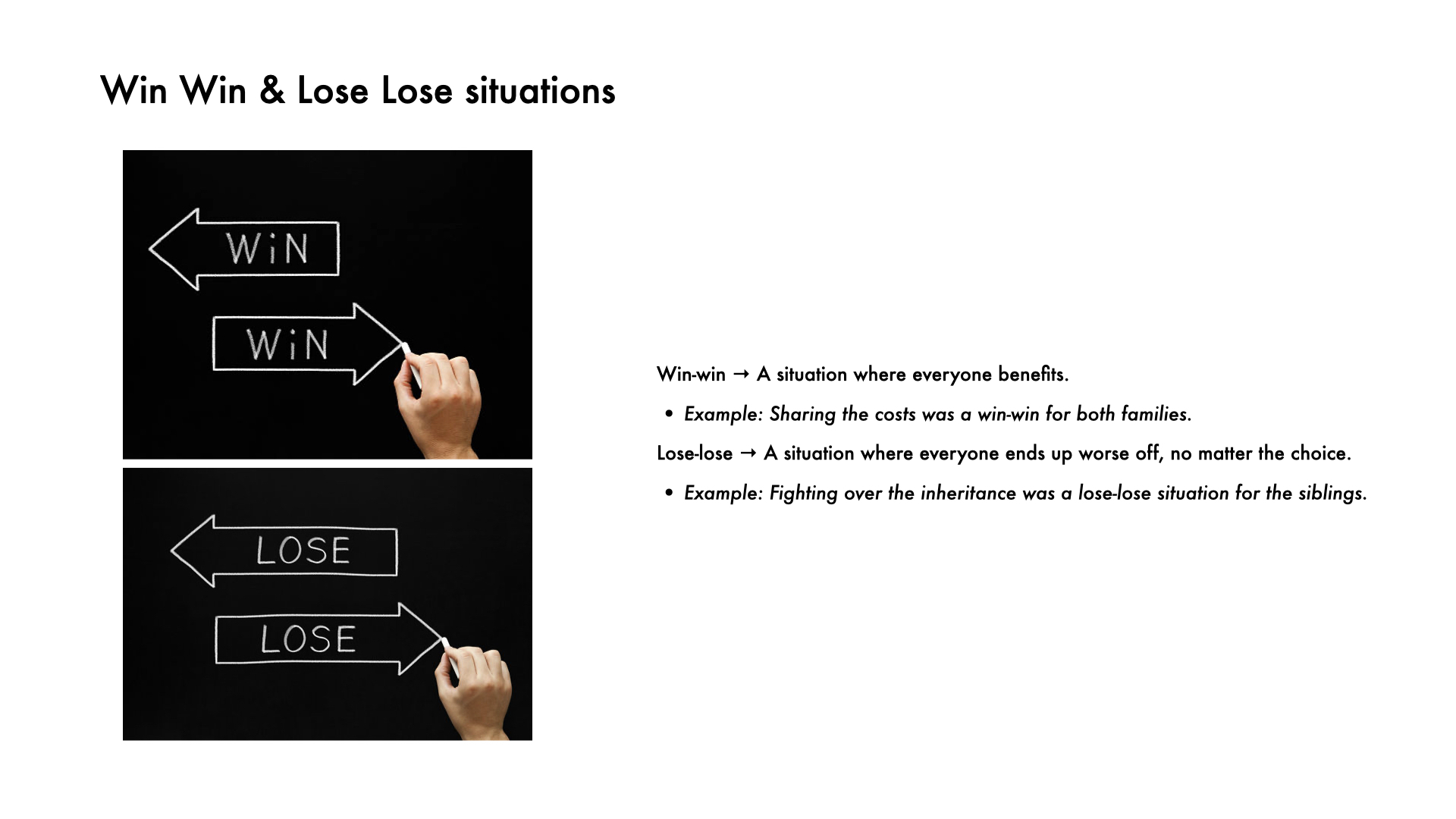
- lose-lose: a situation where nobody benefits
- night-night (nighty-nighty): a way of saying goodnight (esp. to a child)
- no-no: something not allowed or socially unacceptable
- pee-pee: childish term for urination
- so-so: neither very good nor very bad; average
- wee-wee: childish term for urination
- win-win: a situation where everyone benefits
- wink-wink: suggests something secretive
- yum-yum: used to say something tastes delicious
Ablaut reduplication
- bish bash bosh: said to suggest something was done quickly and easily
- chit chat: casual talk or gossip
- clip clop: the sound of hooves hitting the ground
- criss cross: to move or mark in a crossing pattern
- dilly dally: to waste time or move slowly
- ding dong: the ringing sound of a bell; sometimes a noisy quarrel
- fiddle faddle: trivial nonsense or fuss
- flip flop: a change of opinion; also a type of sandal
- flim flam: trickery or deceitful nonsense
- hip hop: music & culture (rap, DJing, breaking, graffiti)
- jibber jabber: fast, meaningless talk
- jingle jangle: light ringing or clinking sounds
- King Kong: the famous giant ape character
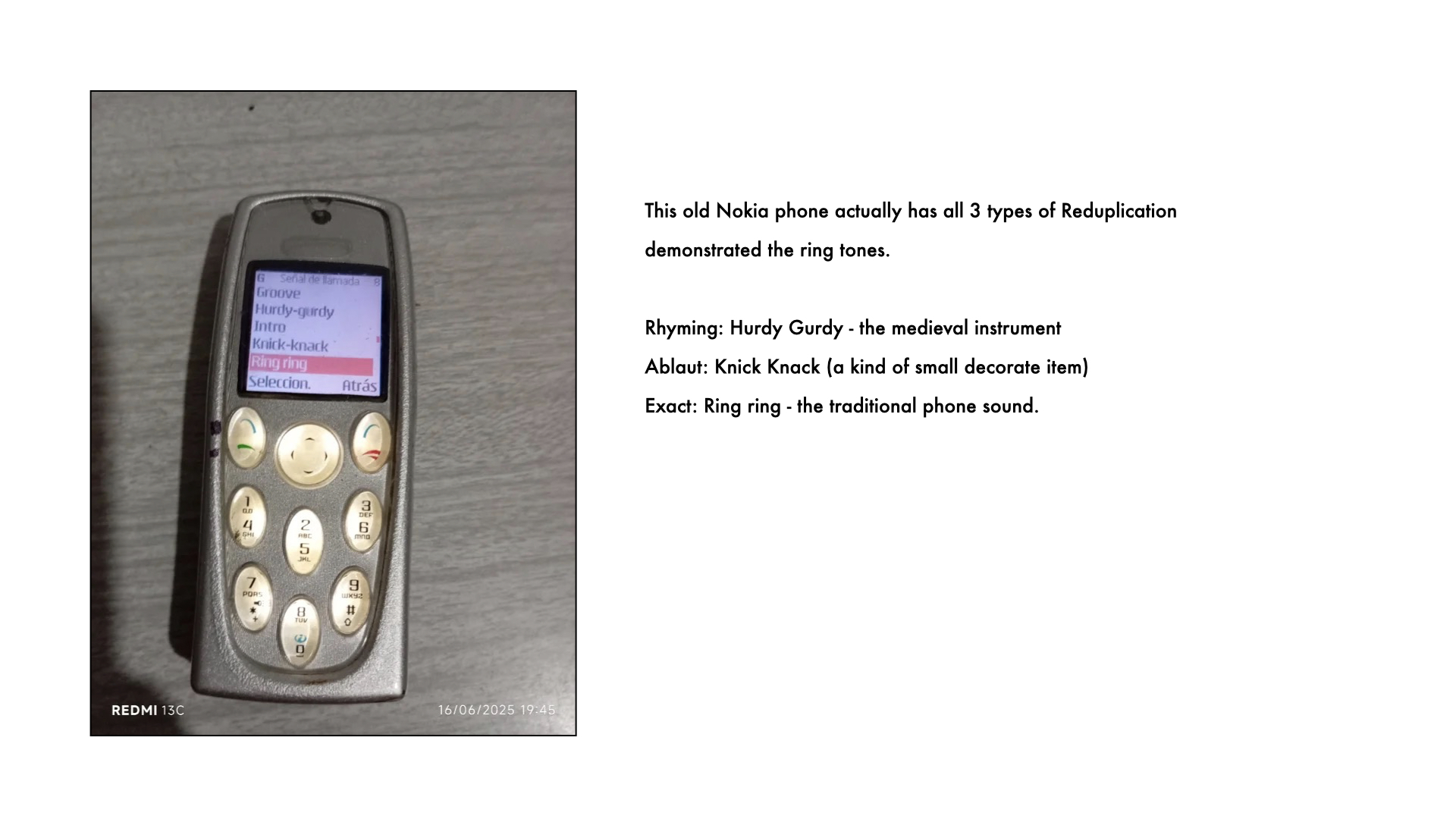
- knick knack: a small ornament or trinket
- mish mash: a confused mixture of things
- ping pong: table tennis
- pitter patter: the sound of light steps or raindrops
- riff raff: people considered disreputable or low-class
- sing song: informal group singing
- splish splash: the sound of water being moved about
- tic-tac-toe: paper-and-pencil game with Xs and Os
- tick tock: the sound of a clock
- tip top: of the highest quality
- wishy-washy: weak, indecisive, lacking strength
- zig zag: a line/path changing direction sharply
Rhyming reduplication
- dilly dally: to waste time or move slowly
- easy peasy: very simple or easy
- hanky panky: dishonest behaviour or sexual activity
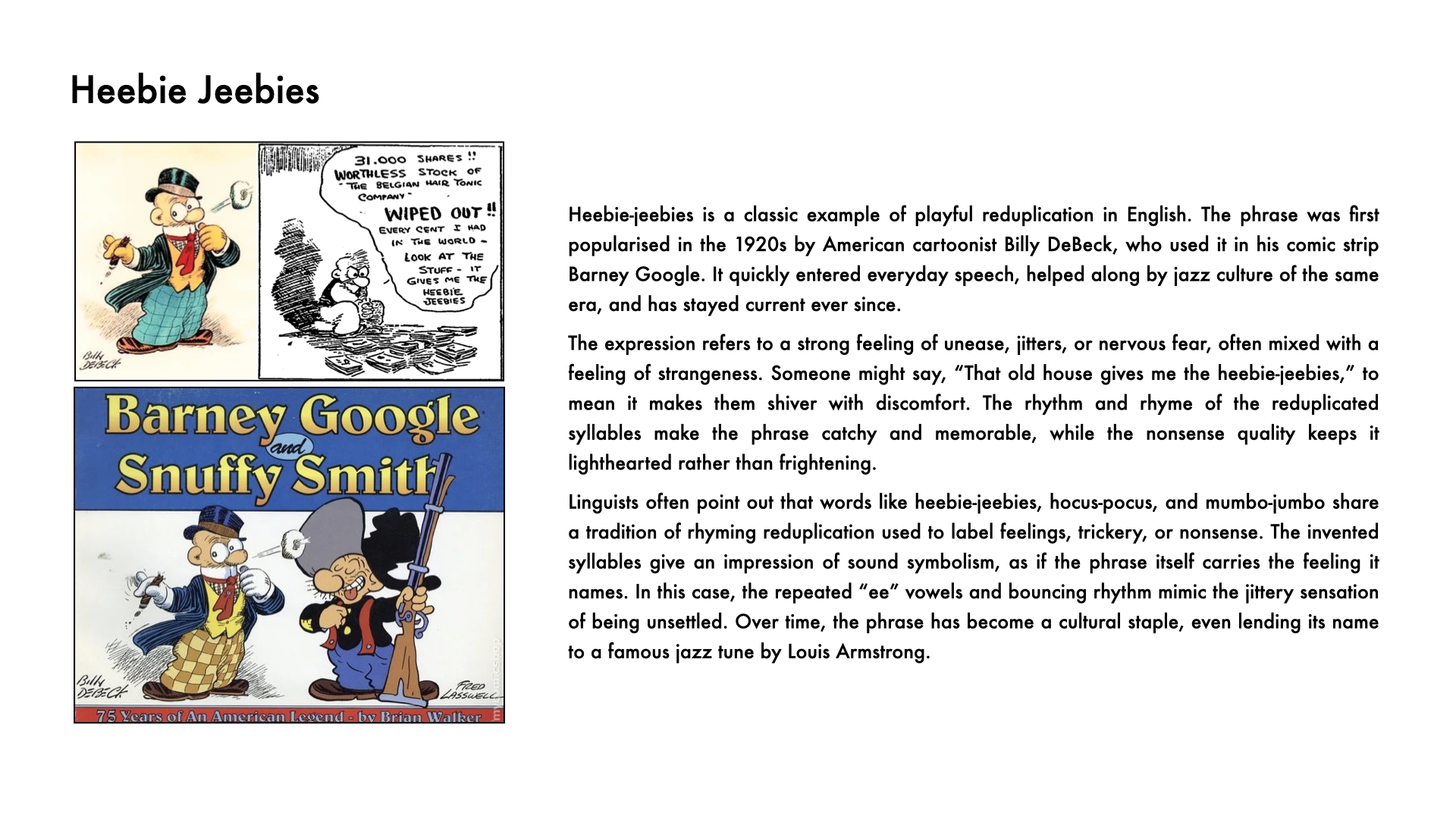
- heebie jeebies: a feeling of nervousness or fear
- higgledy-piggledy: in a messy or disorganised way
- hippity hoppity: moving with quick hopping steps
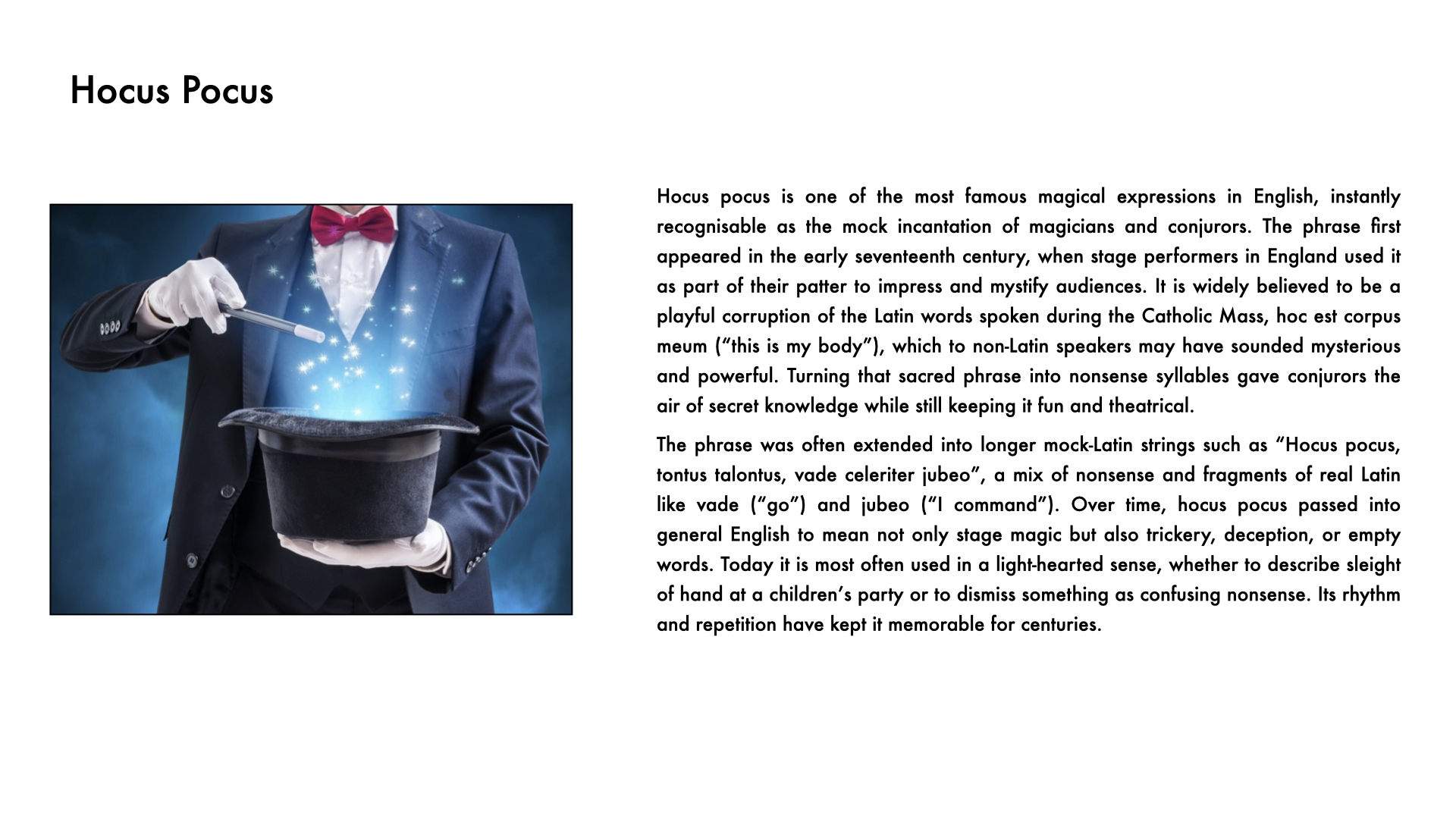
- hocus pocus: trickery, nonsense, meaningless talk
- hokey pokey: a playful dance; in some places, a type of ice cream
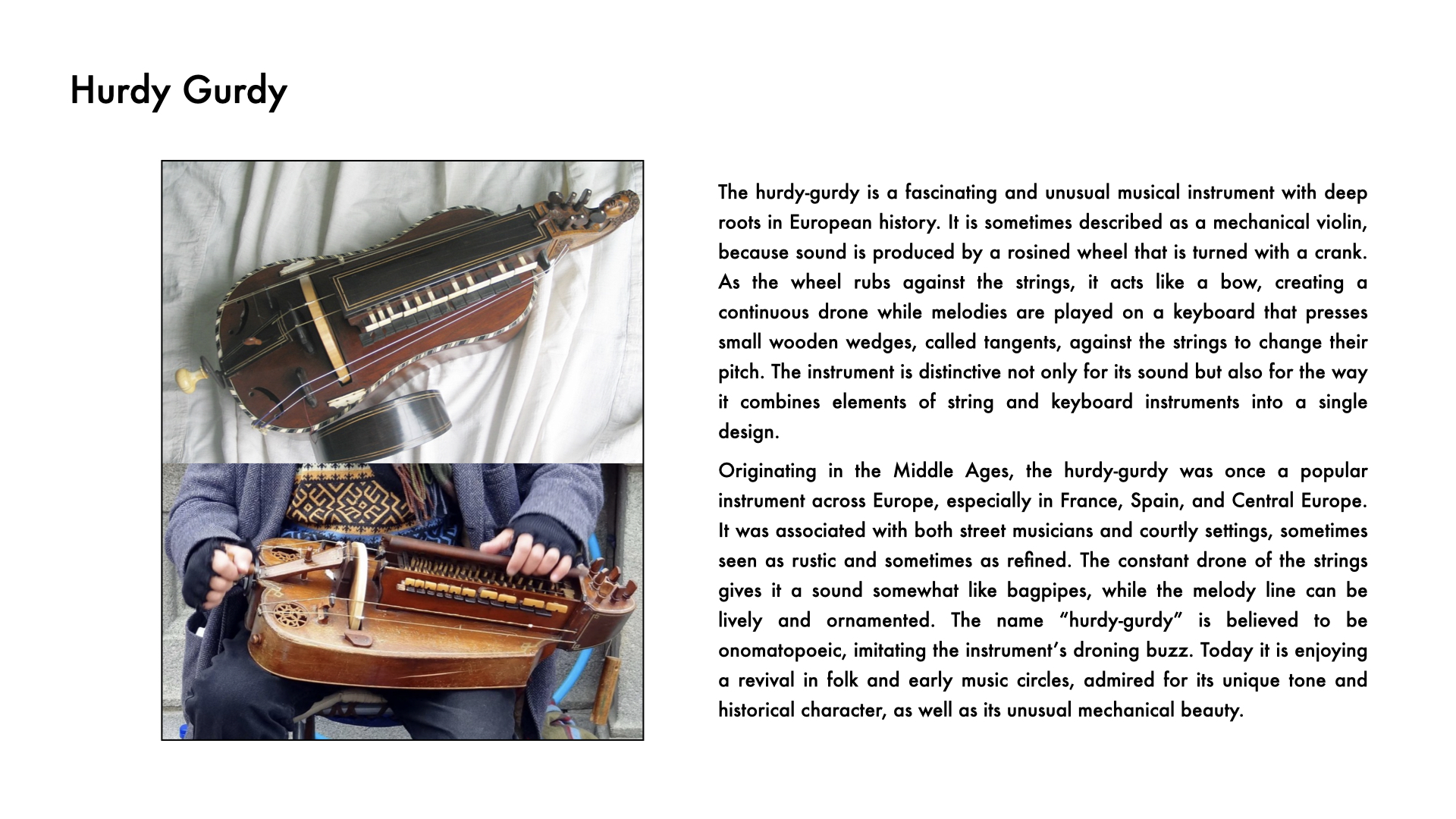
- hurdy gurdy: stringed instrument played with a crank
- hurly burly: noisy confusion or commotion
- itsy bitsy: very small
- lovey dovey: showing lots of romantic affection
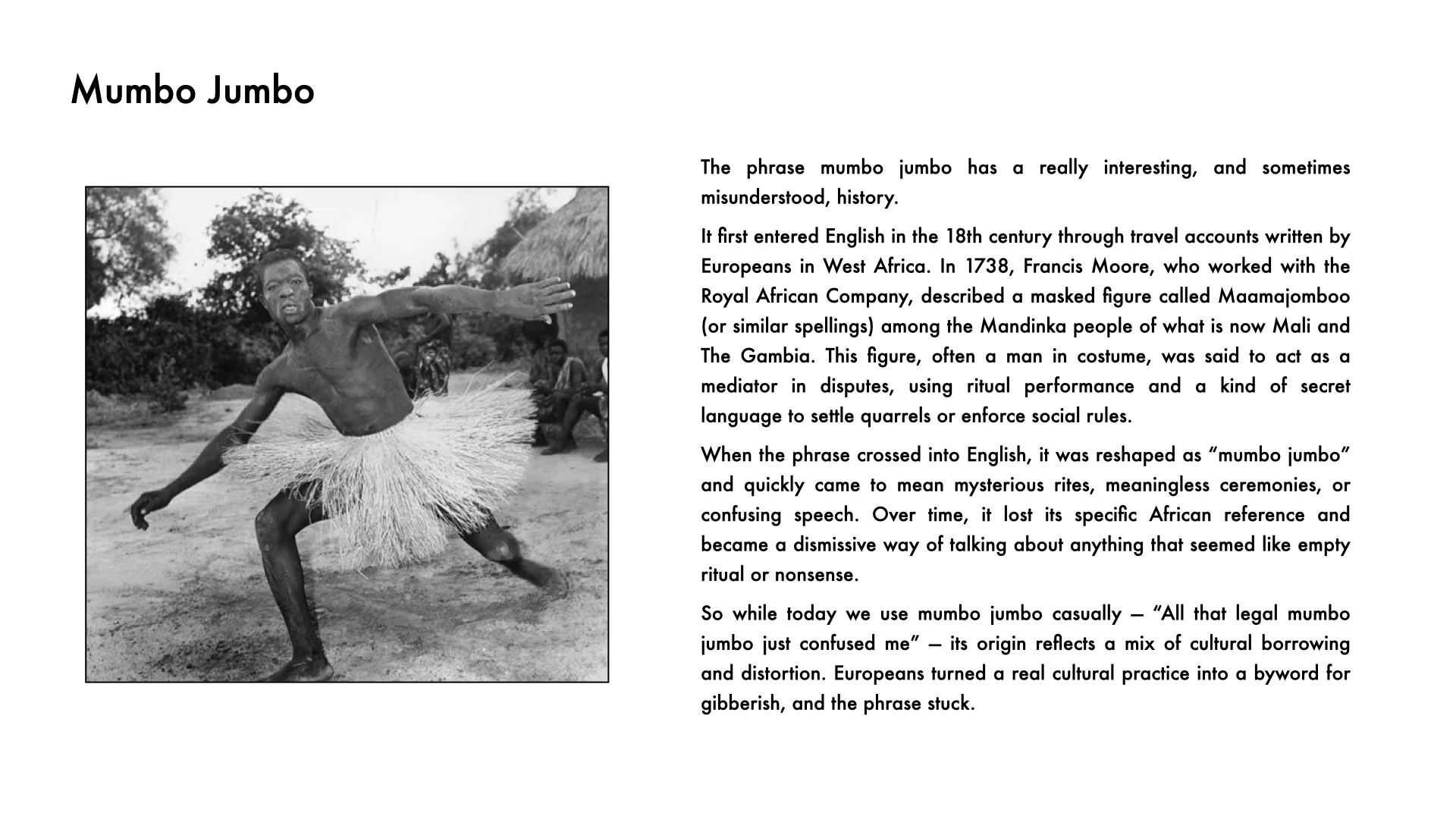
- mumbo jumbo: language or activity that seems complicated or meaningless
- nitty gritty: the most important/basic details
- okey dokey: informal way of saying “okay”
- razzle dazzle: showy or flashy display meant to impress
- silly billy: a playful way of calling someone silly
- teeny weeny: extremely small
- trolley dolly: slang for a flight attendant
- walkie talkie: handheld two-way radio
- willy nilly: without choice or order; haphazardly
- wishy-washy: weak, indecisive, lacking strength
💬 Conversation Questions
- What is a no-no in your country?
- When might you say “yum-yum”?
- Do you know anyone who dilly-dallies? What do they do?
- Do you like hip hop music? Why or why not?
- Do you wear flip-flops? When?
- Are you good at ping pong?
- What gives you the heebie-jeebies?
- Have you ever played tic-tac-toe? Who usually wins?
- What makes you go zig-zag?
- Who do you know that is a goody-goody?